
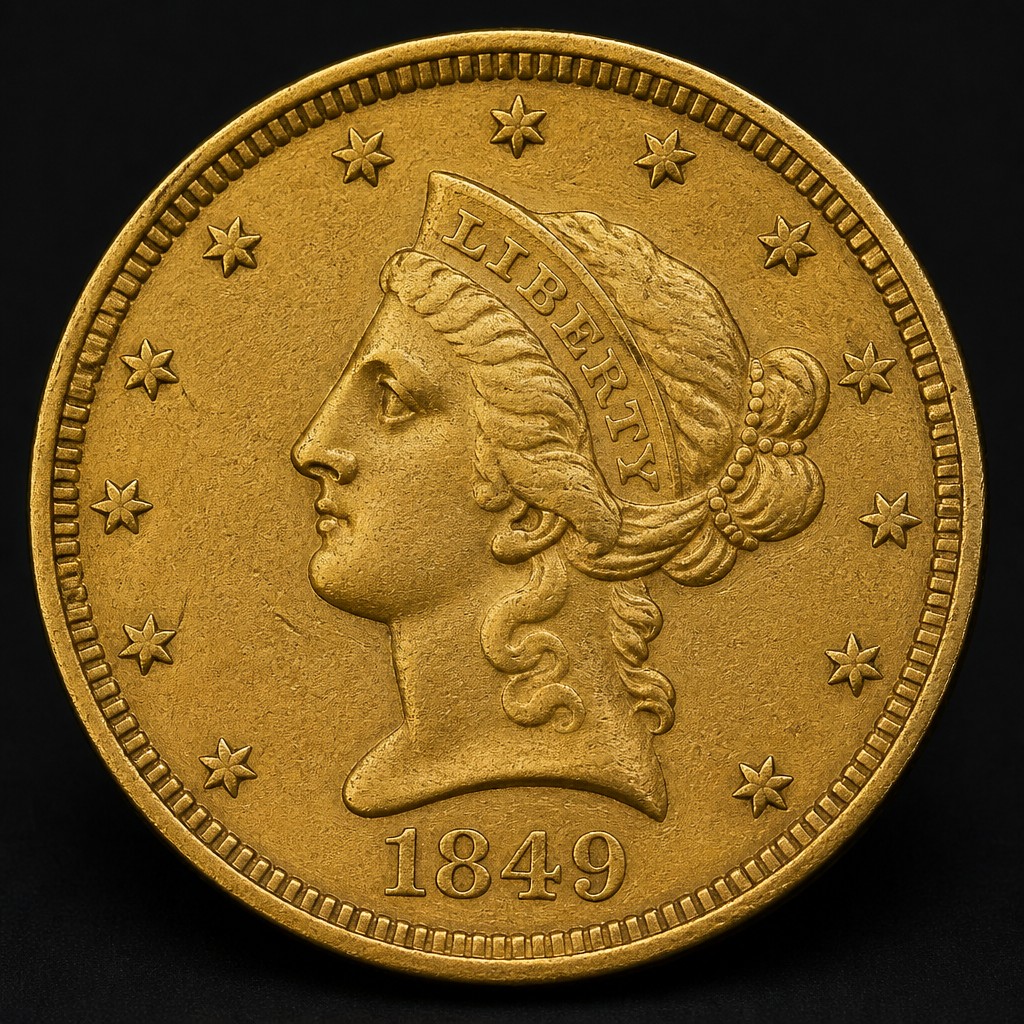
Type 1 Liberty Head Gold Dollar
The first United States gold dollar, a tiny coin introduced during the California Gold Rush and among the smallest coins ever struck by the U.S. Mint.
- Country
- United States
- Denomination
- One Dollar
- Metal
- Gold (.900 fine)
Got a coin like this?
Identify any coin from a photo, free.
Overview
The Type 1 Liberty Head Gold Dollar was the first of three major design types in the short history of the United States gold dollar denomination, introduced amid the flood of new gold reaching the Mint during the California Gold Rush. At just about 13 millimeters in diameter, it remains among the smallest coins the U.S. Mint has ever produced.
Collectors appreciate the Type 1 for its historical role as the debut of the smallest American gold denomination, its relatively higher survival rate compared to later types due to less striking difficulty, and its connections to several Southern branch mints.
History & Background
Authorized by the Act of March 3, 1849, the gold dollar was created in response to the large influx of gold from California, giving the Mint a practical way to coin small denominations of the new metal. James B. Longacre designed the coin, adapting a coronet-head Liberty motif similar to his other gold designs of the period.
Struck at Philadelphia and the Southern branch mints of Charlotte, Dahlonega, and New Orleans, the Type 1 design proved successful enough in production quality, but its small size made it difficult to strike with fully sharp details and easy to lose in circulation. This led to the redesign into the larger-diameter Type 2 Indian Princess design beginning in 1854.
The Type 1 gold dollar's production years overlap closely with the peak of Southern gold mining activity before the Civil War, giving certain branch-mint dates strong historical and numismatic interest.
How to Identify
The obverse features Liberty's head facing left wearing a coronet inscribed LIBERTY, surrounded by thirteen stars, with the date below. The reverse shows the denomination 1 DOLLAR within a wreath, with the date and UNITED STATES OF AMERICA around the border.
Mintmarks appear on the reverse below the wreath: C for Charlotte, D for Dahlonega, and O for New Orleans, with Philadelphia coins unmarked. Because of its tiny size, the coin can be easily confused at a glance with other small gold or token pieces, so checking the legends and date carefully is important.
The coin has a reeded edge, and due to its size, well-centered, sharply struck examples are more desirable, since off-center or weak strikes were relatively common in original production.
Value & Collectibility
Common-date Philadelphia and New Orleans Type 1 gold dollars trade with moderate premiums over gold bullion value in circulated grades, while Southern branch-mint issues from Charlotte and Dahlonega generally command higher premiums due to lower mintages and strong collector demand for Civil War-era Southern gold.
Mint State examples, particularly well-struck ones, are sought after and can bring solid premiums, and because the coin is so small, well-preserved surfaces free of nicks and mount marks add meaningfully to value.
Frequently asked questions
Why is this coin so small?
The gold dollar was designed to use as little gold as practical for its face value, resulting in a diameter of only about 13 millimeters.
Why did the design change after 1854?
The small size made the Type 1 design difficult to strike sharply and easy to lose, prompting a larger-diameter redesign known as Type 2.
Which branch mints struck Type 1 gold dollars?
Charlotte, Dahlonega, and New Orleans all struck the Type 1 gold dollar alongside Philadelphia.
Who designed the coin?
James B. Longacre, the U.S. Mint's Chief Engraver, designed the Type 1 gold dollar.
Other coins you may enjoy
Virginia Halfpenny
1773
Brasher Doubloon
1787
Higley Copper
1737–1739
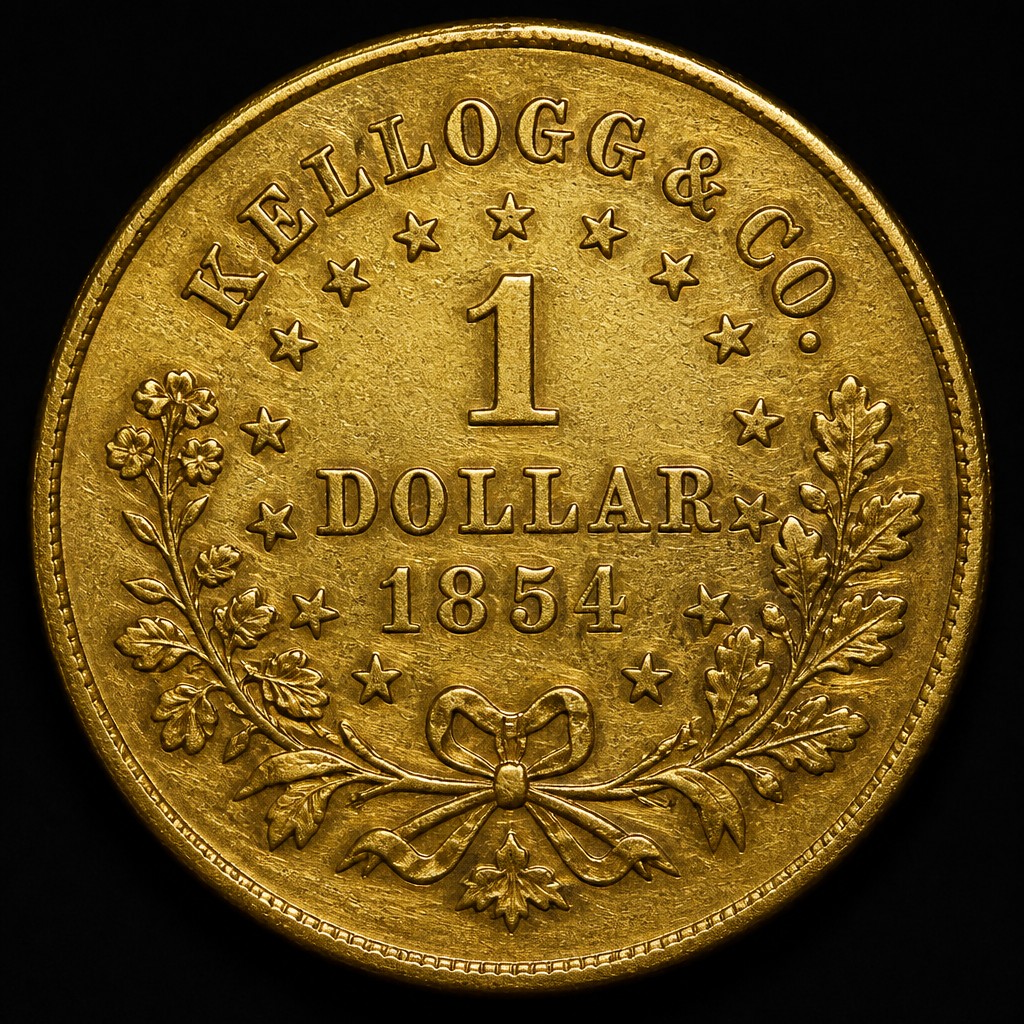
Kellogg & Co. Gold Piece
1854–1855
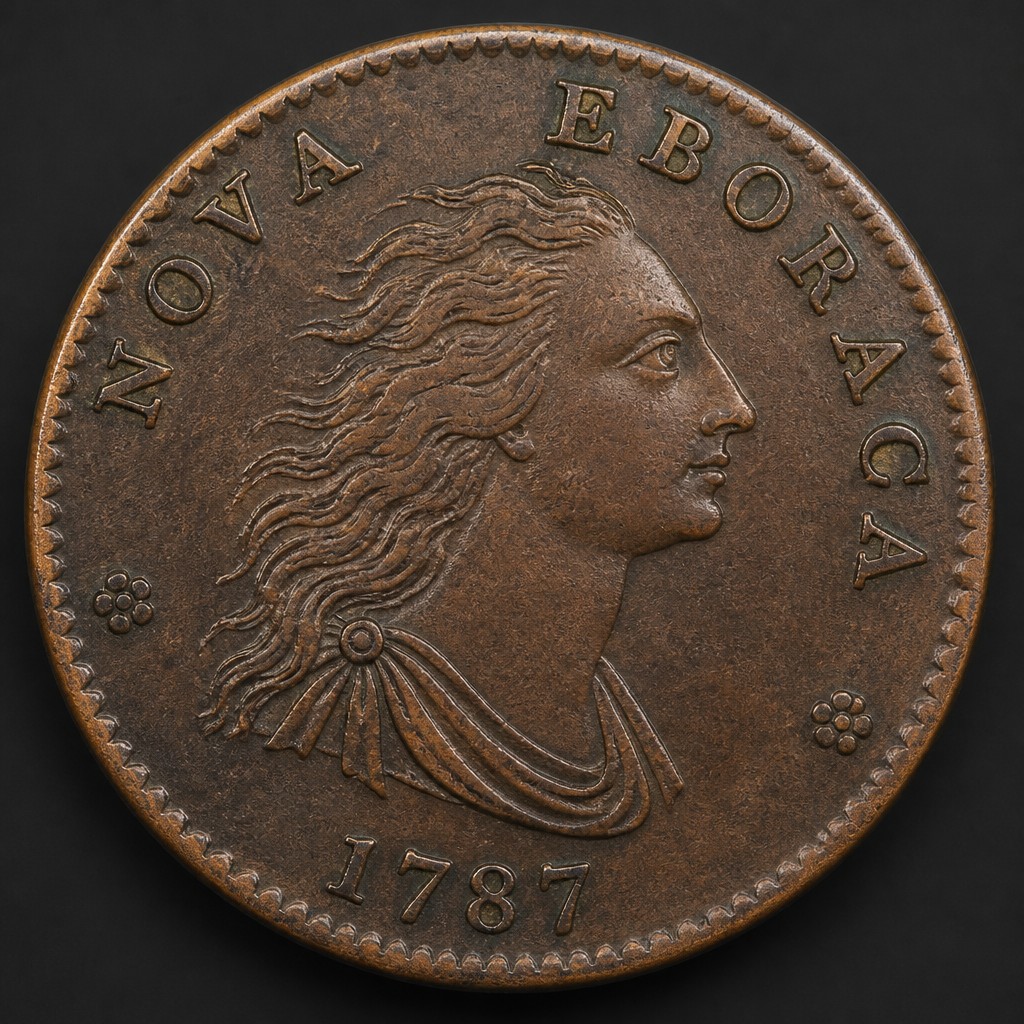
Nova Eborac Copper
1787
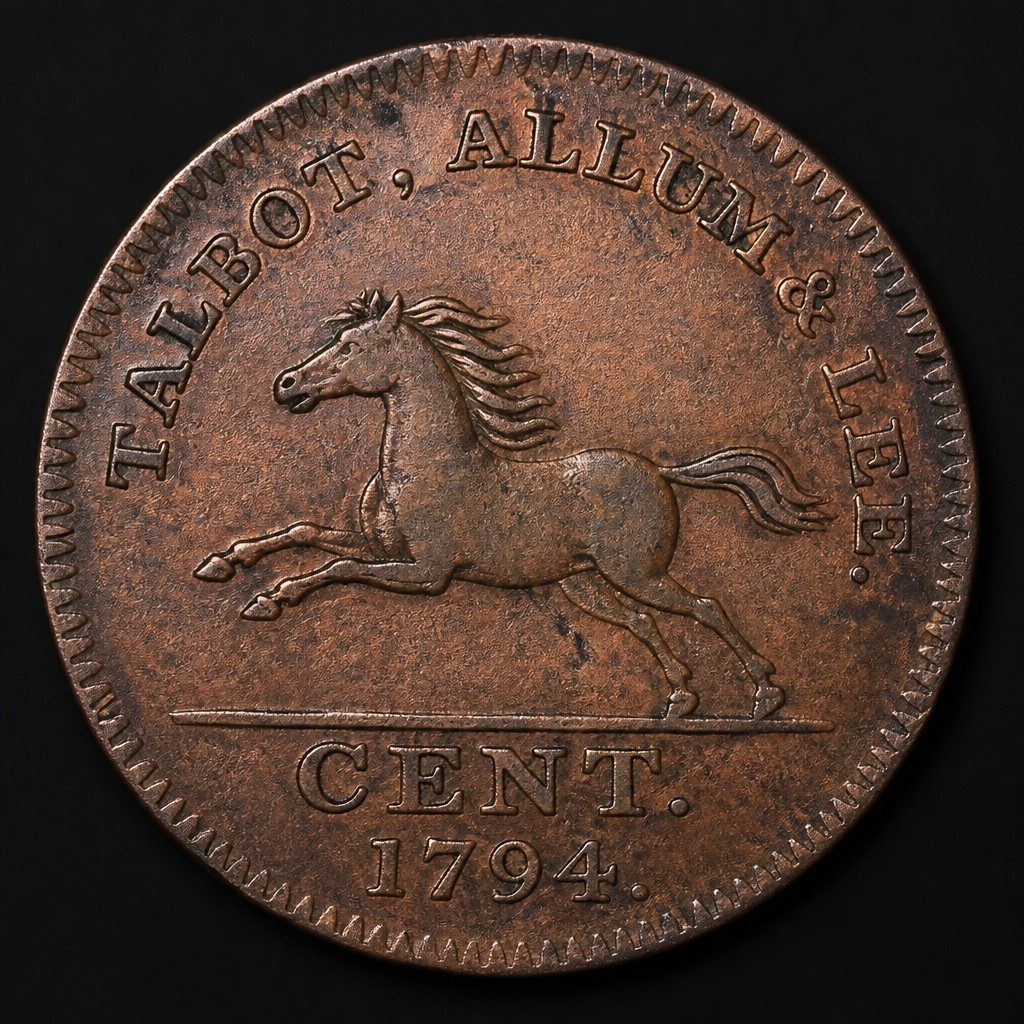
Talbot, Allum & Lee Cent
1794–1795
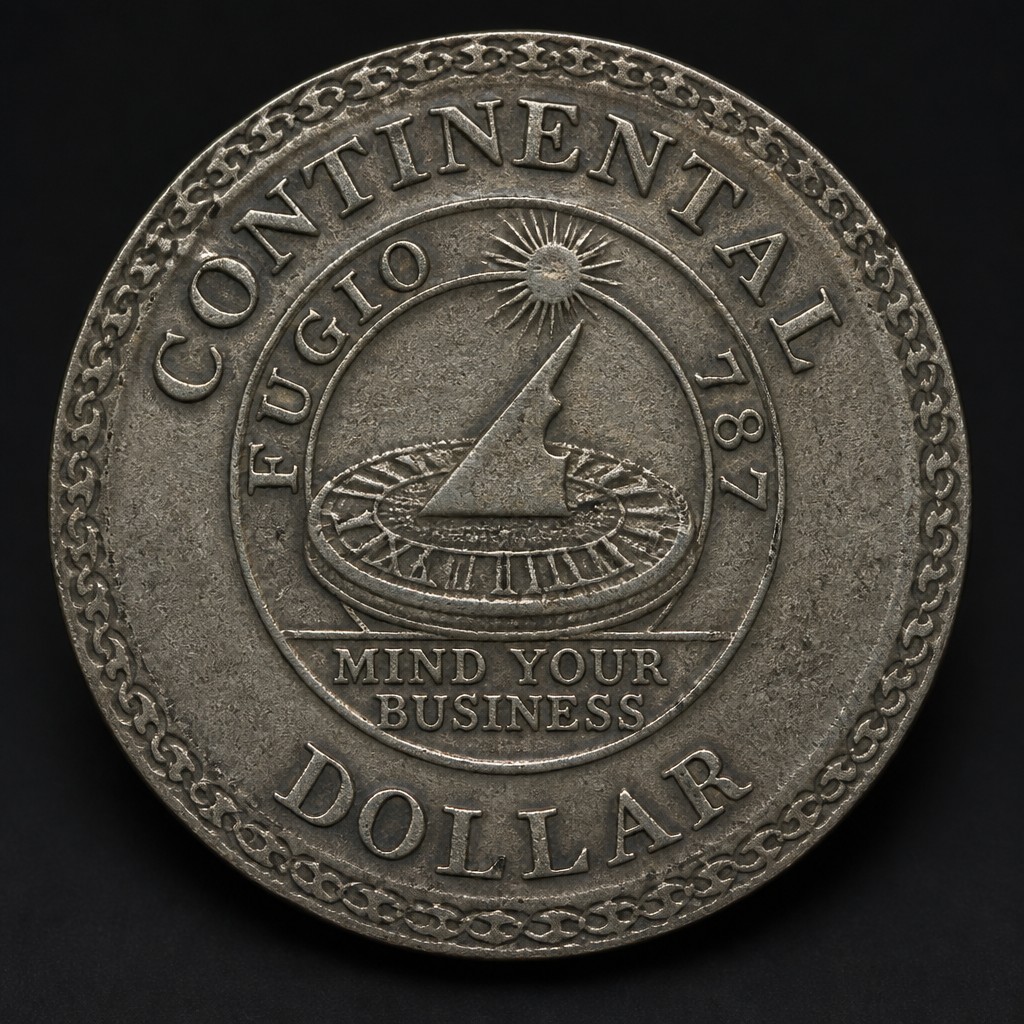
Continental Dollar
1776
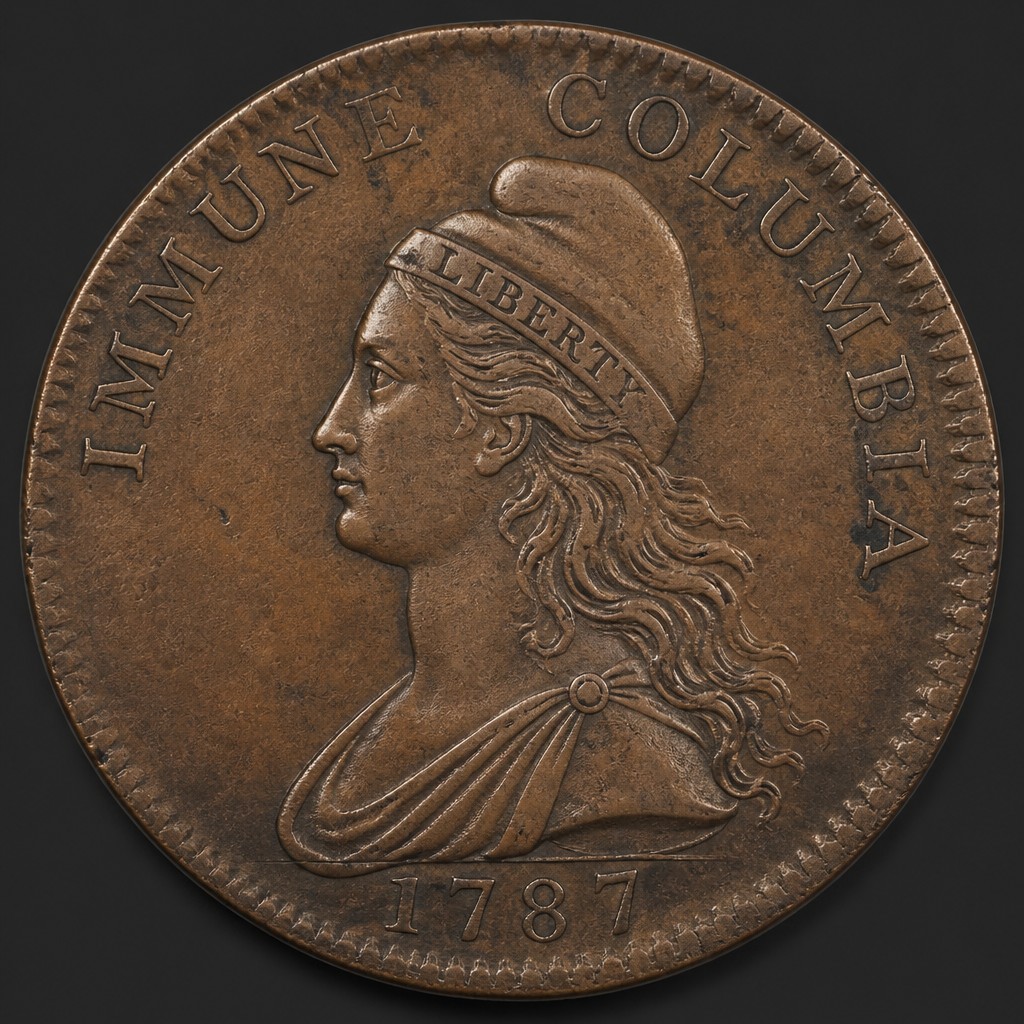
Immune Columbia Copper
circa 1785–1787
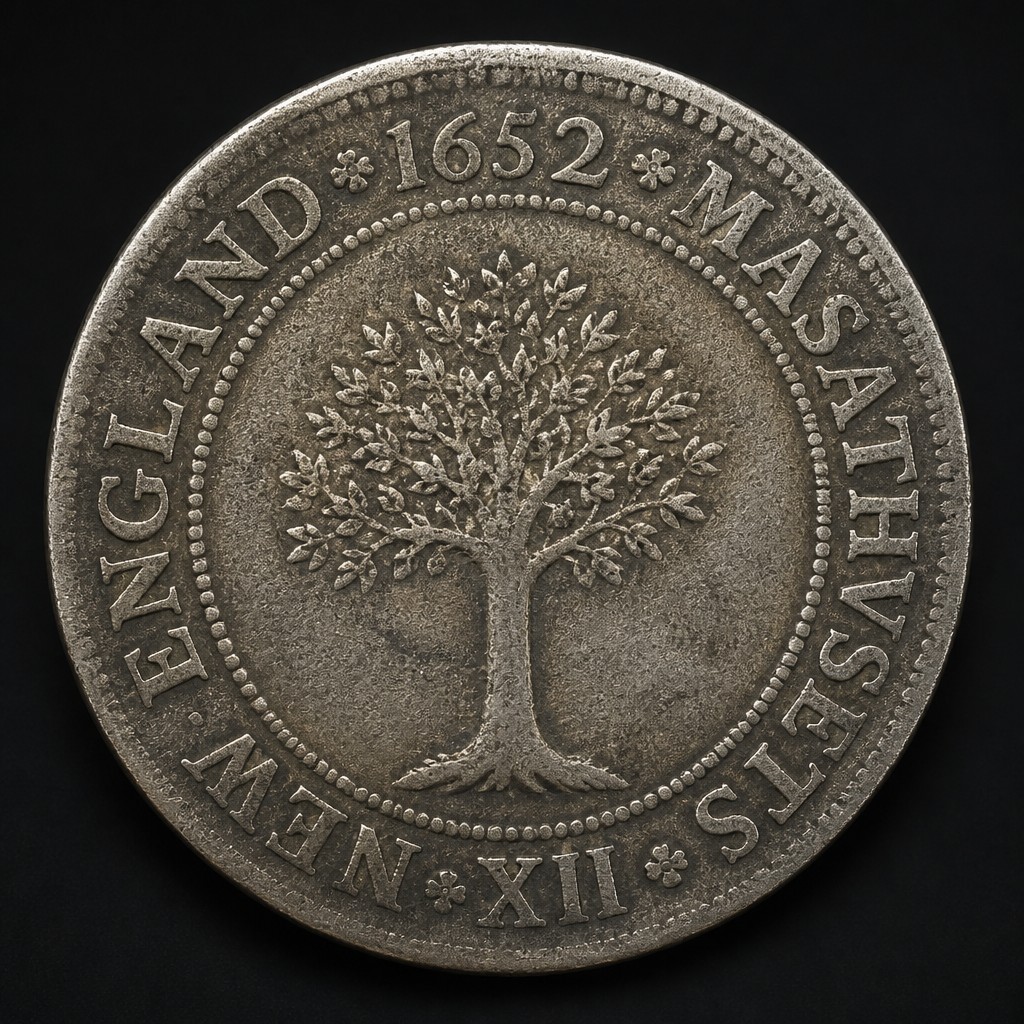
Massachusetts Oak Tree Shilling
Dated 1652, struck circa 1660–1667
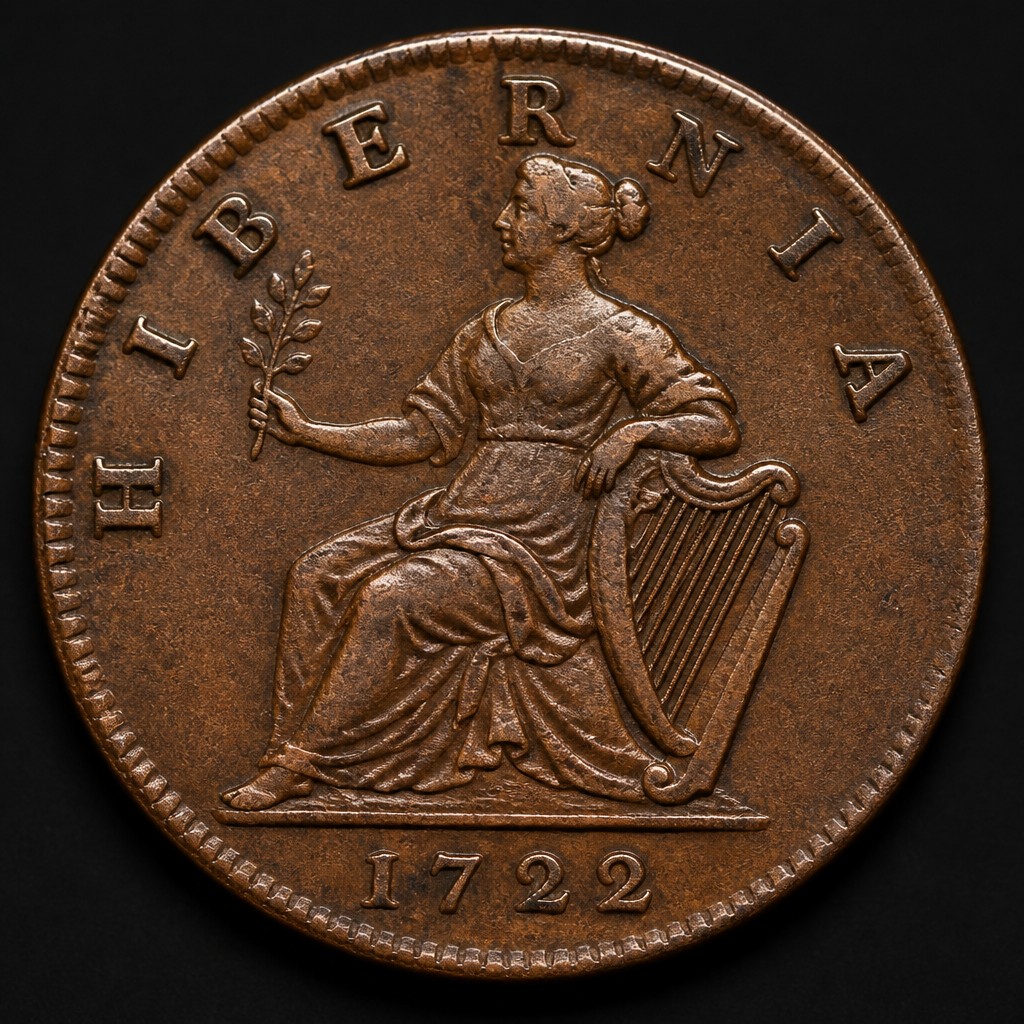
Wood's Hibernia Halfpenny
1722–1724
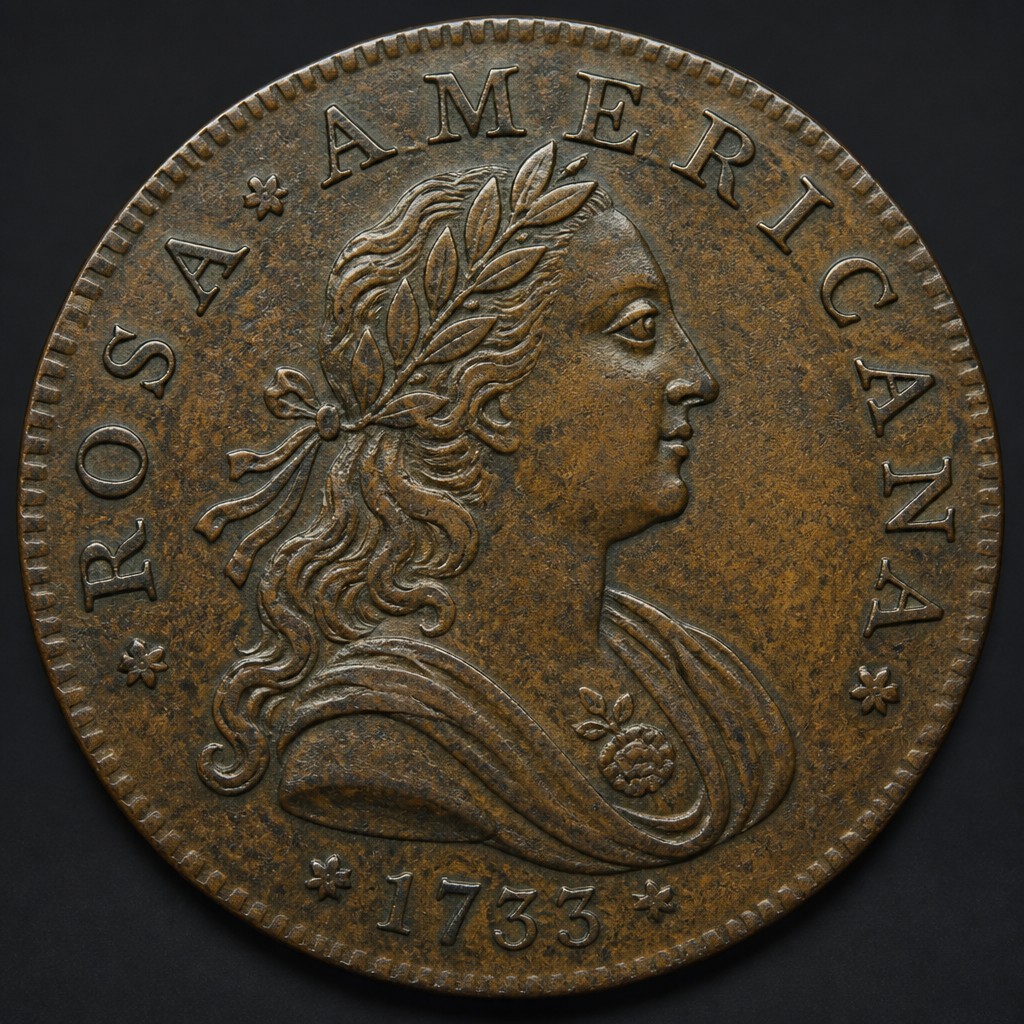
Rosa Americana Coinage
1722–1724 (with pattern issues dated 1733)
Massachusetts Willow Tree Shilling
Dated 1652, struck circa 1653–1660