
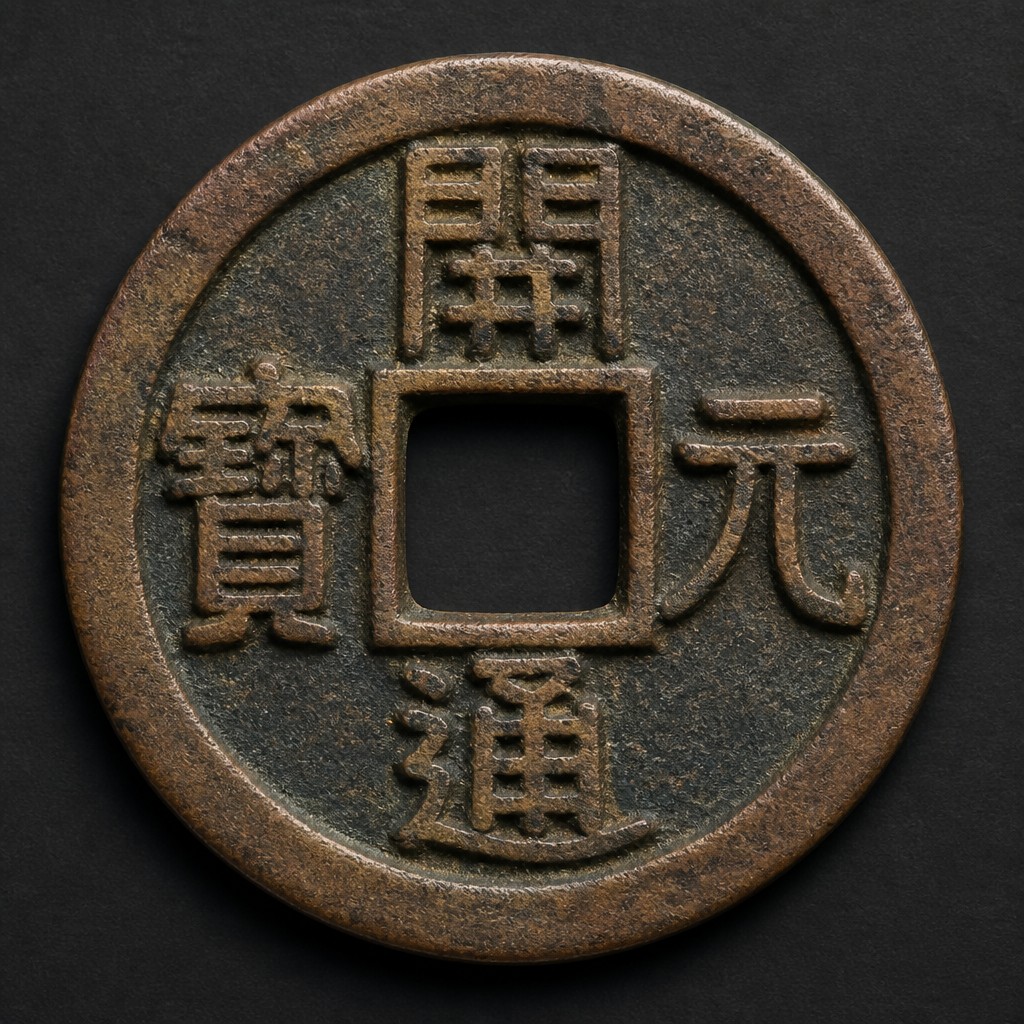
Kai Yuan Tong Bao Cash
A landmark Tang dynasty cash coin whose four-character reign-title inscription became the standard template for Chinese, and much of East Asian, coinage for the next 1,300 years.
- Country
- Tang Dynasty China
- Denomination
- Wen (one cash unit)
- Metal
- Bronze
Got a coin like this?
Identify any coin from a photo, free.
Overview
The Kai Yuan Tong Bao is one of the most historically important coins in East Asian numismatics, marking the shift from weight-based coin names, like the earlier Wu Zhu, to a new system of inscriptions naming an era or simply describing the coin as circulating currency. This template proved so successful that it was copied, with variations, by Chinese, Japanese, Korean, and Vietnamese mints for well over a millennium.
Collectors value the Kai Yuan Tong Bao both as a foundational piece in the history of cash coinage and as a relatively accessible entry point into Tang dynasty China, one of the most culturally and economically influential periods in Chinese history.
History & Background
The Tang dynasty was founded in 618 AD, and in 621 AD Emperor Gaozu introduced a sweeping currency reform that replaced the centuries-old Wu Zhu coin with a new design bearing the four-character inscription "Kai Yuan Tong Bao," generally translated as something like "inaugurating a new era circulating treasure" or "opening currency of a new beginning." This inscription style, describing the coin's function and issuing dynasty rather than a specific weight, became the standard model for Chinese cash coinage going forward.
The design's calligraphy is traditionally attributed to the renowned Tang calligrapher Ouyang Xun, reflecting the importance the Tang court placed on the coin's artistic presentation as a symbol of dynastic legitimacy. The coin remained in production, with variations, throughout much of the Tang dynasty and served as a monetary and design template well beyond China's borders.
The four-character reign-title format pioneered by the Kai Yuan Tong Bao was subsequently adopted by nearly every later Chinese dynasty for their own cash coins, and was also imitated by Japan, Korea, and Vietnam in their own early cash coinages, making this single coin type one of the most influential in world monetary history.
How to Identify
The Kai Yuan Tong Bao is a round bronze coin with a square center hole, following the traditional Chinese cash format, with raised rims around both the outer edge and the central hole. The obverse bears the four characters "Kai Yuan Tong Bao" arranged in the order top, bottom, right, left around the square hole, while the reverse is typically blank, though some later variants bear small marks such as a crescent or dot.
Because the coin was cast in huge numbers over a long period and later imitated by other regimes and countries, calligraphy style, thickness, rim details, and metal quality vary considerably; specialists use these details to distinguish official Tang issues from later imitations or coins cast by neighboring states.
Collectors distinguish the Kai Yuan Tong Bao from the earlier Wu Zhu by its four-character reign-style inscription rather than a two-character weight-based one, and from later Chinese cash coins by its specific calligraphy and by cross-referencing the reign title against known dynastic chronology, since many later coins used different four-character titles following the same template.
Value & Collectibility
Kai Yuan Tong Bao coins are generally common and affordable, since they were cast in vast quantities over an extended period and remain one of the most frequently encountered ancient Chinese cash coins on the market. Basic examples in worn condition are widely available at low cost.
Specific rarer variants, including certain mint or reverse-mark types, exceptionally well-cast early Tang examples, or coins with clear, sharp calligraphy in excellent condition, are more desirable to specialist collectors and can bring meaningfully higher prices. As with other ancient Chinese cash, overall condition and clarity of the inscription are the main factors driving value for this type.
Frequently asked questions
What does "Kai Yuan Tong Bao" mean?
It roughly translates to something like "inaugurating a new era, circulating treasure," reflecting its role as the currency marking the Tang dynasty's fresh start rather than referencing a specific coin weight.
Why is this coin considered so historically important?
It introduced the four-character reign-title inscription format that became the standard template for Chinese cash coinage, and was later imitated across Japan, Korea, and Vietnam for well over a thousand years.
Who designed the coin's inscription?
The elegant calligraphy is traditionally credited to the noted Tang calligrapher Ouyang Xun.
How does this coin differ from the earlier Wu Zhu?
The Wu Zhu names a specific weight standard, while the Kai Yuan Tong Bao uses a four-character phrase describing the coin as circulating currency of a new era, a format later dynasties continued to follow.
Are Kai Yuan Tong Bao coins rare?
No, they were produced in enormous numbers over a long period and are among the more common ancient Chinese cash coins available to collectors today.
Other coins you may enjoy
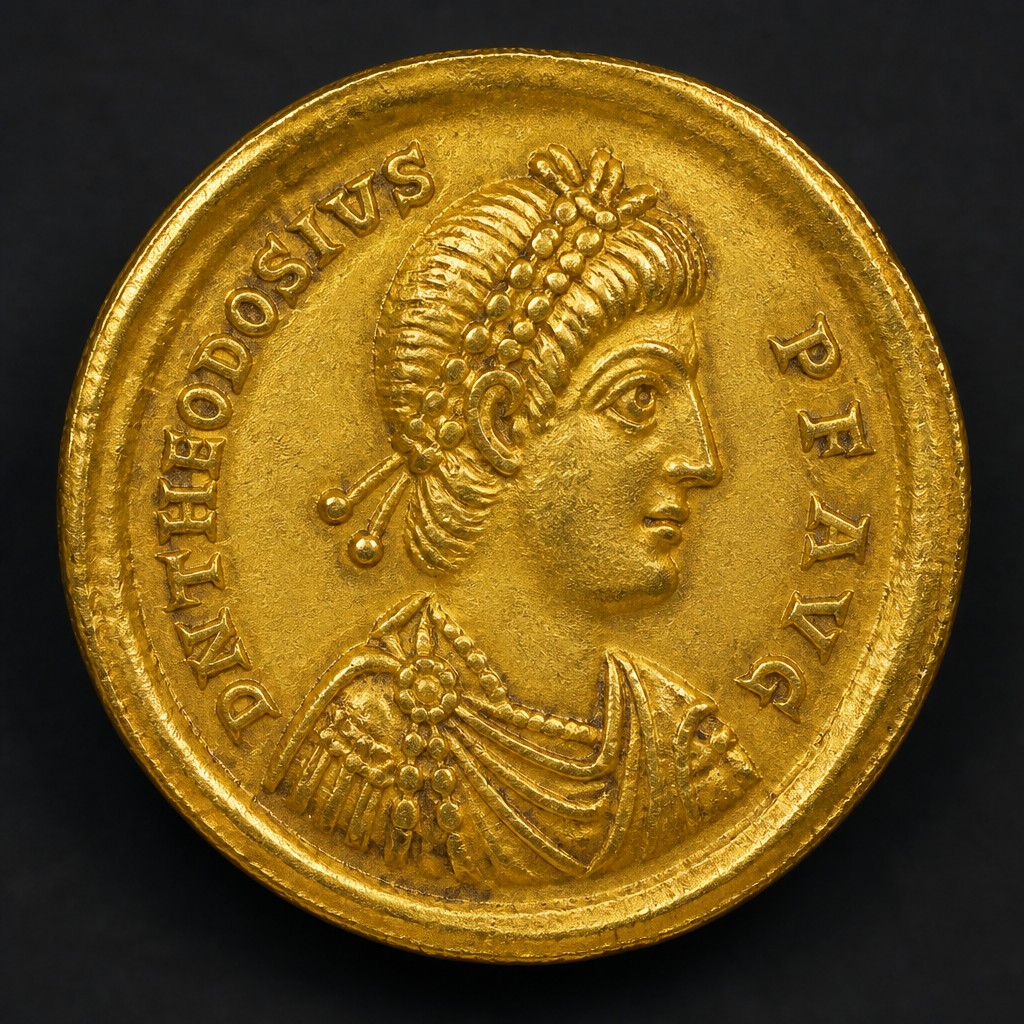
Theodosius I Solidus
379–395 AD
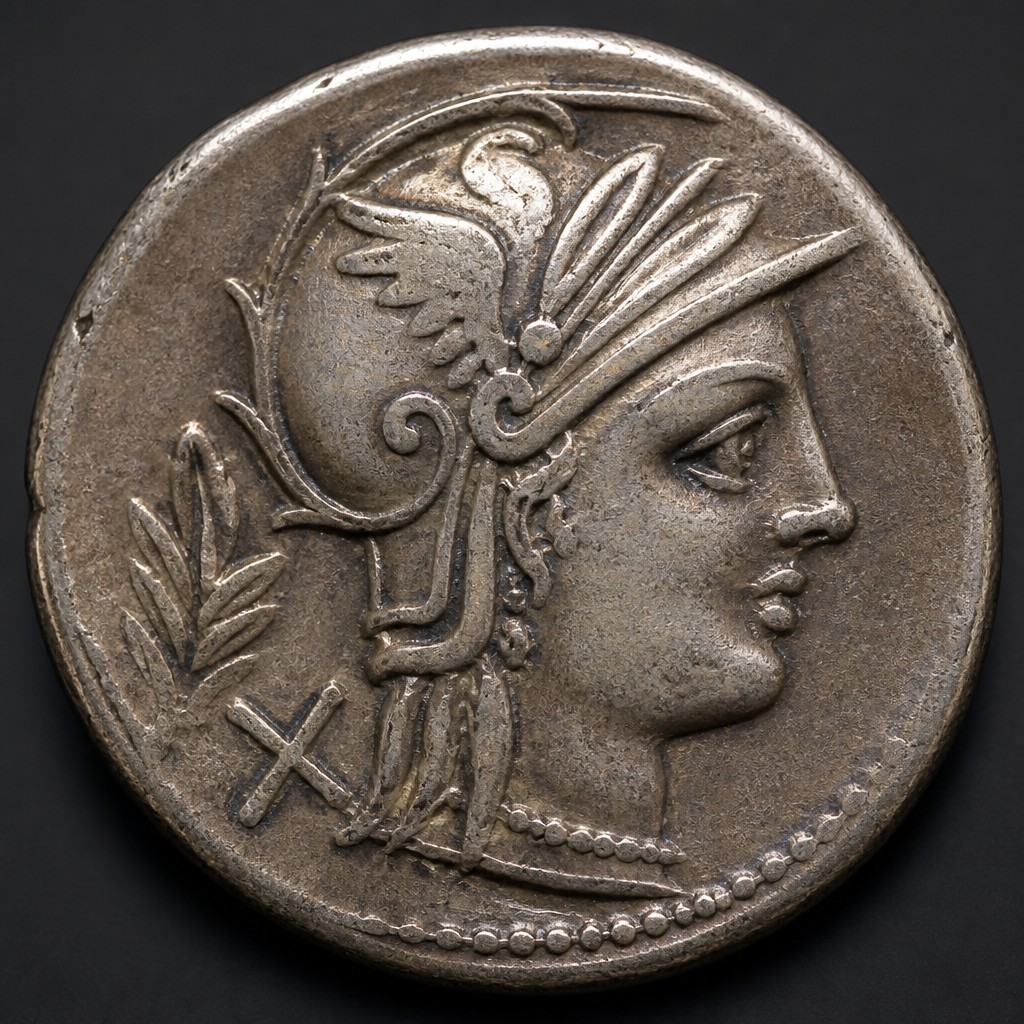
Republican Victoriatus
c. 211–170 BC
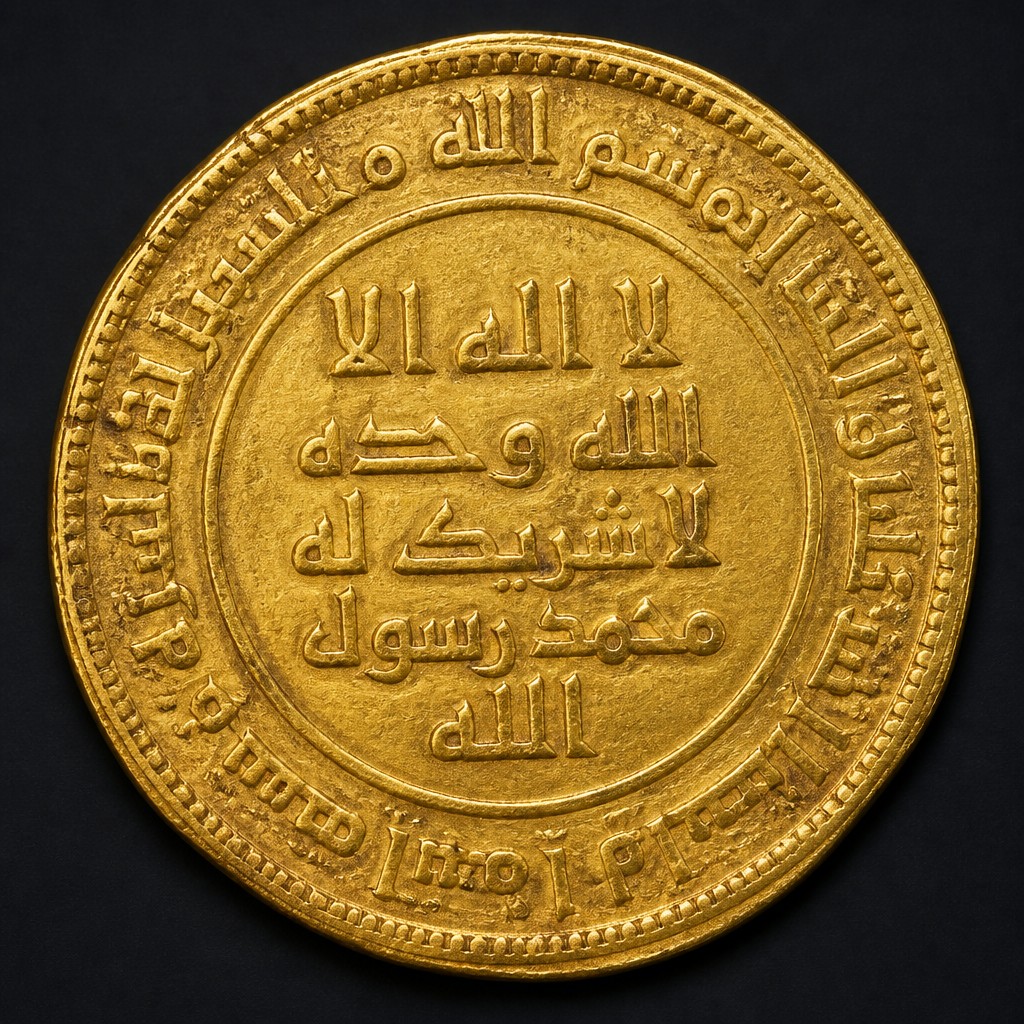
Islamic Gold Dinar (Umayyad)
c. 696–750 AD
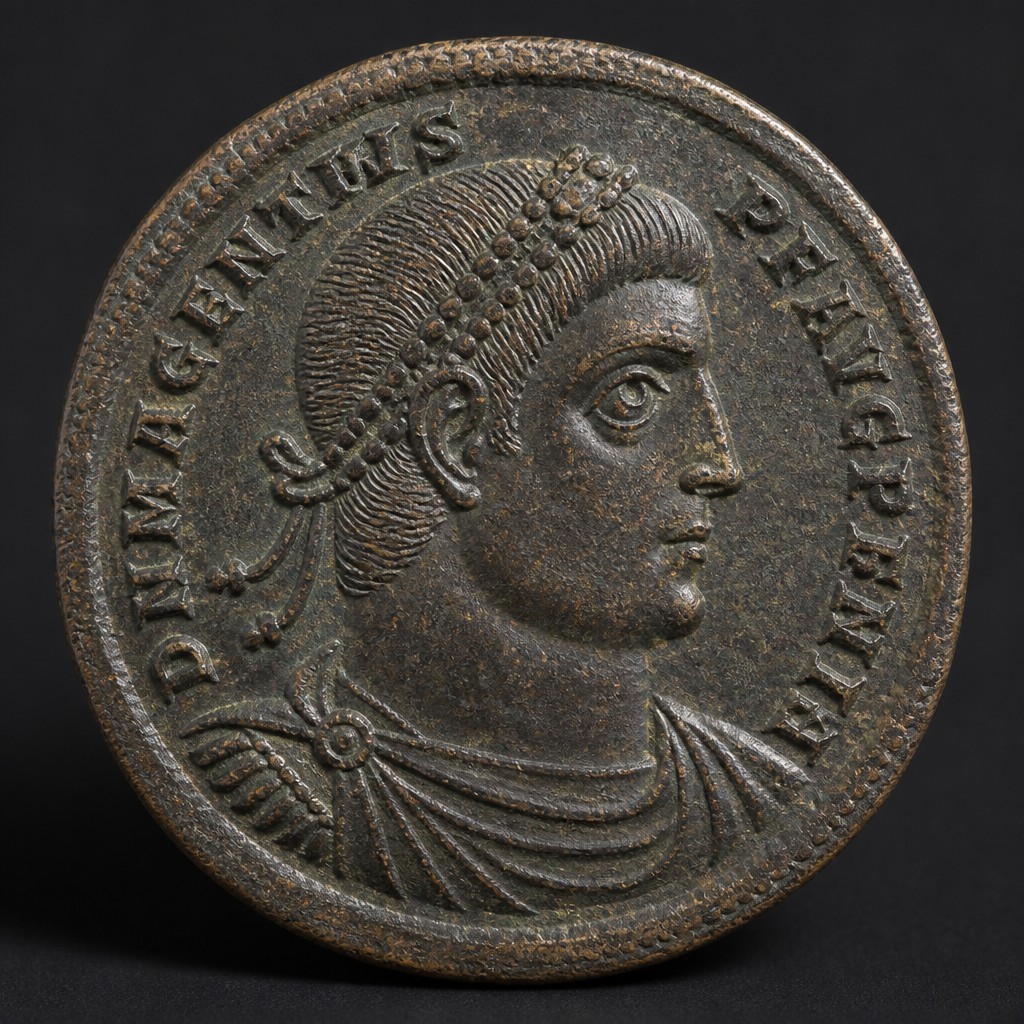
Magnentius Double Centenionalis
350–353 AD
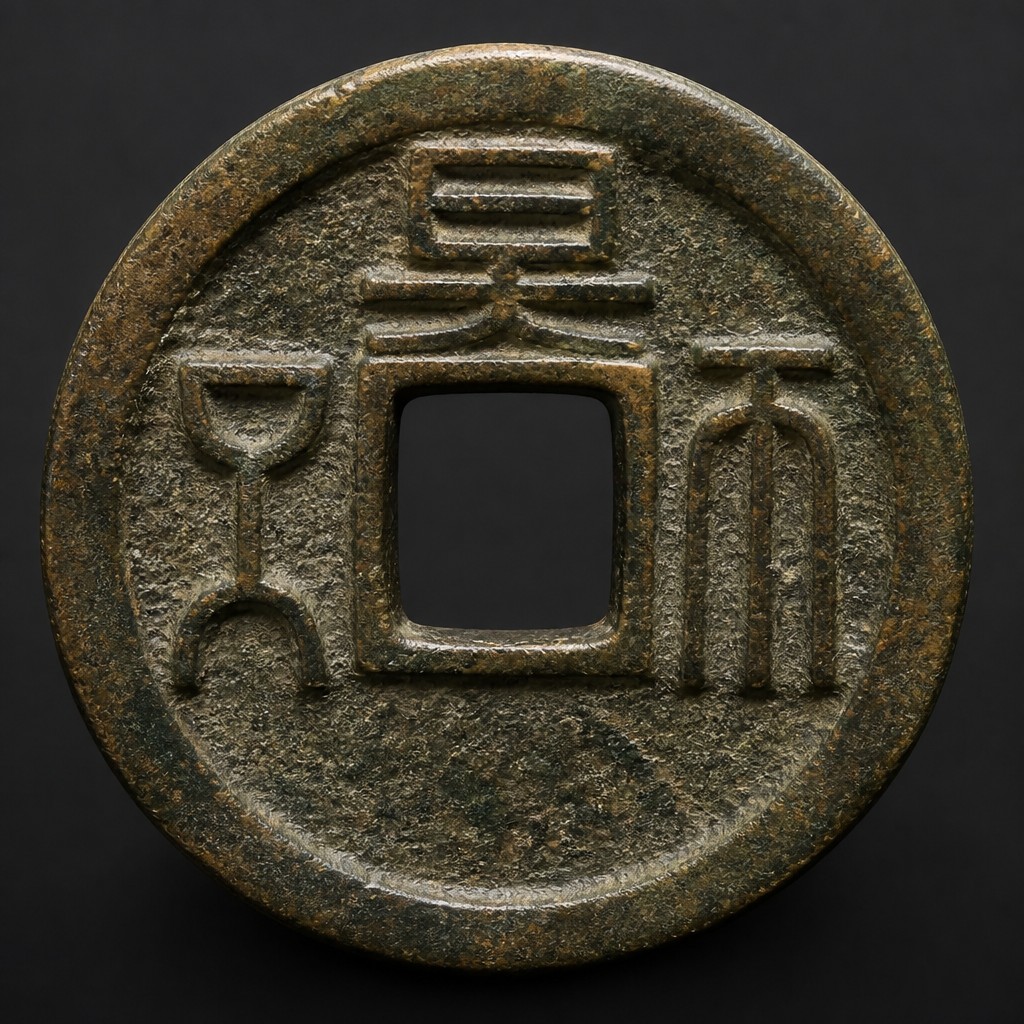
Chinese Wu Zhu Cash
118 BC – 618 AD
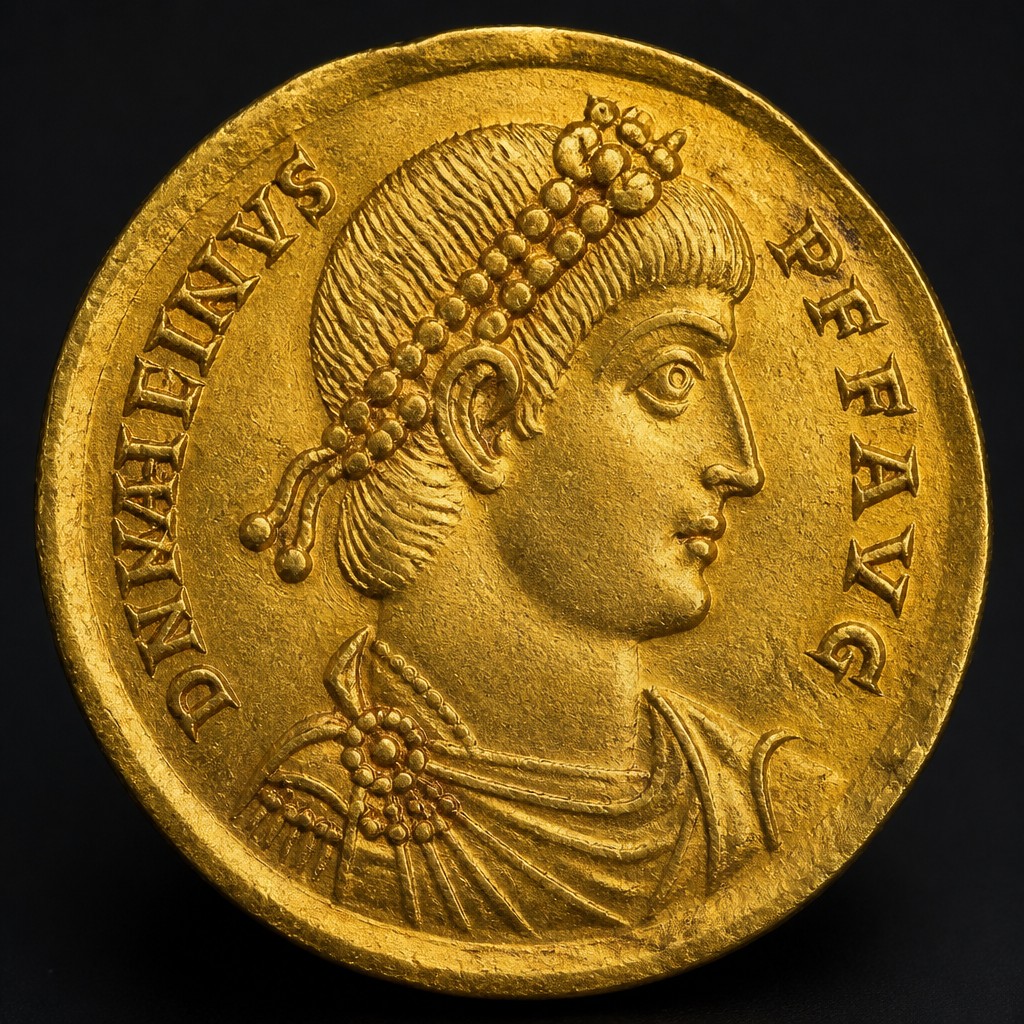
Valentinian I Solidus
364–375 AD
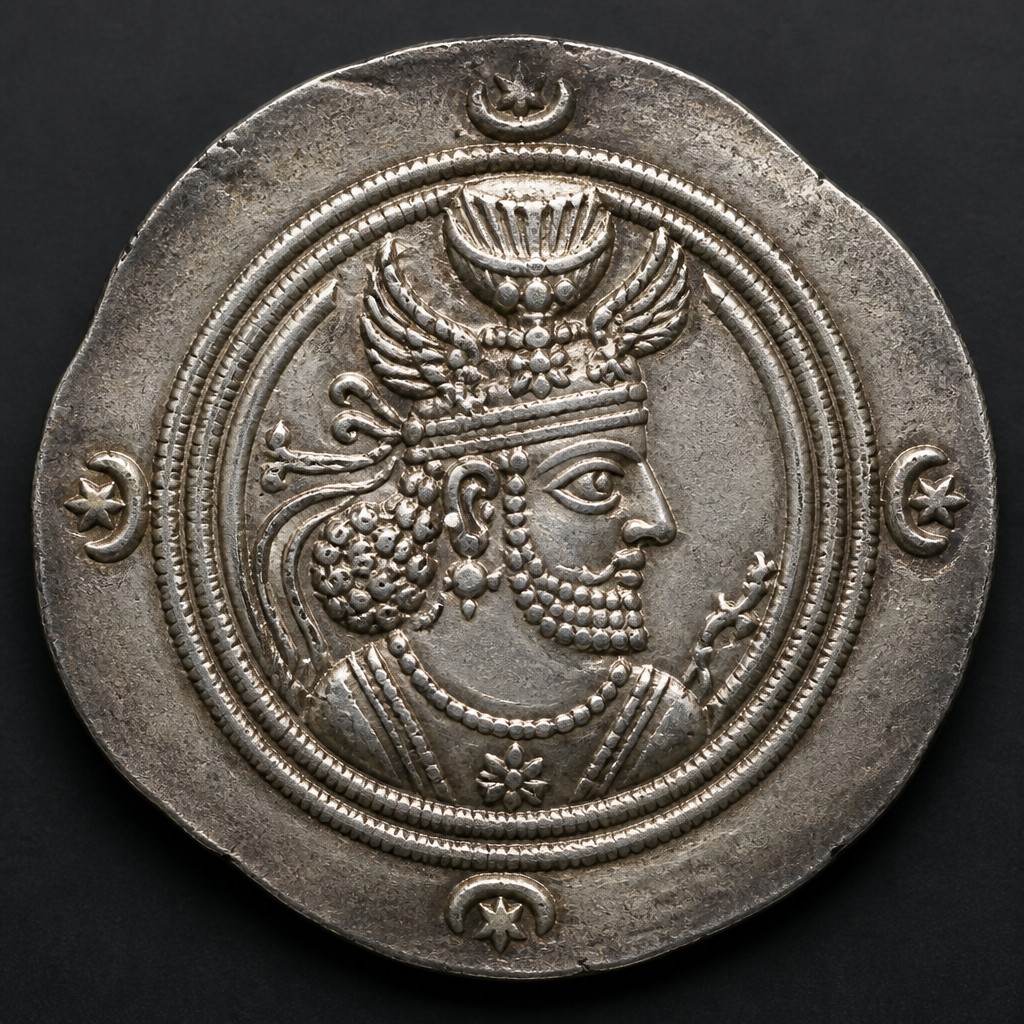
Sassanian Silver Drachm
c. 224–651 AD
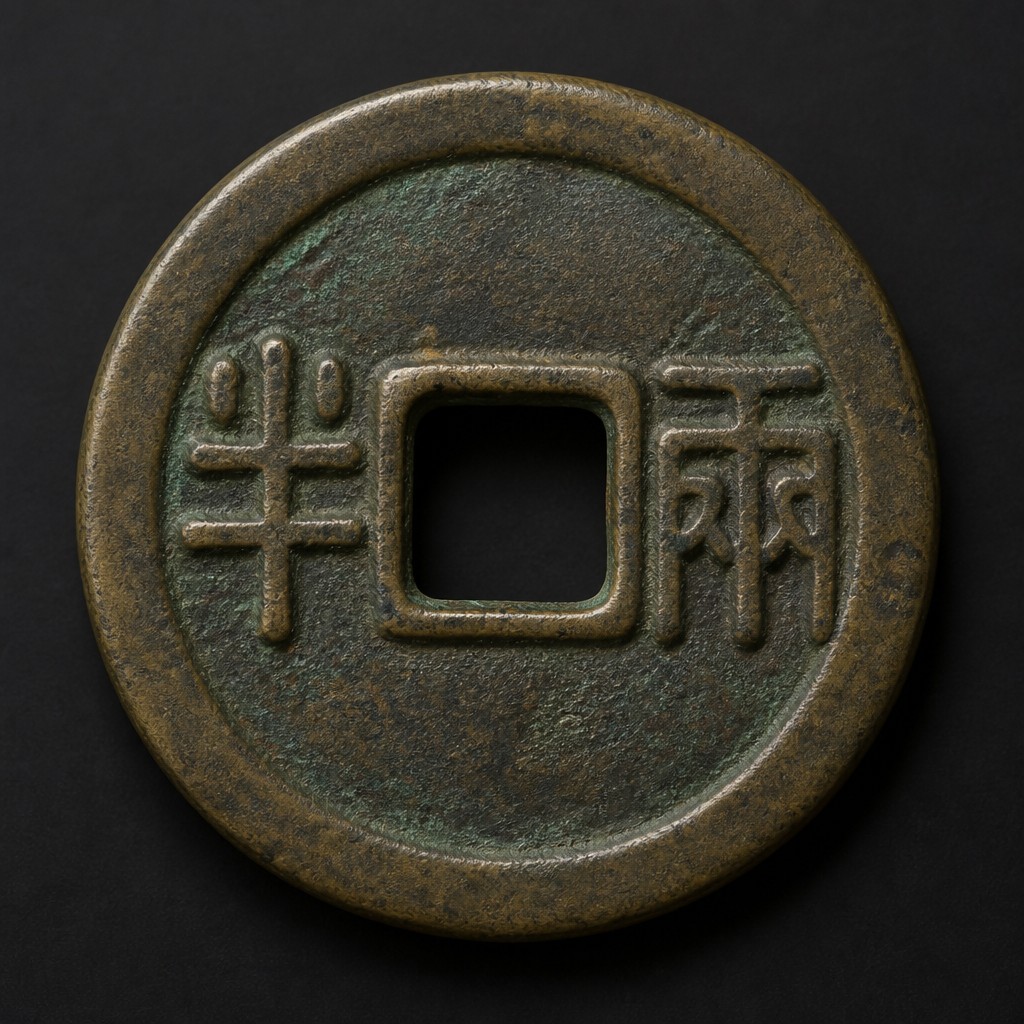
Chinese Ban Liang Cash
c. 221–118 BC
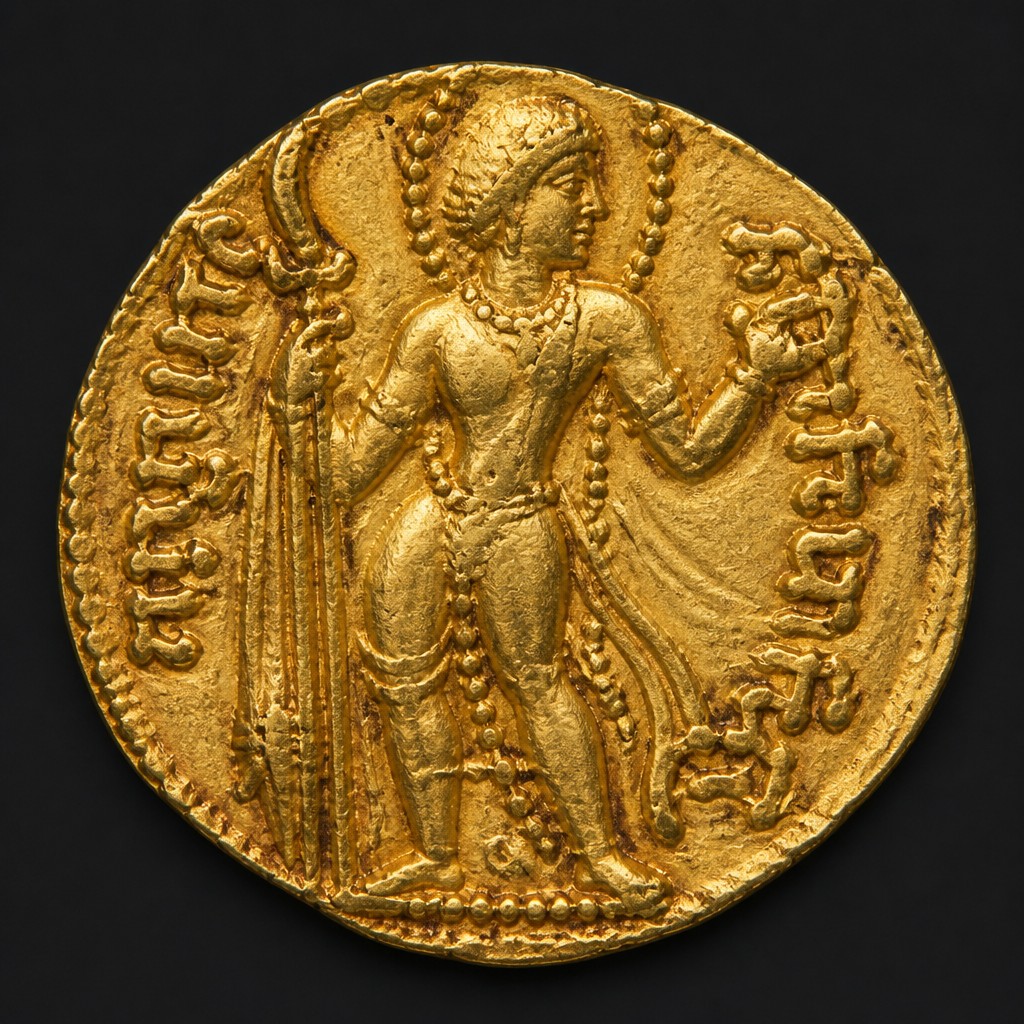
Gupta Empire Gold Dinar
c. 320–550 AD
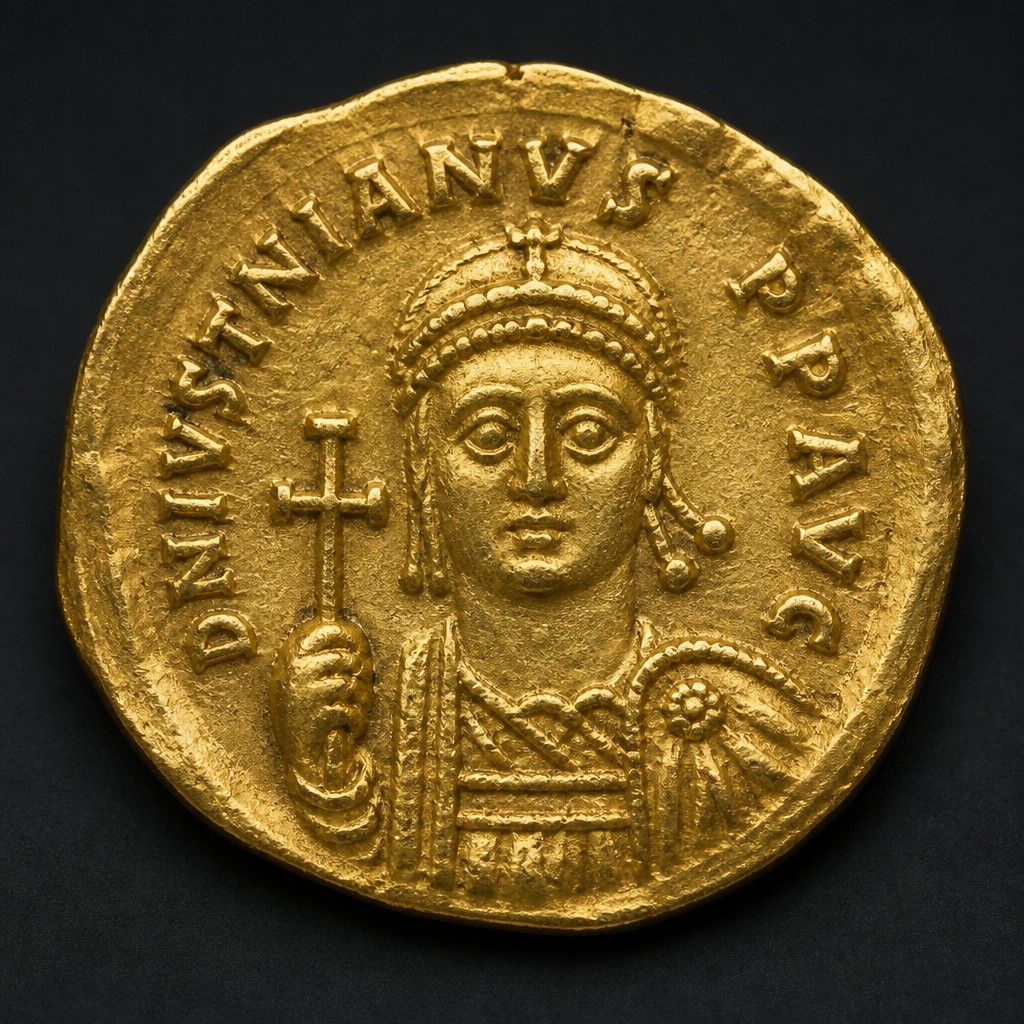
Byzantine Gold Tremissis
c. 4th–7th century AD
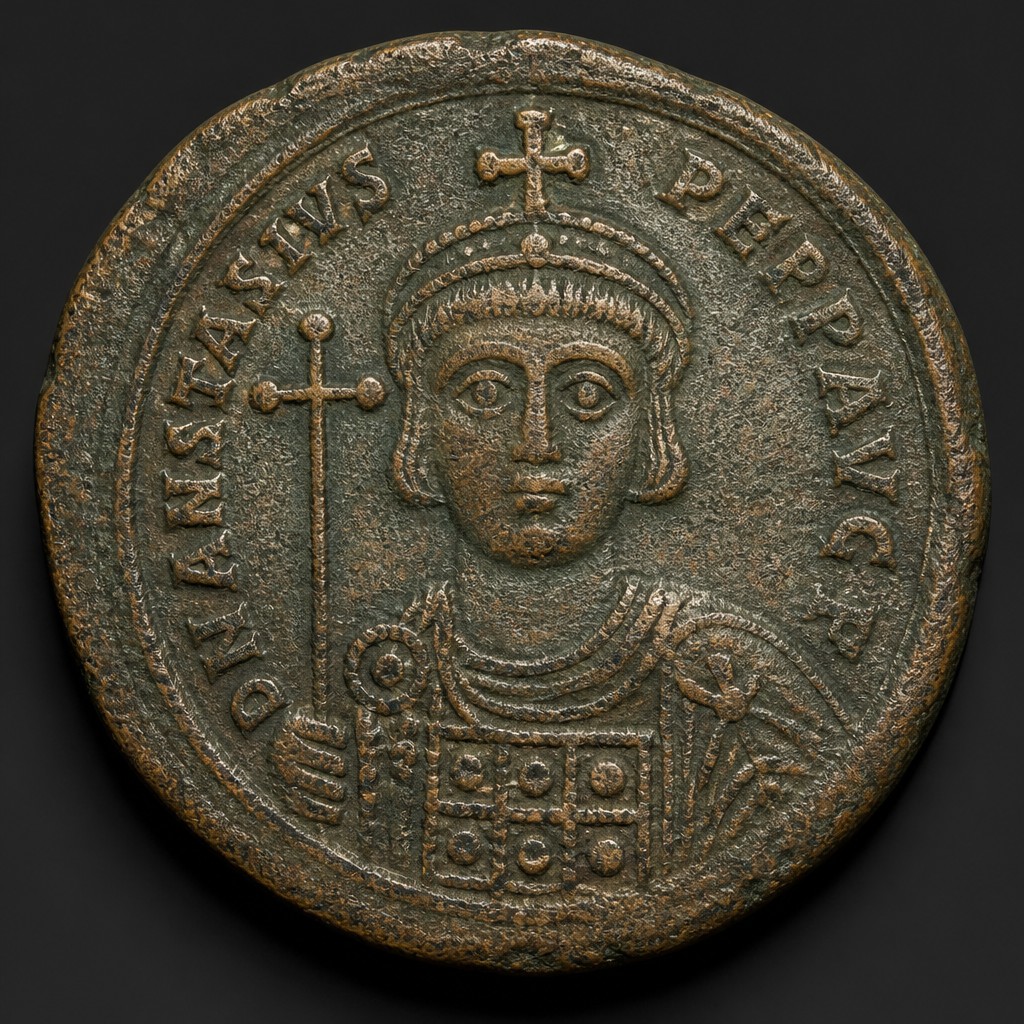
Byzantine Follis
498–c. 11th century AD
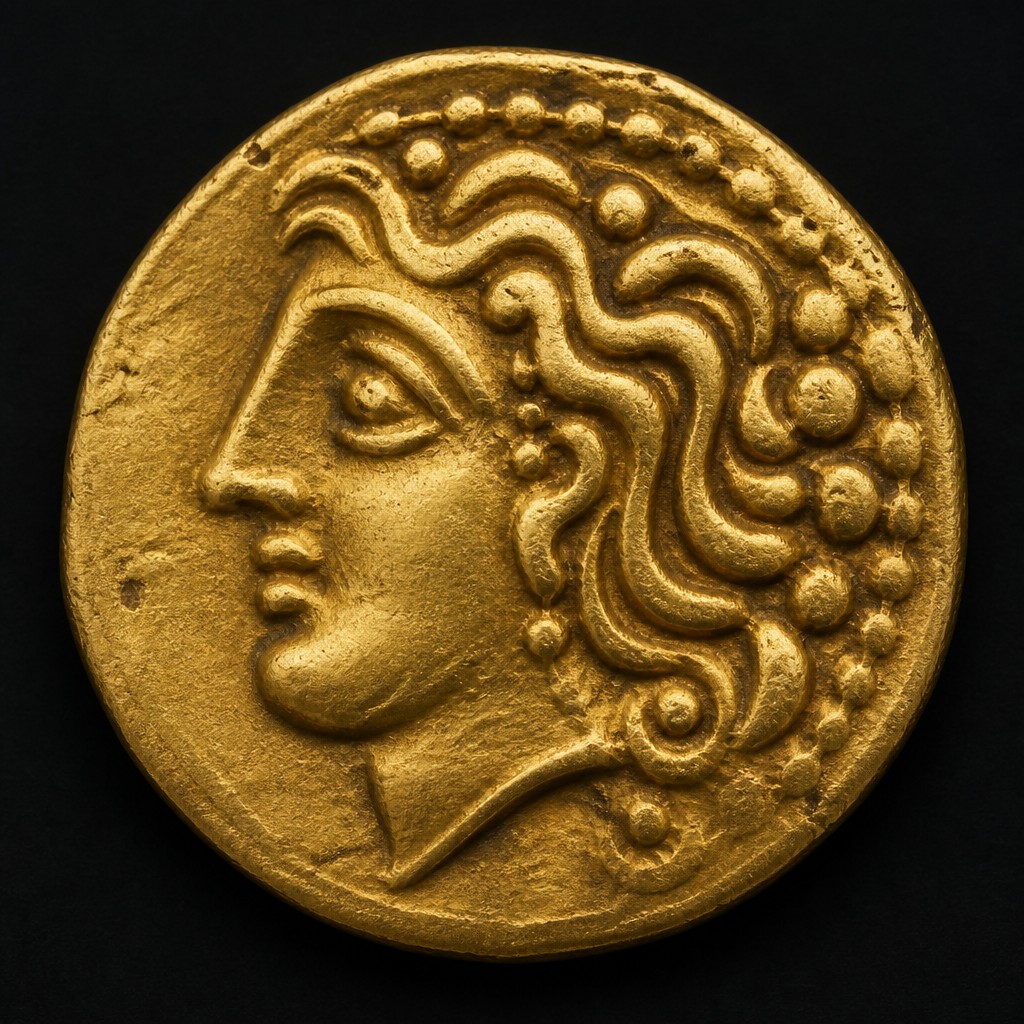
Celtic Gold Stater
c. 3rd century BC – 1st century AD