
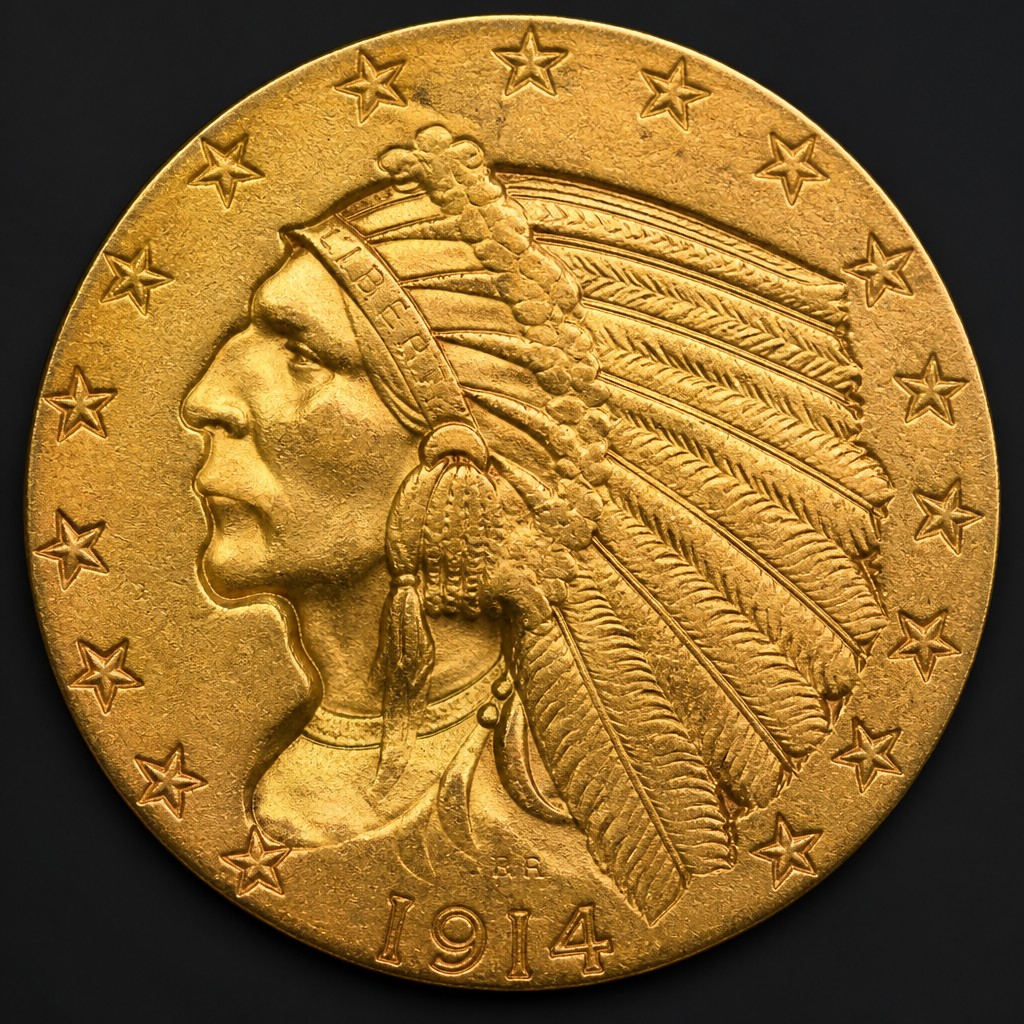
Indian Head Quarter Eagle ($2.50)
A small gold coin featuring Bela Lyon Pratt's distinctive incuse Native American design, one of only two U.S. denominations ever struck with recessed devices.
- Country
- United States
- Denomination
- Two Dollars and Fifty Cents
- Metal
- Gold (.900 fine)
Got a coin like this?
Identify any coin from a photo, free.
Overview
The Indian Head Quarter Eagle shares its unusual incuse design method with its larger half eagle counterpart, making it one of just two U.S. coin denominations ever produced with recessed rather than raised imagery. Designed by Bela Lyon Pratt, it reflects the artistic ambitions of the early 20th-century American coinage reform movement.
Its compact size and interesting production history, including years without any mintage at all, make it a popular series for collectors seeking an accessible yet historically distinctive gold coin.
History & Background
Introduced in 1908 alongside its half eagle companion, the Indian Head Quarter Eagle was designed by Bela Lyon Pratt during the broader push, championed by President Theodore Roosevelt, to modernize and beautify American coin design. The incuse technique was unusual and drew some criticism at the time over concerns about dirt collecting in the recessed areas, though production continued for over two decades.
The series was struck only at Philadelphia and Denver, with several years seeing no production at all due to limited demand for small gold denominations. It ended in 1929, shortly before the Gold Reserve Act of 1934 effectively ended circulating gold coinage in the United States.
Because the denomination saw less use in everyday commerce than larger gold coins, quarter eagles from this series often survive in better average condition than comparable half eagles or eagles.
How to Identify
The obverse shows a Native American chief's head facing left wearing a feathered war bonnet, with LIBERTY above and the date below, rendered in incuse relief. The reverse depicts a standing eagle, also incuse, on a bundle of arrows with an olive branch, surrounded by UNITED STATES OF AMERICA and 2 1/2 DOLLARS.
A D mintmark for Denver appears on the reverse to the left of the arrow bundle; Philadelphia coins carry no mintmark. The coin's edge is reeded, and because of its incuse design, the highest points of relief sit below the coin's rim, which can make the coin look and feel different in the hand compared to raised-relief gold coins.
Collectors distinguish this from the earlier Liberty Head Quarter Eagle immediately by its Native American motif and recessed design style versus the older coronet-head, raised-relief type.
Value & Collectibility
Most dates in this relatively short series are considered common in circulated grades and trade close to gold bullion value, though a handful of lower-mintage Denver issues and choice, well-struck Mint State examples of any date command real numismatic premiums.
Because the coin saw comparatively light circulation, well-preserved Mint State examples are more available proportionally than in the half eagle series, though still notably scarcer in the finest grades.
Frequently asked questions
What is unique about this coin's design?
It uses an incuse design, with images recessed below the coin's surface, one of only two U.S. denominations produced this way.
Which mints struck the Indian Head Quarter Eagle?
Only Philadelphia and Denver struck this coin during its production run from 1908 to 1929.
Were there years with no mintage?
Yes, several years during the series saw no quarter eagles struck at all due to limited demand for the small gold denomination.
Who designed it?
Bela Lyon Pratt designed both the Indian Head Quarter Eagle and its half eagle companion.
Other coins you may enjoy
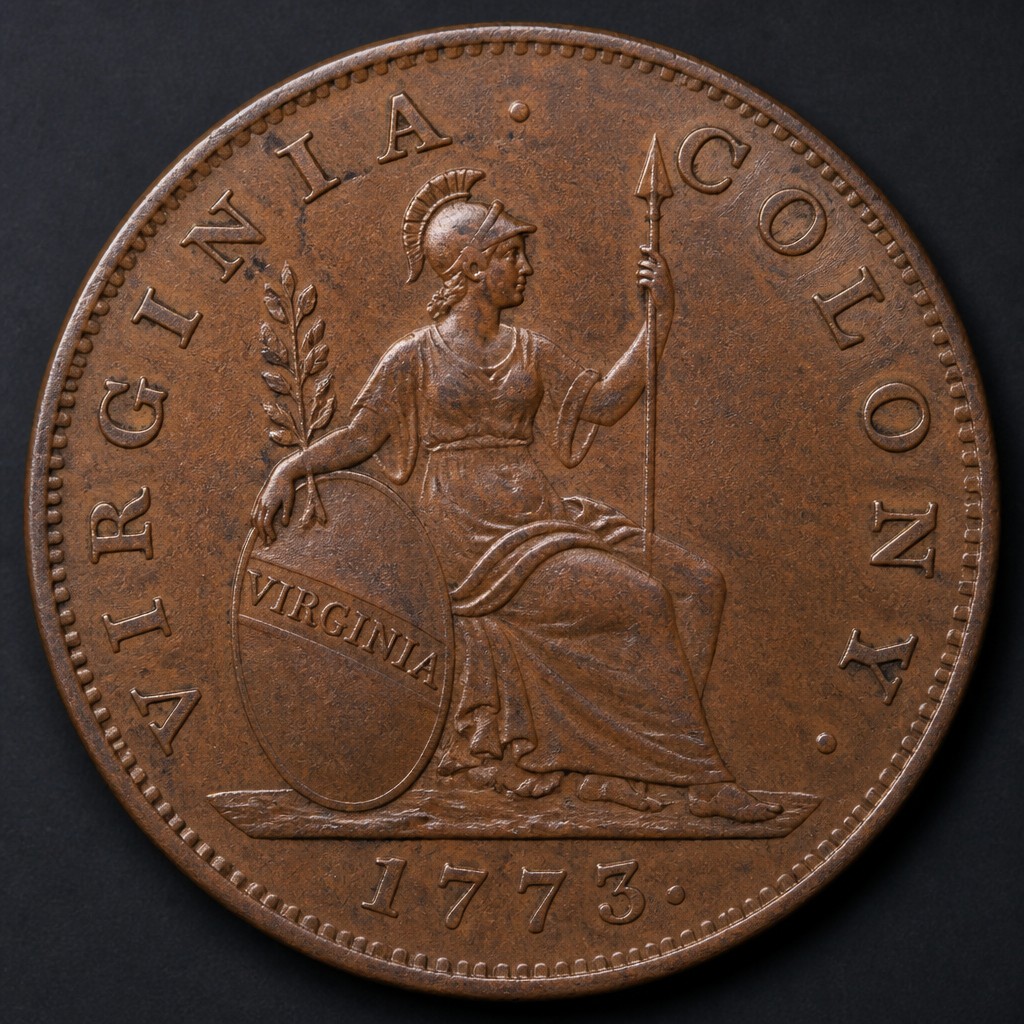
Virginia Halfpenny
1773
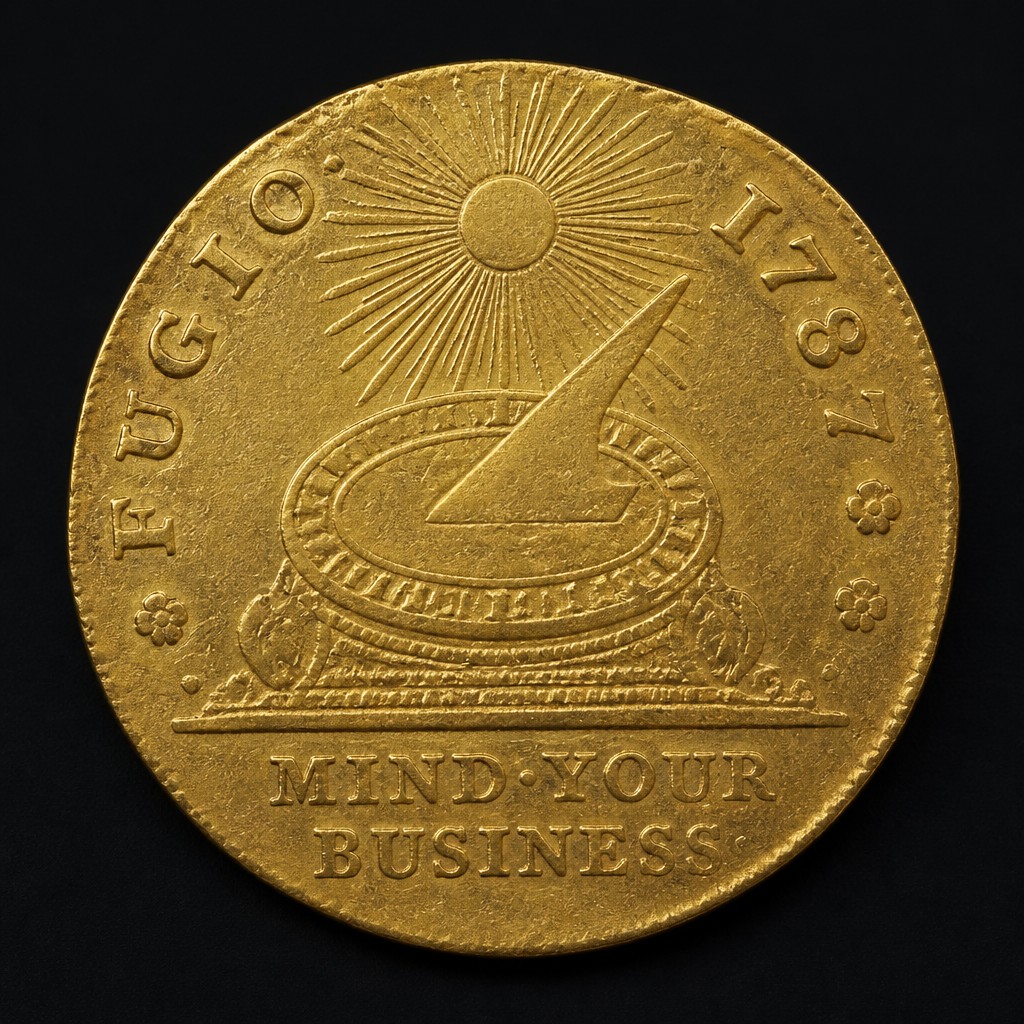
Brasher Doubloon
1787
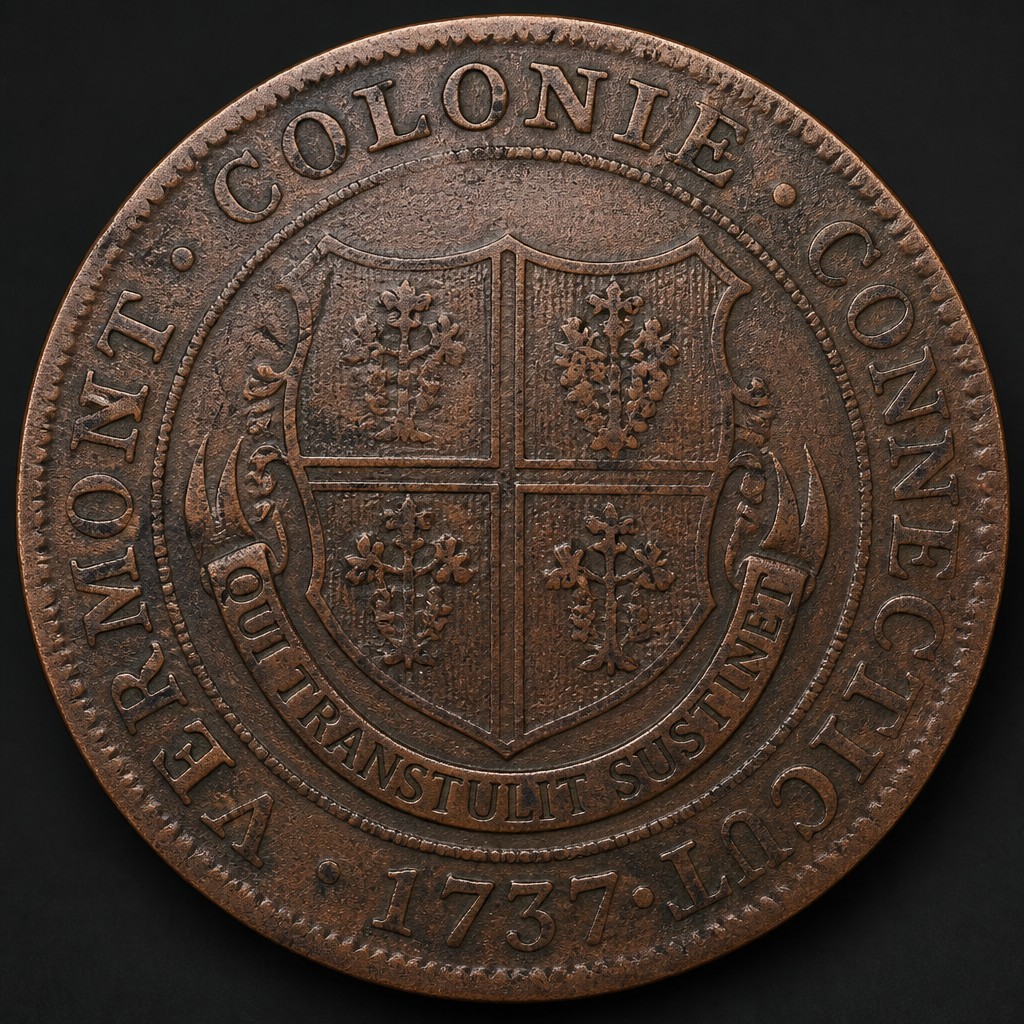
Higley Copper
1737–1739
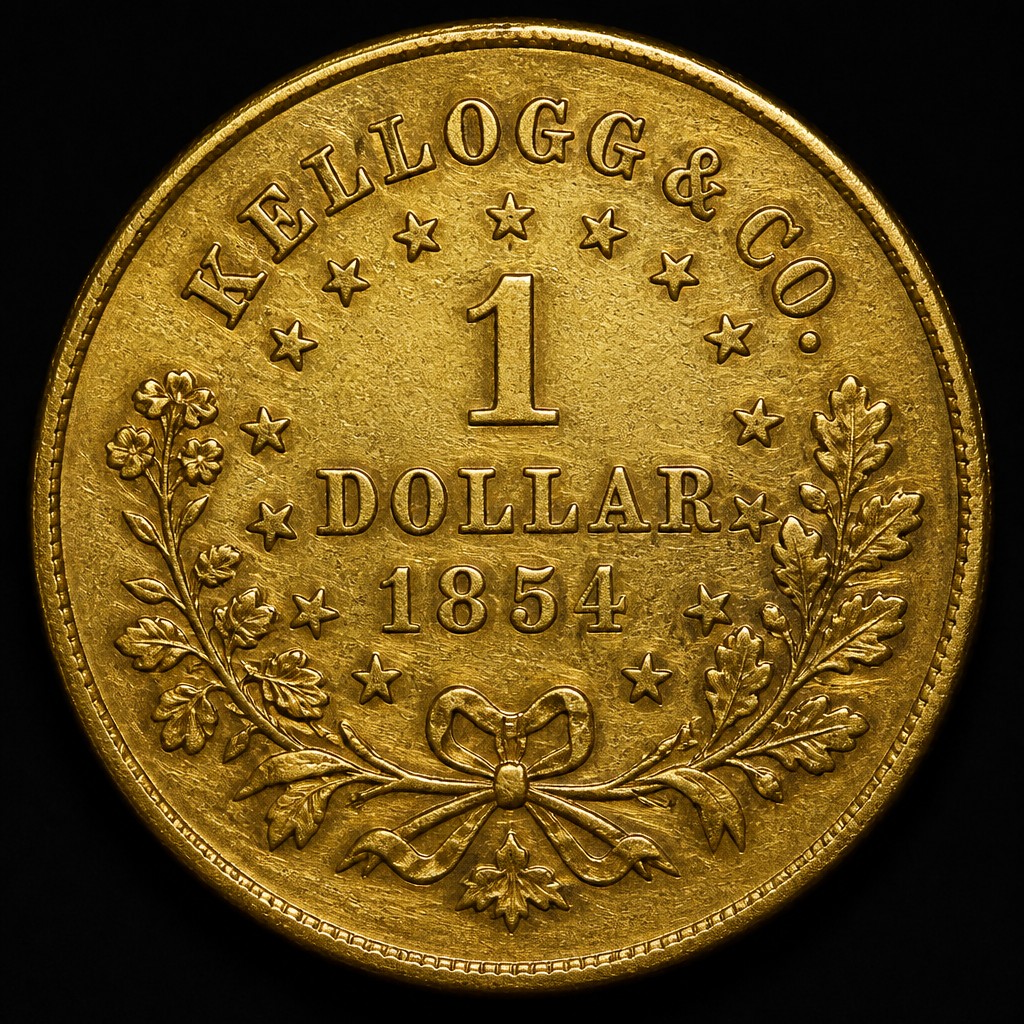
Kellogg & Co. Gold Piece
1854–1855
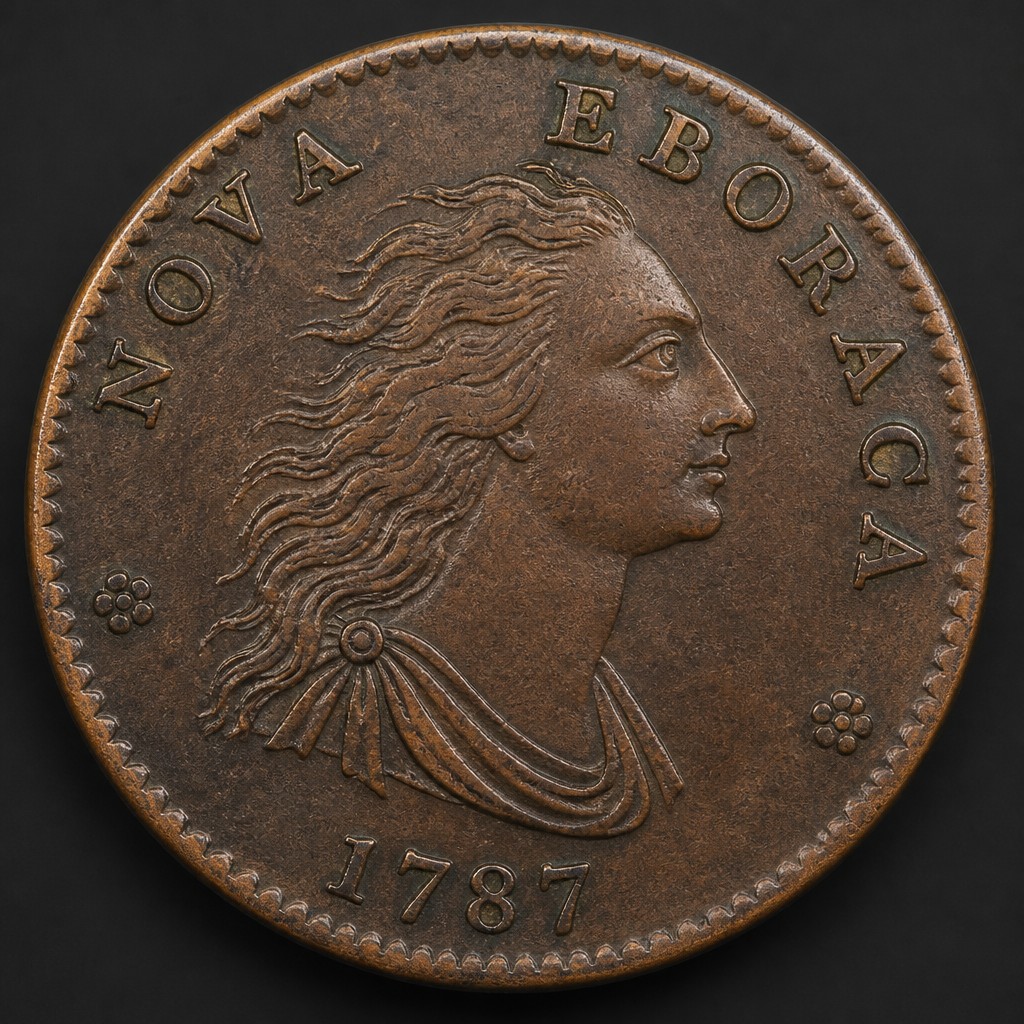
Nova Eborac Copper
1787
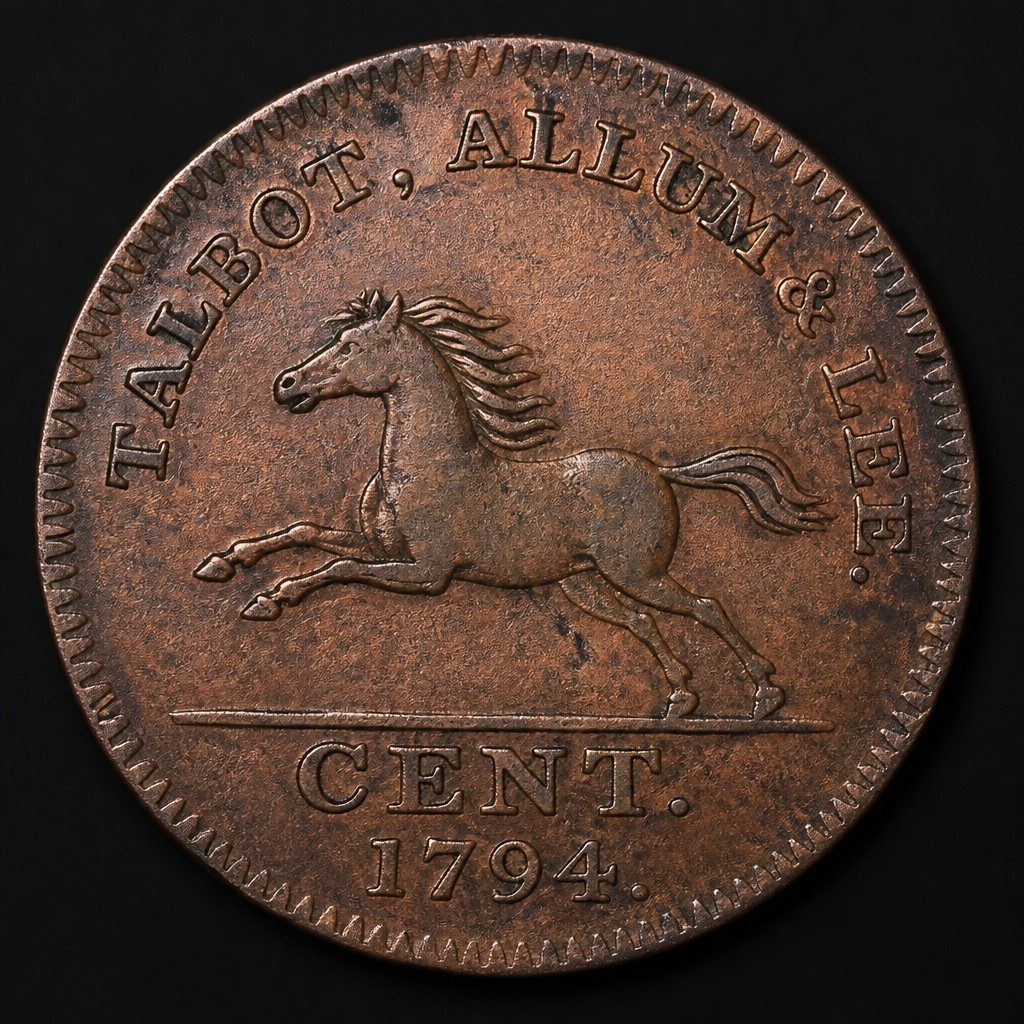
Talbot, Allum & Lee Cent
1794–1795
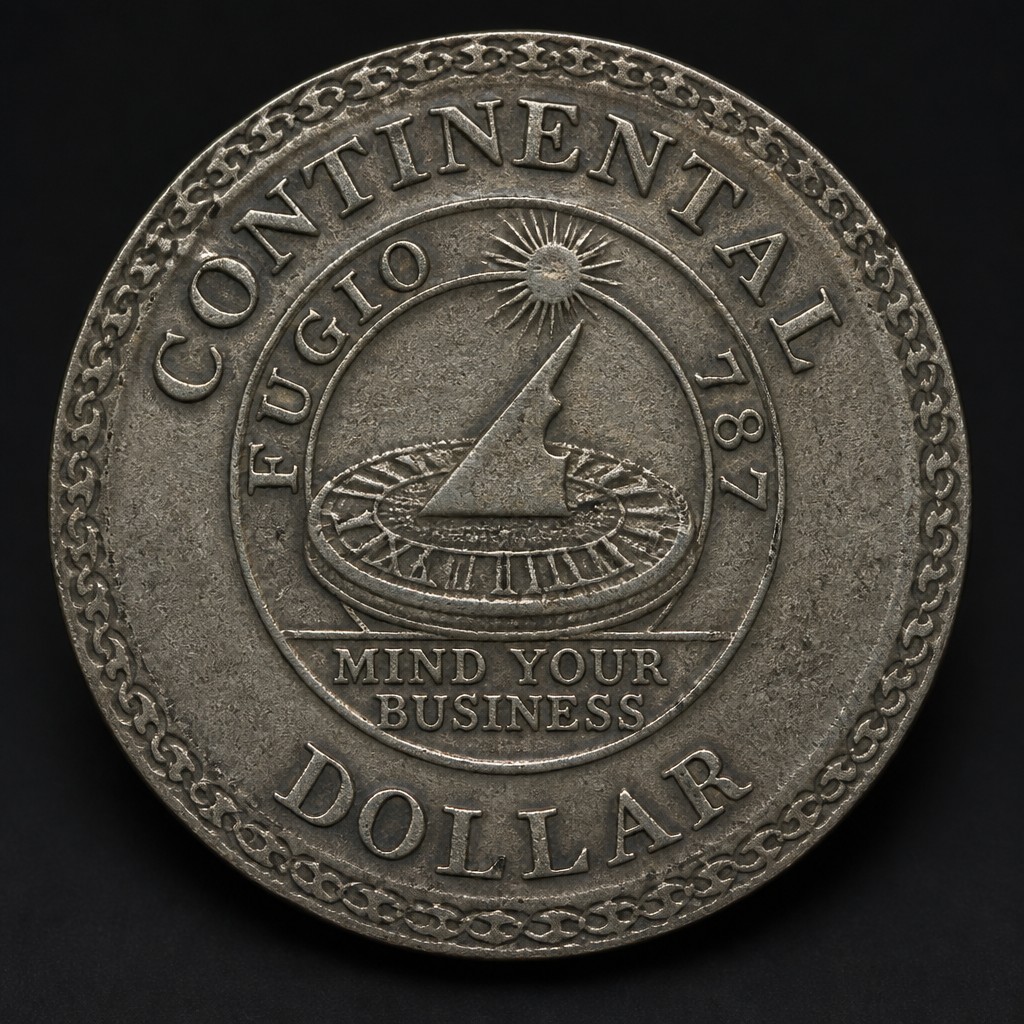
Continental Dollar
1776
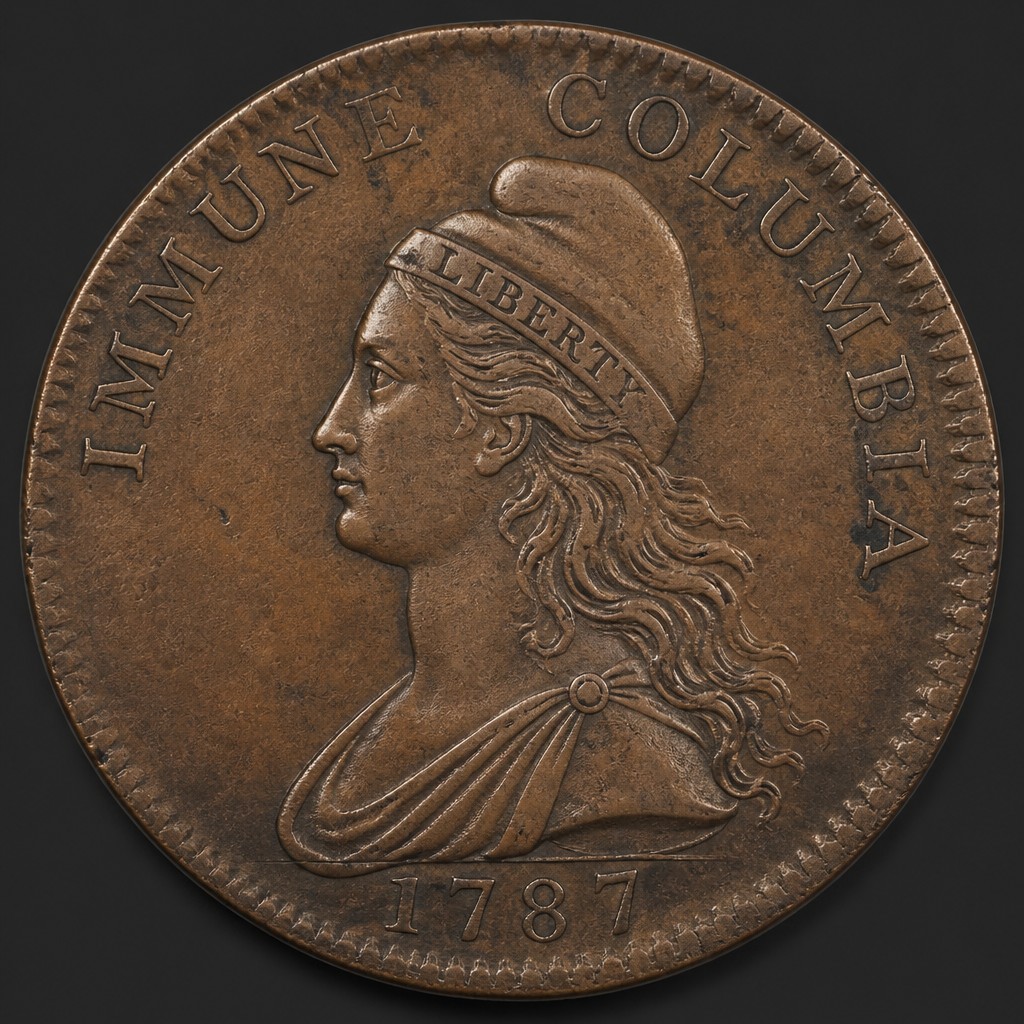
Immune Columbia Copper
circa 1785–1787
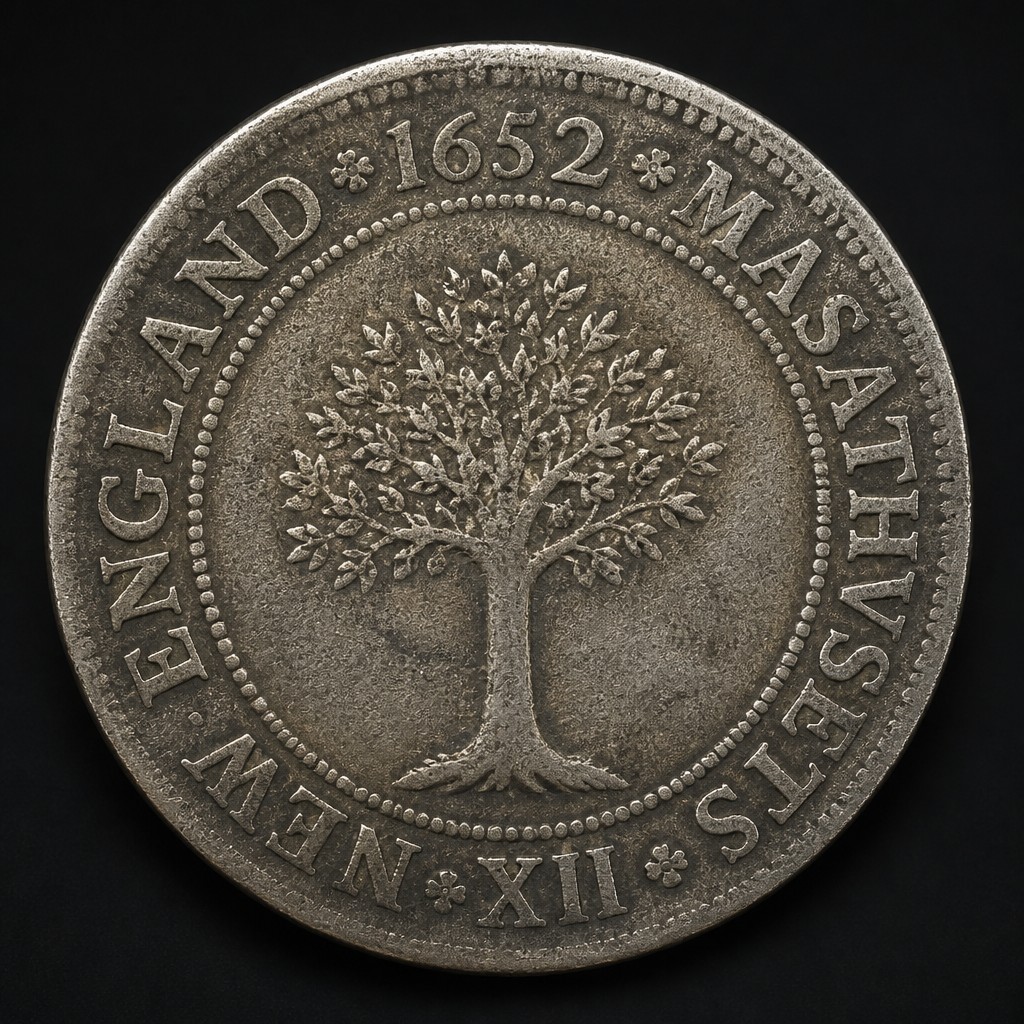
Massachusetts Oak Tree Shilling
Dated 1652, struck circa 1660–1667
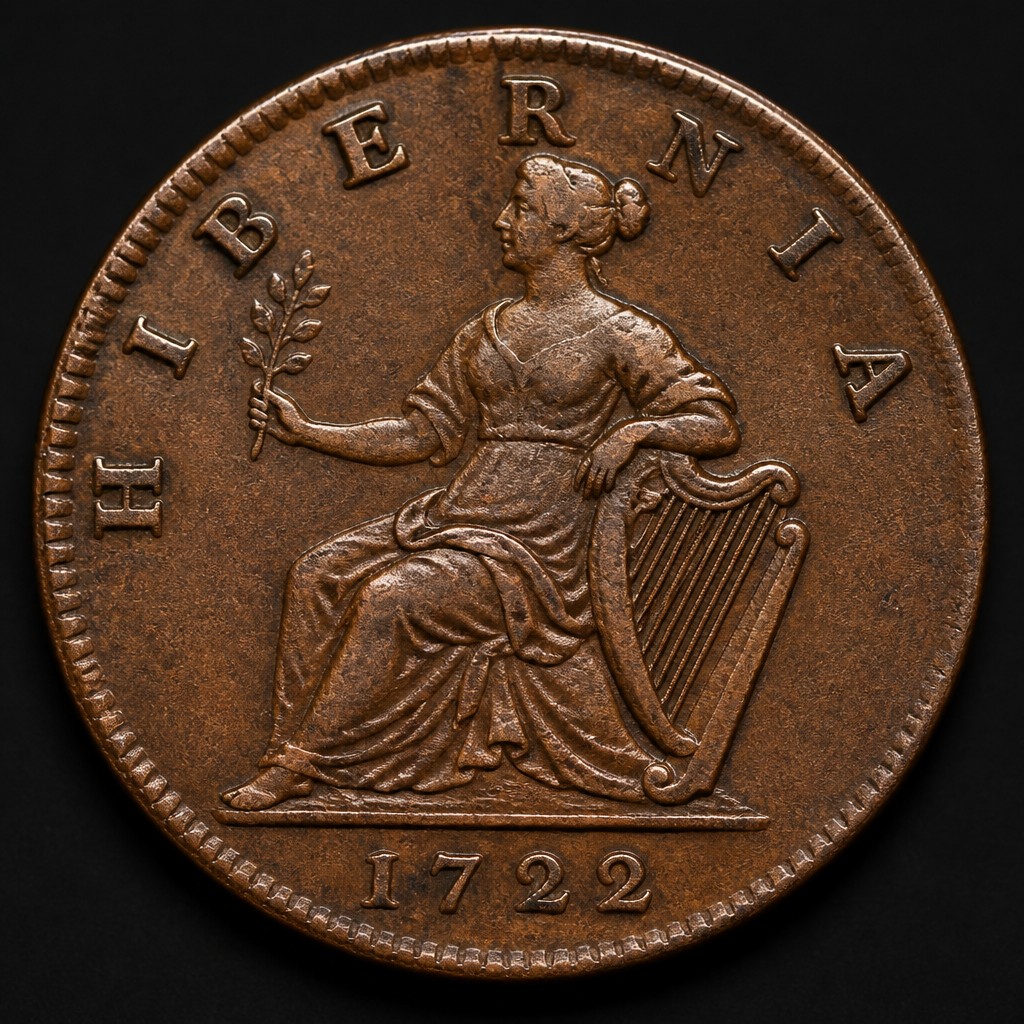
Wood's Hibernia Halfpenny
1722–1724
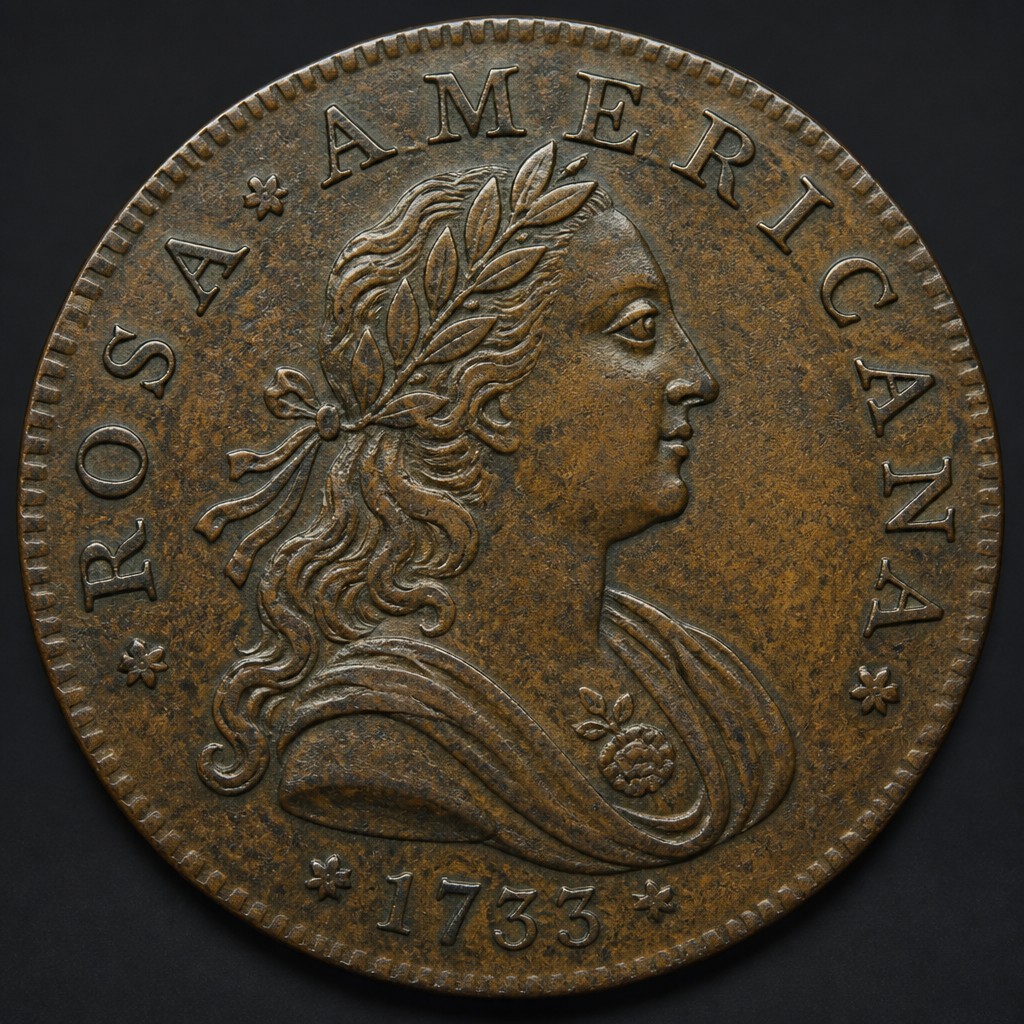
Rosa Americana Coinage
1722–1724 (with pattern issues dated 1733)
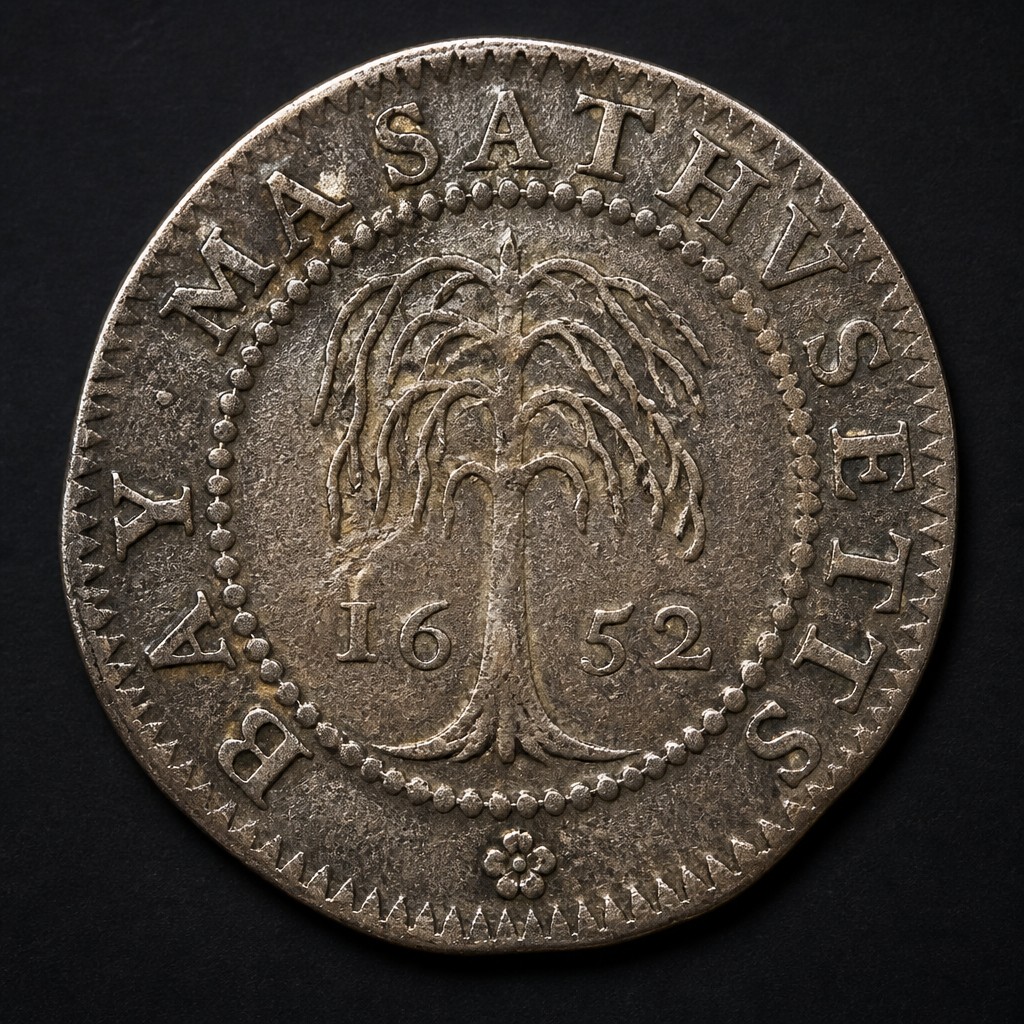
Massachusetts Willow Tree Shilling
Dated 1652, struck circa 1653–1660