
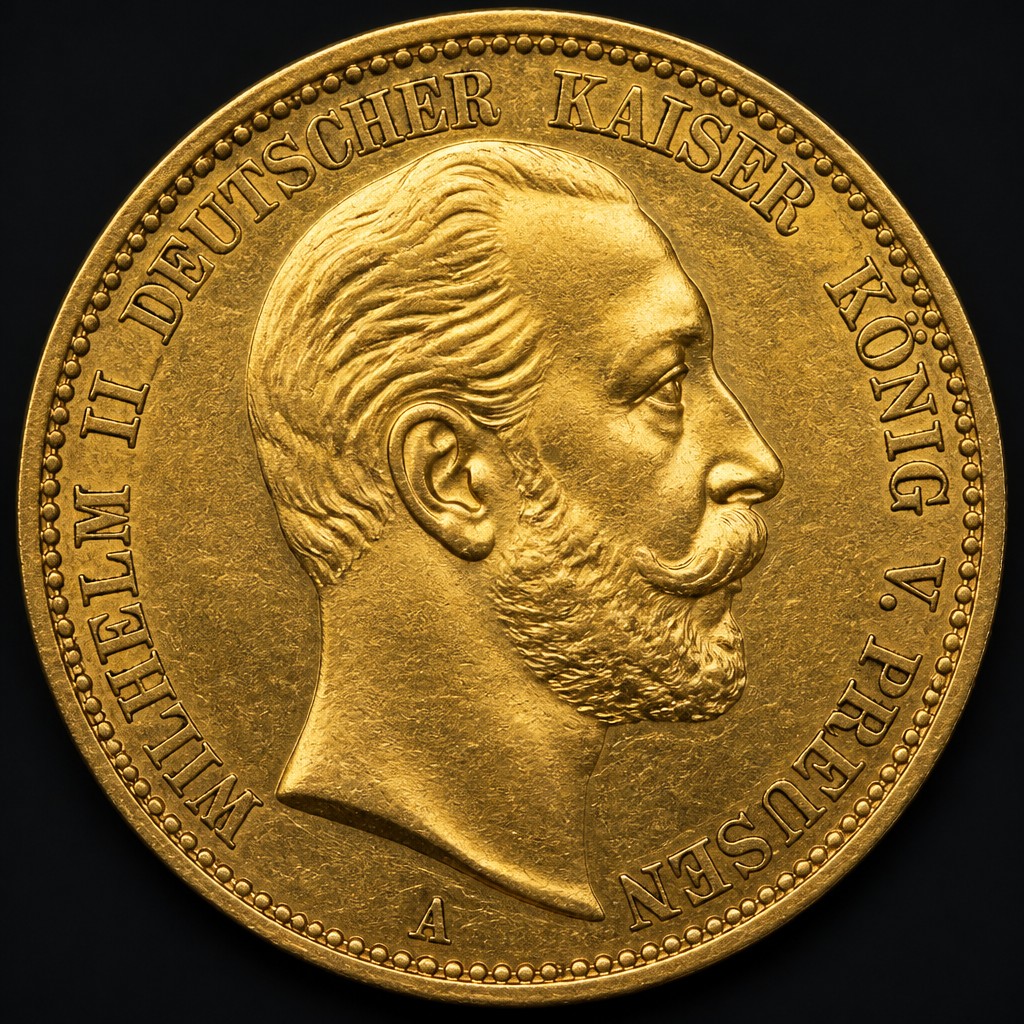
German Prussia 20 Mark Gold
The standard gold coin of Prussia within the newly unified German Empire, featuring successive Prussian kings and forming a key part of the empire's gold mark system.
- Country
- Germany (Kingdom of Prussia, German Empire)
- Denomination
- 20 Mark
- Metal
- Gold (.900 fine)
Got a coin like this?
Identify any coin from a photo, free.
Overview
The Prussian 20 Mark gold coin was struck as part of the unified German Empire's new gold-based currency system, introduced after German unification in 1871, with Prussia as the empire's dominant constituent state contributing one of the most commonly seen state-issued gold coins.
Because the German Empire allowed individual states to strike gold and silver coinage bearing their own rulers' portraits alongside the common imperial eagle reverse, Prussian 20 Mark coins are a particularly popular and accessible entry point into German states gold coinage.
Collectors are drawn to the series for its multi-reign span, covering Wilhelm I, Friedrich III, and Wilhelm II, and for its representation of Prussia's central role in the newly unified Germany.
History & Background
After the unification of Germany in 1871 following the Franco-Prussian War, the new German Empire introduced the mark as its common currency, replacing the patchwork of earlier state currencies used across the German lands. Gold coinage was struck both centrally and by individual states, with Prussia, as the empire's largest and most powerful constituent kingdom, producing a substantial share of the empire's 20 Mark gold coins.
The coin was issued under King Wilhelm I of Prussia (also the first German Emperor), briefly under his son Friedrich III during his short 1888 reign, and then under Wilhelm II, whose long reign lasted until the empire's collapse at the end of World War I in 1918.
Gold coin production in Germany, as in much of Europe, ceased with the outbreak of World War I in 1914, as the empire moved away from a gold-backed circulating currency, making pre-war 20 Mark gold coins a defined historical series.
How to Identify
The obverse of the Prussian 20 Mark gold coin shows the portrait of the reigning King of Prussia (who was simultaneously German Emperor), such as Wilhelm I, Friedrich III, or Wilhelm II, with his name and title inscribed around the border, often referencing both his Prussian and imperial German titles.
The reverse displays the German imperial eagle, along with the denomination, date, and the words 'DEUTSCHES REICH' identifying it as part of the unified empire's currency, even though the obverse portrait reflects the specific issuing state.
Mint marks (such as 'A' for Berlin) appear below the eagle on the reverse, and collectors distinguish Prussian issues from those of other German states (such as Bavaria or Saxony) by the specific ruler's portrait and titles on the obverse, since the reverse imperial eagle design is shared across all German states' gold coinage.
Value & Collectibility
Common-date Prussian 20 Mark gold coins, particularly those featuring Wilhelm II from the more heavily minted later years, are widely available and trade close to gold bullion value with a modest numismatic premium.
Scarcer types, such as the short-reign Friedrich III issue from 1888, are significantly more valuable due to the brevity of his reign and correspondingly limited mintage compared to the long reigns of Wilhelm I and Wilhelm II.
Common Wilhelm II or later Wilhelm I dates typically sell close to gold value plus a modest premium, while the scarcer Friedrich III issue and other low-mintage dates can be worth considerably more, sometimes several times bullion value.
Frequently asked questions
Why does a Prussian coin say 'Deutsches Reich'?
Individual German states struck their own gold and silver coins bearing their ruler's portrait, but the reverse carried the common imperial eagle and 'Deutsches Reich' (German Empire) designation shared across all states.
Which Prussian king's 20 Mark coin is rarest?
The 1888 issue featuring Friedrich III is notably scarcer and more valuable, due to his brief reign of only about three months that year.
When did Prussia stop minting 20 Mark gold coins?
Production effectively ended with the outbreak of World War I in 1914, when Germany moved away from gold-backed circulating currency.
How can I tell a Prussian 20 Mark from a Bavarian or Saxon one?
Check the obverse ruler's portrait and title; each German state issued its own portrait while sharing the same imperial eagle reverse design.
Other coins you may enjoy
Polish-Lithuanian Thaler
circa 16th–18th century
Reichsthaler
circa 1566–early 19th century
Papal States Scudo
16th century–1866
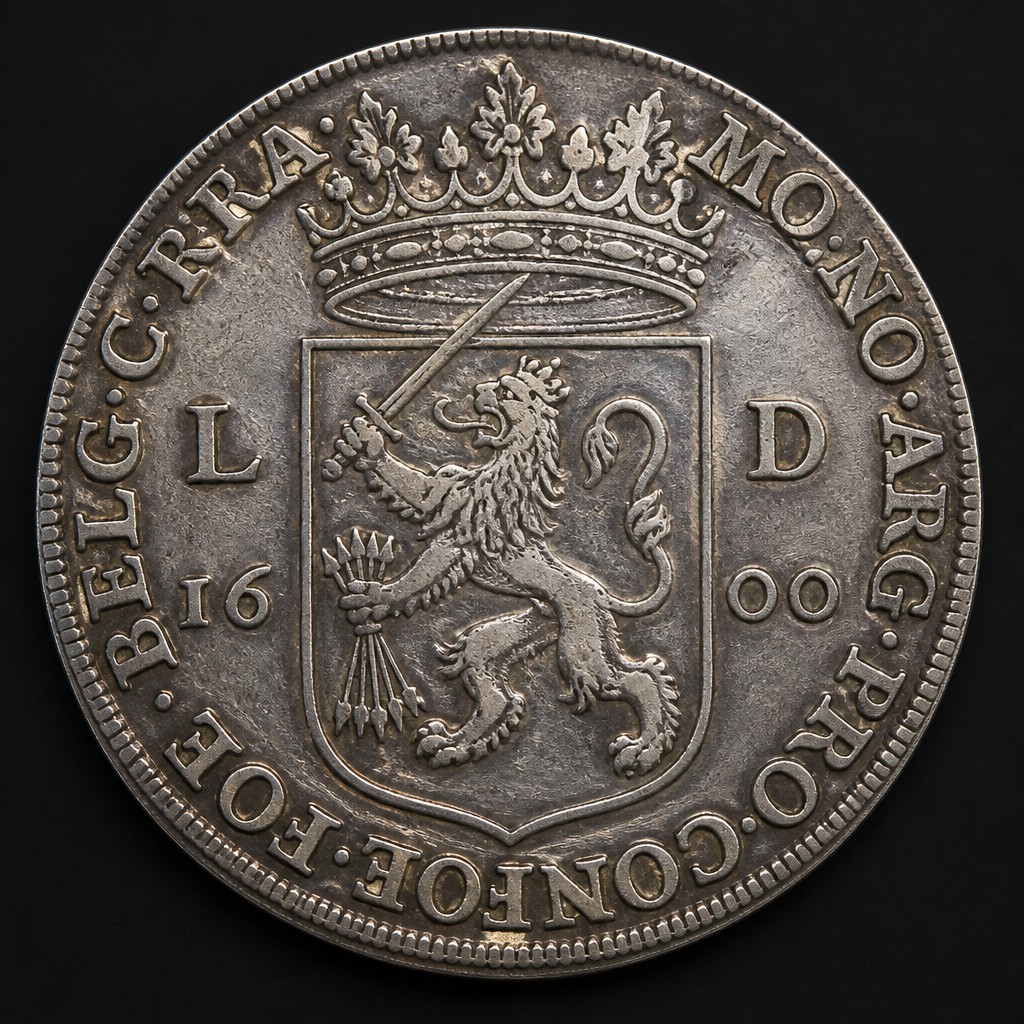
Netherlands Lion Daalder (Leeuwendaalder)
1575–1713
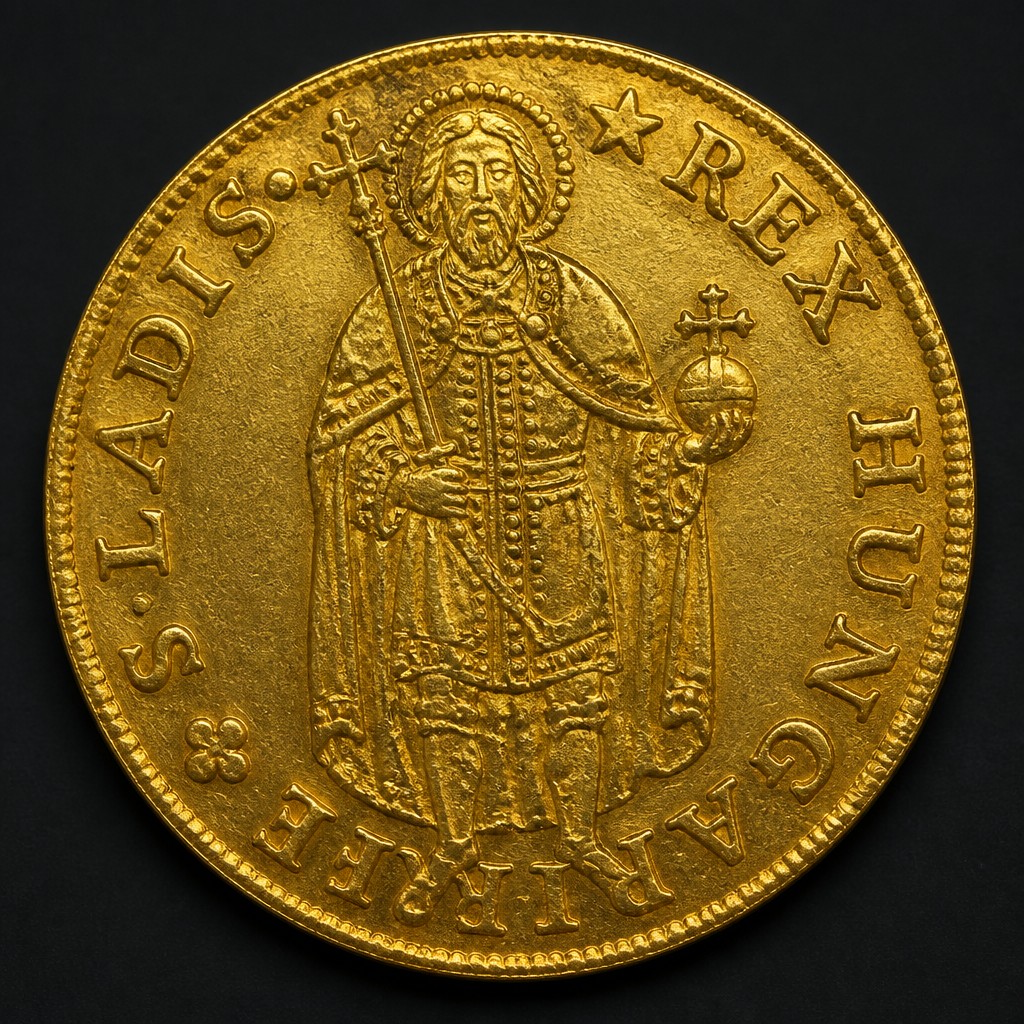
Hungarian Ducat
c. 1325–1918
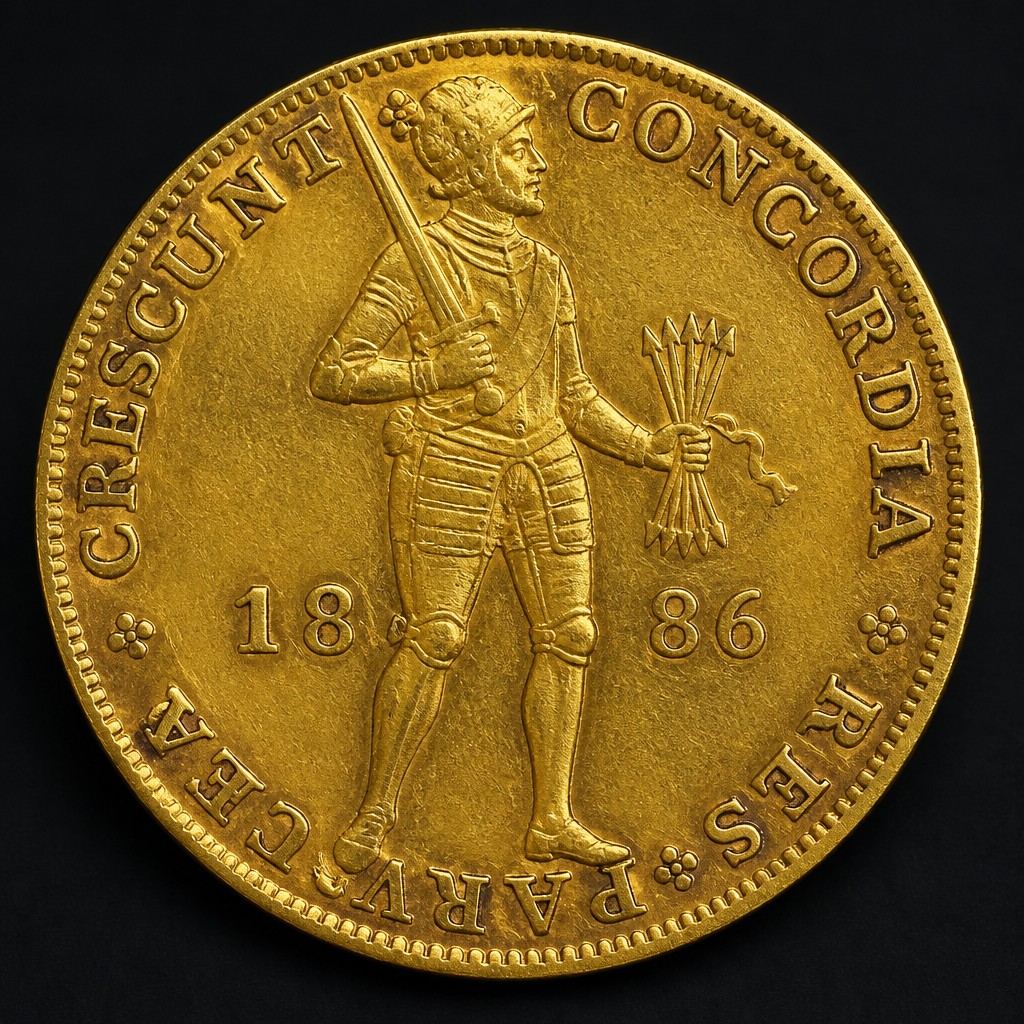
Dutch Ducat
c. 1586–present (classic type standardized after 1817)
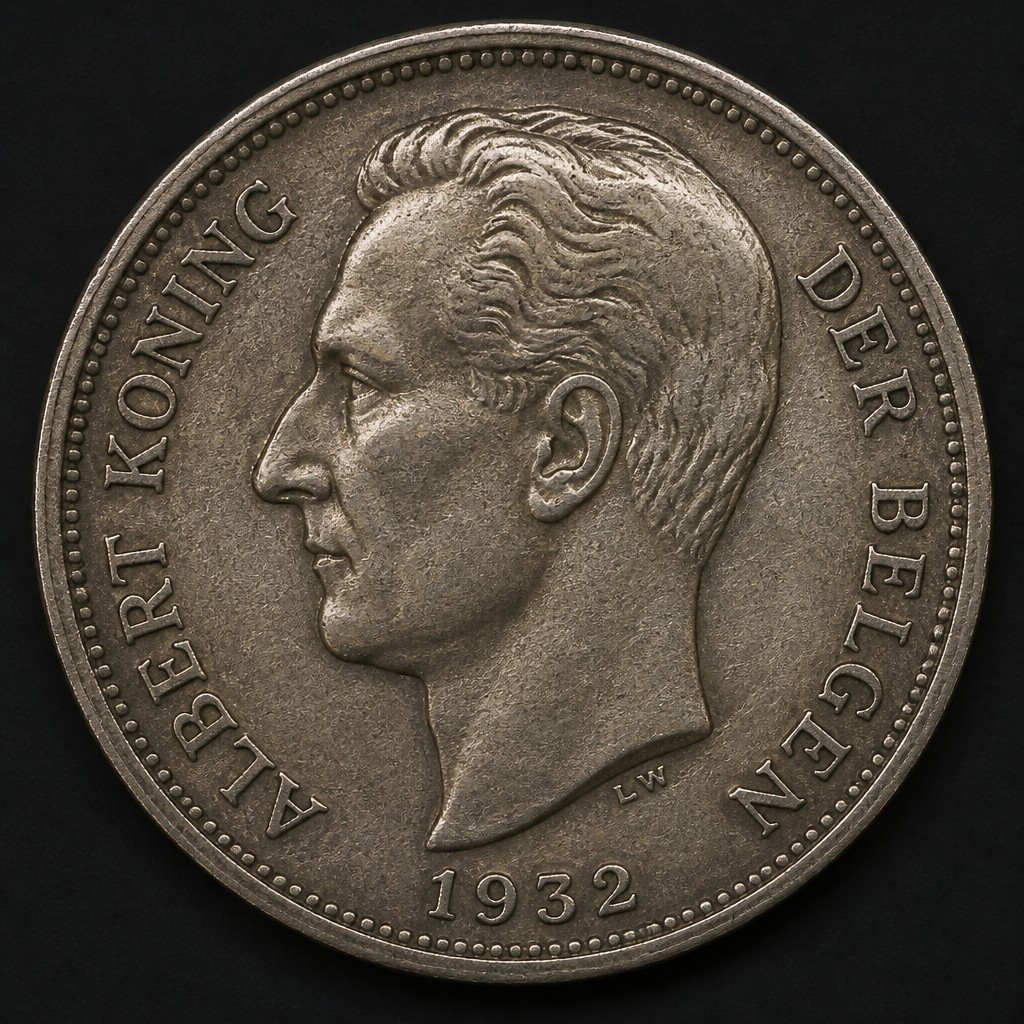
Belgian Franc
1832–2002
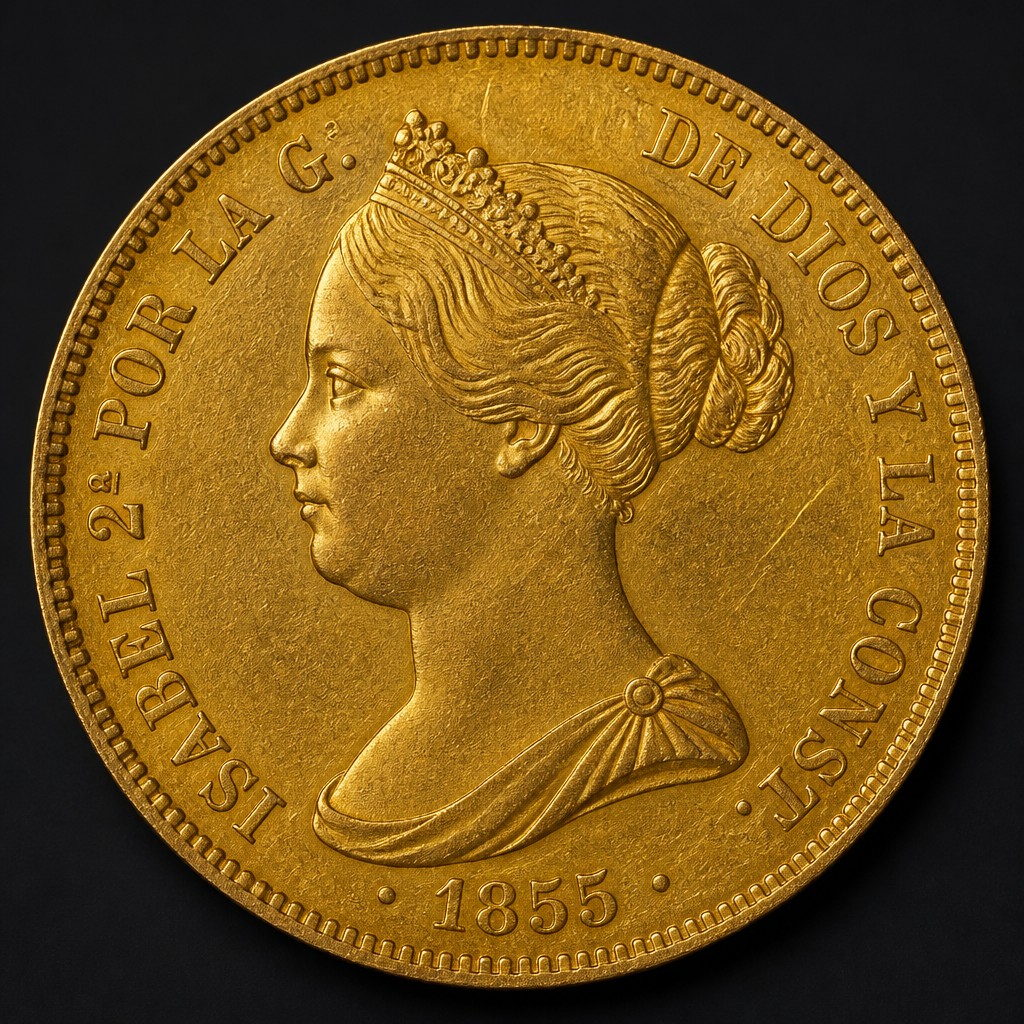
Spanish 100 Reales Gold (Isabel II)
1850s–1868
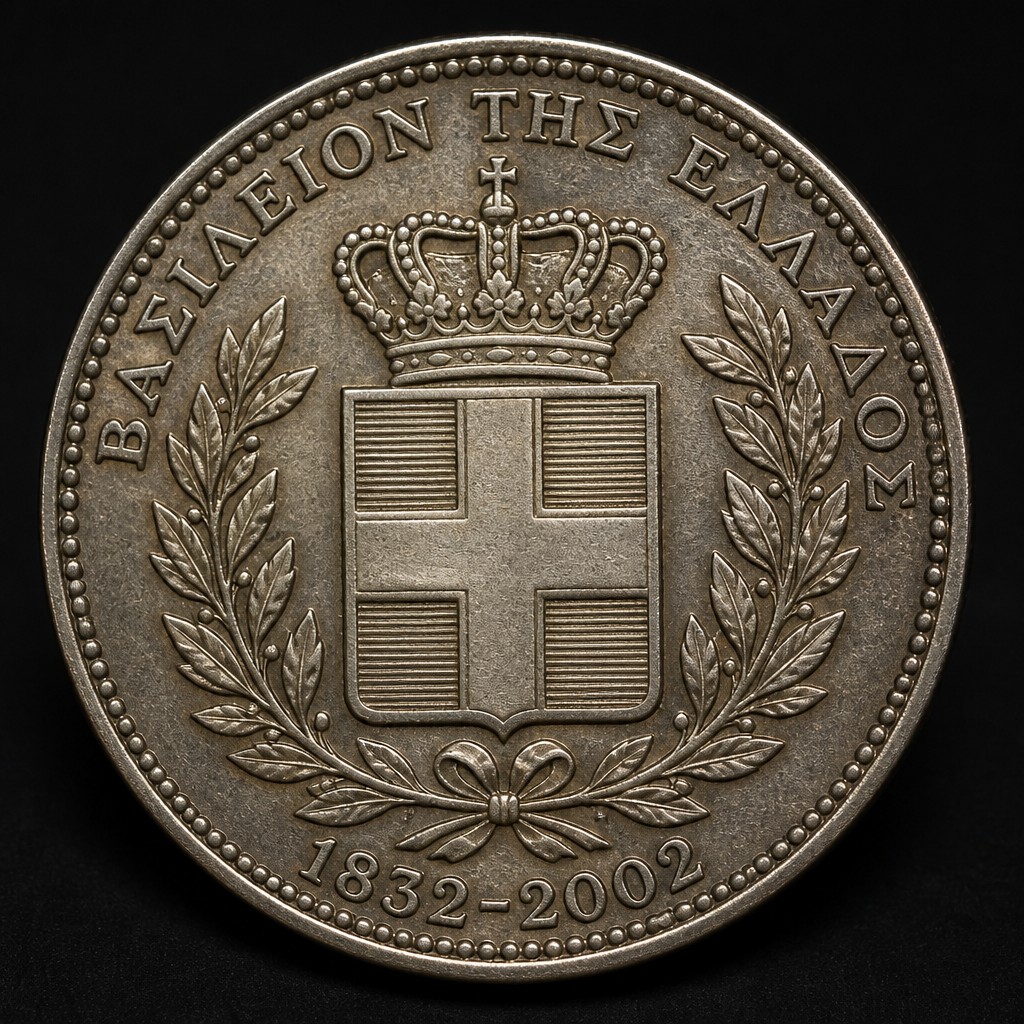
Greek Drachma
1832–2002
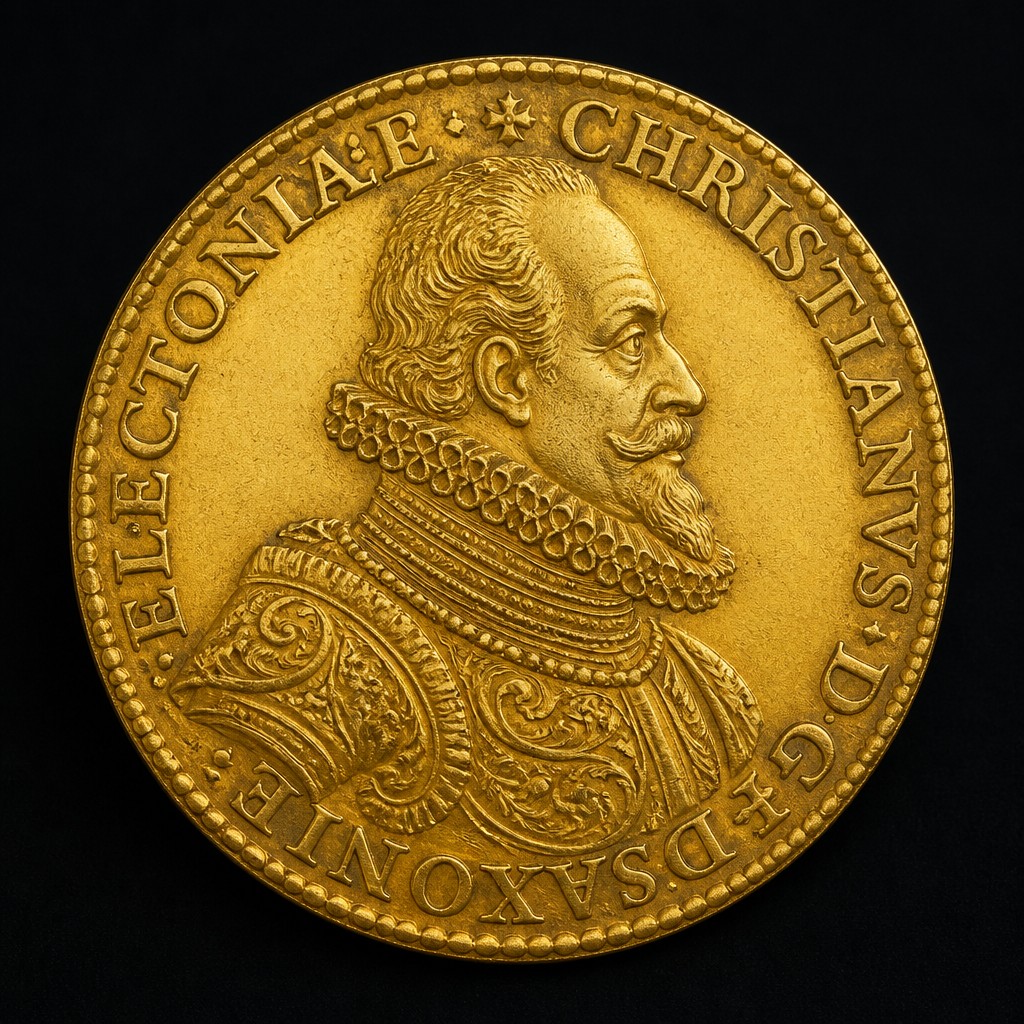
German Saxony Ducat
16th century–19th century
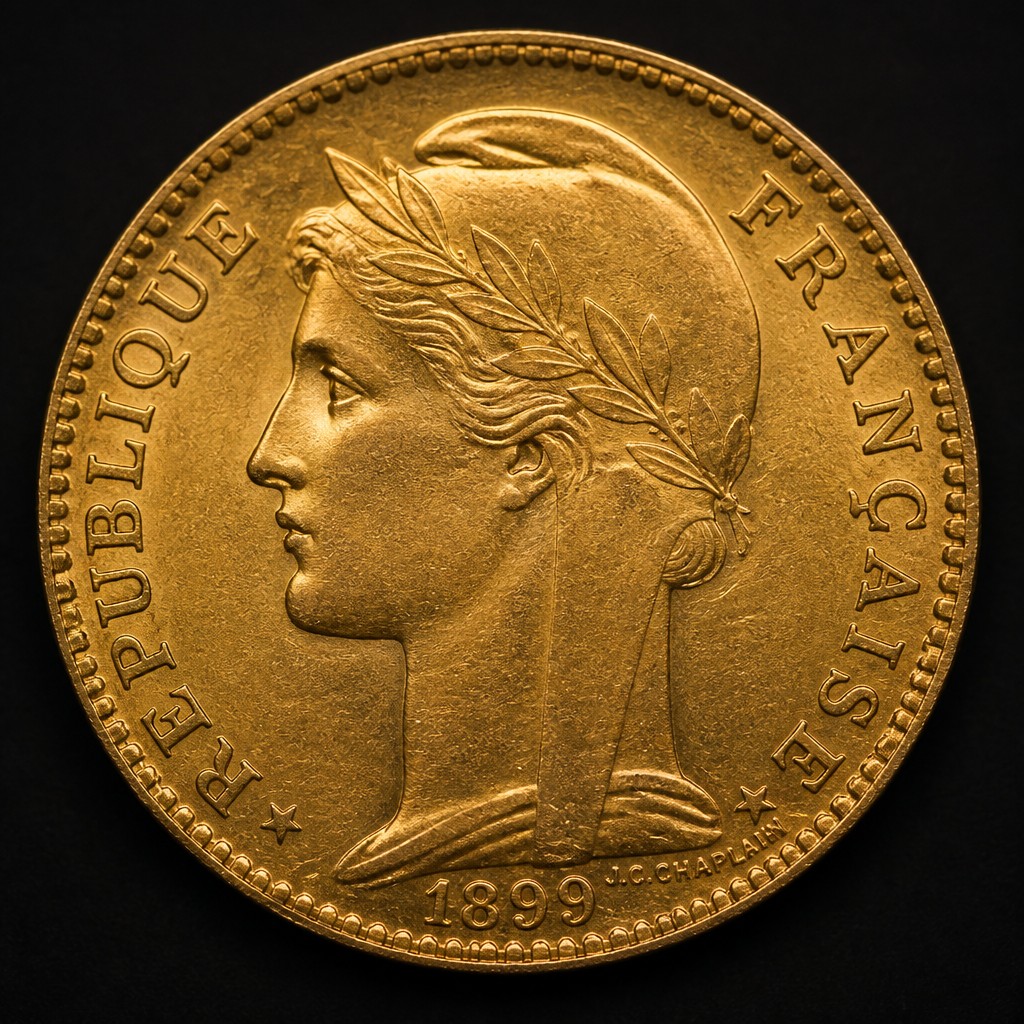
French 10 Francs Gold (Napoleon Rooster)
1899–1914
Netherlands 5 Gulden Gold
1826–1912 (intermittent)