
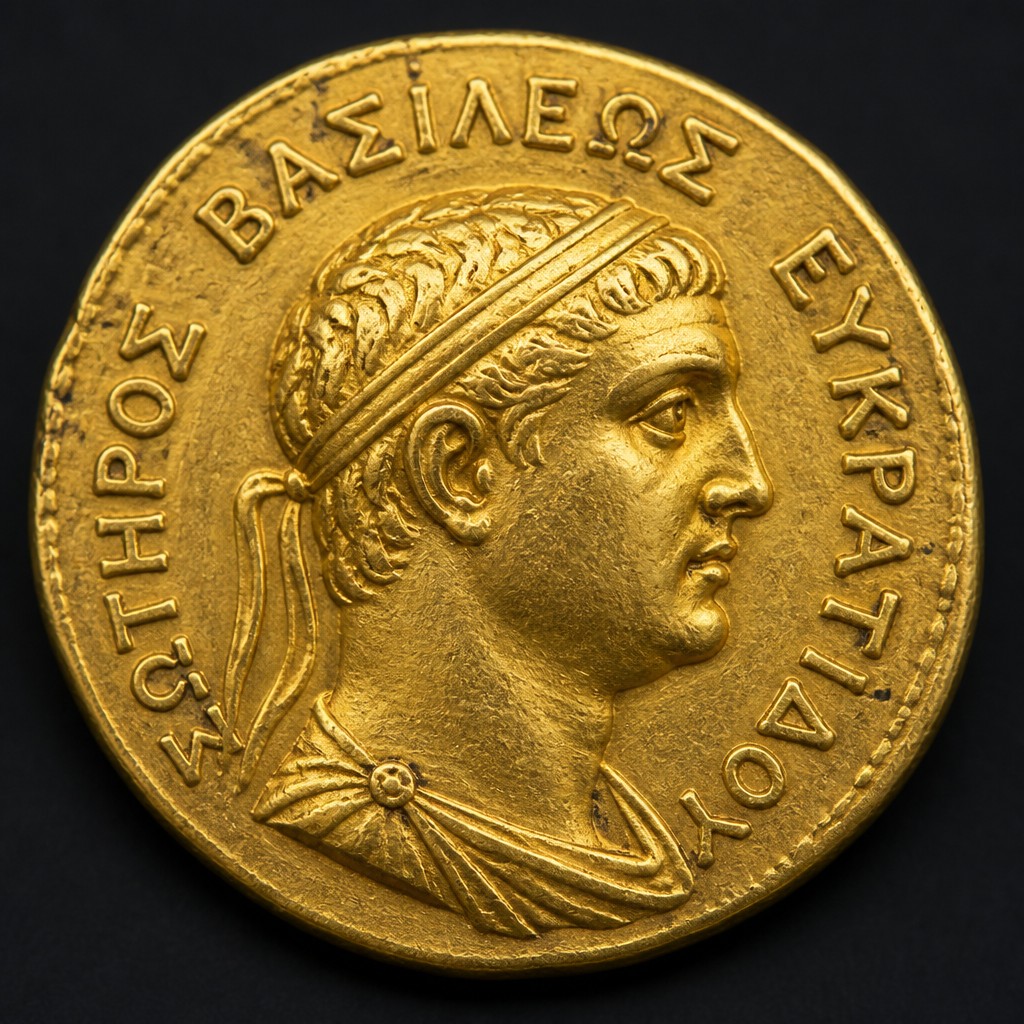
Eukratides I Gold Stater (Baktria)
A gold stater of Eukratides I, the powerful Greco-Bactrian king best known for issuing the largest gold coin surviving from antiquity, depicting the divine twins Dioskouroi on horseback.
- Country
- Greco-Bactrian Kingdom
- Denomination
- Gold Stater
- Metal
- Gold
Got a coin like this?
Identify any coin from a photo, free.
Overview
Eukratides I ruled one of the farthest-flung and least documented outposts of the Hellenistic world, the Greco-Bactrian Kingdom in Central Asia, and left behind coinage remarkable both for its artistic quality and its sheer ambition. His name is inseparably linked in numismatic history with the largest gold coin known from antiquity, a spectacular twenty-stater medallion, though his standard circulating gold and silver staters are themselves prized as exceptional examples of Hellenistic portraiture at the very eastern edge of the Greek world.
Collectors value Eukratides's coinage for its combination of vigorous, individualized royal portraiture, its rarity relative to Mediterranean Hellenistic issues, and its connection to a fascinating, only partially understood chapter of Greek civilization surviving deep in Central Asia centuries after Alexander's conquests.
History & Background
The Greco-Bactrian Kingdom emerged from the eastern territories of Alexander the Great's empire, becoming an independent Greek-ruled state in Central Asia by the mid-third century BC and maintaining Hellenistic culture, language, and coinage far from the Mediterranean core of the Greek world. Eukratides I seized the Bactrian throne around 171 BC, reportedly through usurpation, and expanded his territory through vigorous campaigning, including conflict with the neighboring Indo-Greek kingdoms and the Parthians.
His reign, known largely through his coinage and scattered literary references since Bactria's archaeological and historical record remains far less complete than that of the Mediterranean Hellenistic kingdoms, ended violently: ancient sources report he was murdered by his own son around 145 BC. His extraordinary gold medallion, weighing roughly 169 grams, remains the largest gold coin surviving from the ancient world and a testament to the wealth Bactria's Silk Road position could generate.
How to Identify
The obverse of the standard gold stater shows a diademed and helmeted bust of Eukratides, the helmet often decorated with a bull's horn and ear, giving the portrait a distinctive, almost fantastical military appearance among Hellenistic royal images. The reverse depicts the Dioskouroi, the divine twins Castor and Pollux, riding galloping horses side by side, each bearing a palm branch and spear, with the king's name and royal titles inscribed in Greek in the field.
The coinage is struck to a high standard of Hellenistic Greek weight and fabric despite its remote Central Asian origin, and genuine examples are identified by the specific combination of the horned-helmet portrait and the Dioskouroi reverse, a type unique to Eukratides among Bactrian rulers. The famous oversized gold medallion shares the same basic design elements at a vastly larger scale and is held in a national museum collection rather than circulating in the market.
Value & Collectibility
Eukratides I gold staters are rare and highly desirable among collectors specializing in Greco-Bactrian and Indo-Greek coinage, a field with a smaller but dedicated following compared to Mediterranean Hellenistic collecting. Genuine examples, when they appear at auction, often command prices in the tens of thousands of dollars given their rarity, gold content, and striking portraiture, though prices vary considerably with condition and specific die variety.
Because Bactrian gold coinage overall is scarce and historically significant, with far fewer surviving examples than comparable Mediterranean Hellenistic issues, value is driven strongly by authenticity, rarity of the specific type, and the sharpness of the distinctive horned-helmet portrait.
Frequently asked questions
What is Eukratides best known for numismatically?
He issued the largest gold coin known to survive from antiquity, a roughly 169-gram twenty-stater gold medallion, alongside his more typical circulating gold and silver staters.
What does the horned helmet signify?
It is a distinctive decorative element on Eukratides's portrait, likely meant to convey exceptional martial prowess or a semi-divine, larger-than-life royal image.
Who are the Dioskouroi on the reverse?
They are Castor and Pollux, twin sons of Zeus in Greek mythology, often associated with protection, cavalry, and victory, fitting emblems for a warrior king.
How did Eukratides die?
Ancient sources report he was murdered by his own son, who then reportedly desecrated his body, around 145 BC.
Other coins you may enjoy
Theodosius I Solidus
379–395 AD
Republican Victoriatus
c. 211–170 BC
Islamic Gold Dinar (Umayyad)
c. 696–750 AD
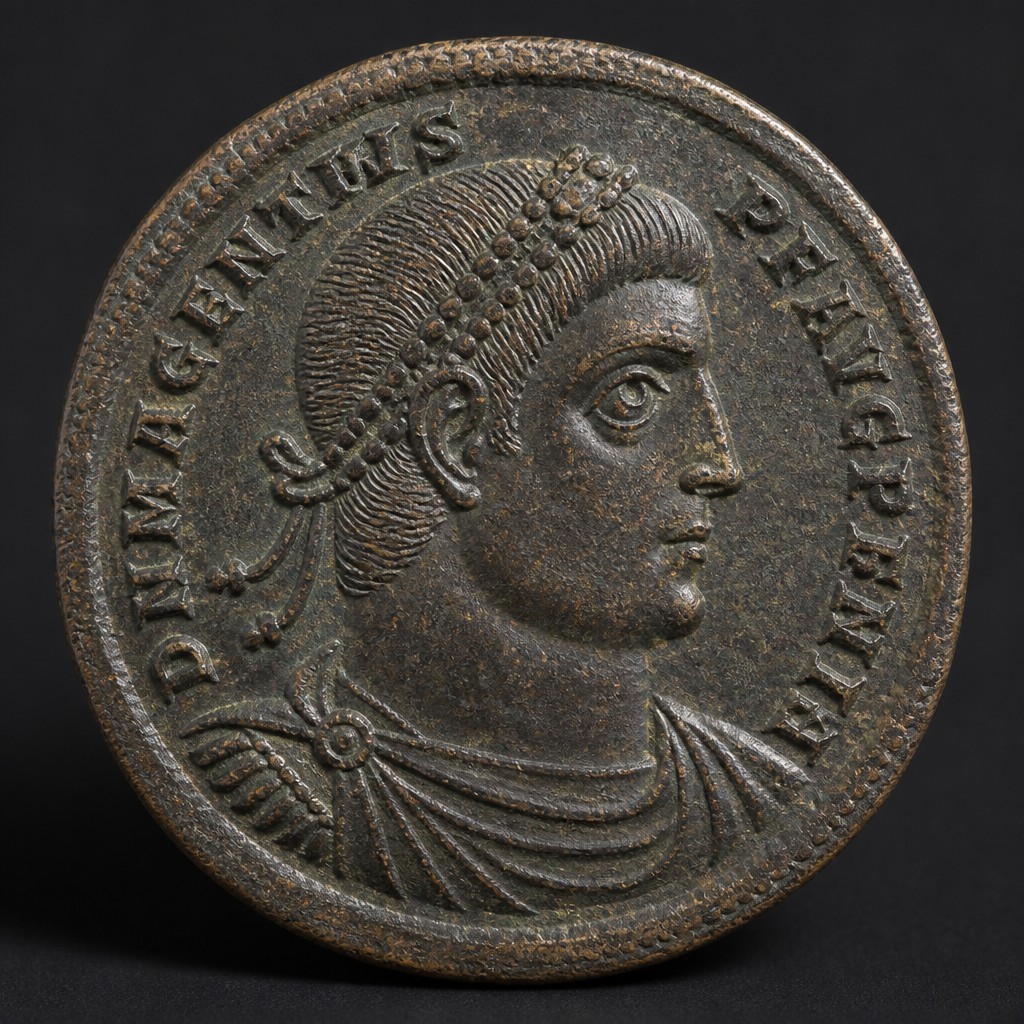
Magnentius Double Centenionalis
350–353 AD
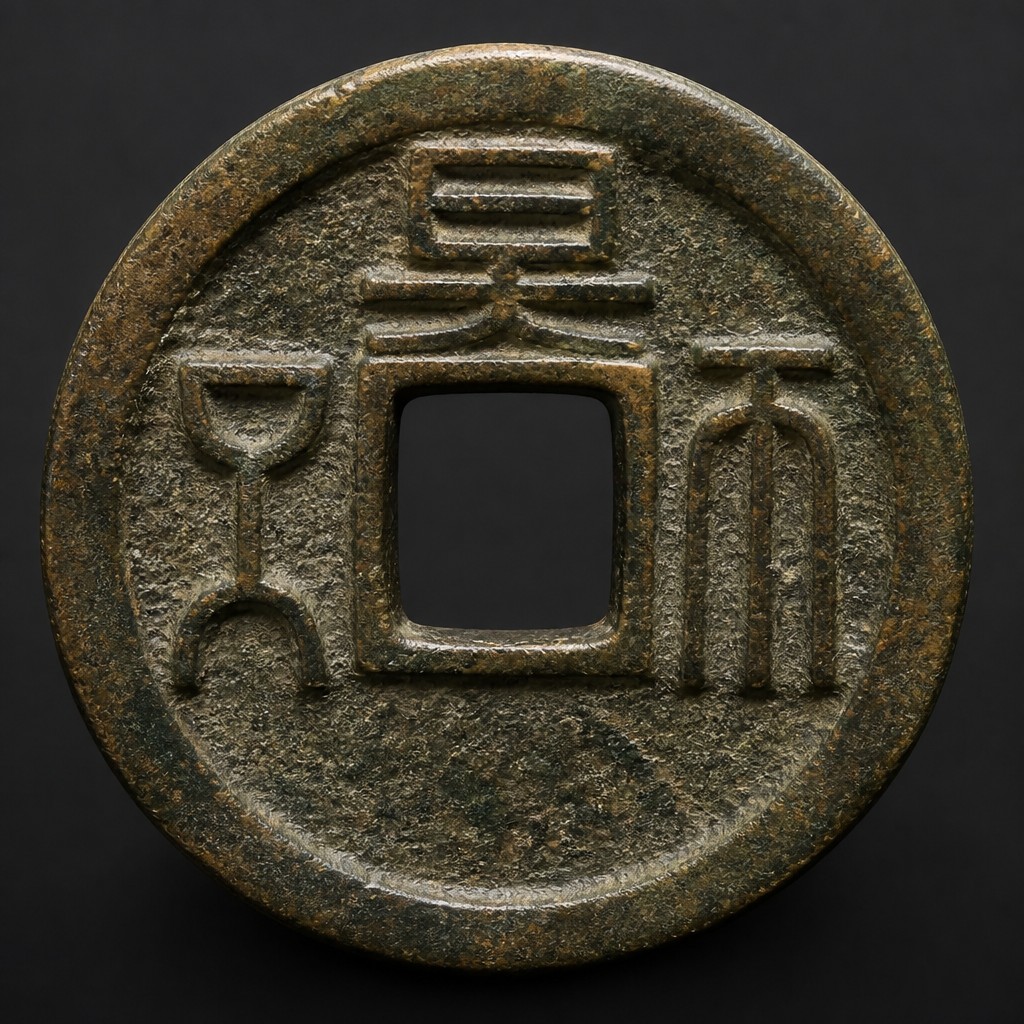
Chinese Wu Zhu Cash
118 BC – 618 AD
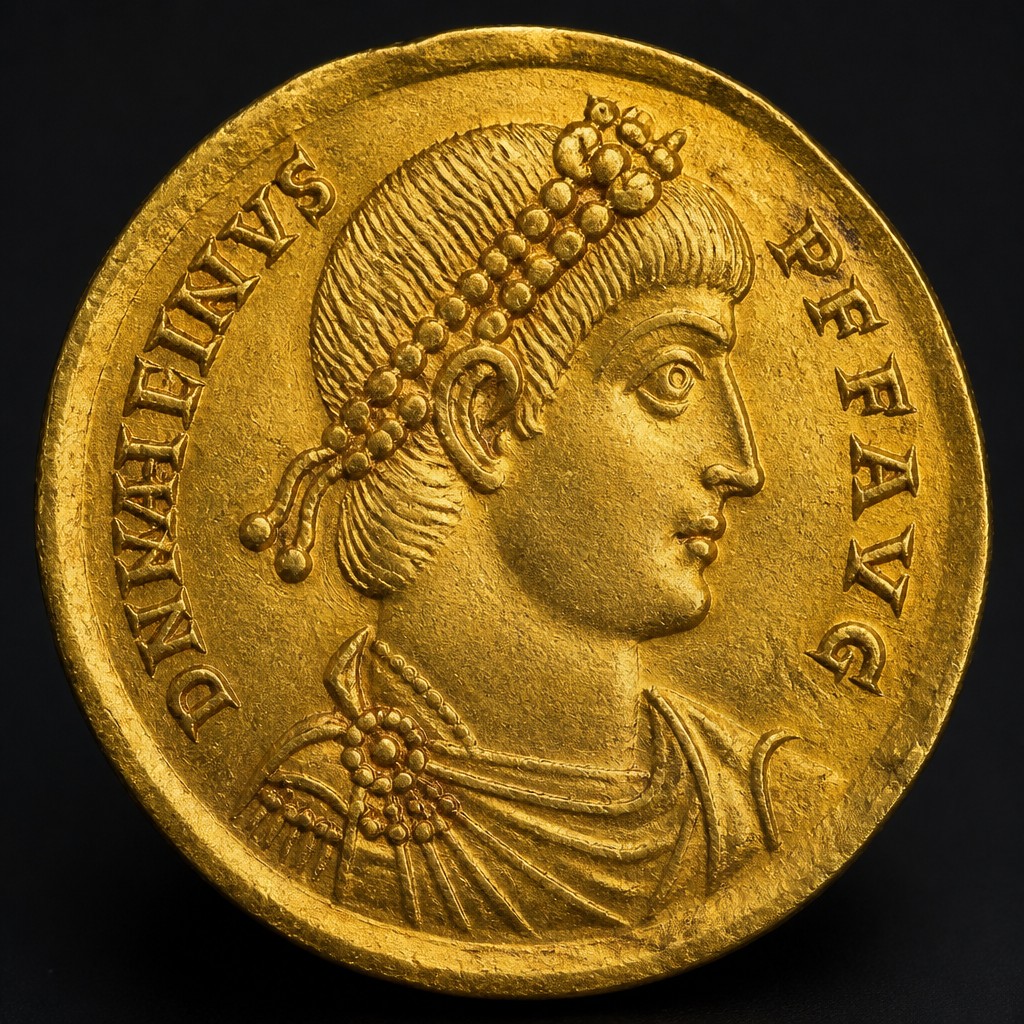
Valentinian I Solidus
364–375 AD
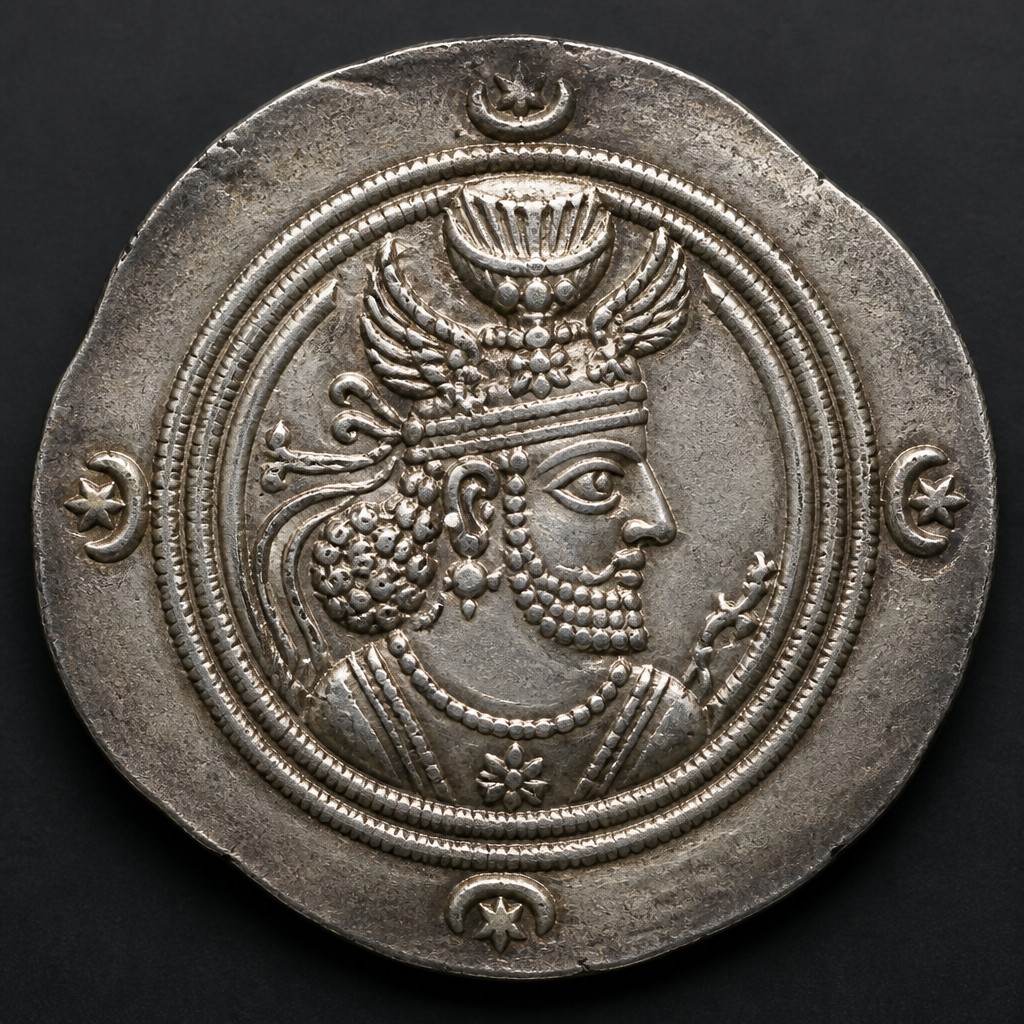
Sassanian Silver Drachm
c. 224–651 AD
Chinese Ban Liang Cash
c. 221–118 BC
Gupta Empire Gold Dinar
c. 320–550 AD
Byzantine Gold Tremissis
c. 4th–7th century AD
Byzantine Follis
498–c. 11th century AD
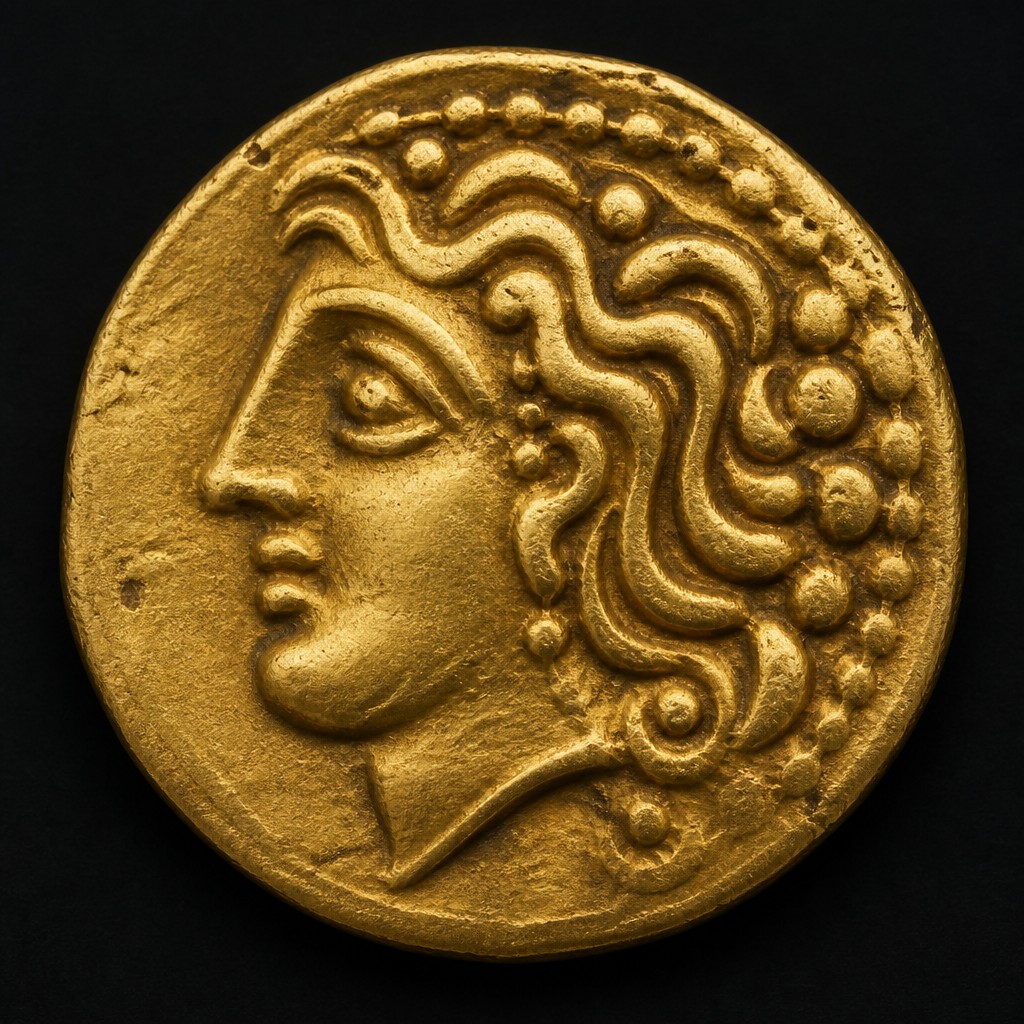
Celtic Gold Stater
c. 3rd century BC – 1st century AD