
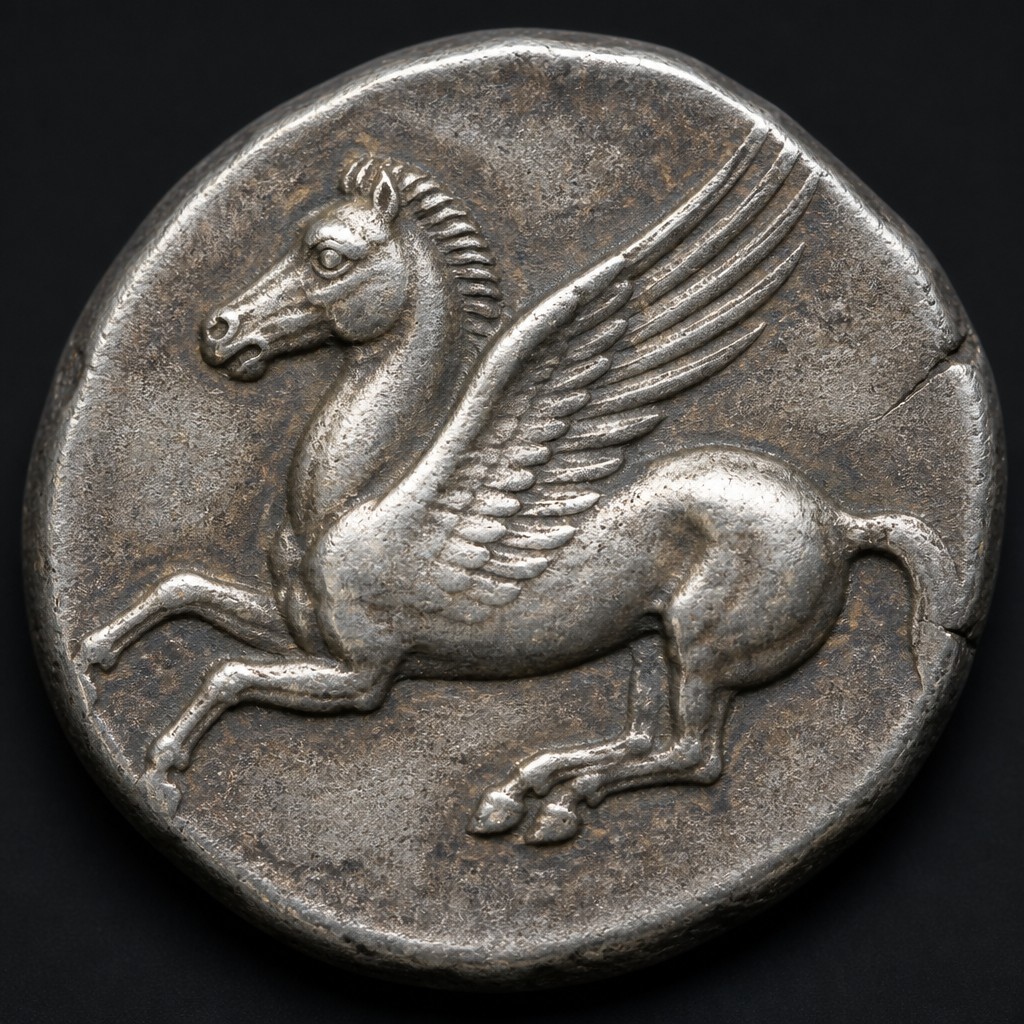
Corinthian Pegasus Stater
A widely circulated ancient Greek silver coin from Corinth, featuring the winged horse Pegasus on the obverse and a helmeted head of Athena on the reverse.
- Country
- Ancient Corinth (Greece)
- Denomination
- Stater
- Metal
- Silver
Got a coin like this?
Identify any coin from a photo, free.
Overview
The Corinthian Pegasus stater, sometimes nicknamed the "colt" by ancient Greeks for its horse imagery, was one of the most widely traded and imitated coin types in the ancient Greek world. Its recognizable winged horse design made it a trusted currency far beyond Corinth itself.
Collectors value the type for its attractive, dynamic imagery, its important role in ancient Mediterranean trade, and the wide variety of related issues struck by Corinth's many colonies, which offer collectors an entire sub-field of related coinage to explore.
History & Background
Corinth, one of the most commercially powerful city-states of ancient Greece, began striking its Pegasus-type silver staters around the mid-6th century BC. As a major trading hub controlling key routes between mainland Greece and its colonies in Sicily, southern Italy, and along the Ionian and Adriatic coasts, Corinth's coinage traveled widely and became a recognized standard of value across much of the Greek world.
Many Corinthian colonies, including Syracuse, Ambracia, Leucas, and others, adopted the same Pegasus design for their own coinage, sometimes with distinguishing local symbols, reflecting Corinth's far-reaching commercial and cultural influence. Production continued for centuries, with the coin evolving stylistically while retaining its core Pegasus and Athena imagery until Corinth's coinage traditions faded amid the changing political landscape of the later Hellenistic period.
How to Identify
The obverse shows Pegasus, the winged horse of Greek mythology, usually depicted flying or in motion, with the letter koppa (Ϙ), an archaic Greek letter representing the initial sound of Corinth's name, often placed beneath. The reverse depicts the helmeted head of the goddess Athena, patron deity of the city, typically shown wearing a Corinthian-style helmet, within an incuse square.
The coin is struck in silver, generally around 20 to 21 mm in diameter and weighing about 8.6 grams, following the so-called Corinthian weight standard distinct from the more common Attic standard used by Athens and many other cities. Small symbols or letters in the fields often help identify the specific issuing mint among Corinth's many colonies that used the same basic design.
Collectors distinguish coins of Corinth proper from those of its colonies primarily through subtle differences in style, added control symbols, and sometimes an ethnic abbreviation identifying the specific colony, since the core Pegasus and Athena imagery remained broadly consistent across the whole family of related issues.
Value & Collectibility
Corinthian Pegasus staters are relatively available on the ancient coin market compared to many other Greek types, since they were struck in large quantities over a long period at multiple mints, making them accessible to collectors at a range of price points. Well-centered strikes with strong detail command higher prices.
Certain rarer colonial issues, unusual control marks, and exceptionally well-preserved or attractively toned examples can carry meaningfully higher premiums, but the type as a whole remains one of the more approachable entry points into classical Greek numismatics.
Frequently asked questions
Why does the coin feature Pegasus?
Pegasus was closely linked in Greek mythology to the hero Bellerophon, who was said to have tamed the winged horse near Corinth, making Pegasus a natural civic emblem for the city.
What is the significance of the letter koppa on the coin?
Koppa (Ϙ) is an archaic Greek letter used as an abbreviation for Corinth's name, functioning similarly to a mint mark identifying the coin's city of origin.
Why do other cities' coins look similar to Corinth's?
Several Corinthian colonies, such as Syracuse and Ambracia, adopted the same Pegasus and Athena design for their own coinage, reflecting Corinth's wide trading network and cultural influence.
Is this an expensive coin to collect?
Generally it is one of the more accessible ancient Greek silver types due to its relatively large surviving population, though exceptional examples and rare colonial varieties can be considerably more costly.
Other coins you may enjoy
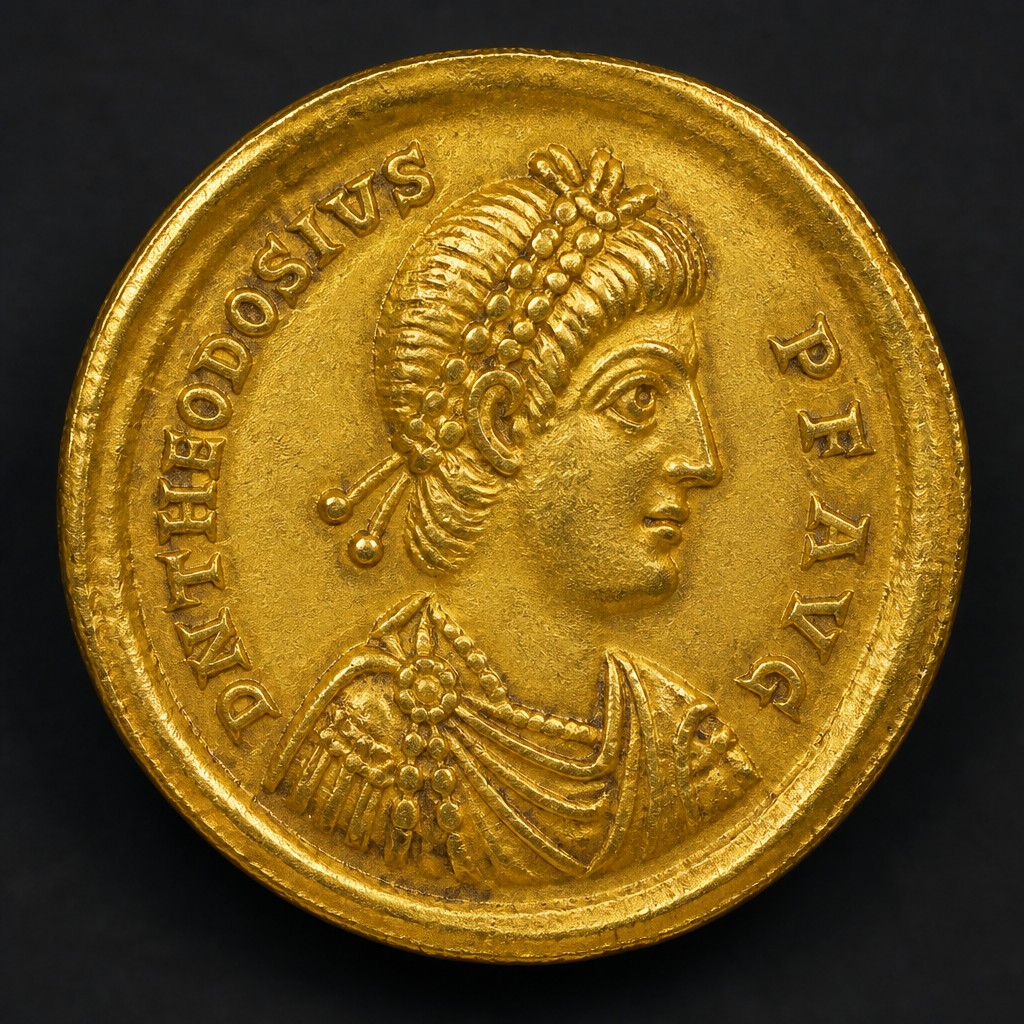
Theodosius I Solidus
379–395 AD
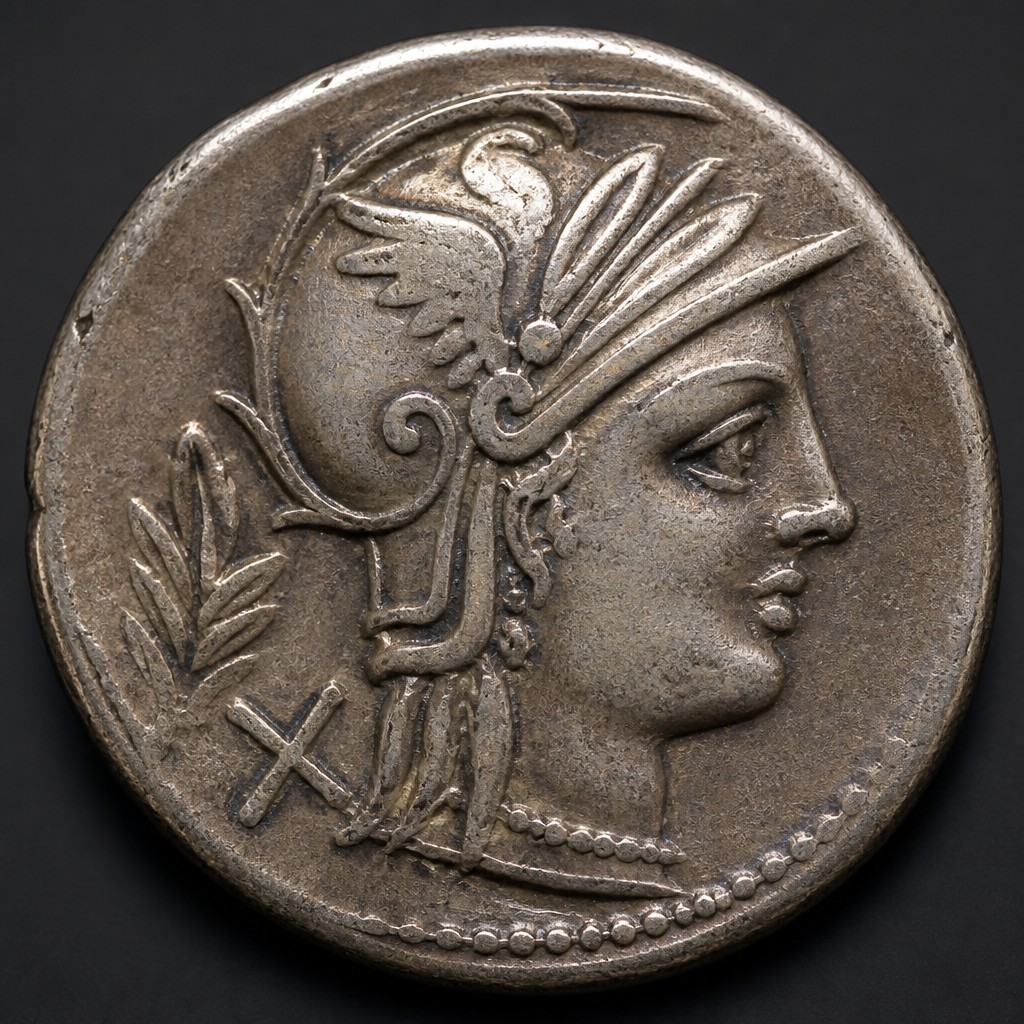
Republican Victoriatus
c. 211–170 BC
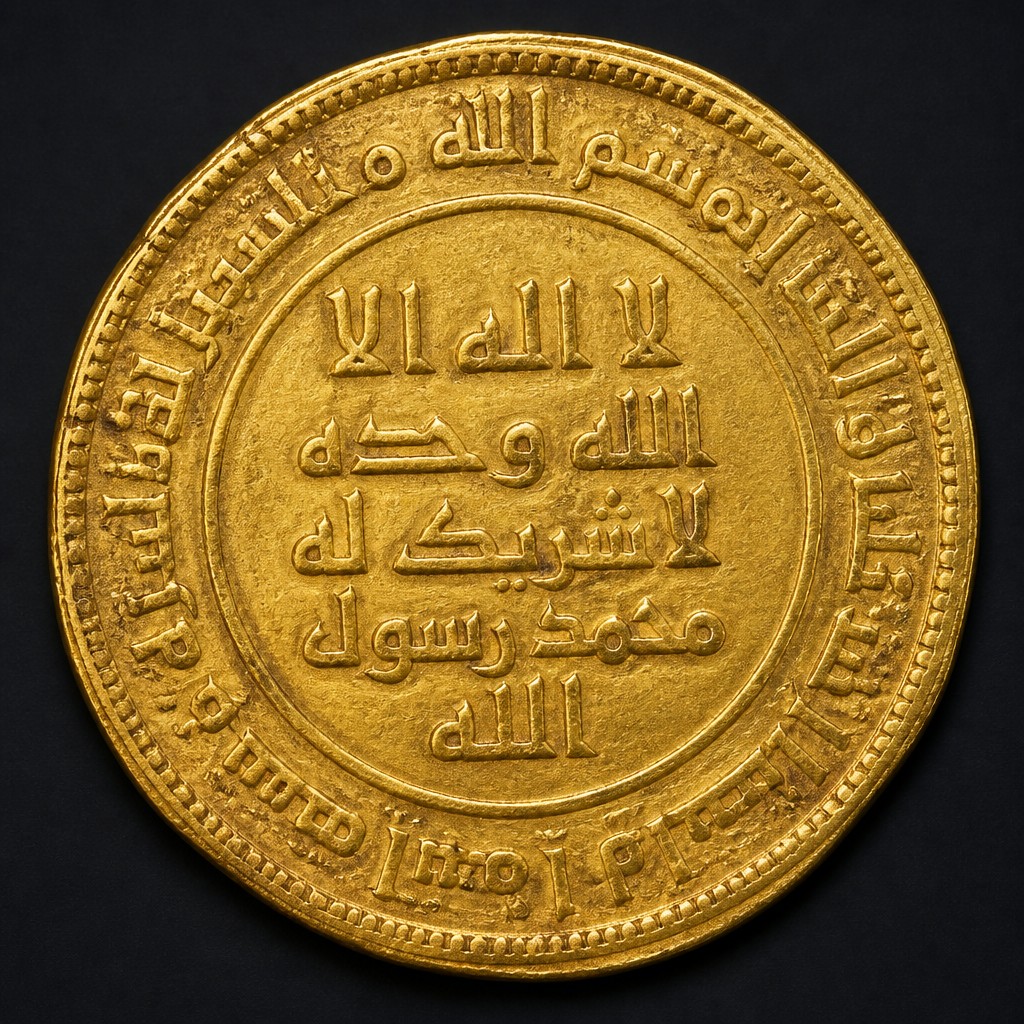
Islamic Gold Dinar (Umayyad)
c. 696–750 AD
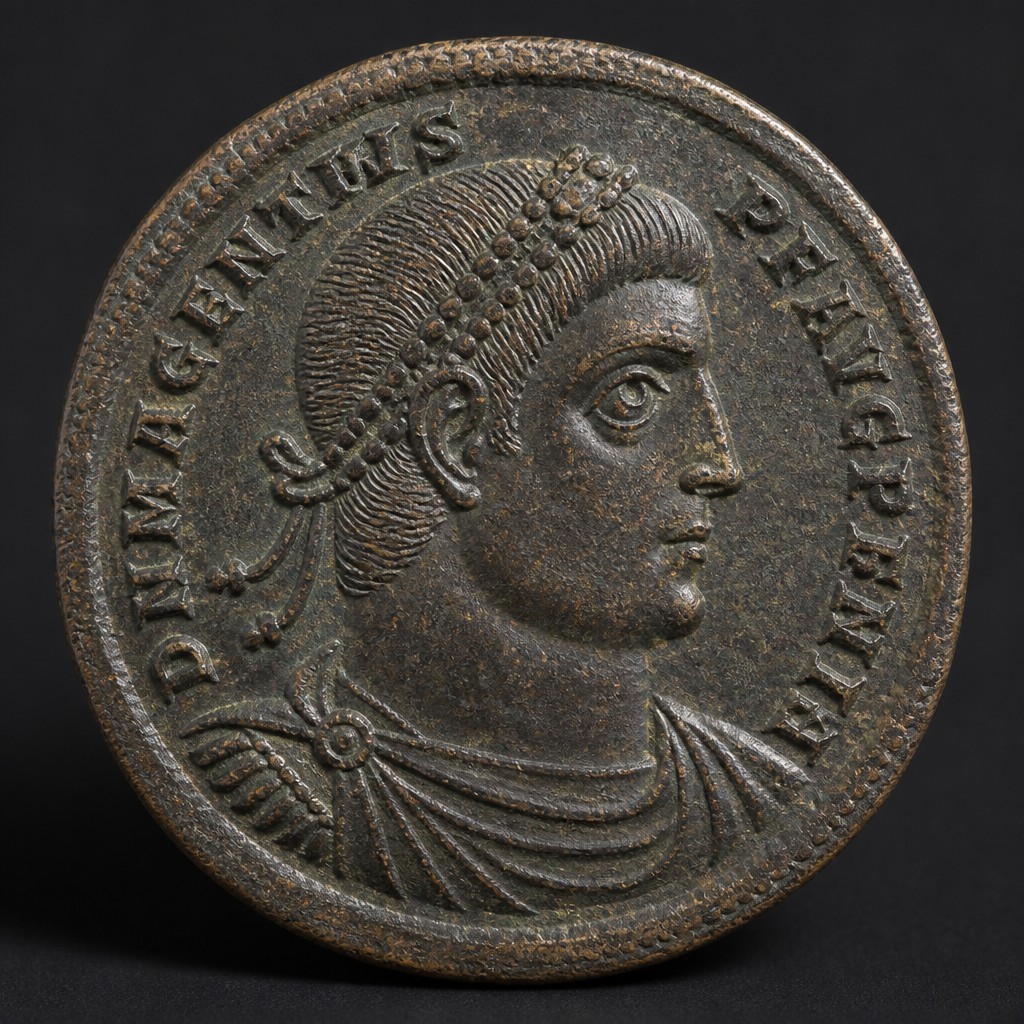
Magnentius Double Centenionalis
350–353 AD
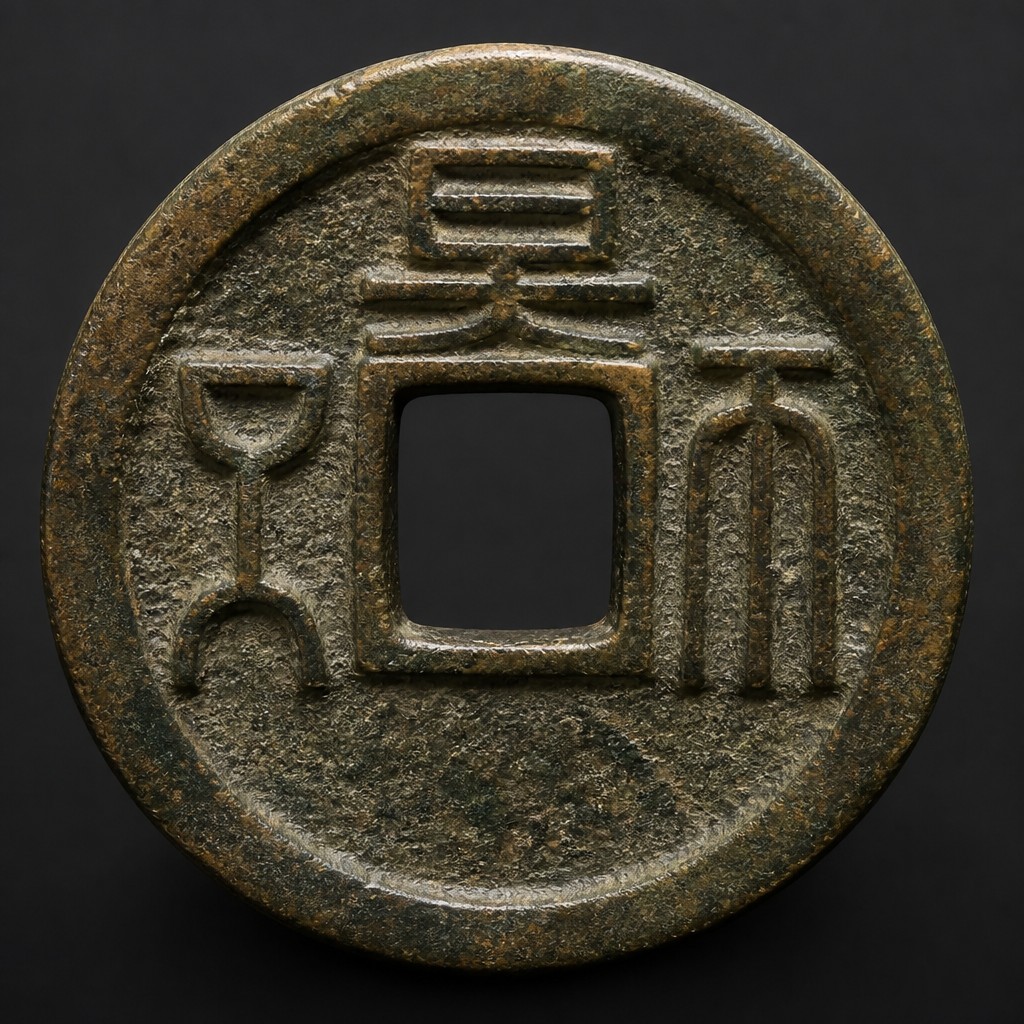
Chinese Wu Zhu Cash
118 BC – 618 AD
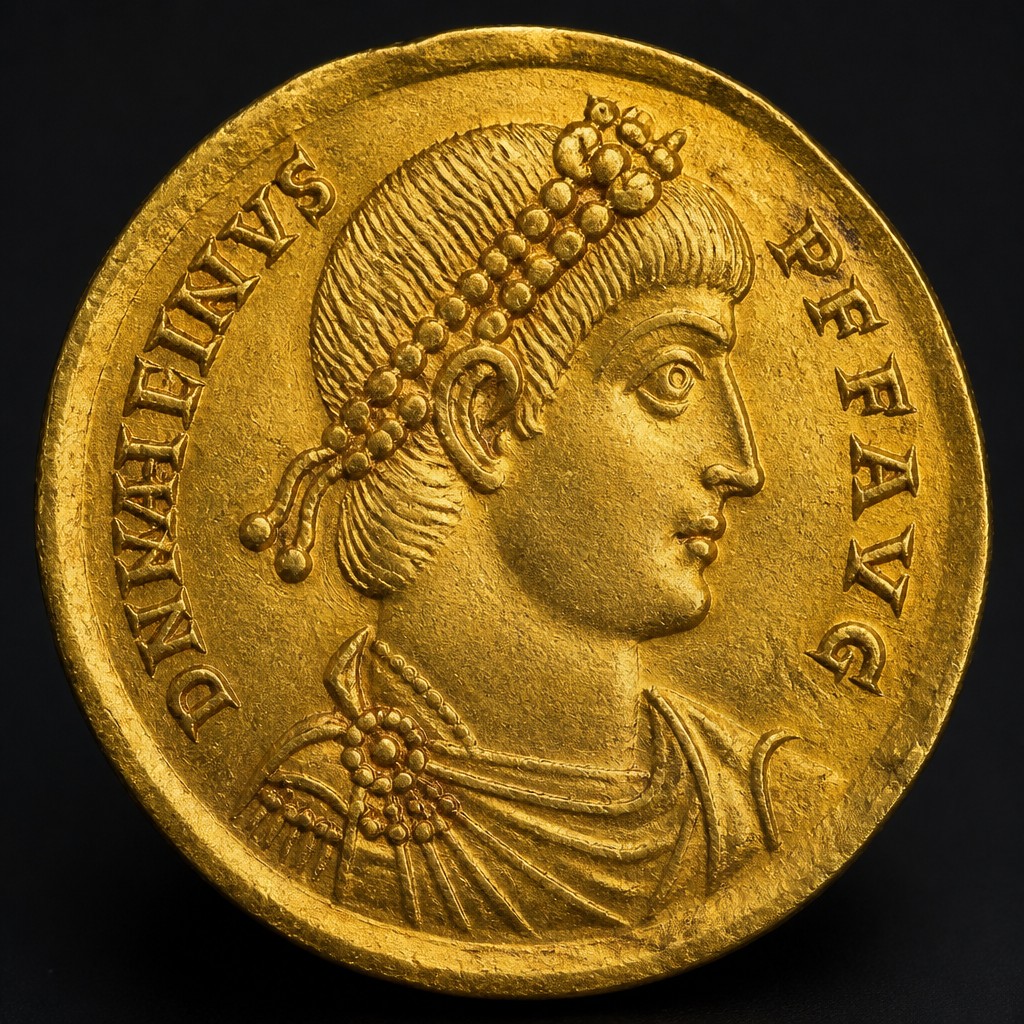
Valentinian I Solidus
364–375 AD
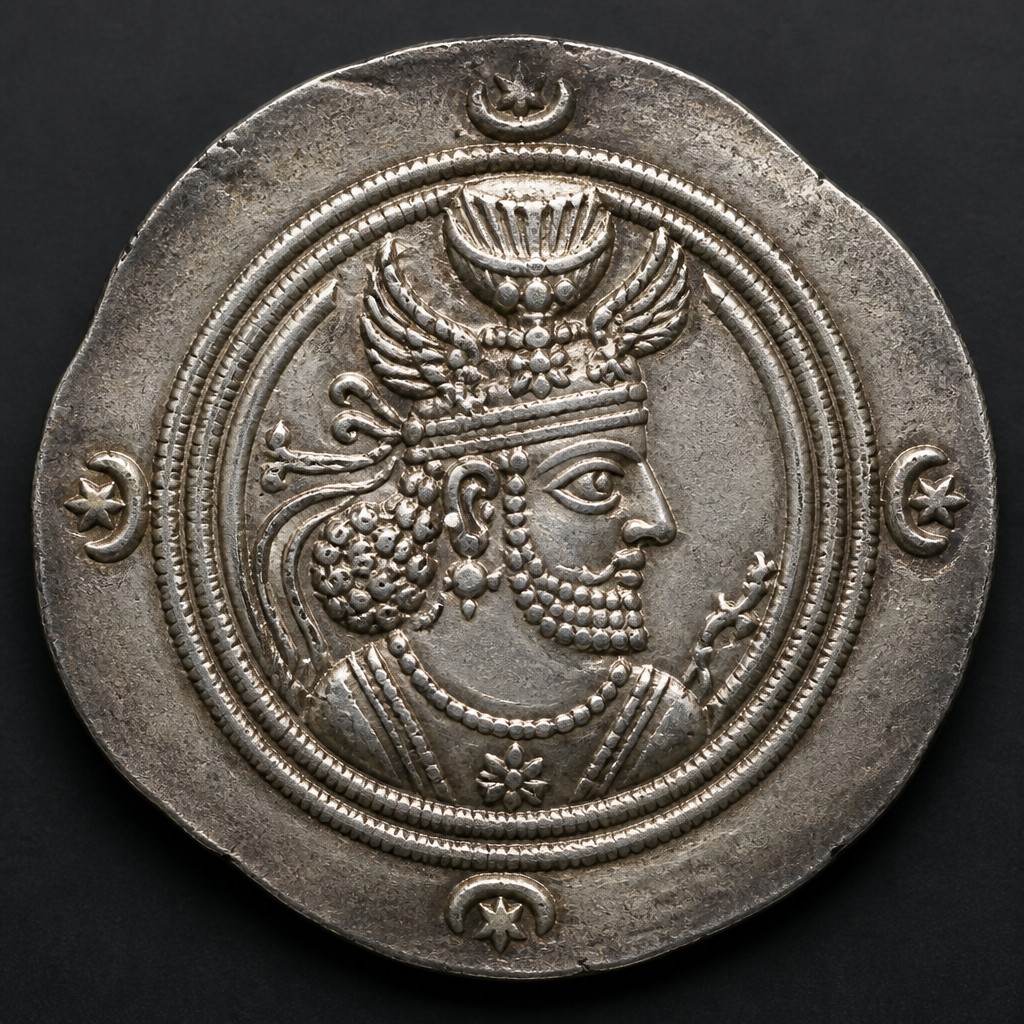
Sassanian Silver Drachm
c. 224–651 AD
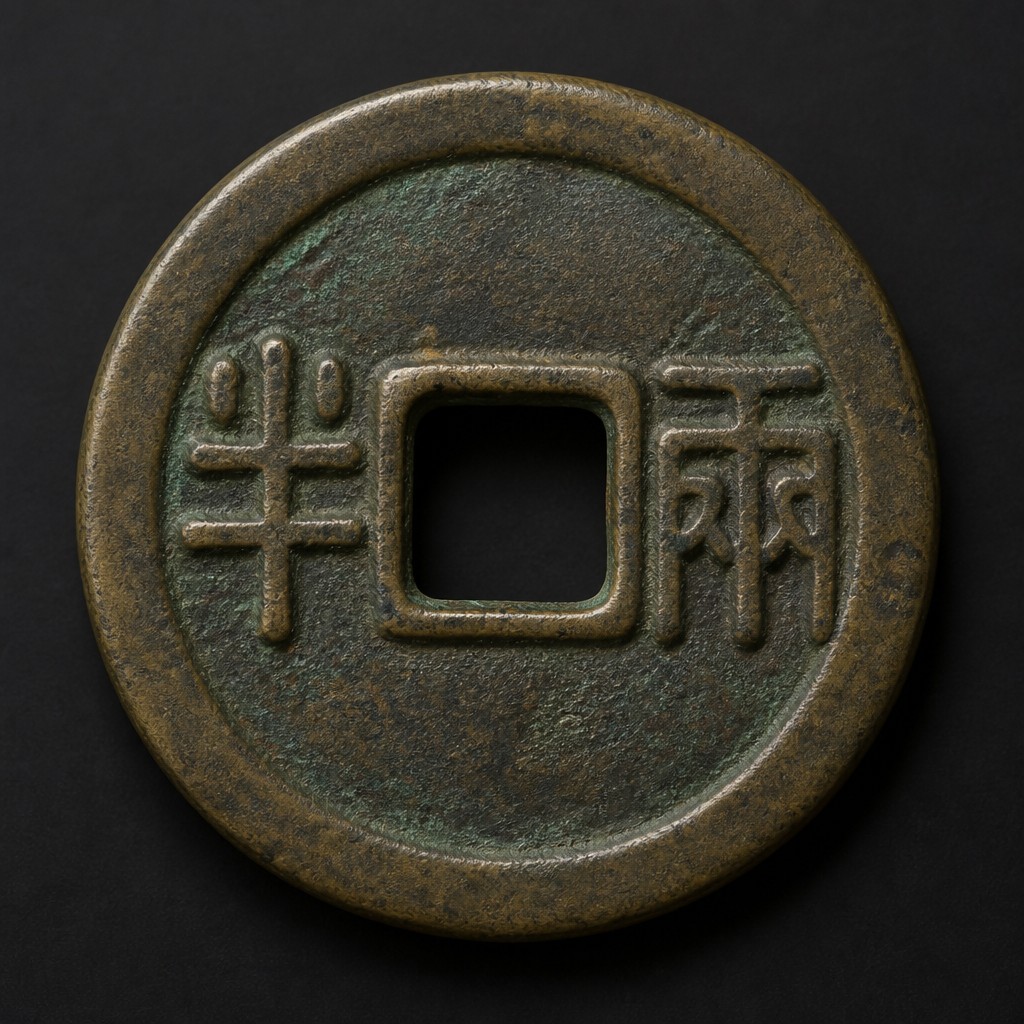
Chinese Ban Liang Cash
c. 221–118 BC
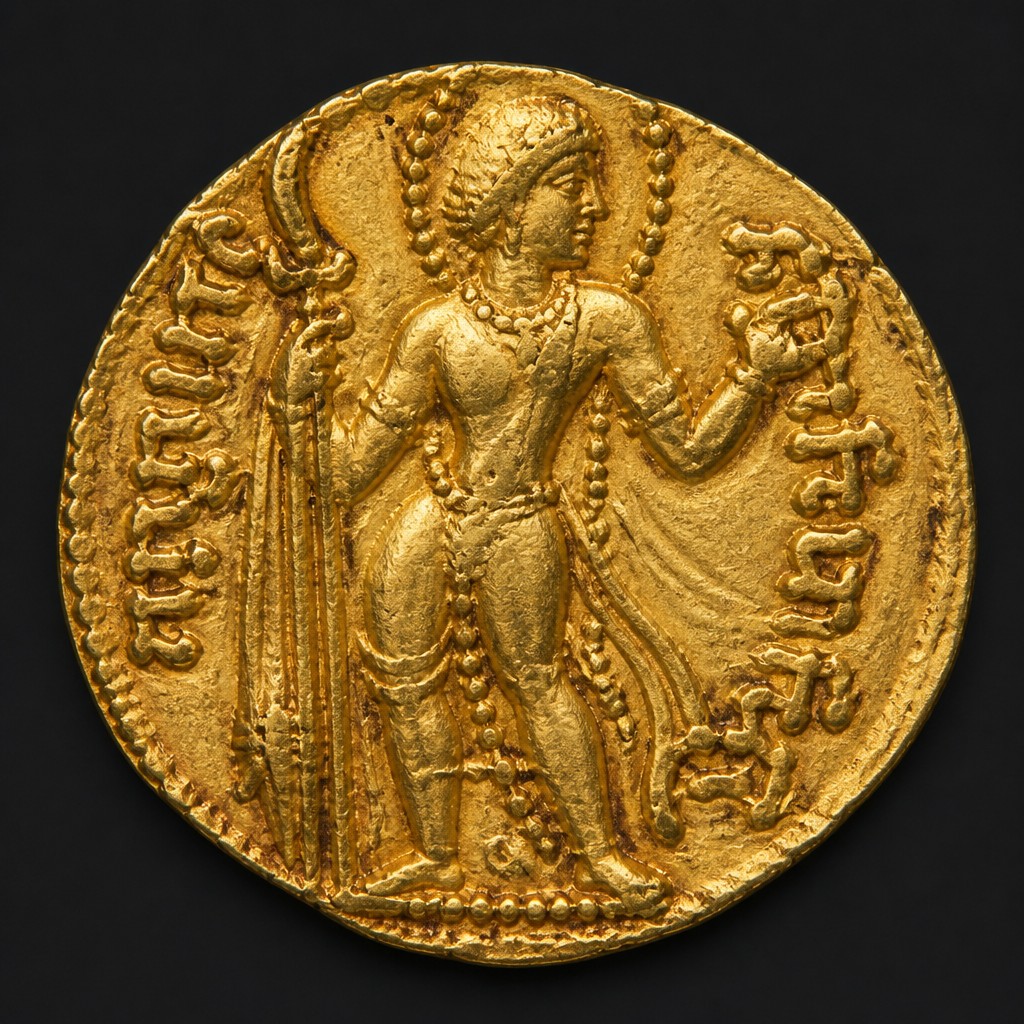
Gupta Empire Gold Dinar
c. 320–550 AD
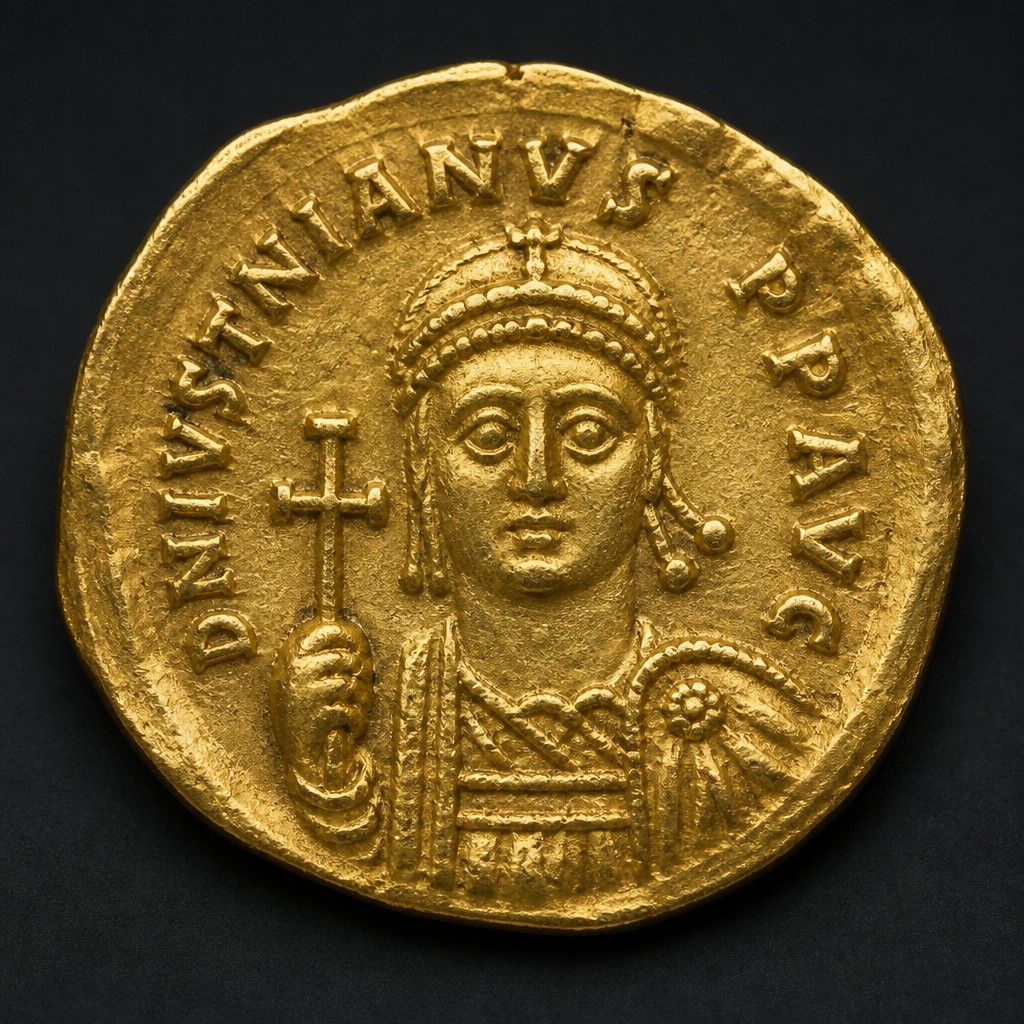
Byzantine Gold Tremissis
c. 4th–7th century AD
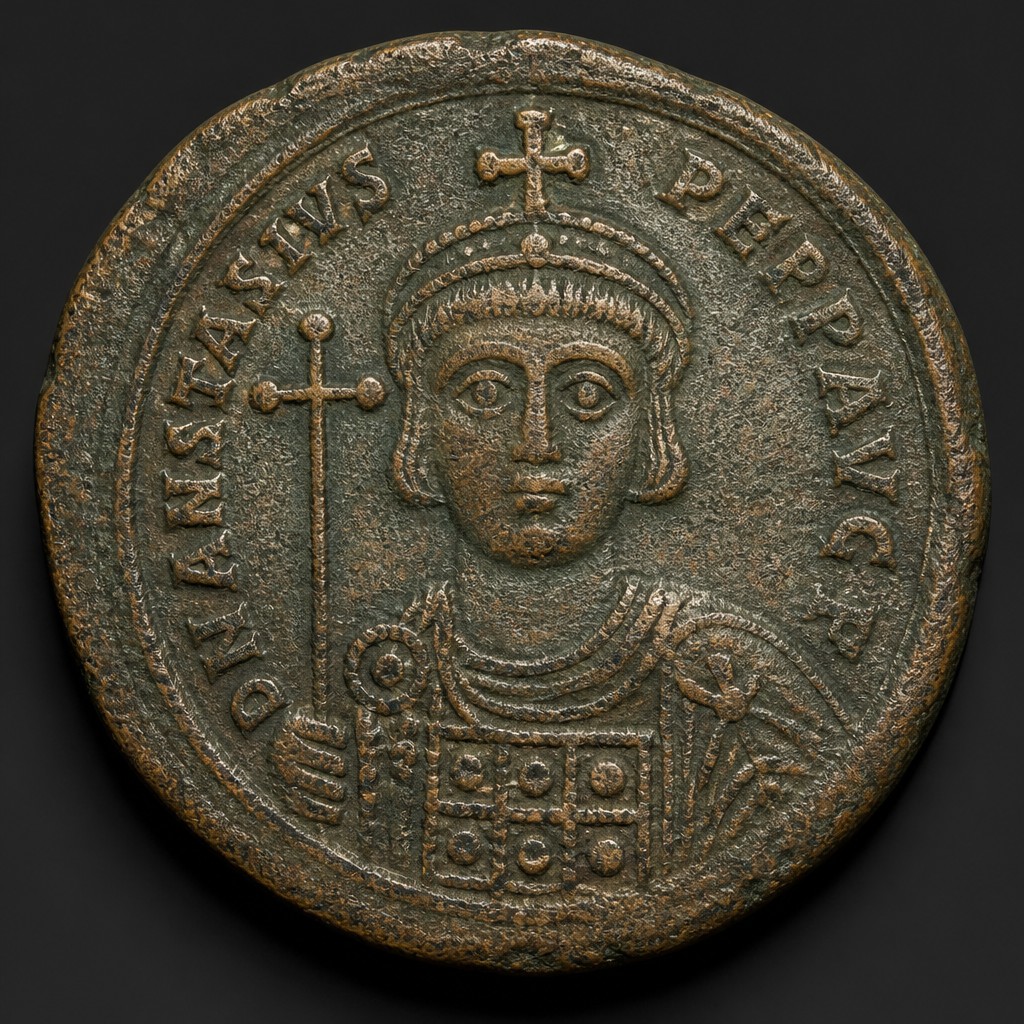
Byzantine Follis
498–c. 11th century AD
Celtic Gold Stater
c. 3rd century BC – 1st century AD