
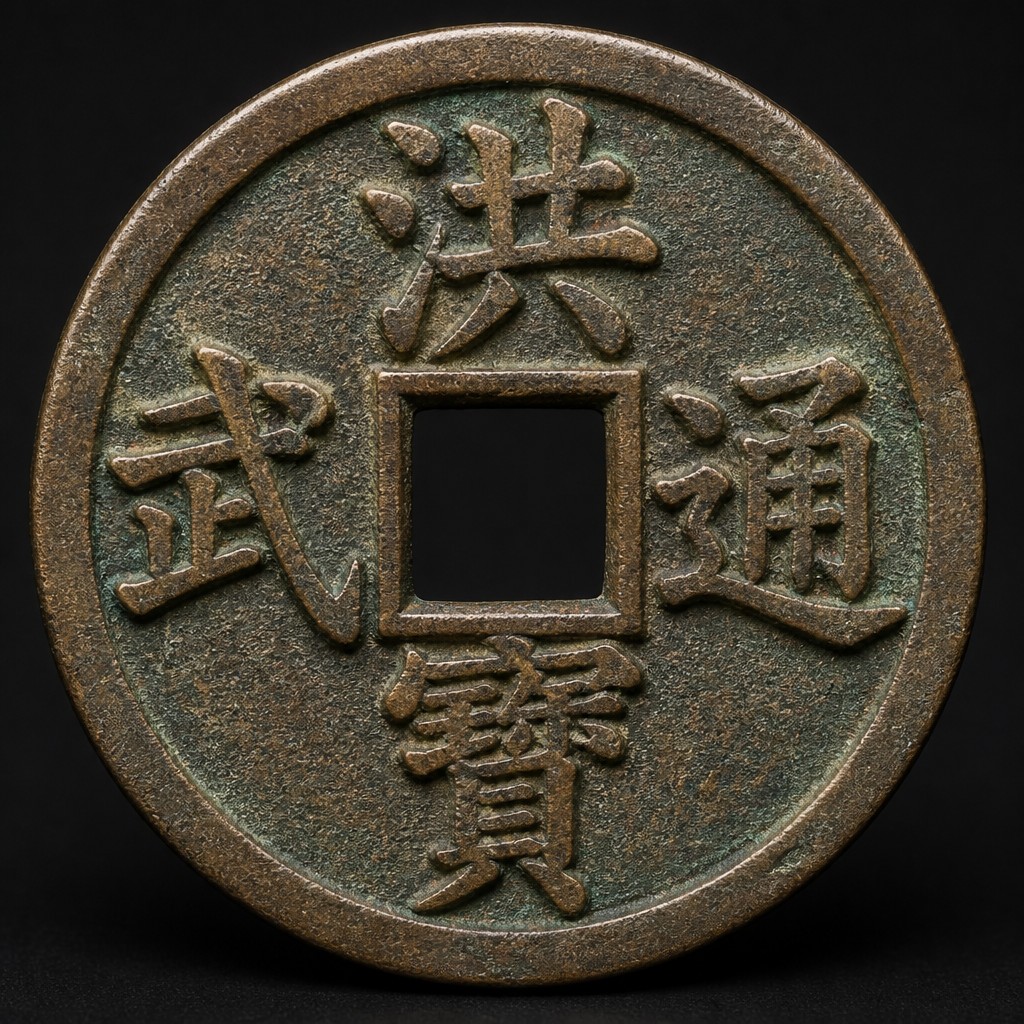
Chinese Ming Dynasty Cash (Hong Wu Tong Bao)
The founding cash coin of the Ming Dynasty, issued under the Hongwu Emperor, marking the restoration of native Han Chinese rule after the collapse of the Mongol Yuan Dynasty.
- Country
- China (Ming Dynasty)
- Denomination
- Cash (Wen)
- Metal
- Bronze/copper
Got a coin like this?
Identify any coin from a photo, free.
Overview
Hong Wu Tong Bao cash coins mark a symbolically important moment in Chinese history: the establishment of the Ming Dynasty and the end of nearly a century of Mongol Yuan Dynasty rule. Issued in several denominations under the founding Hongwu Emperor, these coins reflect the new dynasty's efforts to stabilize and standardize its currency system.
Collectors value these coins for their direct connection to the Ming Dynasty's founding and for the interesting denominational variety, which ranges from small single-cash pieces to larger multiple-value issues distinguished by size and reverse markings.
History & Background
Zhu Yuanzhang, a peasant rebel leader, overthrew the Mongol-led Yuan Dynasty and founded the Ming Dynasty in 1368, adopting the reign title Hongwu, meaning roughly "Vastly Martial." As part of establishing a stable new government, his administration issued Hong Wu Tong Bao cash coins in several denominations, from a basic single-cash coin up to larger pieces worth multiple cash.
The early Ming government also experimented with paper currency alongside metallic coinage, though bronze cash coins remained an essential part of everyday commerce. Coin production continued under subsequent Ming emperors, each adopting new reign titles for their own coinage, following the long-established Chinese tradition.
How to Identify
The obverse displays four characters, "Hong Wu Tong Bao," read in the standard order of top, bottom, right, then left. Smaller single-cash denominations typically have a plain reverse, while larger multiple-cash denominations often carry additional characters on the reverse indicating their value or the issuing provincial mint.
The coins are round with a square center hole and cast in a bronze or copper alloy. Diameters vary noticeably by denomination, with the smallest single-cash pieces around 22mm and larger multiple-value issues considerably bigger, making size itself a useful clue to a given coin's original denomination.
Value & Collectibility
Small single-cash Hong Wu Tong Bao coins in worn condition are generally common and affordable, often available for a modest sum reflecting their originally large production. Larger multiple-cash denominations are scarcer and typically command higher prices due to lower survival rates and stronger demand from specialists.
Sharpness of the four main characters, along with clarity of any reverse value or mint markings on larger pieces, are the primary factors separating a premium example from an ordinary one. As the founding coinage of a major dynasty, well-preserved examples hold steady collector interest.
Frequently asked questions
Why is this coin historically significant?
It was issued at the founding of the Ming Dynasty in 1368, marking the restoration of native Han Chinese imperial rule after the Mongol Yuan Dynasty.
Did this coin come in different sizes?
Yes, it was issued in several denominations, from a basic single-cash coin up to larger multiple-cash pieces distinguished by size and reverse markings.
How can I tell the denomination of my coin?
Overall diameter is a useful guide, with larger multiple-cash pieces also often bearing additional reverse characters indicating value or mint.
Are these coins rare?
Small single-cash pieces are relatively common, while larger denomination coins are considerably scarcer and more sought after.
Who founded the Ming Dynasty?
Zhu Yuanzhang, a former peasant rebel leader who took the reign title Hongwu, founded the Ming Dynasty in 1368.
Other coins you may enjoy
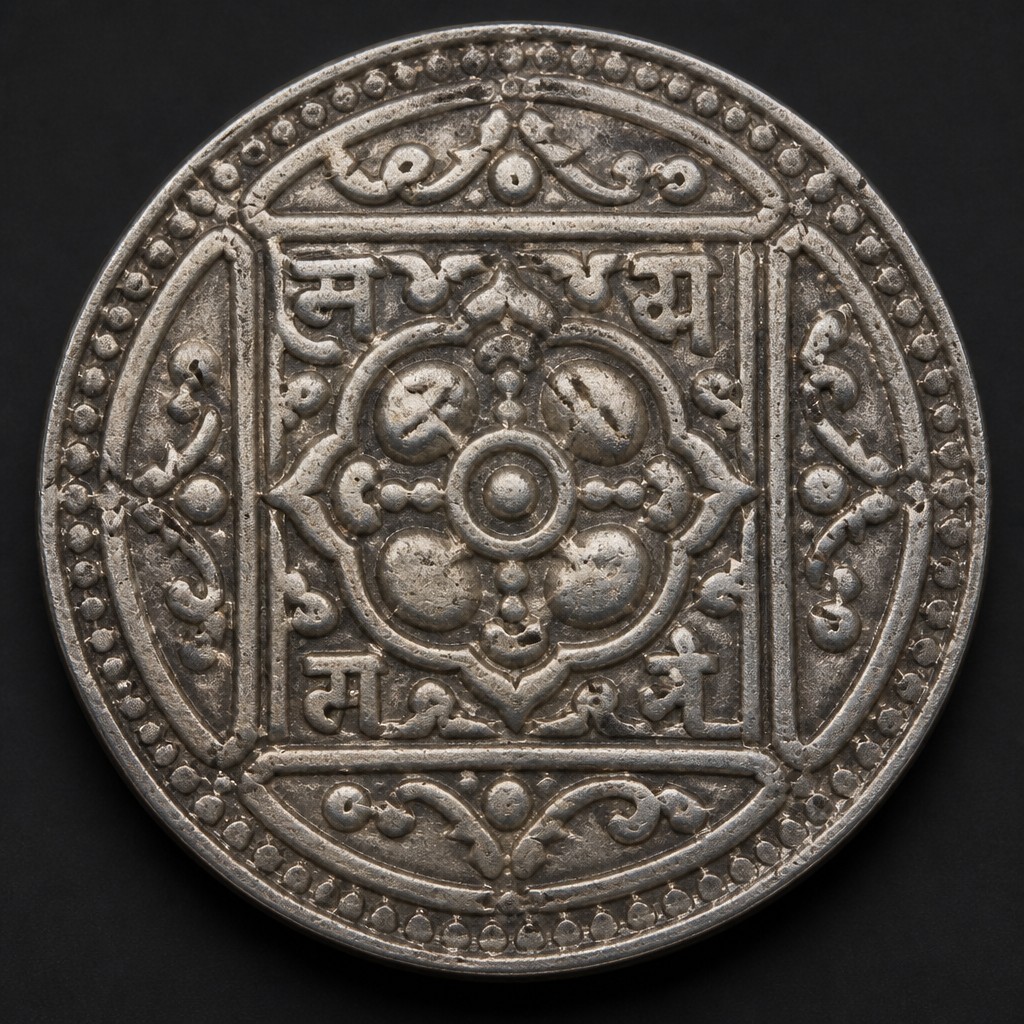
Nepal Silver Mohar
c. 16th–19th century
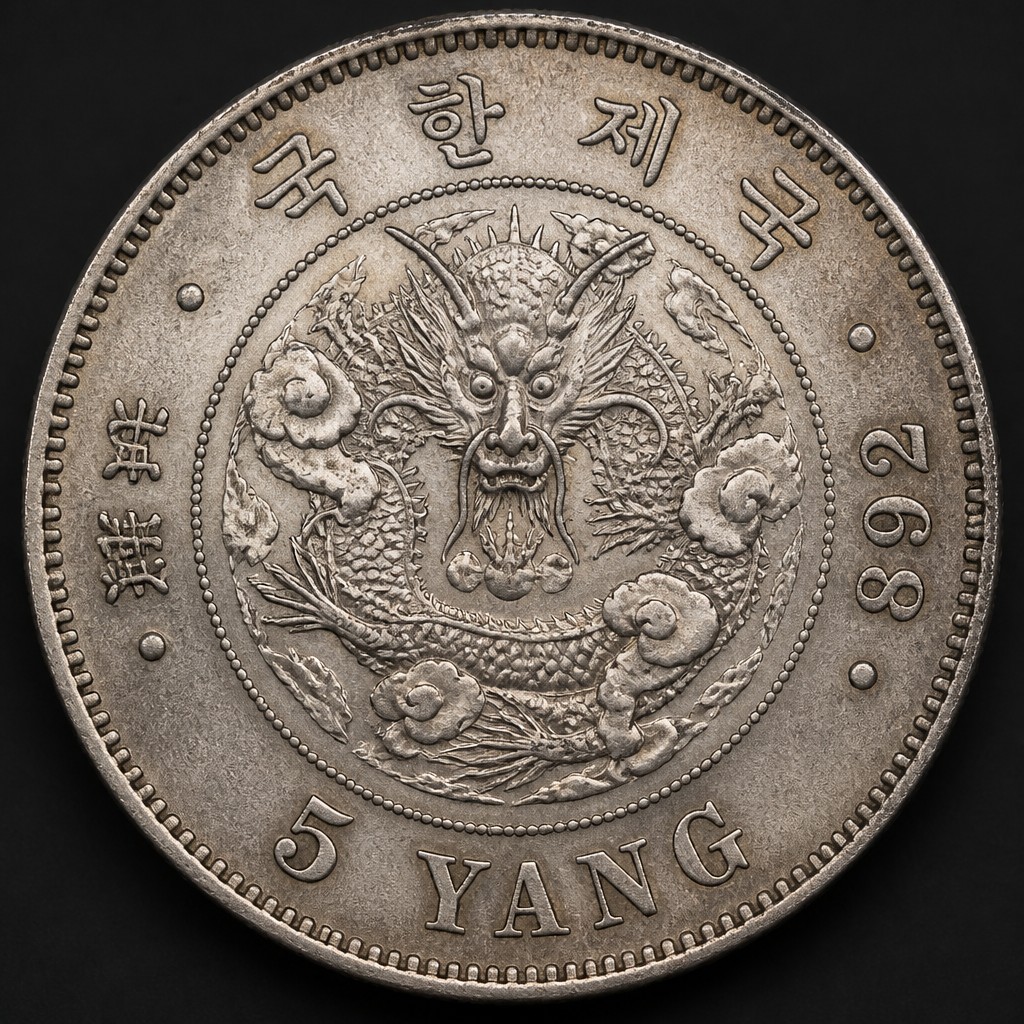
Korean 5 Yang Silver Dollar (1892)
1892
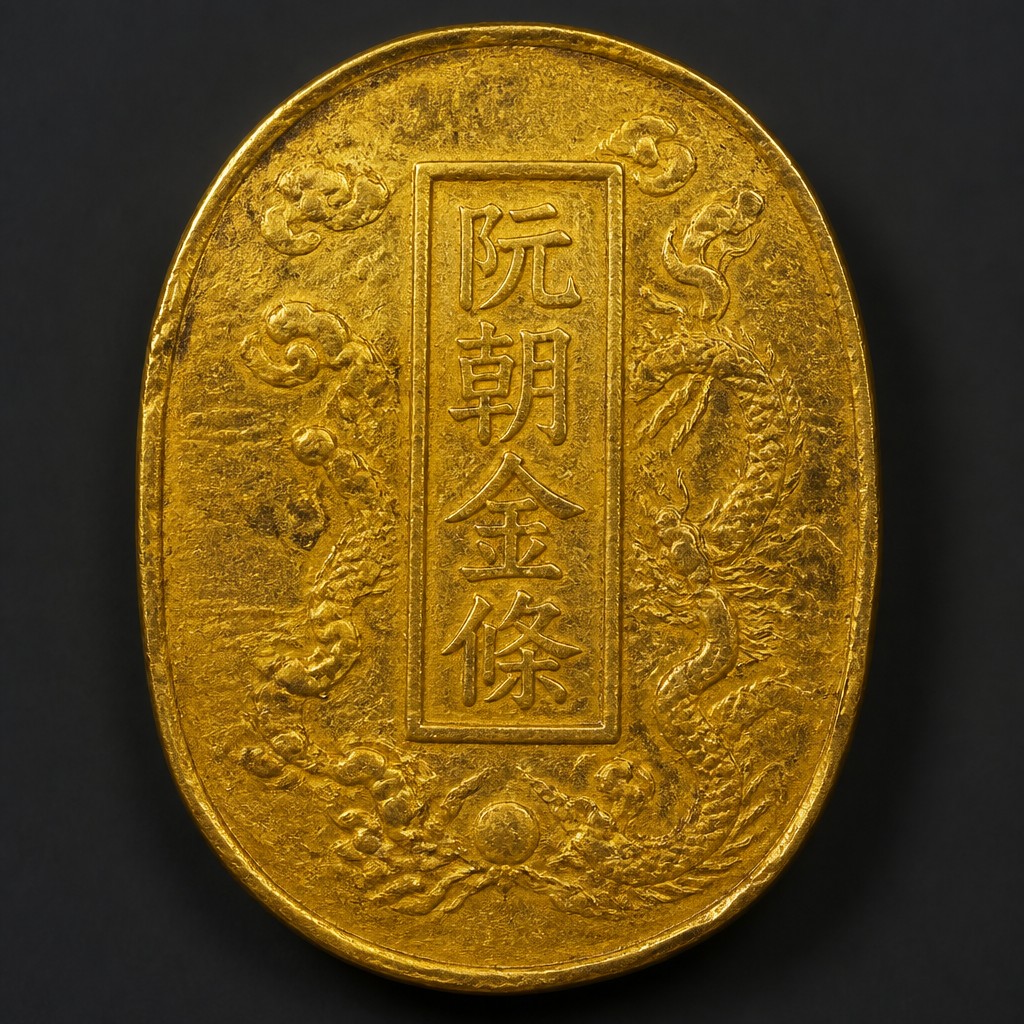
Nguyen Dynasty Gold Bar (Vietnam)
19th century
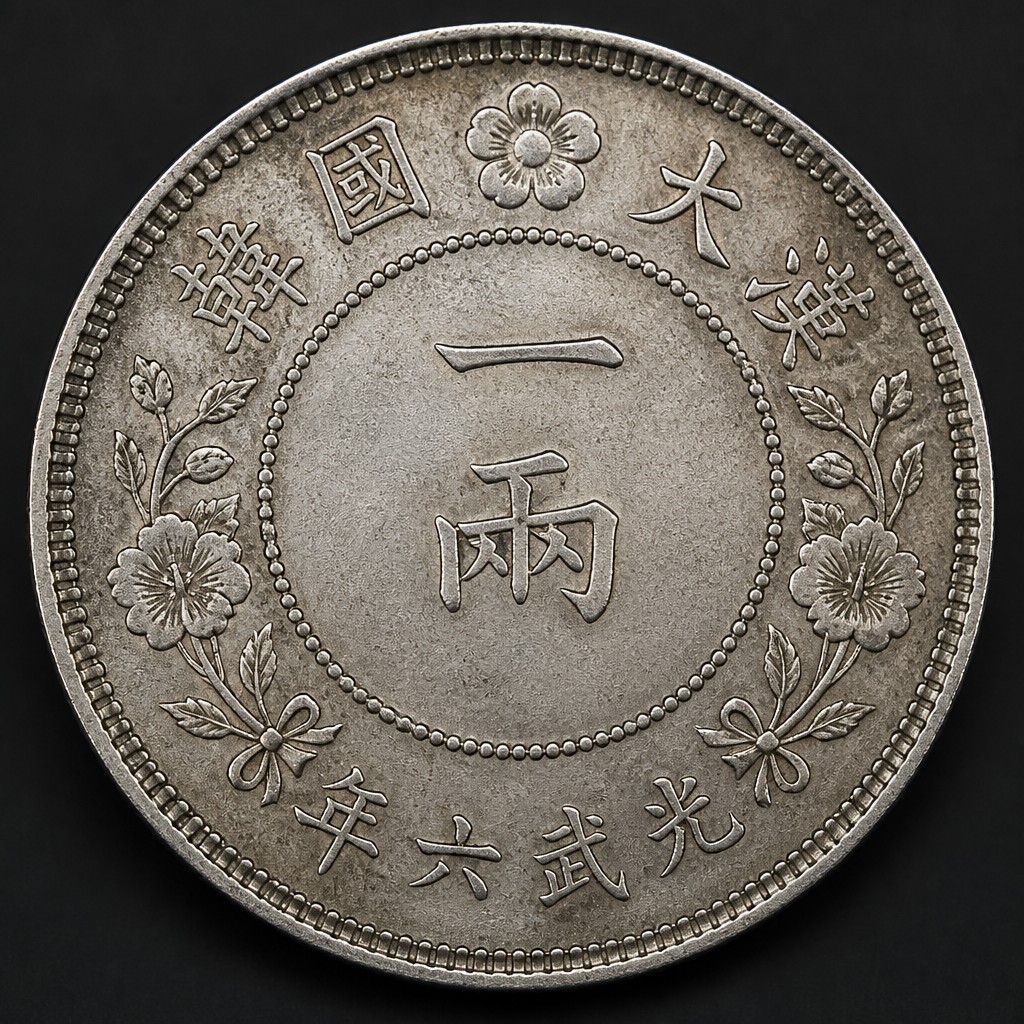
Korean 1 Yang Silver (Joseon/Great Han Empire)
1892–1902
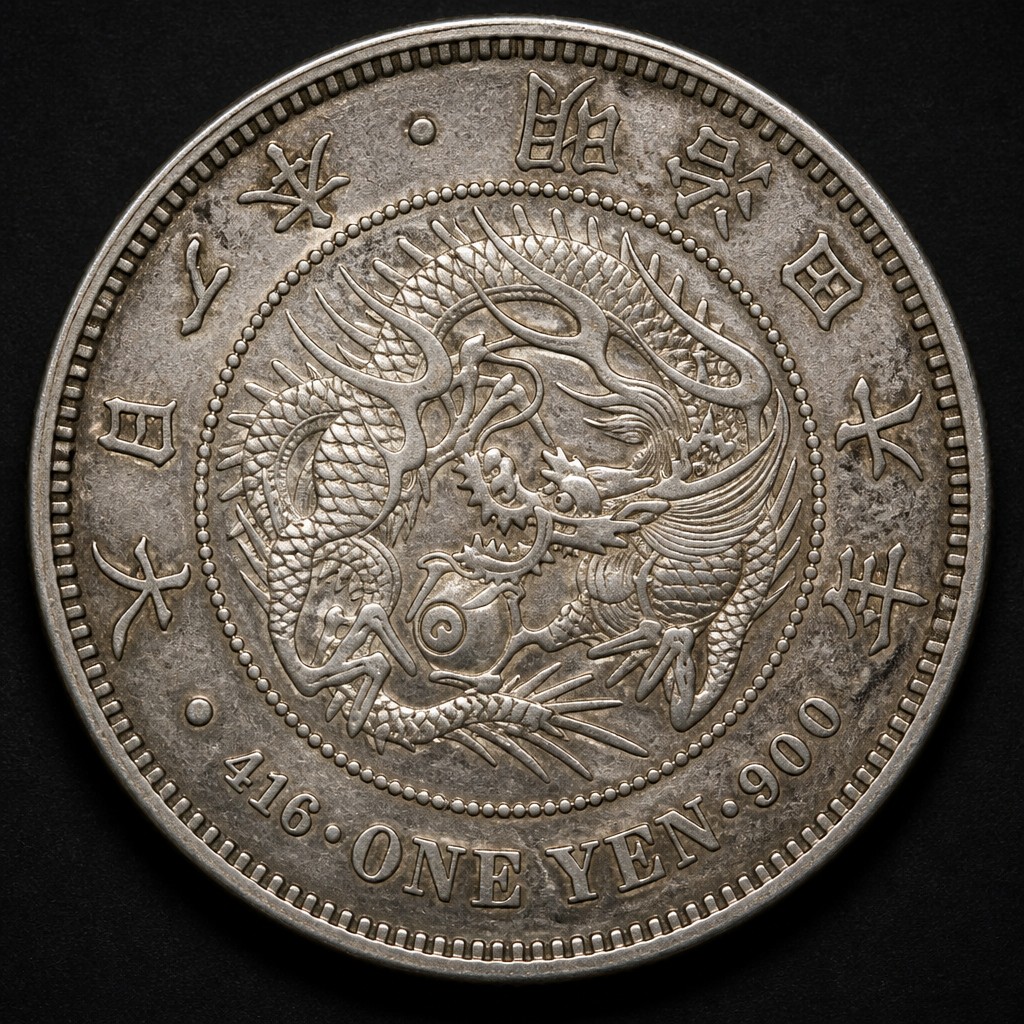
Japanese 1 Yen Silver 'Dragon' Trade Dollar
1870–1914 (trade dollar variant 1875–1877)
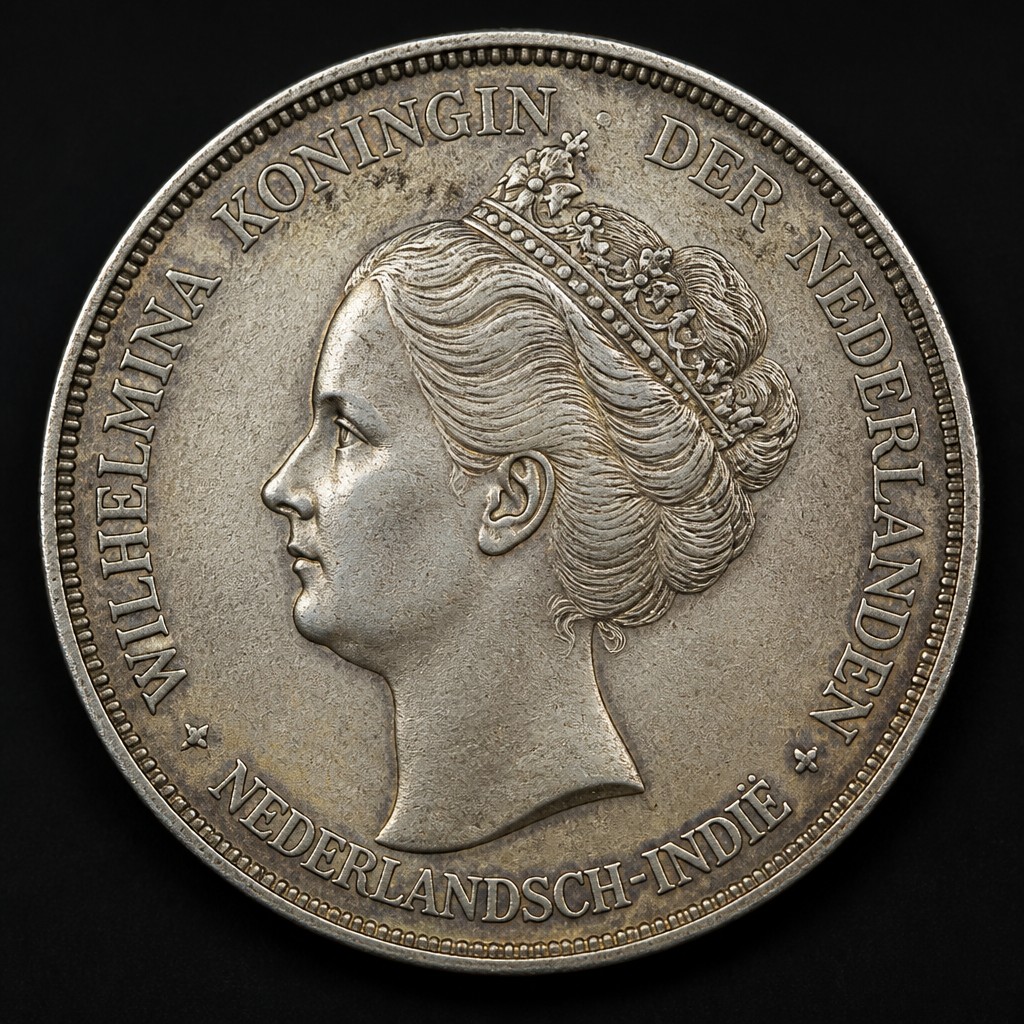
Netherlands East Indies Gulden (Wilhelmina)
1897–1945
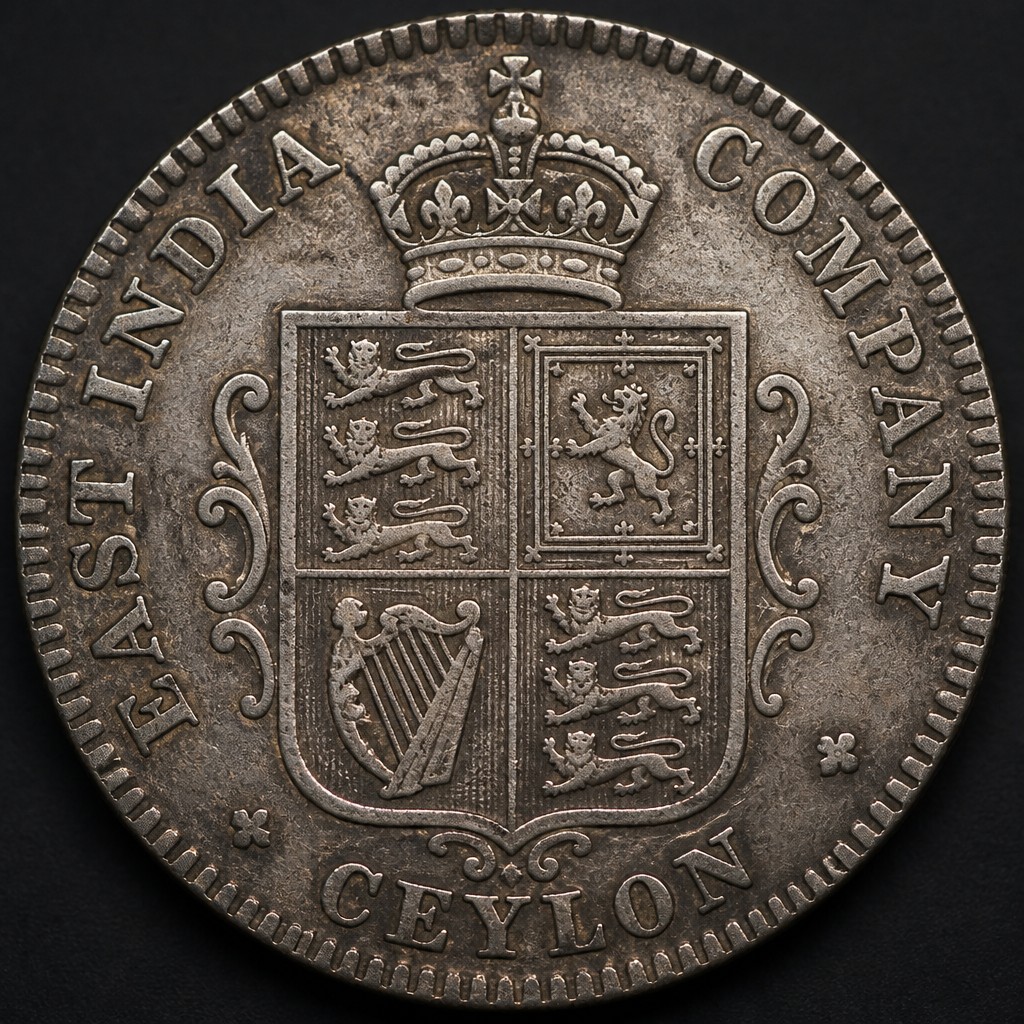
Ceylon (Sri Lanka) EIC Rixdollar
c. 1802–1821
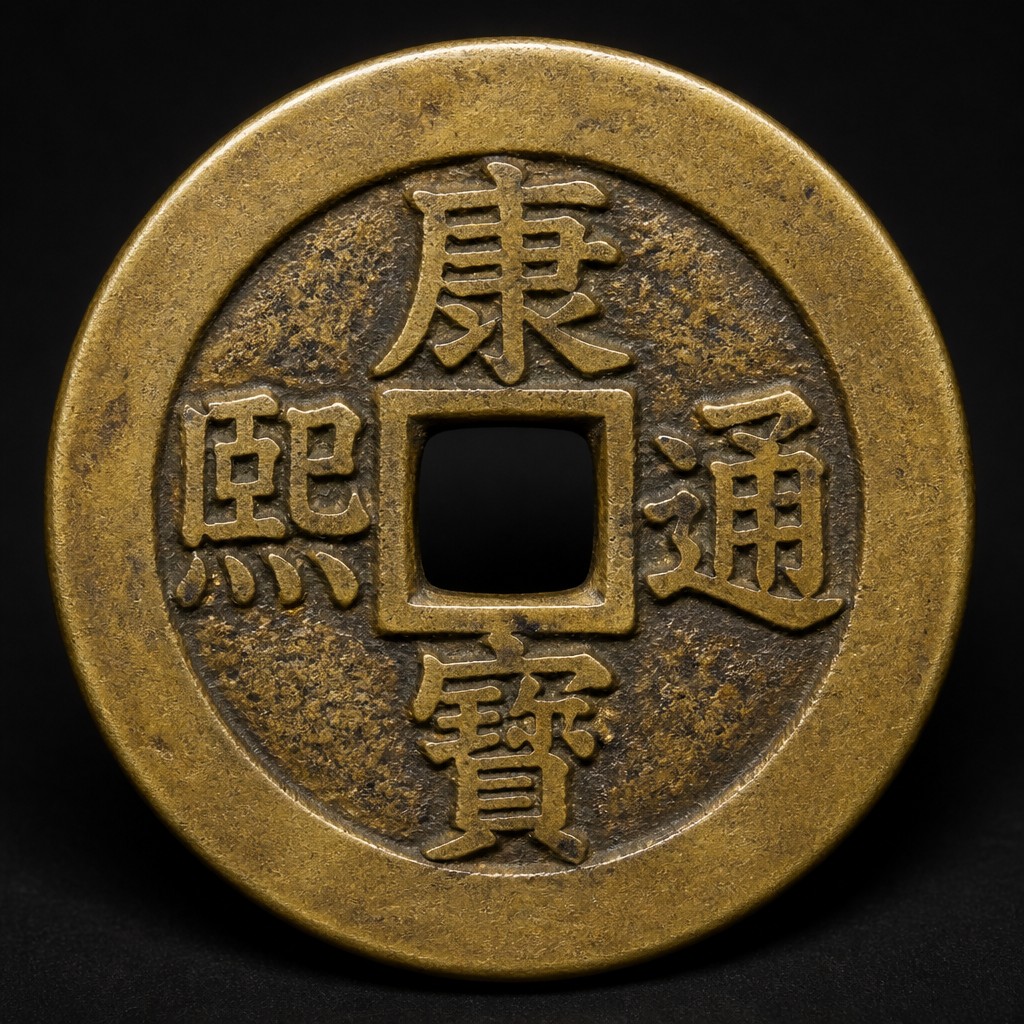
Chinese Cash Coin (Qing Dynasty 'Kangxi Tongbao')
1662–1722
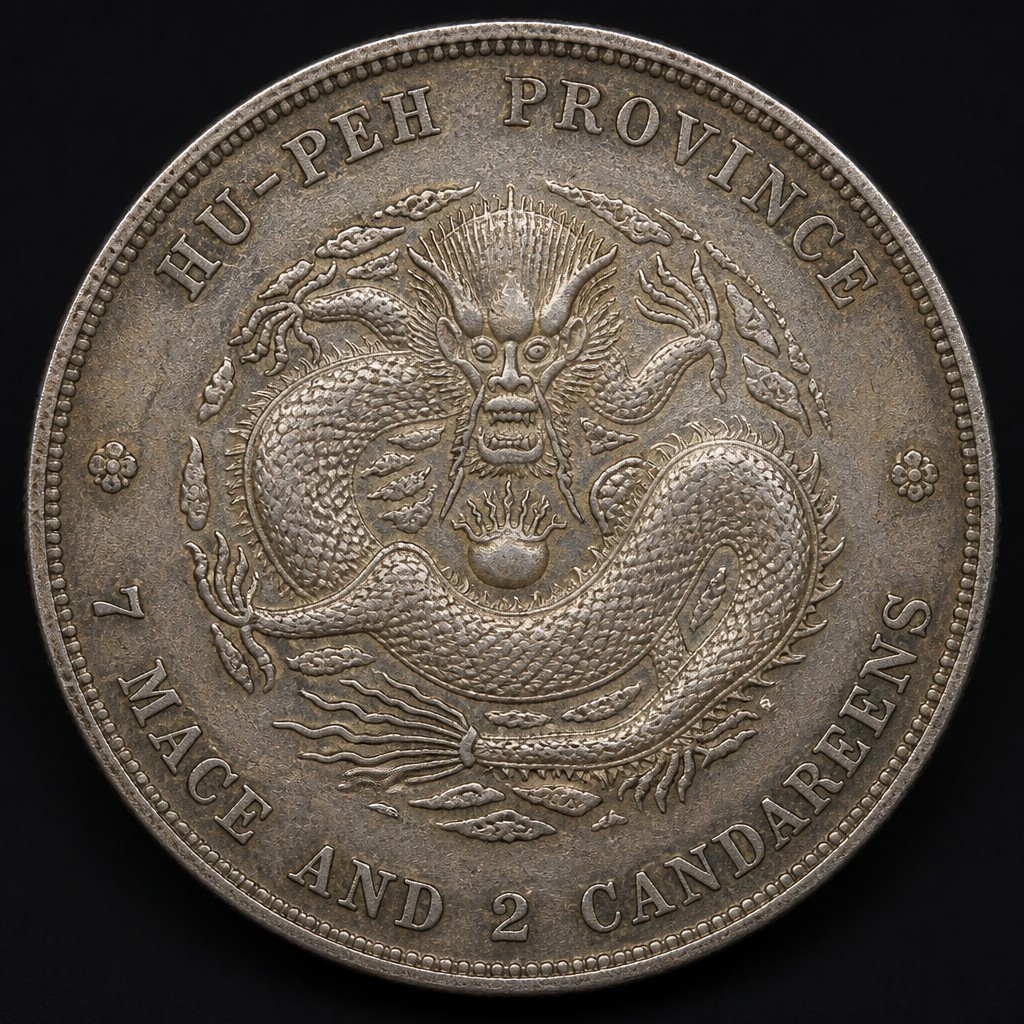
Chinese Hupeh Province Dragon Dollar
c. 1895–1909
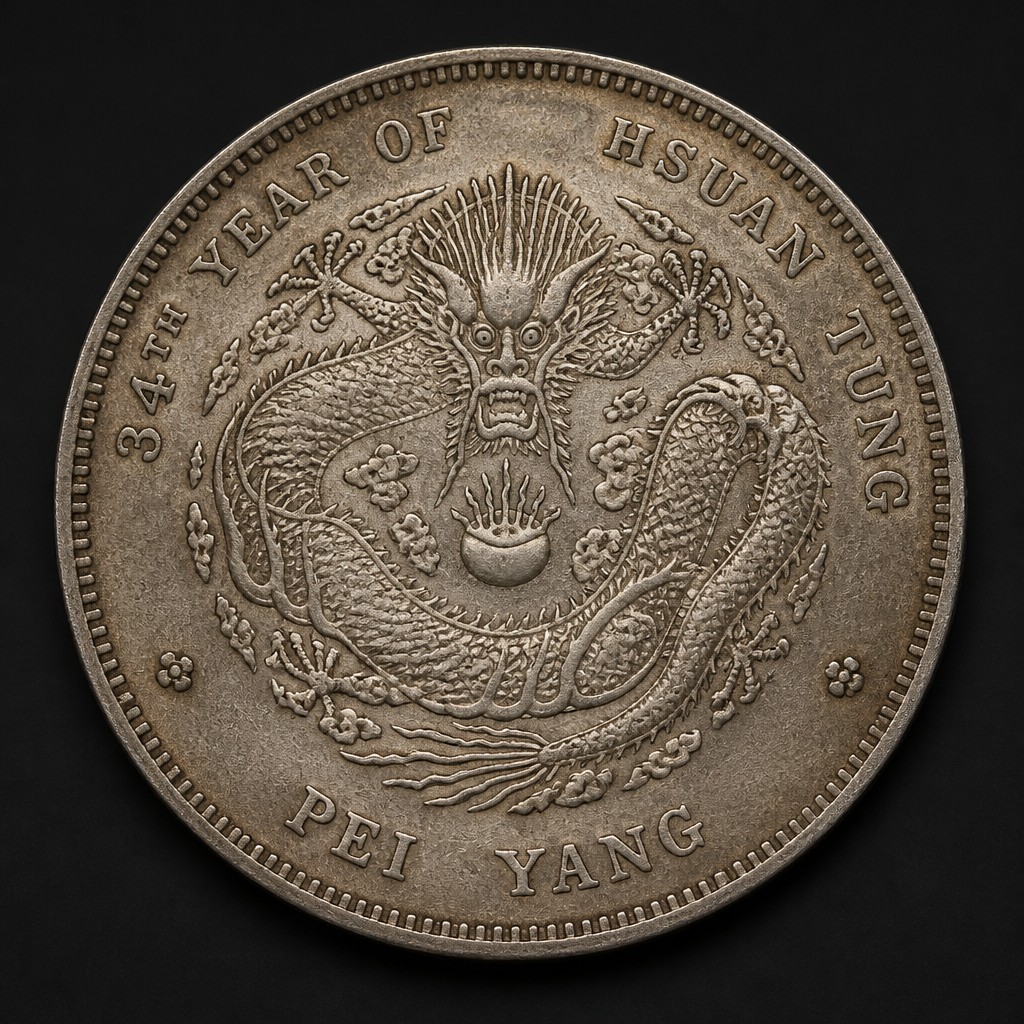
Chinese Empire Silver Dollar (Hsuan Tung Dragon)
1909–1911
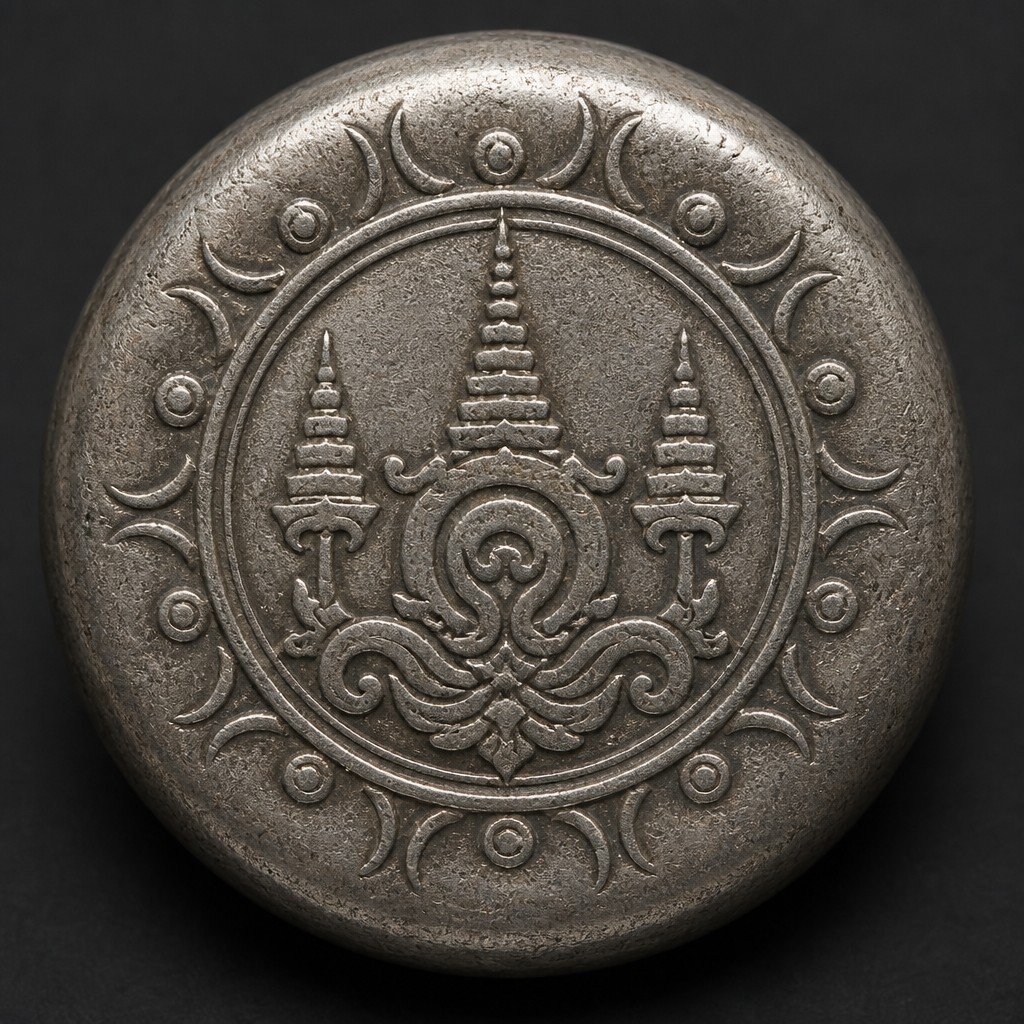
Thailand (Siam) Silver Baht 'Bullet Money' (Pod Duang)
c. 13th century – late 19th century
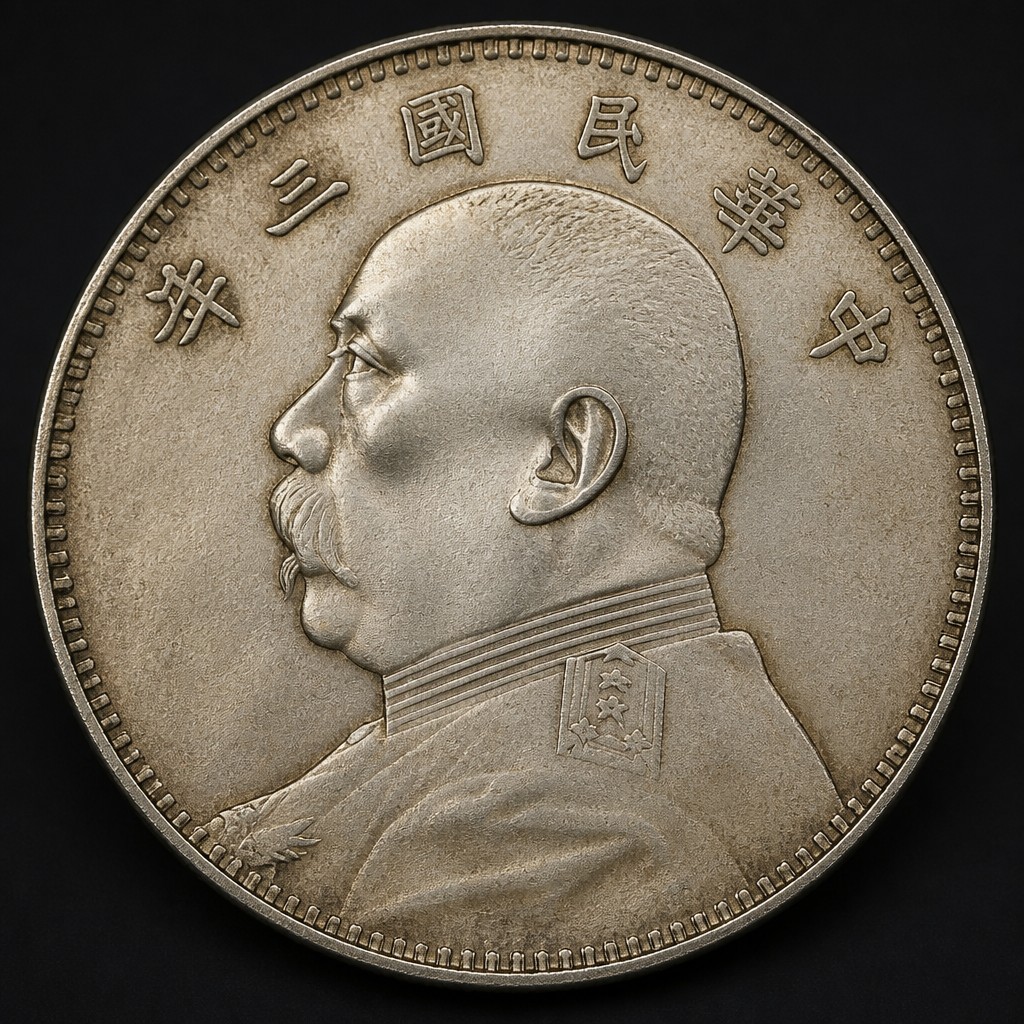
Yuan Shikai 'Fatman' Dollar (1914)
Dated 1914, struck into the early 1920s