
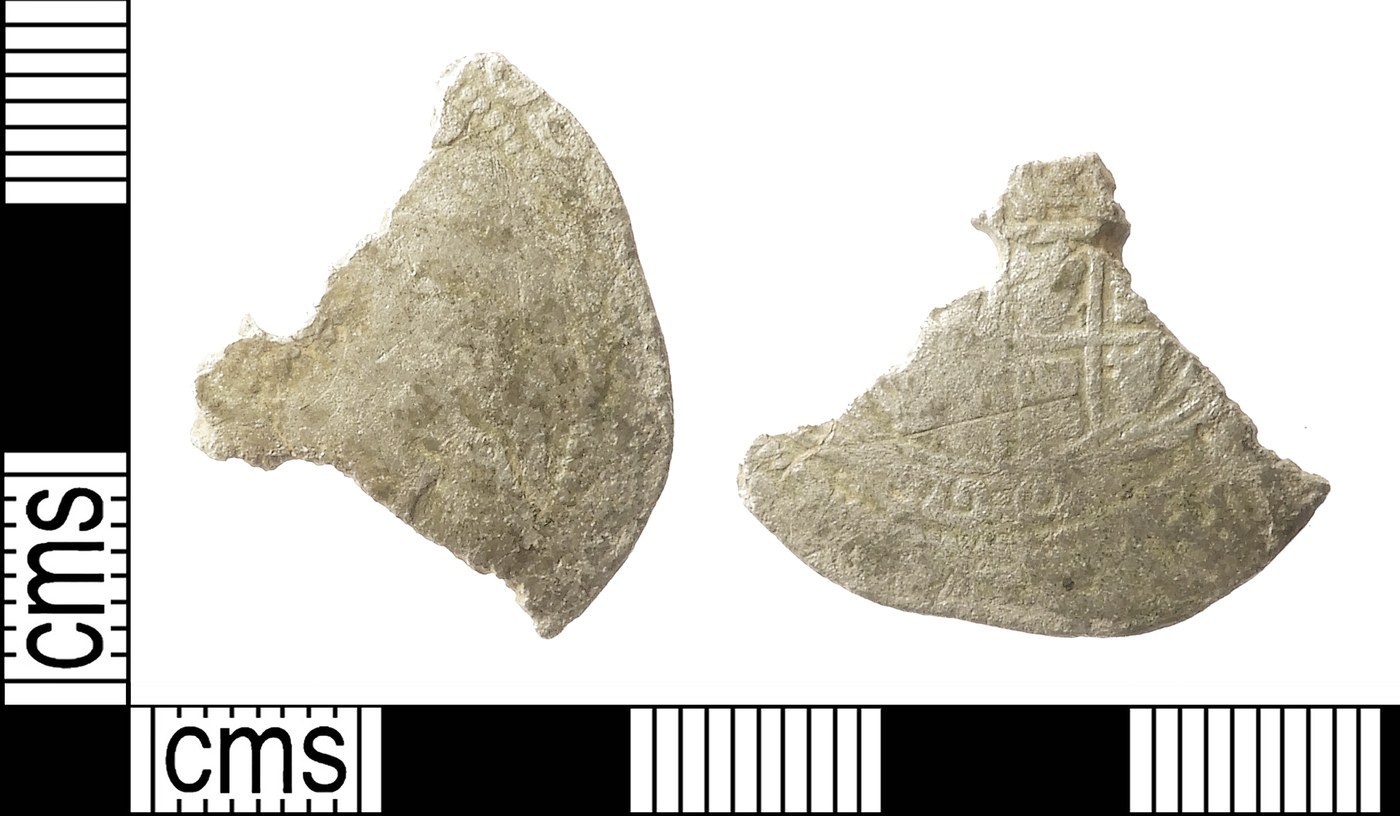
Charles I Half Crown
A large hammered silver half crown of Charles I, showing the king in portrait facing left and a crowned royal shield on the reverse.
- Country
- England
- Denomination
- Half Crown
- Metal
- Silver
Got a coin like this?
Identify any coin from a photo, free.
Overview
The Charles I Half Crown is a large hammered silver coin struck during the reign of Charles I of England (1625–1649), the last full era of England's hand-struck coinage. Valued at two shillings and sixpence, it was one of the biggest silver pieces in everyday circulation and carried the king's portrait as its principal design.
The photographed type shows Charles I in portrait facing left, encircled by a Latin legend, with the reverse bearing a crowned heraldic shield quartering the arms of England, Scotland, and Ireland. As with all hammered coinage, each surviving example was struck by hand between two dies, producing slightly irregular flans and individual character rather than the uniform look of later machine-made coins.
Because Charles I reigned through the political upheaval that led to the English Civil War, half crowns of this type were produced over many years and at several mints, making them one of the most widely collected of all English hammered silver coins.
History & Background
Charles I came to the throne in 1625 and his silver coinage, including the half crown, was struck at the Tower Mint in London through most of his reign. The half crown had already become established as a standard large silver denomination under his father James I, and Charles continued it as a workhorse of the currency.
The outbreak of the English Civil War in the 1640s transformed the coinage. With Parliament controlling London and the Tower Mint, Charles established rival royalist mints in the provinces — at places such as Oxford, Shrewsbury, Bristol, York, and elsewhere — many of which struck their own half crowns. These emergency and provincial issues vary widely in style and quality, and some of the most distinctive Civil War coins are half crowns.
The reign, and this hammered coinage, ended with Charles I's execution in 1649. Milled (machine-struck) coinage would come to dominate soon after, so the Charles I half crown belongs to the closing chapter of England's centuries-long tradition of hand-hammered money.
How to Identify
The obverse shows Charles I in profile facing left, surrounded by a Latin legend naming him as king. On many Tower issues the king appears mounted on horseback rather than as a simple bust, so the exact portrait style varies by mint and period; the described type presents the royal portrait within an encircling legend.
The reverse carries a crowned oval or shaped shield bearing the quartered royal arms — the lions of England, the lion rampant of Scotland, and the harp of Ireland combined on a single heraldic shield — surrounded by a further Latin legend. This quartered-shield reverse is the key diagnostic linking the coin to the united crowns held by the Stuart kings.
The coin is a large, hand-hammered silver piece with a slightly uneven flan and hand-cut lettering. A small symbol in the legend, the mint mark or initial mark, indicates the period and issuing mint and is essential for close attribution. Genuine strikes show the soft, occasionally doubled detail typical of hammered work rather than the crisp, uniform edges of milled coinage.
Value & Collectibility
As a genuine hammered silver coin roughly four centuries old, the Charles I half crown is both historically significant and, for many Tower Mint types, relatively available to collectors. Common London issues in worn but honest condition are among the more affordable of large English hammered silver coins, while values rise sharply with grade, strong portraits, and scarce mints.
Provincial and Civil War issues — Oxford, Bristol, York, and the various emergency mints — are generally scarcer and more sought after, and rare varieties or high-grade examples can command strong sums at specialist auction. Condition, centering, strike quality, and mint attribution matter far more than any single quoted figure.
Anyone valuing a specific coin should compare it against recent auction records for the matching mint mark and type, and treat any single price as context rather than a guarantee. Worn, clipped, or damaged pieces are worth considerably less than sound, well-struck examples.
Frequently asked questions
What was a Charles I half crown worth when it was in use?
It was valued at two shillings and sixpence — half of a crown of five shillings. It was one of the larger silver coins in everyday circulation during the reign.
Why do Charles I half crowns look so different from one another?
They were struck over more than two decades at many mints, including provincial and Civil War emergency mints. Portrait style, shield shape, legends, and quality vary considerably between London and provincial issues.
What do the symbols on the reverse shield mean?
The crowned shield quarters the arms of England (lions), Scotland (a lion rampant), and Ireland (a harp), reflecting the crowns united under the Stuart kings.
Is it made of real silver?
Yes. Charles I half crowns were struck in silver of the sterling standard used for English hammered coinage of the period.
Are these coins rare?
Common Tower Mint issues are relatively available, especially in worn grades, while provincial and Civil War issues and high-grade examples are much scarcer and more valuable.
Charles I Half Crown guides
In-depth guides for identifying, valuing, and collecting Charles I Half Crown.
Other coins you may enjoy
English Sixpence
Early 1600s (James I, 1603-1625)
Sixpence of James I
1603-1625
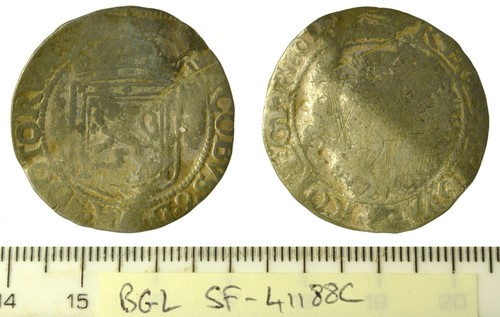
Thistle Merk
1567–1625
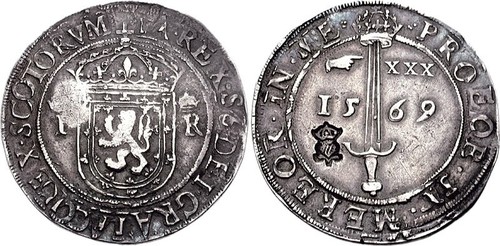
James VI Ryal
1567–1571
Quarter Merk
c. 1580–1691
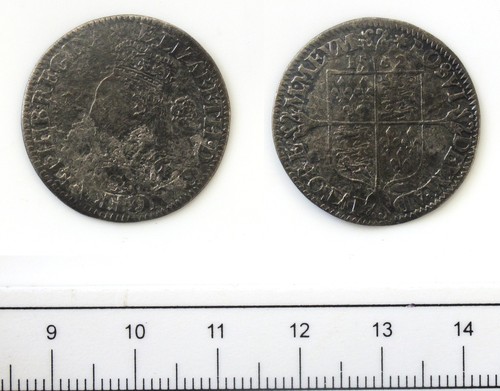
Sixpence of Elizabeth I
1560–1603
Quarter Angel of Elizabeth I
1581-1583
Laurel
1619-1625
Mary I Groat
1553-1558
Medieval Coin
c. 500–1500 (Medieval)
Half Thistle Merk
1567-1625
Irish Pistole
1640s (17th century)