
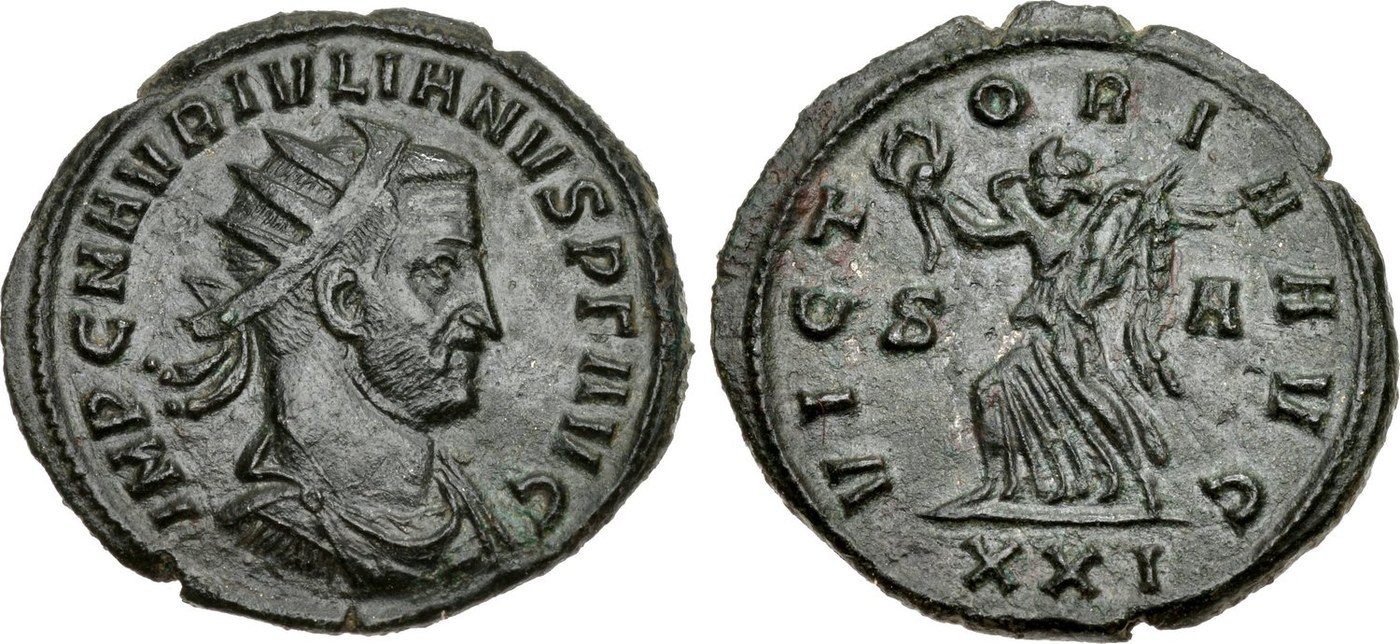
Antoninianus of Julian of Pannonia
Copper-alloy radiate antoninianus attributed to Julian of Pannonia, with a spiked-crown portrait and an ORIENTIS RESTIT standing-figure reverse.
- Country
- Roman Empire
- Denomination
- Antoninianus
- Metal
- Copper alloy
Got a coin like this?
Identify any coin from a photo, free.
Overview
The antoninianus attributed to Julian of Pannonia is a Roman copper-alloy coin of the radiate (double-denarius) type, named for the emperor's spiked crown rather than a laurel wreath. The specimen shown here carries an obverse radiate portrait with the legend read as C JULIUS PROB IANVS, paired with a standing figure and the reverse legend ORIENTIS RESTIT, meaning a restorer of the East.
The piece is dated to roughly 260-270 AD, the height of the period when debased radiate antoniniani dominated Roman circulation. The name Julian of Pannonia refers to a short-lived third-century usurper, and coinage carrying this name is exceptionally rare, so any example should be studied and attributed with care rather than assumed from the portrait alone.
History & Background
Julian of Pannonia is the conventional name for a Roman usurper who rose in the Danubian provinces during the turbulent late third century, revolted against the sitting emperor, and was defeated after only a brief bid for power. Because his reign was measured in months rather than years, coinage bearing his name was struck in very small quantity and survives today only in tiny numbers, making genuine pieces among the great rarities of the Roman series.
The reverse type on this coin, ORIENTIS RESTIT (a form of ORIENS RESTITVTOR, restorer of the East), belongs to a family of propaganda legends widely used in the 260s and 270s AD, when emperors advertised the recovery of the eastern provinces during the crisis of the third century. The coin's copper-alloy fabric reflects the collapse of the silver standard in this era: antoniniani of the period are base-metal pieces that once carried only a thin silvery surface wash. Note that the reading of the obverse legend here (C JULIUS PROB IANVS) is unusual, and third-century radiates frequently show blundered or irregularly spaced legends, so the exact attribution deserves scholarly confirmation.
How to Identify
Begin with the obverse. The portrait wears a radiate crown of pointed spikes, which marks the coin as an antoninianus rather than a laurel-wreathed denarius. Read the encircling Latin legend carefully: on this specimen it is recorded as C JULIUS PROB IANVS, with the emperor's name element the decisive clue. Because letters on worn base-metal radiates are easily misread, transcribe each letter rather than trusting a first impression.
The reverse shows a single standing figure with the surrounding legend ORIENTIS RESTIT. Figures on this type of reverse are typically a deity or personification, or the emperor himself, identified by attributes such as a raised hand, a globe, a spear, or a captive at the feet. Physically the coin is a small copper-alloy piece, generally in the range of about 18-22 mm across and only a few grams in weight, often with dark, earthen, or patinated surfaces and any original silvering long worn away.
Value & Collectibility
Value for a coin of this kind hinges almost entirely on attribution and authenticity. A securely identified, genuine issue of a rare usurper such as Julian of Pannonia would be a significant rarity of real importance, while a piece with a doubtful, blundered, or misread legend is treated as an ordinary base-metal radiate and carries only modest worth.
Because rare-usurper coins attract both high prices and frequent imitation, condition, clear legends, and documented provenance matter enormously. Rather than assigning a figure from the name alone, collectors should have any candidate examined against standard references and, where the stakes are high, by a specialist in third-century Roman coinage before treating it as a rarity.
Frequently asked questions
How do I know this is an antoninianus?
The portrait wears a radiate crown of pointed spikes rather than a laurel wreath, which is the defining feature of the antoninianus, or radiate double-denarius.
Is the coin made of silver?
No. It is a copper-alloy (base-metal) piece typical of the mid-third century, when the silver standard had collapsed and radiates carried at most a thin surface wash of silver that is usually worn away.
What does ORIENTIS RESTIT mean?
It is a form of ORIENS RESTITVTOR, roughly restorer of the East, a common propaganda legend advertising the recovery of Rome's eastern provinces during the third-century crisis.
Are coins of Julian of Pannonia rare?
Yes, extremely. He was a short-lived usurper, so genuine coins bearing his name are among the rarest in the Roman series and warrant careful, expert attribution.
Why does the obverse legend look unusual?
Third-century base-metal radiates often have blundered, crowded, or worn legends that are easily misread, so the exact reading and attribution of this coin should be confirmed against references.
Antoninianus of Julian of Pannonia guides
In-depth guides for identifying, valuing, and collecting Antoninianus of Julian of Pannonia.
Other coins you may enjoy
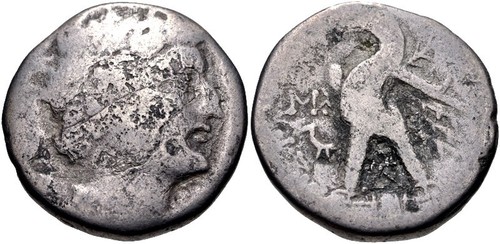
Tetradrachm of Ptolemy XII
80-51 BC
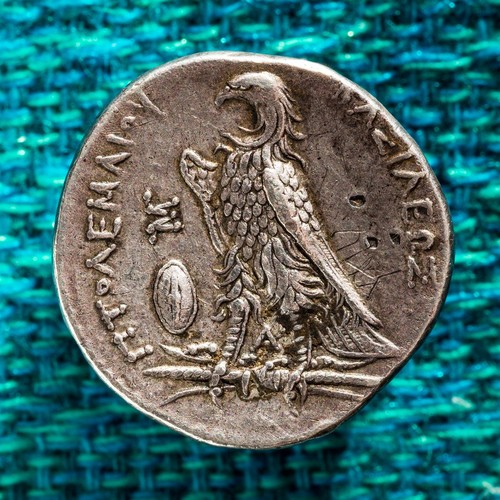
Tetradrachm of Ptolemy I
305-283 BC
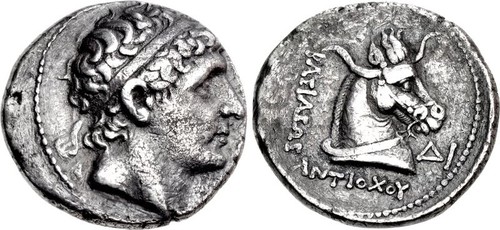
Tetradrachm of Antiochos I Soter
281-261 BC
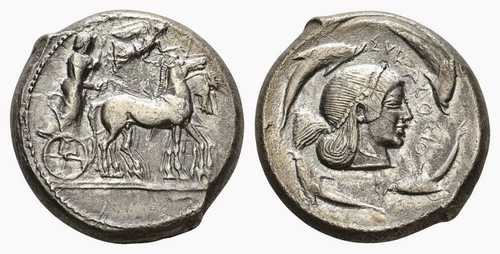
Syracuse Tetradrachm
c. 5th-4th century BC (Classical period)
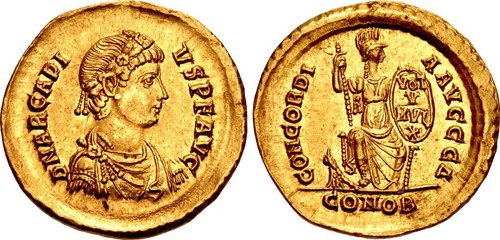
Solidus of Arcadius
AD 395-402
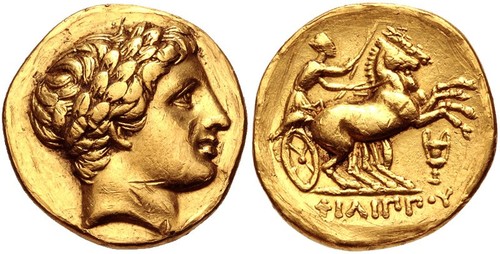
Philip III Gold Stater
323-317 BC
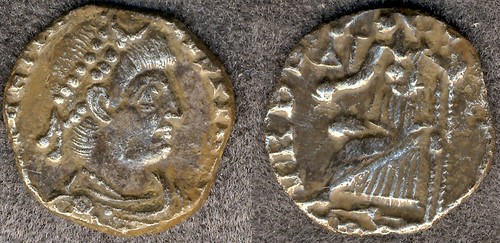
Siliqua of Gratian
AD 367-383
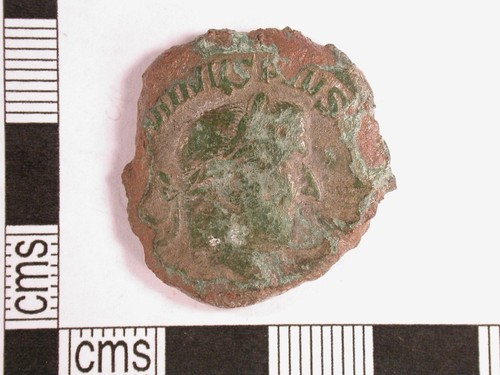
Sestertius of Maximinus Thrax
235-238 AD
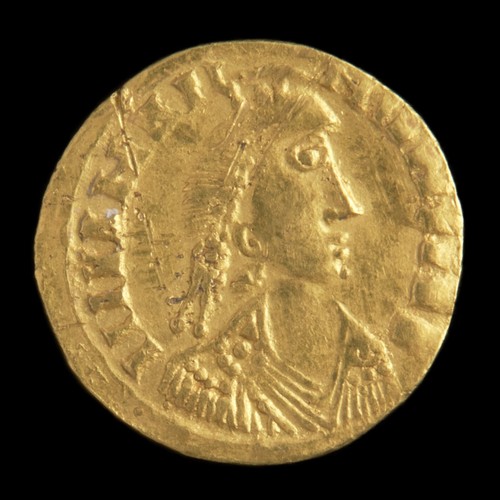
Solidus of Valentinian III
AD 425-455
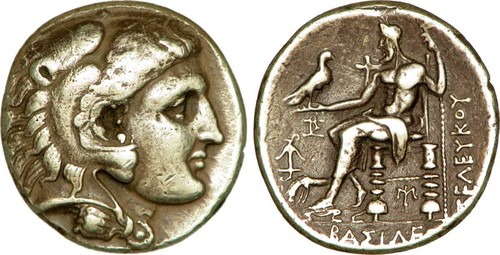
Seleucus I Nicator Tetradrachm
Late 4th-3rd century BC
Nummus of Magnentius
AD 350-353
Follis of Galerius
AD 308-310