
How to Identify the Antoninianus of Julian of Pannonia
A collector's guide to reading the radiate portrait, ORIENTIS RESTIT reverse, size, and metal of an antoninianus attributed to Julian of Pannonia.
Read the full Antoninianus of Julian of Pannonia encyclopedia entry →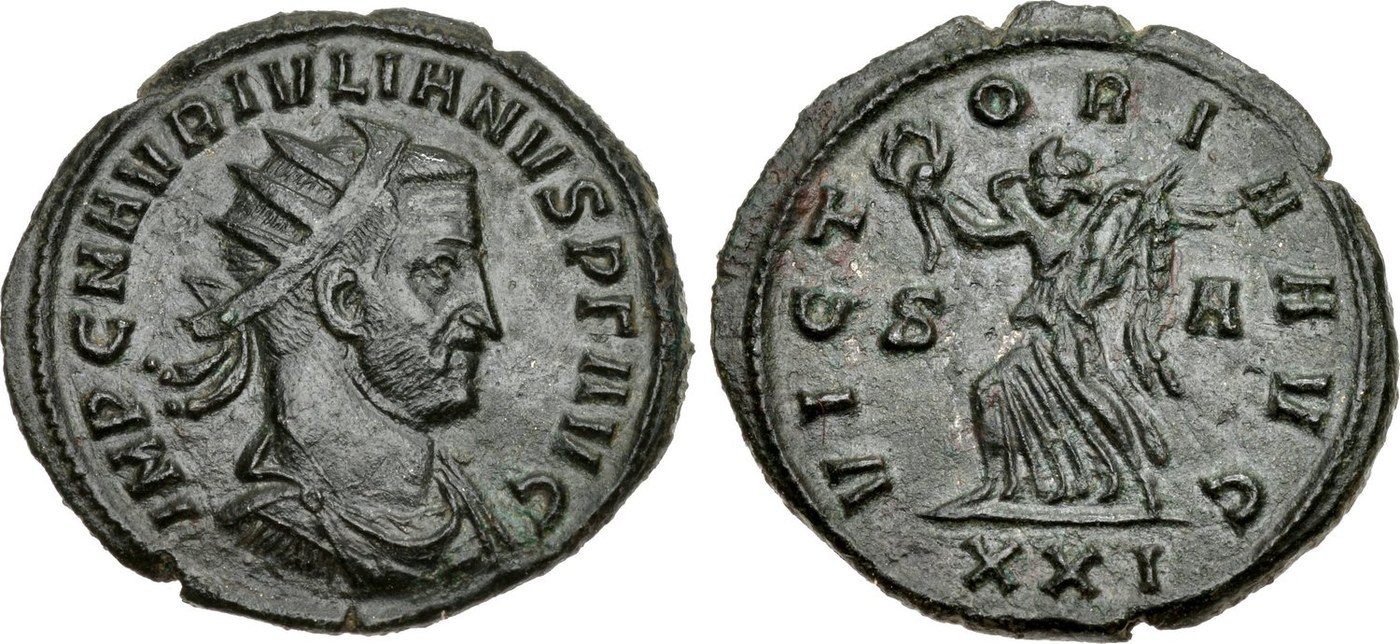
Start by confirming the denomination. A genuine antoninianus shows the ruler wearing a radiate crown, a band of pointed spikes rising from the head, not the laurel wreath of a denarius. On this coin the obverse portrait faces with that spiked crown and is surrounded by a legend recorded as C JULIUS PROB IANVS. Transcribe the legend letter by letter under good light and magnification, because the name element is the single most important piece of evidence and worn base-metal surfaces are easy to misread.
Move to the reverse, which shows a standing figure and the legend ORIENTIS RESTIT (from ORIENS RESTITVTOR). Note what the figure holds or does: a raised hand, a globe, a spear, or a captive underfoot all help place the type within the third-century restorer-of-the-East family. The pairing of a specific figure with its exact legend is the key attribution step, so record both rather than the portrait alone.
Check the physical coin. Expect a small copper-alloy piece, roughly 18-22 mm in diameter and only a few grams in weight, often with a dark or earthen patina and little or no surviving silver wash. A bright, heavy, or suspiciously fresh-looking piece deserves extra scrutiny for this issue.
Watch for look-alikes. ORIENS RESTITVTOR reverses were used widely by emperors such as Aurelian, Tacitus, and Probus, and by countless anonymous barbarous radiates, so a similar reverse does not by itself confirm Julian of Pannonia; the obverse name is what matters. Because coins of a rare usurper are heavily faked and sometimes have legends re-cut or tooled to read a desirable name, treat any candidate cautiously: look for cast seams, surface bubbles, soft mushy detail, or lettering that seems altered, and compare the exact obverse and reverse legends against standard references before accepting the attribution.
Frequently asked questions
What is the fastest first check on this coin?
Confirm the radiate (spiked) crown to establish it as an antoninianus, then carefully read the obverse legend, since the ruler's name, not the reverse, drives the attribution.
Does the ORIENTIS RESTIT reverse prove it is Julian of Pannonia?
No. Restorer-of-the-East reverses were used by many third-century emperors and by barbarous imitations, so you must confirm the emperor's name in the obverse legend.
How can I spot a fake or altered piece?
Look for cast seams, surface bubbles, soft blurry detail, or lettering that appears re-cut or tooled; genuine radiates are struck with crisp devices, and rare-usurper names are a common target for alteration.
Should I get this coin authenticated?
Yes. Because a genuine coin of this usurper is a major rarity and imitations are common, have any candidate examined against references and, where value is at stake, by a specialist in third-century Roman coinage.