
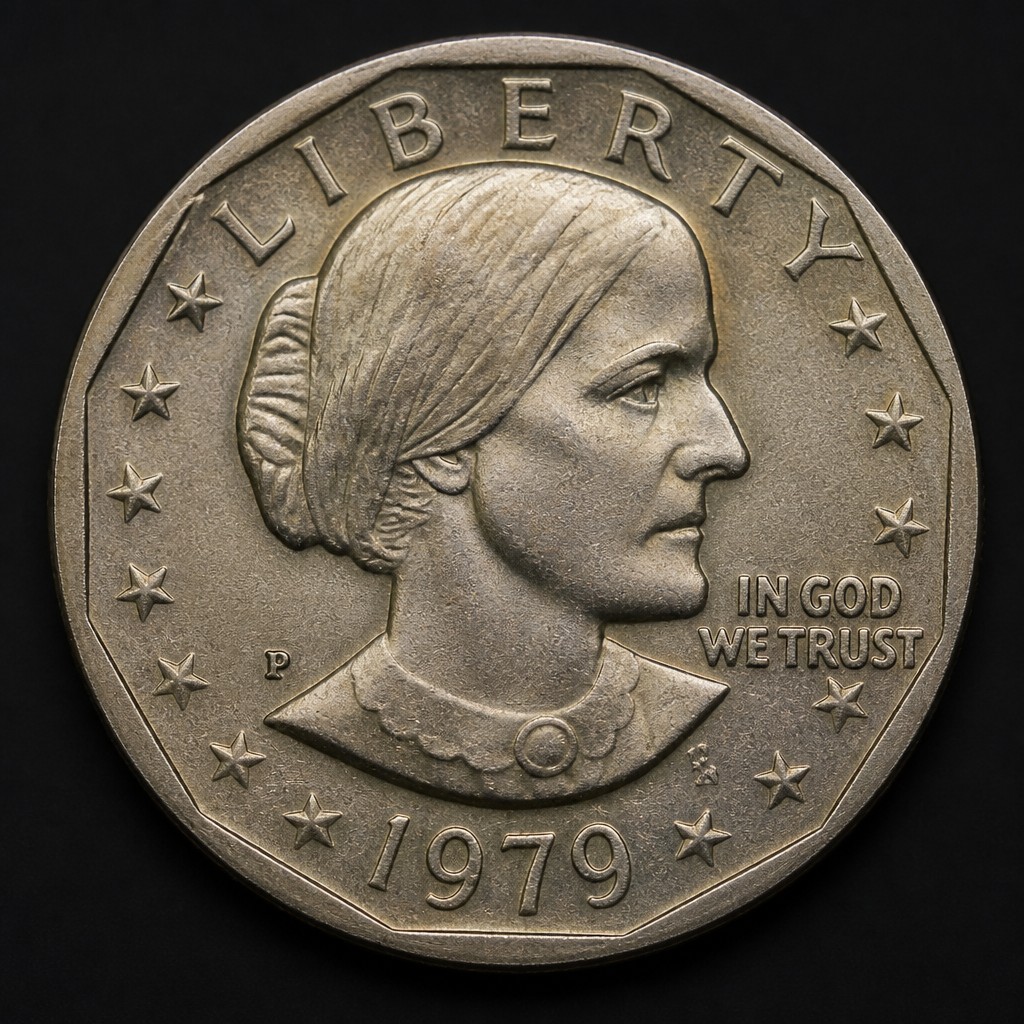
1979 Susan B. Anthony Dollar
The first year of the Susan B. Anthony dollar, the first U.S. circulating coin to depict a real, named woman, notable for the scarce 1979-P wide-rim (Near Date) variety.
- Country
- United States
- Denomination
- One Dollar
- Metal
- Copper-Nickel Clad
Got a coin like this?
Identify any coin from a photo, free.
Overview
The 1979 Susan B. Anthony dollar marked the debut of a smaller, more manageable dollar coin intended to replace the large Eisenhower dollar in everyday commerce, and it was the first U.S. circulating coin to feature a specific, named historical woman. Susan B. Anthony was honored for her decades of activism for women's suffrage, making the coin a significant milestone in American coinage even though it struggled to gain public acceptance.
The coin's smaller size and copper-nickel clad composition were meant to make it easier to handle than the bulky Eisenhower dollar, but its similarity in size, color, and edge to the quarter caused persistent confusion among the public, limiting its circulation success despite its historical importance.
History & Background
By the late 1970s, the large Eisenhower dollar had proven unpopular due to its size and weight, prompting Congress to authorize a smaller dollar coin design. Frank Gasparro, the Mint's Chief Engraver, was tasked with creating a new obverse portrait, and after considering an allegorical Liberty figure, the Treasury ultimately selected women's suffrage leader Susan B. Anthony as the coin's subject, following lobbying from women's groups and members of Congress who wanted meaningful recognition of a real historical figure.
The coin was released into circulation in 1979, but the public quickly confused it with the similarly sized and colored quarter, especially since it had a plain, reeded edge like other higher-denomination coins rather than a visibly distinct feature. Despite the Mint's hope that the coin would see wide use in vending machines and mass transit systems, public reception was lukewarm, and production was scaled back significantly after the initial year.
Within the 1979 issue, a scarce variety known as the Wide Rim or Near Date exists among Philadelphia-minted coins, distinguished by a wider rim and the date positioned closer to the rim than the more common Narrow Rim variety, adding a notable subplot to the coin's debut year.
How to Identify
The obverse depicts a right-facing portrait of Susan B. Anthony with the inscriptions LIBERTY, IN GOD WE TRUST, and the date. The reverse reuses the Apollo 11 eagle-landing-on-the-moon design originally created for the Eisenhower dollar, with UNITED STATES OF AMERICA and E PLURIBUS UNUM in the surrounding legend.
The coin is notably smaller than the Eisenhower dollar, at 26.5mm in diameter, and is distinguished from a quarter mainly by its color tone, its eleven-sided inner rim border (visible around the portrait and date on close inspection), and its denomination marking of ONE DOLLAR on the reverse. It has a reeded edge and is struck in standard copper-nickel clad composition.
The 1979-P Wide Rim (Near Date) variety can be identified by comparing the distance between the date and the rim: on the wide rim variety, the date sits noticeably closer to the coin's edge compared to the more common narrow rim variety, where more space separates the date from the rim.
Value & Collectibility
Most 1979 Susan B. Anthony dollars are common and trade close to face value or a small premium in circulated to uncirculated condition, since they were struck in large numbers. The scarcer 1979-P Wide Rim (Near Date) variety, however, is considerably more valuable, particularly in higher uncirculated grades, since it was produced in much smaller numbers than the common narrow rim variety.
Proof versions from San Francisco, especially in cameo or deep cameo condition, can also carry a modest premium over ordinary business-strike coins. As with other modern clad coinage, exceptional condition and certified grading matter more to value than base rarity for the majority of common-date pieces.
Frequently asked questions
Why was Susan B. Anthony chosen for this coin?
She was honored for her lifelong work advocating for women's suffrage, and the coin marked the first time a real, named woman appeared on a circulating U.S. coin.
Why did people confuse the Anthony dollar with a quarter?
Both coins are similar in size, color, and edge style, which caused frequent mix-ups and contributed to the coin's limited circulation success.
What is the 1979-P Wide Rim variety?
It is a scarcer variety from Philadelphia where the date sits closer to the coin's rim than on the more common narrow rim version, making it more valuable to collectors.
Is the reverse design original to this coin?
No, it reuses the Apollo 11 eagle-on-the-moon design first created for the Eisenhower dollar.
Other coins you may enjoy
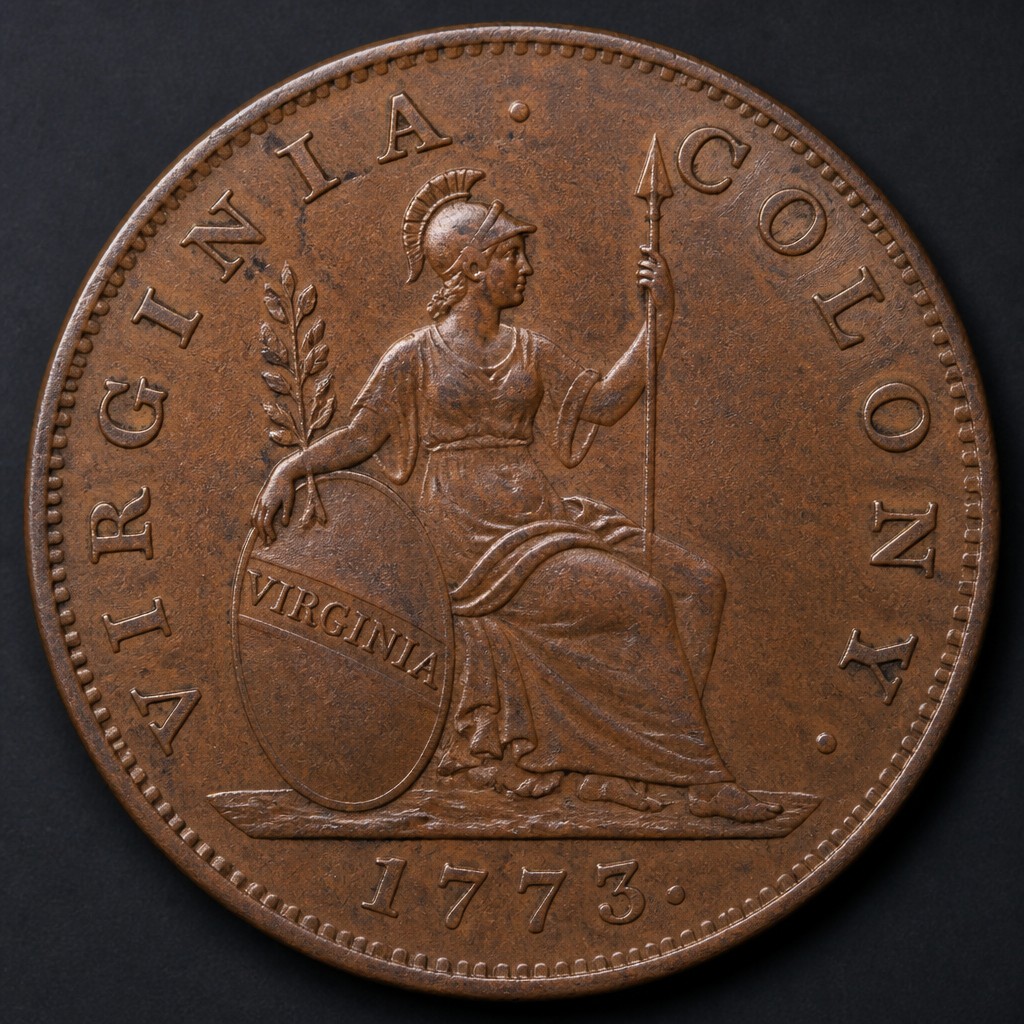
Virginia Halfpenny
1773
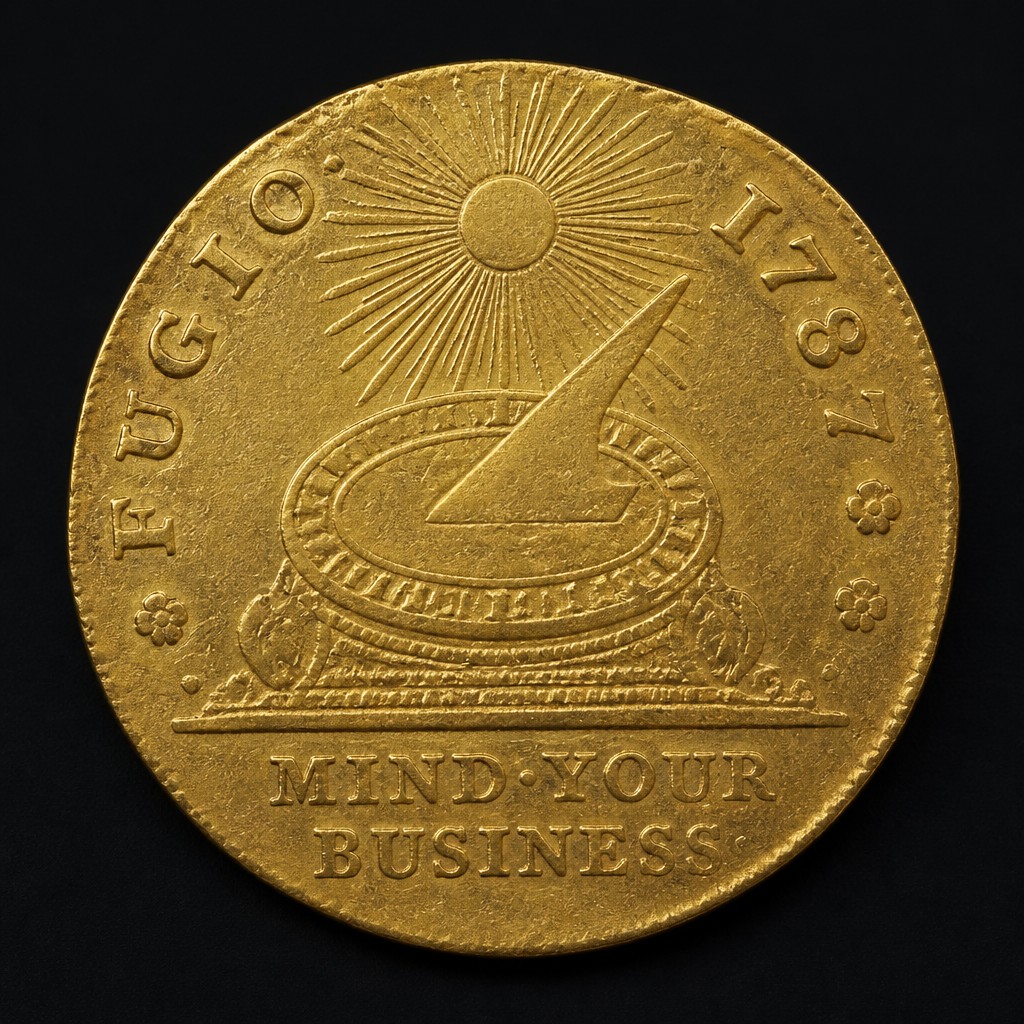
Brasher Doubloon
1787
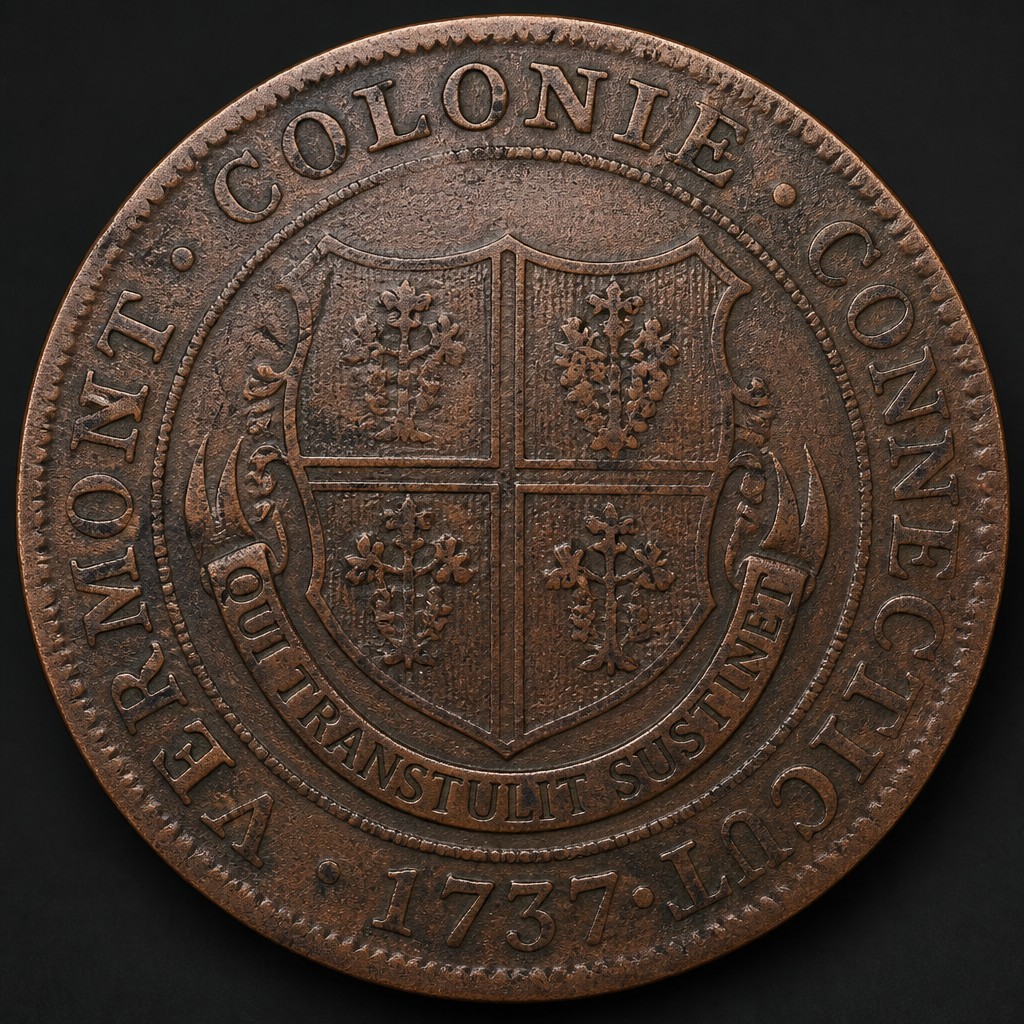
Higley Copper
1737–1739
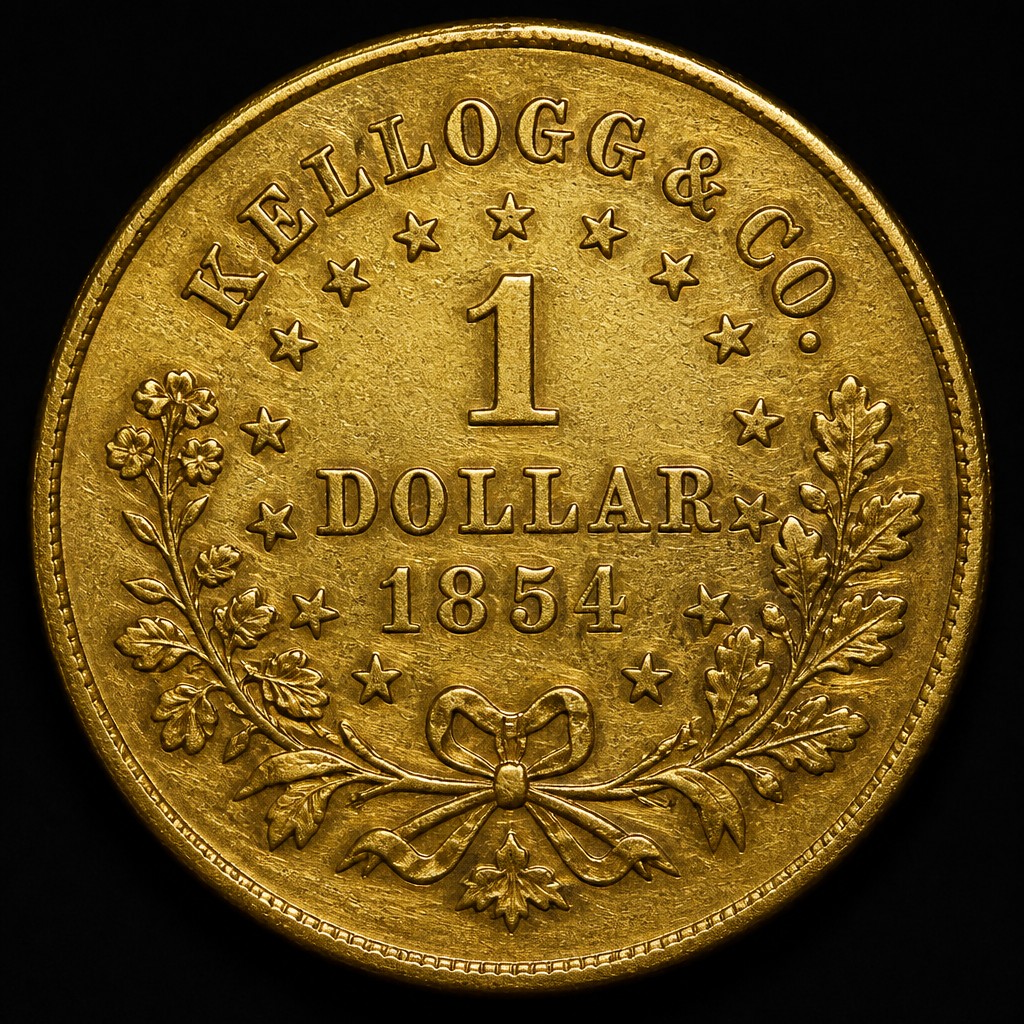
Kellogg & Co. Gold Piece
1854–1855
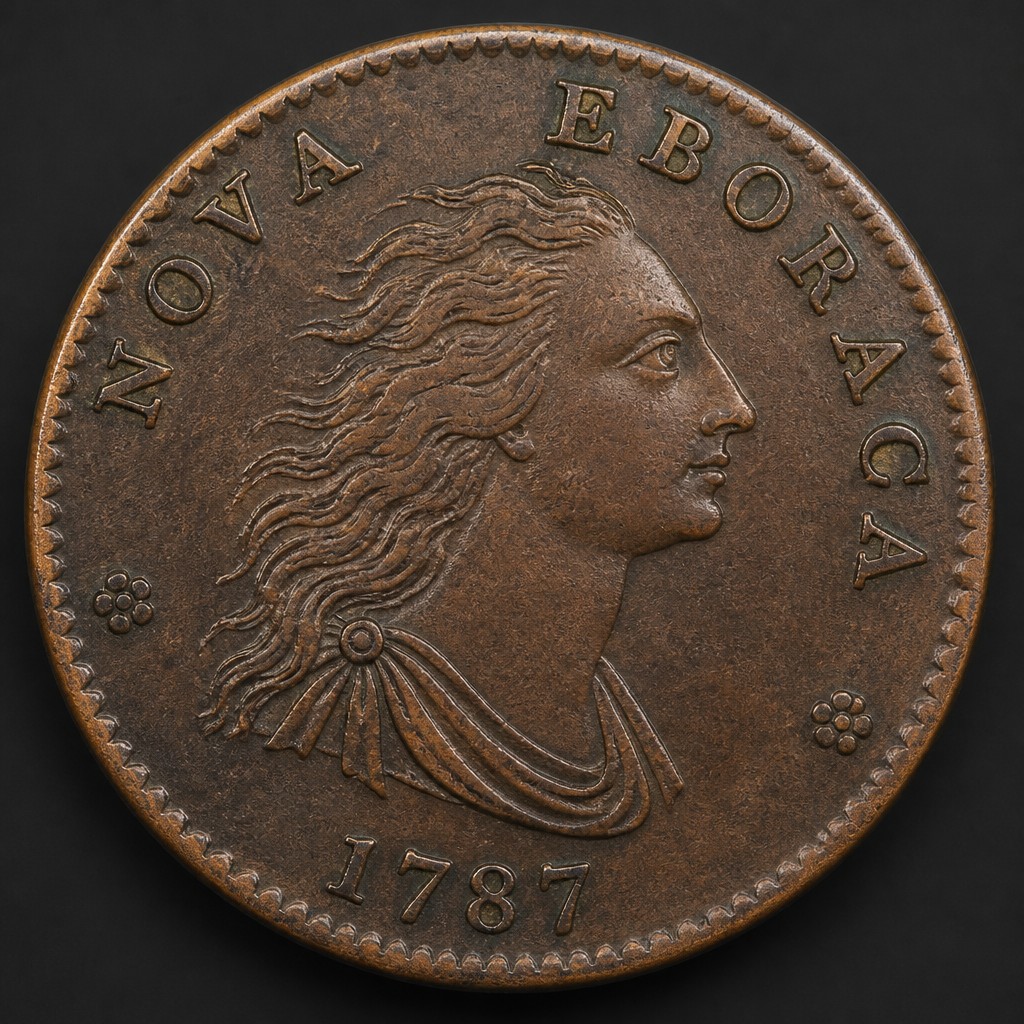
Nova Eborac Copper
1787
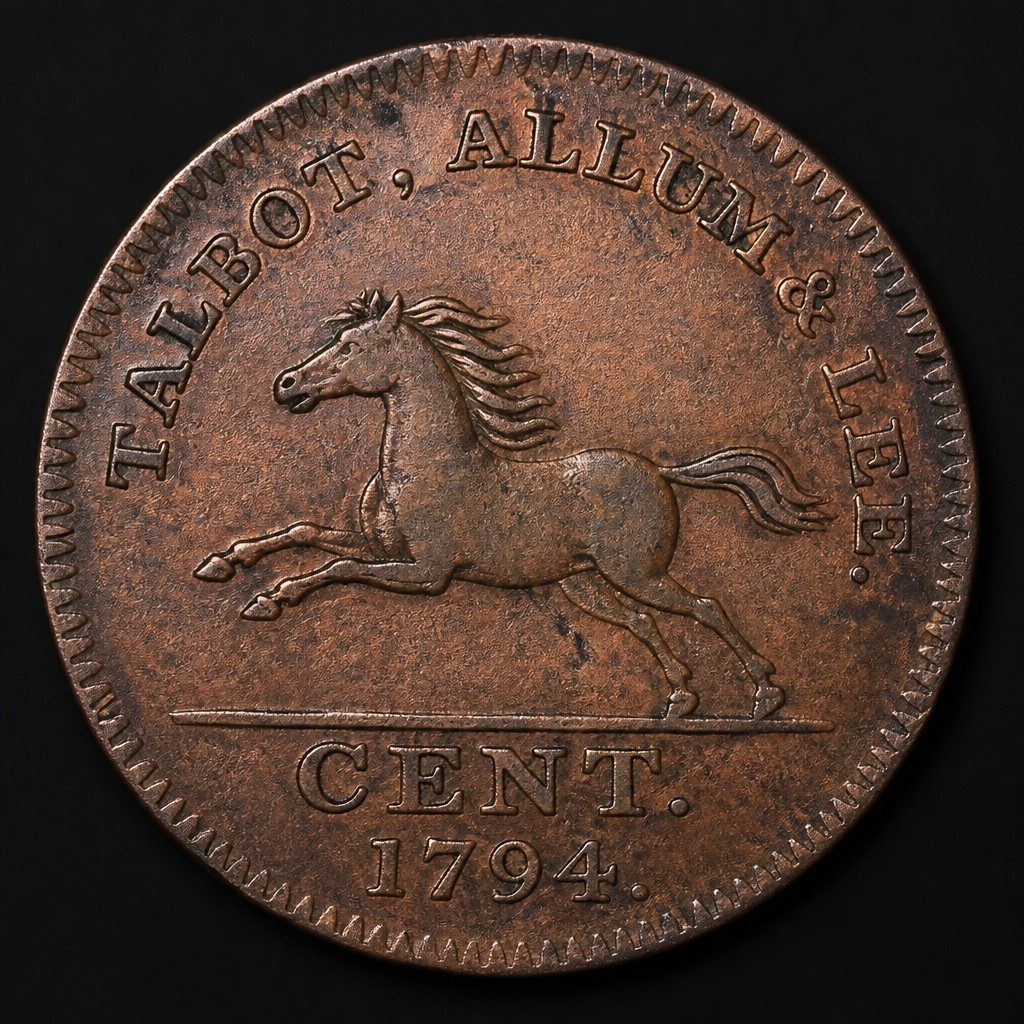
Talbot, Allum & Lee Cent
1794–1795
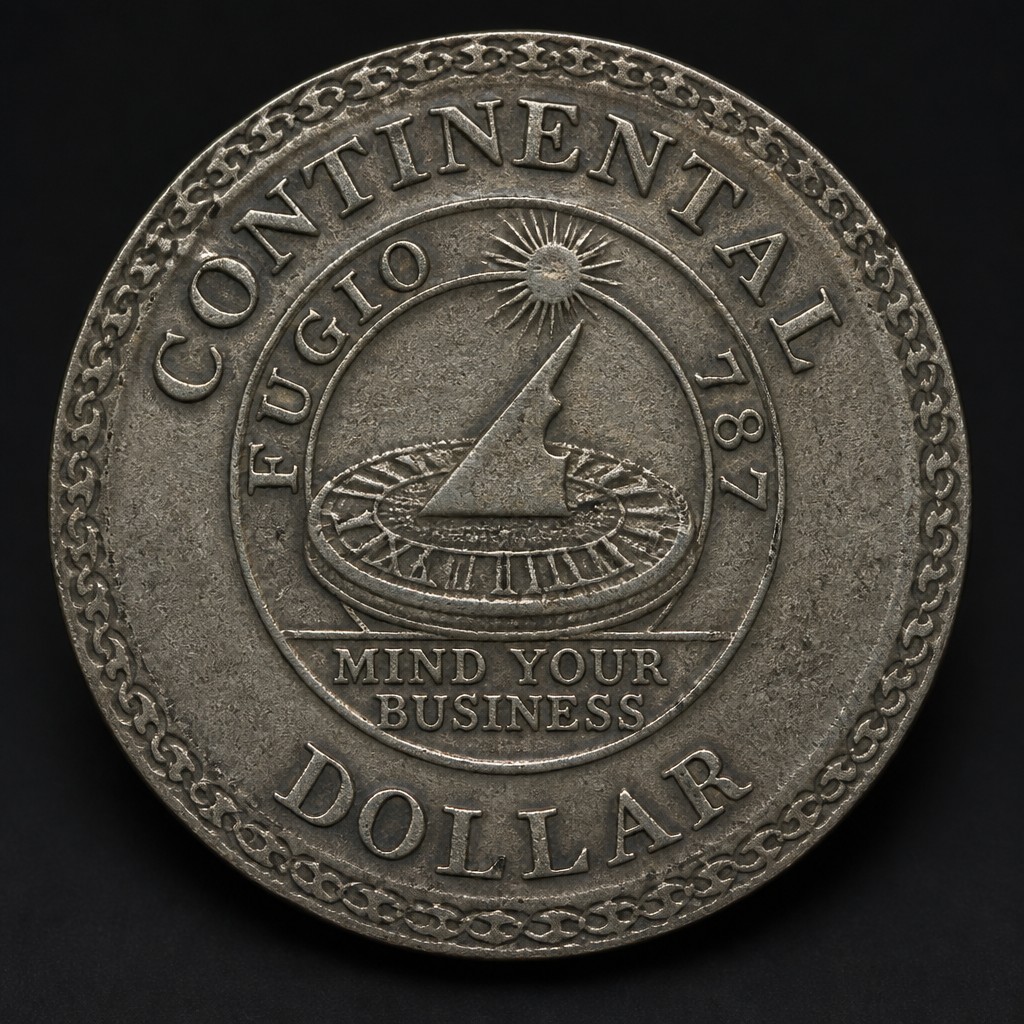
Continental Dollar
1776
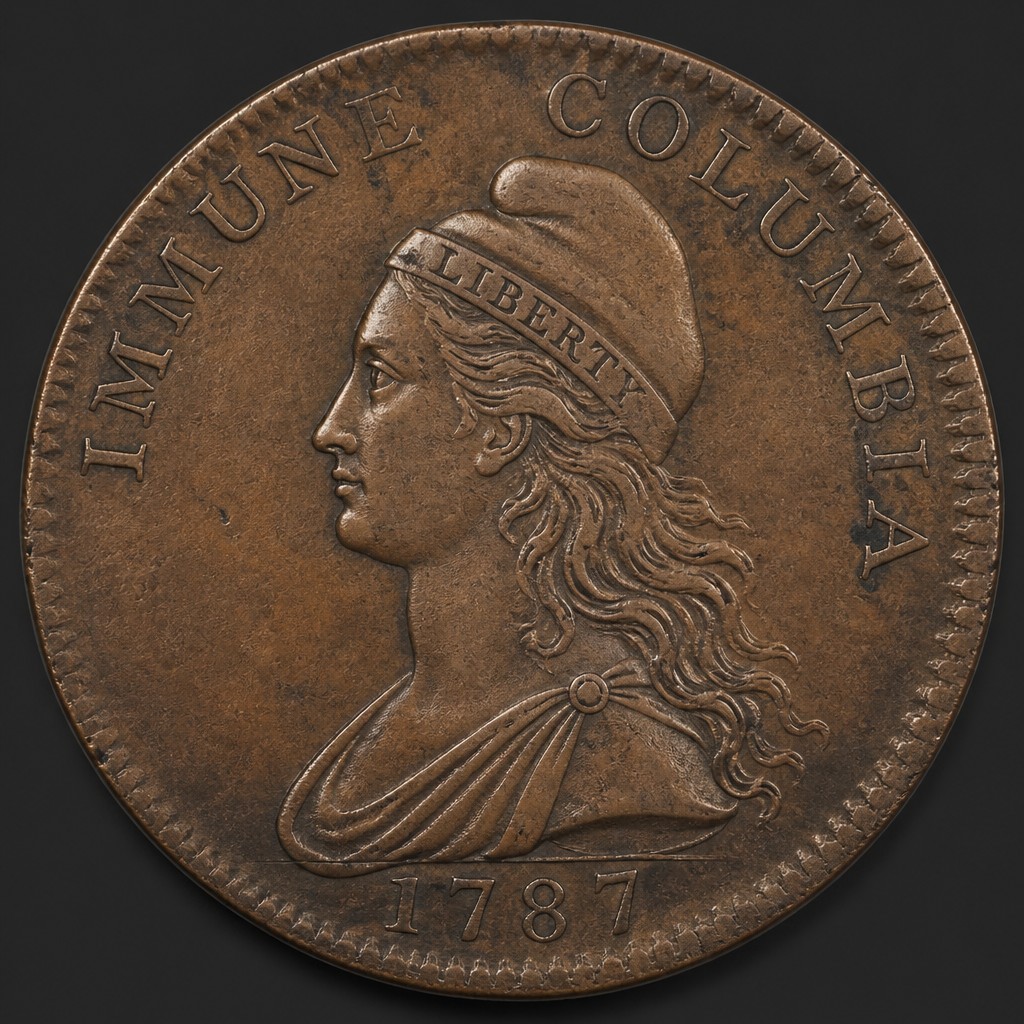
Immune Columbia Copper
circa 1785–1787
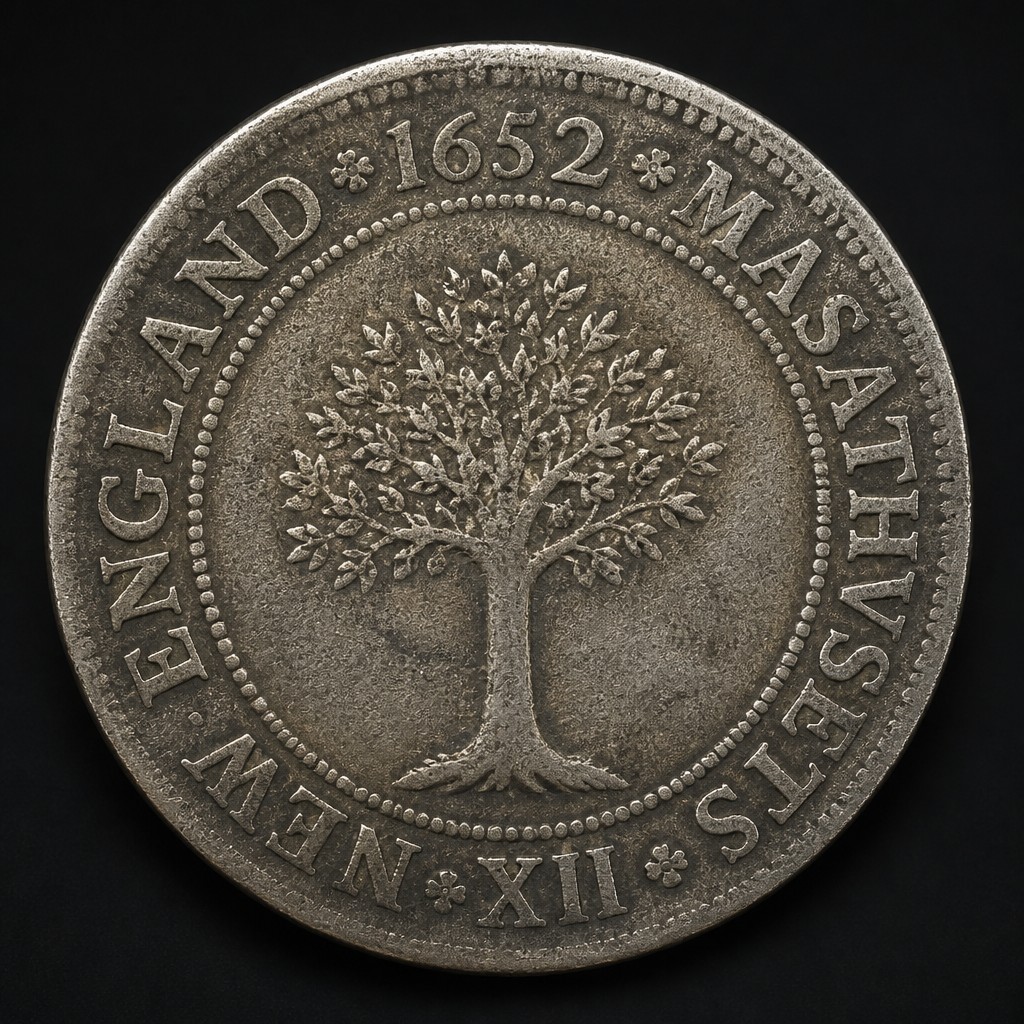
Massachusetts Oak Tree Shilling
Dated 1652, struck circa 1660–1667
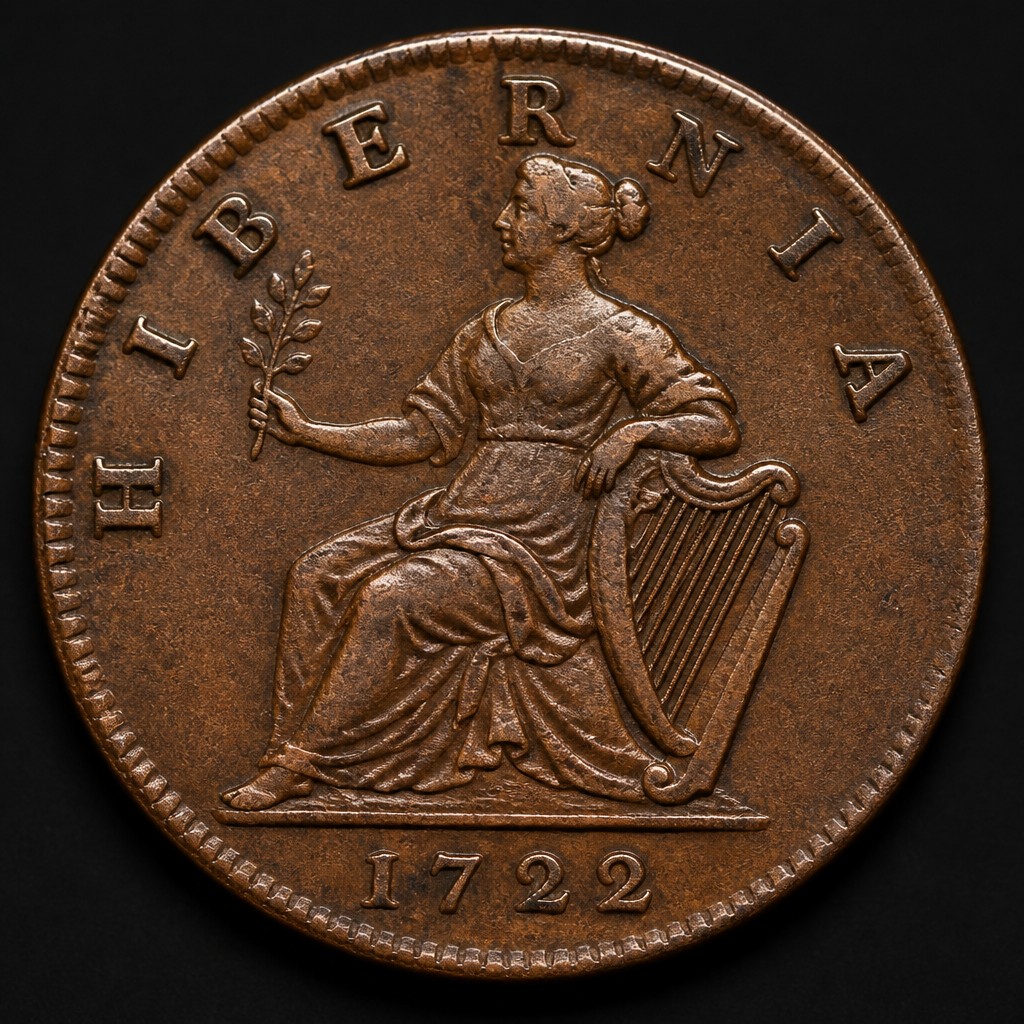
Wood's Hibernia Halfpenny
1722–1724
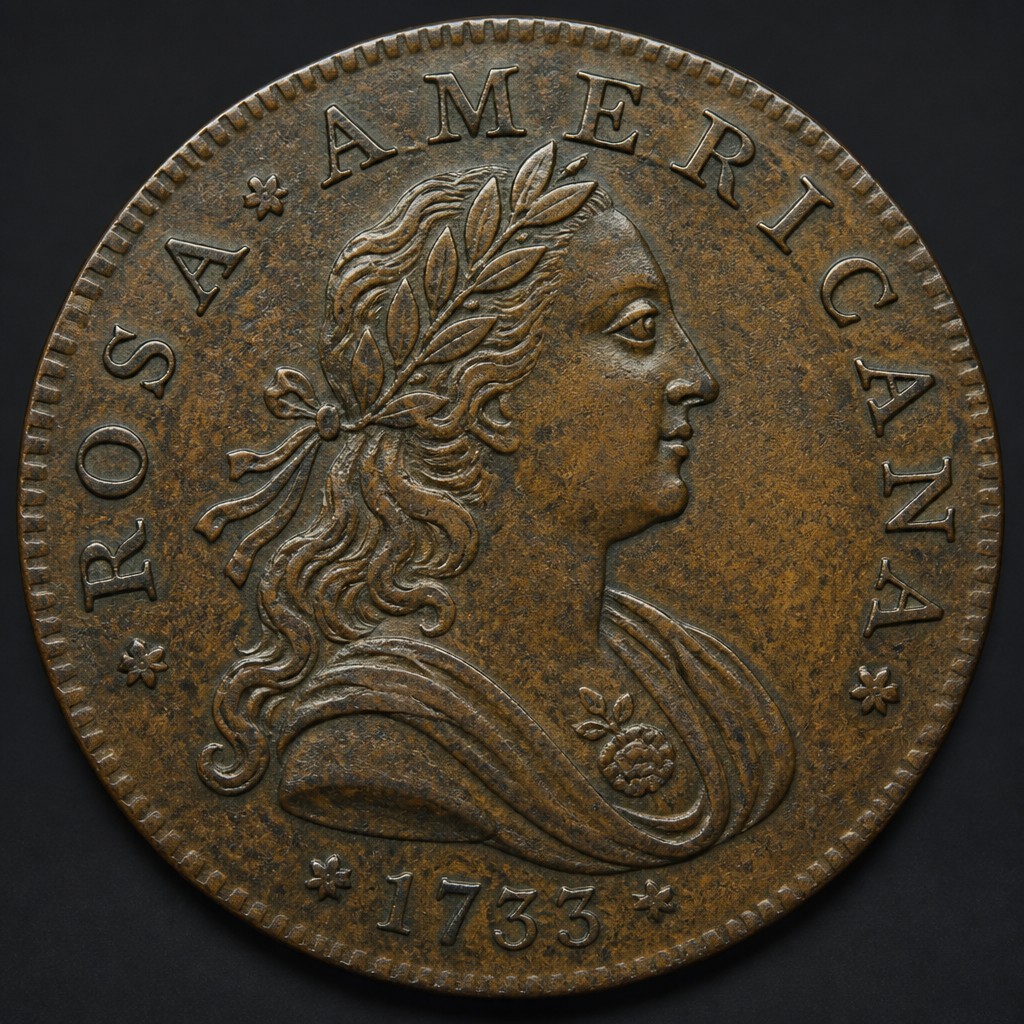
Rosa Americana Coinage
1722–1724 (with pattern issues dated 1733)
Massachusetts Willow Tree Shilling
Dated 1652, struck circa 1653–1660