
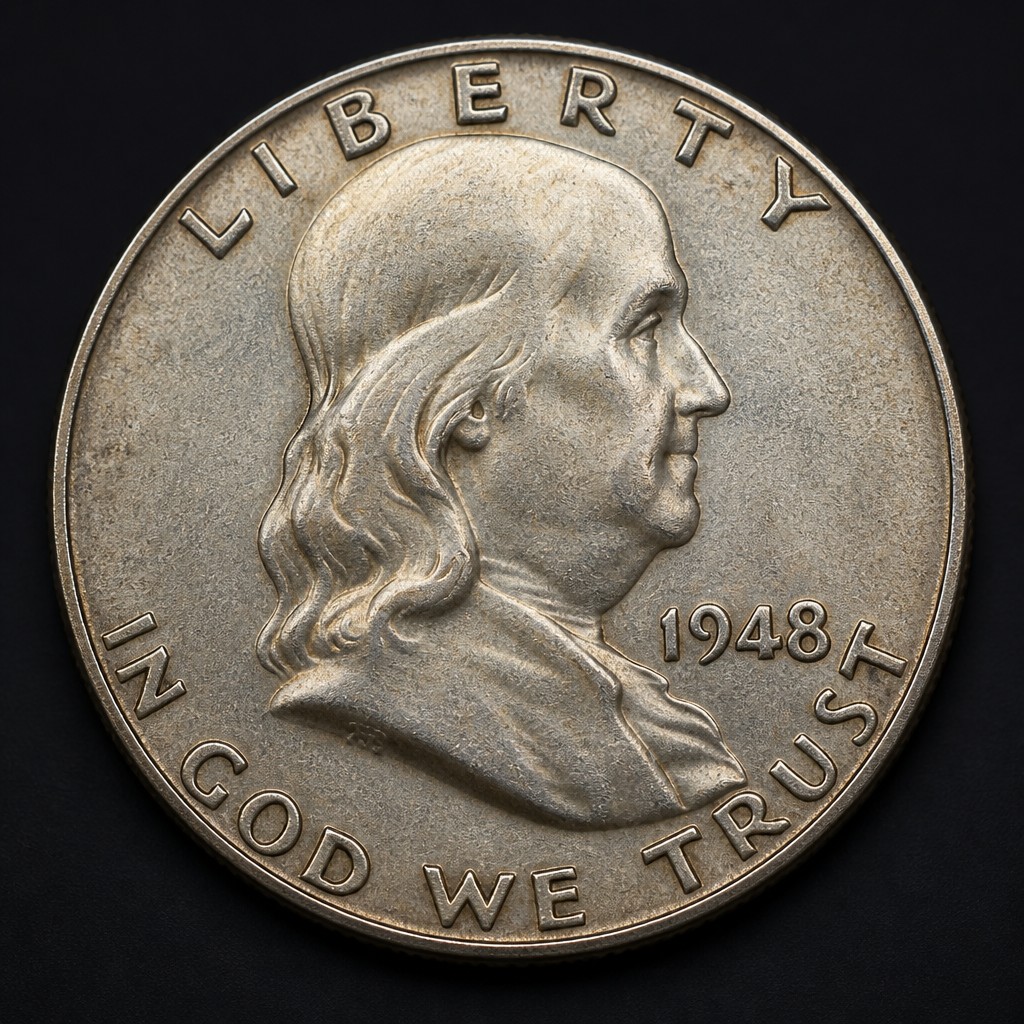
1948 Franklin Half Dollar
The debut year of the Franklin half dollar, featuring Benjamin Franklin's portrait and the Liberty Bell, designed by Mint engraver John R. Sinnock.
- Country
- United States
- Denomination
- Half Dollar
- Metal
- 90% Silver, 10% Copper
Got a coin like this?
Identify any coin from a photo, free.
Overview
The Franklin half dollar replaced the beloved Walking Liberty design in 1948, becoming the first US coin to depict a person who was not a president or allegorical figure. Its 1948 debut makes it a natural starting point for anyone assembling a set of the series.
The coin's understated, historically themed design, honoring Founding Father Benjamin Franklin and Philadelphia's Liberty Bell, marked a shift toward more literal, historically grounded imagery on US circulating coinage.
History & Background
Chief Engraver John R. Sinnock had prepared sketches pairing Franklin with the Liberty Bell years earlier, and after his death in 1947 the Mint adapted the design for the half dollar once the Walking Liberty design's minimum term had expired. Franklin was chosen partly at the urging of Mint Director Nellie Tayloe Ross, who admired his legacy as a statesman and printer.
Production began in 1948 at Philadelphia and Denver. The design would run through 1963, after which it was replaced by the Kennedy half dollar following President Kennedy's assassination.
How to Identify
Obverse: A right-facing bust of Benjamin Franklin, with "LIBERTY" arcing above, "IN GOD WE TRUST" to the left, and the date below.
Reverse: The Liberty Bell, complete with its famous crack, dominates the design, with a small eagle added beside it starting in 1954 to satisfy a legal requirement for an eagle on half dollar reverses. "UNITED STATES OF AMERICA" arcs above, "HALF DOLLAR" below, and "E PLURIBUS UNUM" appears in small letters across the bell.
The mintmark, when present, sits above the bell near the crack. 1948 Philadelphia coins carry no mintmark; Denver coins show a small "D" in that location.
Value & Collectibility
As a common date with moderate mintages, 1948 Franklin halves in typical circulated grades are affordable, generally trading close to their silver melt value. Uncirculated coins with sharp "Full Bell Lines" (complete, unbroken lines at the base of the Liberty Bell) command meaningful premiums, since strike weakness there is common across the series.
Frequently asked questions
Why was Benjamin Franklin chosen for this coin?
Mint officials, including engraver John Sinnock, wanted to honor Franklin's legacy, pairing him with the Liberty Bell as a fitting historical theme.
What does 'Full Bell Lines' mean?
It refers to complete, well-struck horizontal lines at the base of the Liberty Bell on the reverse, a mark of an especially sharp strike that collectors pay a premium for.
Is the 1948 Franklin half rare?
No, it is a common date; its value comes primarily from its silver content unless in exceptional, fully struck uncirculated condition.
When did the eagle appear next to the bell?
Starting with coins from 1954, a small eagle was added beside the bell to meet a legal design requirement.
Other coins you may enjoy
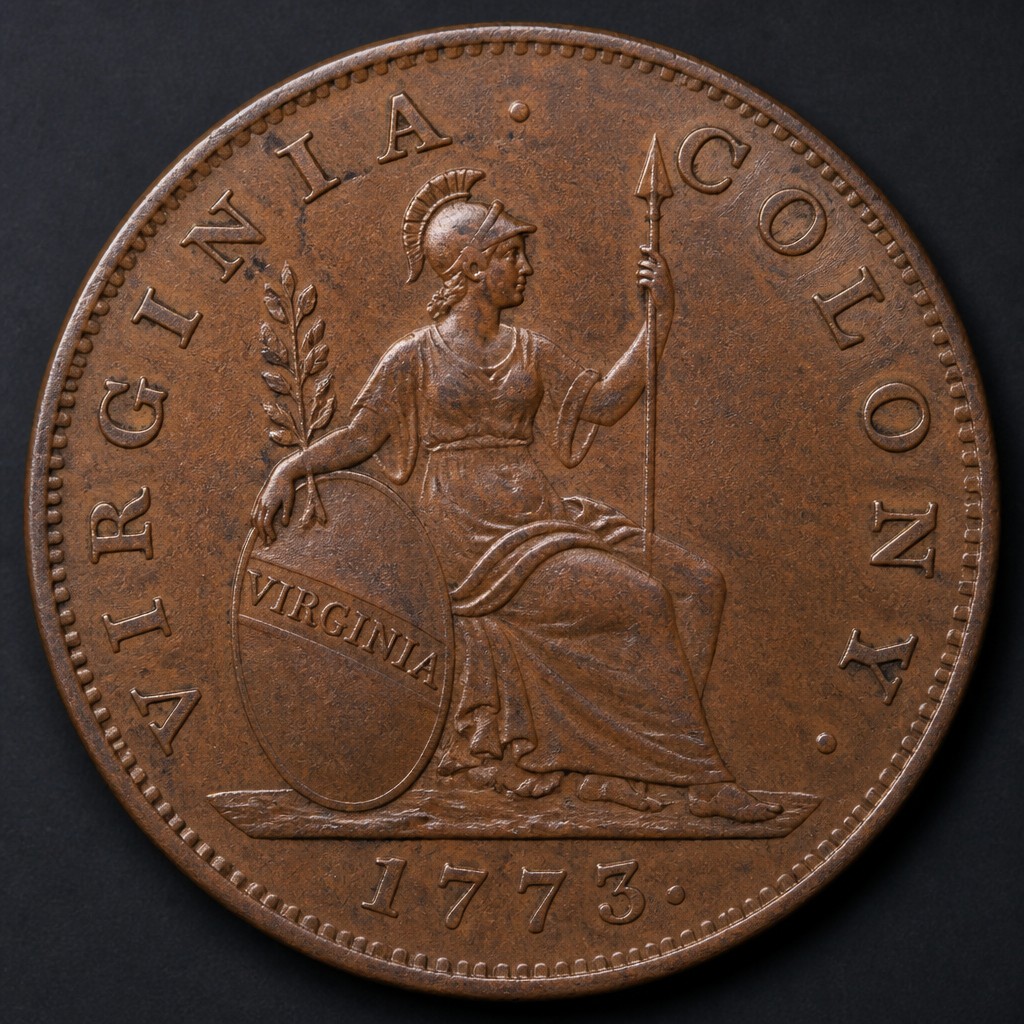
Virginia Halfpenny
1773
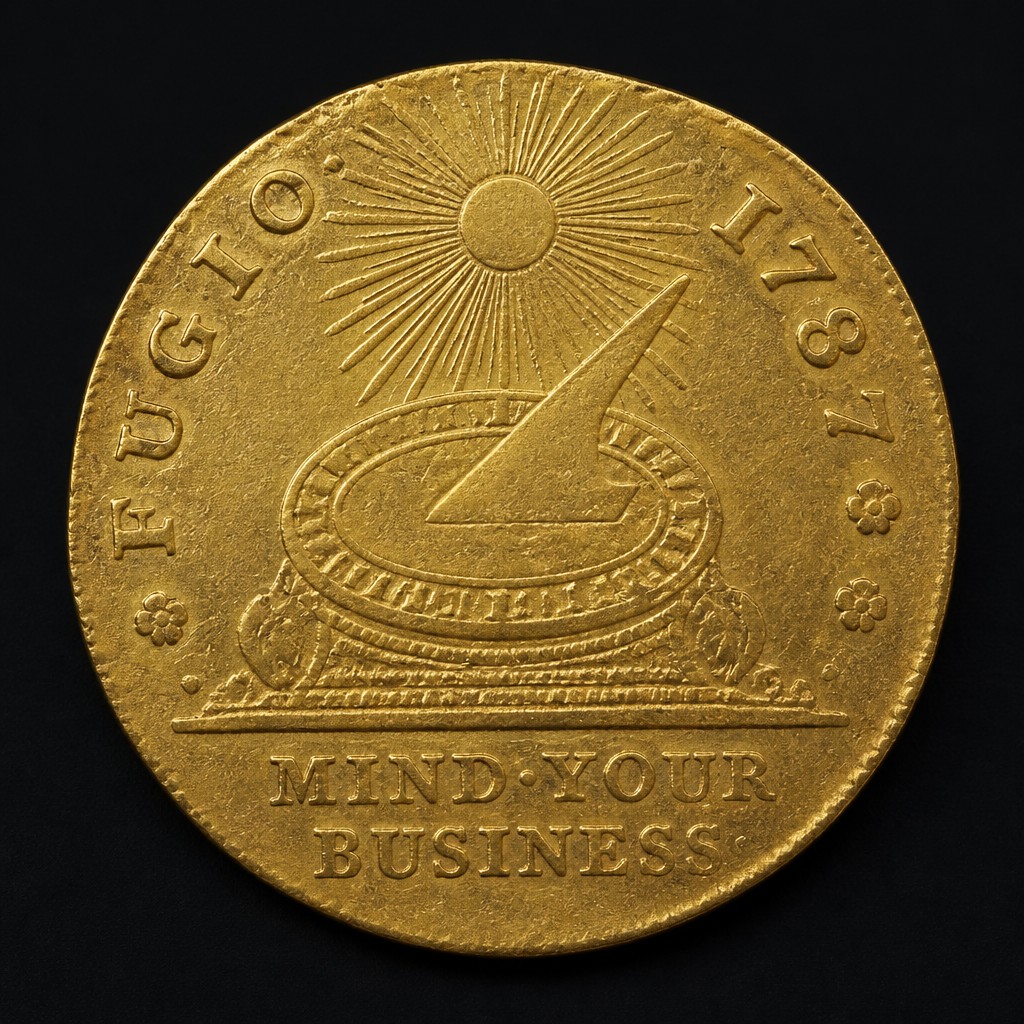
Brasher Doubloon
1787
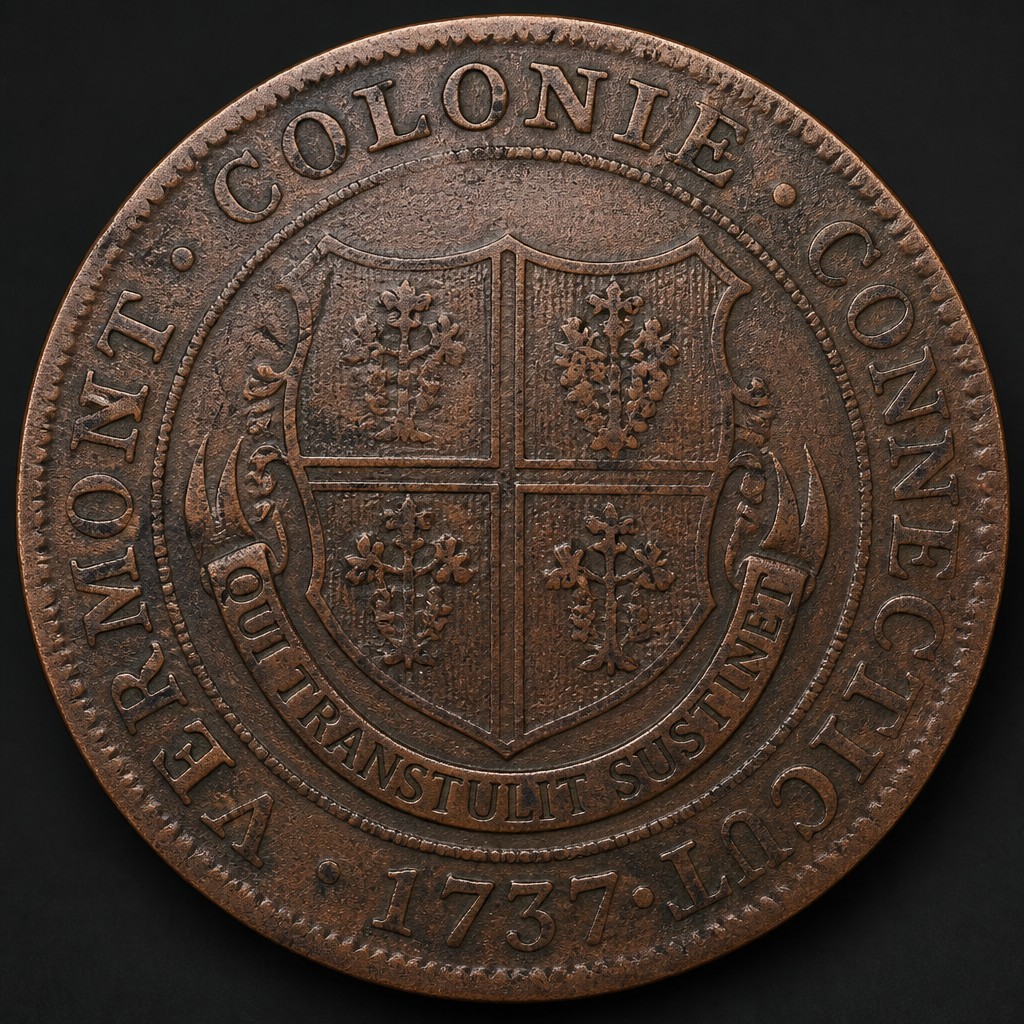
Higley Copper
1737–1739
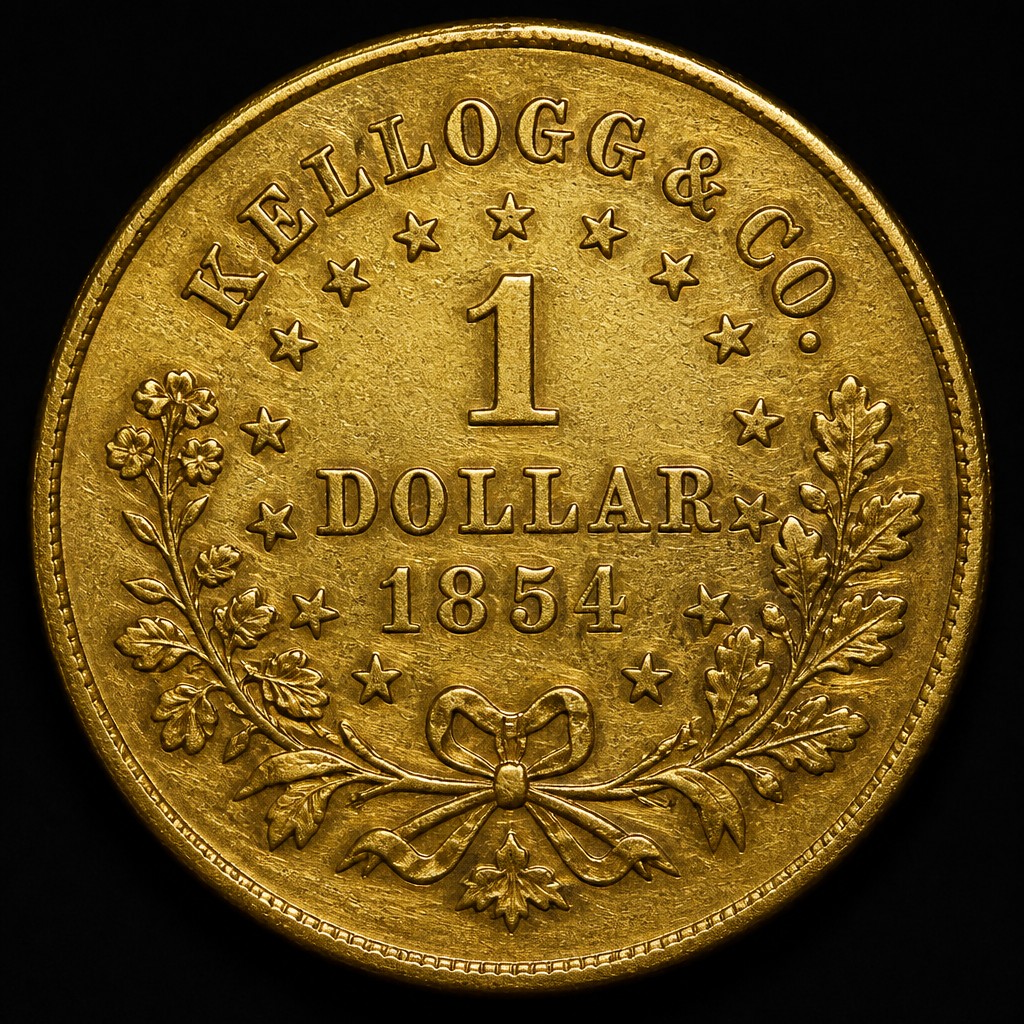
Kellogg & Co. Gold Piece
1854–1855
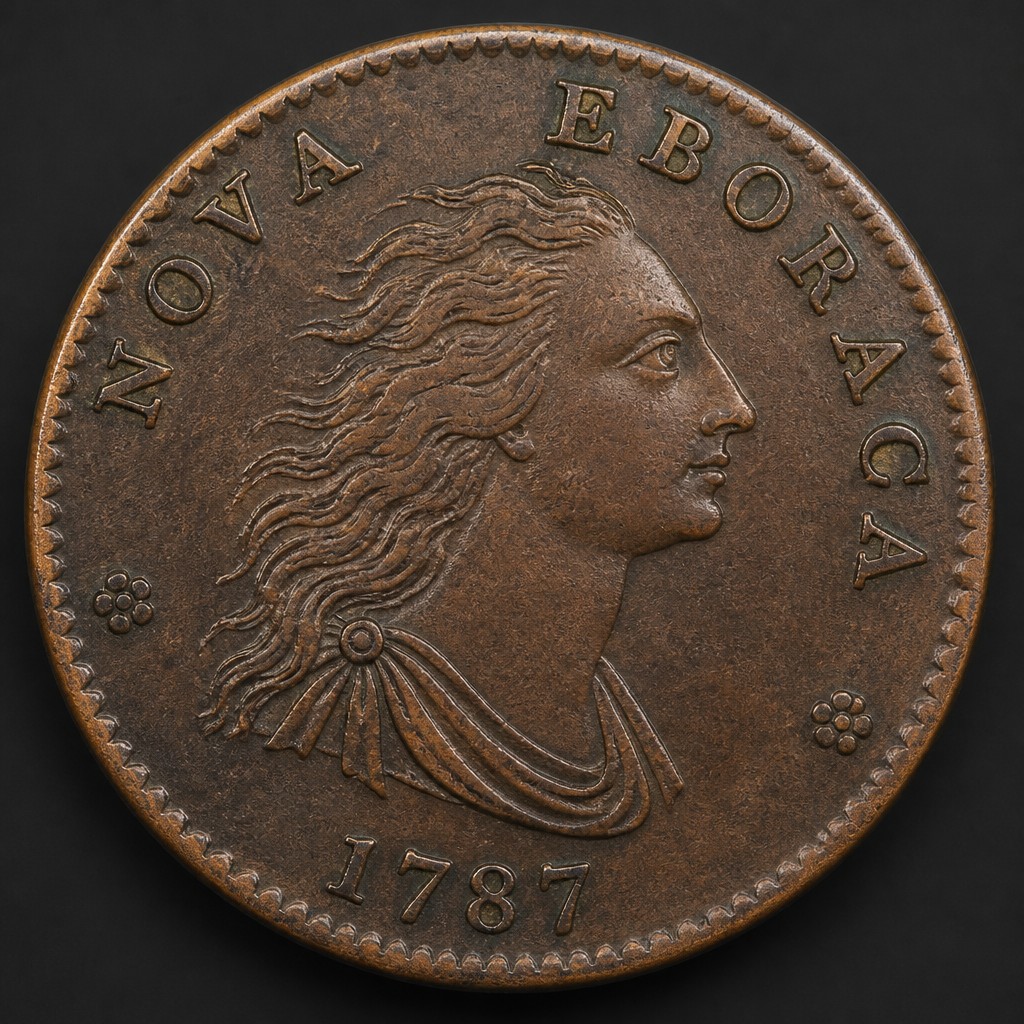
Nova Eborac Copper
1787
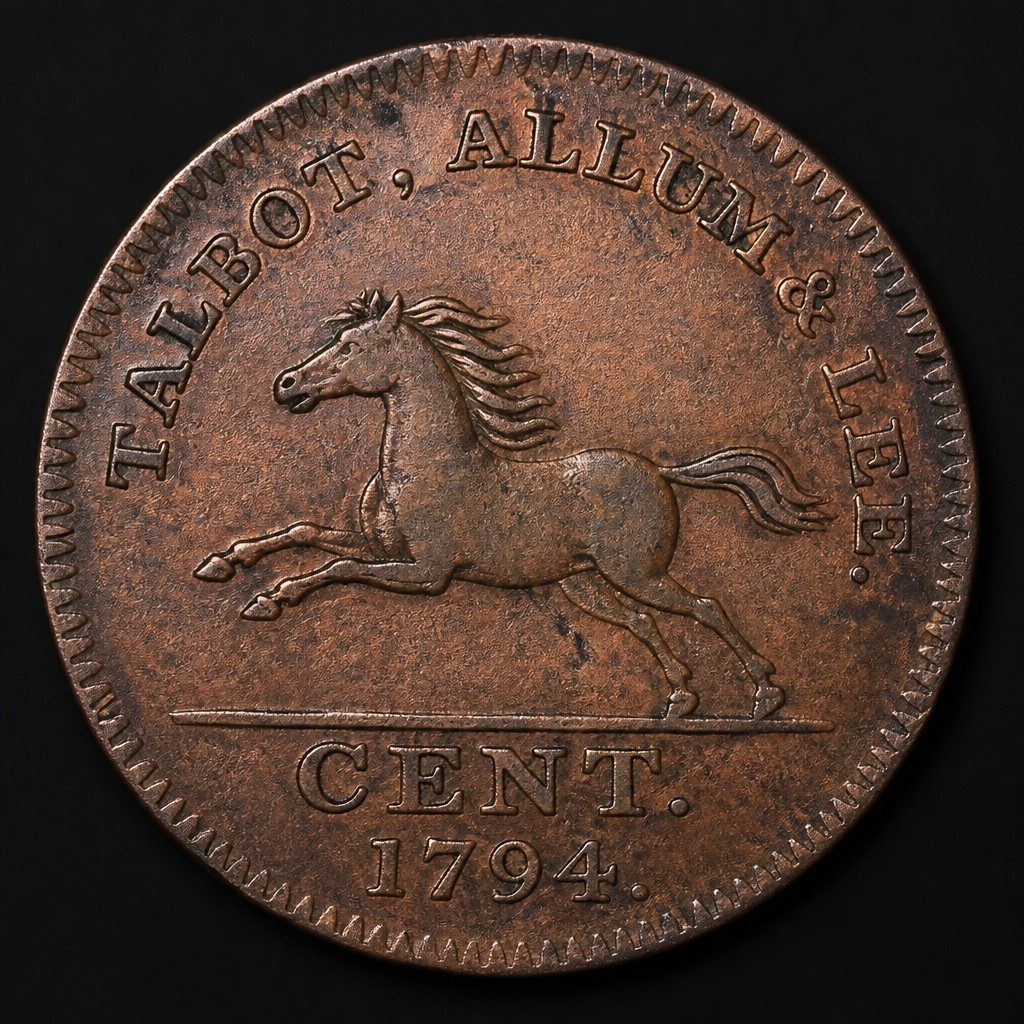
Talbot, Allum & Lee Cent
1794–1795
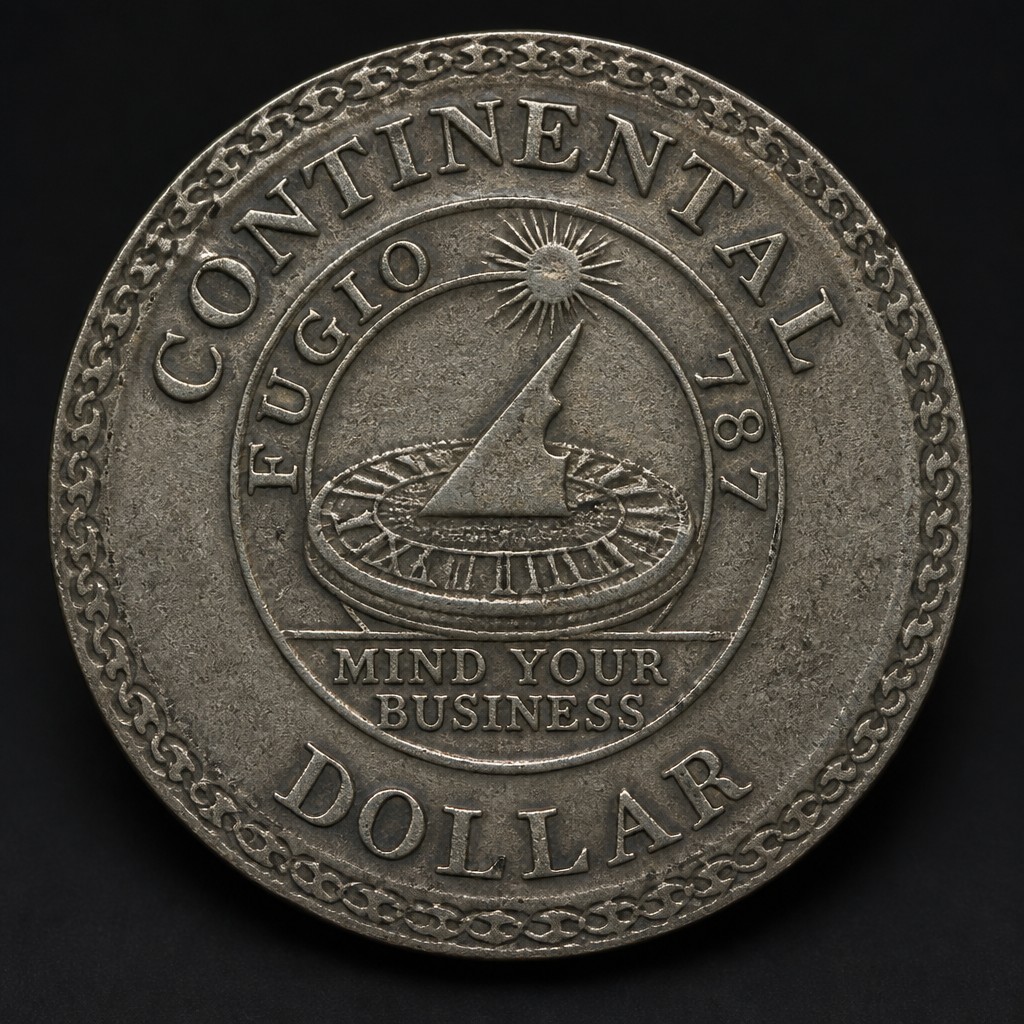
Continental Dollar
1776
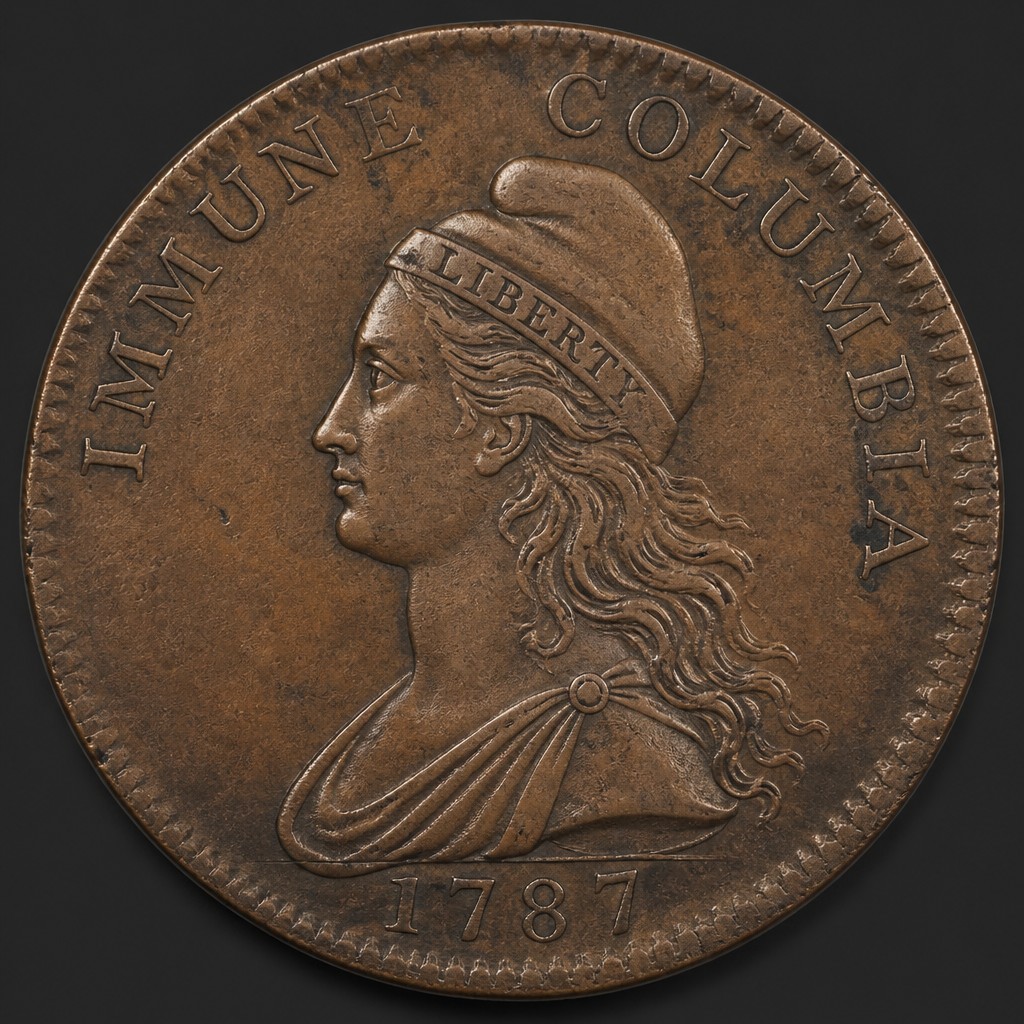
Immune Columbia Copper
circa 1785–1787
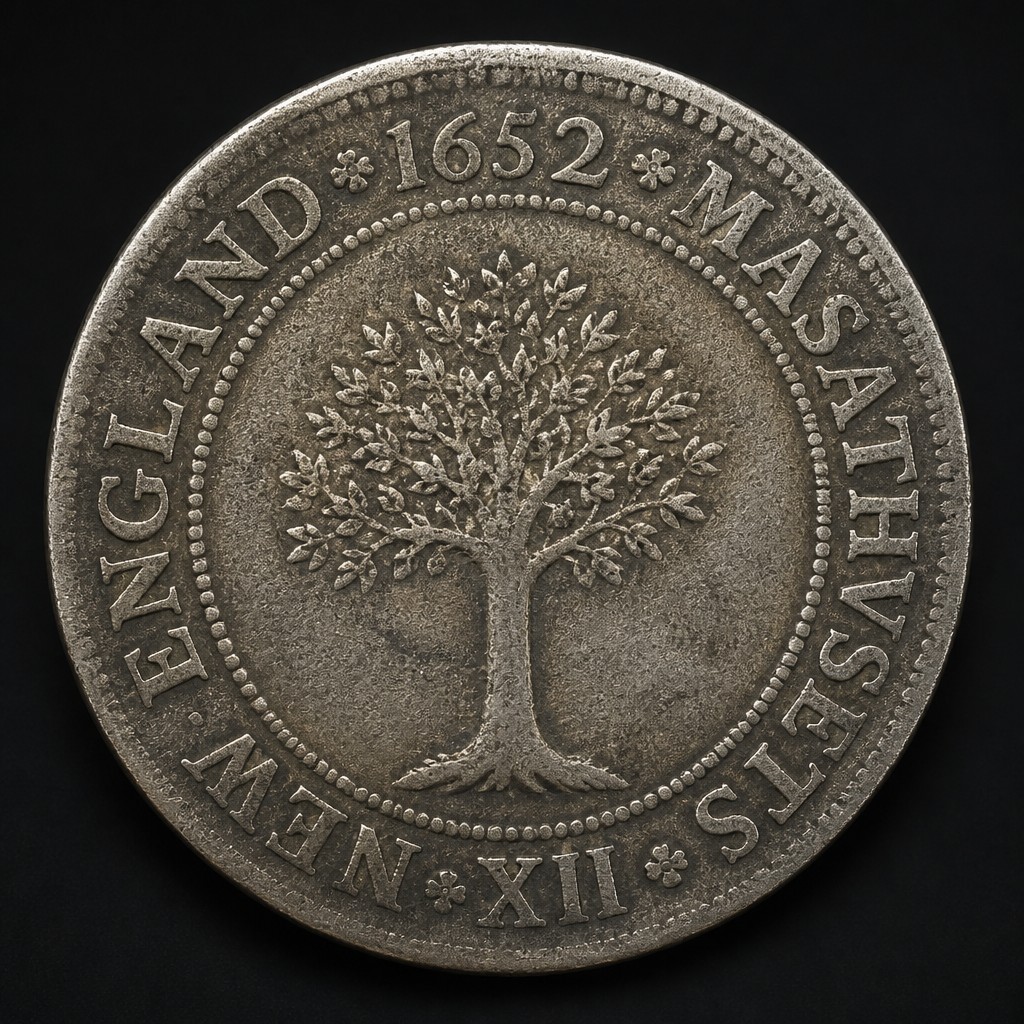
Massachusetts Oak Tree Shilling
Dated 1652, struck circa 1660–1667
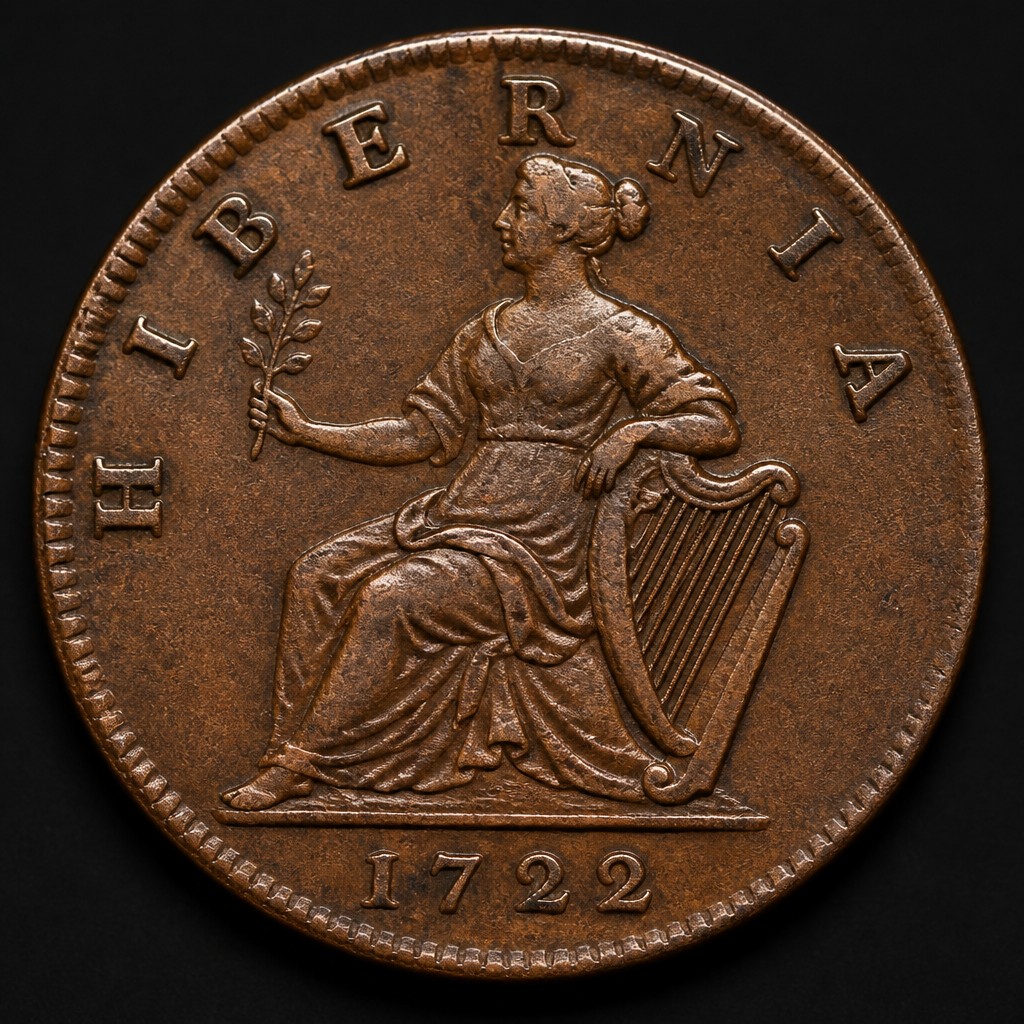
Wood's Hibernia Halfpenny
1722–1724
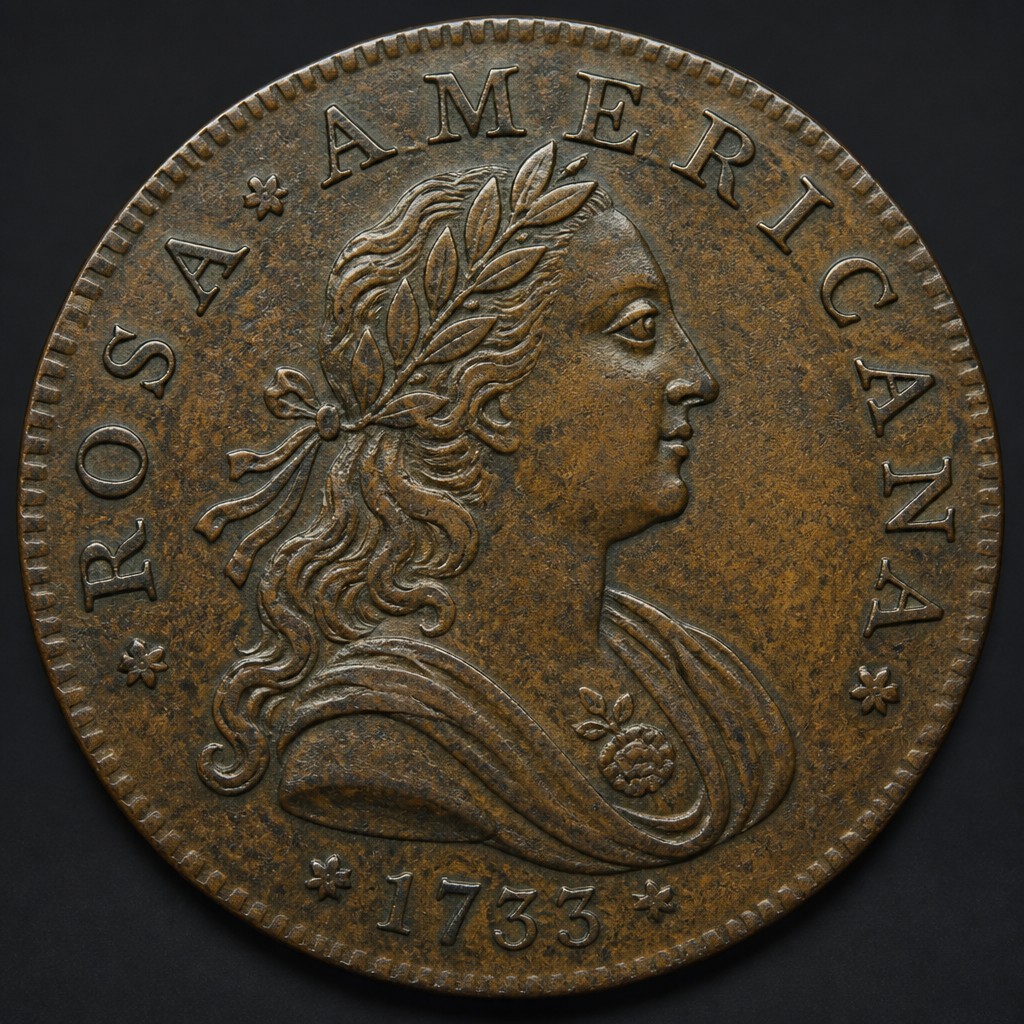
Rosa Americana Coinage
1722–1724 (with pattern issues dated 1733)
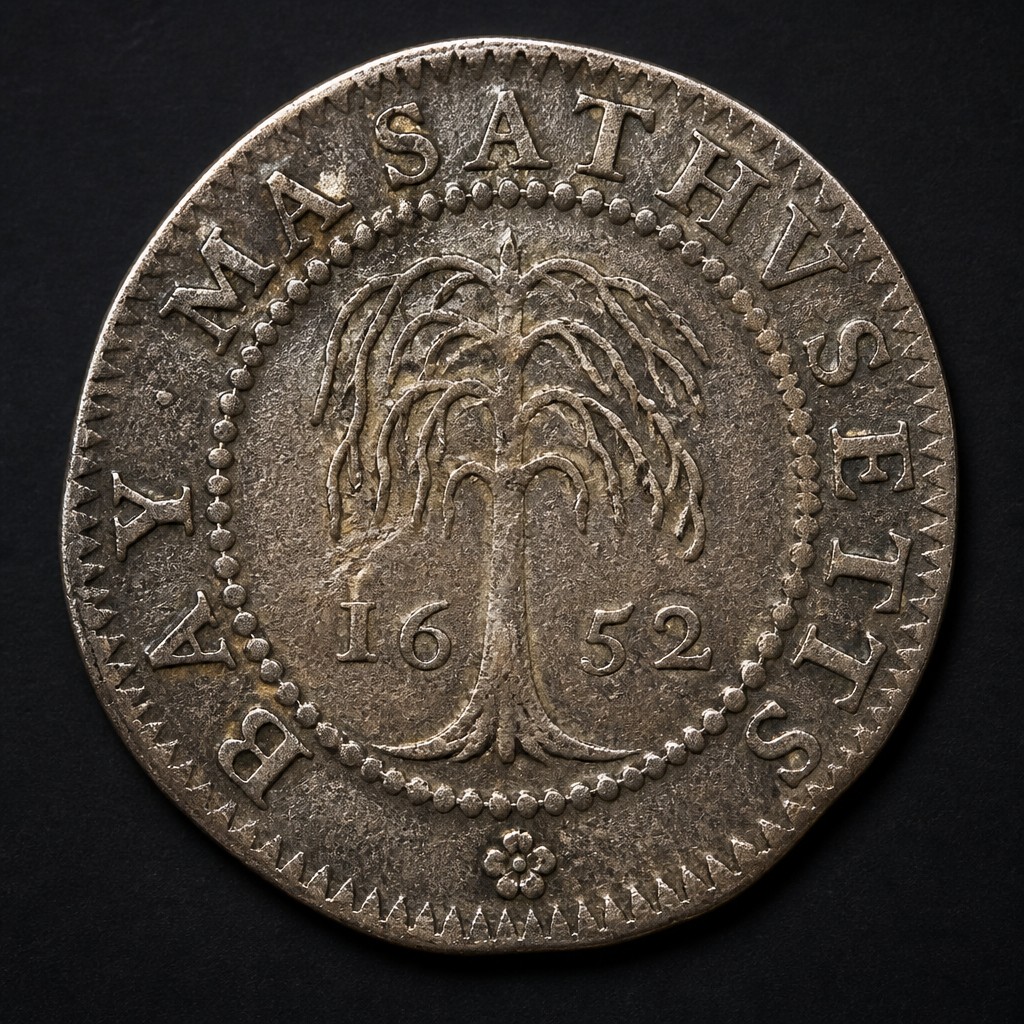
Massachusetts Willow Tree Shilling
Dated 1652, struck circa 1653–1660