
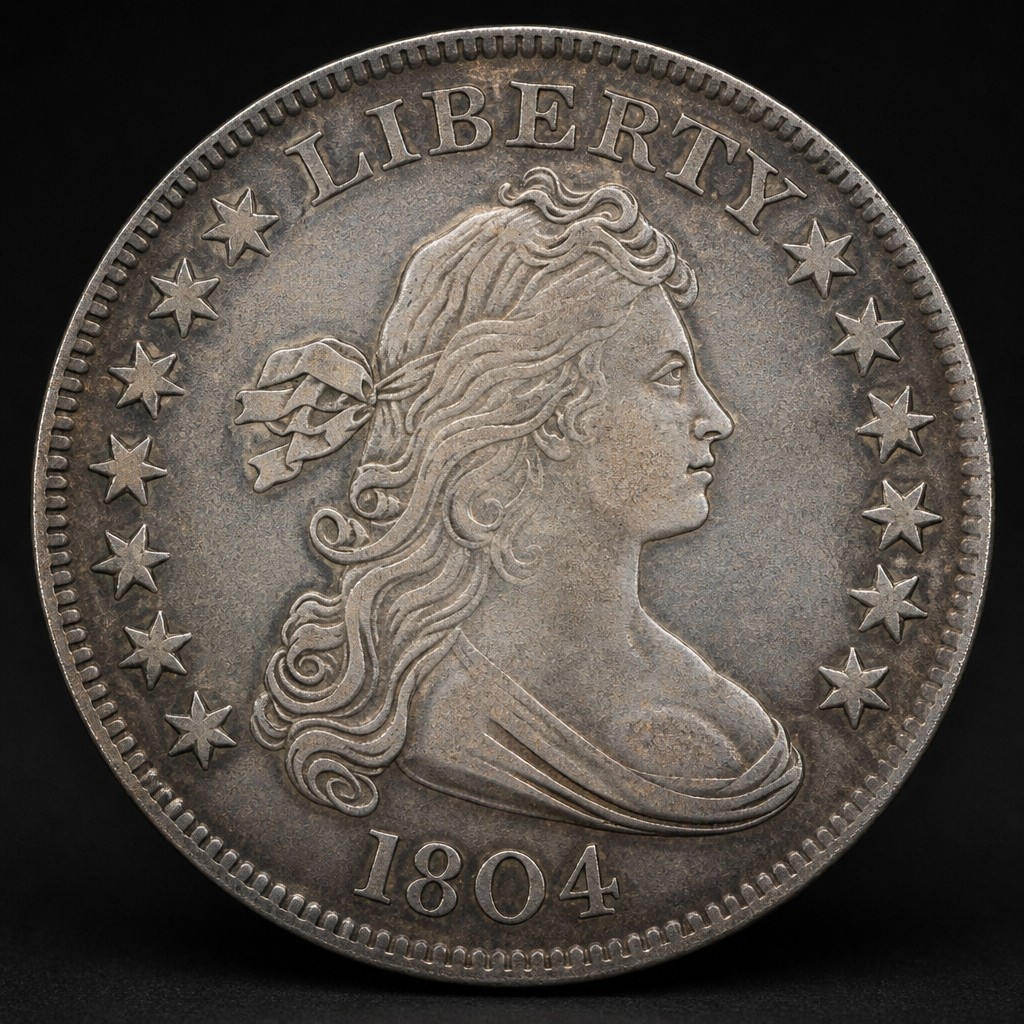
1804 Draped Bust Dime
A scarce early dime featuring the Draped Bust obverse and Heraldic Eagle reverse, struck in very limited numbers and prized as a key date of the series.
- Country
- United States
- Denomination
- Dime (Ten Cents)
- Metal
- .8924 Fine Silver
Got a coin like this?
Identify any coin from a photo, free.
Overview
The 1804 Draped Bust Dime is one of the notable key dates within the short-lived Draped Bust dime series (1796-1807), valued by collectors for its low original mintage and consequent scarcity in all grades. It pairs the familiar Draped Bust portrait of Liberty with the later Heraldic Eagle reverse, adapted from the Great Seal of the United States.
Building a complete Draped Bust dime set is a significant undertaking for advanced collectors precisely because of dates like 1804, which are disproportionately difficult to locate compared to more available years in the series.
Survivors are known in two die varieties distinguished by the number of berries in the reverse olive branch, adding a layer of specialist interest beyond the base date rarity.
History & Background
Early U.S. dimes were struck only when merchants or the Treasury deposited silver bullion specifically for that denomination, so mintages fluctuated significantly year to year based on economic demand rather than a fixed production schedule. By 1804, the dime denomination, first struck in 1796, had already gone through a design change, replacing the original small eagle reverse with the Heraldic Eagle motif in 1798.
The Heraldic Eagle design, likely adapted by Robert Scot from the Great Seal of the United States, features a shield-bearing eagle holding an olive branch and arrows, clutched in its talons, with a ribbon of stars above. This same eagle motif appeared across several silver denominations of the era.
Production of dimes in 1804 was modest, and the coin's low output, combined with heavy circulation wear over the following decades, has left relatively few well-preserved examples for collectors today.
How to Identify
The obverse shows Liberty's draped bust facing right, hair tied back, framed by stars and the date below. The reverse depicts a Heraldic Eagle with a shield on its breast, holding an olive branch and arrows in its talons, with a ribbon of thirteen stars above and the legend UNITED STATES OF AMERICA around the border; the denomination is not spelled out numerically on early dimes of this design.
The coin is struck in .8924 fine silver with a plain edge, and its size is close to a modern dime though the design and lettering style differ markedly. Collectors identify the two known 1804 varieties by counting the berries in the olive branch on the reverse — a 13-star or 14-star reverse combined with berry count helps specialists attribute exact die pairings.
Because the coin predates the use of mint marks, all genuine examples originate from the Philadelphia Mint. Buyers should compare details carefully against certified references, as the date's rarity and value have made it a target for alteration from more common Draped Bust dime dates.
Value & Collectibility
The 1804 dime is considered one of the key dates of the Draped Bust dime series, commanding strong prices even in well-worn, heavily circulated grades, typically running from the low thousands of dollars upward, with choice or higher-grade survivors reaching well into five figures or more. Because true high-grade examples are extremely rare, most collectors encounter this date only in lower circulated grades.
As with other early American silver rarities, value depends heavily on originality, problem-free surfaces, and correct die attribution, since counterfeits and altered-date pieces exist in the marketplace given the premium this date commands over more common Draped Bust dimes.
Collectors are encouraged to seek examples certified by a major third-party grading service, both for authentication and for confirmation of variety.
Frequently asked questions
What makes the 1804 dime a key date?
It had a comparatively low original mintage within the Draped Bust dime series, leaving fewer surviving examples than most other dates in the run.
What is the Heraldic Eagle reverse?
It's a design showing a shield-bearing eagle holding arrows and an olive branch, adapted from the Great Seal of the United States and used on several silver denominations starting in 1798.
Are there different varieties of the 1804 dime?
Yes, collectors recognize varieties distinguished mainly by star and berry counts on the reverse, which specialists use for precise attribution.
Does the coin say '10 cents' anywhere?
No, early Draped Bust dimes do not spell out a numerical denomination; the coin's value was implied by its size, weight, and design.
Other coins you may enjoy
Virginia Halfpenny
1773

Brasher Doubloon
1787
Higley Copper
1737–1739
Kellogg & Co. Gold Piece
1854–1855
Nova Eborac Copper
1787
Talbot, Allum & Lee Cent
1794–1795
Continental Dollar
1776
Immune Columbia Copper
circa 1785–1787
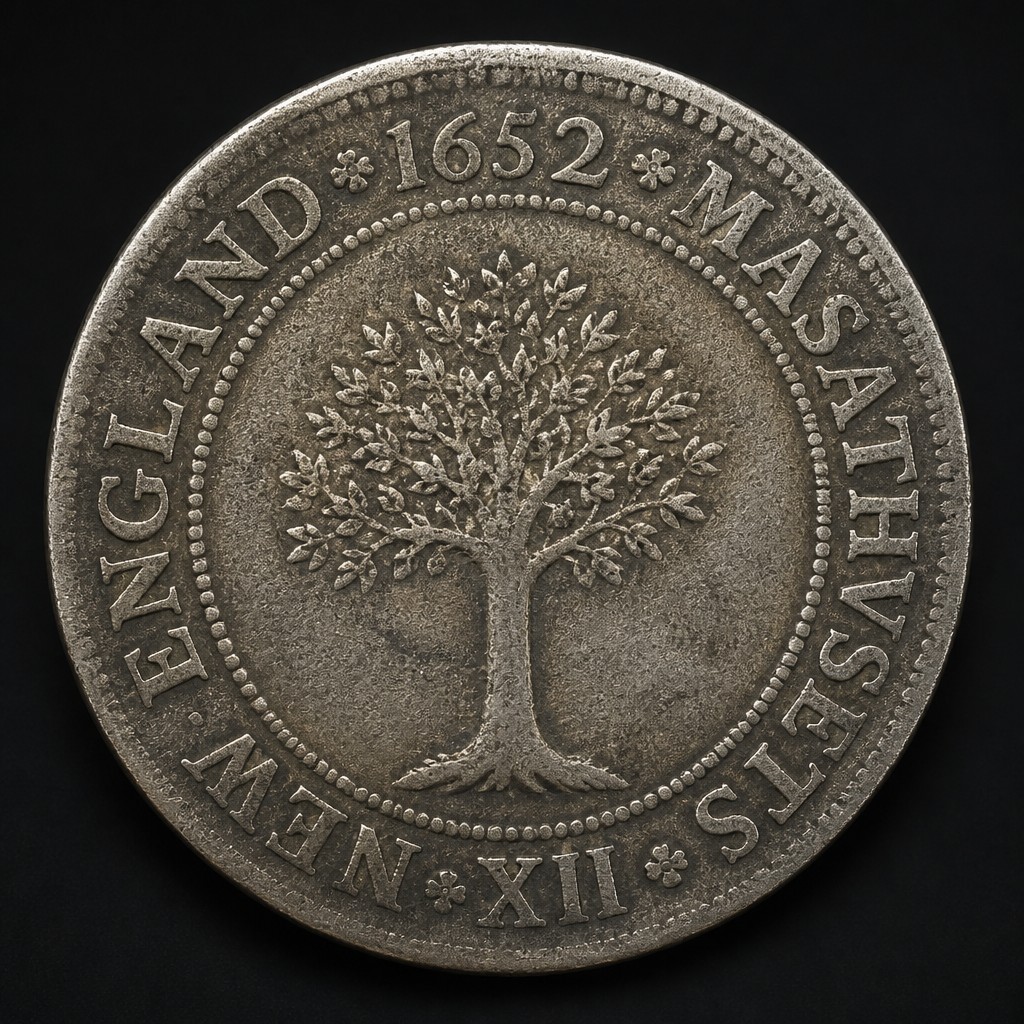
Massachusetts Oak Tree Shilling
Dated 1652, struck circa 1660–1667
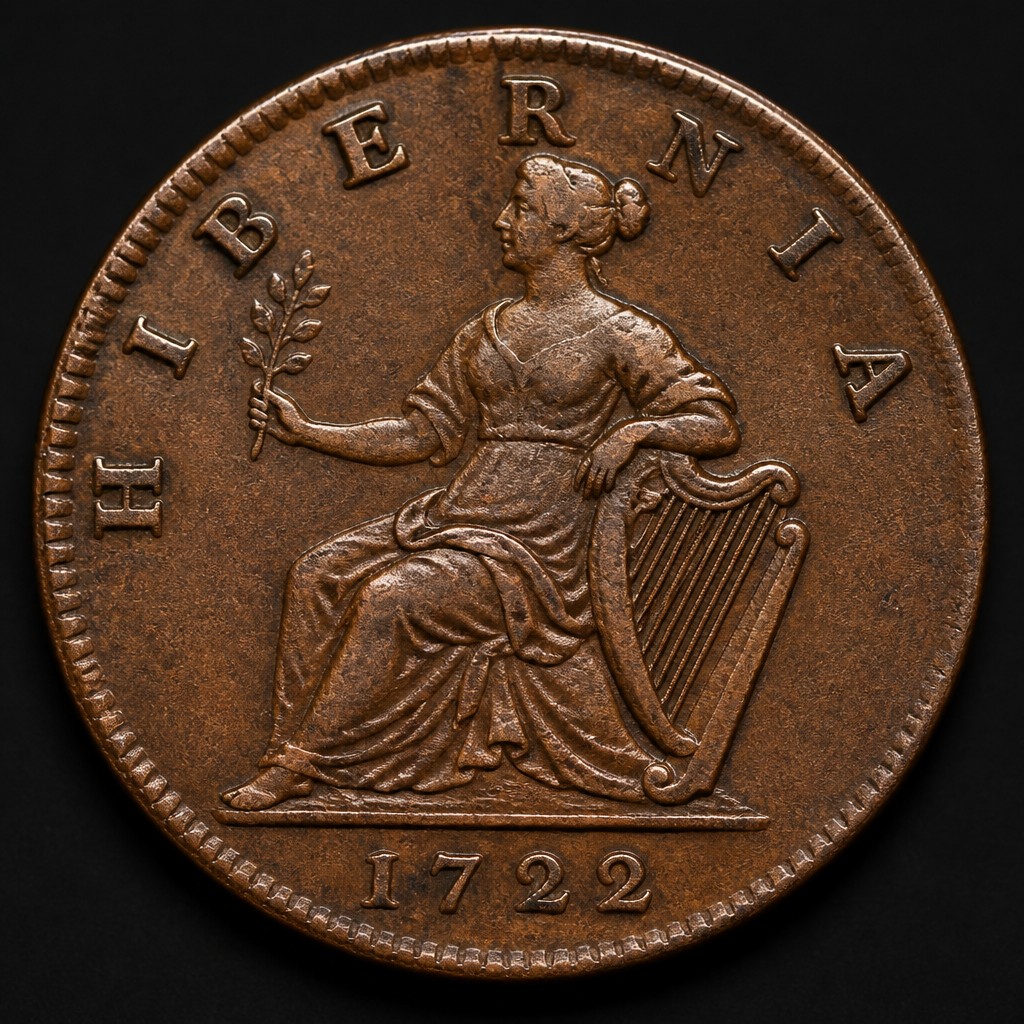
Wood's Hibernia Halfpenny
1722–1724
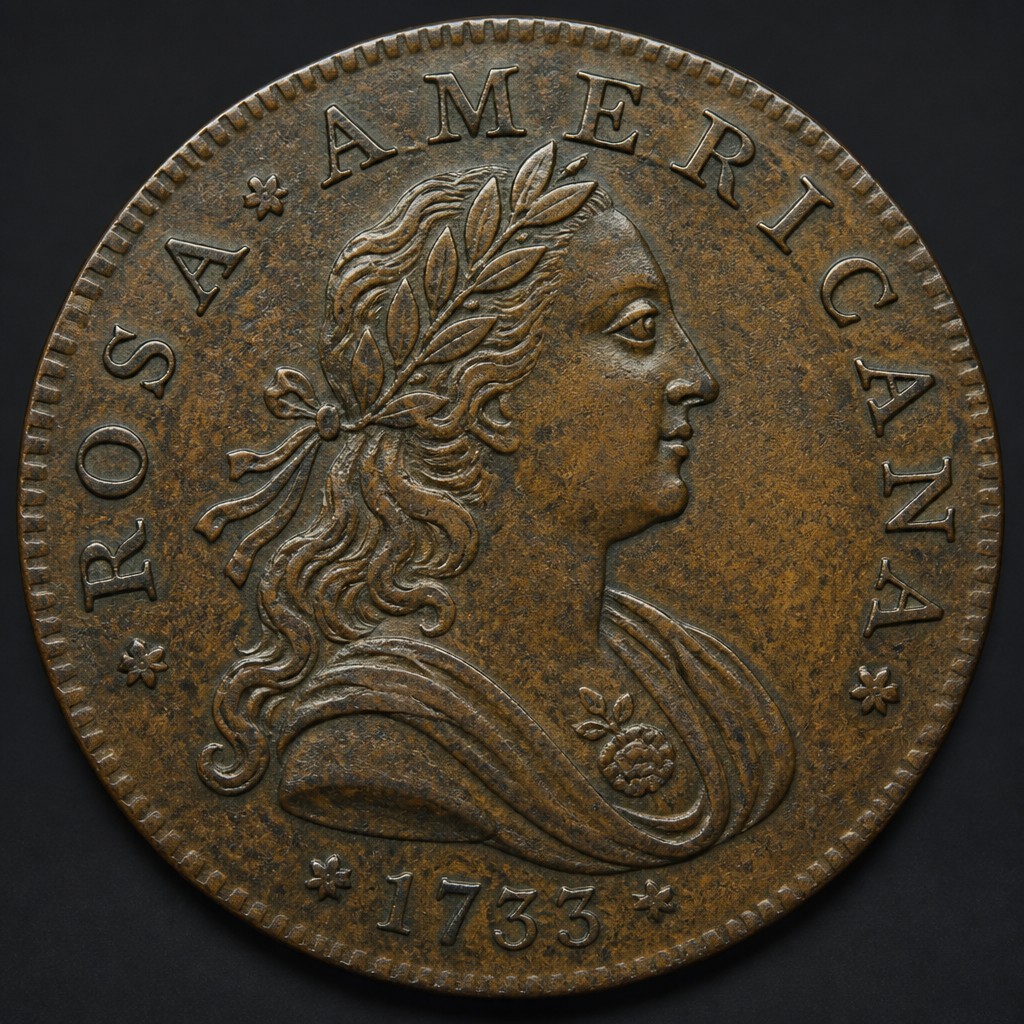
Rosa Americana Coinage
1722–1724 (with pattern issues dated 1733)
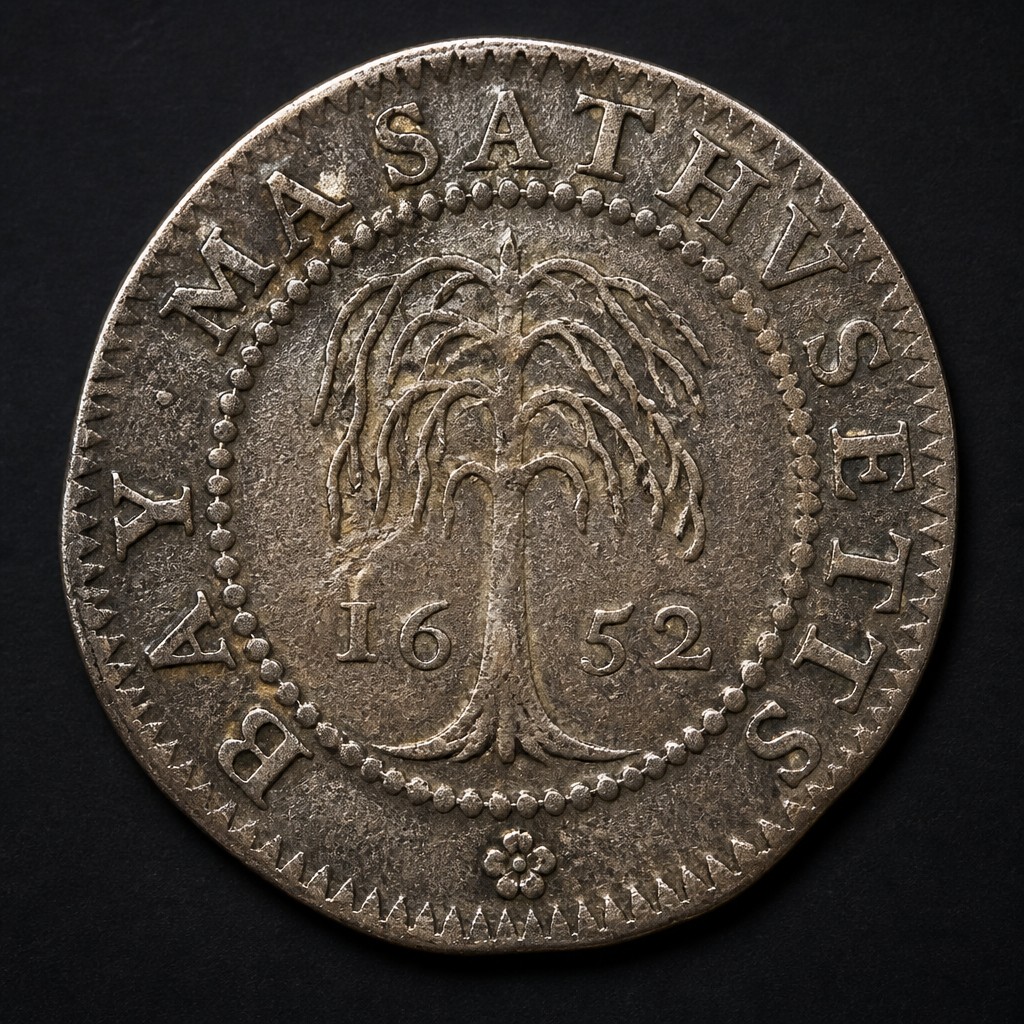
Massachusetts Willow Tree Shilling
Dated 1652, struck circa 1653–1660