
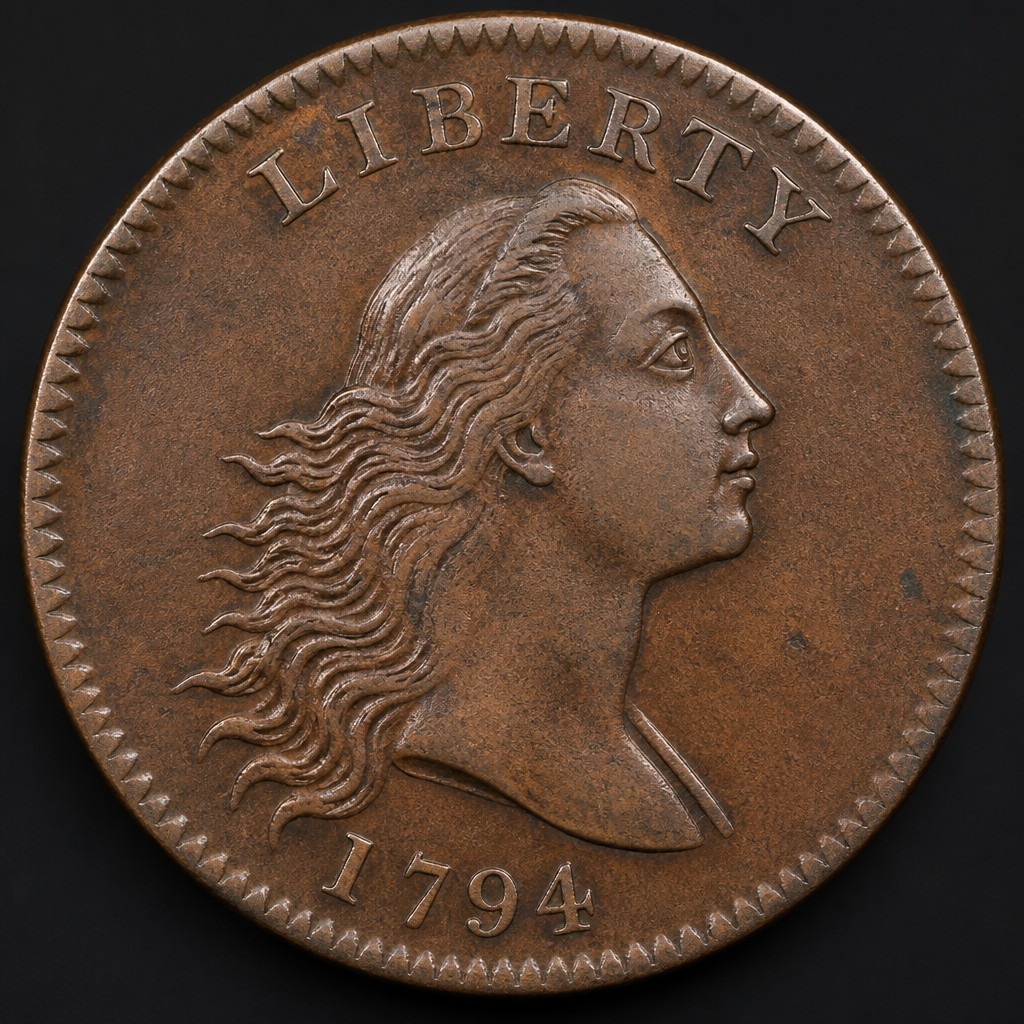
1794 Flowing Hair Cent
An early United States large copper cent from the first years of the Mint, associated with the Flowing Hair Liberty portrait used on the nation's earliest coinage.
- Country
- United States
- Denomination
- One Cent
- Metal
- Pure Copper
Got a coin like this?
Identify any coin from a photo, free.
Overview
Coins from the earliest years of the United States Mint, including large copper cents from the 1793–1796 period, are highly prized by collectors of early American coinage for their direct connection to the founding of the nation's monetary system. The Flowing Hair depiction of Liberty, with loose, undressed hair rather than a cap or wreath, was among the very first design motifs used on U.S. coinage after the Mint opened in Philadelphia in 1792.
Because these early large cents were hand-struck in limited quantities using comparatively primitive equipment, they exist in numerous minor die varieties that specialists study closely, and well-preserved examples from this formative period are scarce and highly sought after regardless of the exact variety.
History & Background
The United States Mint began striking its first cents in 1793, shortly after opening in Philadelphia under the Coinage Act of 1792. Early large cent designs evolved quickly during this period: the first 1793 issues used a Flowing Hair Liberty portrait paired first with a chain reverse and then a wreath reverse, before the design was revised again later that year to a Liberty Cap portrait, which continued with adjustments into 1796.
This rapid sequence of design changes reflected the young Mint's efforts to address public criticism, refine its equipment and dies, and improve the coin's appearance and durability, all while operating with limited staff, tools, and experience. Collectors and researchers today study surviving examples from these earliest years extremely closely, since mint records, dies, and production methods from the period were far less standardized than in later decades.
Given the small scale and experimental nature of the Mint's earliest cent production, precise attribution of any single coin's date and design type is a matter for careful, expert examination, and general references to "1794" cents should be understood within this broader context of the Mint's rapidly evolving first few years of large cent coinage.
How to Identify
Early Flowing Hair and related Liberty Cap large cents from this era are large copper coins, notably bigger than a modern quarter, featuring a portrait of Liberty on the obverse and a wreath or chain motif on the reverse enclosing the denomination or ONE CENT. The exact obverse portrait style (loose Flowing Hair versus a Liberty Cap on a pole) and reverse type (chain links versus wreath) varied within these first few years as the Mint revised its dies.
Because of the hand-engraved dies and manual striking methods used at the time, individual date, letter, and device positioning can vary noticeably between examples, and specialists catalog numerous distinct die varieties for these early cents. Given the complexity and value involved, precise identification and authentication of any early 1790s large cent should be handled by an experienced early American copper specialist or a major third-party grading service.
Value & Collectibility
Early United States large cents from the Mint's first years are consistently valuable due to their historical importance and low survival rates, with even heavily worn, low-grade examples often commanding hundreds to low thousands of dollars, and finer examples or rare varieties reaching much higher figures at auction. Because condition, variety, and authenticity all significantly affect value in this area, and because the coins are complex and often counterfeited or altered, obtaining expert opinion and third-party certification is especially important for any coin from this period.
Frequently asked questions
What does 'Flowing Hair' mean on early U.S. coins?
It refers to a portrait of Liberty with loose, undressed hair, a design motif used briefly on the earliest U.S. cents and other early denominations before being replaced by other Liberty portrait styles.
Why did the large cent design change so often in the 1790s?
The young Mint was experimenting with dies, equipment, and public reception, revising the cent's design multiple times within just a few years to address criticism and improve production.
Are early 1790s large cents rare?
Yes, survival rates from this period are low, and combined with strong collector interest in early American coinage, genuine examples are consistently valuable.
Should I get an early large cent authenticated?
Yes, because of the complexity of die varieties and the value involved, expert or third-party grading service authentication is strongly recommended for coins from this era.
Other coins you may enjoy
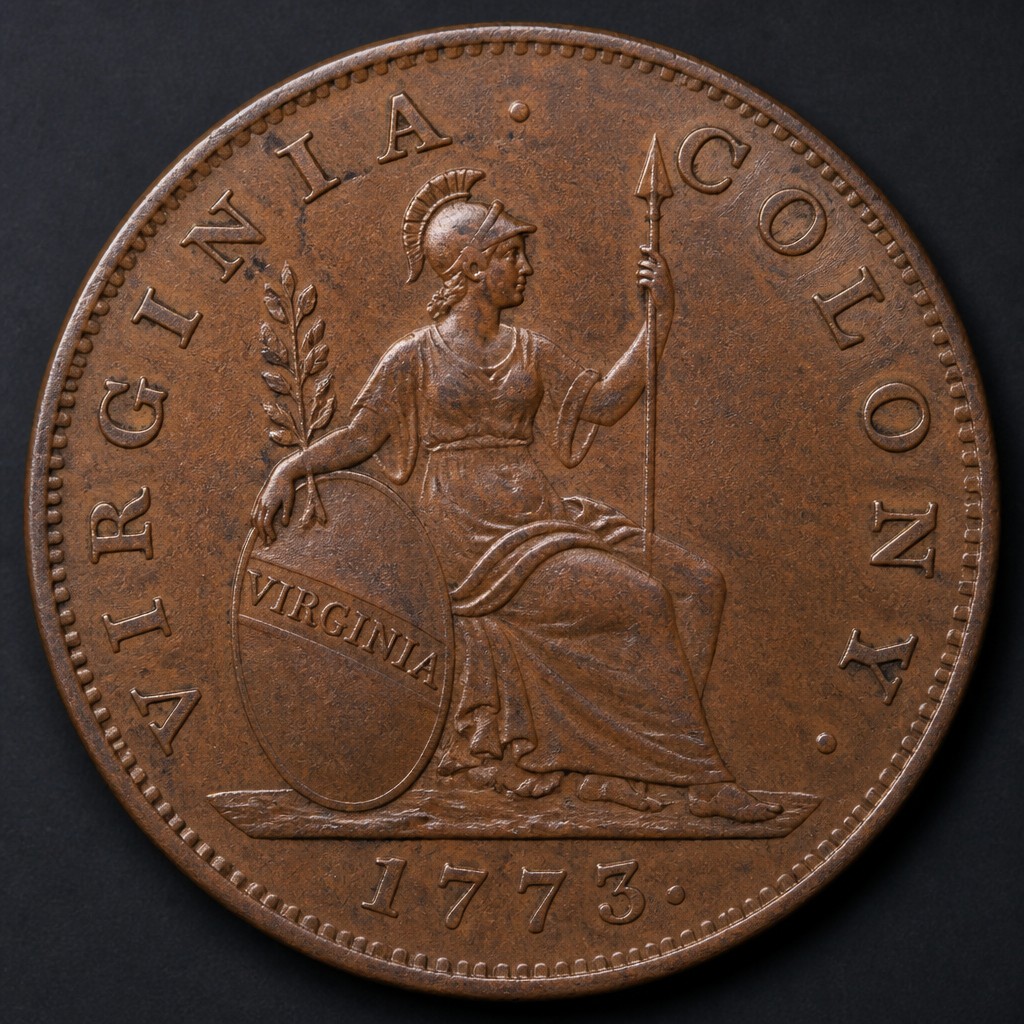
Virginia Halfpenny
1773
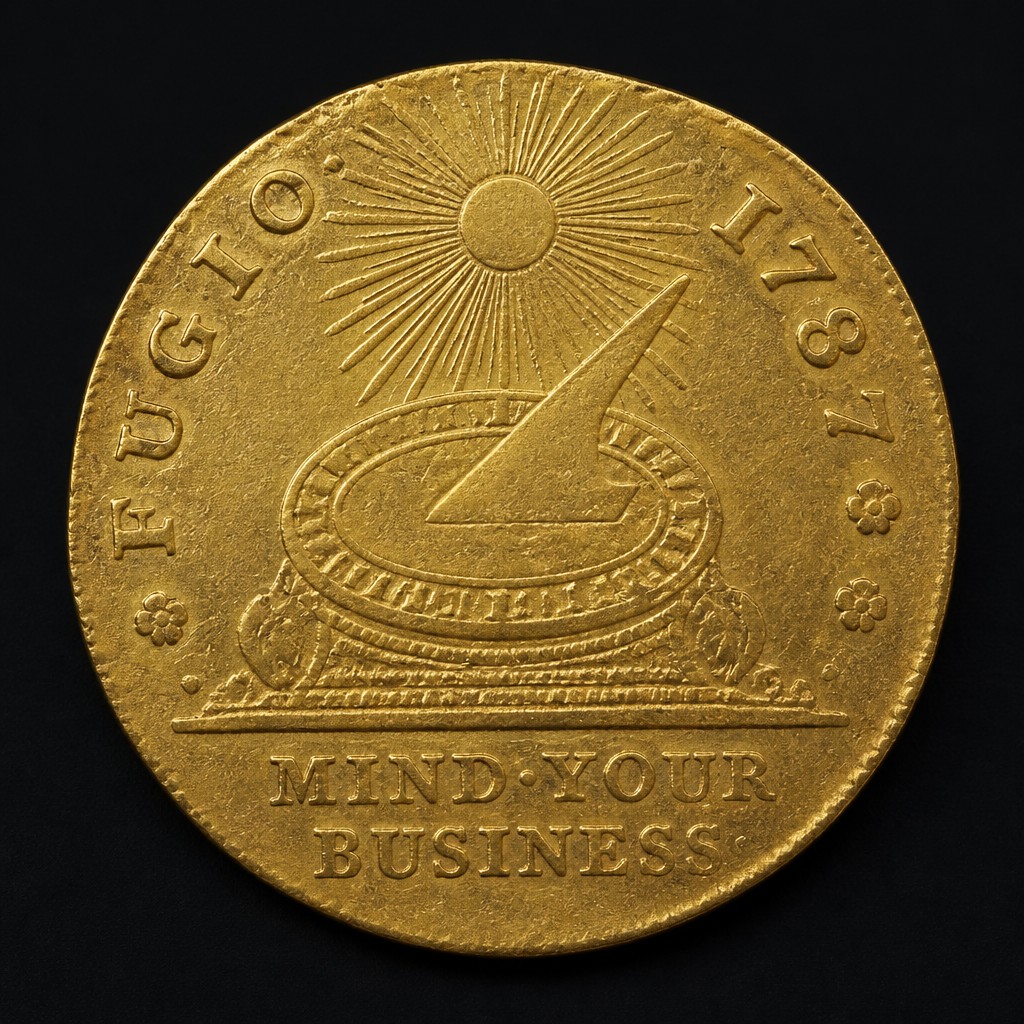
Brasher Doubloon
1787
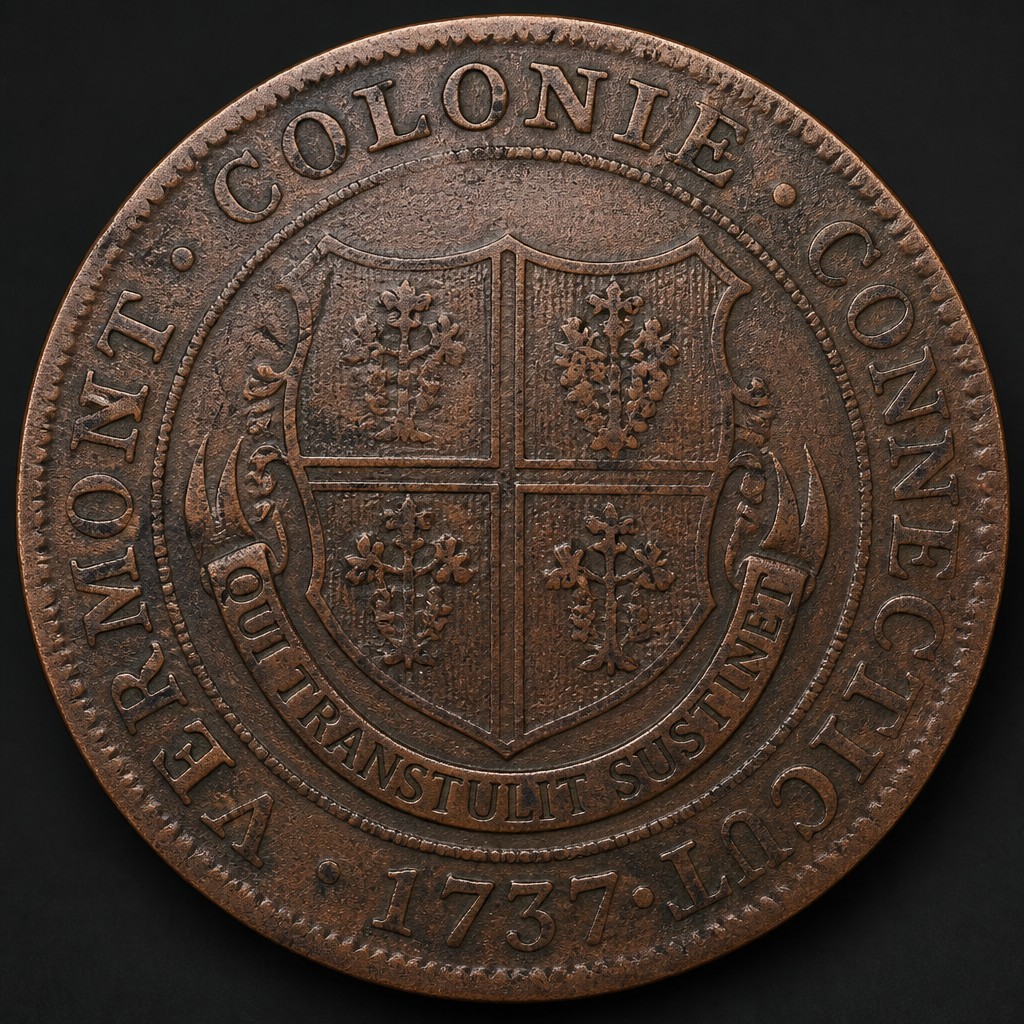
Higley Copper
1737–1739
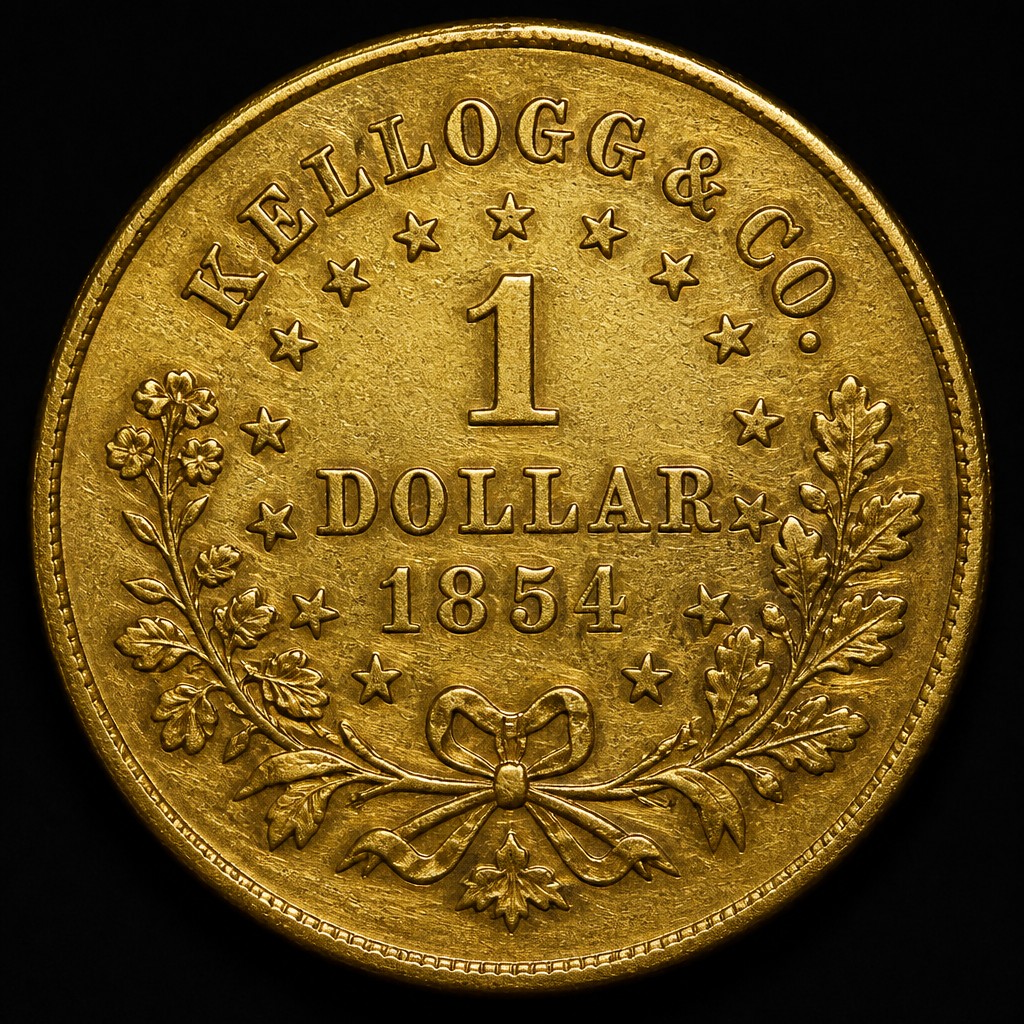
Kellogg & Co. Gold Piece
1854–1855
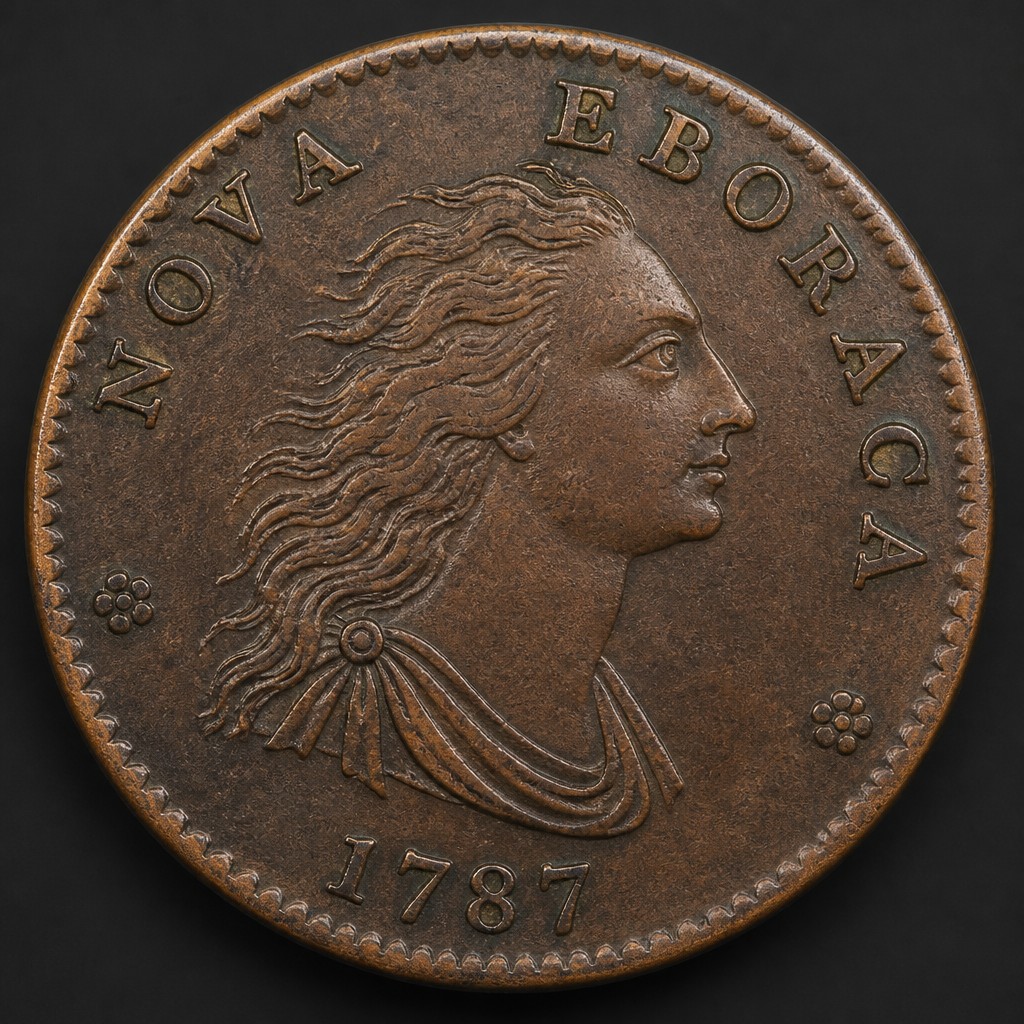
Nova Eborac Copper
1787
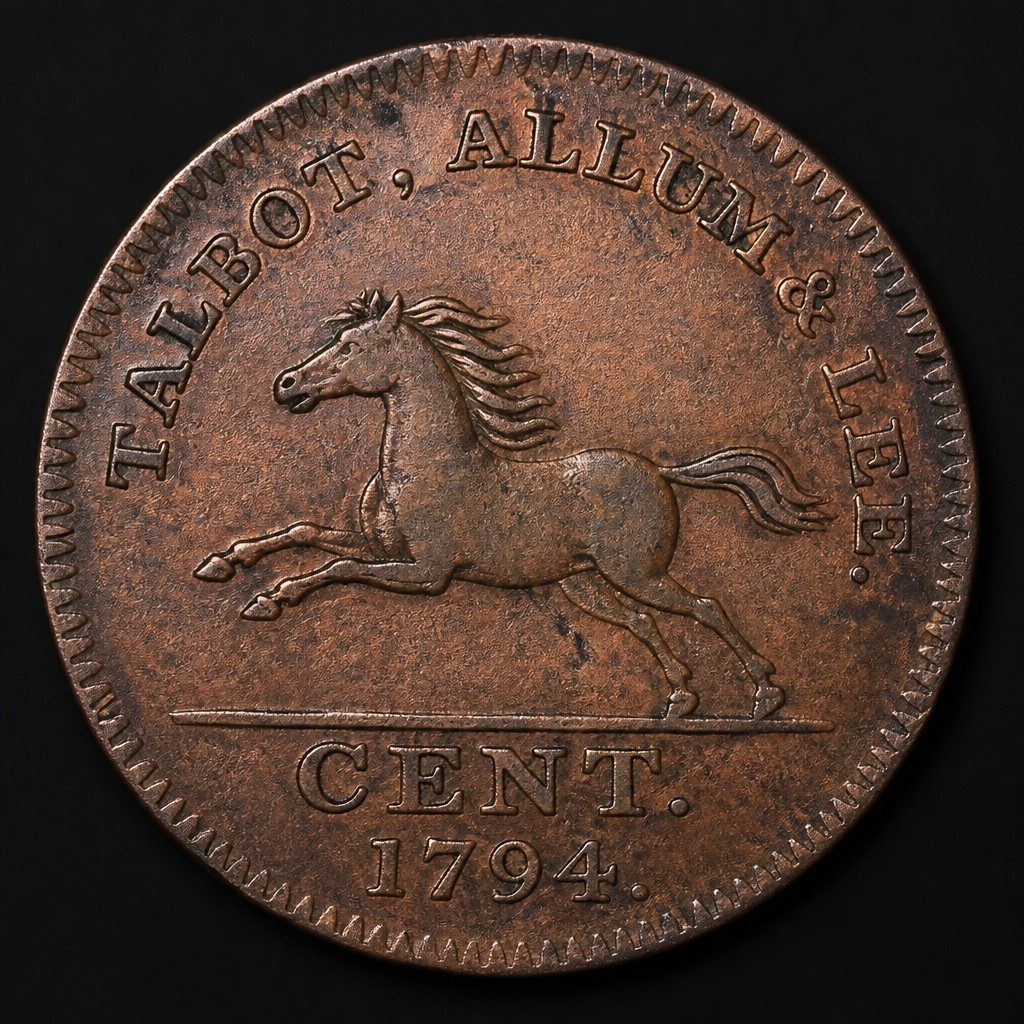
Talbot, Allum & Lee Cent
1794–1795
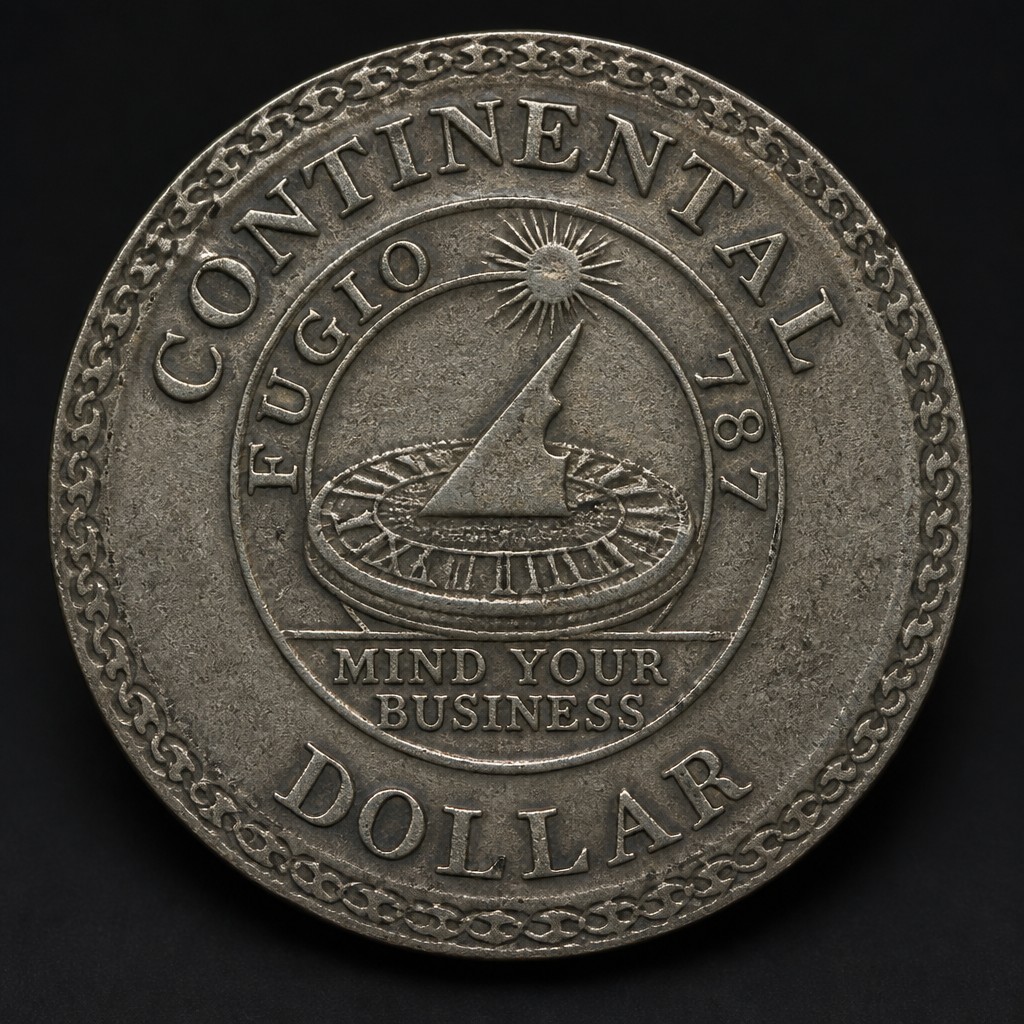
Continental Dollar
1776
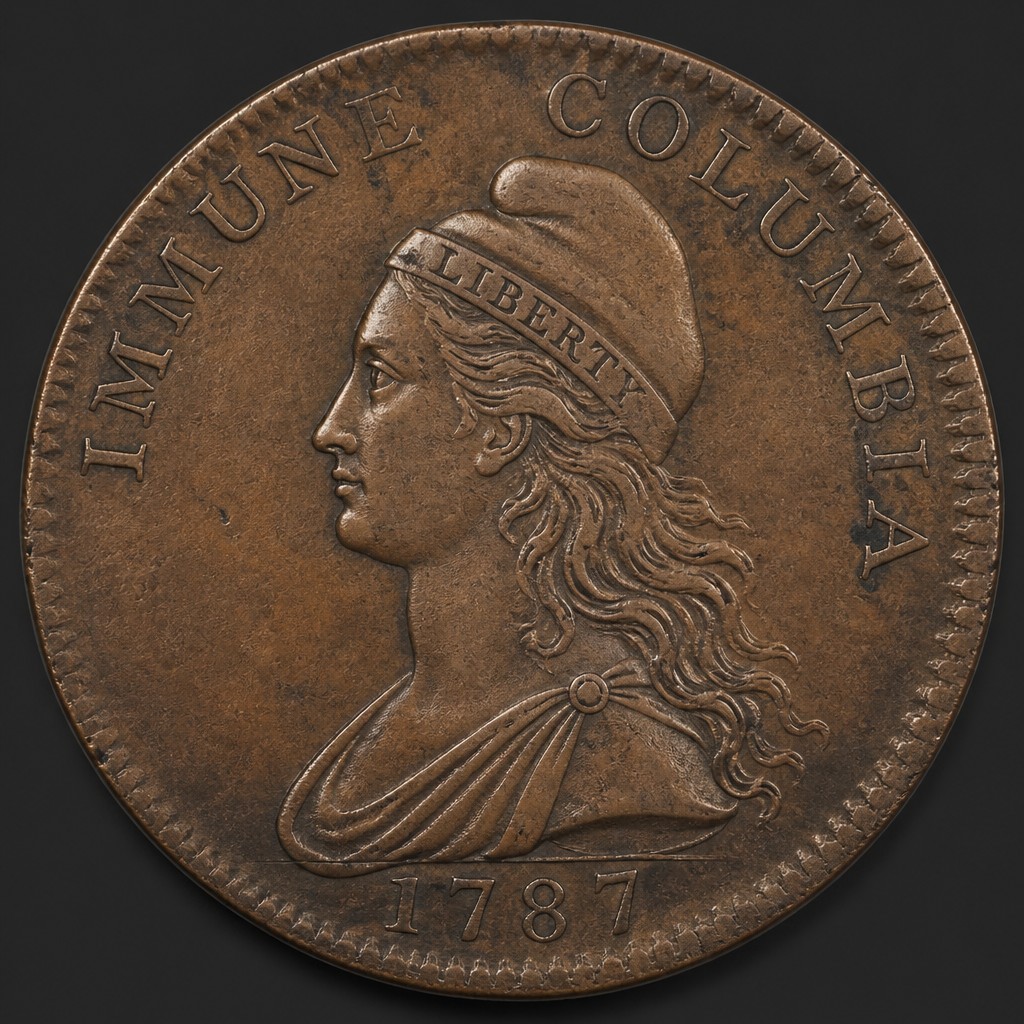
Immune Columbia Copper
circa 1785–1787
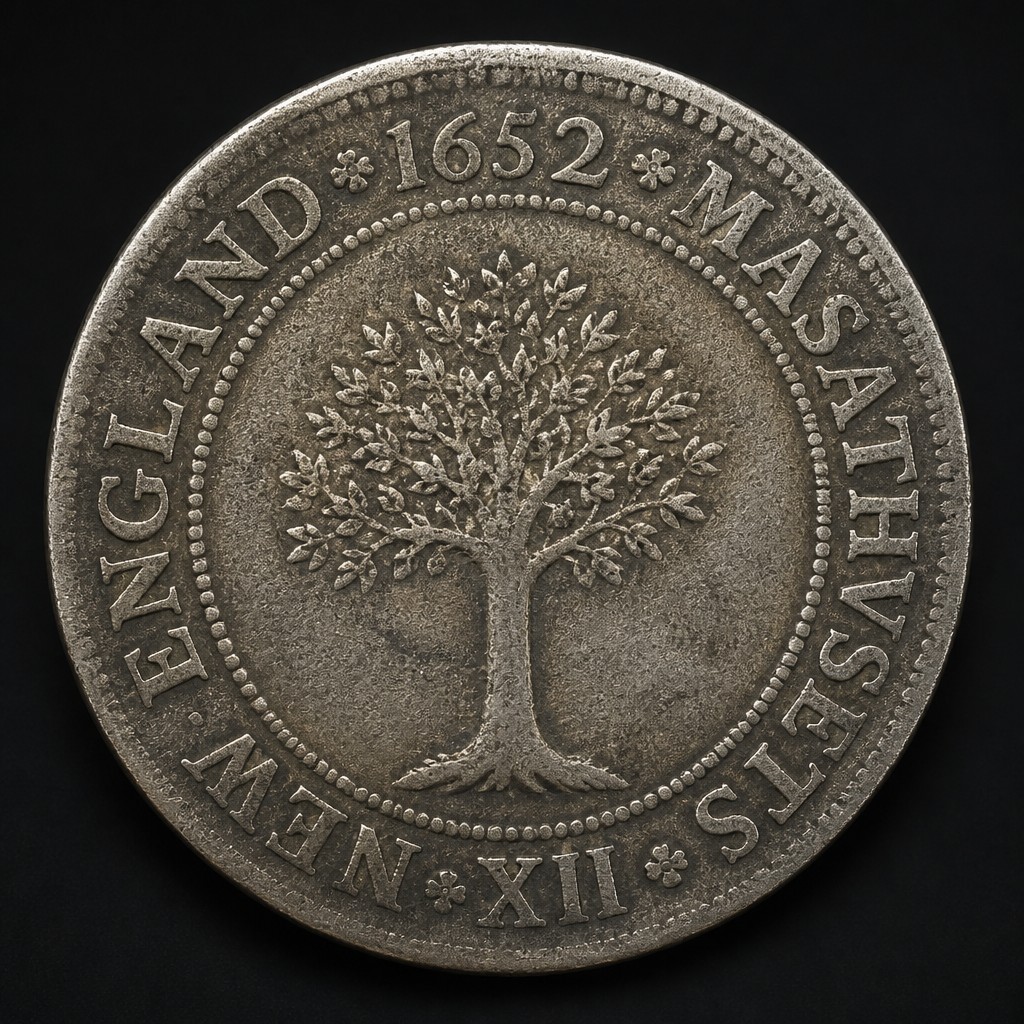
Massachusetts Oak Tree Shilling
Dated 1652, struck circa 1660–1667
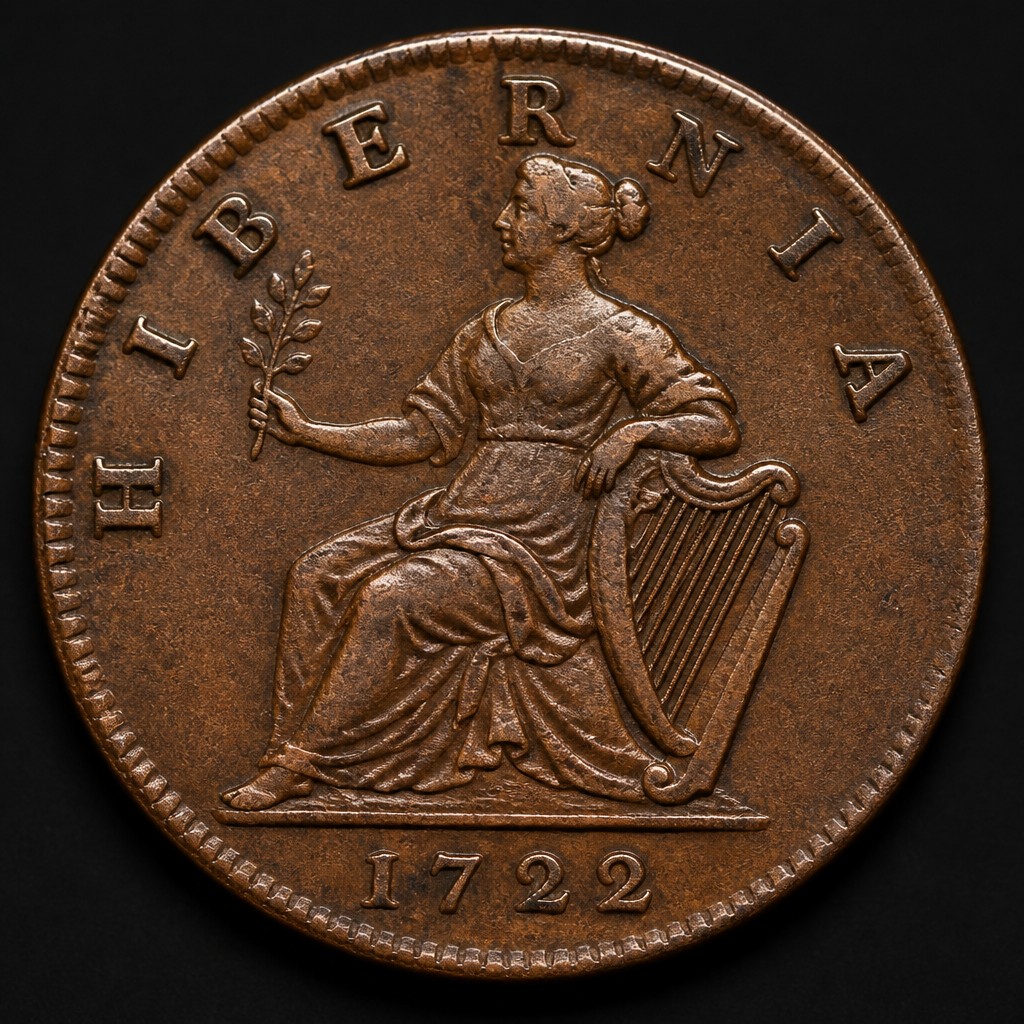
Wood's Hibernia Halfpenny
1722–1724
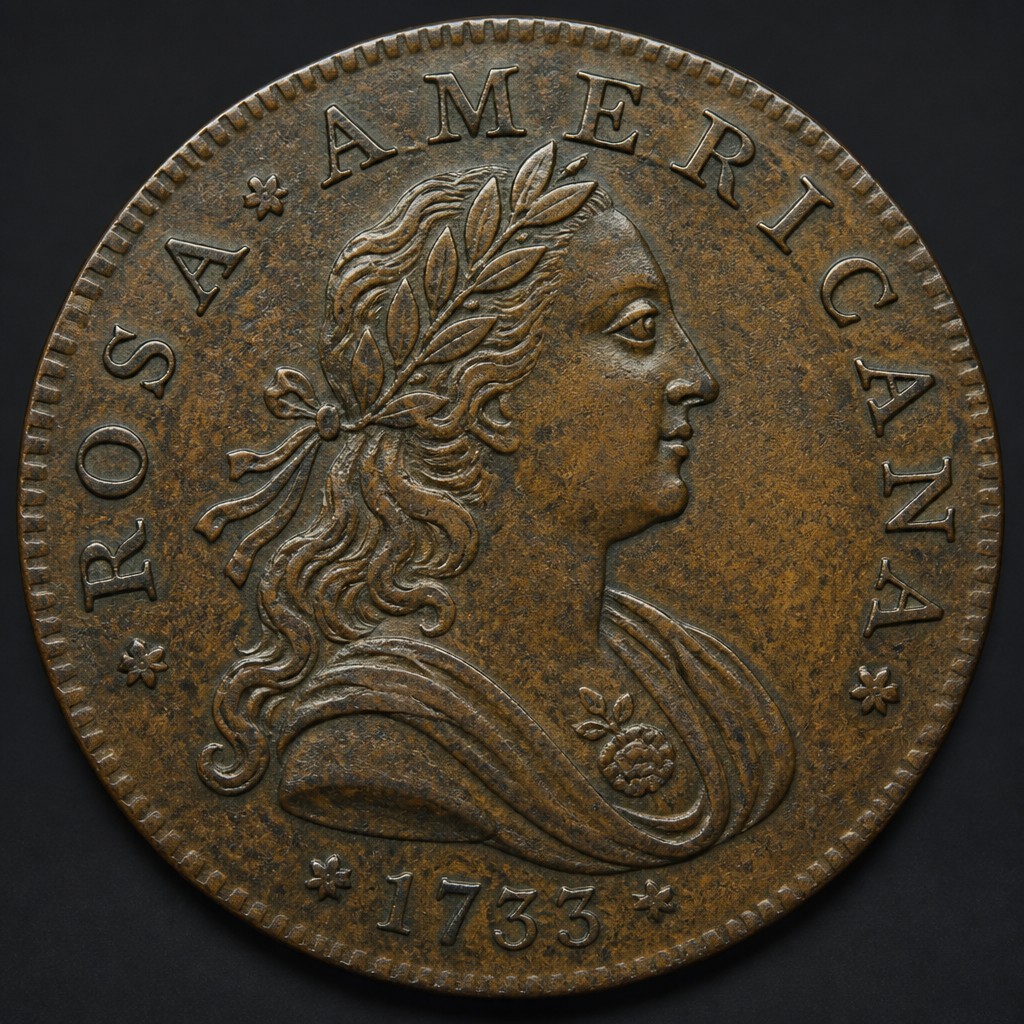
Rosa Americana Coinage
1722–1724 (with pattern issues dated 1733)
Massachusetts Willow Tree Shilling
Dated 1652, struck circa 1653–1660