
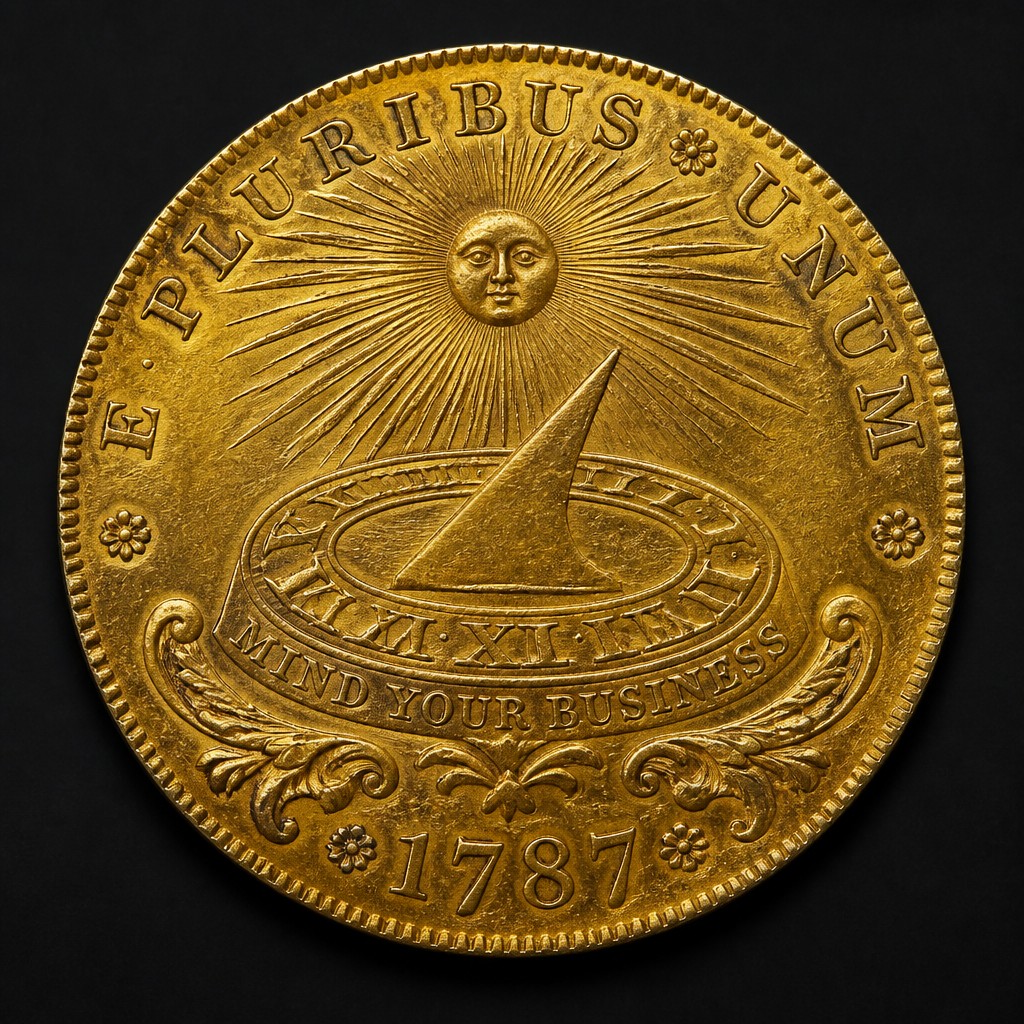
1787 Brasher Doubloon
An extraordinarily rare private gold coin struck by New York goldsmith Ephraim Brasher in 1787, now one of the most valuable and famous coins in American numismatics.
- Country
- United States
- Denomination
- Doubloon (privately valued near $15)
- Metal
- Gold
Got a coin like this?
Identify any coin from a photo, free.
Overview
The Brasher Doubloon is a privately struck gold coin made by New York silversmith and assayer Ephraim Brasher in 1787, during the period after the Revolutionary War when the young United States had no unified national coinage. It is one of the most celebrated rarities in American numismatics, with only a handful of examples known to exist.
The coin holds legendary status partly because of its extreme rarity and partly because of its connection to Brasher, a neighbor and associate of George Washington. Its fame was further amplified in popular culture by Raymond Chandler's detective novel 'The High Window,' which centers on a fictional Brasher Doubloon.
Surviving examples are considered among the most valuable coins in the world and rarely appear on the open market, with sales attracting national attention among collectors and the wider public.
History & Background
In the years immediately following the Revolutionary War, the United States had not yet established a national mint, and merchants relied on a patchwork of foreign coins, state-issued coppers, and privately made pieces to fill everyday commercial needs. Ephraim Brasher, a respected New York goldsmith and assayer known for testing and counter-stamping gold coins for weight and purity, took the unusual step of striking his own gold doubloons in 1787, likely intended to circulate at a value comparable to Spanish colonial gold doubloons then common in American trade.
Brasher petitioned the New York state legislature around this time seeking a contract to produce copper coinage for the state, though that specific proposal was not adopted; his gold doubloon appears to have been a separate, privately motivated venture. Only a small number of these coins are known to survive today, most held in museums or major private collections, underscoring how limited the original production must have been.
The coin's connection to the founding era, combined with its extreme scarcity, has made it a touchstone reference point whenever discussions turn to the rarest and most valuable coins in American history.
How to Identify
The Brasher Doubloon typically depicts a sunrise over mountains with the New York state motto and a mountain scene evocative of the state seal, along with an eagle design on the reverse patterned after the Great Seal of the United States. Ephraim Brasher's distinctive 'EB' punch mark appears on the coin, a hallmark he also used when counter-stamping other gold coins he assayed; the exact placement of the EB punch (such as on the eagle's wing versus the breast) helps distinguish among the different known surviving specimens.
The coin is struck in gold and sized similarly to a Spanish doubloon of the period, reflecting its intended role as a circulating gold piece comparable to foreign gold coinage already accepted in American commerce. Because genuine examples are so scarce and valuable, any coin claimed to be a Brasher Doubloon warrants extreme caution and expert authentication, as replicas, souvenir strikes, and forgeries are far more commonly encountered than genuine pieces.
Collectors and researchers rely on detailed die studies of the handful of known genuine specimens to help authenticate any newly presented example.
Value & Collectibility
Genuine Brasher Doubloons are among the most valuable coins in the world, with confirmed sales in the millions of dollars when examples have occasionally come to market. Their value stems from a combination of extraordinary rarity, direct connection to America's founding era, and enduring fame within numismatic history.
Because so few genuine examples exist and each has its own well-documented pedigree, essentially any coin encountered by the public claiming to be a Brasher Doubloon should be treated with skepticism absent rigorous, expert-level authentication and provenance research.
Frequently asked questions
Who made the Brasher Doubloon?
It was privately struck in 1787 by Ephraim Brasher, a New York goldsmith and assayer, at a time before the United States had a national mint.
Why is it called a 'doubloon'?
It was made to a gold weight and value comparable to Spanish colonial gold doubloons, which widely circulated in early America.
How many Brasher Doubloons exist?
Only a small number of genuine examples are known to survive, making it one of the rarest coins in American numismatics.
What is the 'EB' mark on the coin?
It is Ephraim Brasher's personal punch mark, which he also used to certify the weight and purity of other gold coins he assayed.
Is the Brasher Doubloon connected to a novel?
Yes, Raymond Chandler's 1942 detective novel 'The High Window' was later adapted into a film titled 'The Brasher Doubloon,' which helped popularize the coin's name.
Other coins you may enjoy
Virginia Halfpenny
1773
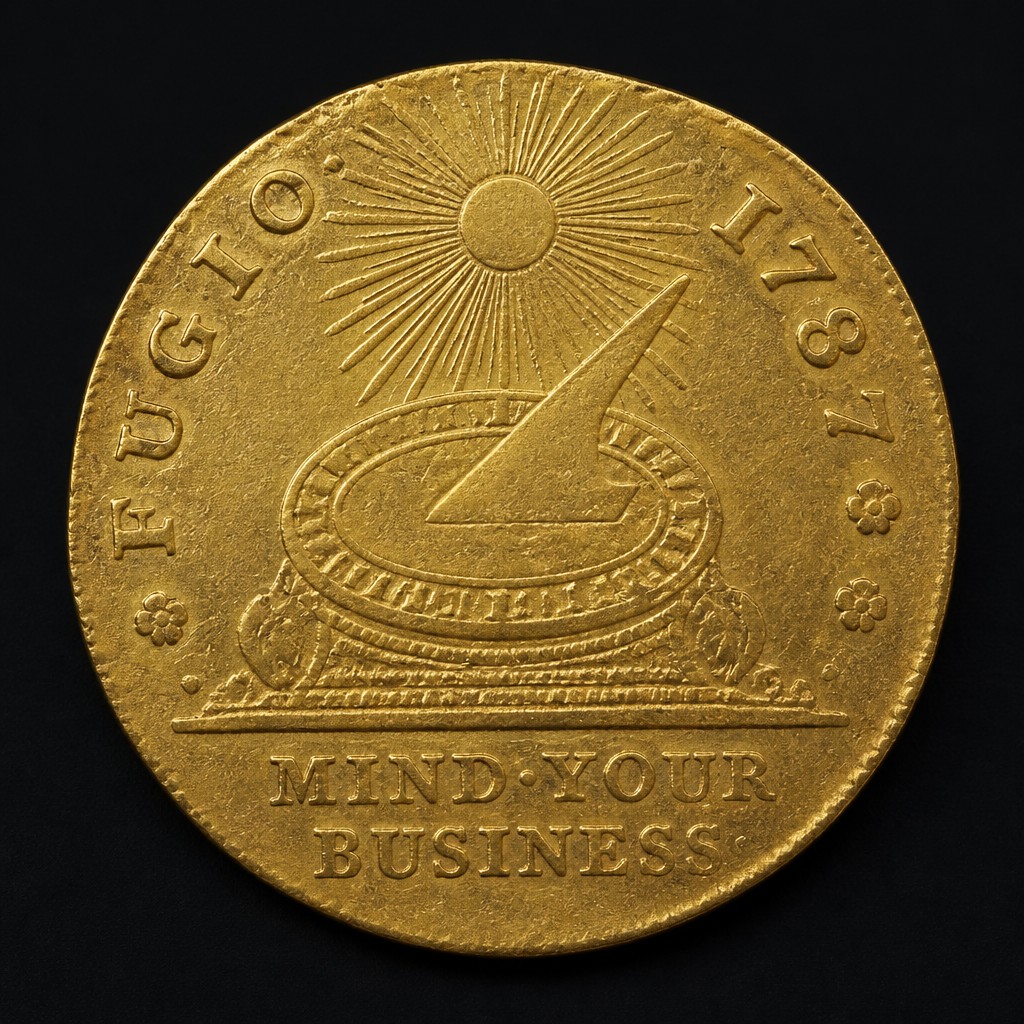
Brasher Doubloon
1787
Higley Copper
1737–1739
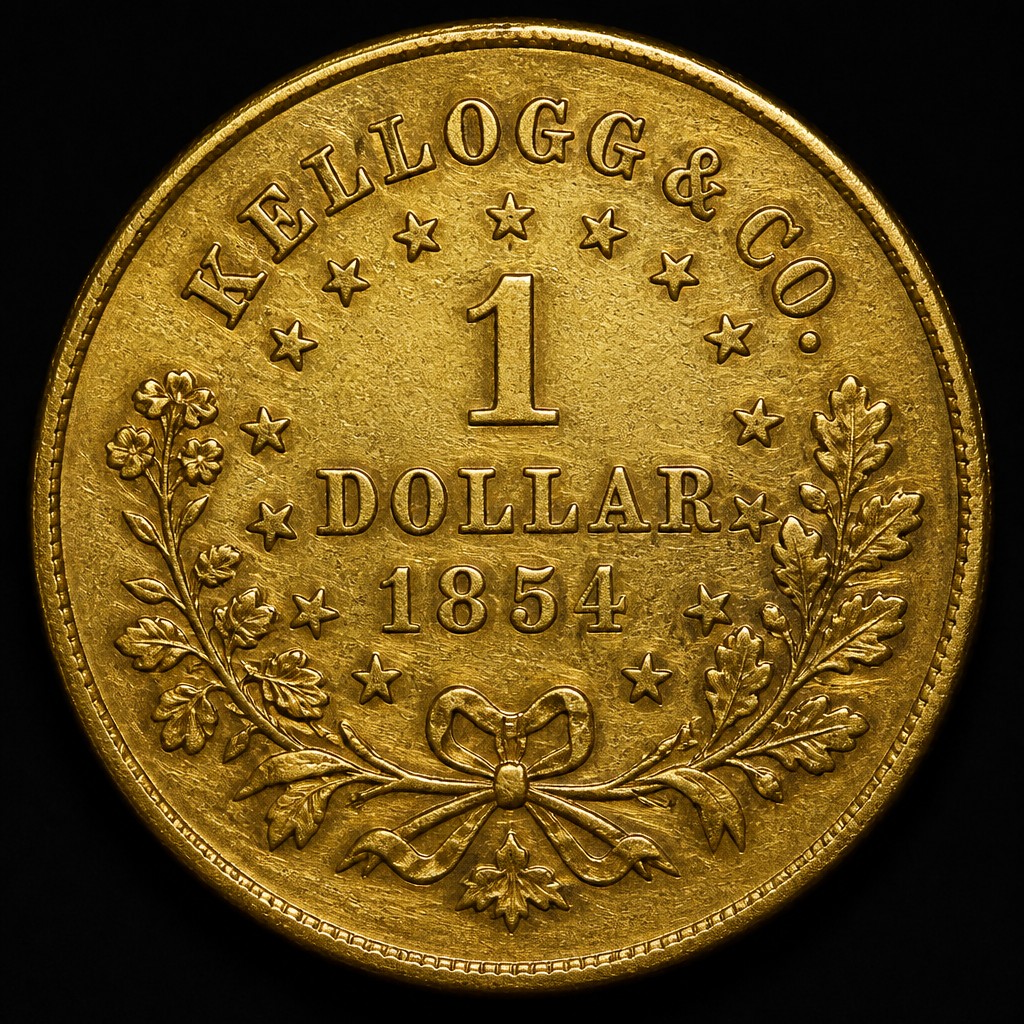
Kellogg & Co. Gold Piece
1854–1855
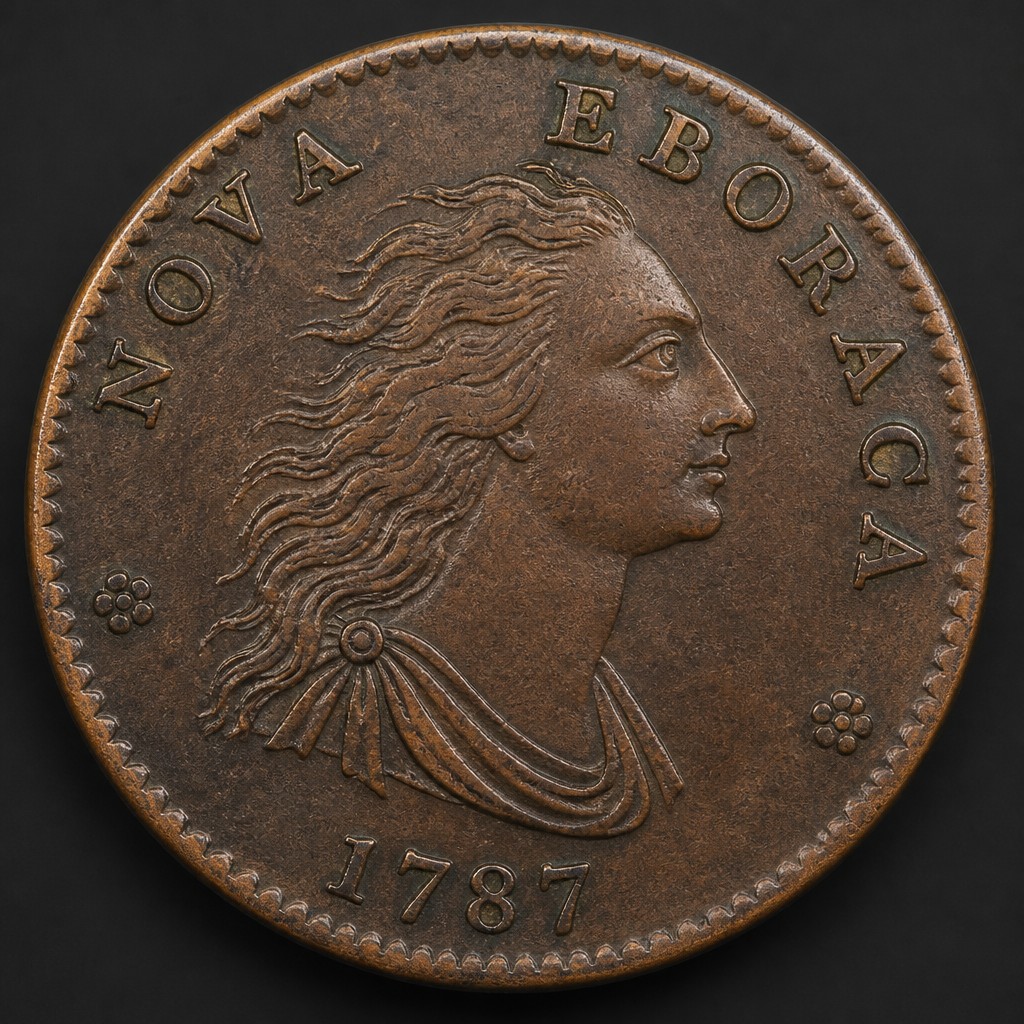
Nova Eborac Copper
1787
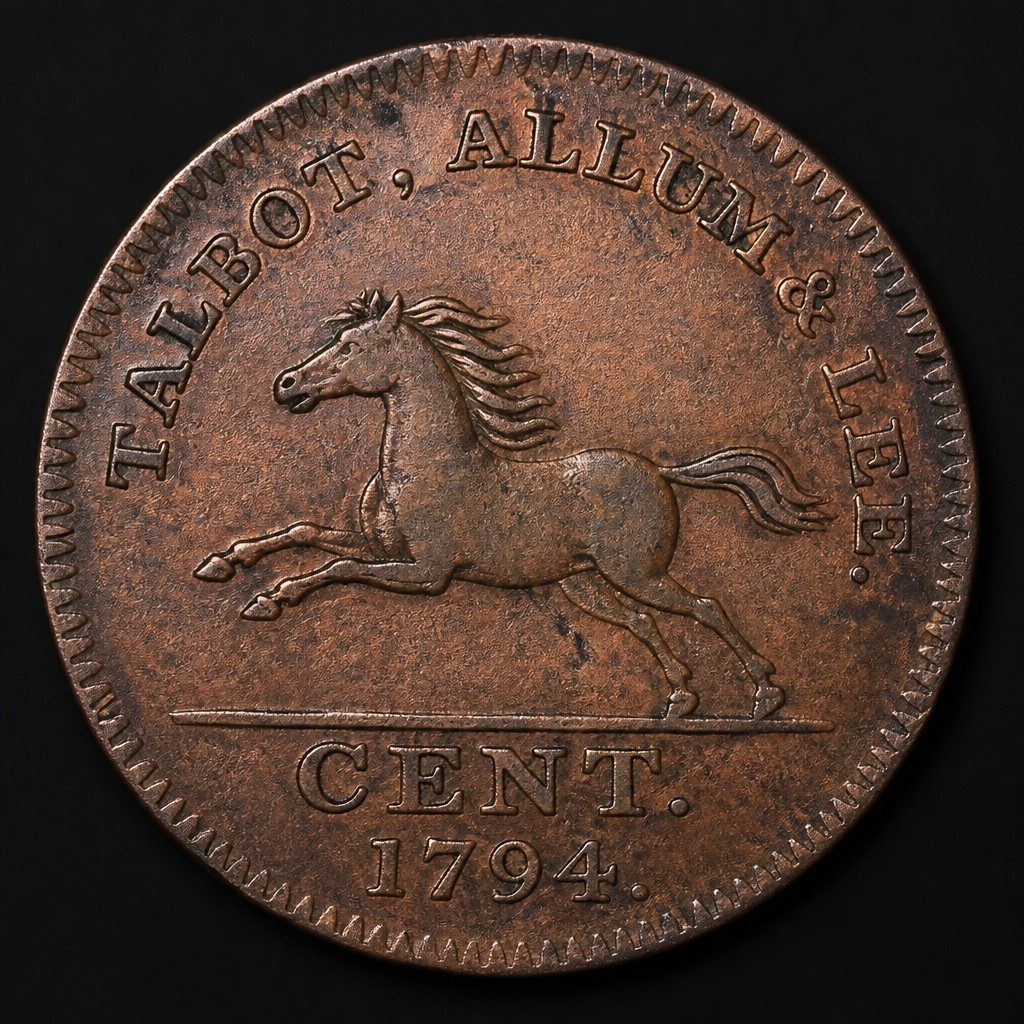
Talbot, Allum & Lee Cent
1794–1795
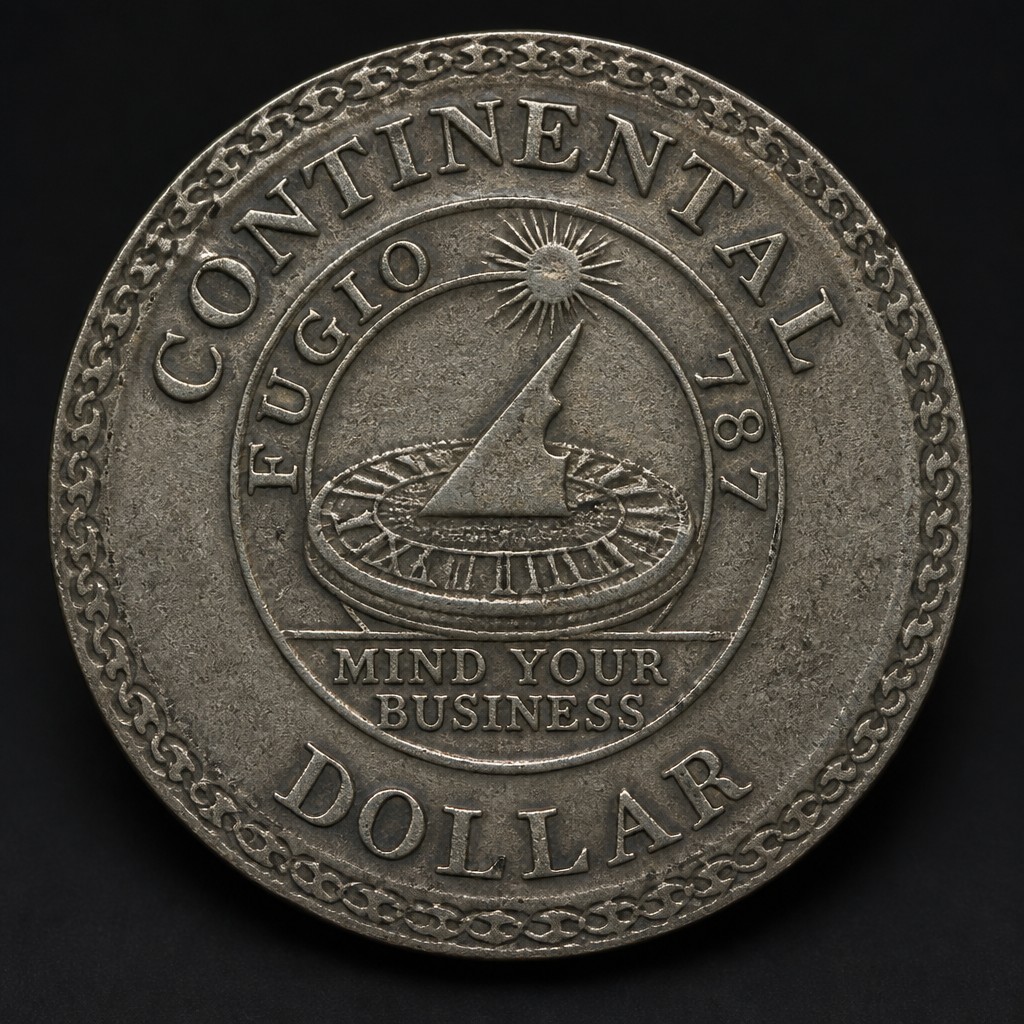
Continental Dollar
1776
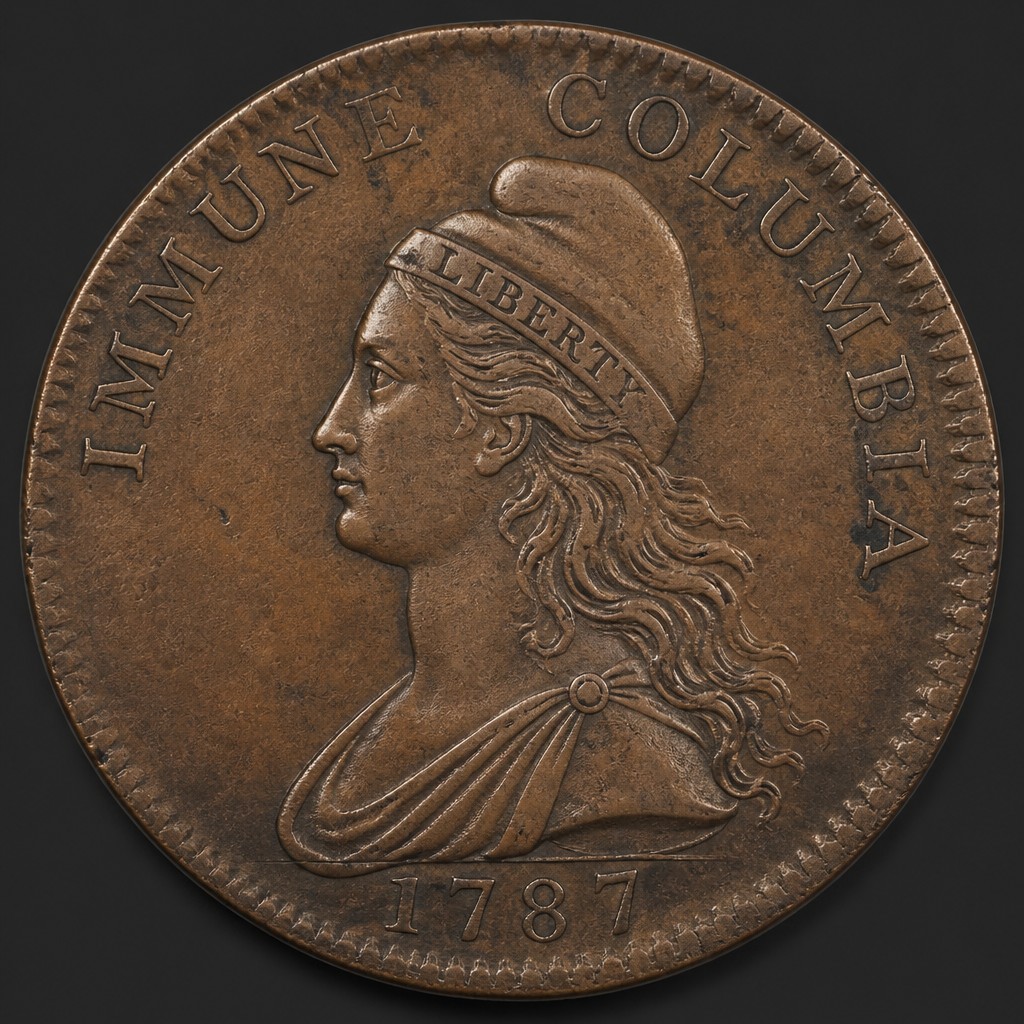
Immune Columbia Copper
circa 1785–1787
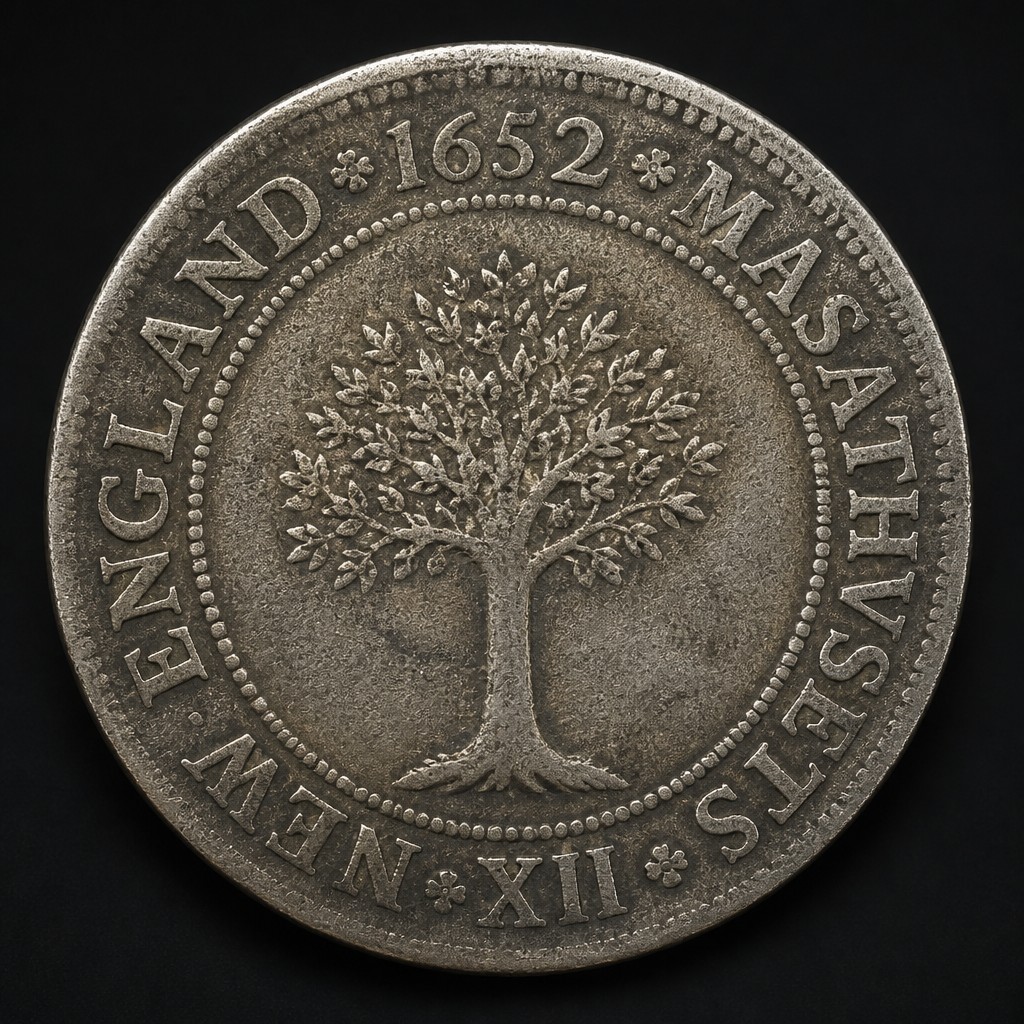
Massachusetts Oak Tree Shilling
Dated 1652, struck circa 1660–1667
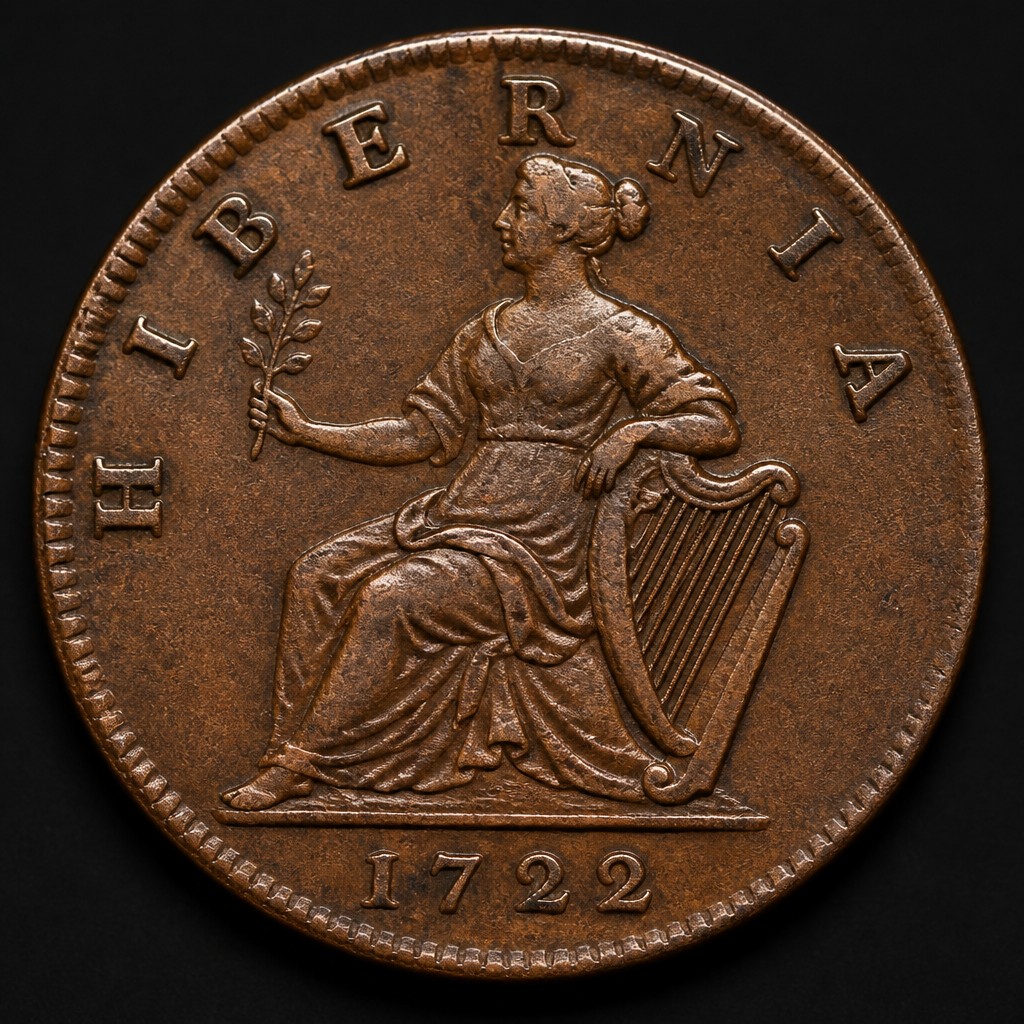
Wood's Hibernia Halfpenny
1722–1724
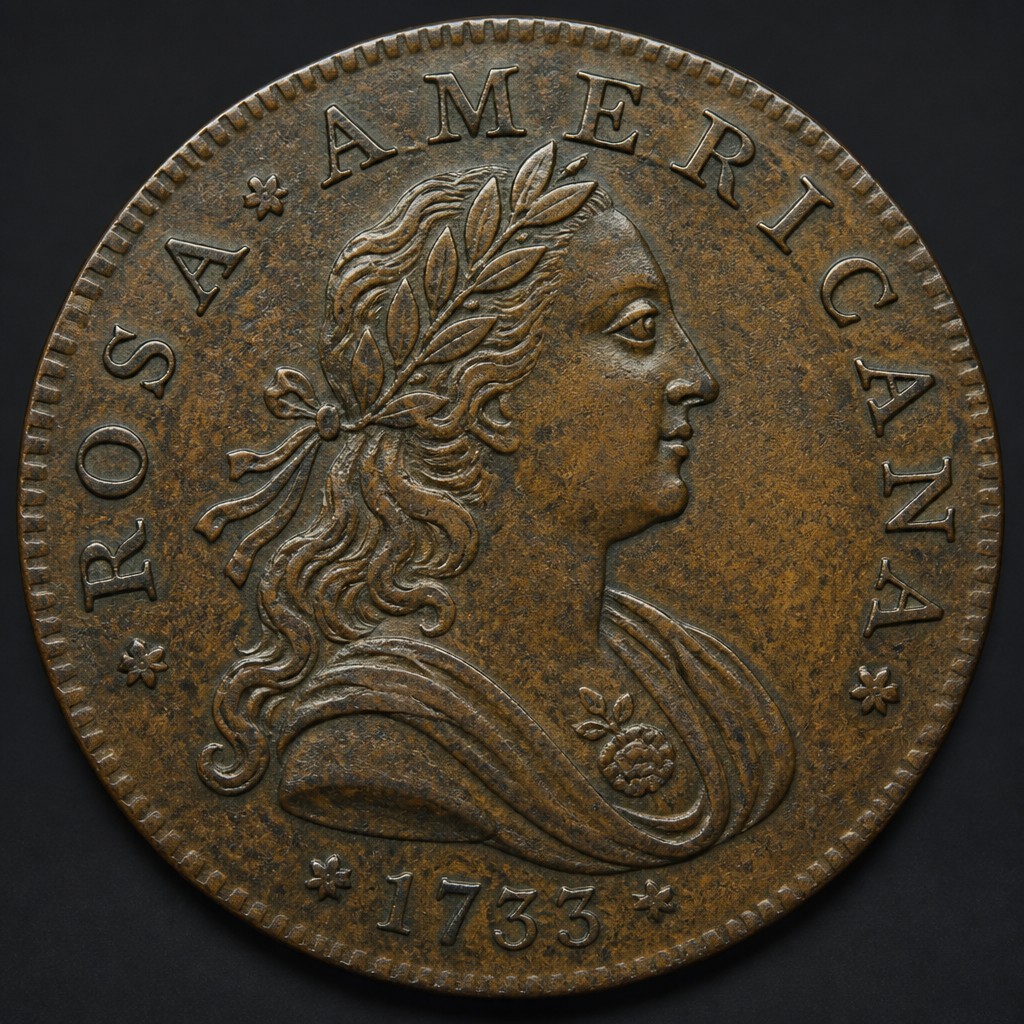
Rosa Americana Coinage
1722–1724 (with pattern issues dated 1733)
Massachusetts Willow Tree Shilling
Dated 1652, struck circa 1653–1660