12 Roubles (Nicholas I)
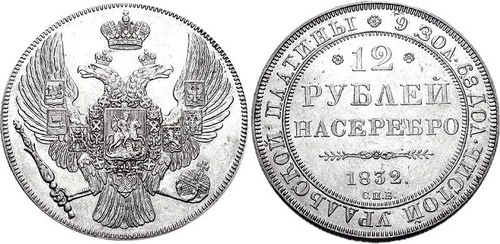
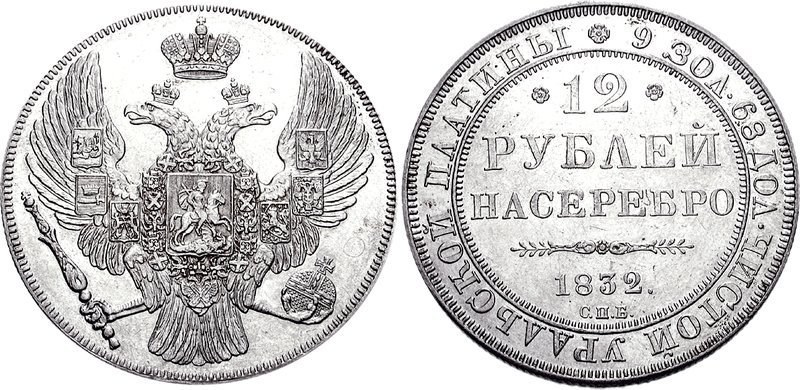
A rare Imperial Russian platinum 12 Roubles of Nicholas I, showing the crowned double-headed eagle and a Cyrillic '12 РУБЛЕЙ' value in Ural platinum.
- Country
- Russia
- Denomination
- 12 Roubles
- Metal
- Platinum
Got a coin like this?
Identify any coin from a photo, free.
Overview
The 12 Roubles of Nicholas I is a coin from one of the most unusual episodes in monetary history: Imperial Russia's issue of circulating platinum money. The example shown here is an 1832 piece bearing the crowned double-headed Imperial eagle on the obverse and the Cyrillic denomination 12 РУБЛЕЙ (12 Rubles) surrounded by inscriptions on the reverse. It is the largest of the three platinum denominations Russia struck in this period.
Struck in platinum rather than gold or silver, the 12 Roubles was the top value in a short series of 3, 6, and 12 rouble coins. The metal came from newly discovered deposits in the Ural Mountains, and Russia remains the only nation ever to have put platinum into general circulation as regular coinage.
The design is deliberately plain and official: no royal portrait, just the state eagle on one side and a factual statement of value and metal on the other. That combination of imperial heraldry and a matter-of-fact platinum inscription is the coin's signature look and the reason it is so recognizable to collectors.
History & Background
Large platinum deposits were found in the Urals in the 1820s, and with little established market for the metal the Russian government chose to turn it into coin. The 3 Roubles began in 1828, followed by the 6 Roubles and, from 1830, the 12 Roubles, all struck under Emperor Nicholas I (reigned 1825–1855). The observed 1832 date falls squarely in this run.
The platinum series was tied to the rouble by weight, with the 12 Roubles set at roughly twice the 6 and four times the 3, and its value stated in silver roubles on the coin itself. The experiment was ambitious but never large in scale; platinum coinage was demonetised and withdrawn in 1845 amid concerns over fluctuating platinum values and the risk of the coins being melted or exported for their metal.
Because the whole program lasted only about fifteen years and the 12 Roubles was the least-struck of the three values, surviving originals are scarce. The coins were later recalled and much platinum returned to bullion, which is why genuine period 12 Roubles pieces are among the rarer and more sought-after coins of the Nicholas I reign.
How to Identify
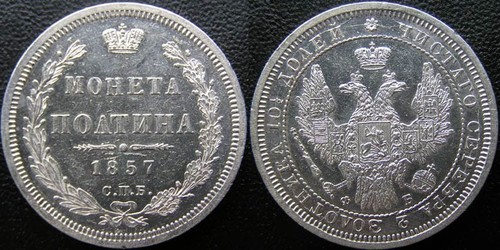
The obverse shows the crowned Imperial double-headed eagle of Russia, wings displayed and bearing the usual heraldic devices, with Cyrillic lettering around it. The reverse carries the large denomination 12 РУБЛЕЙ, the date, and inscriptions in Cyrillic identifying the piece as made of pure Ural platinum, typically stating the metal and weight rather than any motto or portrait.
The defining feature is the metal itself. Platinum is a dense, hard, silvery-white metal that does not tarnish or turn yellow; a genuine 12 Roubles feels distinctly heavy for its size compared with a silver coin of similar diameter. The 12 Roubles is the largest of the platinum series, noticeably bigger and heavier than the 6 and 3 rouble pieces, with a weight in the low-40-gram range and a broad flan.
Because there is no ruler's portrait, identification rests on the eagle, the Cyrillic legends, the date, and above all the platinum content. The dull silver-grey colour that never brightens like polished silver, combined with the surprising heft, separates it at a glance from ordinary silver roubles of the same era.
Value & Collectibility
The 12 Roubles is a rare and historically important coin, and genuine examples are valuable. Value comes from three things at once: the platinum content, the coin's scarcity as the top denomination of a short-lived experiment, and strong collector demand for Imperial Russian rarities. Even the metal alone is significant, as platinum is a precious metal in its own right.
Prices vary enormously with authenticity, condition, and date, and confirmed original strikes sell for very substantial sums well beyond bullion value. Because exact survival numbers are low and demand is high, this is firmly in the territory where a coin should be appraised individually rather than valued from a fixed price list.
Authentication is central to value here. Platinum roubles have been widely copied and restruck, so an unattributed piece is worth far less than one certified by a recognised grading service. Any 12 Roubles being bought or sold at a meaningful price should be independently authenticated first.
Frequently asked questions
Is this coin really made of platinum?
Yes. Imperial Russia struck 3, 6, and 12 rouble coins in platinum from Ural Mountain deposits, and the 12 Roubles is the largest of them. Russia is the only country ever to have circulated platinum as regular coinage.
Why is there no portrait of the tsar on it?
The platinum roubles used the crowned Imperial double-headed eagle rather than a royal portrait. One side carries the state eagle and the other states the denomination and that the coin is pure Ural platinum, so the ruler is represented by heraldry rather than a bust.
How rare is the 12 Roubles?
It is the scarcest of the three platinum denominations. The series ran only from around 1828 to 1845 and the 12 Roubles was struck in the smallest numbers, so genuine originals are among the rarer coins of the Nicholas I reign.
Why did Russia stop making platinum coins?
The platinum coinage was demonetised and withdrawn in 1845. Concerns over the changing value of platinum and the risk of the coins being melted or exported for their metal ended the experiment after only about fifteen years.
What does the Cyrillic reverse say?
The reverse shows the value '12 РУБЛЕЙ' (12 Rubles) with the date and inscriptions describing the coin as pure Ural platinum, typically noting the metal and its weight rather than a motto.
12 Roubles (Nicholas I) guides
In-depth guides for identifying, valuing, and collecting 12 Roubles (Nicholas I).