
How to Identify the 12 Roubles (Nicholas I)
Recognise the Russian platinum 12 Roubles by its silver-grey heft, crowned double-headed eagle, and Cyrillic '12 РУБЛЕЙ' Ural-platinum reverse.
Read the full 12 Roubles (Nicholas I) encyclopedia entry →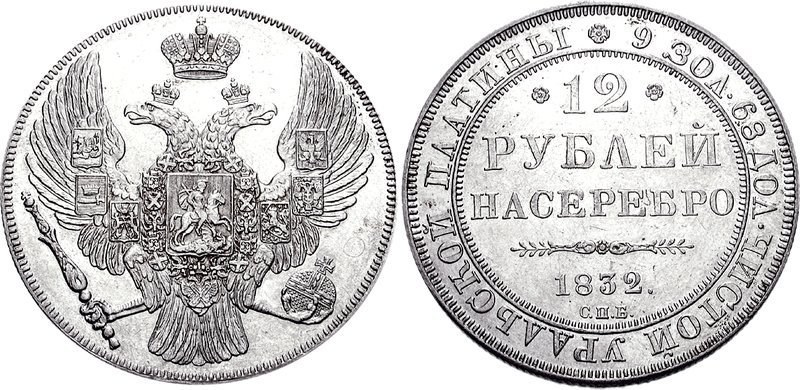
Begin with the metal, because it is the single most telling clue. Platinum is silvery-white but noticeably duller and greyer than bright silver, and it never tarnishes to the black or yellow tones silver develops. Crucially it is very dense, so a genuine 12 Roubles feels startlingly heavy for its diameter; that surprising weight in the hand is often the first thing a collector notices.
Read the two faces carefully. The obverse should show the crowned Imperial double-headed eagle of Russia with Cyrillic lettering around it, and no human portrait. The reverse must carry the large value 12 РУБЛЕЙ, a date such as the observed 1832, and Cyrillic inscriptions identifying the coin as pure Ural platinum, usually stating the metal and weight. A supposed platinum rouble that instead names silver or gold, or that carries a tsar's bust, is not this type.
Use size and the denomination hierarchy to confirm. The 12 Roubles is the largest of the three platinum coins, clearly bigger and heavier than the 6 and 3 rouble pieces, with a weight in the low-40-gram range and a broad flan. If a piece is much lighter than expected for its width, or is magnetic, be cautious, as platinum is not magnetic and a light coin points to a base-metal or silver imitation.
Watch for the specific look-alikes and fakes that plague this series. Restrikes, later 'novodel' copies, and outright forgeries exist, some in the correct metal and some in silver or plated base metal made to imitate platinum's grey colour. Cast copies show grainy surfaces, soft lettering, and sometimes an edge seam, whereas a genuine struck coin has crisp eagle feathers and sharp Cyrillic legends even when worn.
Because the stakes are high, treat weight, dimensions, and metal as a package and verify them together. For any piece of real value, independent authentication and certification by a recognised grading service is essential; the combination of high price, heavy faking, and an unusual metal makes this a coin where professional confirmation matters more than usual.
Frequently asked questions
How can I tell platinum from silver on this coin?
Platinum is a duller silver-grey that does not tarnish, and it is much denser, so the coin feels heavier than a silver piece of the same size. It is also non-magnetic. A bright, light, or magnetic coin is a warning sign.
How do I distinguish the 12 Roubles from the 6 or 3 Roubles?
By size, weight, and the value on the reverse. The 12 Roubles is the largest and heaviest of the three platinum coins and reads '12 РУБЛЕЙ', while the smaller pieces read 6 or 3 roubles and weigh proportionally less.
Are there fakes and restrikes of this coin?
Yes, many. Because platinum roubles are rare and valuable, forgeries and later restrikes are common, some in silver or plated base metal imitating platinum's grey colour. Grainy surfaces, soft lettering, and wrong weight are red flags.
Should I get one authenticated before buying?
Absolutely. Given the high value, the unusual metal, and the volume of copies, any 12 Roubles should be certified by a recognised grading service before a meaningful purchase or sale.