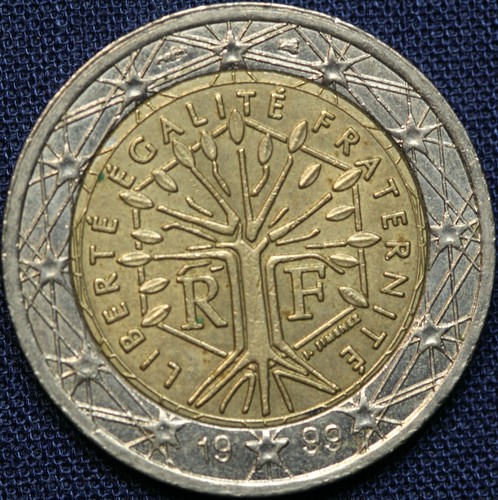
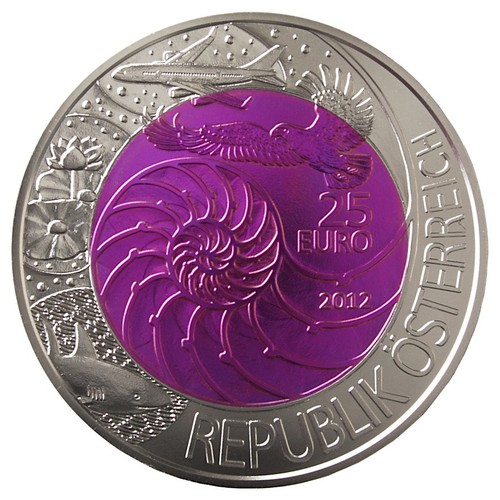
Irish 1 Euro Coin
Ireland · Based on the design and general circulation of Irish Euro coins, the visible '200...' suggests a year of issue in the 2000s, likely 2002 which was the first year of Euro circulation, or a later year in that decade.
The coin features a bimetallic design with a silver-colored core and a gold-colored outer ring. The obverse side depicts a jumping horse, emblematic of Ireland, above the year of issue.
- Country
- Ireland
- Denomination
- 1 Euro
- Metal
- Inner part: Copper-Nickel; Outer part: Nickel Brass
This report is AI-generated and can be wrong. Always verify grade, authenticity, and value with a qualified dealer or certified grading service before buying, selling, or insuring.
Identify your own coins.
Get a report just like this from any photo, free.
Overview
Historical significance
Estimated value
Care & preservation
More like this
Other ireland coins
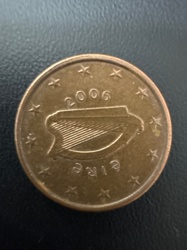
Irish 2006 Euro Coin (Obverse)
Ireland · 2006
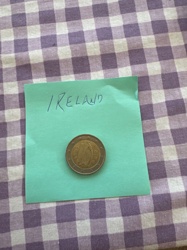
Irish 1-Euro Coin
Ireland · 2002-Present
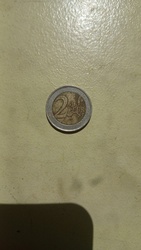
Irish 2 Euro (1st Map Type)
Ireland · 2002
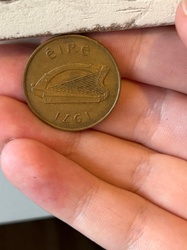
Irish 2 Pence (Decimal Series)
Ireland · 1971
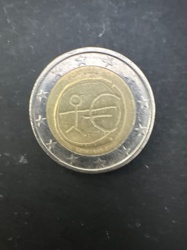
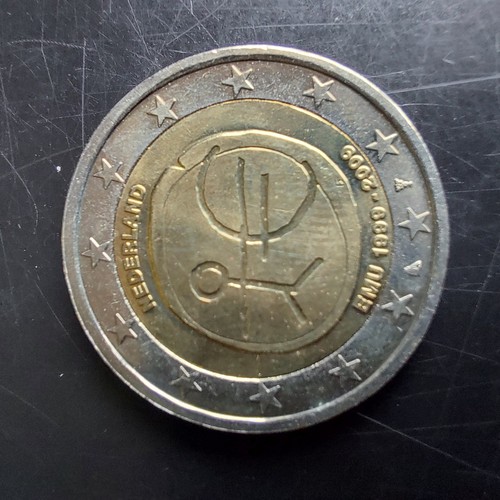
2 Euro Commemorative Coin (10 Years of EMU)
Ireland · 2009
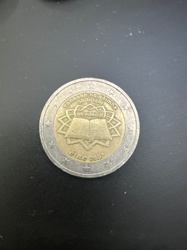
Irish 2 Euro Commemorative Coin - 50th Anniversary of the Treaty of Rome
Ireland · 2007