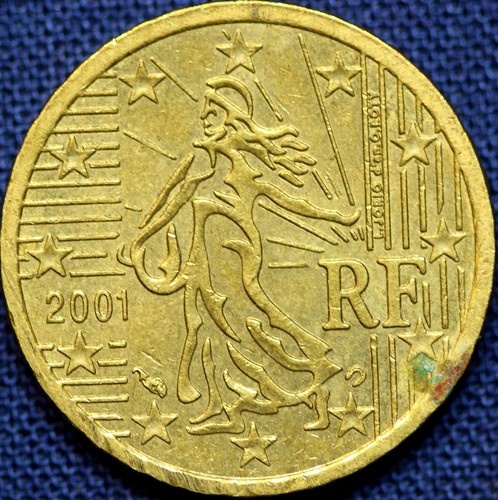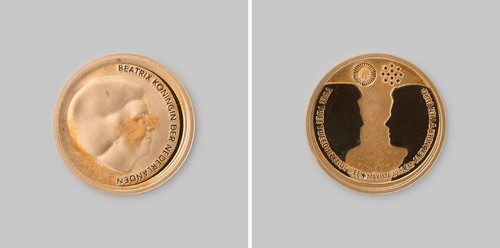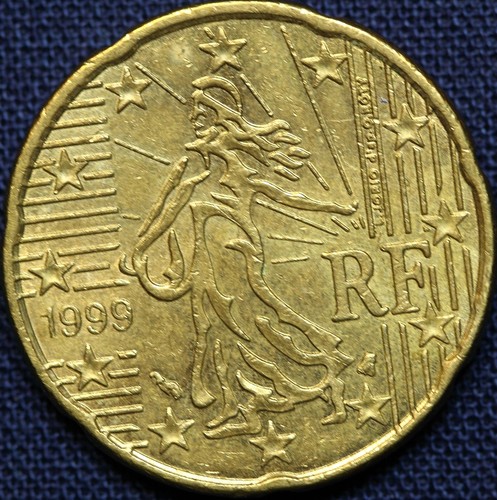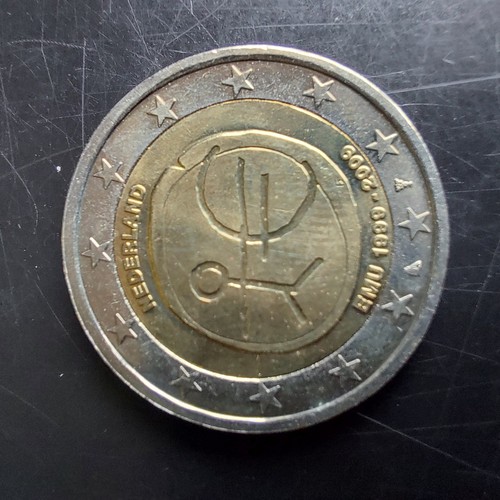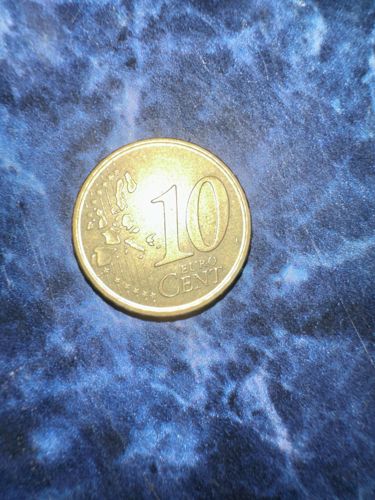
10 Euro Cent
Eurozone (specific country not identifiable without reverse side, but could be any Eurozone member state) · Not discernible from the image, as the year is typically on the obverse (national side). Euro coins have been issued since 1999.
The obverse (common side, shown in image) features a map of Europe (initially showing the 15 EU member states as of 2002, later updated to show Europe as a whole) with the denomination '10 EURO CENT' superimposed. Twelve stars, representing the original members of the European Union, are also present.
- Denomination
- 10 Euro Cent
- Metal
- Nordic Gold (an alloy of 89% copper, 5% aluminium, 5% zinc, and 1% tin)
This report is AI-generated and can be wrong. Always verify grade, authenticity, and value with a qualified dealer or certified grading service before buying, selling, or insuring.
Identify your own coins.
Get a report just like this from any photo, free.
Overview
Historical significance
Estimated value
Care & preservation
More like this
Other eurozone (specific country not identifiable without reverse side, but could be any eurozone member state) coins
1 Euro Cent Coin
Eurozone (specific country not identifiable from image alone) · Not identifiable from image (date is on the other side)

2 Euro Coin
Eurozone (Various countries) · 2011
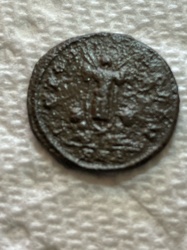
Unidentifiable Ancient Coin (likely Roman or Byzantine)
Likely Roman Empire or Byzantine Empire · Unidentifiable due to condition
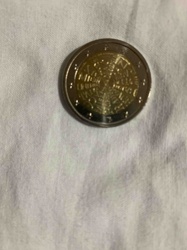
2 Euro Coin
Eurozone countries (specifically varies by year) · Varies (often issued annually)

Euro
European Union · 2002 (first year of issue for Euro coins)
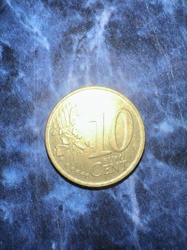
10 Euro Cent
Eurozone (specific country not identifiable from image, but common design for all Eurozone members) · Not clearly visible, but these coins were first issued in 2002. The mint mark or year is typically on the national side (the side not shown).