
Coin Encyclopedia
Search and identify coins from around the world — with country, denomination, metal, mint, history, and how to tell them apart.
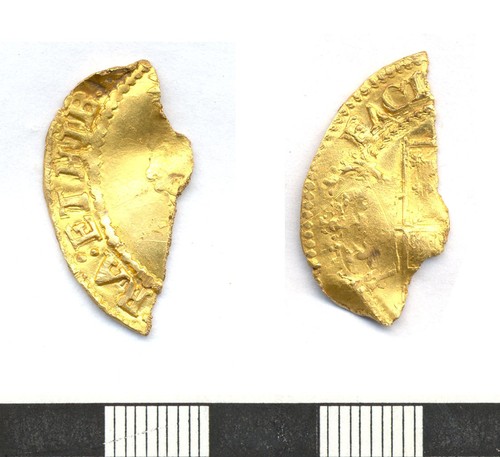
Laurel
A hammered English gold coin of James I worth twenty shillings, named for the king's laurel-wreathed profile, struck 1619-1625.
Hammered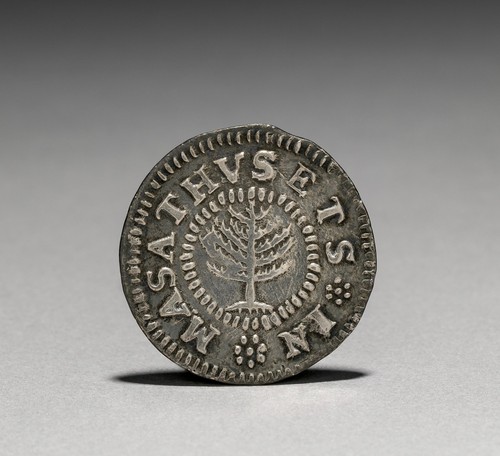
Pine Tree Shilling
Silver shilling from the Boston mint, struck about 1667–1674 but dated 1652, showing a pine tree beside the legend MASSACHUSETTS.
Colonial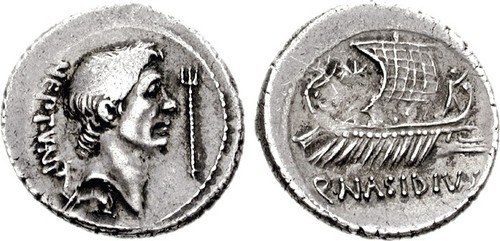
Nasidius Denarius
Roman Republican silver denarius struck for Sextus Pompey's admiral Q. Nasidius, showing Pompey the Great's head and a galley marked NASIDIVS.
Ancient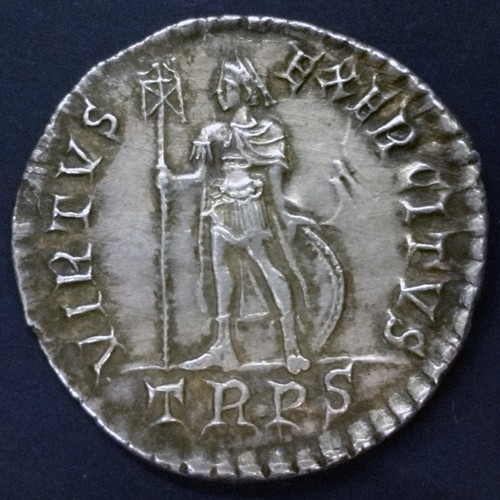
Hoxne Hoard Siliqua
A small late-Roman silver siliqua of the type found in Britain's Hoxne Hoard, with an imperial portrait and a standing figure or personified virtue.
Ancient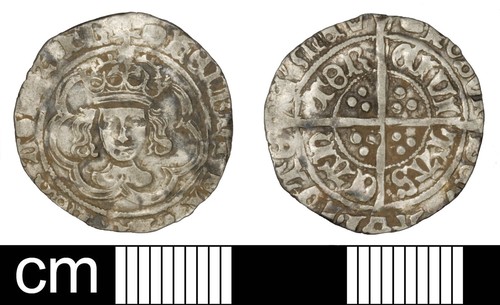
Medieval Halfgroat of Henry VII
Hammered silver twopence of England's first Tudor king, with a crowned royal portrait and a long-cross reverse over a shield.
British Isles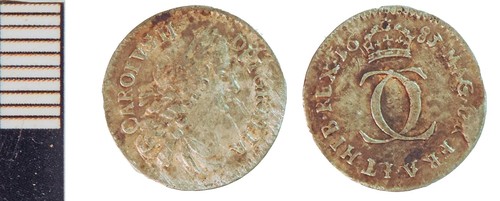
Charles II Twopence
A small milled twopence of Charles II, showing the king's profile bust on the obverse and a crowned mark of value on the reverse.
Milled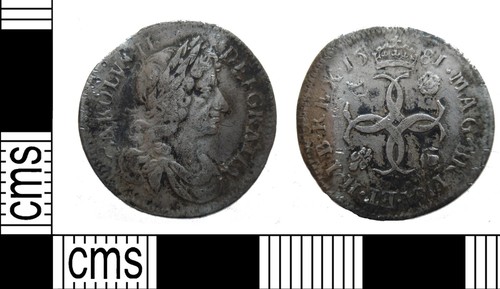
Charles II Fourpence
A small milled sterling silver fourpence of Charles II, with his laureate bust and a crowned cipher of interlinked C's flanked by the national emblems.
Milled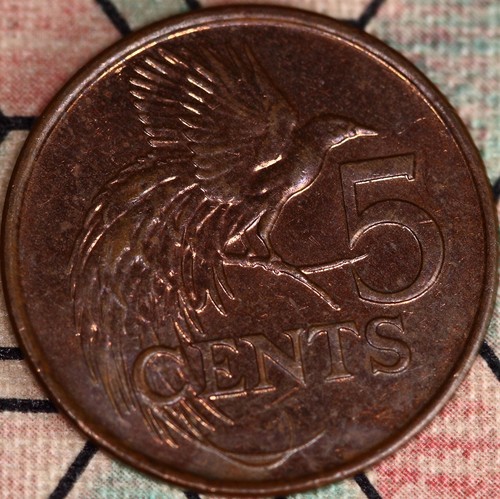
Trinidad and Tobago 5 Cents
A bronze five-cent coin of Trinidad and Tobago showing a perched bird — the Greater Bird of Paradise, often mistaken for a parrot — with FIVE CENTS on the reverse.
Circulation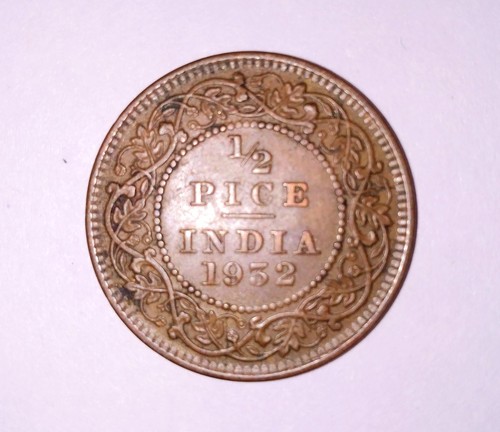
India Half Pice
A small copper half pice from India carrying a crowned obverse with the word INDIA; the pice is a sub-unit of the old pre-decimal Indian coinage system.
Modern India
Hryvnia
Medieval silver money unit of Kievan Rus, circulating as cast silver ingots and weight-money rather than as a struck, portrait-bearing coin.
Medieval