Coin Encyclopedia
Search and identify coins from around the world — with country, denomination, metal, mint, history, and how to tell them apart.
British Sovereign (modern proof)
Contemporary proof-quality gold sovereign struck by the Royal Mint, continuing Benedetto Pistrucci's St George and the dragon reverse design used since the early 19th century.
British
Chilean 100 Pesos Gold 'Condor'
Chile's flagship 20th-century gold coin, popularly called the "Condor" for the majestic Andean bird featured on its reverse, historically prized as an internationally recognized gold piece.
Latin American
Korean Sang Pyong Tong Bo (Mun cash coin)
Traditional Korean cast cash coin with a square center hole, issued for over two centuries during the Joseon Dynasty and carrying the inscription 'Everlasting Circulating Treasure.'
Asian
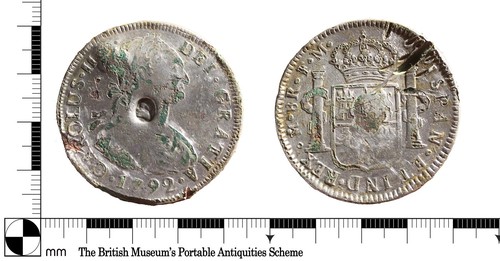
Spanish Colonial Cob (Macuquina)
Crude, irregularly shaped hand-struck coins produced at Spanish colonial mints in the Americas for over two centuries, forming the basis of the famous 'pieces of eight' that circulated worldwide.
Latin American
Papal States Scudo
The principal silver coin of the Papal States, bearing the portrait or arms of the reigning pope alongside religious imagery, struck for centuries until the Papal territories' loss of independence.
European
Chinese Wu Zhu Cash
One of history's longest-running coin types, cast continuously for over seven centuries across multiple Chinese dynasties after its introduction under Emperor Wu of Han.
Ancient
Sassanian Silver Drachm
The standard silver coin of the Sasanian Persian Empire, featuring an elaborately crowned king's portrait and a Zoroastrian fire altar with attendants, struck for over four centuries.
Ancient
Mughal Silver Rupee (Akbar)
A silver rupee struck under Emperor Akbar, who standardized the denomination's weight and calligraphic design, establishing a coin type that shaped Indian currency for centuries.
Asian
Liberty Head Half Eagle ($5)
A widely produced 19th-century gold five-dollar coin bearing Christian Gobrecht's Coronet Head design, struck across nearly every major American branch mint of the era.
United States
Persian Sassanid Silver Drachm
The standard silver coin of the Sasanian Persian Empire, showing an elaborately crowned royal bust and a Zoroastrian fire altar with attendants, struck for over four centuries.
Ancient
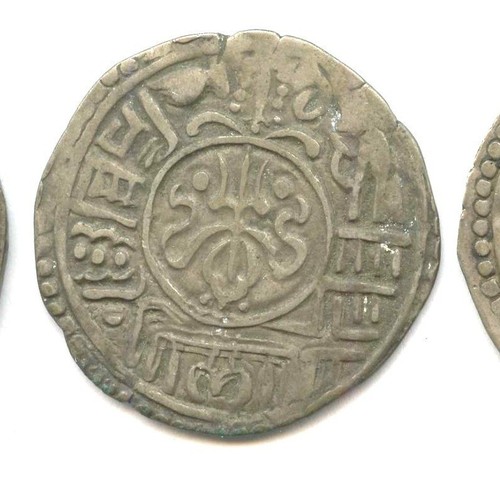
Tibetan Silver Tangka
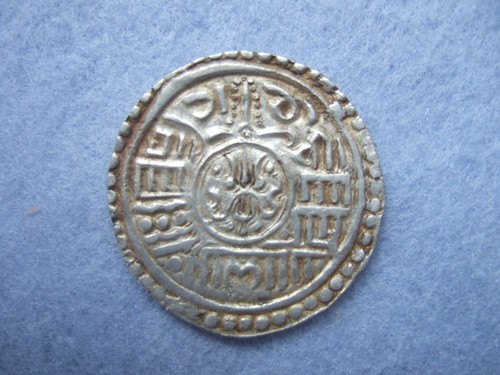
The traditional silver coin denomination of Tibet, issued in many distinct types over roughly three centuries, from early Nepalese-struck coinage to native Tibetan and Sino-Tibetan issues.
Asian
Dutch Ducat
A small, nearly pure gold coin showing an armored knight, minted for centuries by the Dutch provinces and later the Kingdom of the Netherlands as a trusted international trade coin.
European
1 Euro Coin
The standard circulating one-euro coin used across the Eurozone since 2002, bimetallic with a gold-colored center and silver-colored ring, and a national obverse that varies by issuing country.
European
Gallienus Antoninianus
Radiate coin of Gallienus, who ruled through the depths of the Crisis of the Third Century and is especially known for a colorful late-reign series of animal and mythological reverse types.
Ancient
Double Sovereign
A British gold coin worth two pounds, twice the value of the standard sovereign, struck intermittently since the nineteenth century for commemorative and bullion purposes.
British
Half Crown Gold
A small gold coin worth half a gold crown, struck from the reign of Henry VIII through the English Civil War, distinct from the far more familiar silver half crown that circulated for centuries afterward.
British
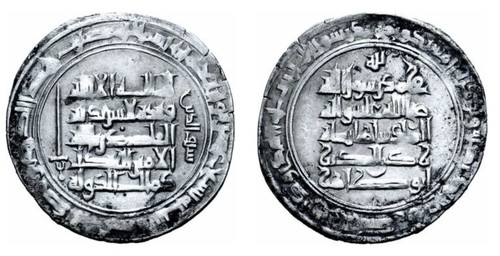
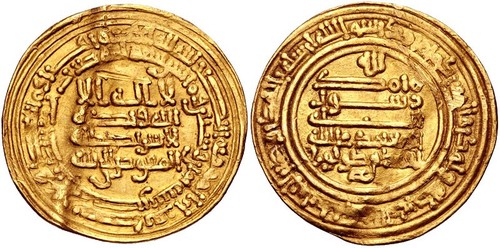
Abbasid Gold Dinar
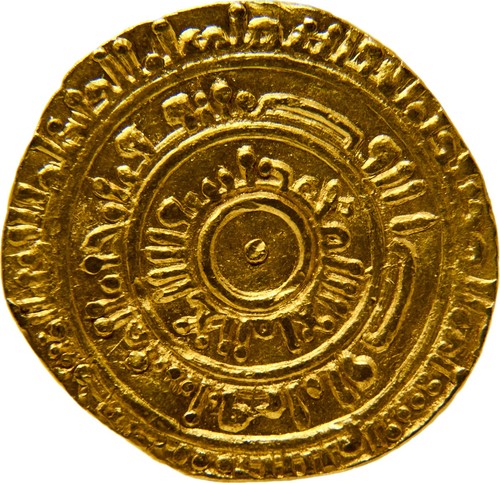
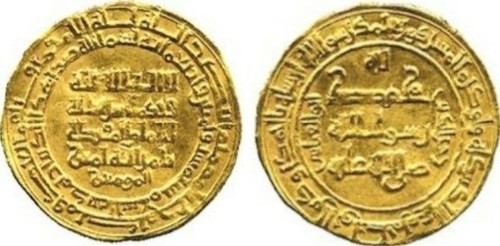
The standard gold coin of the Abbasid Caliphate centered on Baghdad, inscribed entirely in Arabic script and struck for roughly five centuries across a vast Islamic empire.
World
Barber Dime
A late-19th and early-20th century silver dime designed by Charles E. Barber, featuring a classical Liberty head, part of a matching set with the Barber quarter and half dollar.
United States
Indian Gold Mohur
The traditional high-value gold coin of the Indian subcontinent, struck for centuries by Mughal emperors, later by the British East India Company, British India, and various princely states.
Asian
Netherlands 2½ Gulden
The largest regularly circulating silver coin of the Kingdom of the Netherlands, popularly nicknamed "rijksdaalder," featuring the reigning monarch's portrait across more than a century of Dutch coinage.
European
Dutch Silver Ducat
A historic Dutch trade silver coin first struck in 1659, depicting a standing knight, that has been minted continuously for centuries and remains a popular silver bullion and collector piece today.
European
Spanish Peseta
The peseta was Spain's national currency for over 130 years, evolving from silver coinage under a provisional 19th-century government to copper-nickel coins used until the euro replaced it in 2002.
European
Swiss 5 Francs Silver
The Swiss 5 Francs was Switzerland's largest circulating silver coin for over a century, featuring the standing figure of Helvetia, and remains a favorite among collectors of European silver crowns.
European
Austrian Levantine Thaler (Maria Theresa Thaler)
A famous silver trade coin bearing the portrait of Empress Maria Theresa, perpetually dated 1780 and restruck for centuries as a trusted trade currency across the Middle East, Arabia, and East Africa.
European