
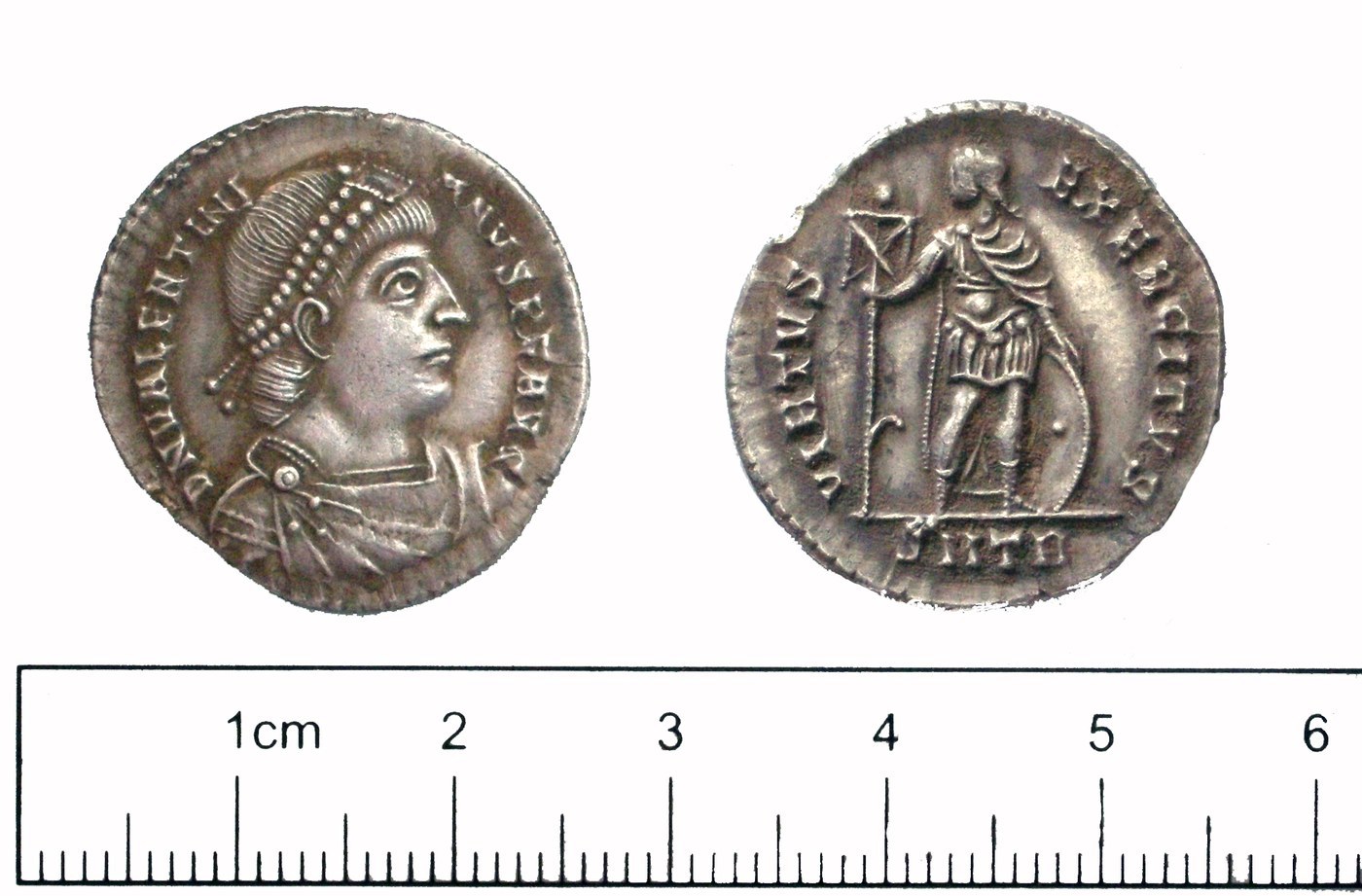
Miliarense of Valentinian I
A late Roman silver miliarensis of Valentinian I (AD 364-375), with a pearl-diademed imperial portrait and an armed standing figure holding spear and shield.
- Country
- Roman Empire
- Denomination
- Miliarensis
- Metal
- Silver
Got a coin like this?
Identify any coin from a photo, free.
Overview
The miliarensis was a silver denomination of the late Roman Empire, larger and heavier than the small siliqua and ranking between the everyday bronze coinage and the gold solidus. This example was struck under Valentinian I, who ruled the western half of the empire from AD 364 to 375. The obverse carries his right-facing bust wearing a pearl diadem, and the reverse shows a standing military figure holding a spear and shield.
As a higher-value silver piece, the miliarensis was issued in far smaller numbers than the base-metal coinage of the same reign. Surviving examples of Valentinian I in this denomination are notably scarcer than his common bronze issues, making the type a sought-after ancient silver coin for collectors of the Valentinianic dynasty and the later 4th century.
History & Background
Valentinian I was proclaimed emperor in AD 364 and soon elevated his brother Valens to rule the East, dividing responsibility for the empire while Valentinian himself took charge of the West. His reign, which lasted until his death in AD 375, was dominated by the defense of the Rhine and Danube frontiers against Germanic and other incursions, and his coinage projected this military emphasis.
The miliarensis itself belonged to the reformed silver coinage that had developed alongside Constantine the Great's gold solidus earlier in the 4th century. It was struck together with the smaller siliqua, and its name is generally understood to relate to its value against the gold coinage rather than to a single fixed rate. Under Valentinian I these silver pieces were produced at several imperial mints across the empire, each identified by a mint mark in the exergue.
Because silver coins of this value circulated less heavily than bronze and were more often hoarded, they survive in relatively small numbers. As with all ancient coins, no official mintage records exist, so quantities are estimated only from surviving specimens and hoard evidence.
How to Identify
Start with metal and size. The miliarensis is a silver coin, broader and heavier than the thin siliqua but smaller than a gold solidus. The obverse of this type shows Valentinian I's right-facing bust wearing a pearl diadem, the beaded headband characteristic of 4th-century emperors, encircled by a Latin legend that names him, typically opening with a form of DN VALENTINIANVS.
The reverse depicts a standing figure in military dress holding a spear and a shield, a common late-Roman device emphasizing the emperor and the army, accompanied by its own legend. Read the exergue, the space below the ground line, for the mint mark that ties the coin to a specific workshop. The exact obverse legend and mint letters, not the general design alone, are what confirm the emperor, mint, and issue.
Because Valentinian I and his brother Valens share very similar portraiture and reverse types, the obverse legend is essential for telling their coins apart. Condition, centering, and full legibility of the inscription and mint mark matter for both attribution and value.
Value & Collectibility
As a scarce late Roman silver denomination, a miliarensis of Valentinian I is a higher-value ancient coin than the common bronze issues of the same reign. Genuine examples generally trade from the low hundreds of dollars up into the low thousands, depending heavily on the mint, sharpness of strike, surface quality, and completeness of the legend and mint mark.
Well-centered coins with a clear portrait, full inscriptions, and an unambiguous mint mark command the strongest premiums, while worn, clipped, or corroded pieces sell for considerably less. Scarcer mints or unusual reverse types can push prices higher still.
These are broad ranges rather than fixed prices, and any specific valuation depends on professional attribution and current market conditions. For a coin of this value it is worth obtaining an expert opinion or reputable dealer certification before buying or selling.
Frequently asked questions
What is a miliarensis?
It is a silver denomination of the late Roman Empire that developed alongside the 4th-century gold coinage. It was larger than the small siliqua and ranked between the bronze coinage and the gold solidus.
Who was Valentinian I?
Valentinian I was a Roman emperor who ruled the western empire from AD 364 to 375. He shared power with his brother Valens in the East and spent much of his reign defending the Rhine and Danube frontiers.
How can I tell a coin of Valentinian I from one of Valens?
The portraits and reverse types are very similar, so the deciding factor is the Latin obverse legend. Coins of Valentinian I name him, usually beginning with a form of DN VALENTINIANVS, while those of Valens name Valens.
Is a silver miliarensis of Valentinian I valuable?
Yes, relatively. As a scarce late Roman silver type it is worth far more than common Roman bronze, typically ranging from the low hundreds into the low thousands of dollars depending on mint and condition.
How is it different from a siliqua?
Both are late Roman silver coins, but the miliarensis is larger and heavier, while the siliqua is a thinner, smaller silver piece of lower value. Weight and diameter are the quickest way to tell them apart.
Miliarense of Valentinian I guides
In-depth guides for identifying, valuing, and collecting Miliarense of Valentinian I.
Other coins you may enjoy
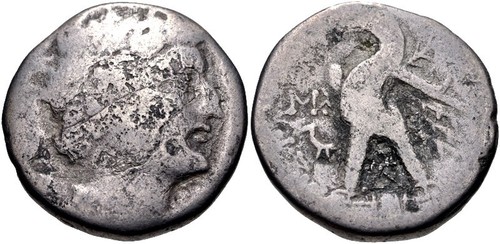
Tetradrachm of Ptolemy XII
80-51 BC
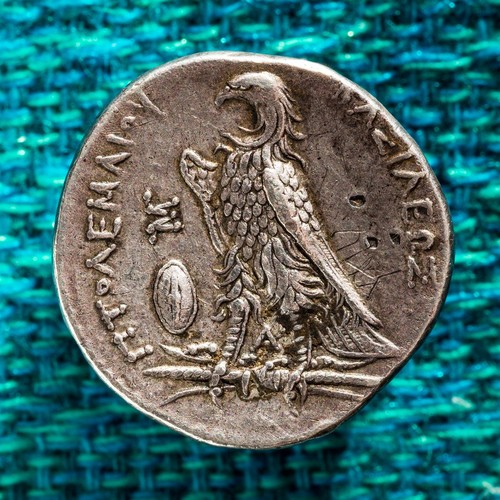
Tetradrachm of Ptolemy I
305-283 BC
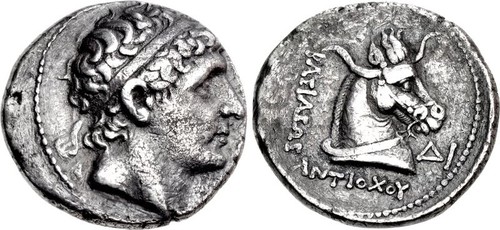
Tetradrachm of Antiochos I Soter
281-261 BC
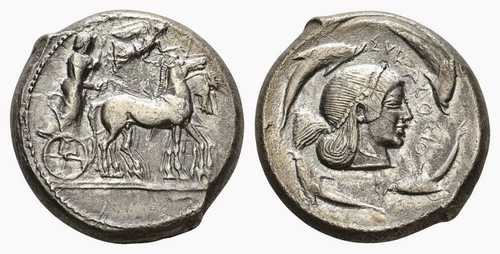
Syracuse Tetradrachm
c. 5th-4th century BC (Classical period)
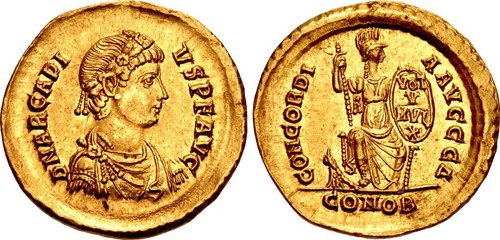
Solidus of Arcadius
AD 395-402
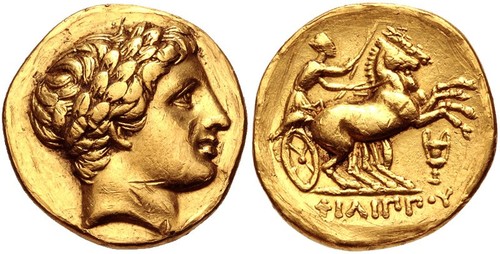
Philip III Gold Stater
323-317 BC
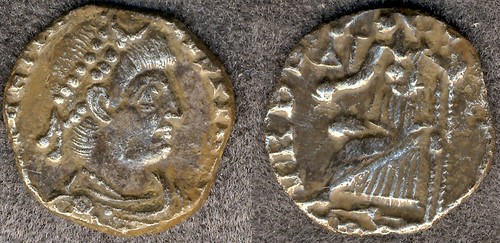
Siliqua of Gratian
AD 367-383
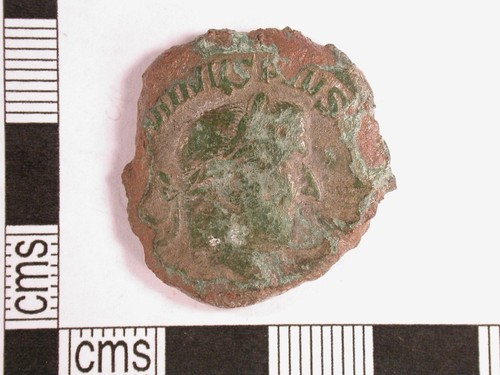
Sestertius of Maximinus Thrax
235-238 AD
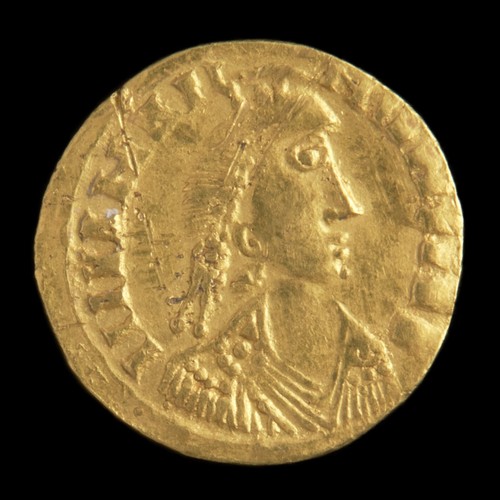
Solidus of Valentinian III
AD 425-455
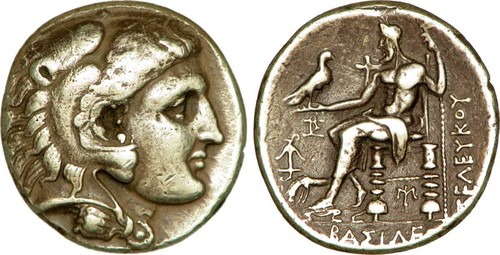
Seleucus I Nicator Tetradrachm
Late 4th-3rd century BC
Nummus of Magnentius
AD 350-353
Follis of Galerius
AD 308-310