
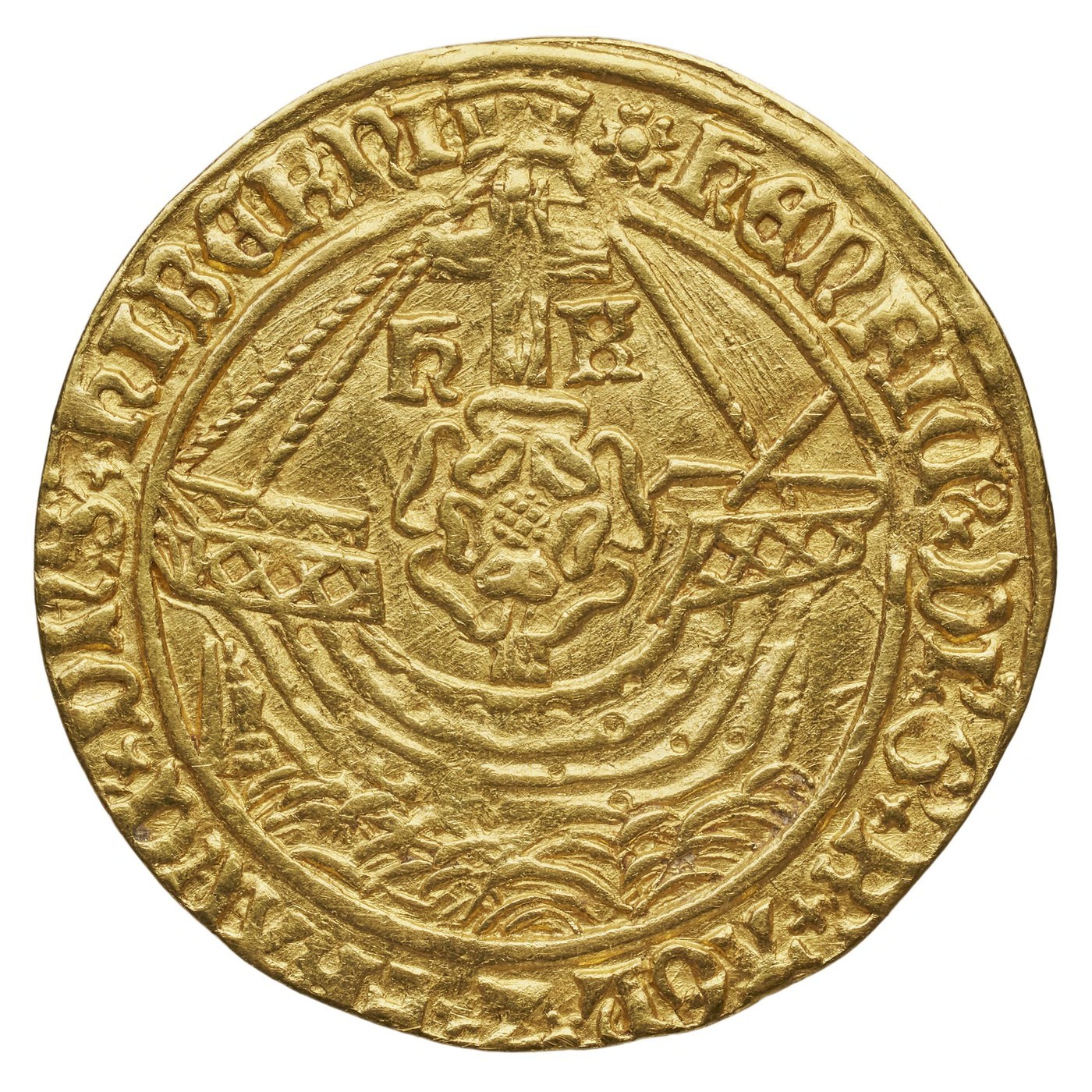
George-noble
A rare Tudor gold noble of Henry VIII showing St George slaying the dragon, valued at 6 shillings 8 pence.
- Country
- England
- Denomination
- Noble
- Metal
- Gold
Got a coin like this?
Identify any coin from a photo, free.
Overview
The George-noble is a small English gold coin introduced under Henry VIII as part of the monetary reforms of 1526. It takes its name from the figure of St George on horseback thrusting a lance into a dragon, which fills one face of the coin inside a Latin legend border.
The opposite face carries a ship riding the waves, bearing a shield of the royal arms surmounted by a cross and Tudor rose. The coin was tariffed at 6 shillings 8 pence (one-third of a pound, or half a mark), the same value long associated with the older angel and noble.
Despite its evocative design, the George-noble was struck only in small quantities and had a short life. Surviving examples are scarce, making it a prized target for collectors of Tudor gold and English hammered coinage.
History & Background
The George-noble belongs to the Second Coinage of Henry VIII (1526-1544), when the coinage was reorganised and new denominations in "crown" gold were introduced alongside the traditional finer gold. It was intended to sit within a reformed system of gold values expressed in shillings and pence.
The St George motif reflects the enduring English devotion to the country's patron saint, whose image also appears on the contemporary sovereign's regalia and later on the badge of the Order of the Garter. Some early strikings carry the initials of Henry VIII and Catherine of Aragon beside the ship, tying the issue to a specific moment in the reign.
The denomination never circulated widely and was discontinued well before Henry's death. As a result it stands as one of the more short-lived and elusive gold pieces of the Tudor period, overshadowed in output by the angel and the crown.
How to Identify
Look first for the coin's signature design: a mounted St George driving a lance downward into a dragon beneath the horse, ringed by a Latin inscription. The other side shows a single-masted ship on a wavy sea, carrying a large shield of the royal arms with a cross rising above it and a Tudor rose at the cross's foot.
The coin is gold, small and thin, roughly in the size class of other Tudor gold fractions rather than the broad sovereign. Genuine hammered strikes show slightly uneven, hand-struck lettering and are often marginally irregular in flan shape.
A mint mark (initial mark) appears at the start of the legend and helps place the coin within Henry VIII's reign; different marks correspond to different periods of issue. The presence of St George plus the ship-and-shield combination distinguishes the George-noble from the angel, the ryal, and the sovereign.
Value & Collectibility
The George-noble is a rare and highly sought-after Tudor gold coin. Because only limited numbers were struck and few survive, even worn examples command strong prices, and well-preserved specimens are firmly in the upper tier of English hammered gold.
As a guide rather than a quotation, genuine pieces typically change hands in the high four to five figures (GBP or USD) at auction, with exceptional coins reaching considerably more. Condition, mint mark, provenance, and eye appeal drive wide swings in price.
Given the coin's rarity and the existence of forgeries and cast copies, third-party authentication and grading are strongly advised before any significant purchase. Values here are contextual and not firm appraisals.
Frequently asked questions
What is a George-noble?
It is a small English gold coin of Henry VIII, introduced in 1526 and valued at 6 shillings 8 pence, named for the figure of St George slaying a dragon on one face.
Why is it called a 'noble'?
Noble was a long-established English gold denomination. This issue kept the traditional 6s 8d noble value but replaced the old design with the St George motif, hence 'George-noble.'
What is shown on the coin?
One side shows St George on horseback lancing a dragon within a legend border; the other shows a ship on the sea bearing a shield of the royal arms with a cross and Tudor rose.
Is the George-noble rare?
Yes. It was struck in small numbers over a short period and few survive, making it one of the scarcer and more valuable gold coins of the Tudor era.
How much is a George-noble worth?
As genuine Tudor gold rarities they typically sell in the high four to five figures, with exceptional examples worth more. Values vary widely by condition, mint mark, and provenance.
George-noble guides
In-depth guides for identifying, valuing, and collecting George-noble.
Other coins you may enjoy
English Sixpence
Early 1600s (James I, 1603-1625)
Sixpence of James I
1603-1625
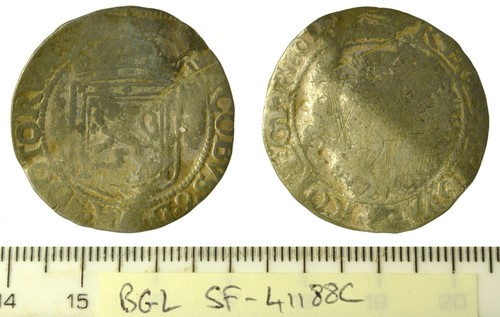
Thistle Merk
1567–1625
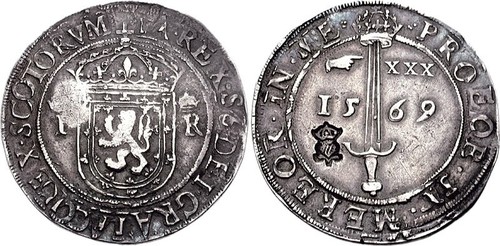
James VI Ryal
1567–1571
Quarter Merk
c. 1580–1691
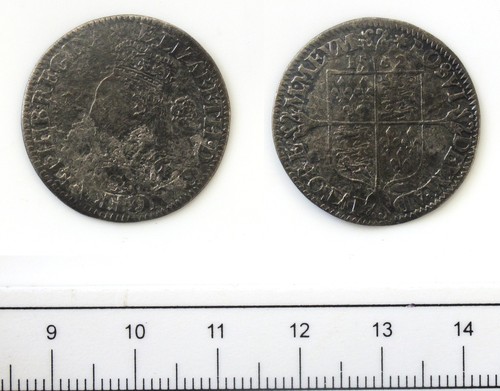
Sixpence of Elizabeth I
1560–1603
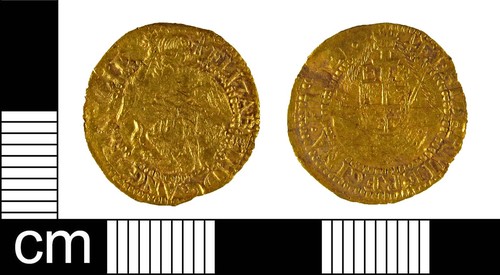
Quarter Angel of Elizabeth I
1581-1583
Laurel
1619-1625
Mary I Groat
1553-1558
Medieval Coin
c. 500–1500 (Medieval)
Half Thistle Merk
1567-1625
Irish Pistole
1640s (17th century)