
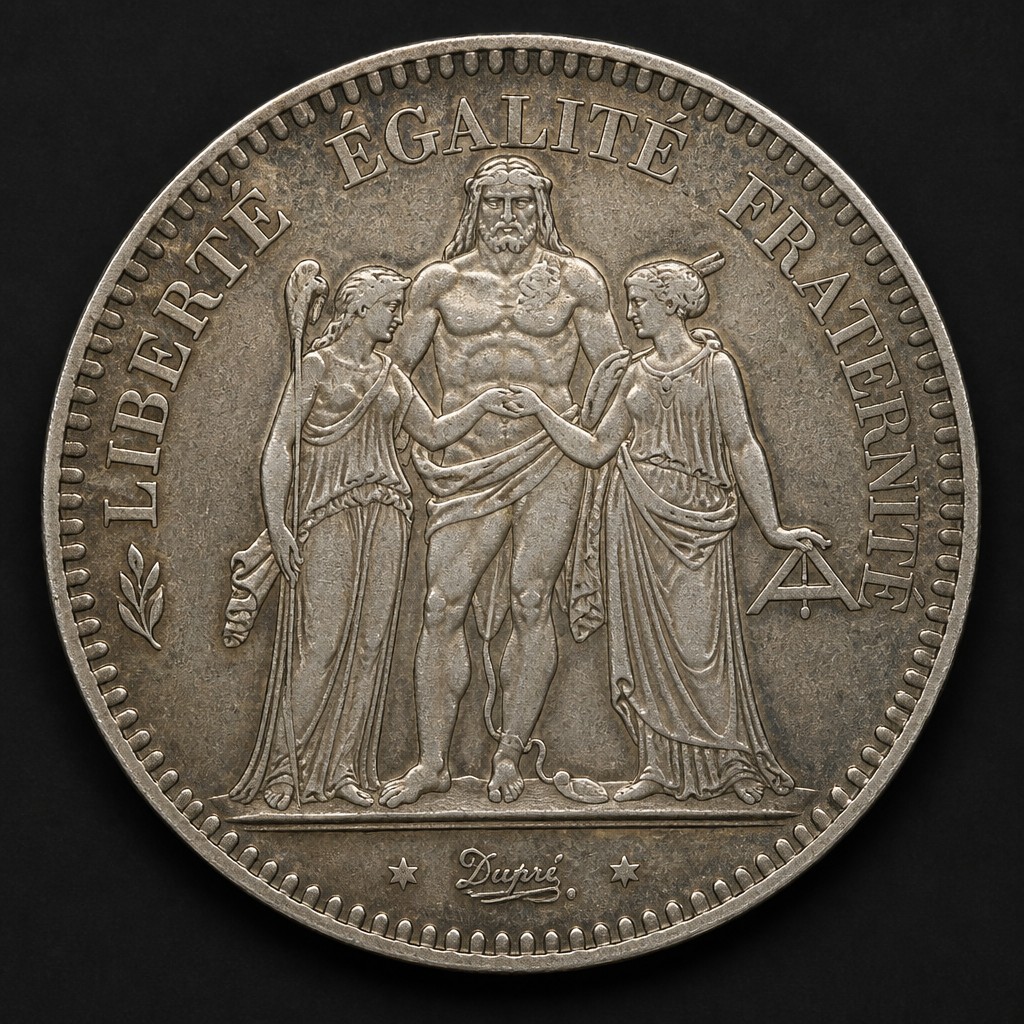
French 5 Francs Hercules
A large silver crown depicting an allegorical Hercules flanked by Liberty and Equality, struck at pivotal republican moments in French history as a statement of civic ideals.
- Country
- France
- Denomination
- 5 Francs
- Metal
- .900 silver
Got a coin like this?
Identify any coin from a photo, free.
Overview
The French 5 Francs "Hercules" type is a large silver coin whose design pointedly departs from monarchic imagery, instead presenting a classical allegorical group intended to embody the ideals of the French Republic. The central figure of Hercules, standing between personifications of Liberty and Equality with hands joined in a gesture of fraternal unity, gave the coin both its popular nickname and its symbolic power as a statement of republican values in a nation that had spent much of the preceding decades cycling between monarchy, empire, and republic.
First struck during the Second Republic following the 1848 revolution that toppled King Louis-Philippe, the design was revived briefly during the early Third Republic in the 1870s as France once again reasserted republican government after the collapse of the Second Empire under Napoleon III. In both periods, the coin served as a deliberate visual break from the imperial and royal portraiture that had characterized French coinage for decades.
Its bold civic imagery, dense with revolutionary-era symbolism inherited from the ideals of 1789 (liberty, equality, fraternity), makes the Hercules 5 Francs a favorite among collectors interested in the interplay between French political history and coin design.
History & Background
The Hercules type first appeared in 1848-1849 under the short-lived Second French Republic, established after the February Revolution forced King Louis-Philippe's abdication. The new republican government, eager to project ideological continuity with the earlier First Republic of the 1790s, commissioned a design recalling that era's own allegorical coinage, resulting in the Hercules-Liberty-Equality group with the motto "UNION ET FORCE" (Union and Strength) below and "LIBERTE EGALITE FRATERNITE" around the border.
After the Second Republic gave way to Napoleon III's Second Empire in 1852, the Hercules design was shelved along with republican coinage generally, only to be revived when the Second Empire collapsed following France's defeat in the Franco-Prussian War in 1870-1871. The nascent Third Republic, needing coinage quickly and lacking time to commission an entirely new design, temporarily reused the earlier Hercules dies and concept for silver 5 Franc coinage through the mid-1870s.
By the later 1870s, the Third Republic transitioned to the longer-running "Ceres" design for its silver coinage, retiring the Hercules motif, but its two separate appearances during moments of republican assertion cemented its symbolic association with French republicanism in numismatic history.
How to Identify
One side shows Hercules standing centrally, nude and muscular in the classical tradition, flanked by female personifications of Liberty (often holding a pole and cap) and Equality (holding a level or similar symbol), their hands joined above his head; "UNION ET FORCE" appears beneath the group. The other side bears the denomination "5 FRANCS" within or below a wreath, the date, and the surrounding legend "REPUBLIQUE FRANCAISE" along with "LIBERTE EGALITE FRATERNITE" around the rim.
The coin is struck in .900 fine silver, approximately 37mm in diameter, with an edge inscription rather than plain reeding, consistent with French large-denomination silver coinage conventions of the period. Mintmarks (such as A for Paris or BB for Strasbourg/Bordeaux) along with a mint director's differentiating mark appear on the coin and are useful for identifying specific striking locations.
Collectors distinguish the two issuance periods (1848-1849 versus 1870-1878) primarily by date and by subtle die differences, and should be careful not to confuse this type with the later, more common "Ceres" or "Sower" (Semeuse) 5 Franc designs that followed once the Third Republic settled on permanent coinage designs.
Value & Collectibility
The original 1848-1849 Second Republic Hercules 5 Francs are scarcer and generally command higher prices than the later 1870s Third Republic revival strikes, particularly in higher circulated or mint-state grades. As with most 19th-century French silver crowns, well-struck, lightly worn or uncirculated examples are considerably scarcer and pricier than heavily worn or cleaned survivors, which are relatively common in the marketplace.
Specific dates within each period vary in scarcity, and certain mint-and-date combinations from smaller provincial mints can be notably harder to find than the more common Paris mint issues. Overall, collectors interested in this type should focus on condition, originality of surface, and correct date/mint attribution rather than assuming uniform pricing across the whole "Hercules" family.
Frequently asked questions
What does the Hercules design symbolize?
It represents republican ideals, with Hercules symbolizing strength and unity flanked by allegorical figures of Liberty and Equality, echoing the "Union et Force" motto.
Why was the design used in two separate, non-consecutive periods?
It was first struck under the Second Republic in 1848-1849, then briefly revived in the 1870s when the Third Republic needed coinage quickly after the Second Empire's collapse.
What replaced the Hercules design?
The Third Republic later adopted the longer-running "Ceres" and eventually "Semeuse" (Sower) designs for its silver and other coinage.
How can I tell the two issue periods apart?
Primarily by the date on the coin, since the 1848-1849 and 1870-1878 strikings used similar but not identical dies.
What is the silver content of this coin?
It is struck in .900 fine silver, standard for major French silver coinage of the 19th century.
Other coins you may enjoy
Venetian Ducat
1284–1797
French 100 Francs Silver
1980s–2001 (pre-euro era)
Nuremberg Thaler
16th–18th century
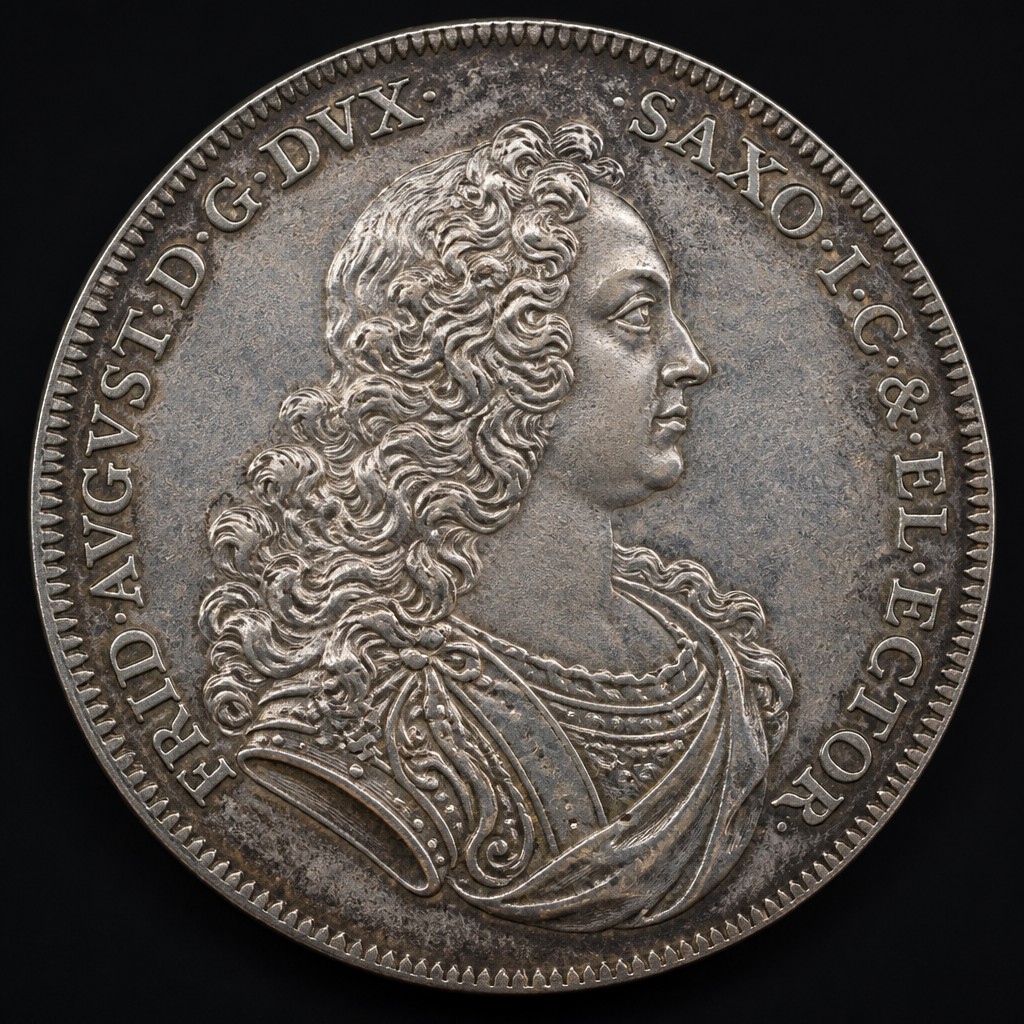
Saxon Speciestaler
17th–19th century
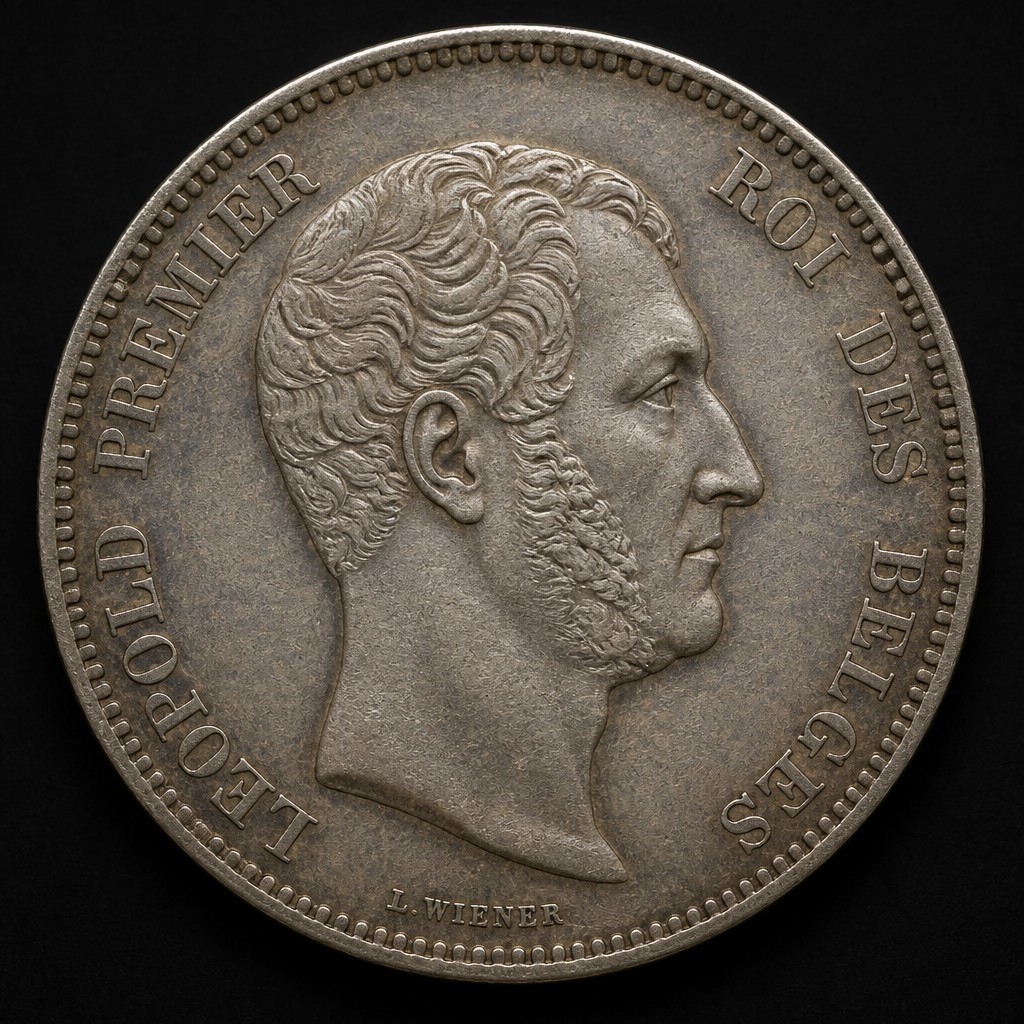
Belgian 5 Francs
1832–1876 (large silver type); later reduced-size and later-metal issues into the 20th century
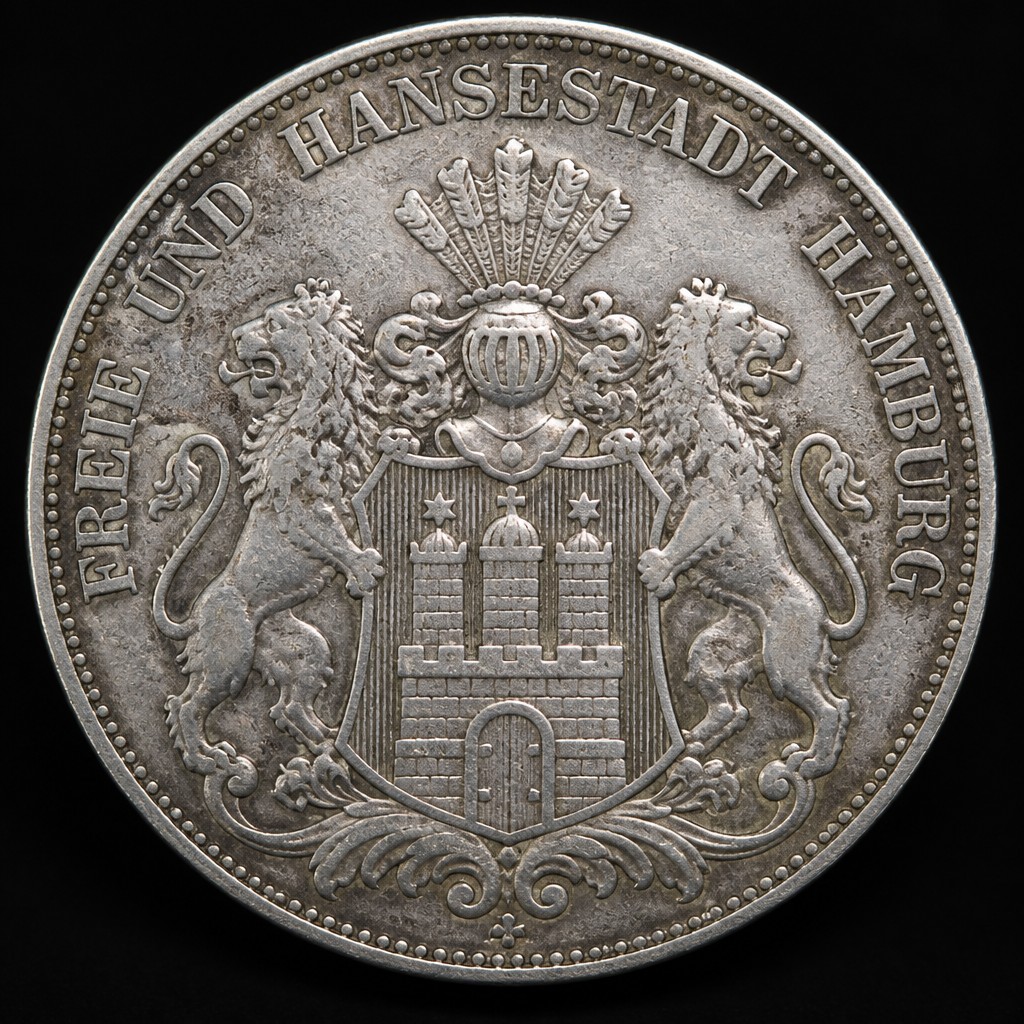
Hamburg Thaler
17th century–1871
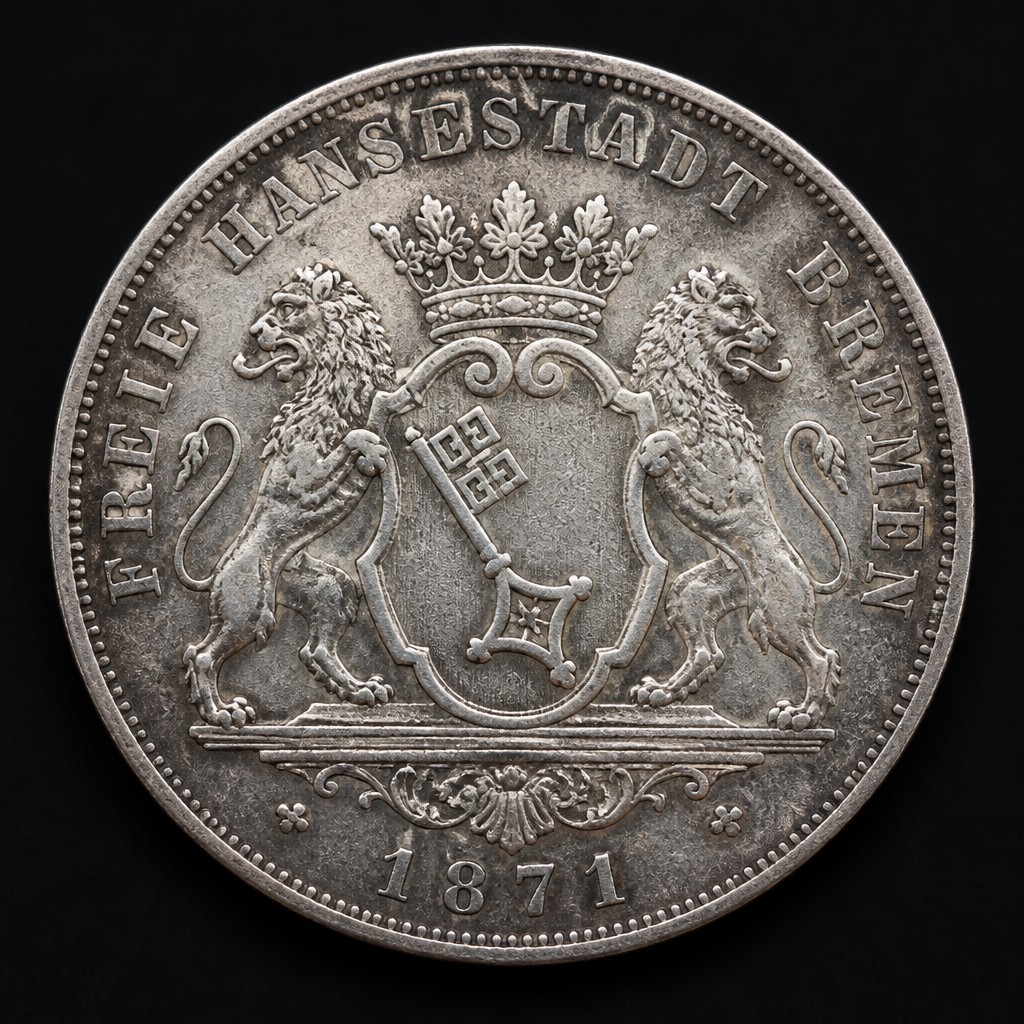
Bremen Thaler
17th century–1871
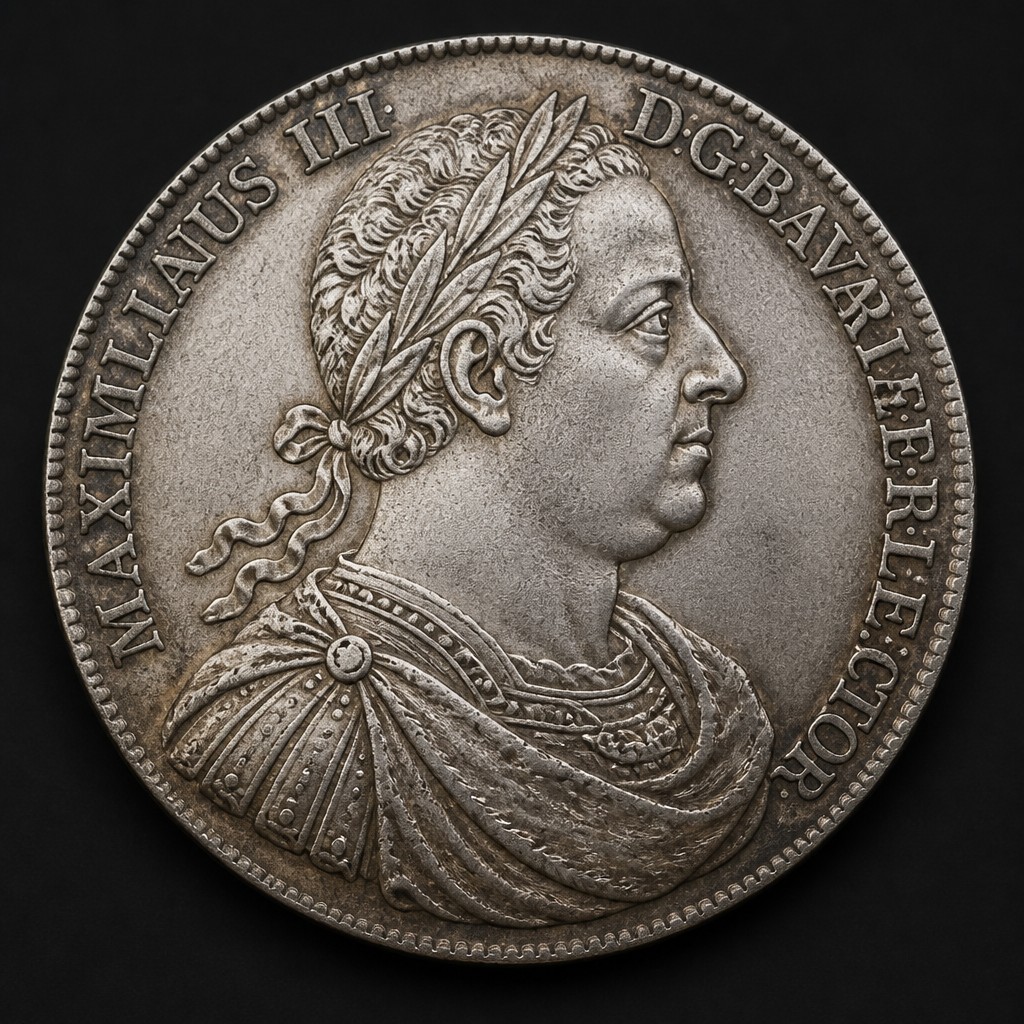
Bavaria Thaler
Circa 1620s-1871
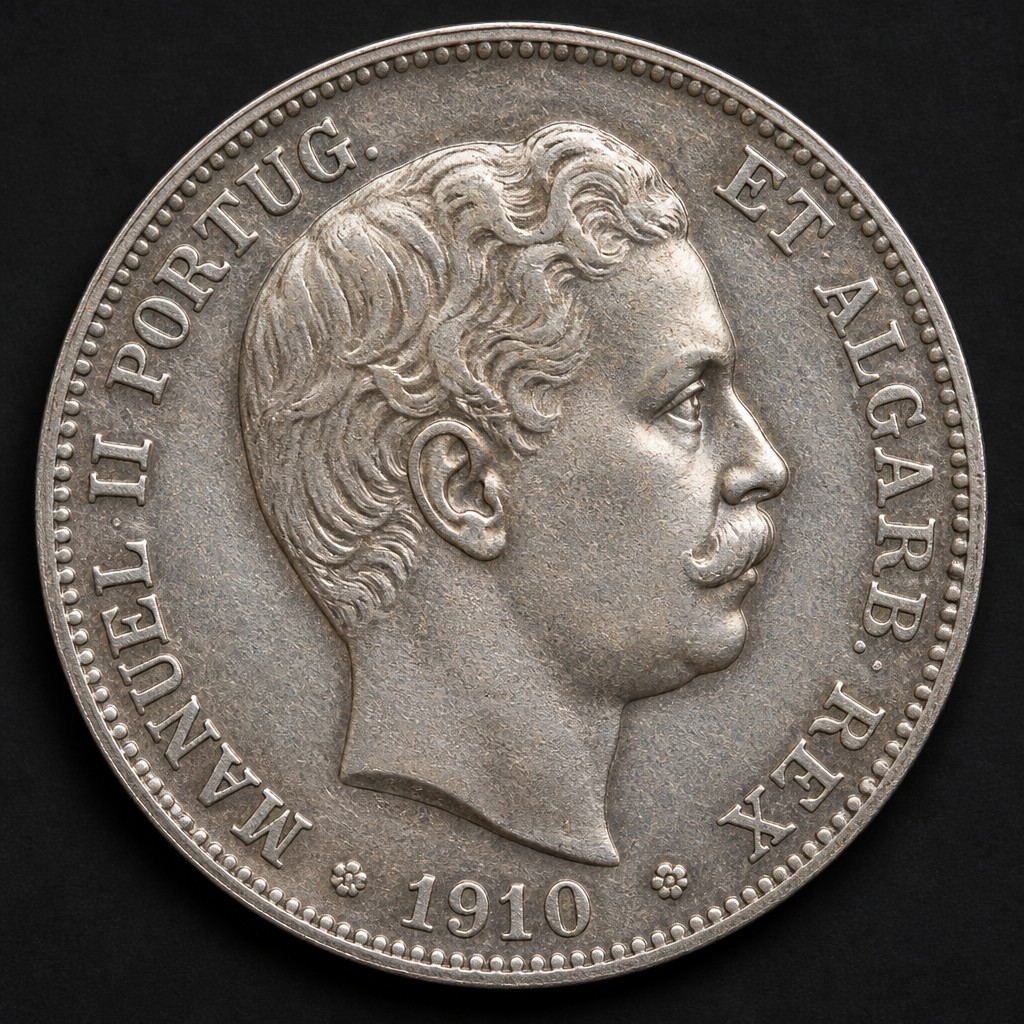
Portuguese 1000 Reis
19th century–1910 (Kingdom period)
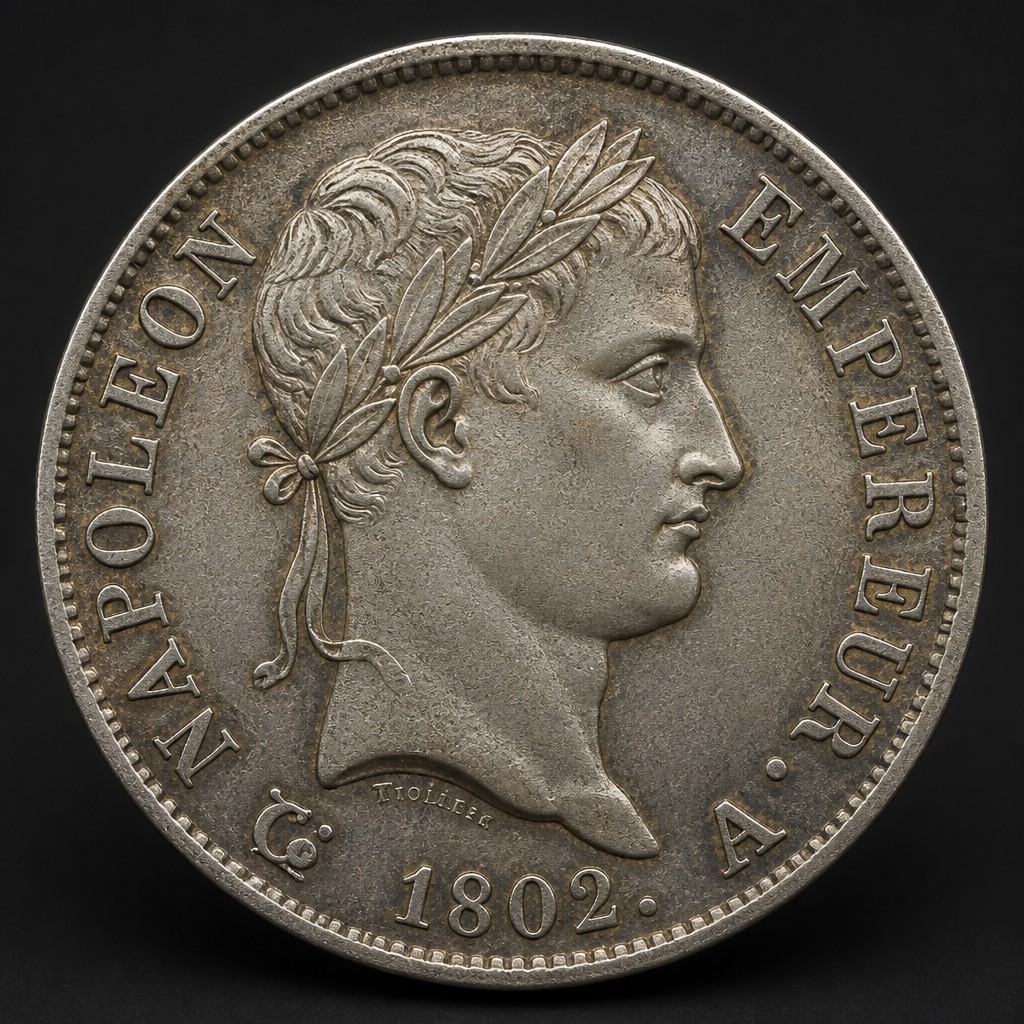
French 5 Francs "Napoleon"
1802–1815
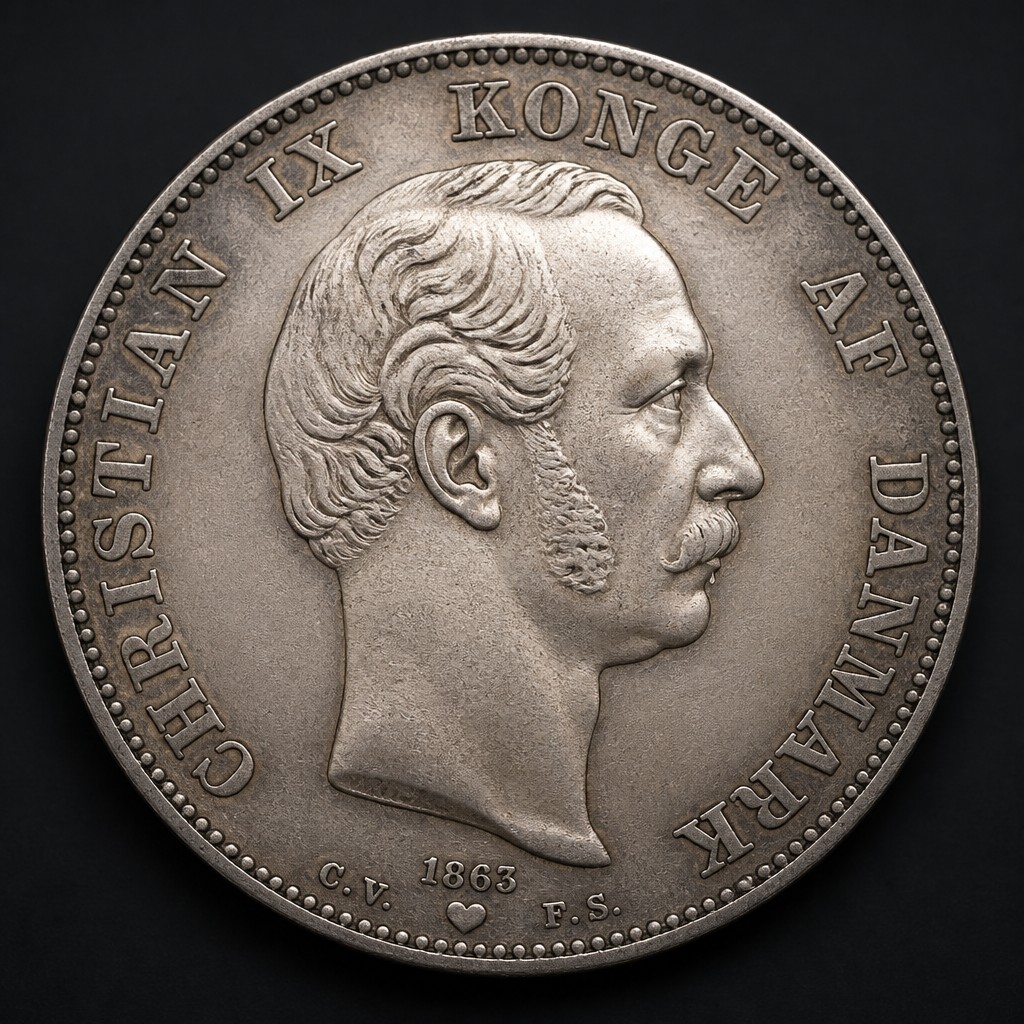
Danish 2 Rigsdaler
19th century (until 1873 currency reform)
Dutch Lion Daalder (Leeuwendaalder)
c. 1575–1713