
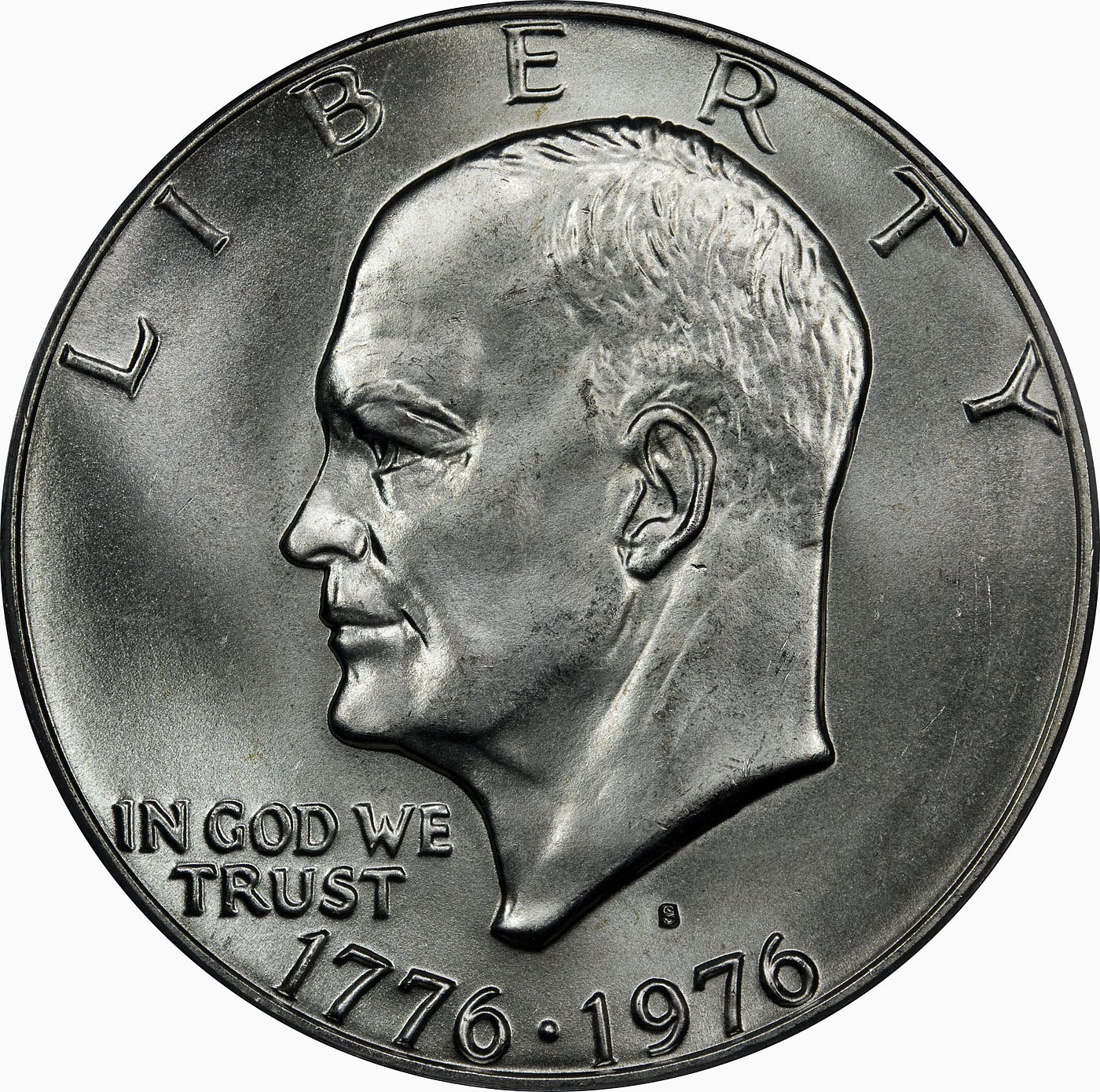
Eisenhower Dollar Bicentennial
U.S. one-dollar coin for the 1976 Bicentennial, with Eisenhower's profile and a special Liberty Bell superimposed on the Moon reverse.
- Country
- United States
- Denomination
- 1 dollar
- Metal
- Copper-nickel clad
Got a coin like this?
Identify any coin from a photo, free.
Overview
The Eisenhower Dollar Bicentennial is the special one-year reverse of the Eisenhower ("Ike") dollar issued to mark the United States Bicentennial. Instead of the standard eagle-on-the-Moon reverse, these coins pair the familiar Eisenhower obverse with a Liberty Bell superimposed over the Moon, and the dual date 1776-1976 in place of a single year.
The coin is large — about 38.1 mm across, the size of the old silver dollars — and heavy in the hand. Circulation examples are copper-nickel clad, with a pure copper core visible on the reeded edge. The piece shown here carries an S mint mark below Eisenhower's neck, marking it as a San Francisco striking.
History & Background
The Eisenhower dollar began in 1971 as the first circulating U.S. dollar coin since the Peace dollar ended in 1935, honoring President Dwight D. Eisenhower, who died in 1969, alongside the Apollo 11 mission on its eagle-and-Moon reverse. Both designs are the work of Mint engraver Frank Gasparro.
For the nation's 200th anniversary, Congress called for special reverse designs on the dollar, half dollar, and quarter. A public competition selected Dennis R. Williams's Liberty Bell-and-Moon motif for the dollar reverse. Every Eisenhower dollar struck for the Bicentennial carries the dual date 1776-1976 — no 1975-dated dollars were made, as production shifted straight to the commemorative design. Coins were struck at Philadelphia (no mint mark), Denver (D), and San Francisco (S), the last including both clad and 40% silver collector versions.
How to Identify
The obverse is the standard Eisenhower portrait: a large profile of Dwight D. Eisenhower facing left, with LIBERTY arced above, IN GOD WE TRUST to the left of the neck, and the mint mark (D, S, or none for Philadelphia) just below the truncation of the neck. On this example the mint mark is S.
The defining feature is the reverse. A Liberty Bell is superimposed over an image of the Moon, encircled by UNITED STATES OF AMERICA and ONE DOLLAR, with the dual date 1776-1976. This distinguishes the Bicentennial issue from all other Eisenhower dollars, which show a soaring eagle clutching an olive branch above the Moon.
By specification the standard circulation coin is copper-nickel clad — outer layers of 75% copper/25% nickel over a pure copper core — roughly 38.1 mm in diameter, about 22.7 g, with a reeded edge. A distinct 40% silver-clad version was struck for collectors; it weighs slightly more (about 24.6 g) and shows no copper stripe on the edge.
Value & Collectibility
Bicentennial Ike dollars were produced in very large numbers, so ordinary copper-nickel clad examples pulled from circulation are common and typically worth little above face value. Their appeal is more historical than monetary, though crisp uncirculated pieces and error coins can carry modest premiums.
The 40% silver-clad versions — sold by the Mint in special uncirculated ("blue pack") and proof ("brown pack") sets — are worth more, driven partly by their silver content and partly by collector demand. High-grade certified coins, deep cameo proofs, and recognized varieties bring the strongest prices. Treat any figure as general context: actual value depends on composition, grade, and whether the coin is certified, and is best confirmed against current market listings.
Frequently asked questions
Why does my Eisenhower dollar say 1776-1976?
That dual date marks the United States Bicentennial. All Bicentennial Eisenhower dollars carry 1776-1976 instead of a single year; no dollars were dated 1975.
What is on the back of the Bicentennial Eisenhower dollar?
A Liberty Bell superimposed over the Moon, designed by Dennis R. Williams. This replaced the standard eagle-and-Moon reverse used on other Eisenhower dollars.
Is my Bicentennial dollar made of silver?
Most are copper-nickel clad with a copper core, showing a copper stripe on the edge. A separate 40% silver-clad version was sold to collectors and shows no copper stripe on the edge.
Is the Bicentennial Eisenhower dollar valuable?
Common clad examples are usually worth close to face value. Silver-clad versions, high-grade certified coins, and errors can be worth more. Composition and condition drive the price.
What does the S mint mark mean?
It marks a coin struck at the San Francisco Mint, below Eisenhower's neck. D is Denver and no mint mark is Philadelphia. San Francisco struck both clad and 40% silver collector coins.
Eisenhower Dollar Bicentennial guides
In-depth guides for identifying, valuing, and collecting Eisenhower Dollar Bicentennial.
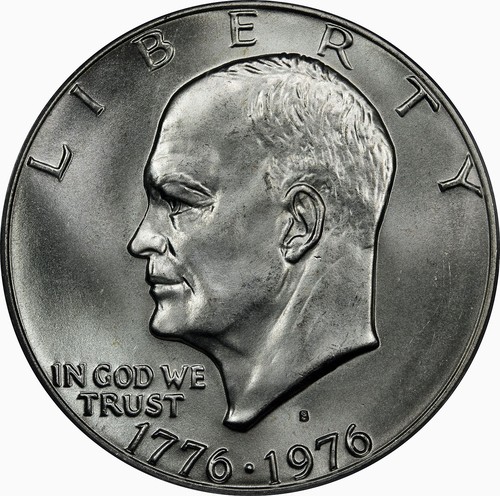
Eisenhower Dollar Bicentennial identified by the community
Real coins identified with Coin Identifier.
Other coins you may enjoy
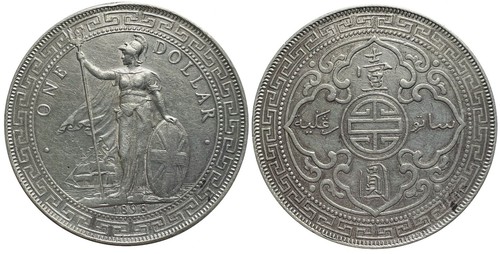
British Trade Dollar
1895–1935
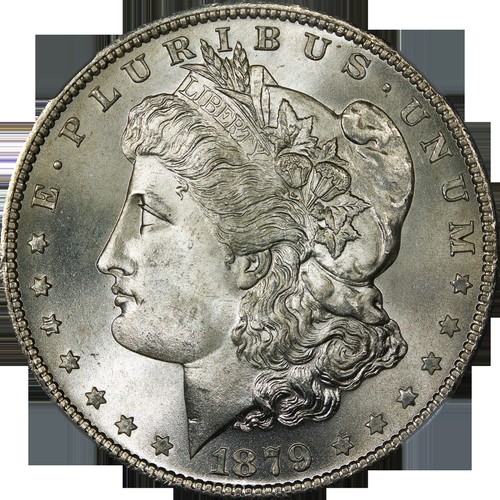
Morgan Dollar
1878–1904, 1921
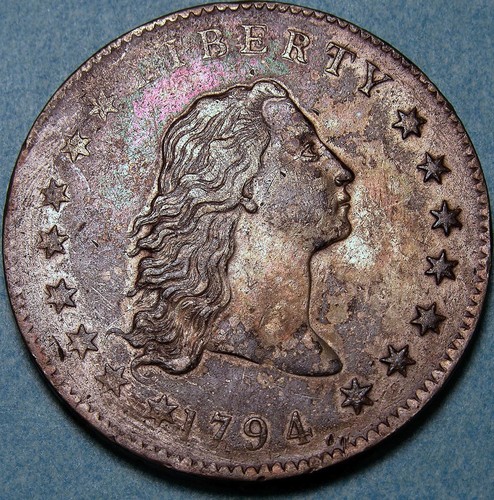
Flowing Hair Dollar
1794–1795
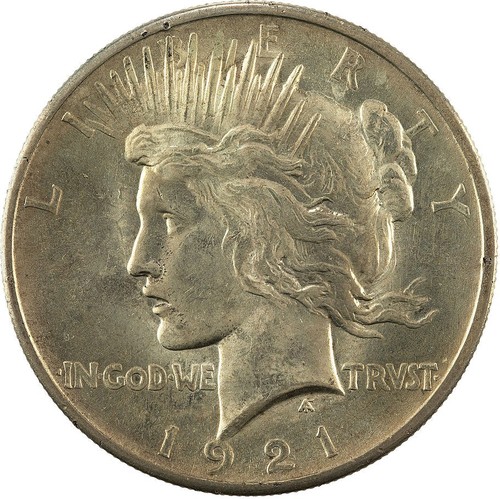
Peace Dollar
1921–1928, 1934–1935
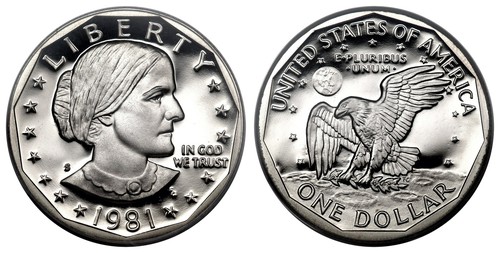
Susan B. Anthony Dollar
1979–1981, 1999
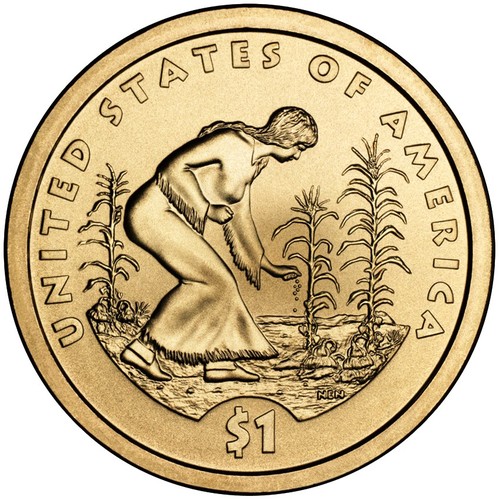
Native American Dollar
2009–present
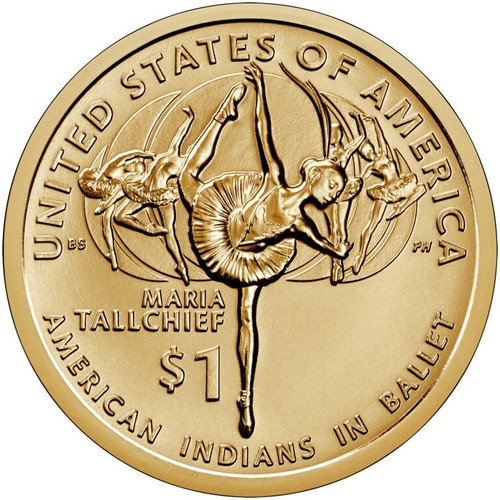
Native American Dollar - Tallchief
2023
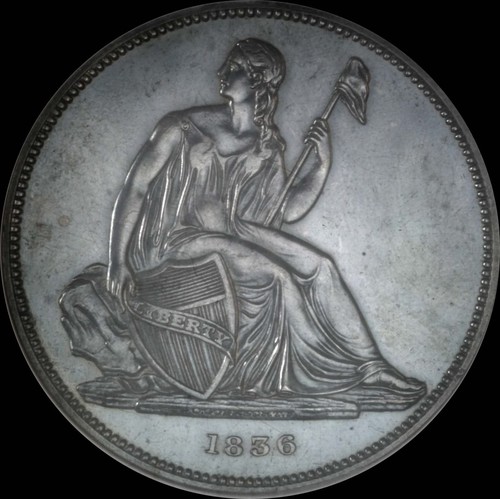
Gobrecht Dollar
1836
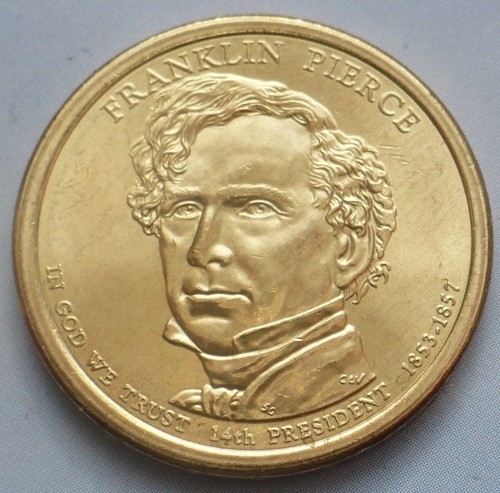
Franklin Pierce Presidential Dollar
2010
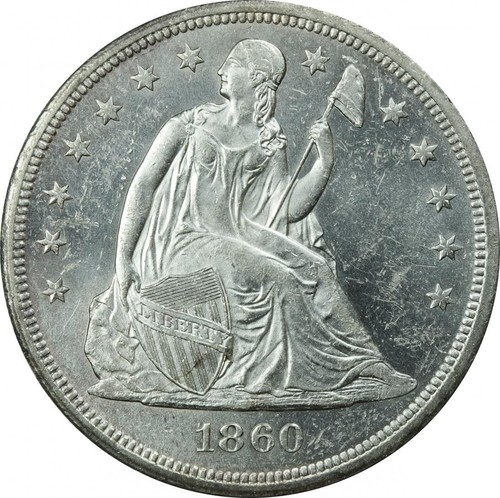
Seated Liberty Dollar
1840-1873
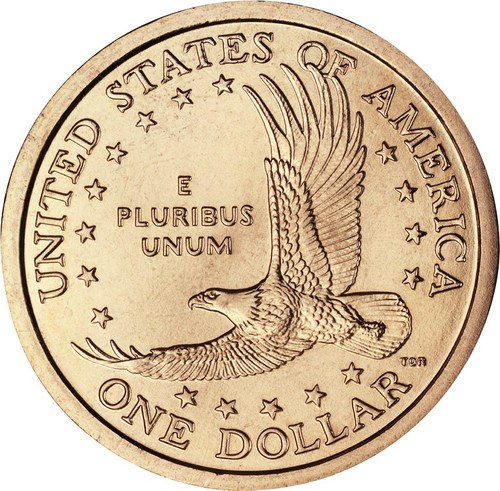
Sacagawea Dollar
2000–2008
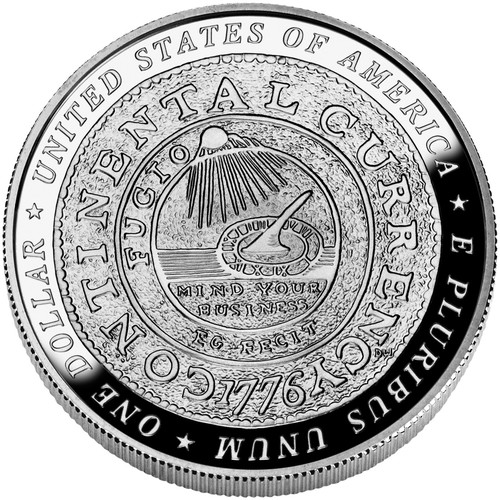
Benjamin Franklin Founding Father Commemorative Silver Dollar
2006