
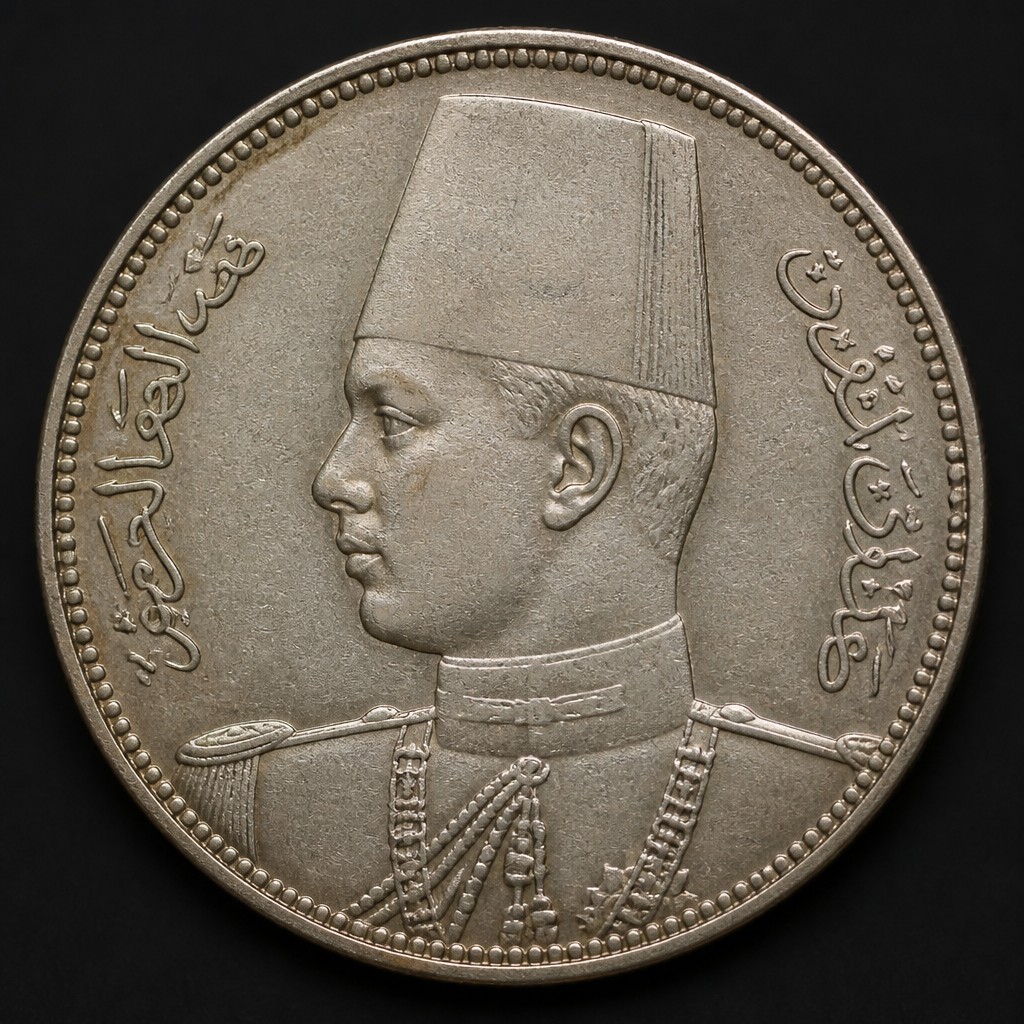
Egyptian Farouk 5 Piastres
Silver five-piastre coin of the Kingdom of Egypt struck during the reign of King Farouk, featuring his portrait or cipher alongside Arabic denomination legends.
- Country
- Kingdom of Egypt
- Denomination
- Five Piastres (Qirsh)
- Metal
- 0.833 fine silver
Got a coin like this?
Identify any coin from a photo, free.
Overview
The five-piastre coin was a mid-value denomination in the Kingdom of Egypt's silver coinage during the reign of King Farouk, who ruled from 1936 until his abdication in 1952. Struck in fairly high-grade silver, it circulated widely in everyday Egyptian commerce during this period.
Egyptian coinage of the era typically combined Arabic script legends with Islamic (Hijri) and Gregorian dating, reflecting Egypt's blend of monarchy, Islamic tradition, and modern state administration under British-influenced but nominally independent rule.
As with other Farouk-era coins, the five-piastre piece is collected both for its silver content and as a tangible artifact of Egypt's last monarchy before the 1952 revolution ended royal rule.
History & Background
King Farouk ascended the Egyptian throne in 1936 following his father King Fuad I, ruling during a turbulent period that included World War II, growing nationalist sentiment, and eventually his own overthrow in the Egyptian Revolution of 1952. Coinage during his reign, including the five-piastre silver piece, carried his likeness or royal cipher as a mark of sovereign authority.
Egyptian coin production during this era was handled through mints producing dies with both Arabic and, on some denominations, English or French elements, consistent with Egypt's cosmopolitan administrative history under years of British influence following formal independence in 1922.
Production of Farouk-era coinage ended with his forced abdication in 1952, after which Egypt transitioned first to a brief monarchy under his infant son and then to a republic under the Free Officers movement led by figures including Gamal Abdel Nasser.
How to Identify
Obverse: typically King Farouk's portrait or his royal tughra/cipher, along with his name and title in Arabic script. Reverse: the denomination '5' and PIASTRES or the Arabic equivalent (qirsh), along with the Hijri and Gregorian dates.
The coin is struck in 0.833 fine silver, with a size and weight typical of mid-value Egyptian silver coinage of the period, generally in the range of 20-25mm depending on the exact year and design variant used during Farouk's reign.
Collectors distinguish Farouk-era coins from earlier Fuad I or later republic-era Egyptian coinage by the specific portrait or cipher used and by cross-referencing the Hijri date alongside the Gregorian year, since Egyptian coins of this period typically display both calendar systems.
Value & Collectibility
Most Farouk-era five-piastre coins are relatively affordable in circulated grades, valued modestly above their silver content, with well-preserved uncirculated examples commanding higher collector premiums.
As a coin from a historically significant but relatively short royal era, pieces with strong eye appeal and minimal wear are particularly appealing to collectors of Middle Eastern and Islamic-world coinage.
Specific date rarities and any special commemorative variants within the broader Farouk coinage should be checked against a dedicated Egyptian numismatic reference, as values can vary meaningfully between common and scarcer years.
Frequently asked questions
Who was King Farouk?
He was the King of Egypt from 1936 until his abdication in 1952, the second-to-last monarch of Egypt's royal era.
What metal is the coin made of?
It is struck in 0.833 fine silver, typical of Egyptian mid-value coinage from this period.
Why does the coin show two different dates?
Egyptian coins of this era commonly display both the Islamic Hijri calendar date and the Gregorian calendar year.
Why did production of Farouk coinage end?
King Farouk was forced to abdicate during the 1952 Egyptian Revolution, ending his coinage and eventually the monarchy itself.
Other coins you may enjoy
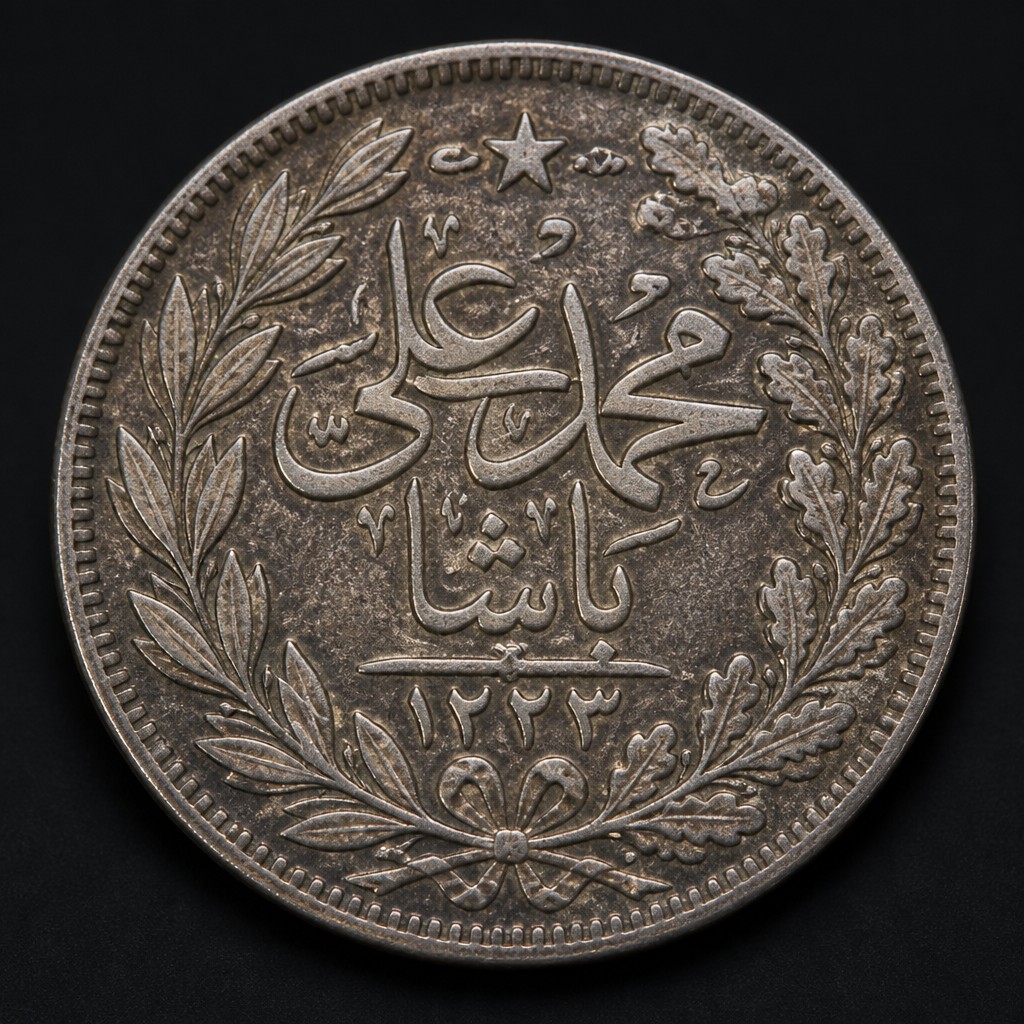
Egyptian Qirsh (Muhammad Ali Era)
Early-to-mid 19th century (c. 1805–1848)
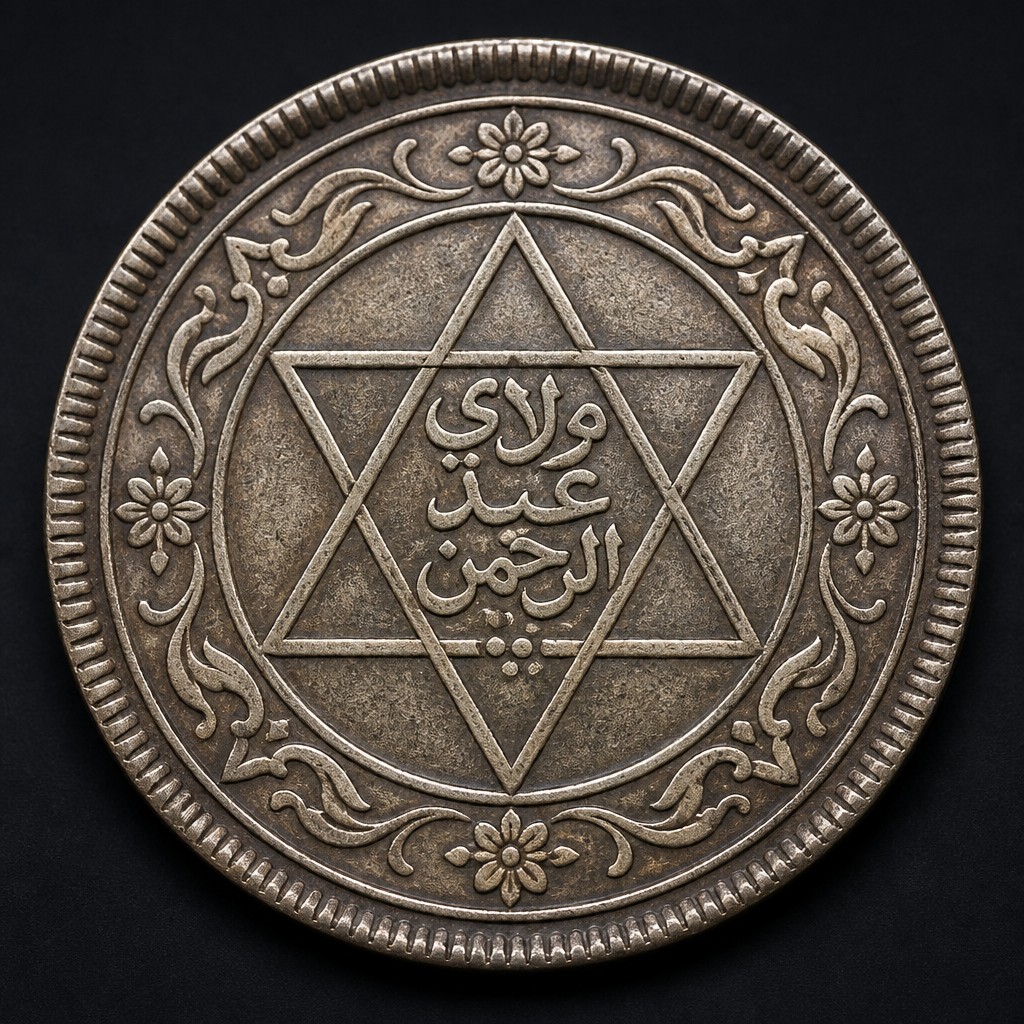
Moroccan Rial (Alawi Dynasty Coinage)
18th–19th century (pre-protectorate era)
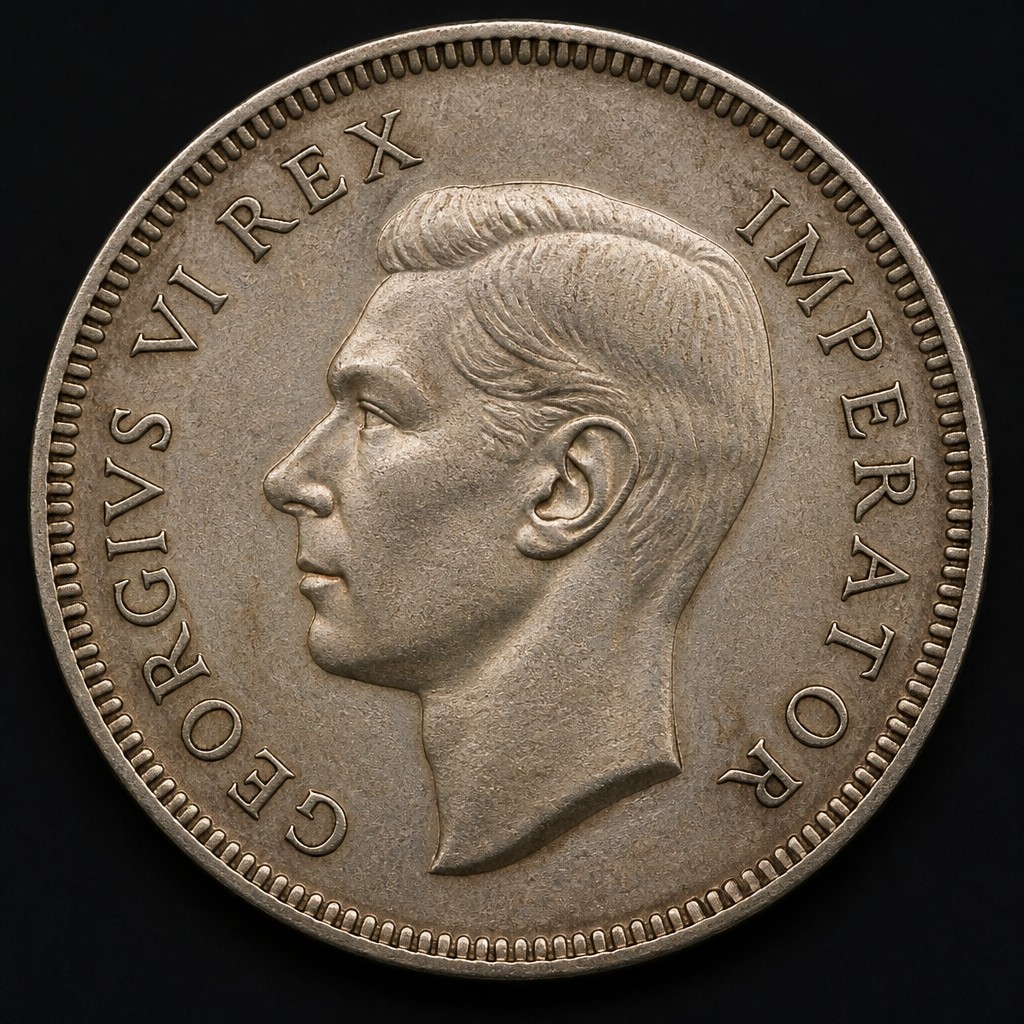
South African Sixpence (Union)
1923-1960
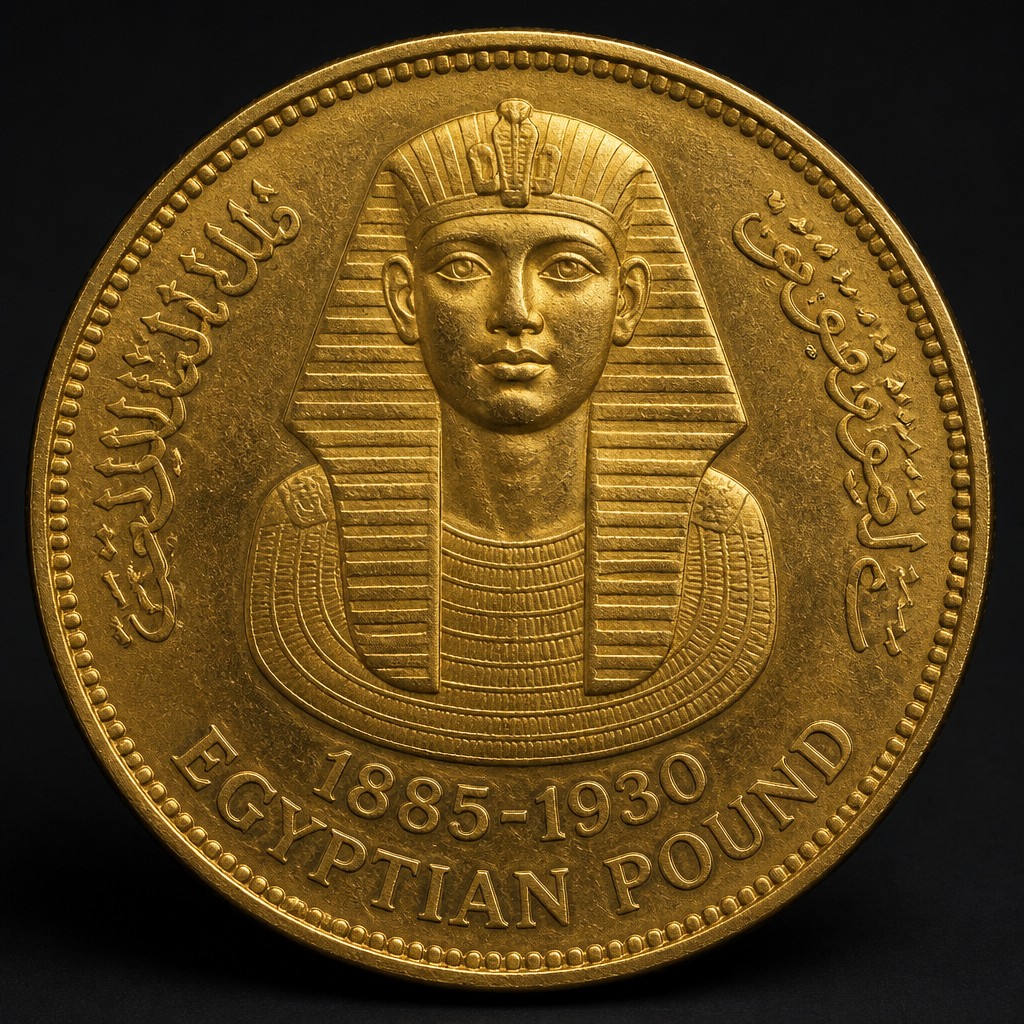
Egyptian Pound (gold)
1885–1930
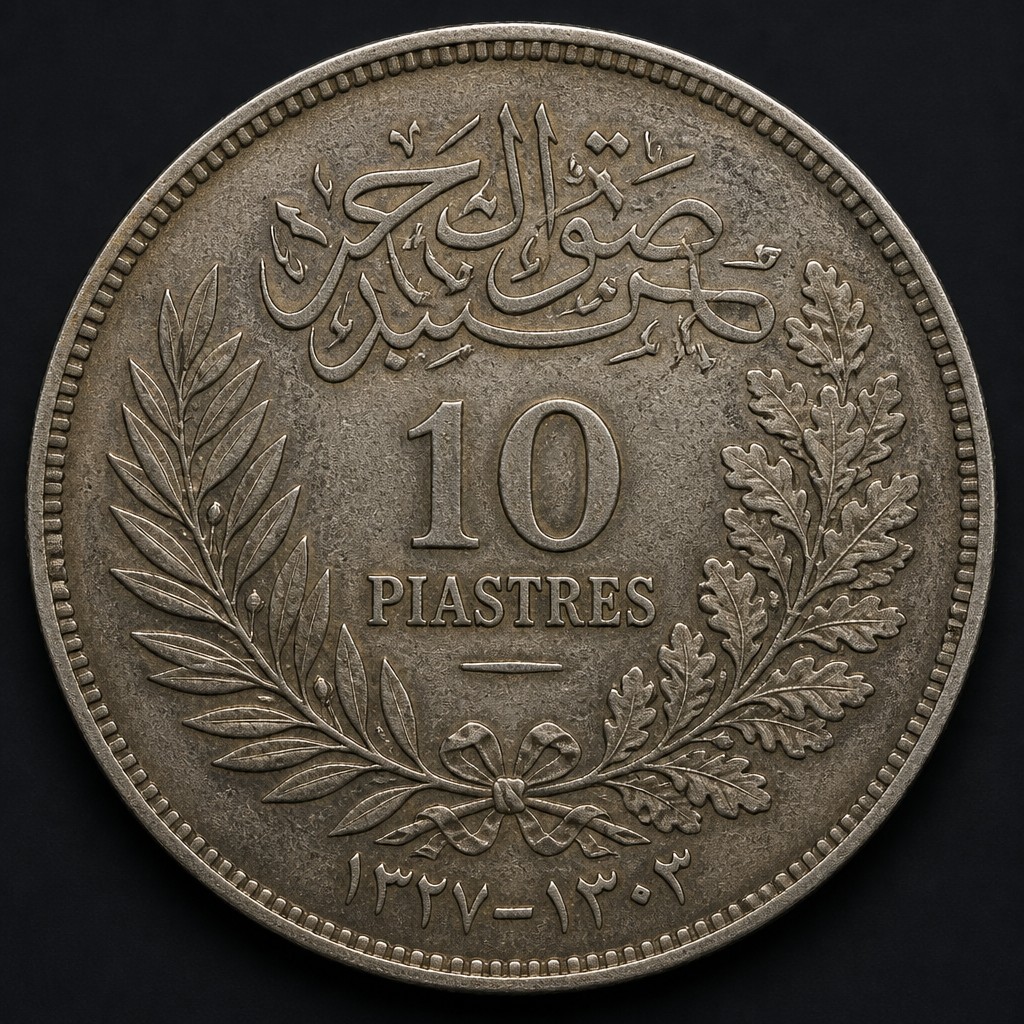
Egyptian 10 Piastres (silver)
1885–1939
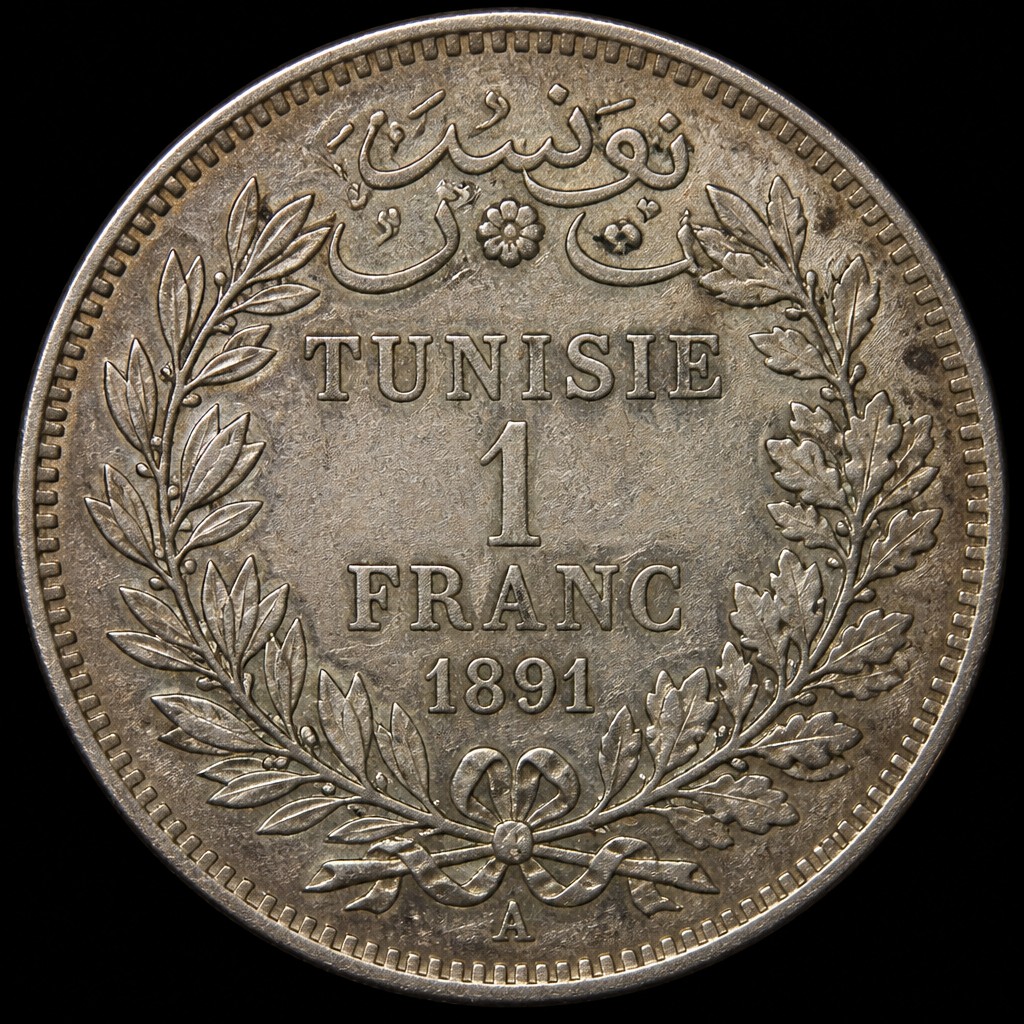
Tunisian Franc (Beylik Era)
Late 19th–early 20th century (c. 1891–1957 transition)
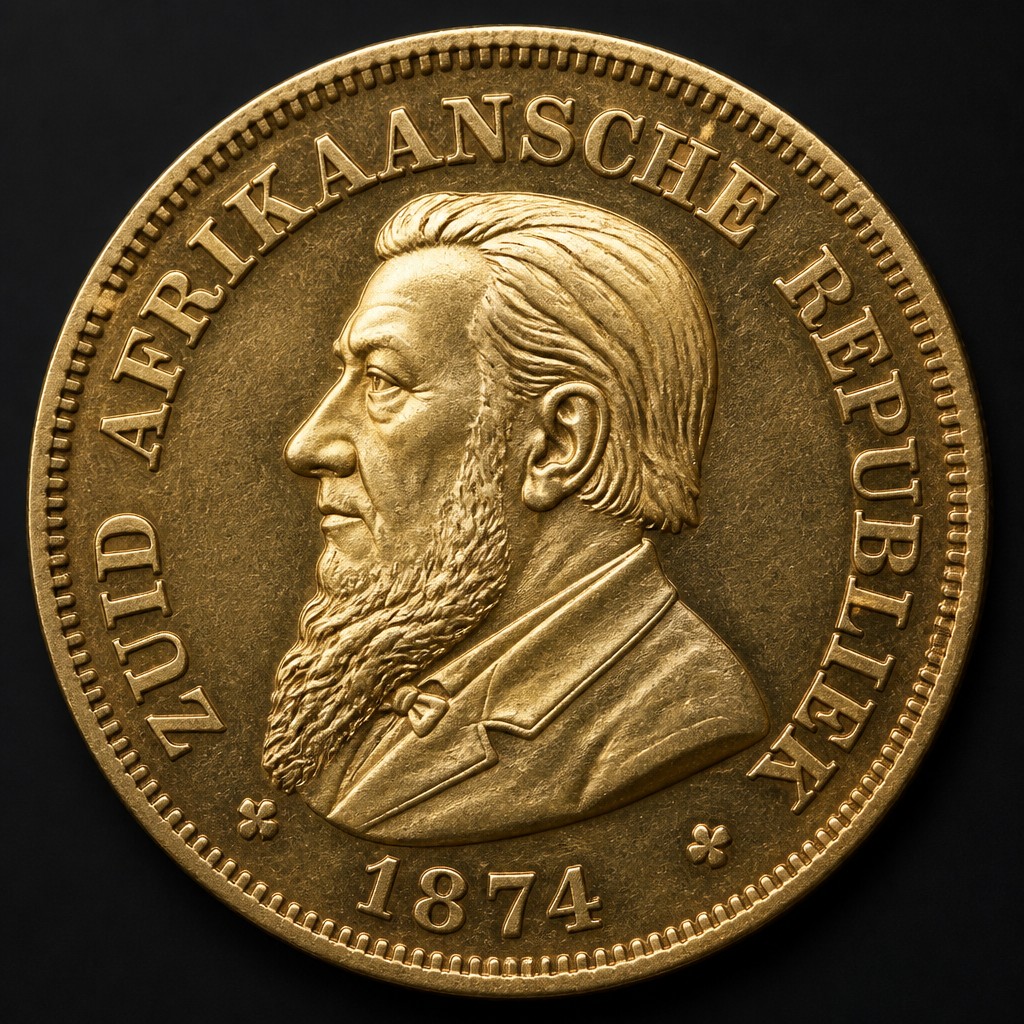
South African Republic Burgers Pond
1874
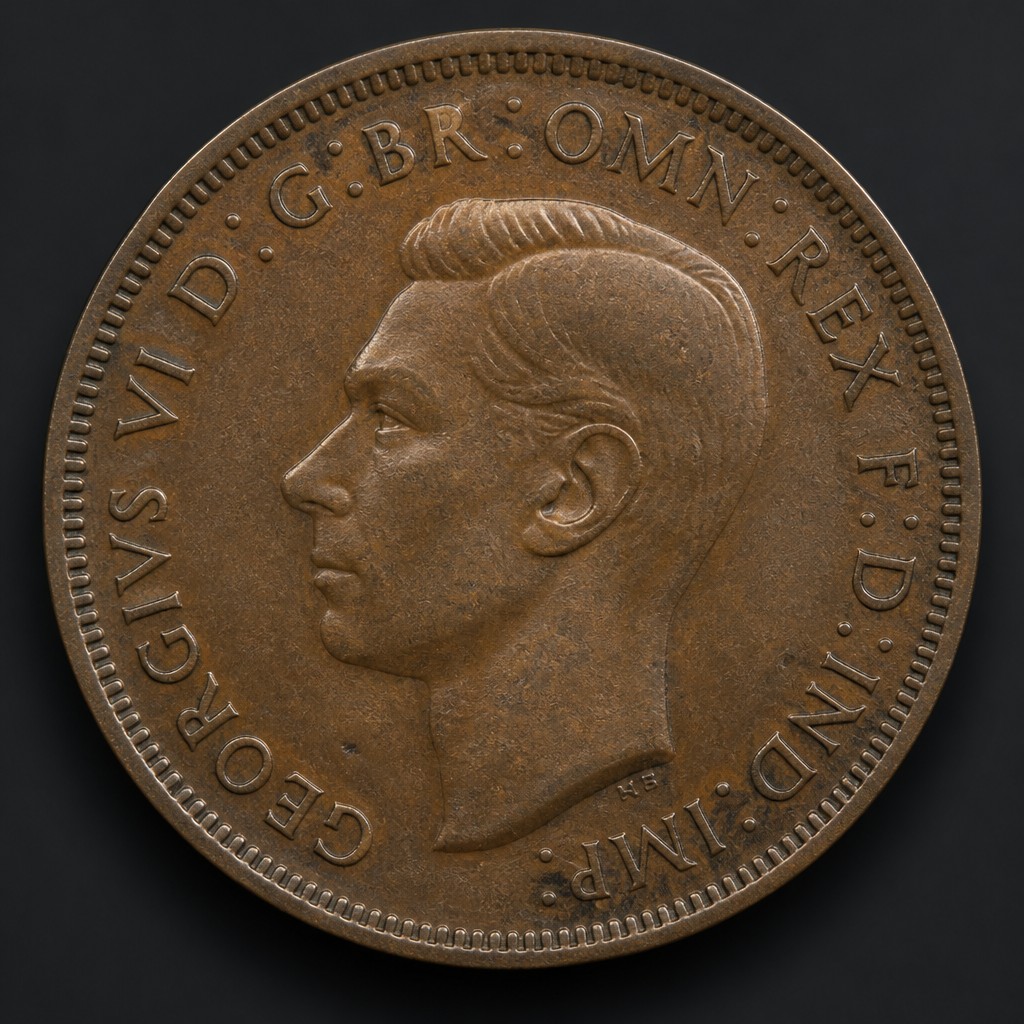
New Zealand Penny (KGVI)
1937-1952
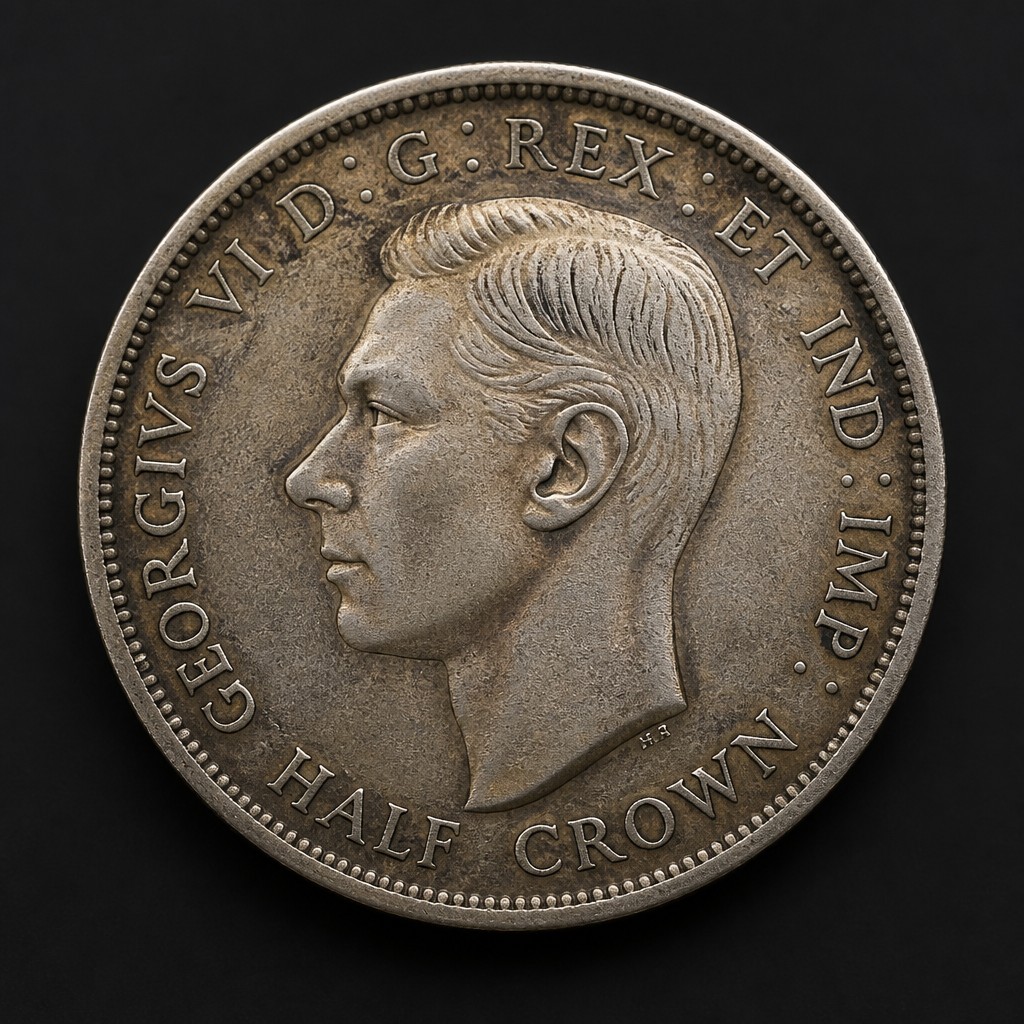
New Zealand Half Crown (pre-decimal)
1933-1965
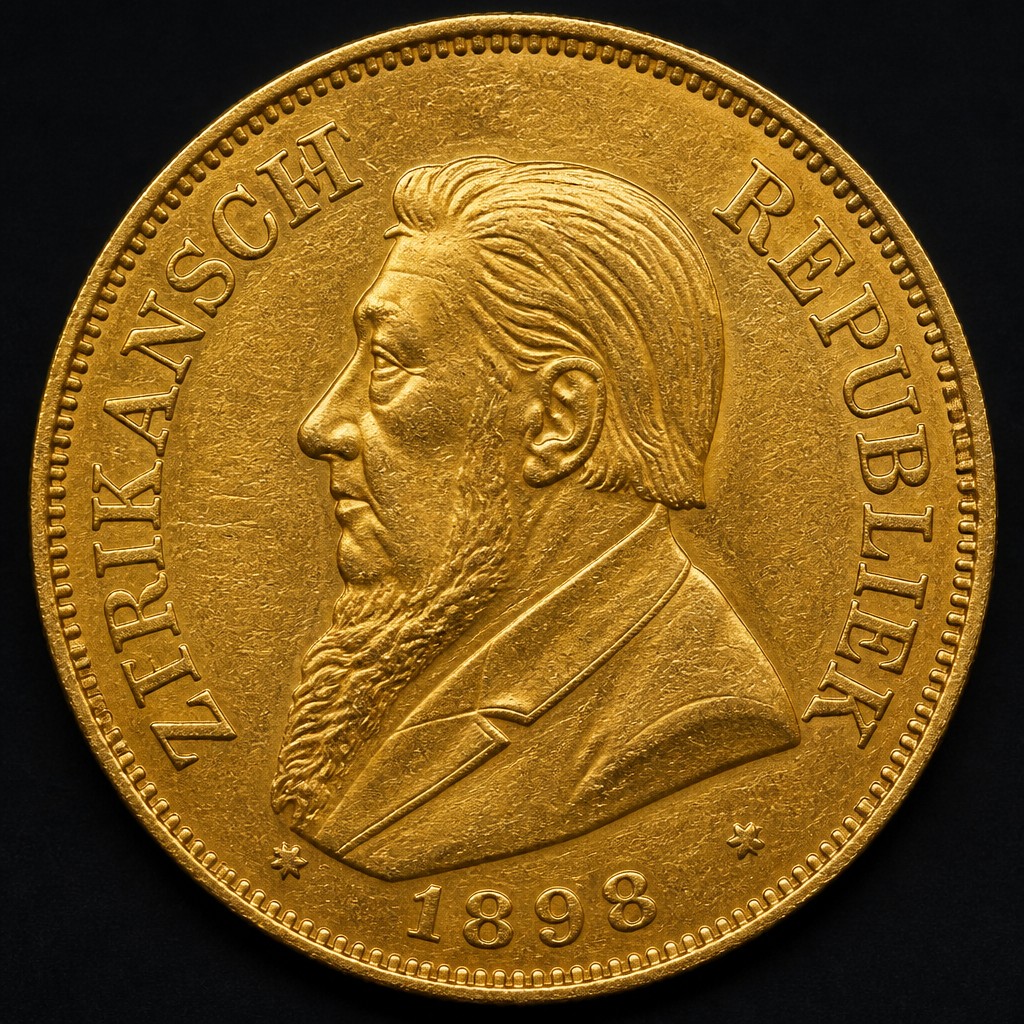
South African ZAR Kruger Pond
1892-1900
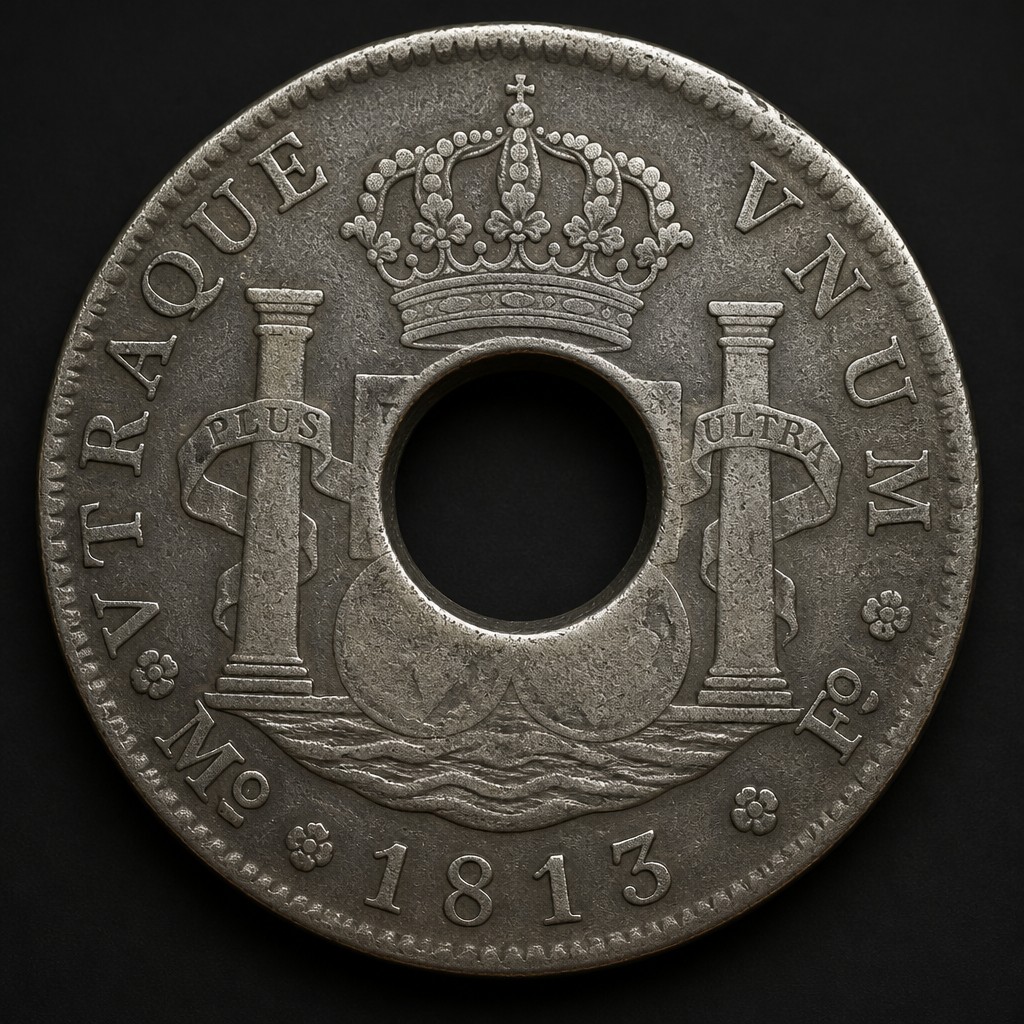
Australian Holey Dollar and Dump
1813
New Zealand Waitangi Crown (1935)
1935