
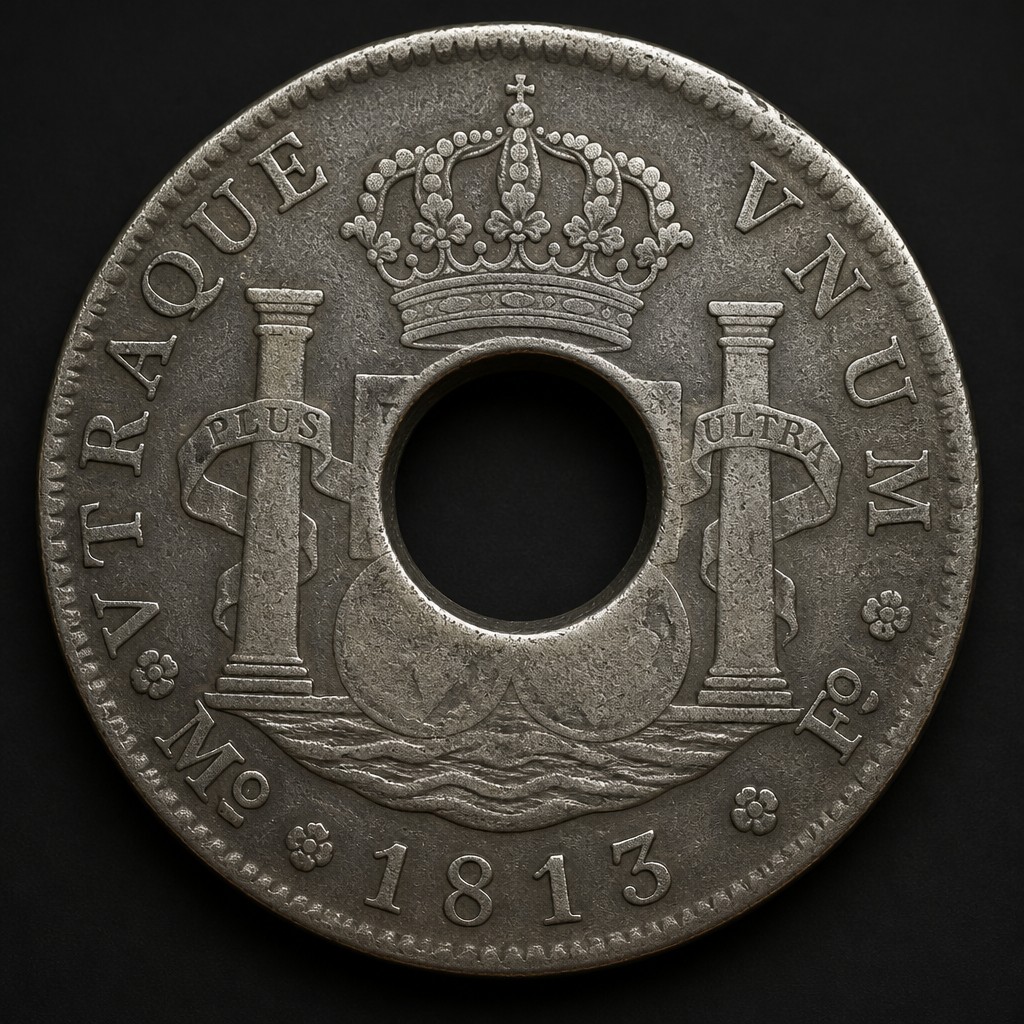
Australian Holey Dollar and Dump
In 1813, colonial authorities in New South Wales punched the centers out of Spanish silver dollars to create two coins from one, easing a severe coin shortage while preventing the silver from leaving the colony.
- Country
- Colonial Australia (New South Wales)
- Denomination
- 5 Shillings (Holey Dollar); 1 Shilling 3 Pence / 15 Pence (Dump)
- Metal
- Silver (repurposed Spanish colonial 8 reales coins)
Got a coin like this?
Identify any coin from a photo, free.
Overview
The Holey Dollar and Dump are among the earliest coins struck specifically for circulation in Australia, created in 1813 under orders from Governor Lachlan Macquarie to solve a chronic shortage of currency in the young penal colony of New South Wales. Officials took Spanish silver 8 reales coins (Spanish dollars) already circulating locally and punched a small disc from the center of each, producing two separate pieces: the outer ring, known as the Holey Dollar, valued at five shillings, and the small punched-out center, known as the Dump, valued at fifteen pence.
By transforming a single Spanish dollar into two locally distinctive coins worth more together than the original coin's exportable value, the scheme discouraged traders from shipping the scarce silver out of the colony, effectively creating one of the first uniquely Australian currencies.
History & Background
New South Wales in the early 1810s suffered from a severe shortage of circulating currency, worsened by the tendency of merchants and ship captains to export any hard coin that arrived in the colony. Governor Lachlan Macquarie addressed the problem by purchasing a shipment of Spanish silver dollars and having them altered so they could not be spent or valued the same way as ordinary Spanish dollars used internationally.
William Henshall, a convicted forger transported to New South Wales, was employed to punch and countermark the coins at Sydney in 1813, an ironic use of his criminal skills in service of the colonial government. The resulting Holey Dollars and Dumps circulated locally for several years before eventually being withdrawn as the colony's currency system evolved, leaving behind a distinctive and celebrated chapter in early Australian monetary history.
How to Identify
A Holey Dollar is a Spanish colonial silver 8 reales coin (commonly minted in Spanish America under monarchs such as Charles IV) with a circular hole punched through its center, leaving a ring-shaped coin roughly the diameter of the original dollar. The rim retains the original Spanish design and legends around its edge, while a colonial counterstamp reading 'NEW SOUTH WALES 1813' and the value '5S' typically appears struck into the ring.
The Dump is the small circular plug punched from the center of the same dollar, counterstamped separately with a crown, 'NEW SOUTH WALES,' and its value, '15 PENCE' (also referred to as one shilling three pence). Because both pieces derive from cutting apart a single original Spanish dollar, their diameters and any host-coin design remnants are directly complementary to one another.
Given the coins' age, rarity, and high value, most surviving genuine examples are well documented and have established provenance through major auction houses or museum collections; buyers should be especially cautious of forgeries or later-made replicas given the significant sums involved, and should seek expert numismatic authentication before purchase.
Value & Collectibility
Genuine Holey Dollars and Dumps are extremely rare and rank among the most valuable and celebrated coins in Australian numismatic history, with surviving authenticated examples routinely reaching very high five- and six-figure prices (in US dollars) at major auctions, depending on condition, host-coin type, and documented provenance. Dumps, being smaller and originally less individually prized, can also bring substantial sums but generally trade for less than a comparable Holey Dollar.
Because so few genuine examples survive and demand among specialist Australian and world coin collectors is strong, prices for well-documented pieces have shown significant appreciation over past decades; value is driven heavily by authentication, condition, and completeness of provenance rather than simple grade alone, given the coins' rarity and historical importance.
Frequently asked questions
Why were Spanish dollars turned into Holey Dollars and Dumps?
Colonial New South Wales faced a severe coin shortage, and punching out the centers of Spanish silver dollars created two locally distinctive coins that could not easily be exported at the same value as ordinary Spanish dollars, keeping the silver in the colony.
What is the difference between a Holey Dollar and a Dump?
The Holey Dollar is the outer ring left after punching, valued at five shillings, while the Dump is the small center plug that was punched out, valued at fifteen pence.
Who made the Holey Dollars and Dumps?
The punching and counterstamping was carried out in Sydney in 1813 under Governor Lachlan Macquarie's orders, with the work performed by William Henshall, a convicted forger.
Are Holey Dollars valuable today?
Yes, authenticated genuine examples are considered among the most valuable and sought-after coins in Australian numismatics, commanding very high prices at auction.
Other coins you may enjoy
Egyptian Qirsh (Muhammad Ali Era)
Early-to-mid 19th century (c. 1805–1848)
Moroccan Rial (Alawi Dynasty Coinage)
18th–19th century (pre-protectorate era)
South African Sixpence (Union)
1923-1960
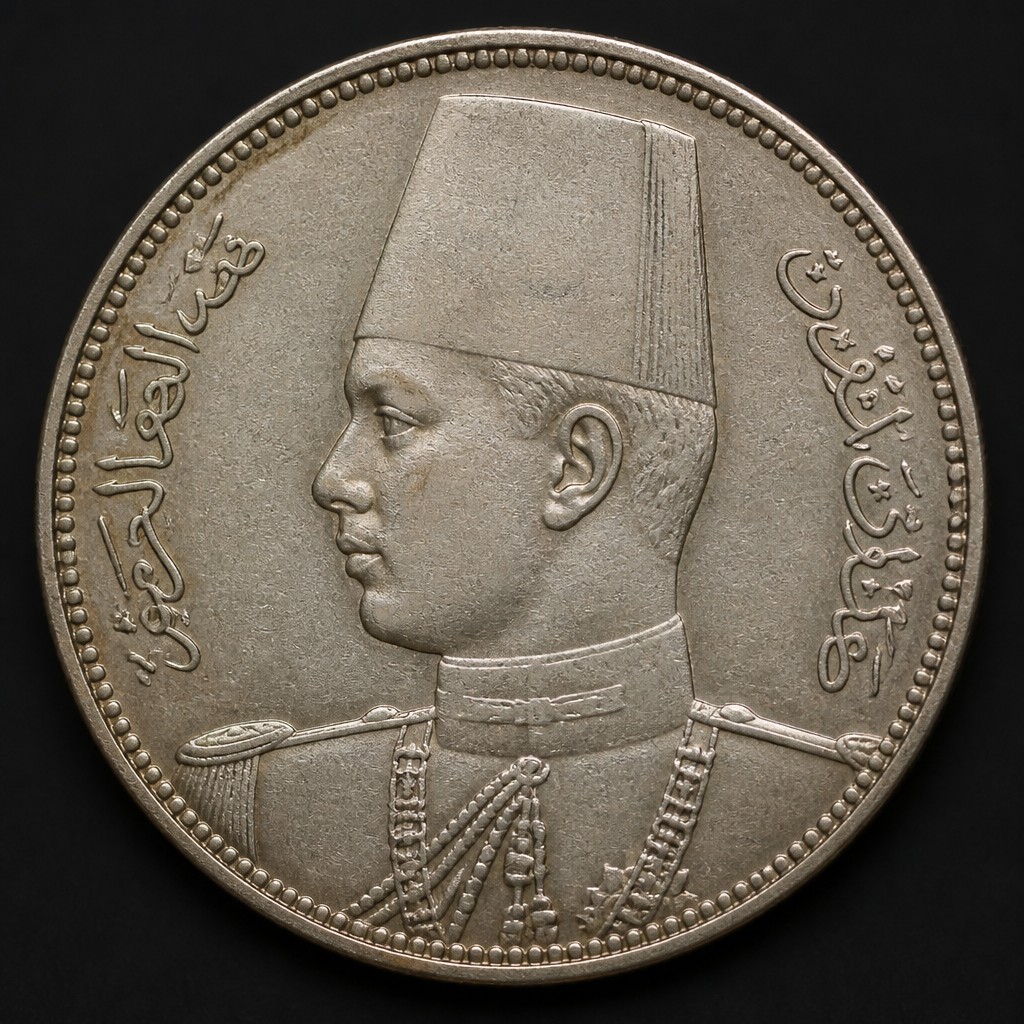
Egyptian Farouk 5 Piastres
1937-1952
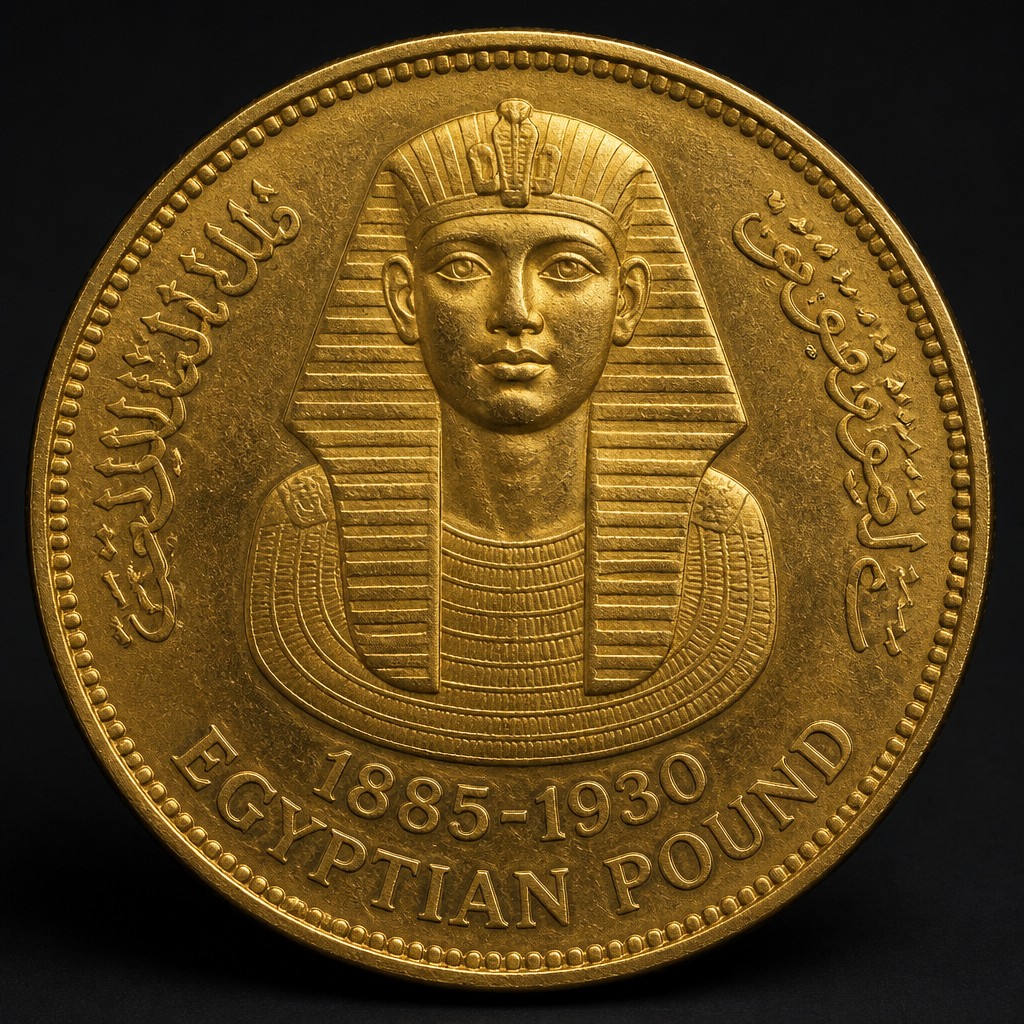
Egyptian Pound (gold)
1885–1930
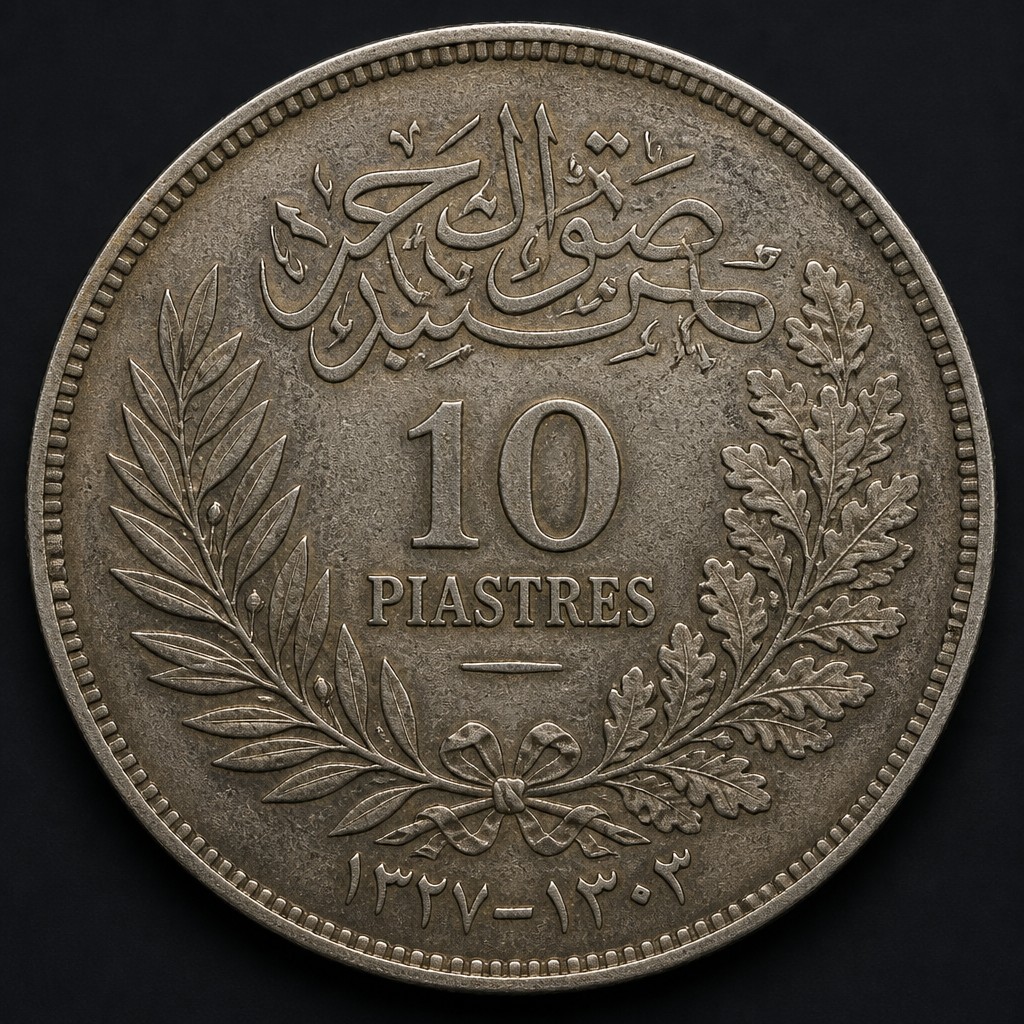
Egyptian 10 Piastres (silver)
1885–1939
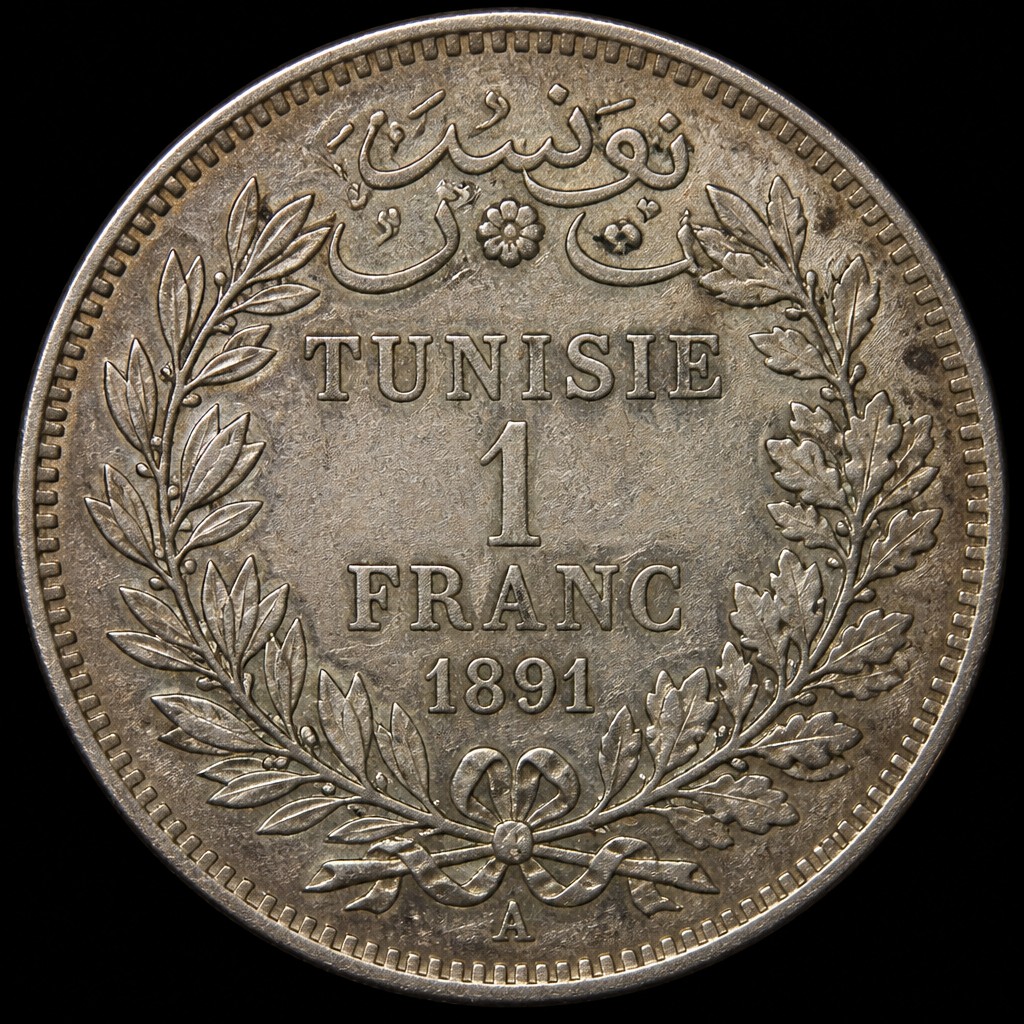
Tunisian Franc (Beylik Era)
Late 19th–early 20th century (c. 1891–1957 transition)
South African Republic Burgers Pond
1874
New Zealand Penny (KGVI)
1937-1952
New Zealand Half Crown (pre-decimal)
1933-1965
South African ZAR Kruger Pond
1892-1900
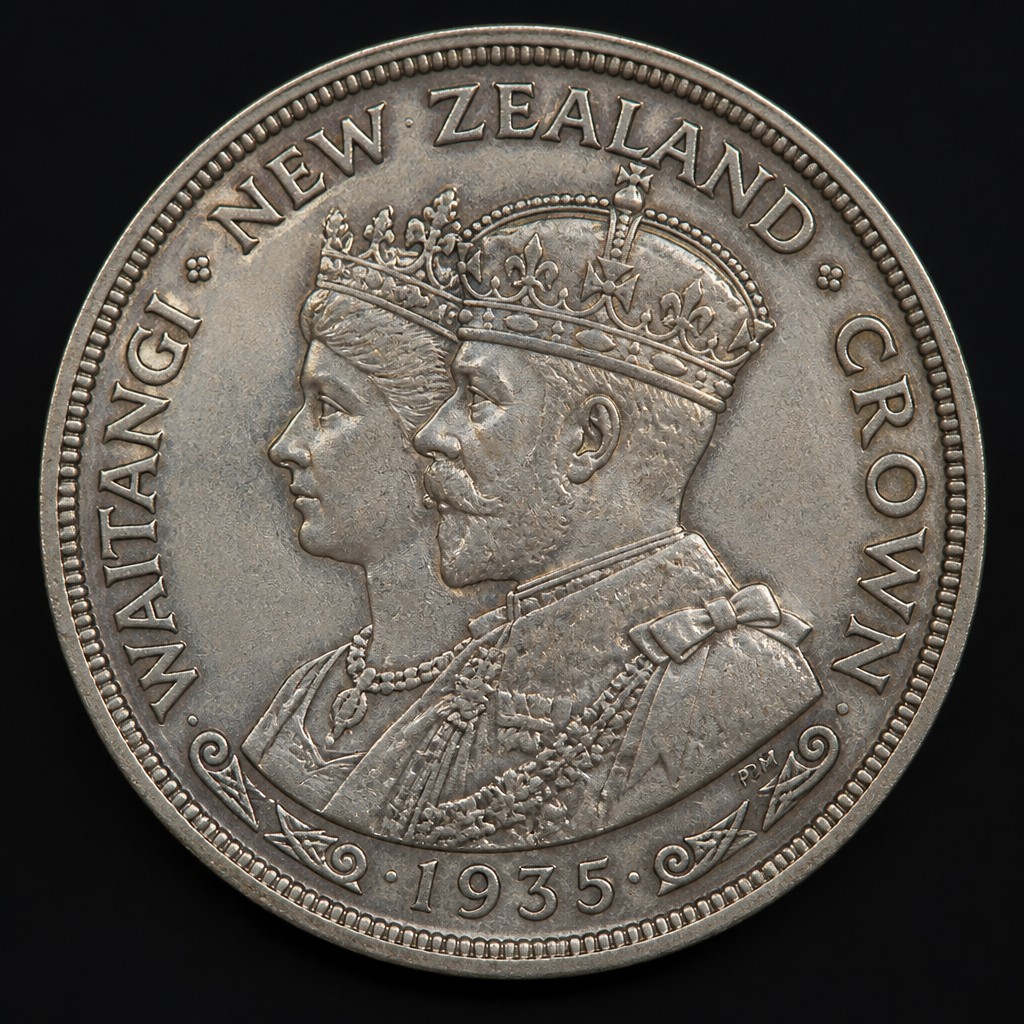
New Zealand Waitangi Crown (1935)
1935