
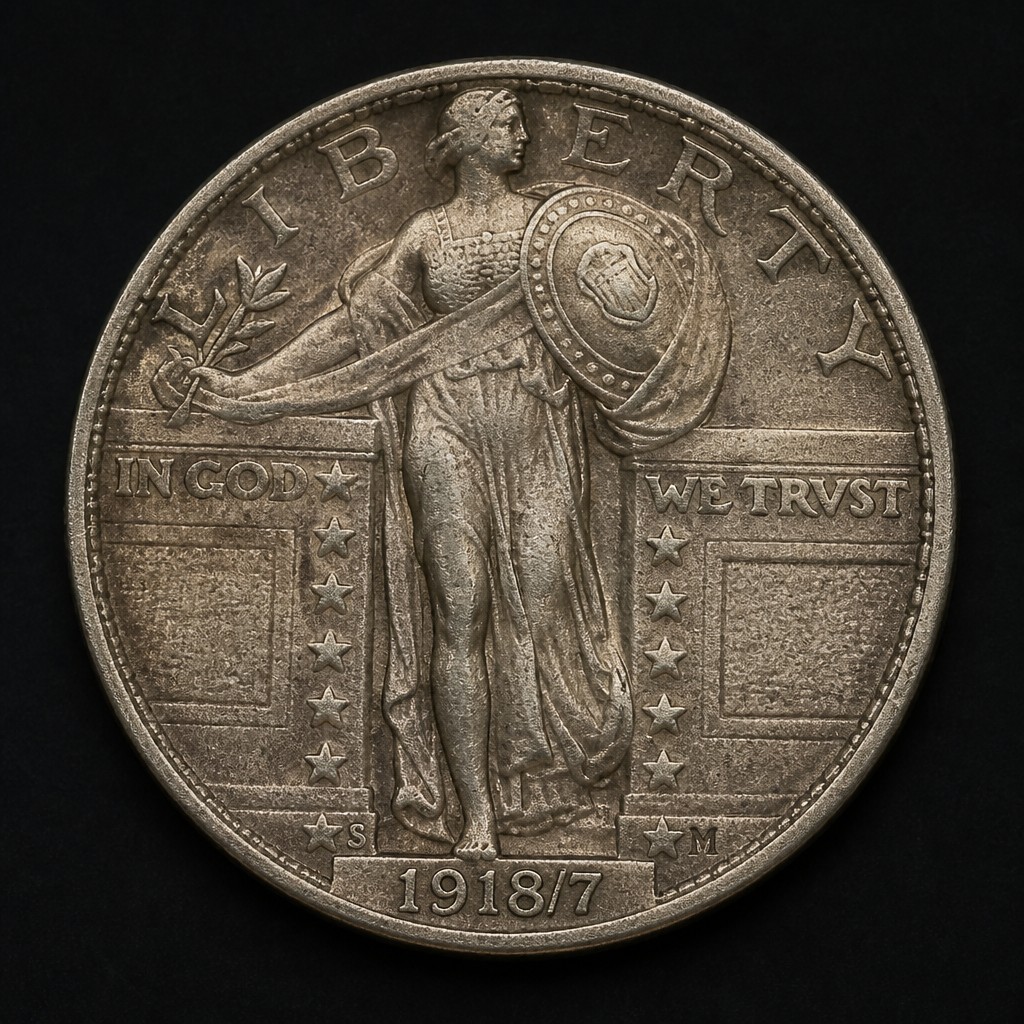
1918/7-S Standing Liberty Quarter Overdate
One of the most famous overdate varieties in U.S. coinage, where a leftover 1917 die was re-punched with an 1918 date, leaving remnants of the 7 visible beneath the 8.
- Country
- United States
- Denomination
- Quarter Dollar
- Metal
- 90% Silver, 10% Copper
Got a coin like this?
Identify any coin from a photo, free.
Overview
The 1918/7-S is widely regarded as the premier variety of the Standing Liberty quarter series and one of the best-known overdates in all of U.S. numismatics. It resulted from an obverse working die originally hubbed with the 1917 date being re-punched with 1918 digits, leaving faint traces of the underlying 7 visible beneath the final 8.
Because it is a die variety rather than a separate date, it must be attributed by careful examination of the last digit, and genuine, well-defined examples are highly prized by variety and type collectors alike.
History & Background
Mint practices in the early twentieth century sometimes involved reusing dies from a prior year by re-punching a new date over the old one, a cost-saving measure common before dies were routinely discarded each year. At the San Francisco Mint, a die intended for 1917 quarters was repurposed and re-dated for 1918 production.
The re-punching was imperfect, leaving evidence of the earlier 7 partially visible under the newly punched 8. The variety went unnoticed for years before diligent collectors and researchers identified and popularized it, after which it became one of the most sought-after die varieties of the twentieth century.
How to Identify
The overall design matches other Standing Liberty quarters of the era: Liberty standing within a gateway holding a shield and olive branch on the obverse, with an eagle in flight on the reverse. The key diagnostic is on the last digit of the date, where careful examination under magnification reveals the outline or remnants of a 7 underlying the final 8.
Because the overdate feature can be subtle, especially on worn coins, collectors typically use a loupe and compare against published close-up diagnostic images or verified examples, and in many cases pursue third-party certification specifically attributing the overdate. The S mintmark appears on the obverse to the left of the date, confirming the San Francisco origin required for this variety.
Value & Collectibility
The 1918/7-S is one of the most valuable regular-issue varieties of the Standing Liberty series, commanding strong prices even in heavily worn grades because genuine, clearly attributable examples are scarce. Values increase substantially with grade, and coins that also show a full head strike bring especially large premiums.
Due to its fame and value, the variety has attracted alterations and misattributions over the years, so authentication by a reputable grading service is commonly sought by buyers to confirm the overdate is genuine rather than damage or a die scratch mistaken for it.
Frequently asked questions
What is an overdate coin?
It is a coin struck from a die where one date's digits were punched over another, leaving traces of the earlier date visible.
How do I spot the 1918/7-S overdate?
Examine the last digit of the date with magnification for evidence of a 7 beneath the final 8; comparison to verified reference images is recommended.
Why is this variety so valuable?
It combines the fame of a dramatic overdate with genuine scarcity, since relatively few clearly attributable examples survive.
Should I get my coin certified?
Given the value and history of misattribution, professional certification specifically confirming the overdate is commonly recommended.
Other coins you may enjoy
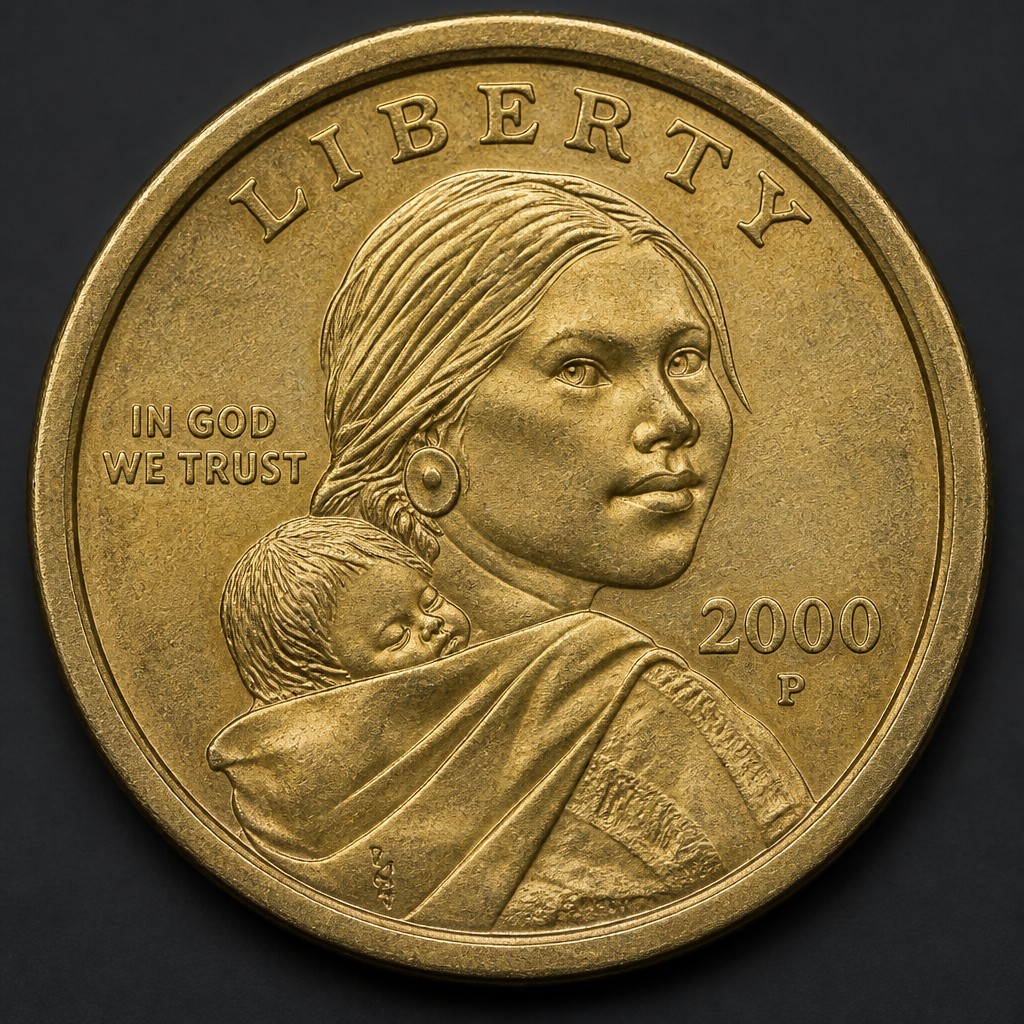
2000-P Sacagawea Cheerios Dollar
2000
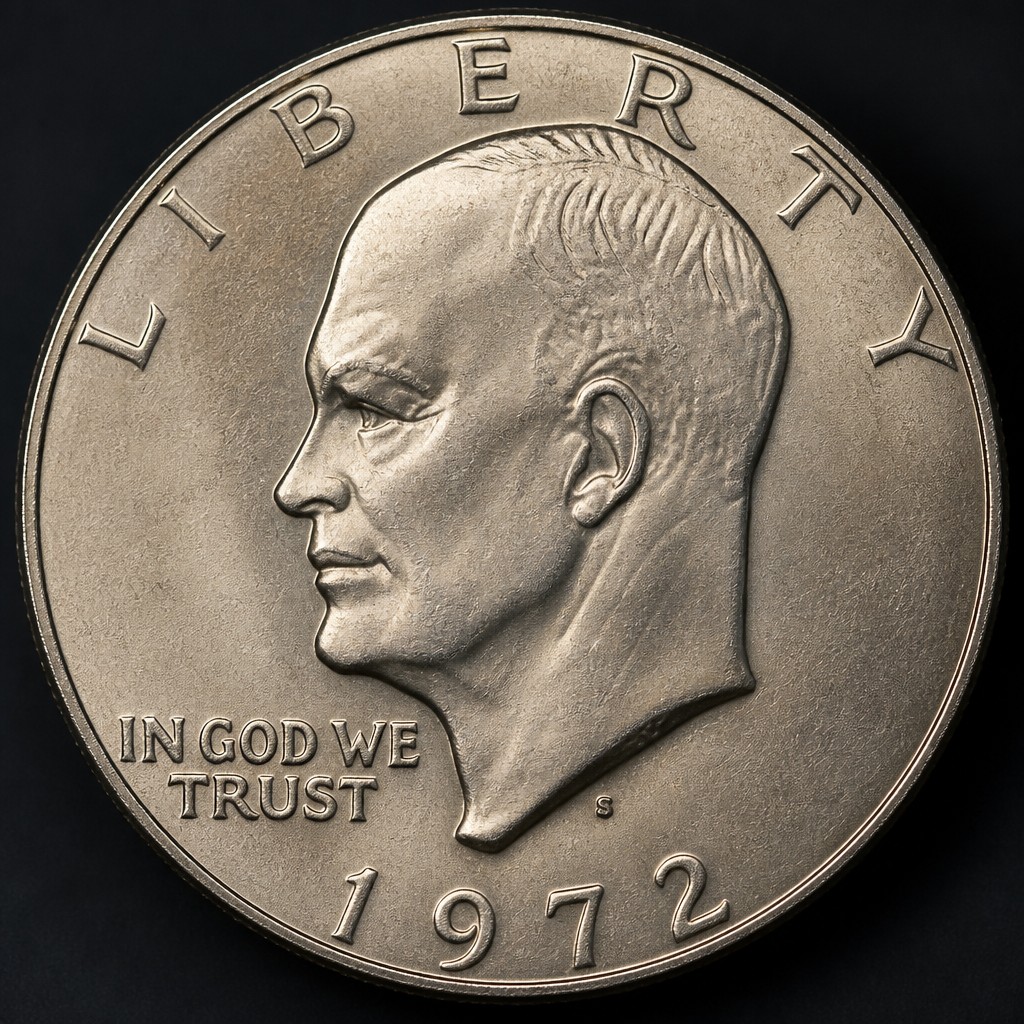
1972 Eisenhower Dollar (Type 2)
1972
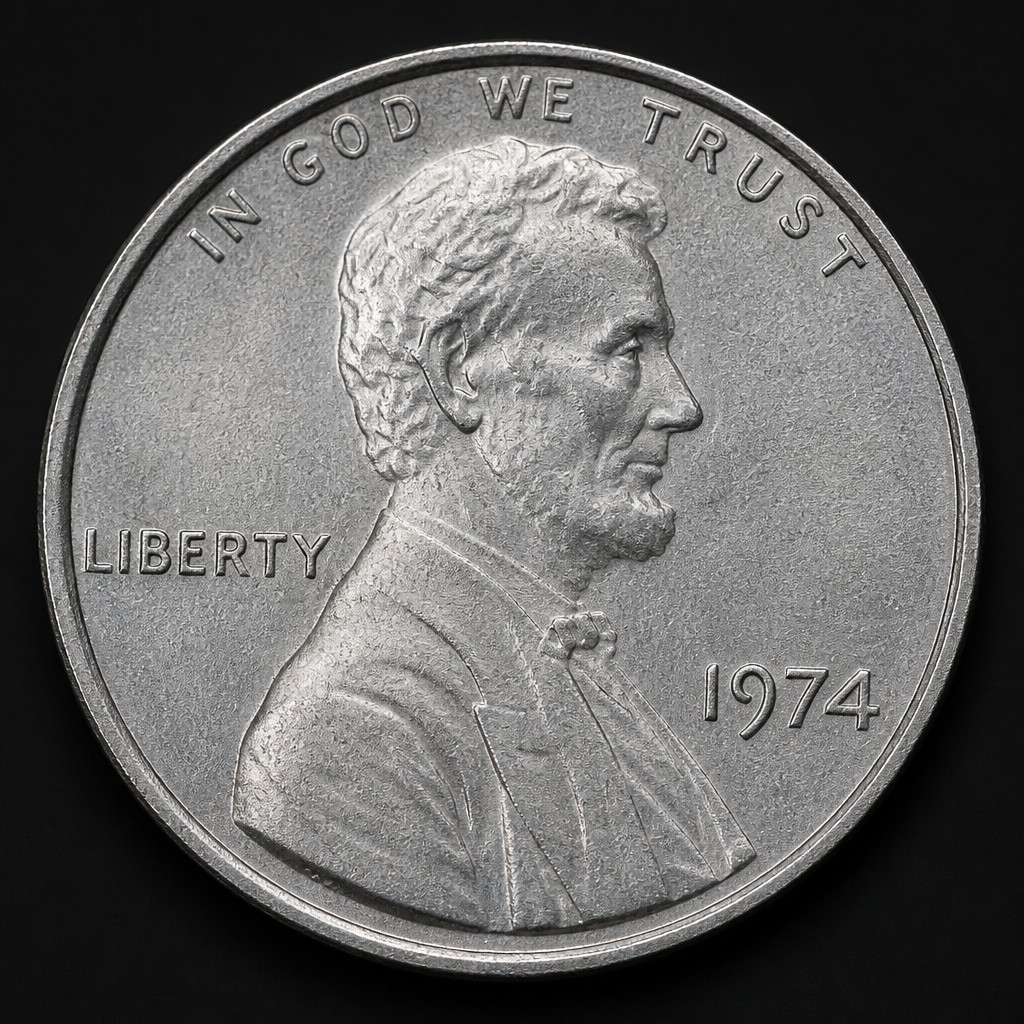
1974 Aluminum Cent
1974
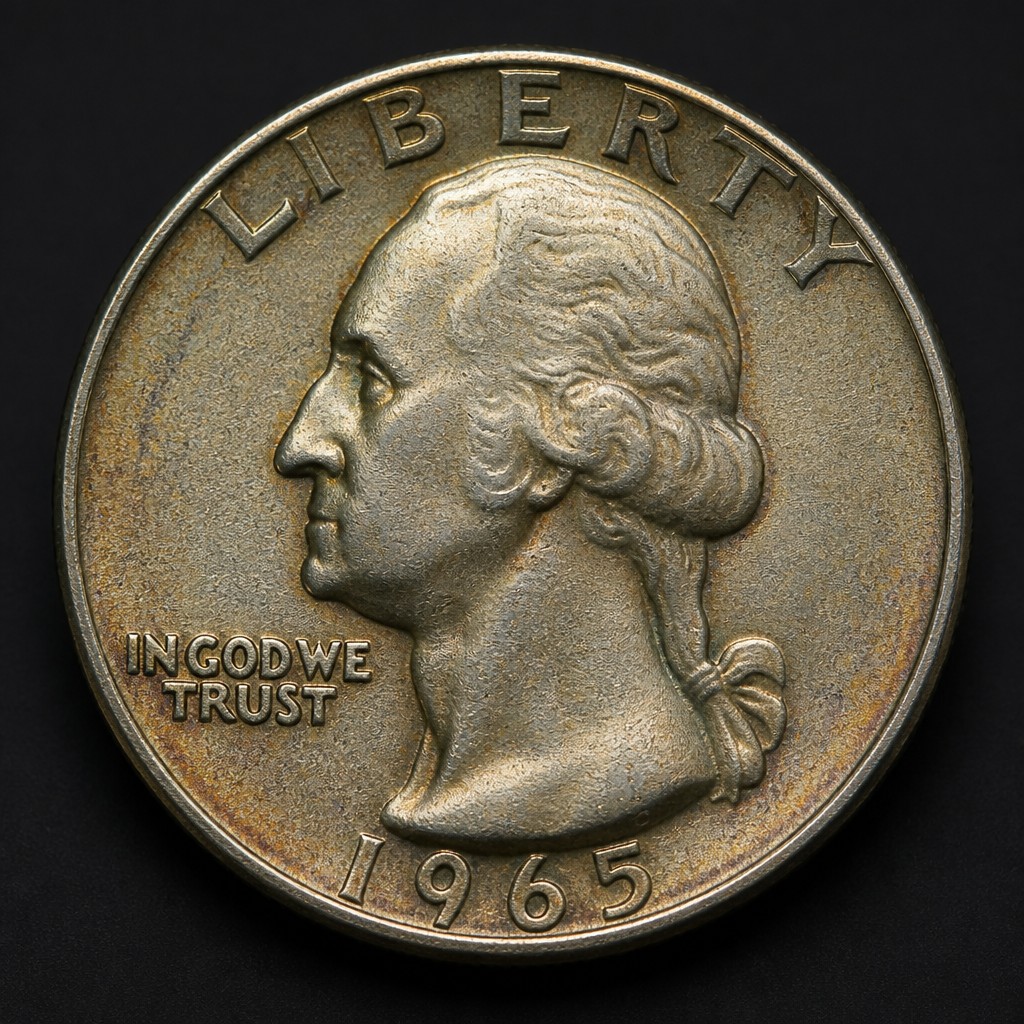
1965 Silver Washington Quarter (Transitional Error)
1965
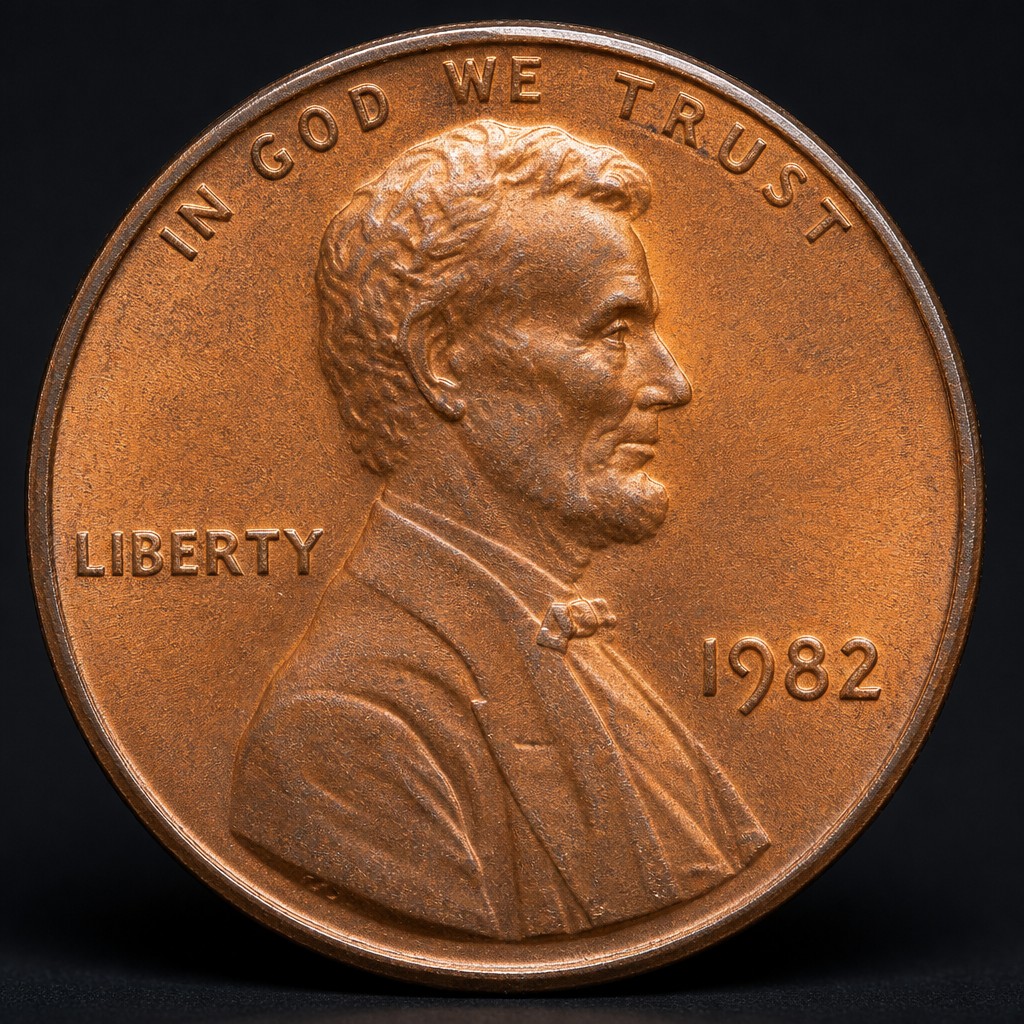
1982 Copper/Zinc Transition Lincoln Cent
1982
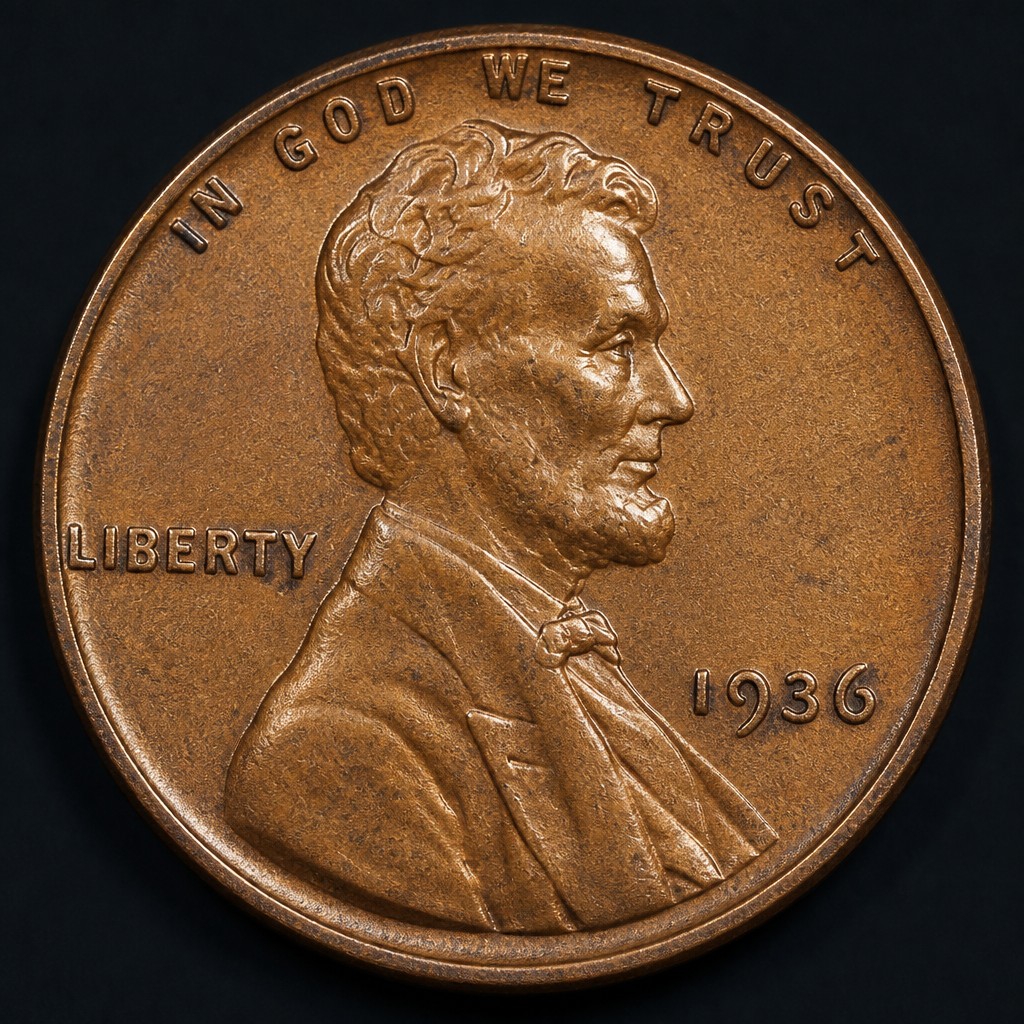
1936 Doubled Die Lincoln Cent
1936
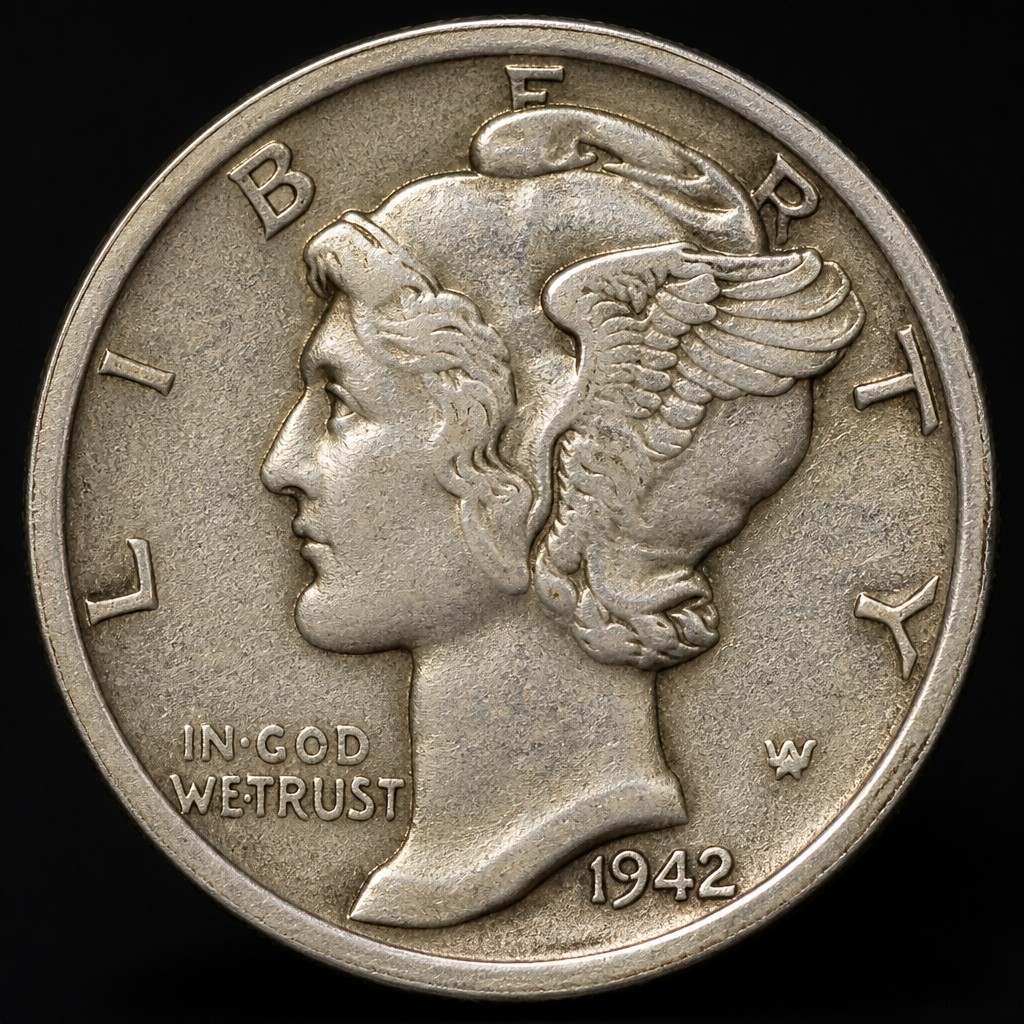
1942/1 Mercury Dime Overdate
1942
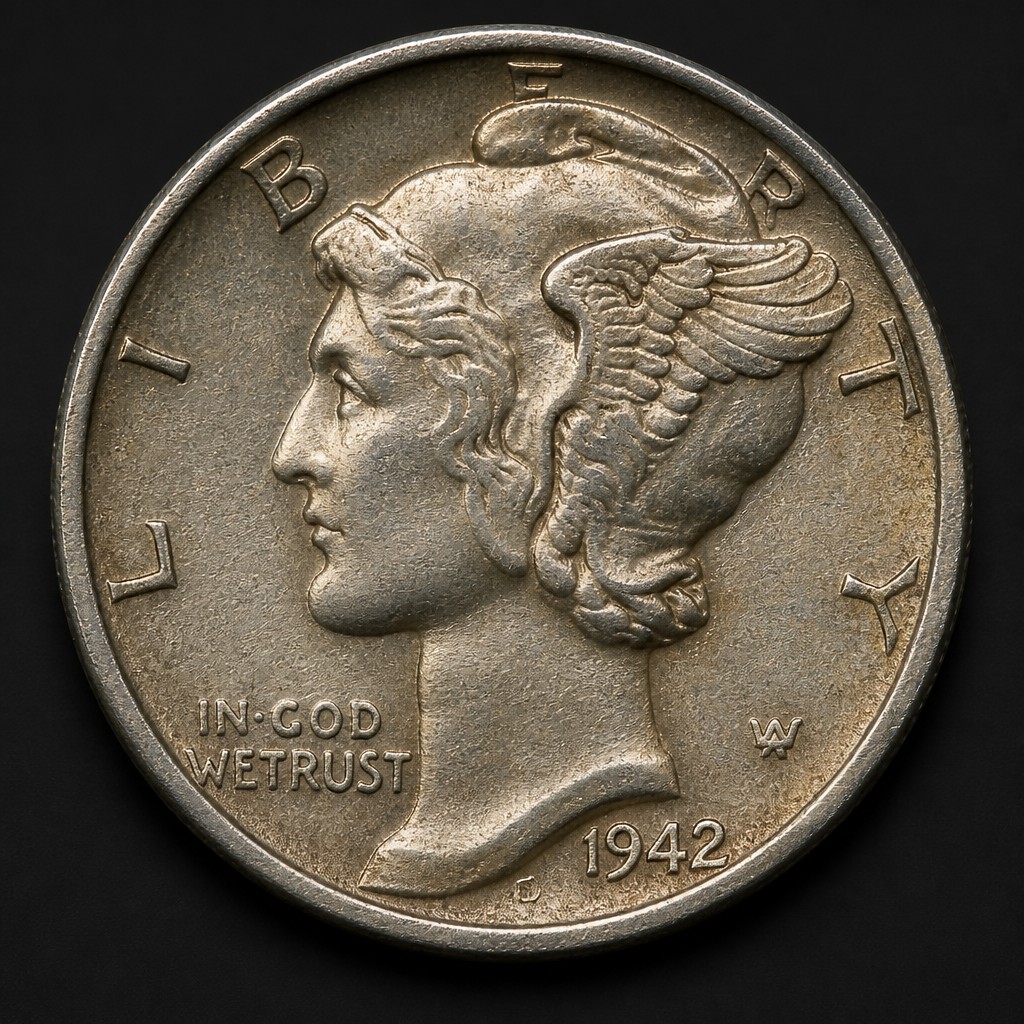
1942/1-D Mercury Dime Overdate
1942
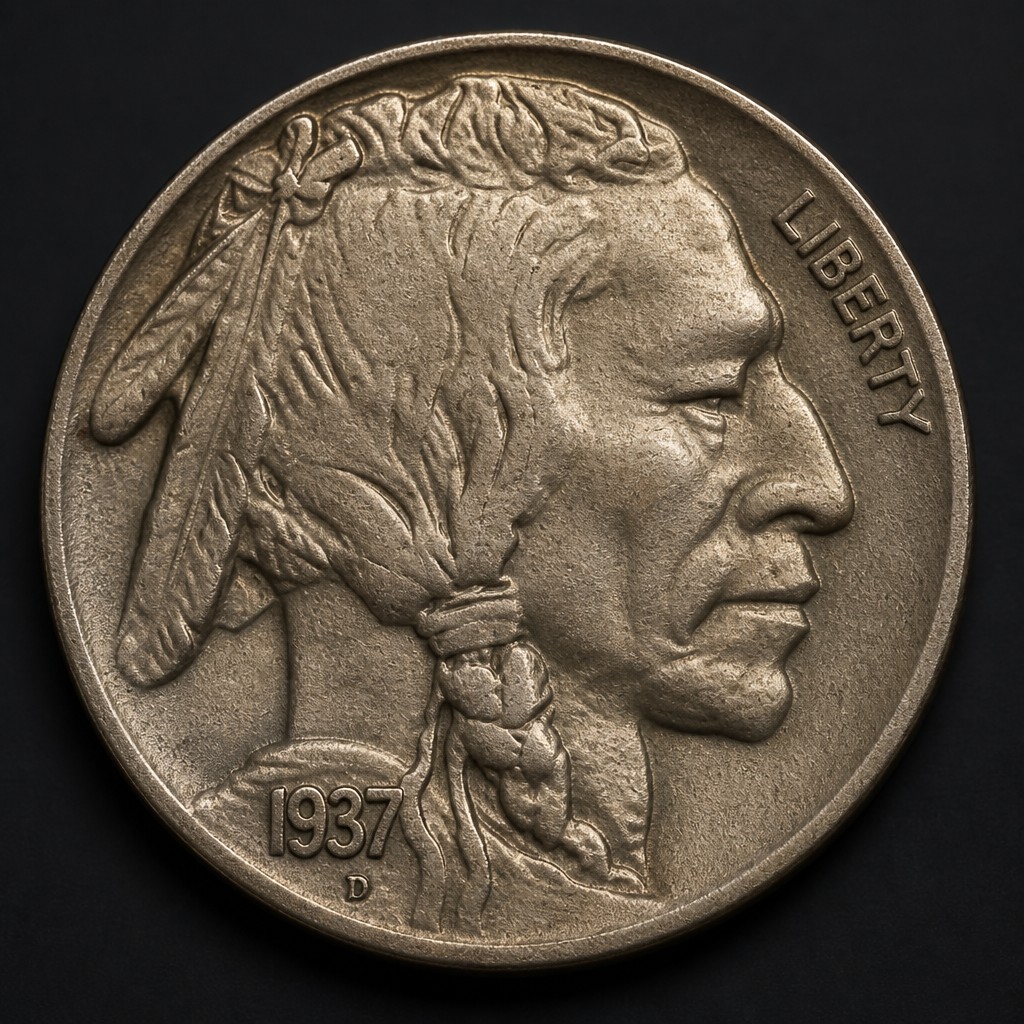
1937-D Three-Legged Buffalo Nickel
1937
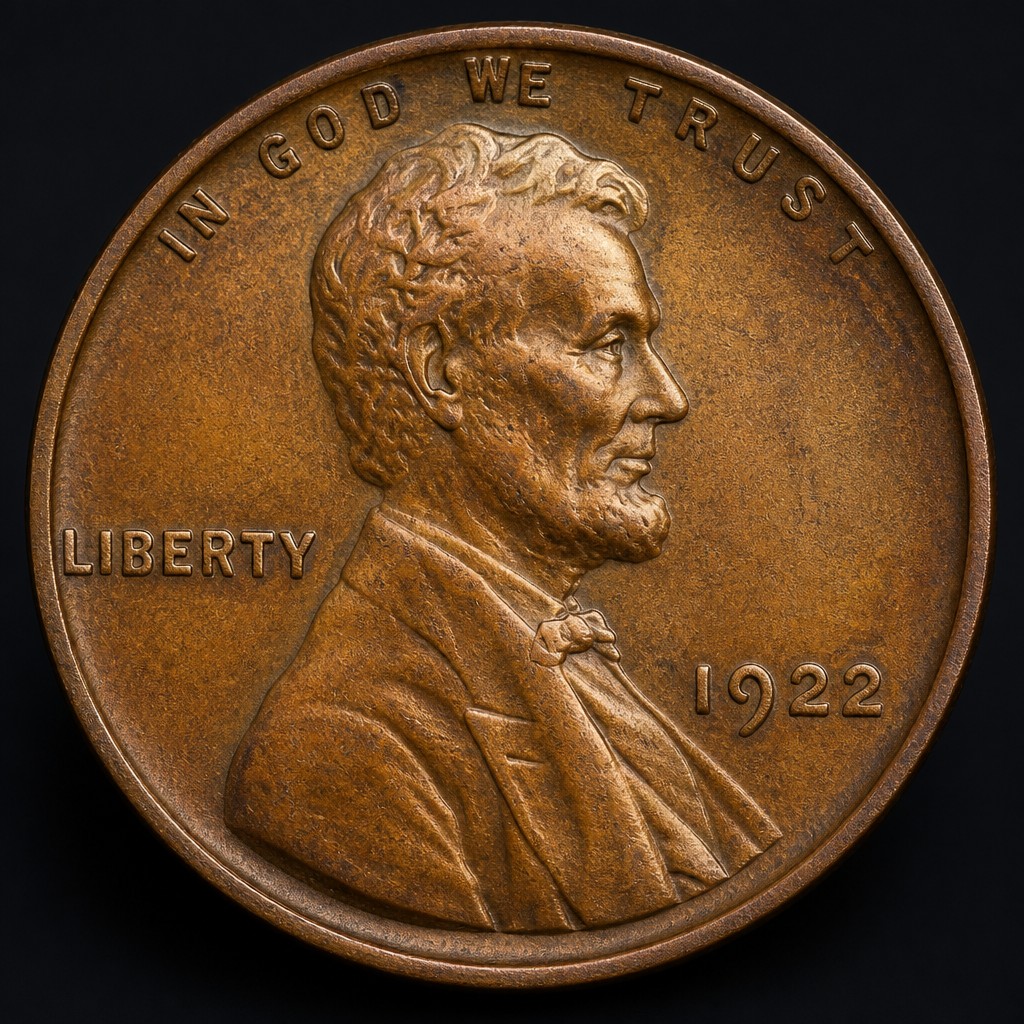
1922 No D Lincoln Cent
1922
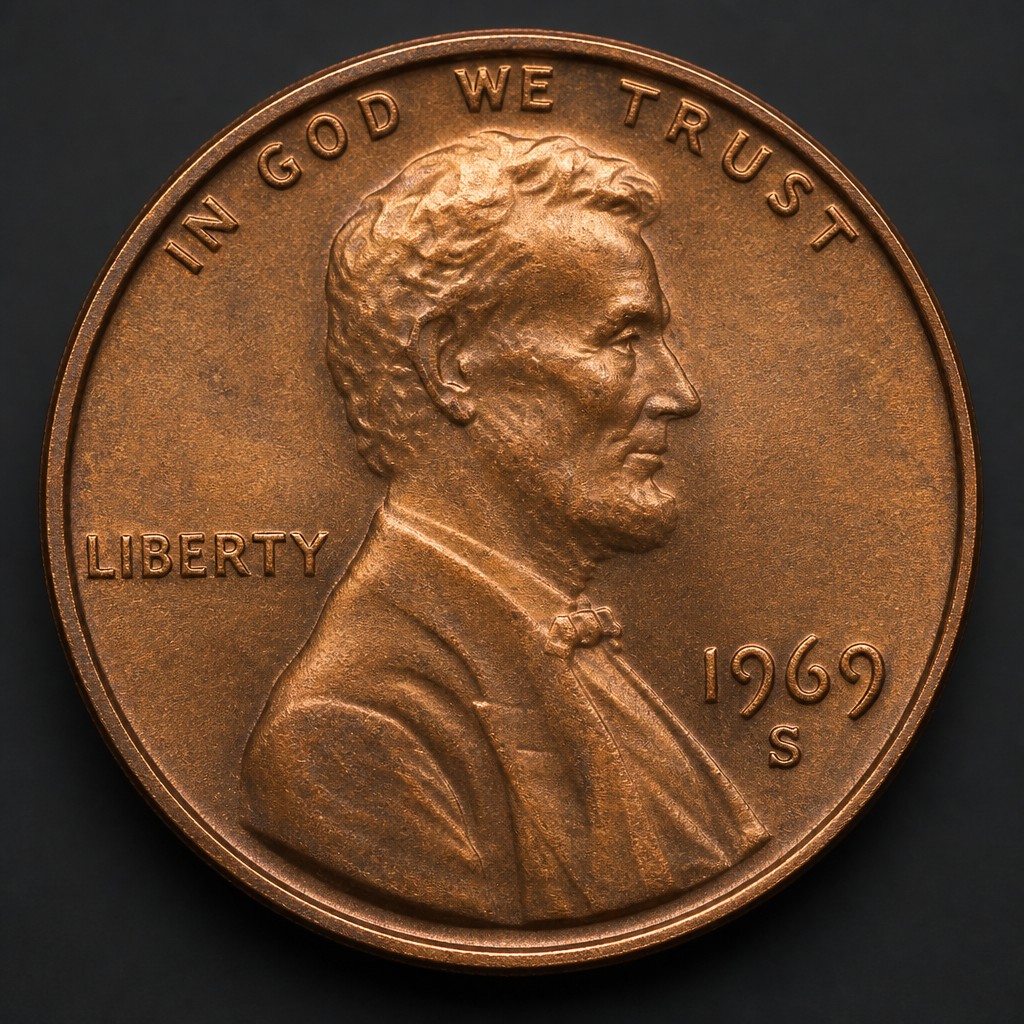
1969-S Doubled Die Lincoln Cent
1969
1943 Bronze Lincoln Cent
1943