
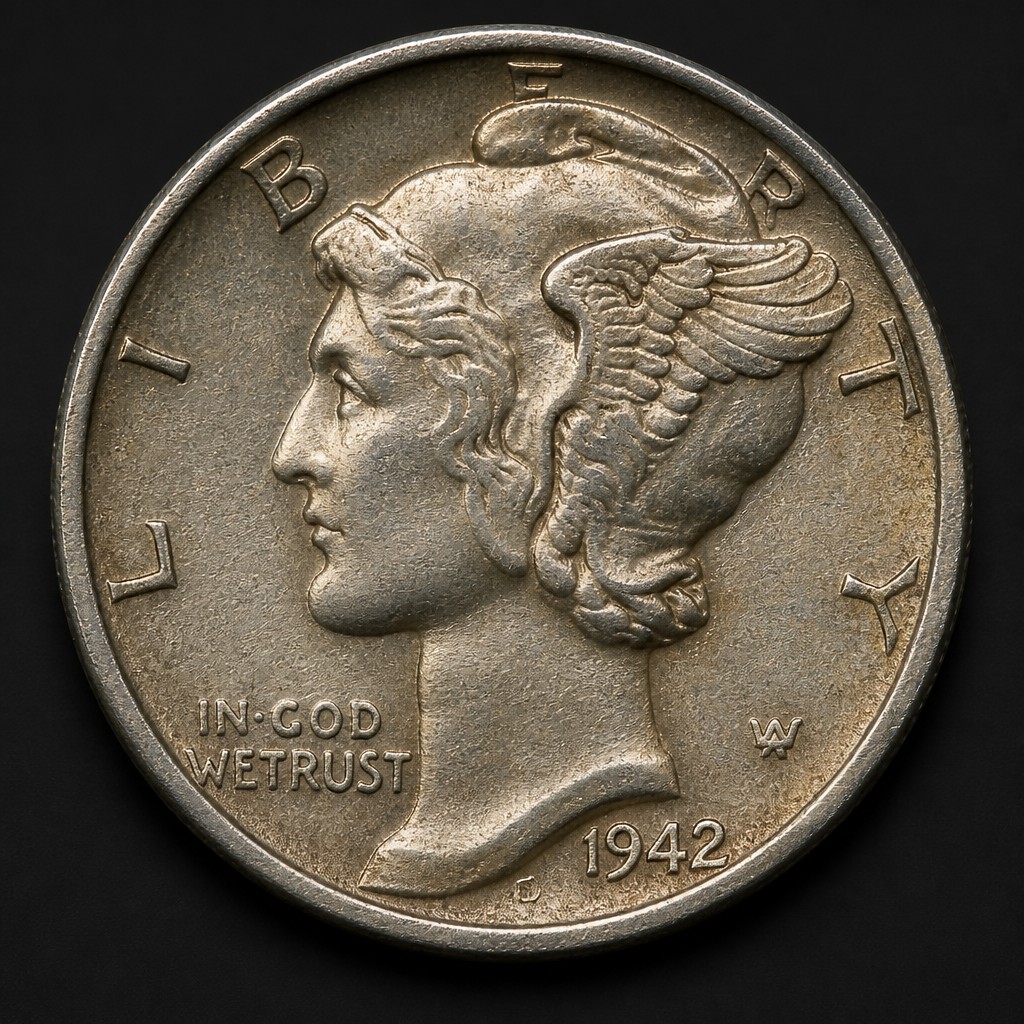
1942/1-D Mercury Dime Overdate
The Denver counterpart to the famous 1942/1 overdate, this Mercury Dime shows a doubled date from reused 1941 die-making equipment and is scarcer than the Philadelphia version.
- Country
- United States
- Denomination
- Ten Cents
- Metal
- 90% Silver
Got a coin like this?
Identify any coin from a photo, free.
Overview
The 1942/1-D Mercury Dime Overdate is the Denver-struck counterpart to the more widely known Philadelphia 1942/1 overdate, sharing the same basic type of die-preparation mistake but occurring independently at a different mint. It is generally recognized as the scarcer and more valuable of the two 1942 overdate varieties.
Like its Philadelphia counterpart, the coin is a favorite among variety specialists for its dramatic, visible doubling in the date, an easy-to-explain error that appeals to both dedicated variety collectors and general Mercury Dime enthusiasts building a complete set.
Because fewer examples of the Denver version have been identified over the decades compared to the Philadelphia overdate, it holds a reputation as one of the more elusive and desirable 20th-century U.S. mint varieties.
History & Background
In 1942, the Denver Mint prepared dies for the year's dime production using leftover 1941 die-making equipment, and when the 1942 date was subsequently punched into the die, it failed to fully cover the earlier date impression, leaving visible remnants of a "1" beneath the final "2." This mirrors the separate but similar error that occurred the same year at the Philadelphia Mint.
Because this type of hub-and-punch date preparation was standard Mint practice at the time, occasional overdate errors like this one occasionally slipped through quality control and were struck into circulating coinage before being caught. The Denver version of the error is considered to have occurred in smaller numbers than the Philadelphia version.
The variety was identified and cataloged by collectors and researchers studying Mercury Dime die varieties, becoming recognized over time as a distinct and independently significant rarity within the broader 1942 overdate story.
How to Identify
As with all Mercury Dimes, the obverse shows a winged Liberty head with "LIBERTY" around the rim, and the reverse depicts a fasces with an olive branch. The overdate is identified by close examination of the final digit in the date, which shows doubling consistent with a "1" beneath the "2," best confirmed under magnification.
The coin is struck in 90% silver with a reeded edge and standard dime diameter, and carries a "D" mint mark on the reverse to the left of the fasces, distinguishing it from the mint-mark-free Philadelphia 1942/1 overdate. Because this variety is scarcer and more valuable, careful comparison against verified reference images is especially important.
Given the coin's rarity and value, collectors are strongly encouraged to seek professional authentication and grading before purchasing, as the combination of a desirable mint mark and a subtle date variety makes this an attractive target for alteration or misattribution.
Value & Collectibility
The 1942/1-D Mercury Dime Overdate generally commands a higher premium than the Philadelphia 1942/1 version, reflecting its comparative scarcity within an already sought-after pair of varieties. Even modestly worn examples with clear doubling attract strong collector interest.
As with the Philadelphia version, value increases substantially with grade, and well-preserved, sharply doubled examples are considerably harder to find than average circulated survivors. Because of the variety's fame and value, professionally graded and authenticated examples tend to command stronger, more confident bidding.
Overall, the 1942/1-D stands as one of the most desirable 20th-century Mercury Dime varieties, valued for its rarity, its clear and dramatic diagnostic feature, and its place alongside the Philadelphia overdate as one of American numismatics' most famous mint mistakes.
Frequently asked questions
How is the 1942/1-D different from the plain 1942/1 overdate?
The 1942/1-D was struck at the Denver Mint and carries a 'D' mint mark, while the plain 1942/1 was struck at Philadelphia with no mint mark; the Denver version is generally scarcer and more valuable.
What causes the doubled date on this coin?
A die was prepared using leftover 1941 die-making equipment before the 1942 date was punched in, leaving visible remnants of the earlier digit beneath the new one.
Where do I look to verify this variety?
Examine the final digit of the date under magnification for a doubled outline suggesting a '1' beneath the '2,' and check for the 'D' mint mark on the reverse.
Is this variety rarer than the Philadelphia 1942/1?
Yes, it is generally considered scarcer and commands a higher premium than its Philadelphia counterpart.
Other coins you may enjoy
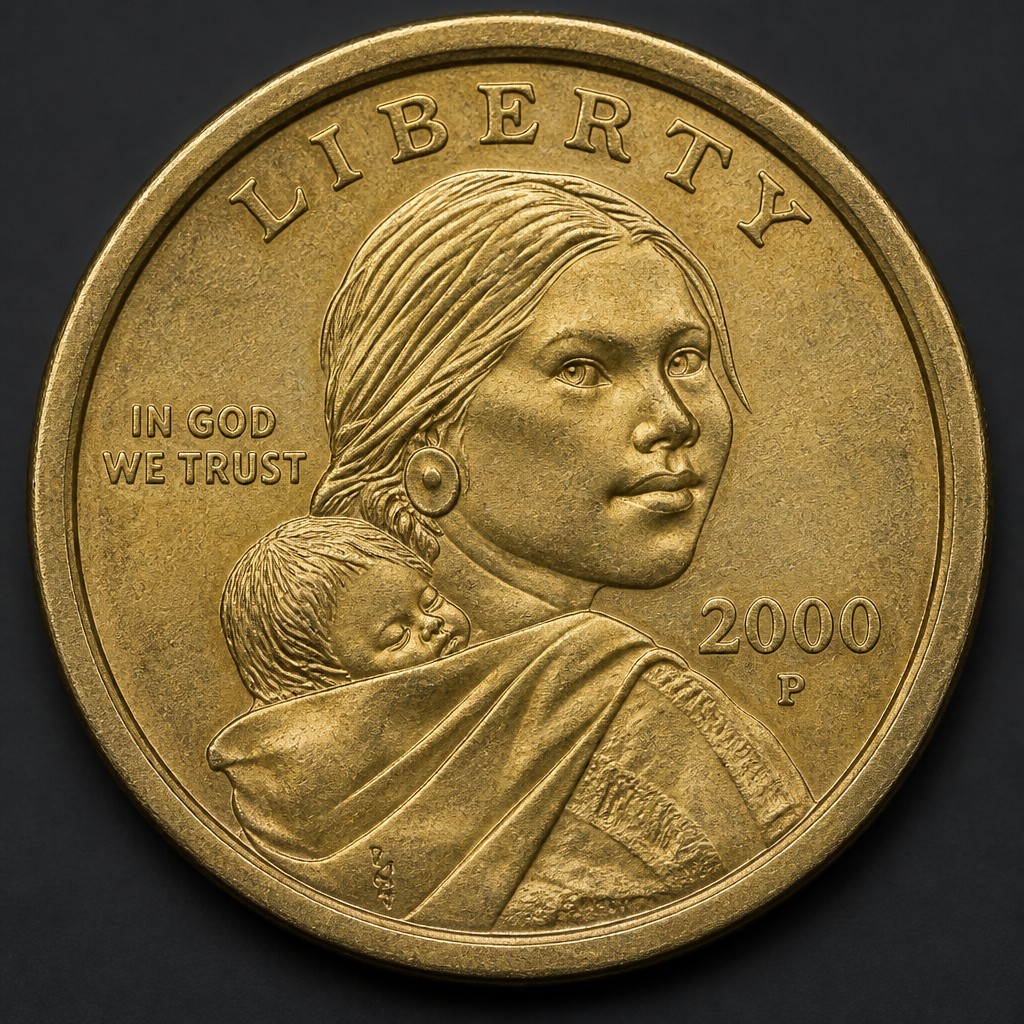
2000-P Sacagawea Cheerios Dollar
2000
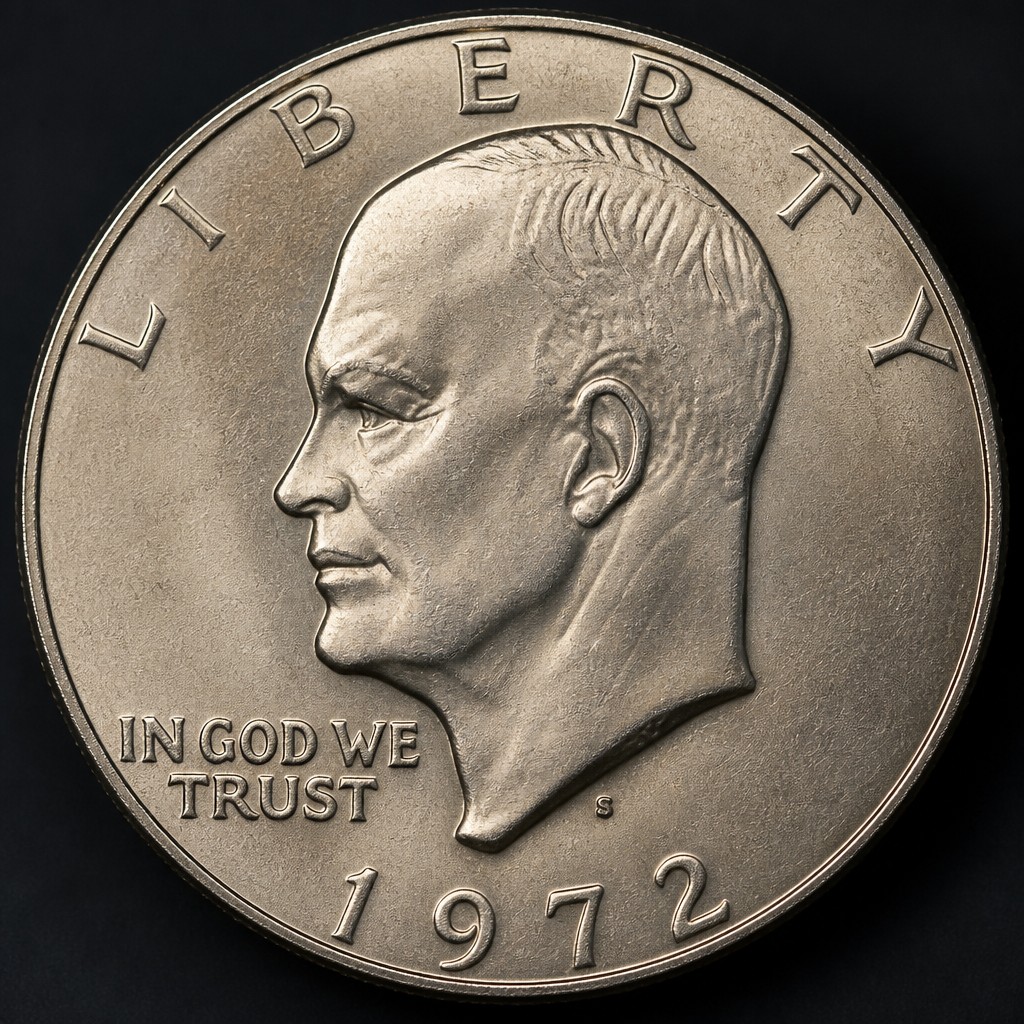
1972 Eisenhower Dollar (Type 2)
1972
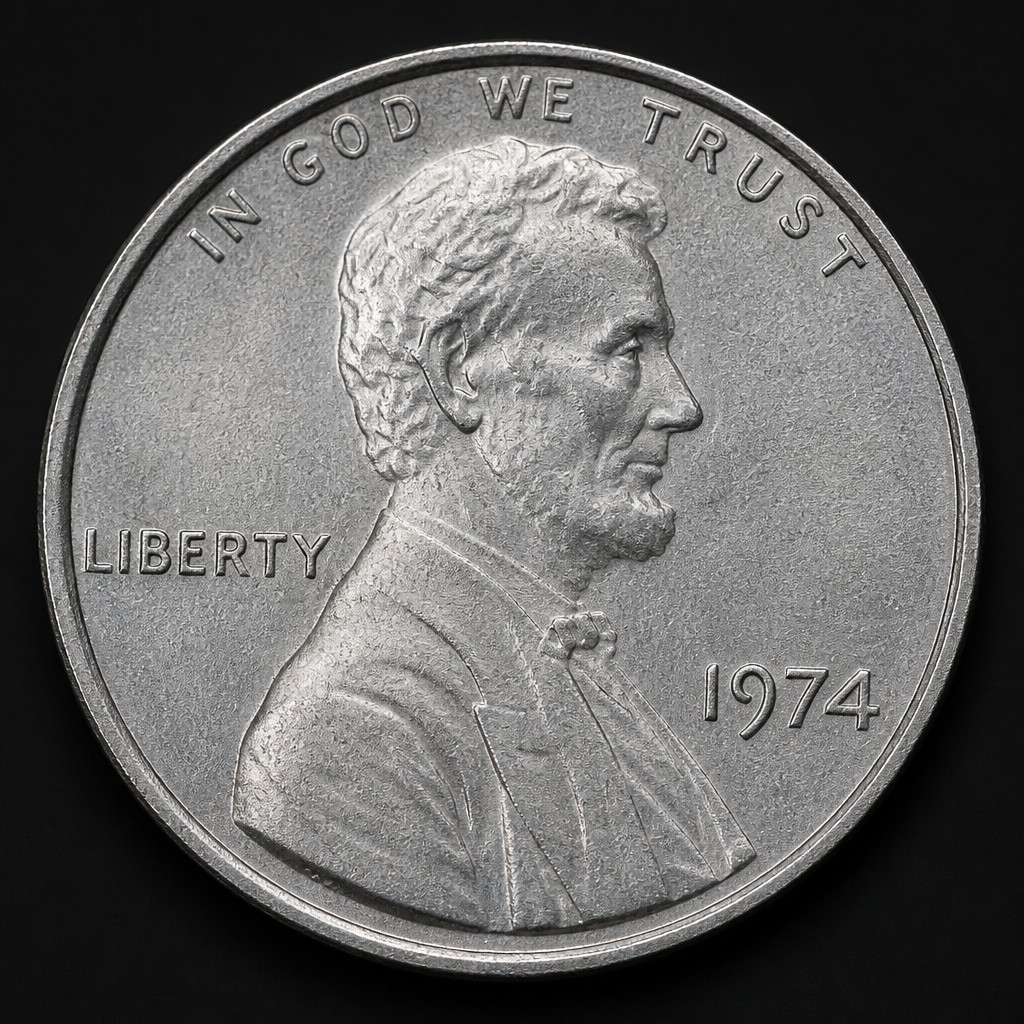
1974 Aluminum Cent
1974
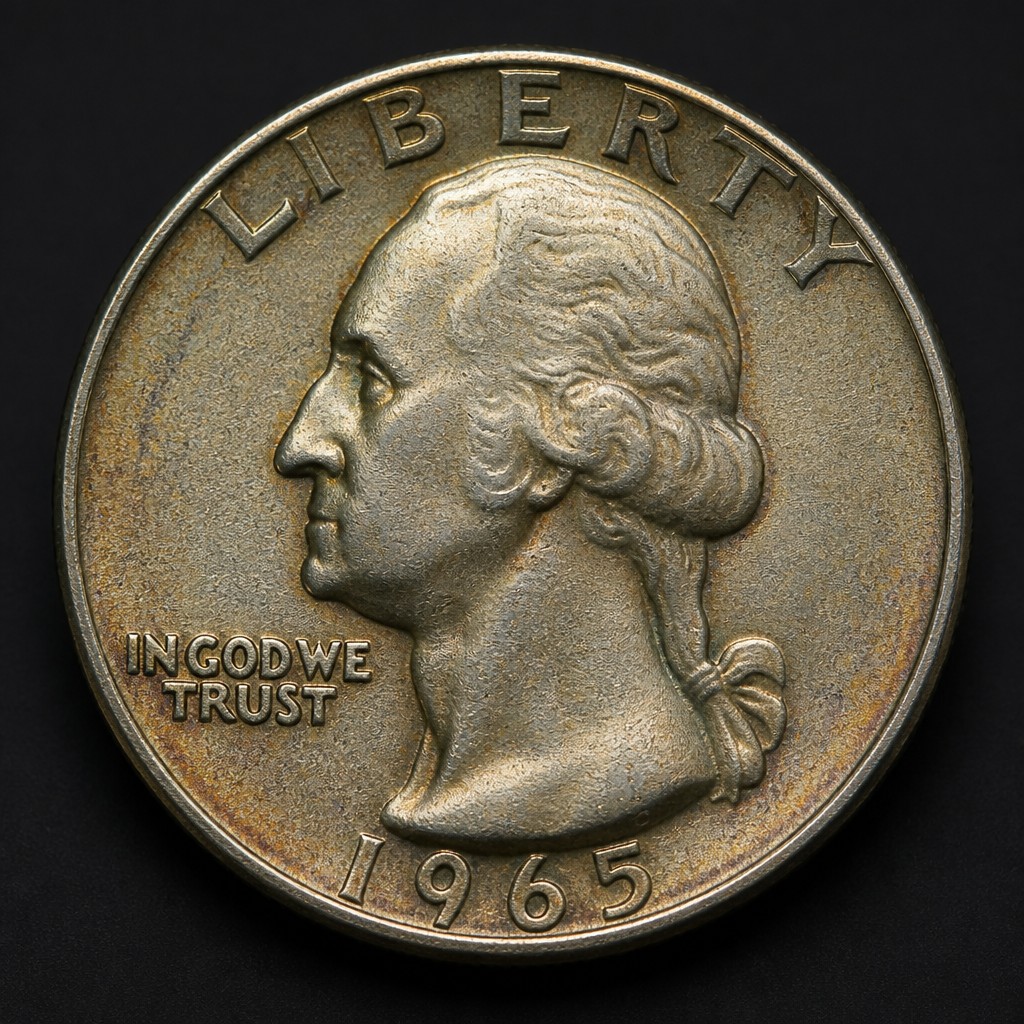
1965 Silver Washington Quarter (Transitional Error)
1965
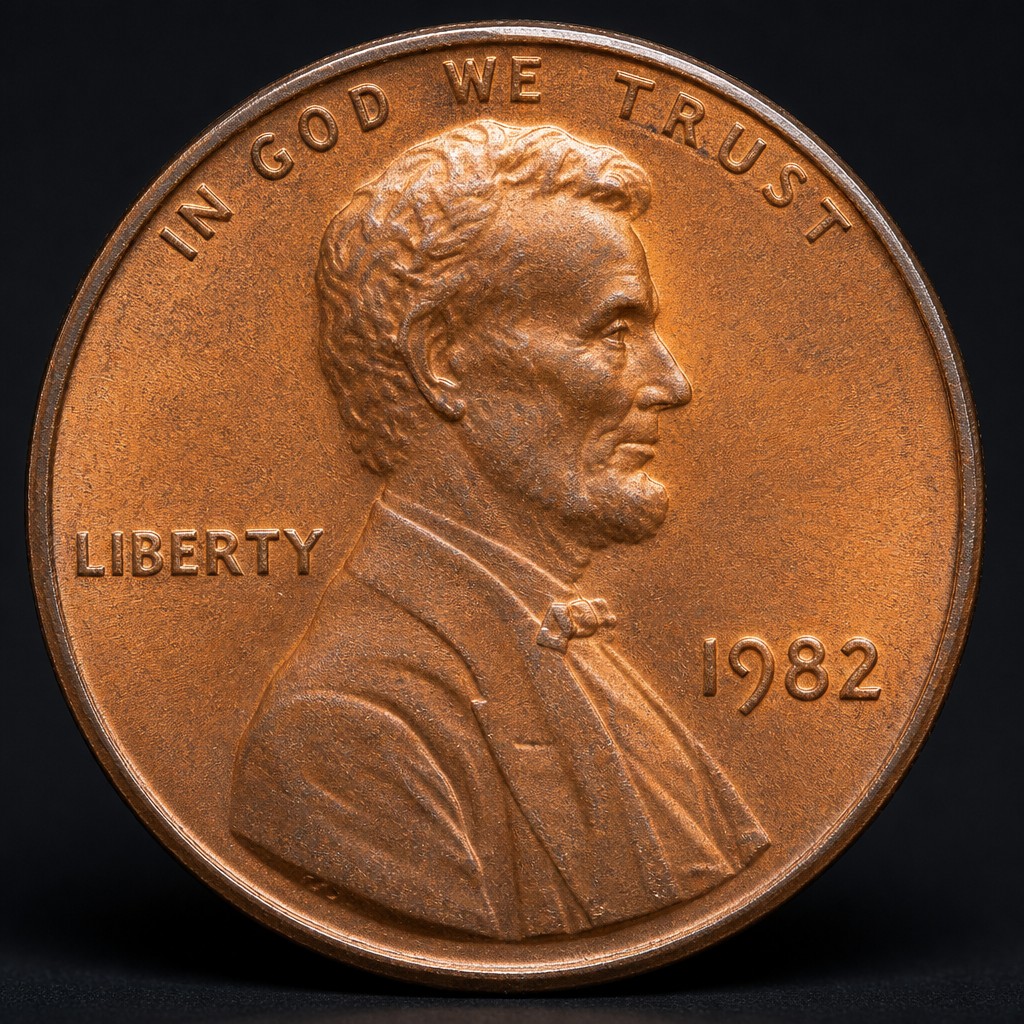
1982 Copper/Zinc Transition Lincoln Cent
1982
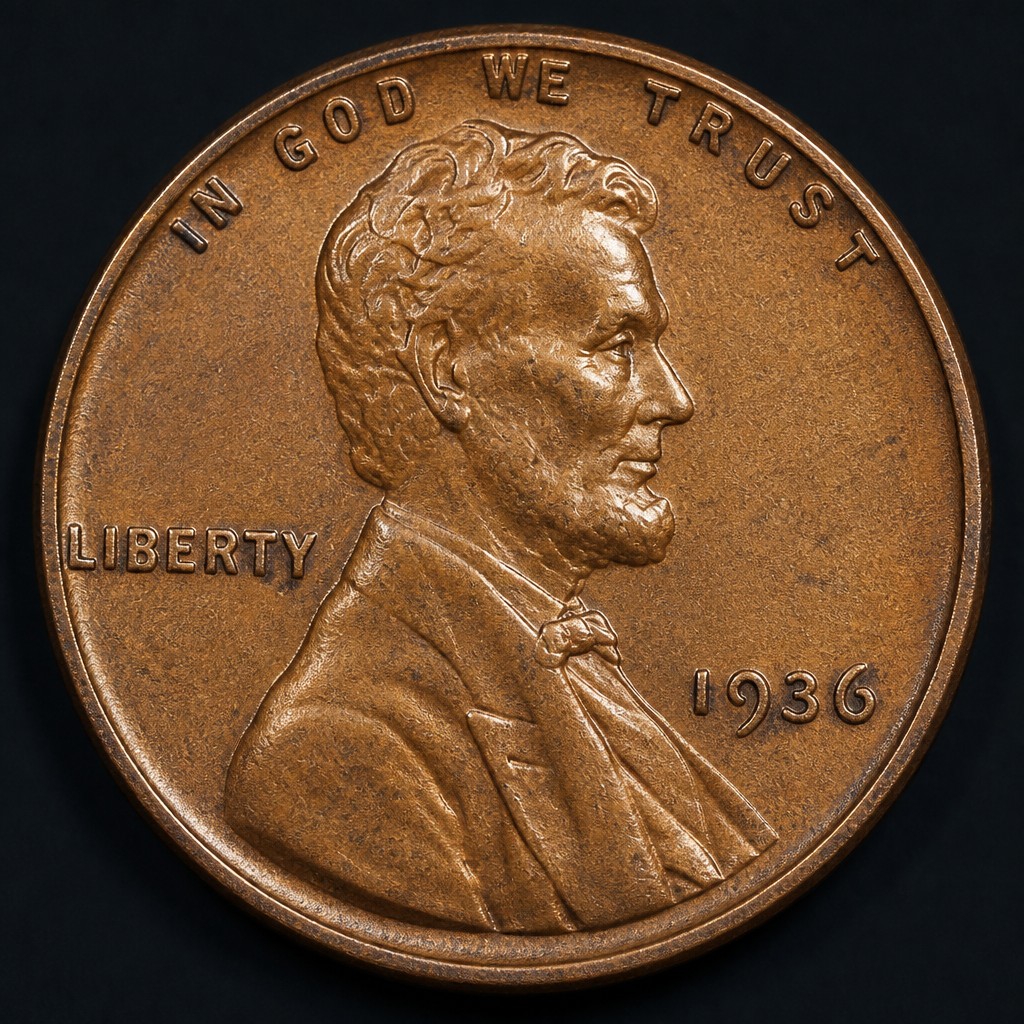
1936 Doubled Die Lincoln Cent
1936
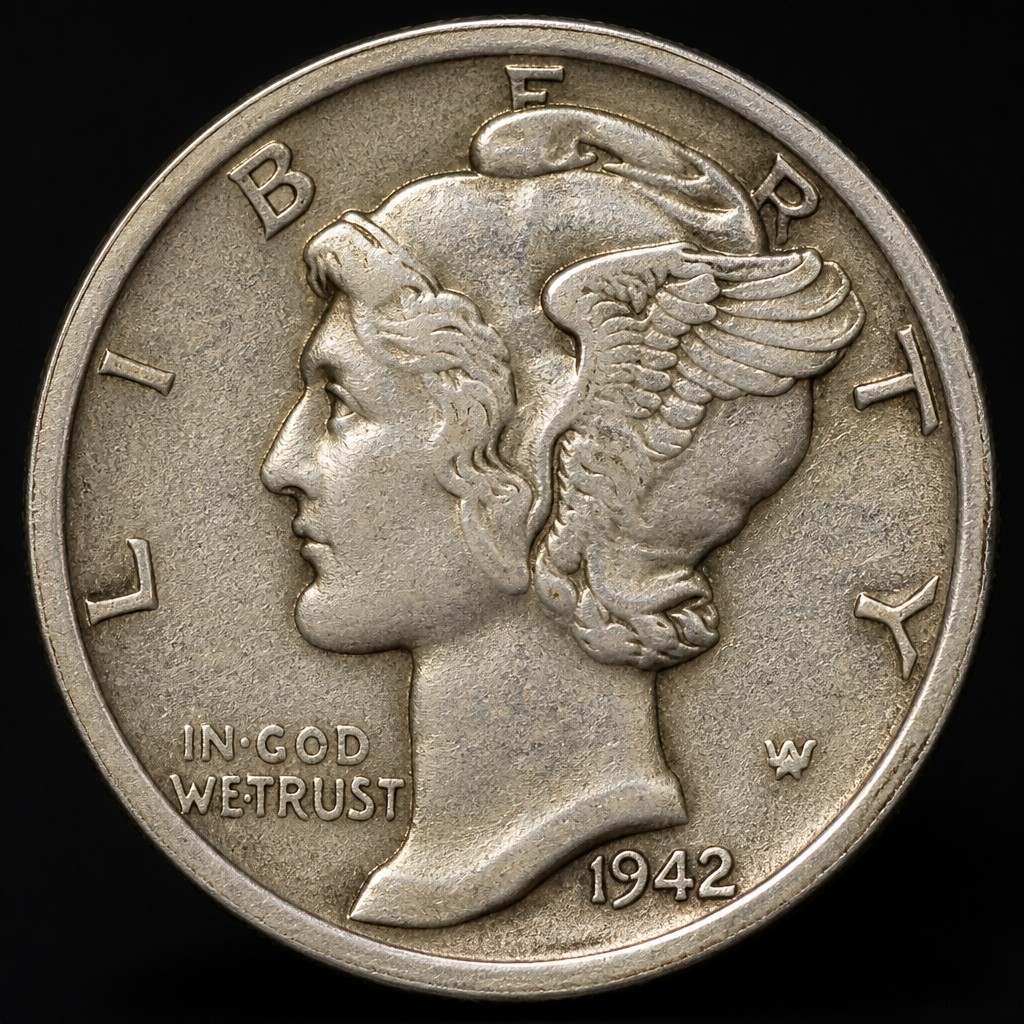
1942/1 Mercury Dime Overdate
1942
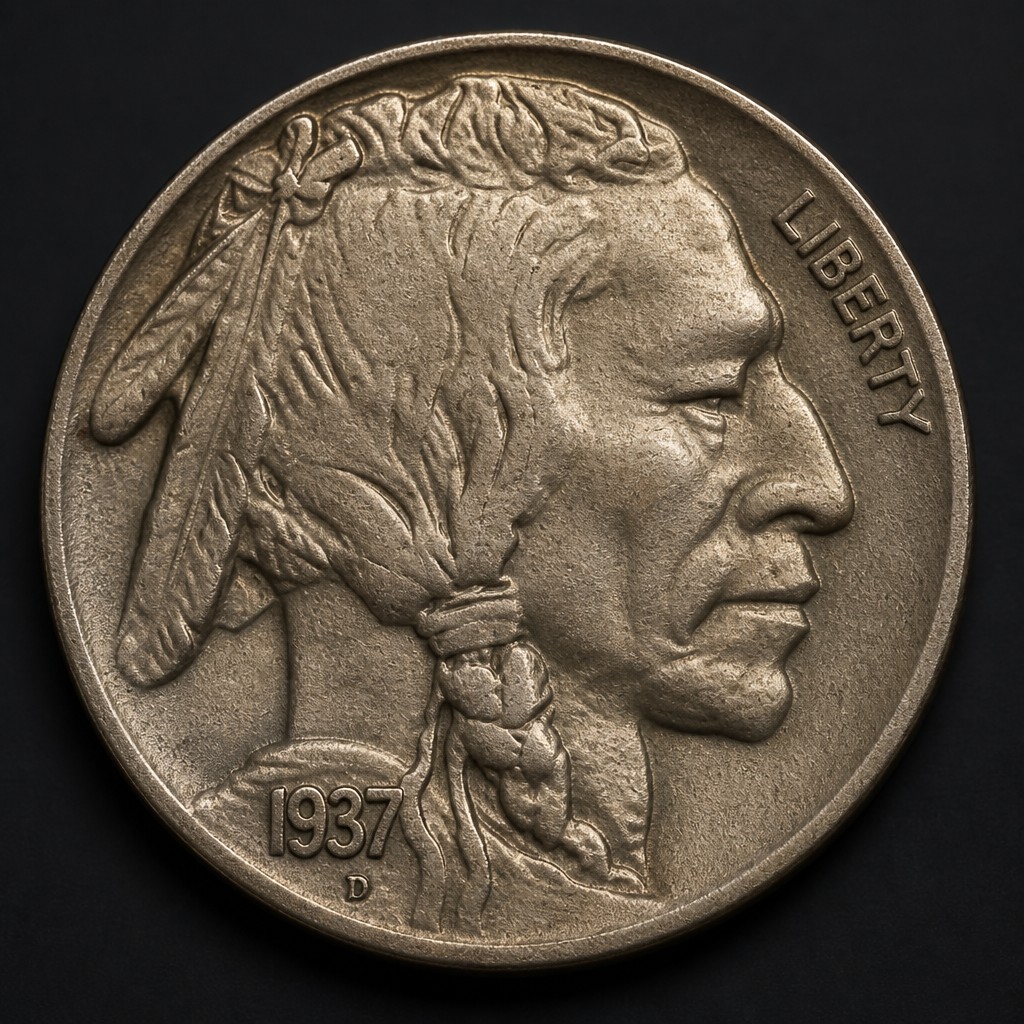
1937-D Three-Legged Buffalo Nickel
1937
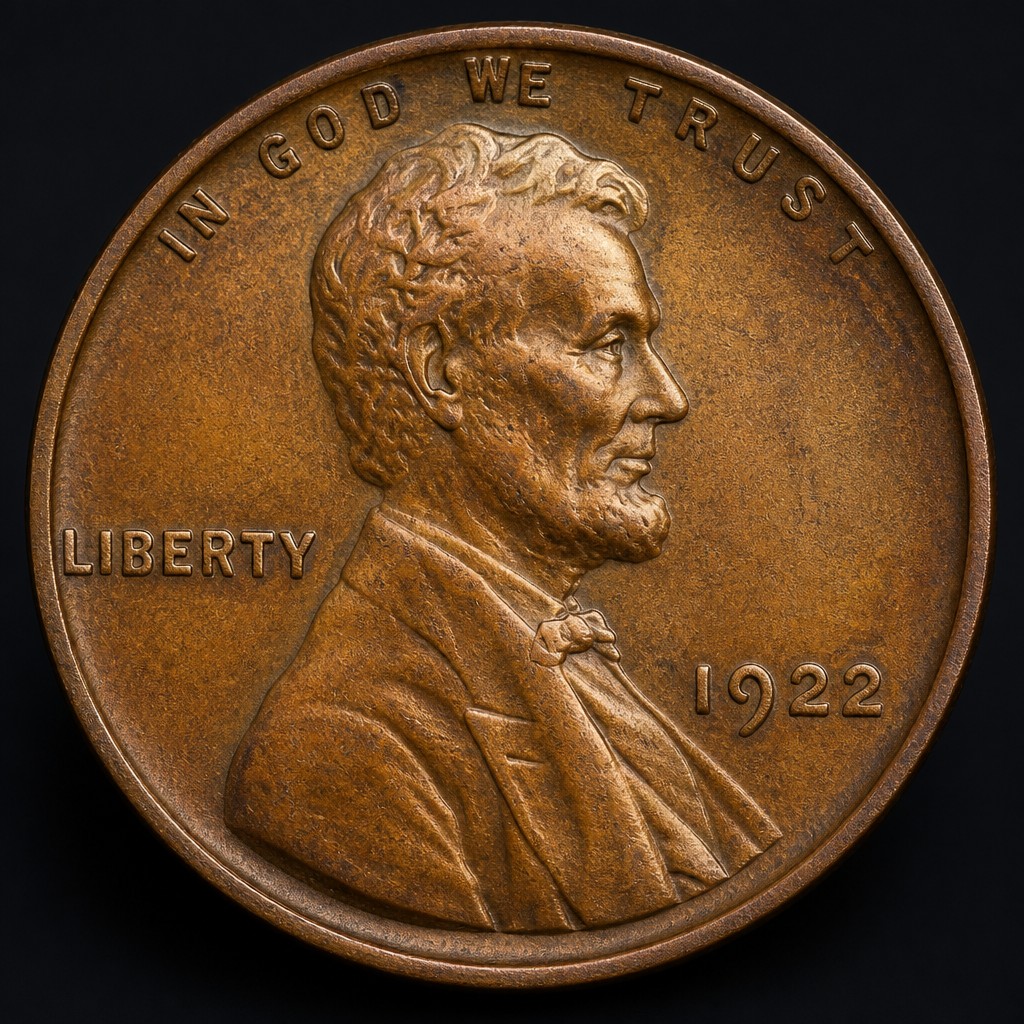
1922 No D Lincoln Cent
1922
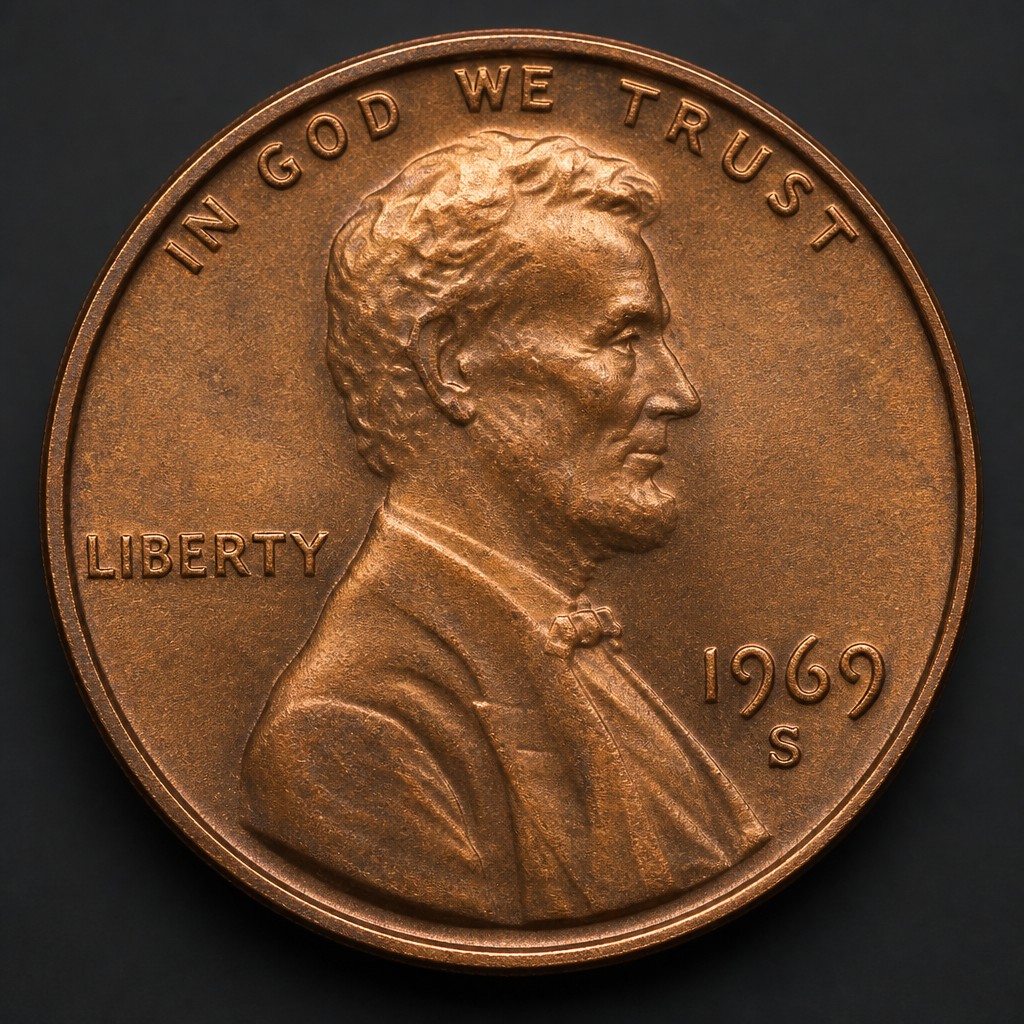
1969-S Doubled Die Lincoln Cent
1969
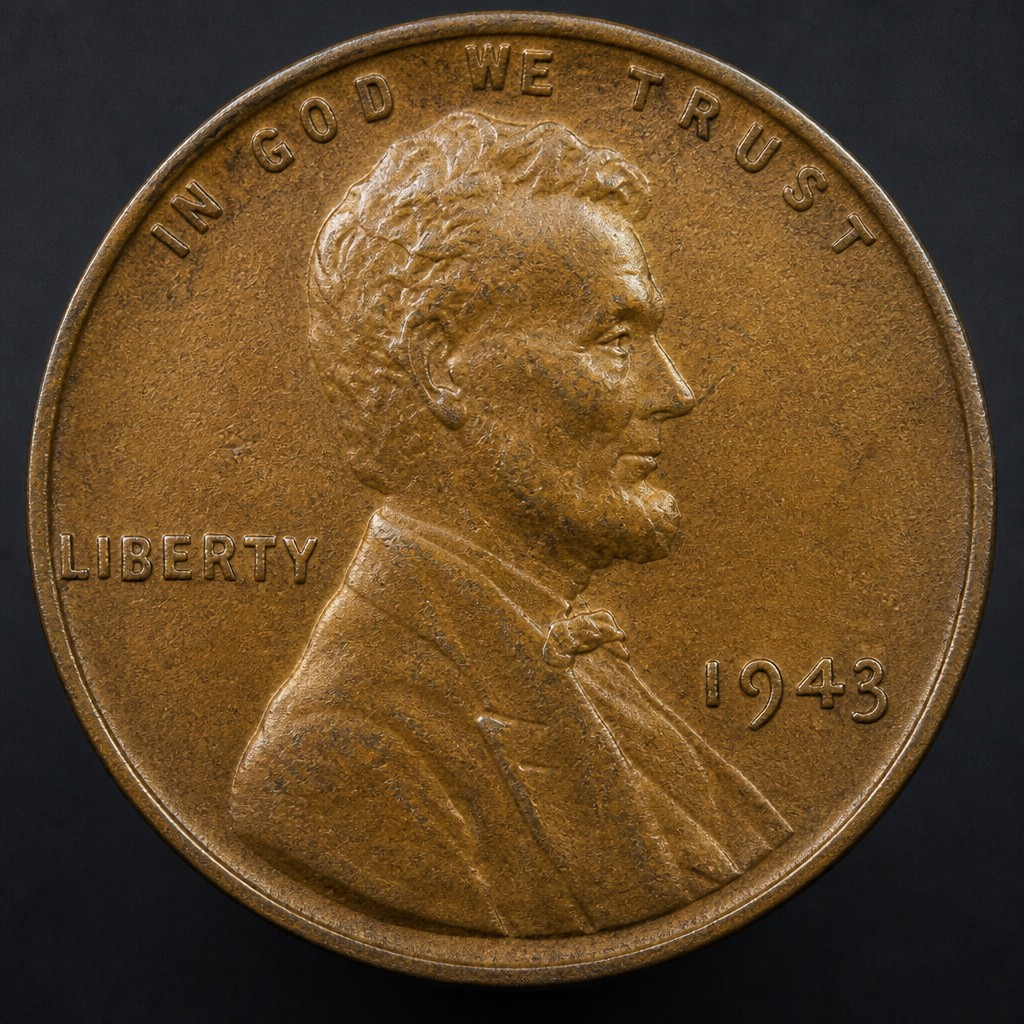
1943 Bronze Lincoln Cent
1943
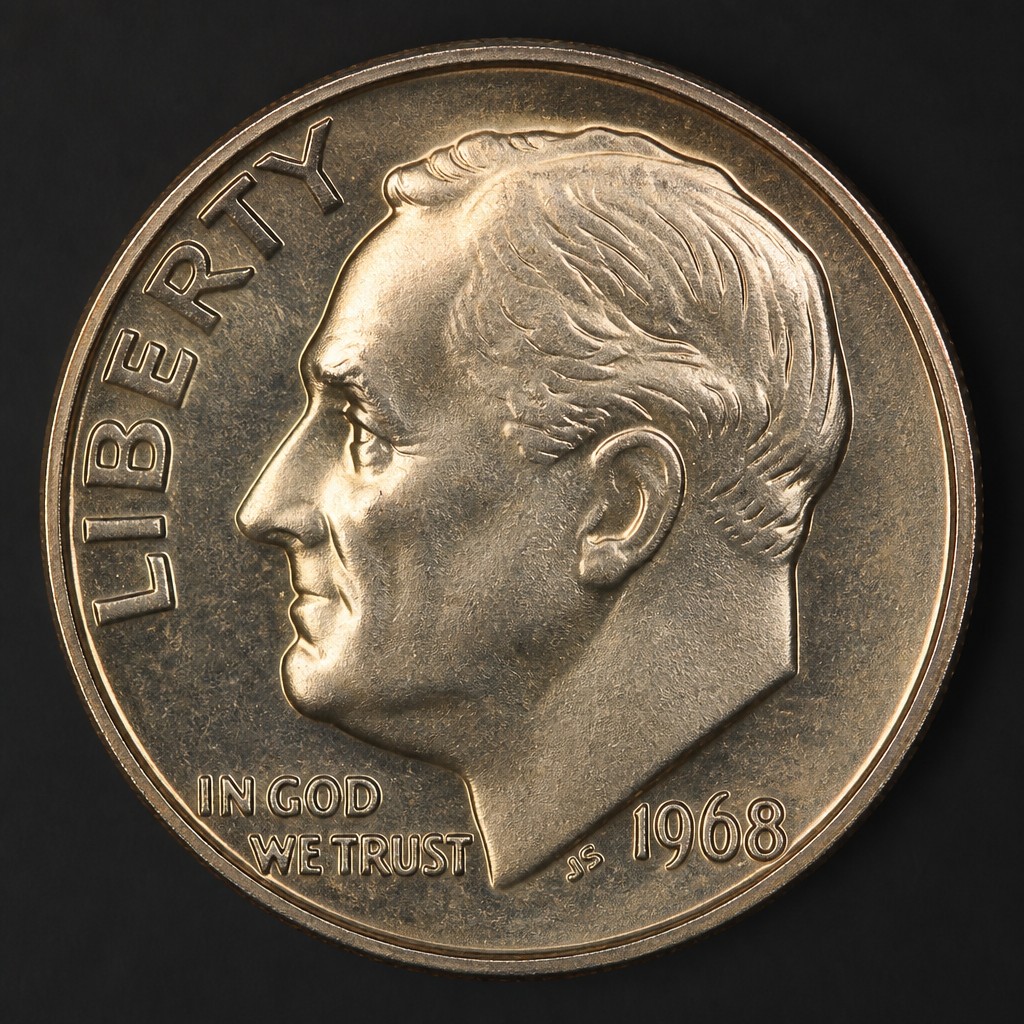
1968 No S Proof Roosevelt Dime
1968