
Septimius Severus Provincial Bronze
Roman Empire, Provincial Issue (Likely Moesia Inferior or Thrace) · 193-211 AD
Bronze Unit (Assarion or similar)
Category
Browse roman empire, provincial issue (likely moesia inferior or thrace) coins identified by the Coin Identifier community.
Septimius Severus Provincial Bronze
Roman Empire, Provincial Issue (Likely Moesia Inferior or Thrace) · 193-211 AD
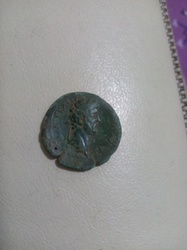
Antonine Dynasty Provincial Bronze (likely Marcus Aurelius or Commodus)
Roman Empire (Provincial Issue) · c. 161 - 192 AD
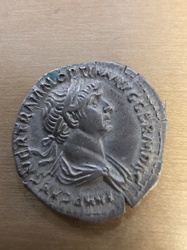
Trajan Denarius (Fortuna Redux type)
Roman Empire · 114-117 AD
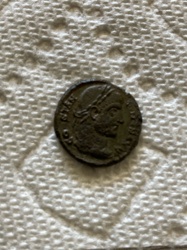
Follis (or similar small bronze coinage)
Roman Empire · Likely between 305 and 337 AD (based on visible lettering and style, possibly representing Constantine I or a co-emperor)
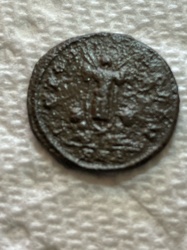
Unidentifiable Ancient Coin (likely Roman or Byzantine)
Likely Roman Empire or Byzantine Empire · Unidentifiable due to condition
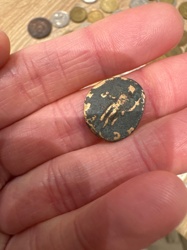
Roman Imperial Coinage (RIC) AE Nummus
Roman Empire · Circa 337-361 AD
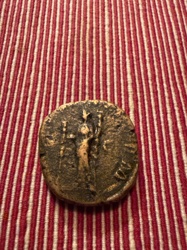
Roman Imperial Coin of Antoninus Pius
Roman Empire · 138-161 AD
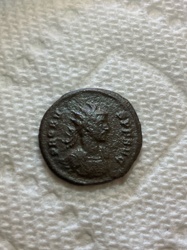
Roman Imperial Antoninianus
Roman Empire · Circa 3rd century AD
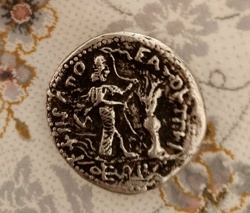
Denarius, Marcus Aurelius or Commodus
Roman Empire · Circa 161-192 AD (based on similar examples of common reverses for these emperors)
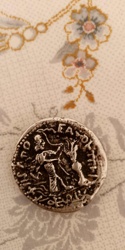
Denarius
Roman Empire · Circa 82 BC
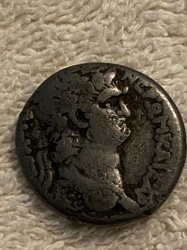
Denarius of Caracalla
Roman Empire · 206-209 AD
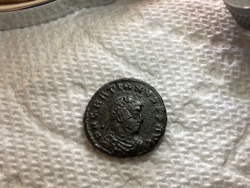
Roman Imperial Coin (likely an Antoninianus)
Roman Empire · Circa 3rd Century CE (specific year difficult to determine without clearer legends)
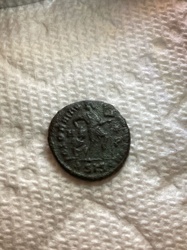
Roman Follis (possibly Constantine I or a successor)
Roman Empire · Circa 310-340 AD (due to the Follis denomination and iconography)
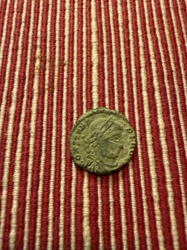
Late Roman Bronze Nummus
Roman Empire · Circa 337-361 AD
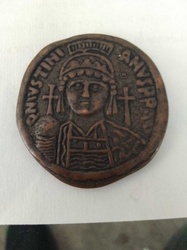
Justinian I Follis (Large Bronze 40 Nummi)
Byzantine Empire (Eastern Roman Empire) · 538-539 AD (Regnal Year 12)
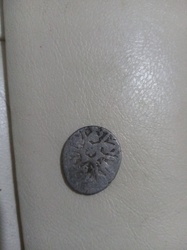
Delhi Sultanate Silver Tanka
Delhi Sultanate (Medieval India) · Circa 1200 - 1526 AD
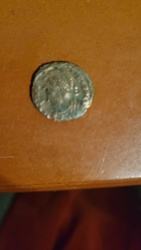
Late Roman Bronze Coin (Follis/Nummus)
Roman Empire · Circa 330–360 AD
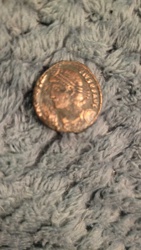
Constantine I Follis (Nummus)
Roman Empire · circa 315–337 AD
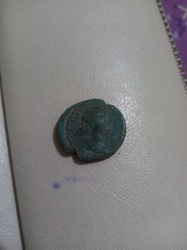
Late Roman AE Nummis (likely Valentinian I or Valens)
Roman Empire · 364-378 AD
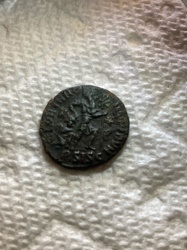
Roman Imperial Bronze Coin (possibly an Antoninianus or a Follis)
Roman Empire · Circa 3rd-4th Century AD (exact year unidentifiable from image)
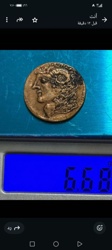
Tetradrachm of Lysimachus (Likely Modern Reproduction/Forgery)
Kingdom of Thrace (Ancient Greece) · Originals minted circa 305–281 BC
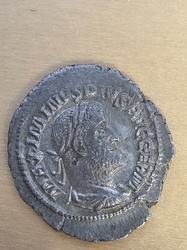
Septimius Severus Denarius, 'Victoria Parthica' issue
Roman Empire · 201-202 AD
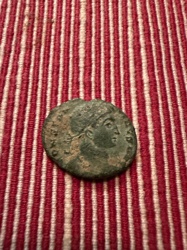
Late Roman Bronze Coin (House of Constantine)
Roman Empire · Circa 337-361 AD
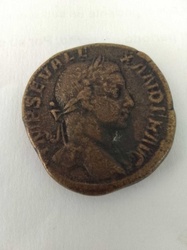
Alexander Severus Sestertius
Roman Empire (Mint of Rome) · 222-235 AD

Heller
Holy Roman Empire / Free Imperial City of Aachen (now Germany) · The exact year is not visible on the coin. These types of hellers from Aachen were minted over a period, likely in the late 17th or 18th century.
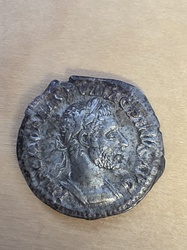
Septimius Severus Denarius
Roman Empire · 193-211 AD (specifically circa 202-210 AD)
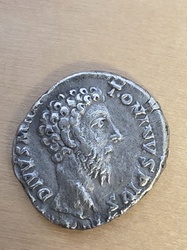
Marcus Aurelius Denarius (Consecratio issue)
Roman Empire, Rome Mint · 180 AD
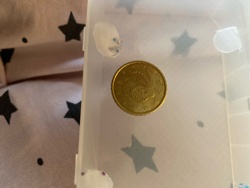
5 Euro Cent coin
Italy · 2002-Present (exact year not discernible from image)
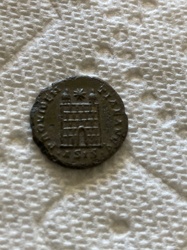
Roman Follis
Roman Empire · Circa 310-313 AD
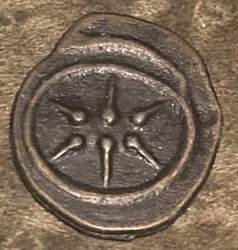
Ancient Roman or Byzantine Seal/Amulet (likely not a coin)
Roman Empire or Byzantine Empire (approximation) · Unknown (likely Ancient to Medieval period)
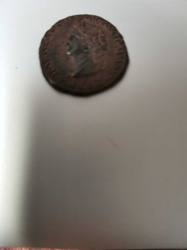
Dupondius of Nero
Roman Empire · Circa 62-68 AD
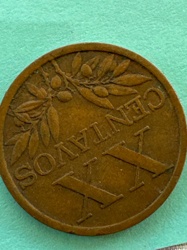
Brazil 20 Centavos (Empire of Brazil)
Brazil · 1868-1870
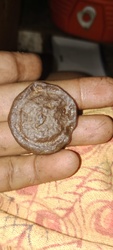
Byzantine Follis (Likely Anonymous Type)
Byzantine Empire · Approximately 9th - 11th Century AD
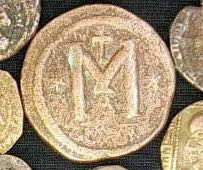
Follis (large module)
Byzantine Empire · Circa 498-668 AD (specifically, the image likely shows a follis from the reigns of Justinian I, Justin II, or Maurice Tiberius, given the clear 'M' design)
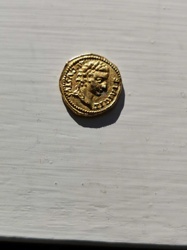
Commodus Aureus
Roman Empire (Rome Mint) · c. 175-177 AD
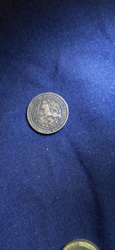
Lion Daalder
Dutch Republic (specifically, provinces such as Zeeland - 'ZEL' in the inscription) · Based on the visible inscription 'MO: ARG: ORD: ZEL: TRA: IMP: CIVT: ZEL:', this coin is a Zeeland (ZEL) issue. The exact year is not clearly visible in the image, but Lion Daalders were minted from 1577 until the late 17th century. To determine the precise year, a clearer view of the obverse or reverse would be needed, typically found near the bottom of the lion or on the reverse design. Given the general design, it is likely from the 17th century.
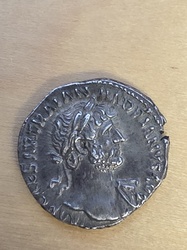
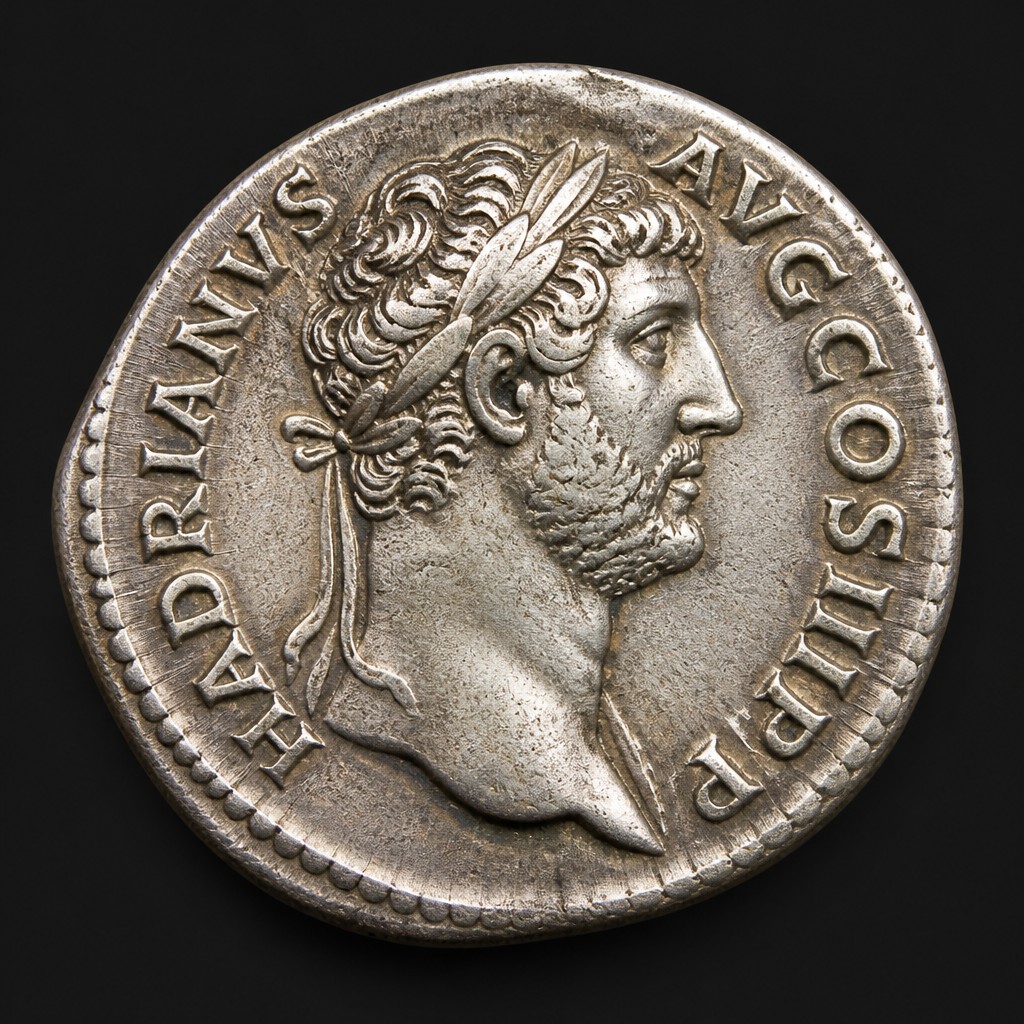
Hadrian Silver Denarius
Roman Empire · 121-125 AD
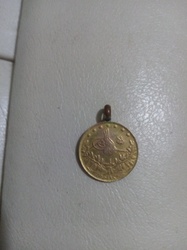
Ottoman Empire Gold Kurush (Mehmed V)
Ottoman Empire (Modern-day Turkey) · AH 1327 (1909 AD) / Regnal Year 9 (c. 1917 AD)
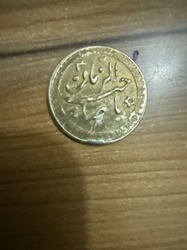
Ottoman Empire Ghazi
Ottoman Empire (modern-day Turkey and surrounding regions) · Late 17th to early 20th Century (precise date requires clearer reading of mint and regnal year, which is typically found on the reverse side or within the calligraphic design not fully visible)
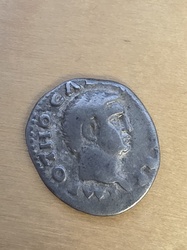
Denarius of Otho
Roman Empire (Rome Mint) · 69 AD (January - April)
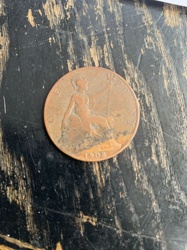
Penny (Edward VII)
United Kingdom · 1908
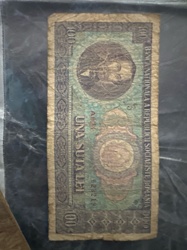
100 Lei banknote
Romania (Socialist Republic of Romania) · Likely 1966 or 1970 (based on series details for this design of 100 Lei notes from the period)