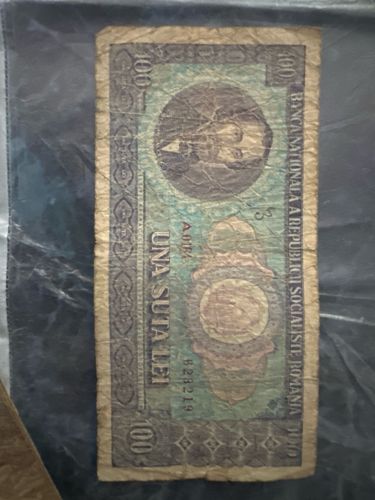
100 Lei banknote
Romania (Socialist Republic of Romania) · Likely 1966 or 1970 (based on series details for this design of 100 Lei notes from the period)
The banknote features a central portrait, likely Stephen the Great (Ștefan cel Mare), in a circular frame. The text "BANCA NATIONALA A REPUBLICII SOCIALISTE ROMANIA" indicates the issuing authority. "UNA SUTA LEI" translates to "One Hundred Lei". The note has a green and brown color scheme with intricate patterns and the denomination "100" in several places.
- Country
- Romania (Socialist Republic of Romania)
- Denomination
- 100 Lei
- Metal
- Paper (banknote)
This report is AI-generated and can be wrong. Always verify grade, authenticity, and value with a qualified dealer or certified grading service before buying, selling, or insuring.
Identify your own coins.
Get a report just like this from any photo, free.
Overview
Historical significance
Estimated value
Care & preservation
More like this
Other romania (socialist republic of romania) coins
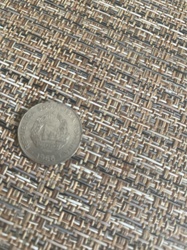
Romania 1 Leu 1966
Romania (Socialist Republic of Romania) · 1966
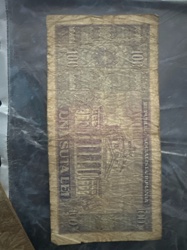
100 Lei Banknote
Romania (Socialist Republic of Romania) · Likely early to mid-20th century, specific year not visible but associated with the Socialist Republic era.
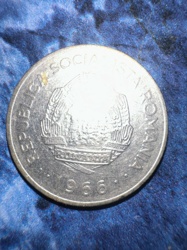
1 Leu
Romania (Socialist Republic of Romania) · 1966
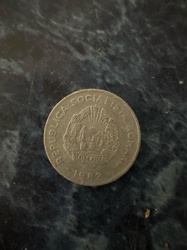
1 Leu
Romania (Socialist Republic) · 1982
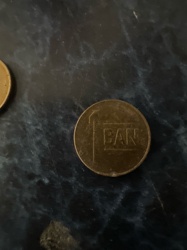
1 Ban Coin
Romania · Likely 1975-1992 (Socialist Republic of Romania period)
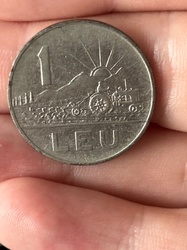
1 Leu
Romania (Romanian People's Republic) · 1963