Coin Identifier
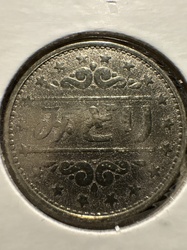
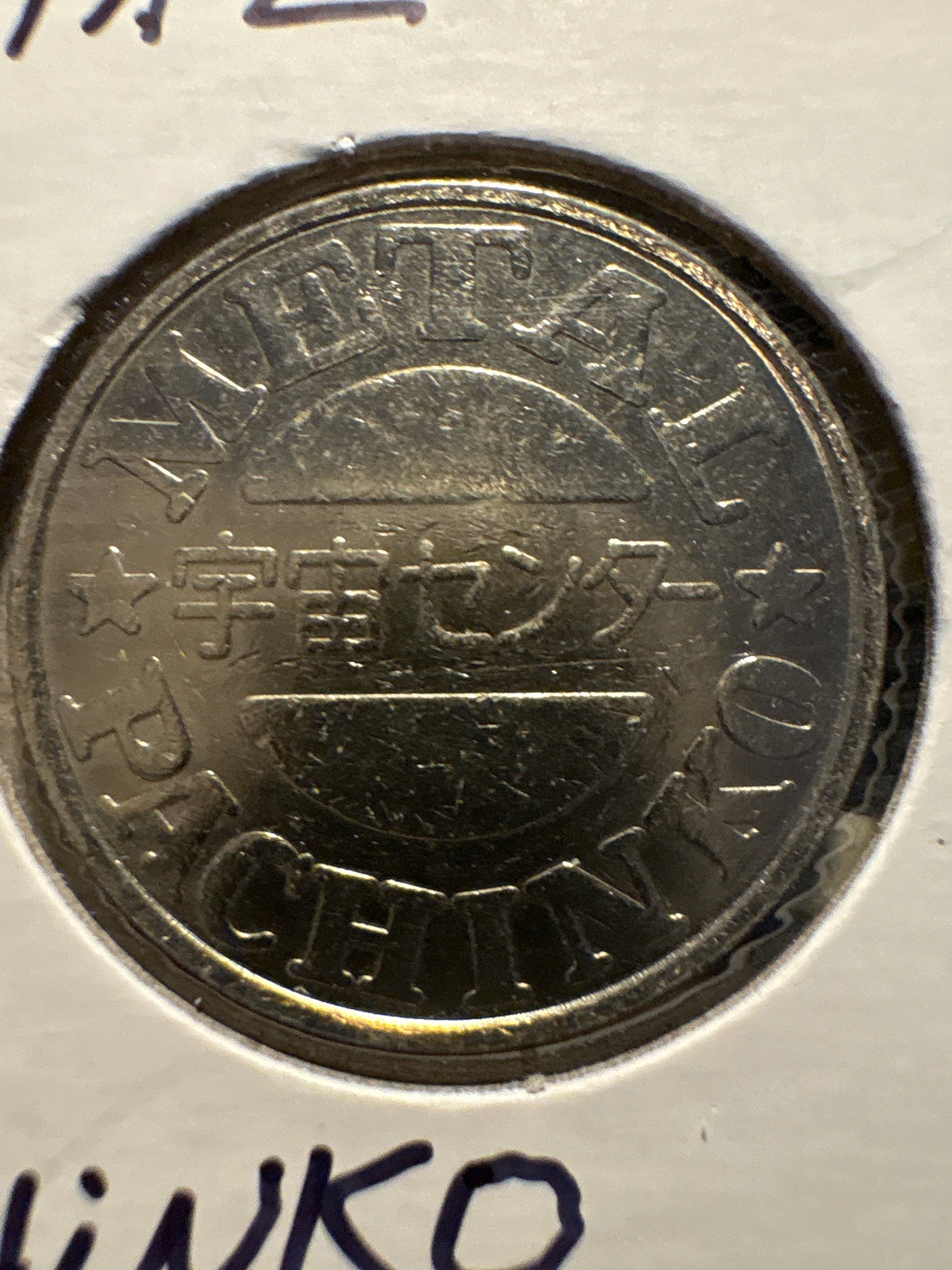
Pachinko Token (Uchū Center / Space Center) — obverse
Obverse
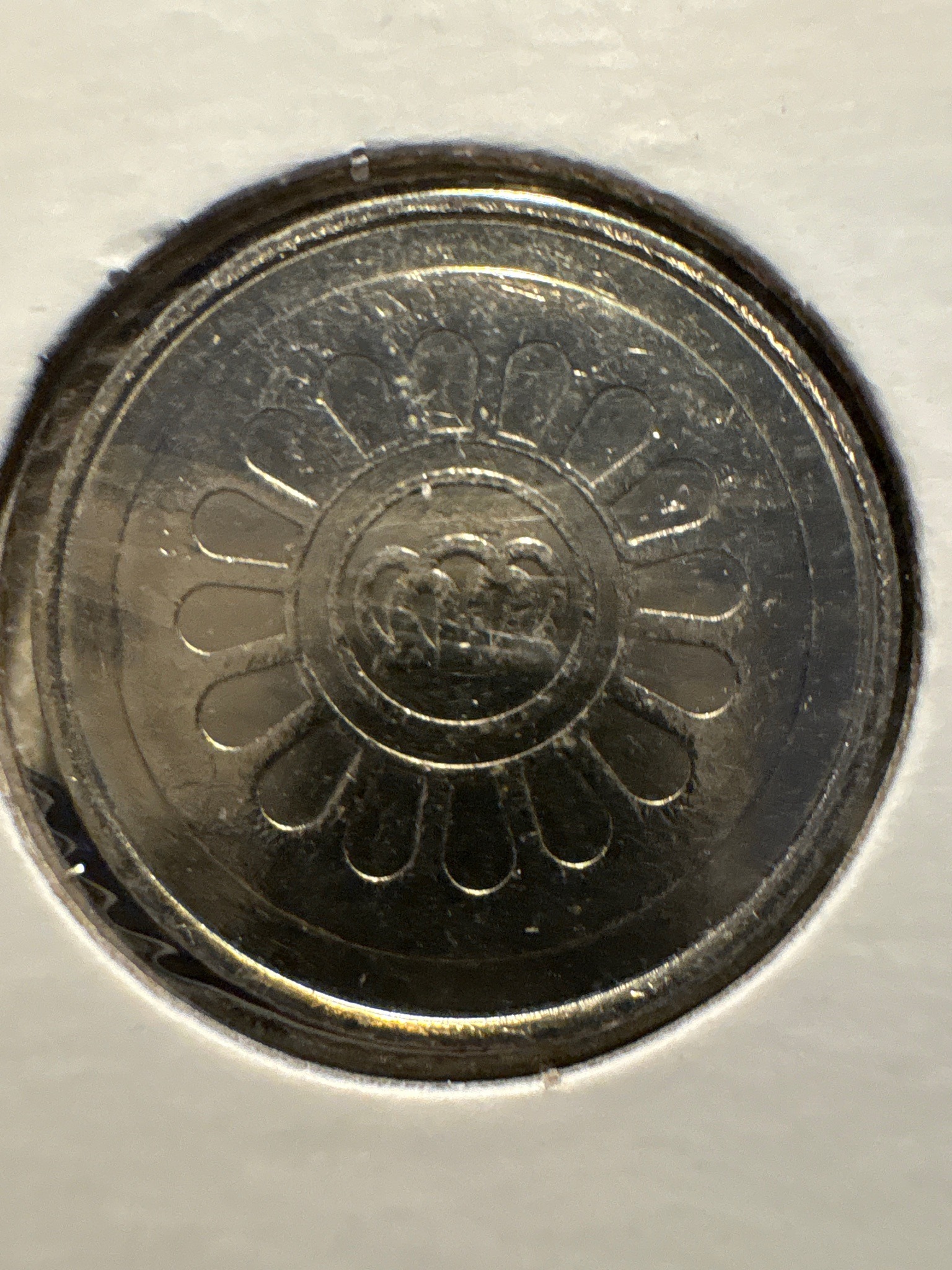
Pachinko Token (Uchū Center / Space Center) — reverse
Reverse
No face value (Game token)

Pachinko Token (Uchū Center / Space Center)

Japan (Entertainment Industry) · Late 20th Century (Approx. 1970s–1990s)

A Japanese pachinko parlor token featuring the words 'METAL PACHINKO' and Japanese characters '宇宙センター' (Space Center).

Country
Japan (Entertainment Industry)
Year
Late 20th Century (Approx. 1970s–1990s)
Denomination
No face value (Game token)
Metal
Likely nickel-plated brass or steel

This report is AI-generated and can be wrong. Always verify grade, authenticity, and value with a qualified dealer or certified grading service before buying, selling, or insuring.

Explore Pachinko Token (Uchū Center / Space Center) in the encyclopedia →

Identify your own coins.

Get a report just like this from any photo, free.

Overview

A Japanese pachinko parlor token featuring the words 'METAL PACHINKO' and Japanese characters '宇宙センター' (Space Center).

Historical significance

Pachinko is a massive Japanese gambling-like gaming industry. Because gambling for cash is technically illegal in Japan, players win steel balls which are exchanged for tokens or prizes, which are then traded for cash at independent exchange centers. This token is a piece of 'exonumia' used within a specific parlor or chain named 'Space Center'.

Obverse (front)

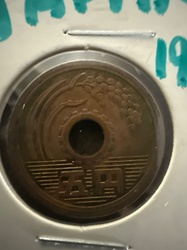
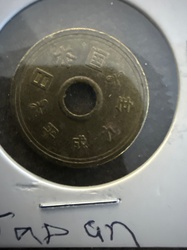
Circular text 'METAL PACHINKO' around the rim. In the center, two horizontal semicircles sandwhich the Japanese Katakana/Kanji '宇宙センター' (Uchū Sentā - Space Center). Two small stars flank the central text.

Reverse (back)

A stylized geometric flower pattern, resembling a 12-petaled chrysanthemum motif, with a small central triple-crescent or crown-like emblem.

Estimated value

$0.50 - $3.00 USD

What drives this coin's value

Collectibility is driven by 'exonumia' enthusiasts and people nostalgic for Japanese arcade culture. Value is mostly nominal unless part of a specific historically significant parlor chain.

Grade assessment

Extremely Fine; shows minor surface scratches and handling marks typical of mechanical gaming use but retains high detail.

Mintage & rarity

High mintage/Common; tokens are mass-produced in millions for parlor use, though specific parlor designs can be harder to find once the business closes.

Authenticity & counterfeit red flags

As a low-value game token, counterfeits are not a concern; however, 'reproduction' tokens for home-use pachinko machines exist and are usually lighter.

Notable varieties & errors

Minor variations in the font size or the central logo on the reverse exist between different batches.

Similar coins

Often confused with Japanese 50 or 100 Yen coins by tourists, but distinguished by the lack of 'Yen' (円) denominations and the 'Metal Pachinko' English text.

Care & preservation

Store in a dry environment to prevent oxidation of the plating. Avoid abrasive cleaning which can strip the thin metallic coating.