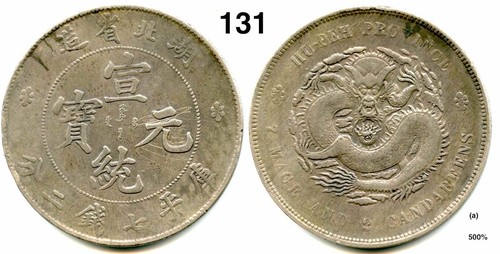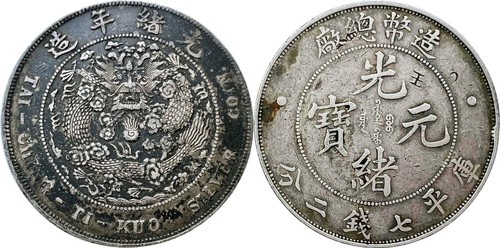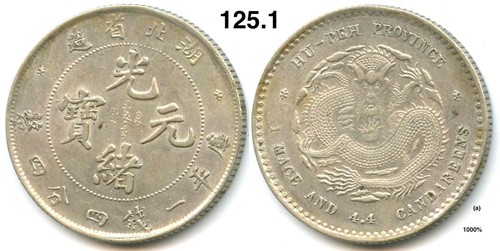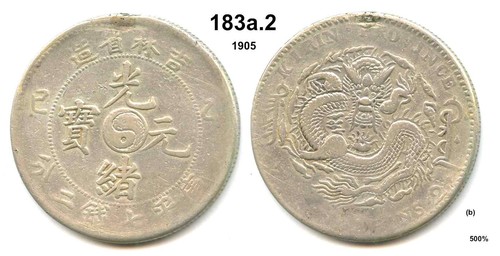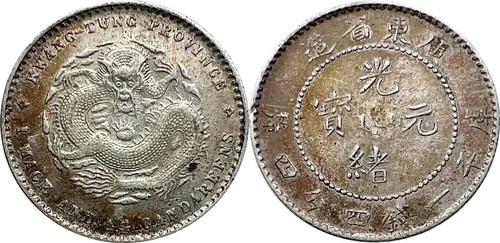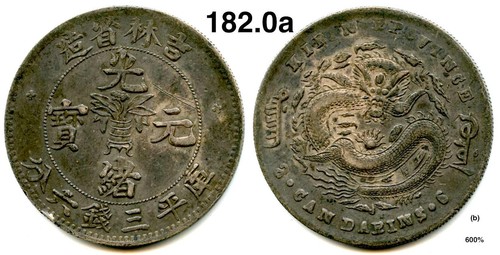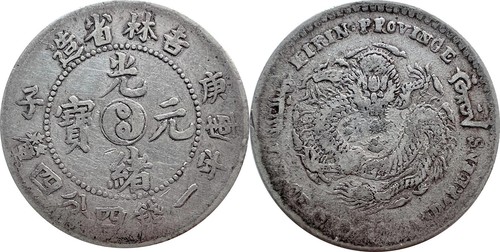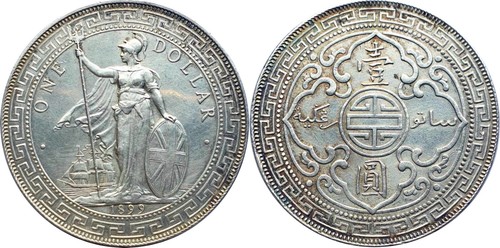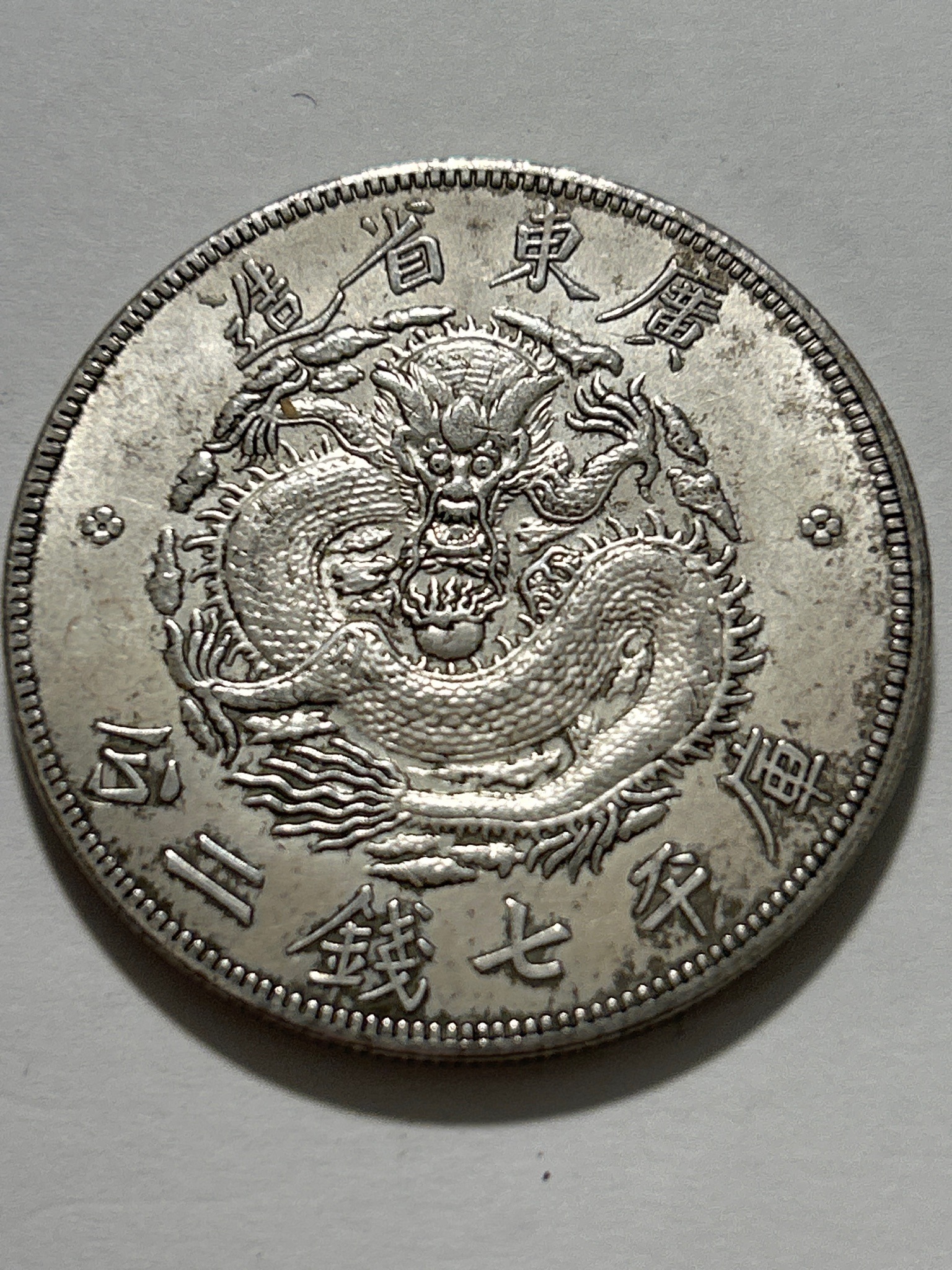
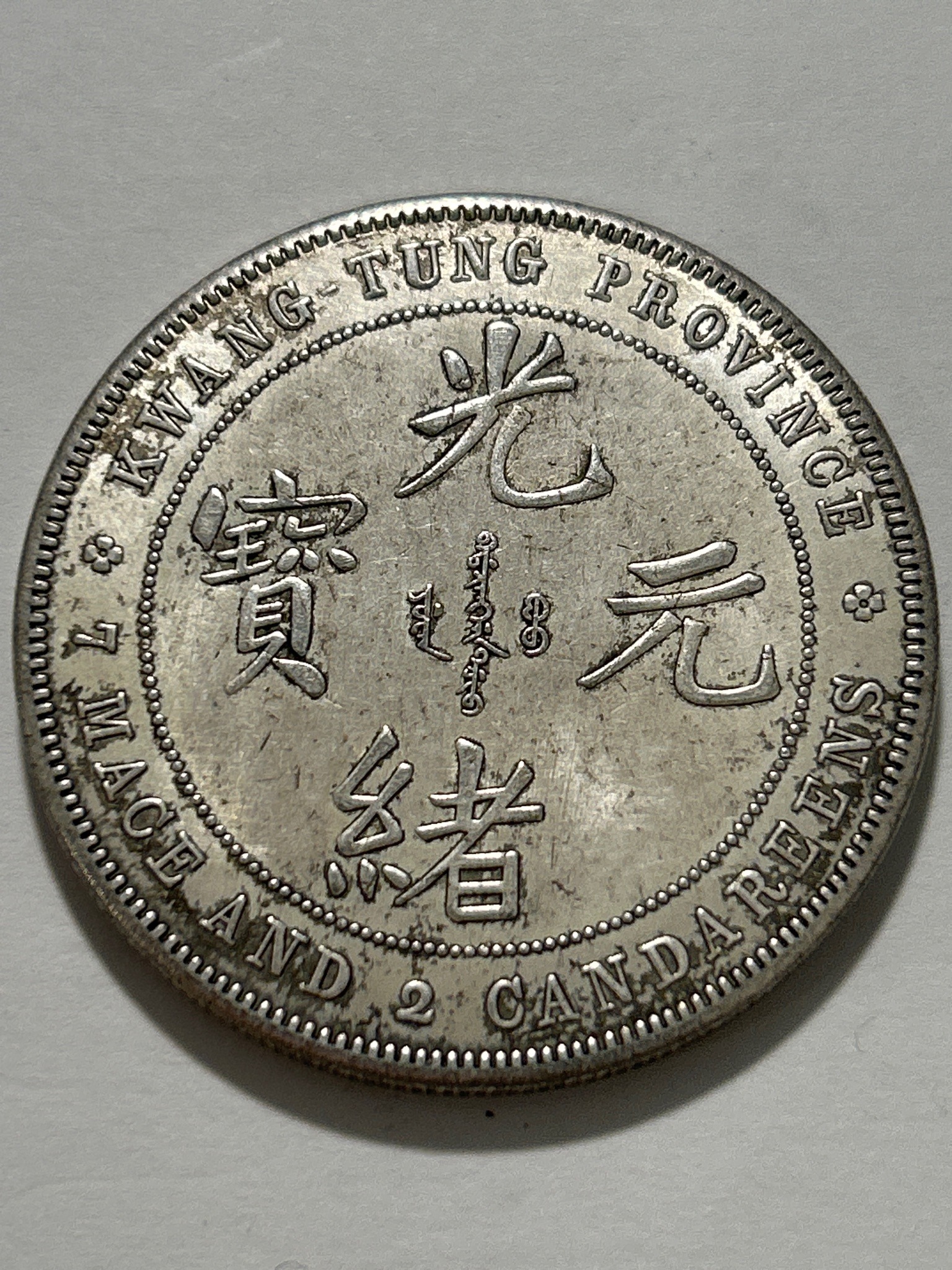
Kwangtung Province 7 Mace and 2 Candareens (Dragon Dollar)
China (Kwangtung Province) · 1890-1908
A classic Chinese imperial silver dragon dollar featuring a coiled frontal dragon surrounded by clouds on one side and Manchu-Chinese inscriptions with English marginal legends on the other.
- Country
- China (Kwangtung Province)
- Year
- 1890-1908
- Denomination
- 7 Mace and 2 Candareens (1 Dollar)
- Metal
- 0.900 Silver, 0.100 Copper
This report is AI-generated and can be wrong. Always verify grade, authenticity, and value with a qualified dealer or certified grading service before buying, selling, or insuring.
Identify your own coins.
Get a report just like this from any photo, free.
Overview
Historical significance
Obverse (front)
Reverse (back)
Estimated value
What drives this coin's value
Grade assessment
Mintage & rarity
Authenticity & counterfeit red flags
Notable varieties & errors
Similar coins
Care & preservation
More like this
Other china (kwangtung province) coins
Kwangtung Province 7 Mace and 2 Candareens (Dragon Dollar)
China (Kwangtung Province) · ND (1889)
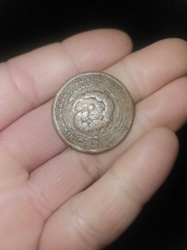
Kwangtung Province 10 Cash (Dragon Coin)
China (Kwangtung Province) · Circa 1900-1906
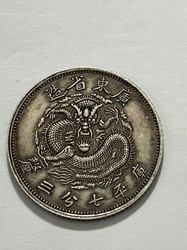
Kwangtung Province 7 Mace and 3 Candareens (Dragon Dollar)
China (Kwangtung Province Mint) · 1890-1908
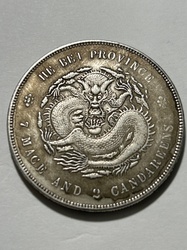
Kiangnan / Chihli Province Dragon Dollar (Ku-Yuan / 7 Mace and 2 Candareens)
China (Imperial / Qing Dynasty) · 1896-1908 (Various years)
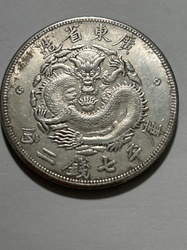
Kwangtung Province 7 Mace and 2 Candareens (Dragon Dollar)
China (Kwangtung Provincial Mint) · 1890-1908
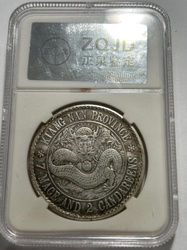
Kiangnan Province 7 Mace and 2 Candareens (Dragon Dollar)
China (Imperial / Qing Dynasty) · Undated (Issued c. 1898-1907)