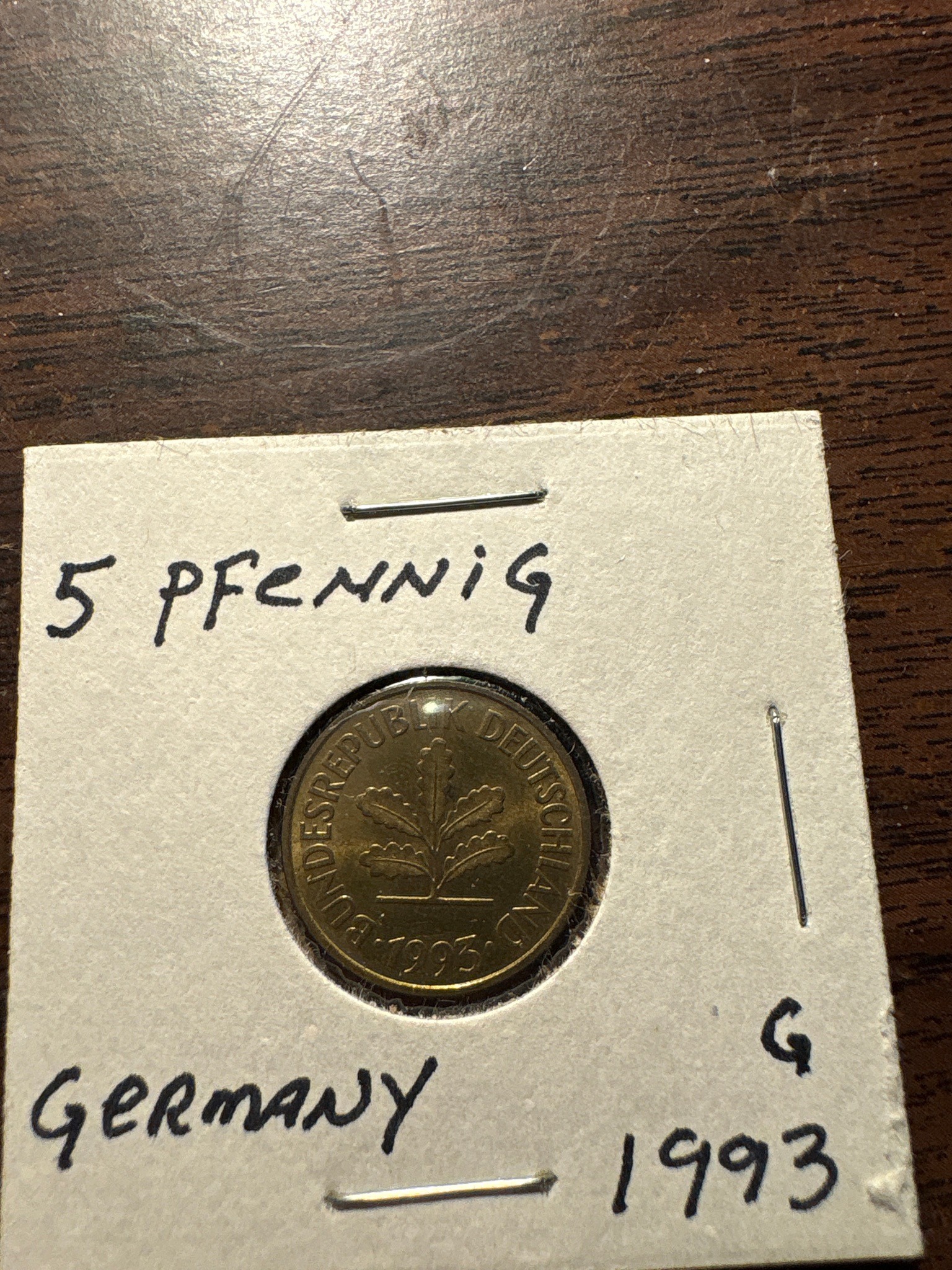
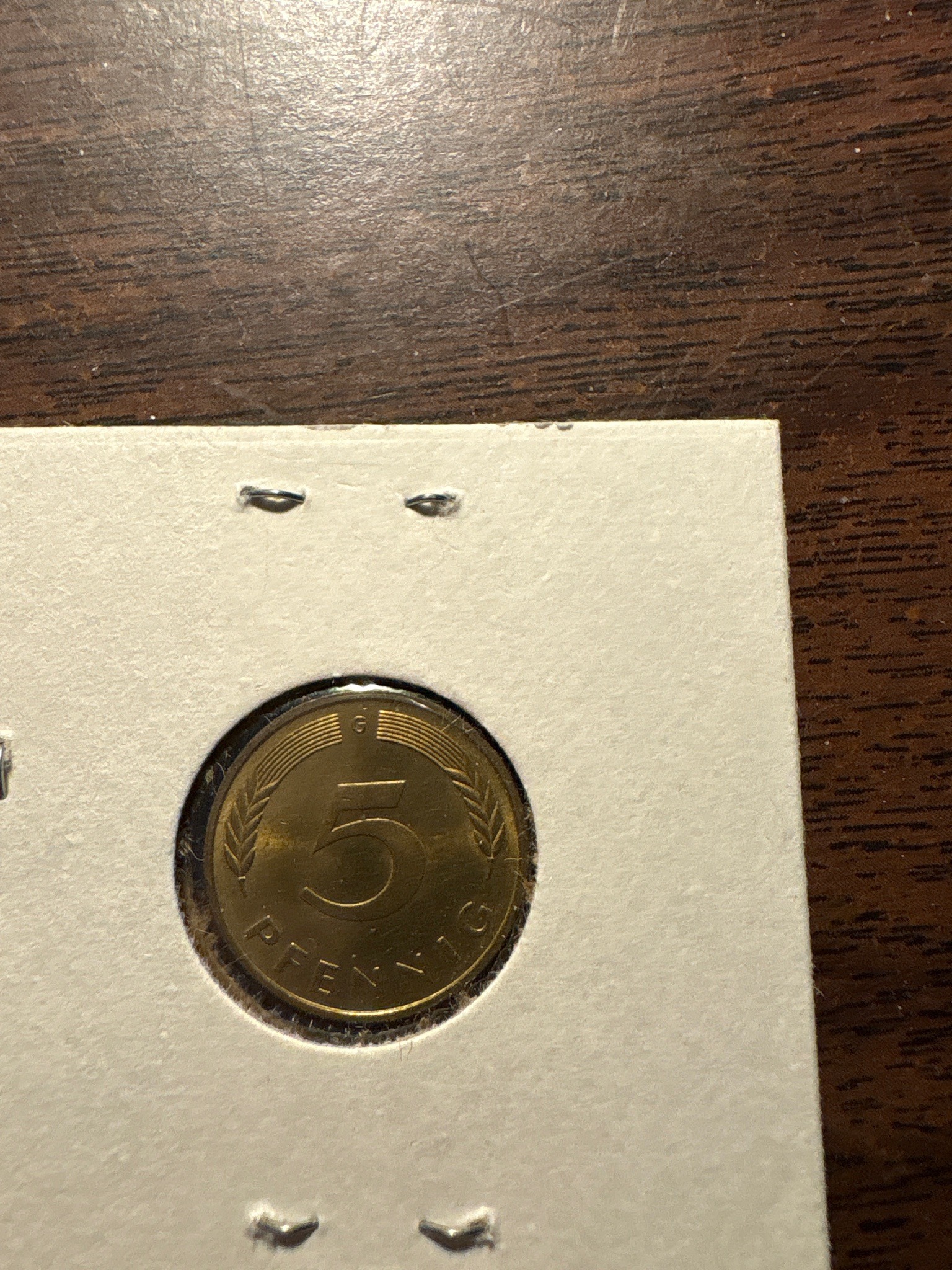
Germany 5 Pfennig (Federal Republic)
Germany (Federal Republic of Germany) · 1993
A small, brassy golden-colored coin featuring an oak seedling on the obverse and the numeral 5 between two stalks of rye on the reverse.
- Country
- Germany (Federal Republic of Germany)
- Year
- 1993
- Denomination
- 5 Pfennig
- Metal
- Brass-plated steel
This report is AI-generated and can be wrong. Always verify grade, authenticity, and value with a qualified dealer or certified grading service before buying, selling, or insuring.
Identify your own coins.
Get a report just like this from any photo, free.
Overview
Historical significance
Obverse (front)
Reverse (back)
Estimated value
What drives this coin's value
Grade assessment
Mintage & rarity
Authenticity & counterfeit red flags
Notable varieties & errors
Similar coins
Care & preservation
More like this
Other germany (federal republic of germany) coins
1 Pfennig
Germany (Federal Republic of Germany) · 1991
5 Pfennig (Federal Republic)
Germany (Federal Republic of Germany) · 1949-2001 (based on designs, specific year not visible)
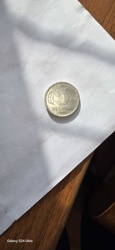
5 Pfennig
Germany (Federal Republic of Germany) · 1994
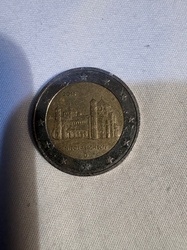
2 Euro Lower Saxony (St. Michael's Church, Hildesheim)
Germany (Federal Republic of Germany) · 2014
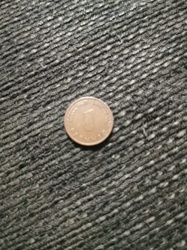
1 Pfennig
Germany (Federal Republic of Germany) · 1948-2001 (Specific year illegible in photo, but 1950 is most common for this design)
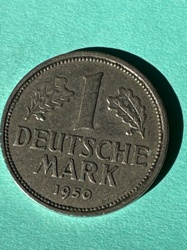
1 Deutsche Mark
Germany (Federal Republic of Germany) · 1950