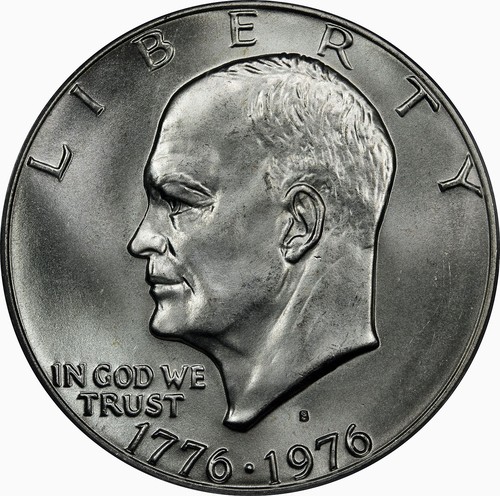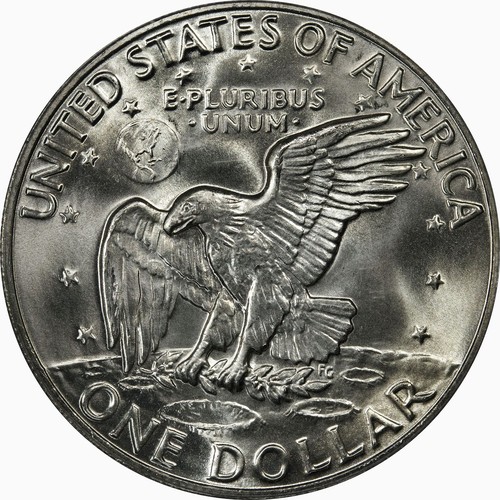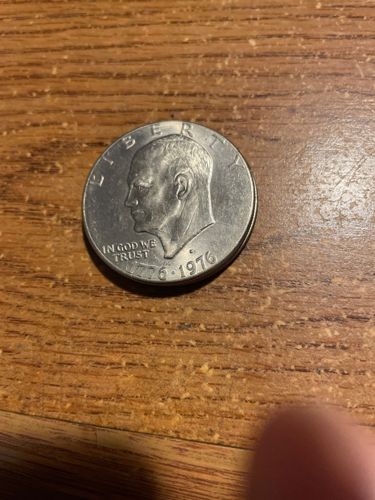
Eisenhower Dollar (Bicentennial Type I)
United States · 1976 (dated 1776-1976)
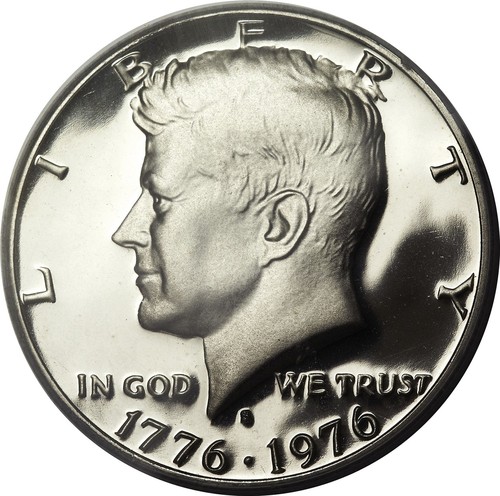
The obverse features a profile of Dwight D. Eisenhower. The date reads "1776-1976", indicative of its bicentennial release. The word "LIBERTY" appears above Eisenhower's head, and "IN GOD WE TRUST" is inscribed below.
- Country
- United States
- Year
- 1976 (dated 1776-1976)
- Denomination
- One Dollar ($1)
- Metal
- Copper-nickel clad (8.33% nickel, balance copper)
This report is AI-generated and can be wrong. Always verify grade, authenticity, and value with a qualified dealer or certified grading service before buying, selling, or insuring.
Identify your own coins.
Get a report just like this from any photo, free.
Overview
Historical significance
Estimated value
Care & preservation
More like this
Other united states coins
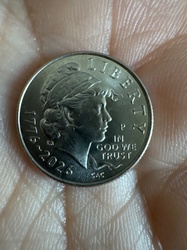
United States Semiquincentennial Fantasy/Mule Concept Dime
United States · 2026
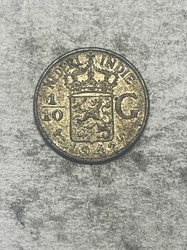
1/10 Gulden - Wilhelmina
Netherlands East Indies · 1942
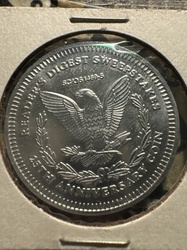
Reader's Digest Sweepstakes 25th Anniversary Coin (Token)
United States, Reader's Digest Association · 1987
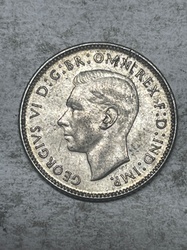
Australian Sixpence
Australia · 1943
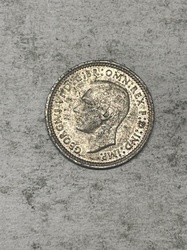
Australian Threepence
Australia · 1943
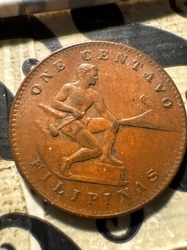
United States Administration of Philippines One Centavo
Philippines (under United States Sovereignty) · 1944