Coin Identifier

Coin Encyclopedia

Search and identify coins from around the world — with country, denomination, metal, mint, history, and how to tell them apart.
Third Farthing

Third Farthing

An extremely small denomination worth one-twelfth of a penny, struck mainly to serve the currency needs of the British colony of Malta across the nineteenth and early twentieth centuries.

British
Siamese Rama V Silver Baht

Siamese Rama V Silver Baht

Western-style silver baht introduced under King Chulalongkorn (Rama V) of Siam, replacing centuries-old bullet money with modern flat coinage.

Asian
Halfpenny

Halfpenny

A small British bronze coin worth half a penny, best known in its twentieth-century form featuring Sir Francis Drake's ship the Golden Hind on the reverse.

British
Half Groat

Half Groat

A small hammered silver coin worth half the value of the groat, or two pence, struck across three centuries of English coinage from the reign of Edward III through the Stuart era.

British
Carolingian Silver Denier (Charlemagne)

Carolingian Silver Denier (Charlemagne)

Standardized silver penny introduced under Charlemagne's monetary reform, forming the template for medieval European currency for centuries afterward.

European
Hungarian Ducat

Hungarian Ducat

A remarkably long-lived gold coin of the Kingdom of Hungary, showing St. Ladislaus and the Madonna and Child, prized for centuries as one of Europe's most trusted trade coins.

European
Dutch Guilder (Gulden)

Dutch Guilder (Gulden)

The guilder was the standard currency of the Netherlands for more than three centuries, struck in silver and later copper-nickel before being replaced by the euro in 2002.

European
Belgian Franc

Belgian Franc

Belgium's national currency from independence in 1830 through the Latin Monetary Union era and into the Euro age, minted in both French and Dutch legends.

European
Portuguese Escudo

Portuguese Escudo

Portugal's national currency unit from the 1911 decimal reform, following the fall of the monarchy, until the Euro replaced it in the early 2000s.

European
Swiss 5 Francs Silver

Swiss 5 Francs Silver

The Swiss 5 Francs was Switzerland's largest circulating silver coin for over a century, featuring the standing figure of Helvetia, and remains a favorite among collectors of European silver crowns.

European
Lewis and Clark Gold Dollar Commemorative

Lewis and Clark Gold Dollar Commemorative

A commemorative gold dollar honoring explorers Meriwether Lewis and William Clark, struck in 1904 and 1905 for the Lewis and Clark Centennial Exposition in Portland, Oregon.

Commemorative
Napoleon 20 Franc Gold Coin

Napoleon 20 Franc Gold Coin

A historic French gold coin first struck under Napoleon Bonaparte in 1803, later issued under successive French governments and long used as a benchmark gold coin across Europe.

European
Florentine Florin

Florentine Florin

Introduced in 1252, the gold florin of Florence became medieval Europe's leading trade coin, its lily emblem and fixed gold standard copied by dozens of other mints.

European
Netherlands Rijksdaalder

Netherlands Rijksdaalder

A historic large silver crown-sized coin of the Low Countries, the rijksdaalder became a trusted trade coin across Europe for centuries and lent its name to the modern Dutch 2½-guilder piece.

European
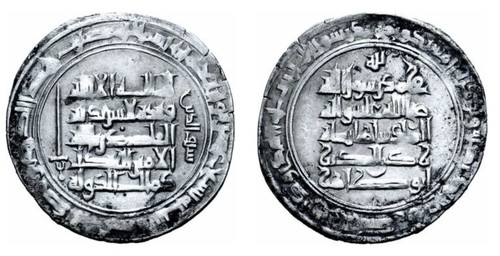
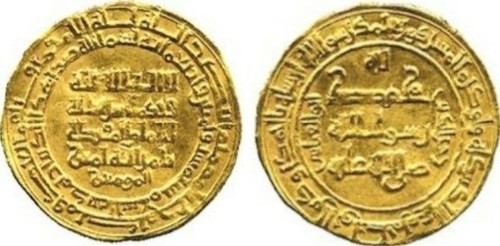
Islamic Silver Dirham (Abbasid)

Islamic Silver Dirham (Abbasid)

The standard silver coin of the Abbasid Caliphate, continuing the text-only Kufic script tradition and widely used across a vast medieval trade network stretching from Europe to Central Asia.

Ancient
Austrian Gold Ducat

Austrian Gold Ducat

A traditional high-purity Austrian gold trade coin with centuries of history, still struck today by the Austrian Mint as an official restrike permanently dated 1915.

European
Swiss Franc (Helvetia Seated)

Swiss Franc (Helvetia Seated)

Switzerland's classic 19th-century silver coinage depicting a seated figure of Helvetia, the female personification of the Swiss nation.

European
Venetian Ducat

Venetian Ducat

Gold coin first struck by the Republic of Venice in 1284, prized for its remarkably consistent weight and purity, which made it a dominant trade coin across medieval and Renaissance Europe.

European
Australian Holey Dollar and Dump

Australian Holey Dollar and Dump

In 1813, colonial authorities in New South Wales punched the centers out of Spanish silver dollars to create two coins from one, easing a severe coin shortage while preventing the silver from leaving the colony.

Africa & Oceania
Austrian Florin (Gulden)

Austrian Florin (Gulden)

The main silver coin of Austria-Hungary in the second half of the 19th century, used until the krone replaced it in the 1892 monetary reform.

European
Seated Liberty Dollar

Seated Liberty Dollar

A mid-19th century silver dollar depicting Liberty seated on a rock, the standard large silver dollar of the United States before the Trade dollar and Morgan dollar.

United States
US Seated Liberty Dollar

US Seated Liberty Dollar

Mid-19th century American silver dollar showing Liberty seated on a rock, produced from 1840 until being replaced by the Trade Dollar in 1873.

United States
Chile Peso (Condor)

Chile Peso (Condor)

Chilean coinage featuring the Andean condor perched or in flight, first seen on 19th-century gold pesos and later on the everyday circulating peso coin.

Latin American
Costa Rica 2 Colones Gold

Costa Rica 2 Colones Gold

A small gold denomination from Costa Rica's early colon-era coinage, part of a family of gold coins (2, 5, 10, and 20 colones) struck around the turn of the twentieth century.

Latin American