
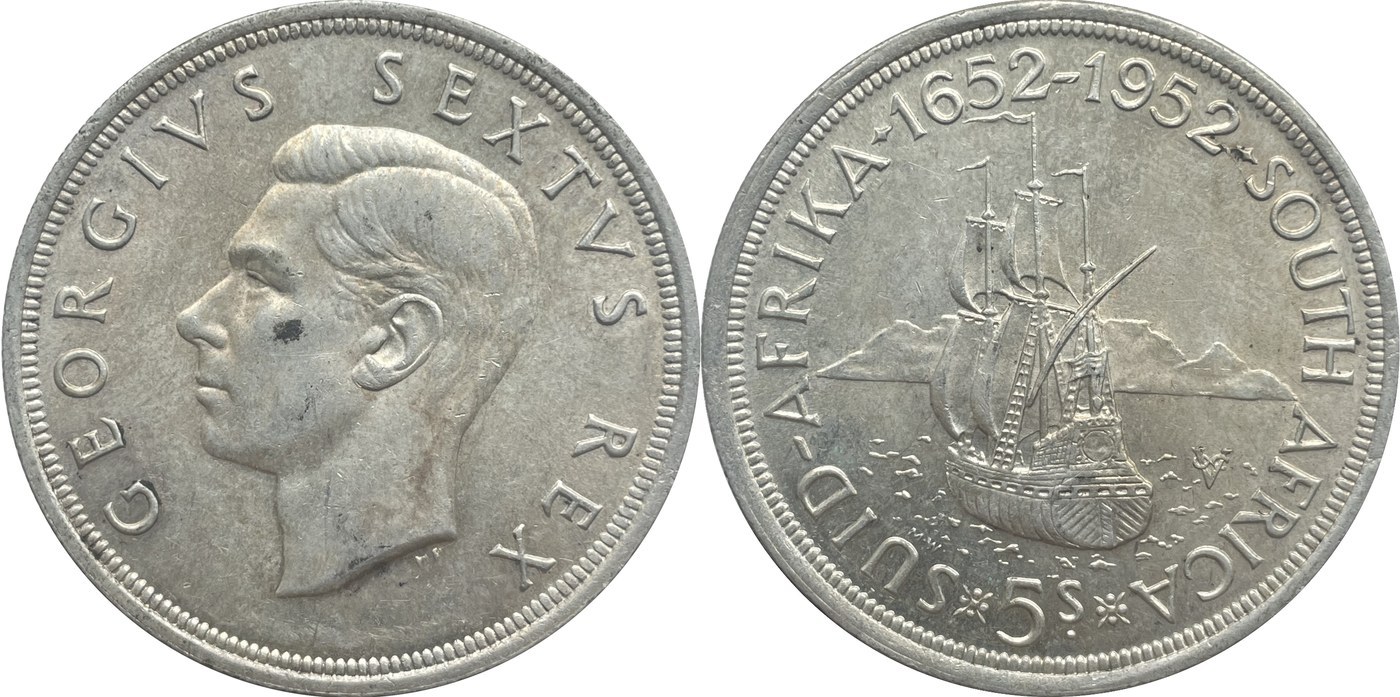
South Africa 5 Shillings
A large 1952 South African silver crown marking Cape Town's 300th anniversary, with King George VI and a sailing-ship reverse.
- Country
- South Africa
- Denomination
- 5 Shillings
- Metal
- Silver
Got a coin like this?
Identify any coin from a photo, free.
Overview
The South Africa 5 Shillings shown here is the 1952 issue, a large crown-sized silver coin struck under the Union of South Africa during the reign of King George VI. The obverse carries the bare-headed profile of the King with a Latin royal inscription honoring George VI, while the reverse depicts a period sailing ship above the dual dates 1652-1952.
Those paired dates mark the 300th anniversary of the founding of a European settlement at the Cape of Good Hope. The coin functioned as both a circulating five-shilling piece and a commemorative crown, and large numbers were saved at the time. As a result it is one of the most widely encountered South African silver coins today.
History & Background
The 5 Shillings, or crown, was the largest silver denomination of the Union of South Africa. Ship-reverse crowns were produced across the late 1940s and early 1950s, but the 1952-dated coin is distinguished by its commemorative 1652-1952 legend tied to the tercentenary of the Cape settlement.
The piece was struck during the final years of King George VI's reign; he died in early 1952, and the following year South African coinage moved to the portrait of Queen Elizabeth II. The 1952 crown therefore sits at the close of the George VI series. Earlier ship crowns of this type were struck in a higher-grade silver alloy, while the early-1950s issues were produced in a reduced-fineness silver, part of a broader mid-century move away from higher silver content in Commonwealth coinage.
Because the anniversary drew public interest, the coin was widely retained in original condition rather than heavily circulated, which shaped its survival and availability among collectors.
How to Identify
Look first for the two anchoring features seen on the photographed coin: a left- or right-facing bare-headed profile of King George VI with a Latin royal inscription on the obverse, and a single sailing ship on the reverse set above the dates 1652-1952. The presence of both dates together, rather than a single year, is the quickest confirmation that this is the commemorative crown.
The coin is physically large, roughly 38-39 mm across and near 28 grams, on the scale of a British crown or a US silver dollar. It is struck in silver of reduced fineness for this date, so it has a bright but slightly warmer tone than higher-grade silver. The denomination is expressed as 5 SHILLINGS.
South African crowns were struck at the Pretoria mint; check the ship and surrounding legends for the specific wording and any small mint or designer initials rather than expecting a prominent mint mark. Wear typically shows first on the King's cheekbone and hair and on the ship's rigging and hull.
Value & Collectibility
The 1952 crown was produced in large quantity and heavily saved, so it is a common coin and generally an affordable entry point into South African silver. In circulated to average uncirculated grades it typically trades modestly above its silver content, with the metal value acting as a practical floor.
Premiums rise for coins with sharp original detail, full mint luster, and no cleaning or edge knocks. Proof or specially struck examples, where present, command more than ordinary business strikes. Because so many exist, condition and eye appeal drive value far more than scarcity.
As always, verified grade and originality matter: a cleaned or polished piece is worth less than an untouched example even at the same wear level. Treat any single price as indicative only and confirm against recent sales of comparable coins.
Frequently asked questions
What does the 1652-1952 on the reverse mean?
The two dates mark a 300-year span, commemorating the tercentenary of the founding of a European settlement at the Cape of Good Hope. 1952 is the actual year the coin was struck.
Is the South Africa 1952 5 Shillings made of silver?
Yes. It is a silver crown, though the 1952 issue uses a reduced-fineness silver alloy rather than the higher-grade silver of some earlier ship crowns.
Why does the coin show King George VI?
It was struck during his reign, which ended in early 1952. South African coinage switched to Queen Elizabeth II from 1953, making this one of the last George VI crowns.
Is this coin rare or valuable?
It is common because large numbers were struck and saved. Most examples trade a little above their silver value, with sharp, uncleaned, lustrous pieces bringing the strongest premiums.
How big is the coin?
It is a large crown-sized piece, roughly 38-39 mm in diameter and close to 28 grams, similar in size to a British crown or a US silver dollar.
South Africa 5 Shillings guides
In-depth guides for identifying, valuing, and collecting South Africa 5 Shillings.
Other coins you may enjoy
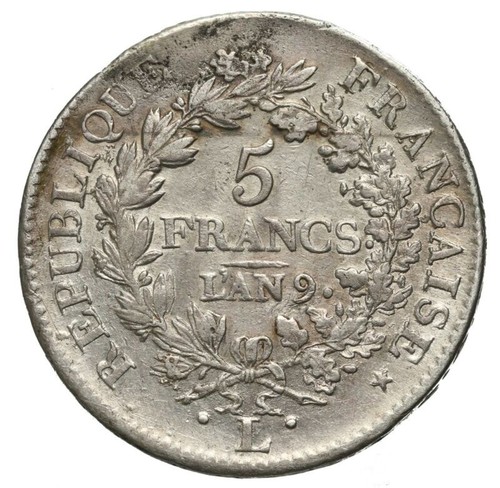
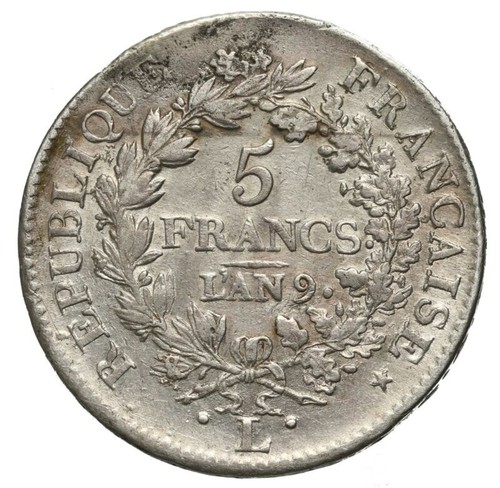
5 Francs (First Republic)
L'an 9 (1800–1801)
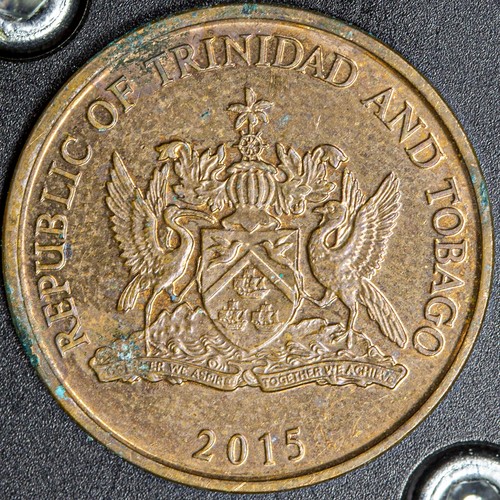
Trinidad and Tobago Dollar
2015
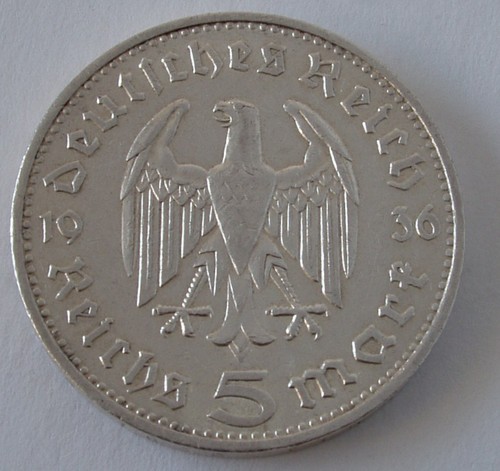
German 5 Reichsmark (Hindenburg)
1935–1936 (Hindenburg type with swastika)
5 Francs Semeuse
1960–1969
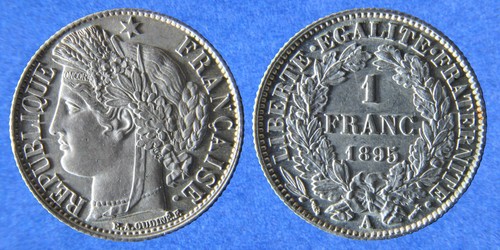
French Cérès 1 Franc
1849–1895
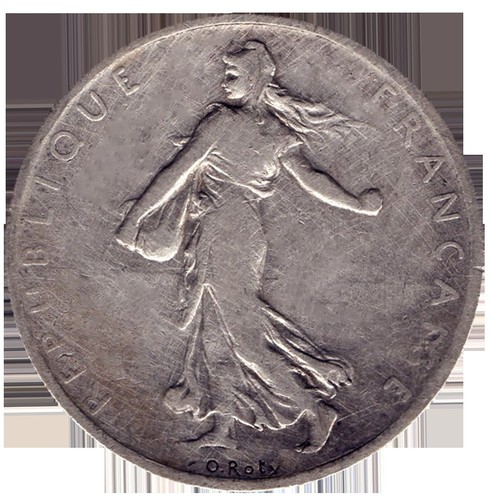
French Semeuse 2 Francs
1898–1920 (silver issues; pictured example dated 1899)
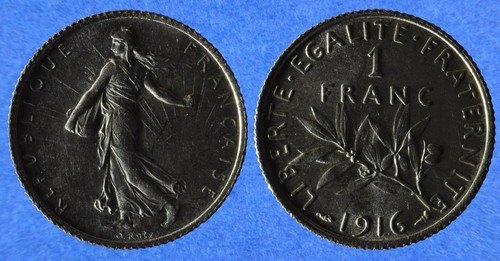
French Semeuse 1 Franc
1898–1920 (silver Semeuse 1 franc type)
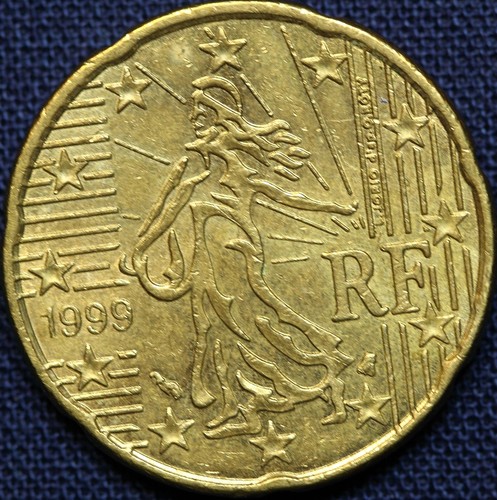
France 50 Cent Euro
1999–present
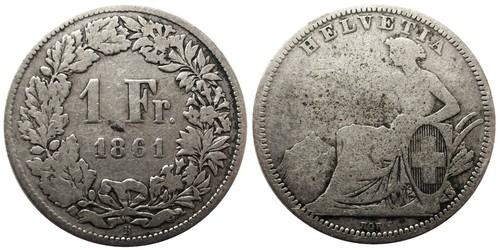
Swiss 1 Franc
1861
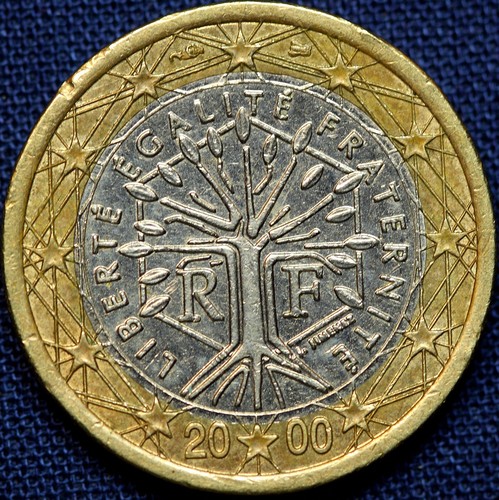
France 20 Centimes
1962–2001 (Fifth Republic, Marianne / Lagriffoul type)
Swiss 2 Francs
1860
Austria-Hungary 15 Kreuzer
1807