
How to Identify the South Africa 5 Shillings
A collector's checklist for confirming the 1952 South African silver crown by its ship reverse, dual dates, size, and metal.
Read the full South Africa 5 Shillings encyclopedia entry →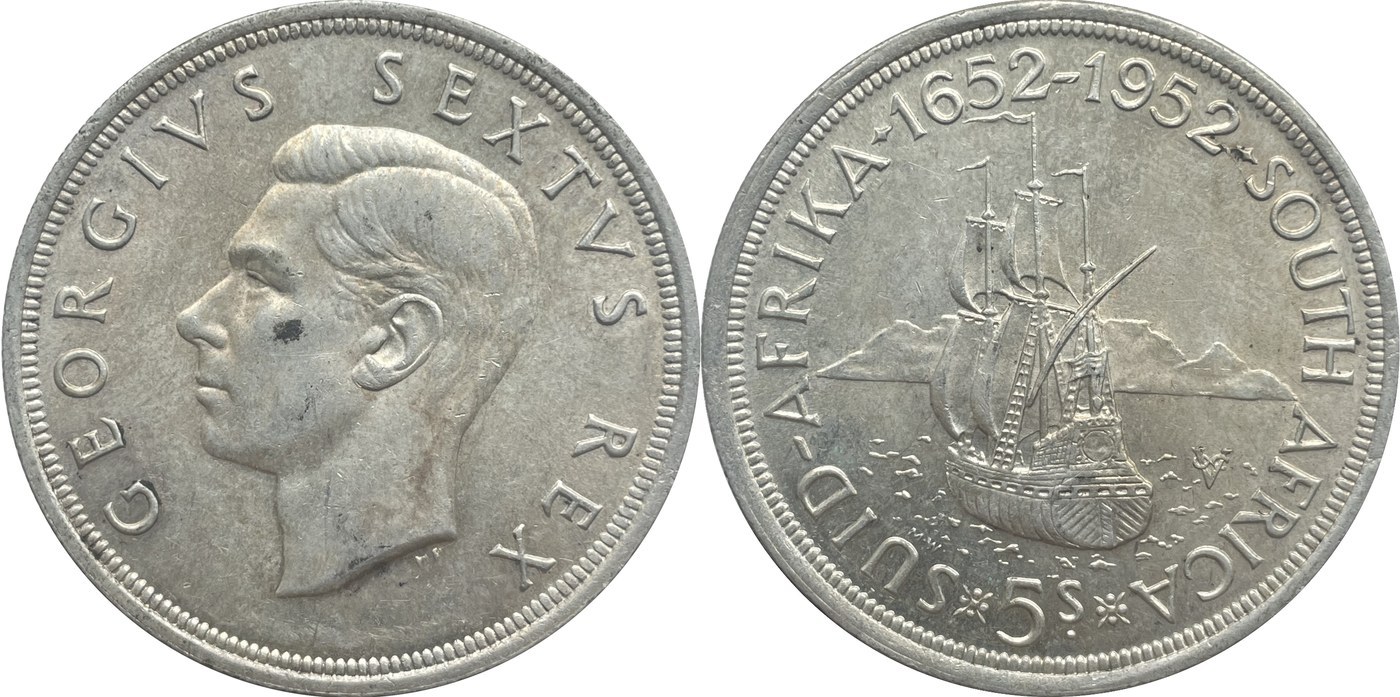
Start with the reverse, because it is the most diagnostic side. The 1952 South Africa 5 Shillings shows a single sailing ship as the central device, and critically it carries two dates, 1652-1952, rather than one. If you see the ship paired with only a single year, or with a different denomination, you are looking at a related but different South African crown, not this commemorative issue.
Turn to the obverse to confirm the ruler. This coin shows a bare-headed profile of King George VI with a Latin royal legend naming him. If the portrait is a crowned or laureate bust, or a female profile of Queen Elizabeth II, you have a different coin or a later date. The George VI portrait ties the piece firmly to 1952 or earlier in this series.
Verify the physical characteristics next. Expect a large crown-sized coin of roughly 38-39 mm and close to 28 grams, struck in silver. A digital scale and calipers are worth using here: a coin that is markedly lighter, non-magnetic-tested base metal, or the wrong diameter is a red flag for a replica or a wrong attribution. The 1952 date uses a lower-fineness silver, so the tone can look slightly warmer than high-grade silver, which is normal and not a sign of a fake.
South African crowns of this era came from the Pretoria mint, so do not expect a large obvious mint letter. Instead, read the full legends carefully and look for small designer or mint initials near the ship or in the field. Reeded edges should be crisp and even; casting seams, a soft mushy edge, or lettering that looks lumpy under magnification point to a counterfeit or a cast copy.
Finally, weigh authentication cautions against the coin's own commonness. Because genuine examples are inexpensive, an offer of this coin at a large premium, or a piece with suspiciously perfect surfaces and a wrong weight, deserves scrutiny. When in doubt, compare weight, diameter, and the exact legend wording against a known-genuine example or have it checked by a reputable dealer or grading service.
Frequently asked questions
What is the single fastest way to identify this coin?
Look for the sailing ship on the reverse together with the two dates 1652-1952. That date pair, rather than a single year, is the clearest confirmation of the commemorative crown.
How can I tell it apart from other South African ship crowns?
Other ship crowns of the period carry a single date and lack the 1652-1952 legend. Confirm both the dual dates and the George VI obverse portrait to isolate the 1952 issue.
What size and weight should a genuine example be?
About 38-39 mm in diameter and close to 28 grams in silver. A coin far off these figures, or one that tests as base metal, is likely a replica.
Are there fakes of this coin?
Cast copies and replicas exist for most large silver crowns. Check for crisp reeding, correct weight and diameter, sharp lettering, and no casting seams; verify with a dealer or grader if unsure.