
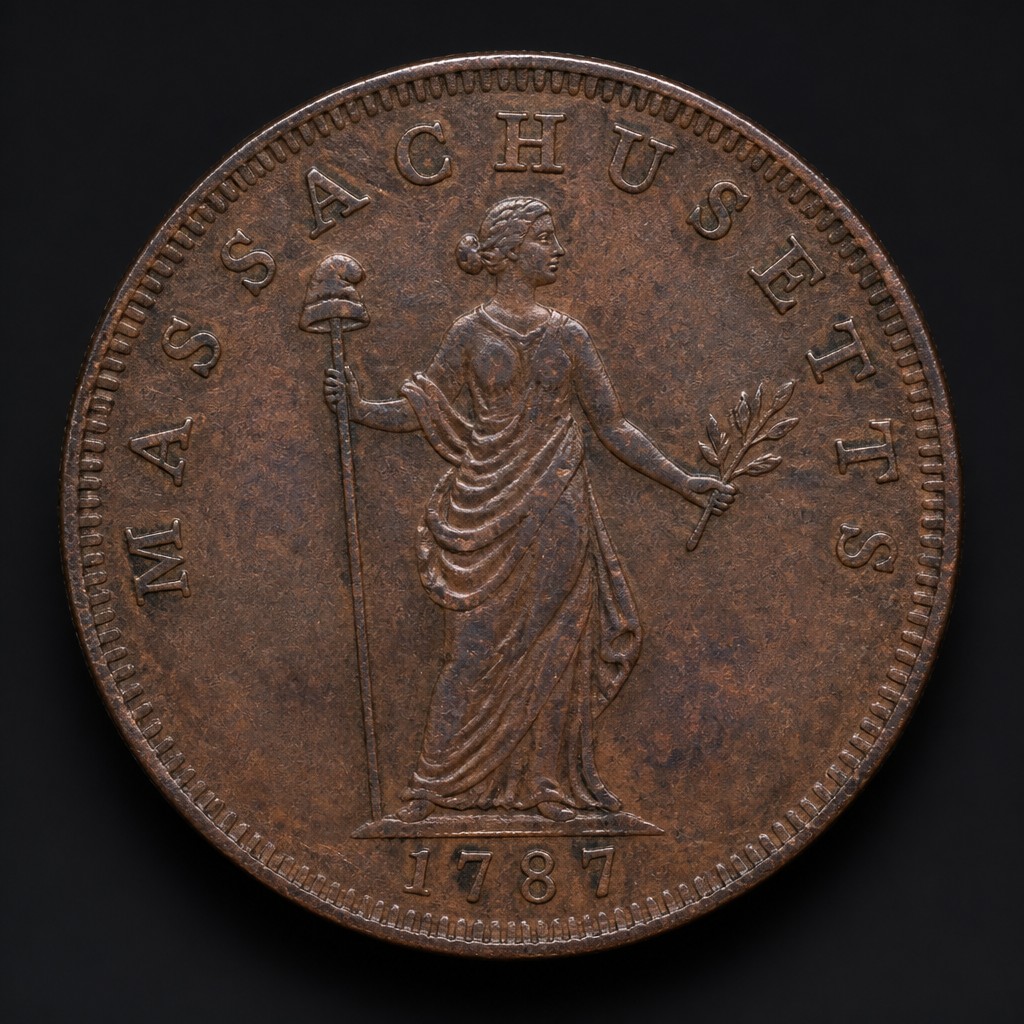
Massachusetts Cent (1787-1788)
State-issued copper coinage struck by the Commonwealth of Massachusetts in 1787 and 1788, notable as the first official U.S. coinage to use the denomination 'cent'.
- Country
- United States (Commonwealth of Massachusetts, pre-federal)
- Denomination
- Cent and Half Cent
- Metal
- Copper
Got a coin like this?
Identify any coin from a photo, free.
Overview
The Massachusetts cent and half cent, struck in 1787 and 1788, hold a special place in American numismatic history as the first official coinage denominated in "cents," a decimal denomination that would later become standard for United States federal coinage. Unlike most other state coppers of the era, which were produced under contract by private individuals, Massachusetts's coinage was struck at a mint directly operated by the Commonwealth itself.
The design features a Native American figure on the obverse holding a bow and arrow, paired with an eagle with a shield on its breast on the reverse, motifs that anticipated design themes that would recur in later official United States coinage, giving the series a distinctly "American" character compared to some other state coppers that echoed British halfpenny designs.
Despite its historical importance as a forerunner to federal decimal coinage, the Massachusetts mint operated only briefly, and production ceased once the state's copper coinage contract concluded, well before the establishment of the U.S. Mint in Philadelphia in 1792.
History & Background
Massachusetts, like other states in the mid-1780s, faced a shortage of adequate small-denomination coinage and in 1786 authorized a state-run mint to strike copper coins, a departure from the private-contractor model used by states such as Connecticut and New Jersey. The mint operated in Boston and began striking coins dated 1787, continuing into 1788.
The Massachusetts coinage introduced the denomination "cent" for the first time on an American coin, alongside a half cent denomination, both using imagery, an Indian figure and an eagle, that would echo in spirit through subsequent early United States federal coin designs, even though the specific artwork was not directly reused.
The state mint's operation was short-lived, ending as Massachusetts's coinage authority lapsed and the broader movement toward a unified federal monetary system gained momentum, culminating in the Coinage Act of 1792 that established the U.S. Mint and a truly national decimal currency, making the Massachusetts cent an important transitional link between disparate state coinages and the federal system.
How to Identify
The obverse of the Massachusetts cent and half cent depicts a Native American figure standing, holding a bow in one hand and an arrow in the other, with the word "MASSACHUSETTS" arched above and the date below. The reverse shows an eagle with wings displayed, a shield on its breast, holding an olive branch, with "CENT" or "HALF CENT" indicated along with the value expressed in period style (such as denomination fractions on some varieties).
Both denominations are struck in copper, with the half cent naturally smaller and lighter than the full cent, and both were produced using contemporary screw press technology at the state-run Boston mint, generally yielding a more consistent strike than some private-contractor state coppers of the same era.
Collectors distinguish the Massachusetts cent from other state coppers primarily by its distinctive Indian-and-eagle design, which is unlike any other 1780s state issue, making identification straightforward; die variety differences within the series (such as minor differences in the eagle's arrows or branch) are cataloged for specialists but do not require the same level of expertise as more variety-dense series like Connecticut's coppers.
Value & Collectibility
Massachusetts cents and half cents are popular with colonial coin collectors both for their historical status as the first "cent" denominated American coinage and for their appealing, uniquely American Indian-and-eagle design, which sets them apart visually from other state coppers.
As with other coppers of the period, condition heavily influences value, since most surviving pieces circulated extensively and show considerable wear; well-struck, attractive examples with strong eagle and Indian details command a significant premium over typical worn specimens.
Common-date Massachusetts cents in average circulated grades are reasonably accessible to collectors, generally in the low-to-mid hundreds of dollars, while the scarcer half cent denomination and exceptional high-grade or rare-variety examples of either denomination can bring considerably higher prices at auction.
Frequently asked questions
Why is the Massachusetts cent historically significant?
It was the first official American coin to use the denomination 'cent,' anticipating the decimal system later adopted for United States federal coinage.
How was Massachusetts's coinage different from Connecticut's or New Jersey's?
It was struck at a mint directly operated by the state itself, rather than contracted out to private individuals, which was the more common arrangement elsewhere.
What imagery appears on the coin?
A Native American figure with a bow and arrow on the obverse, and an eagle with a shield on the reverse.
Was there also a half cent denomination?
Yes, Massachusetts struck both a cent and a smaller half cent using similar design themes.
Other coins you may enjoy
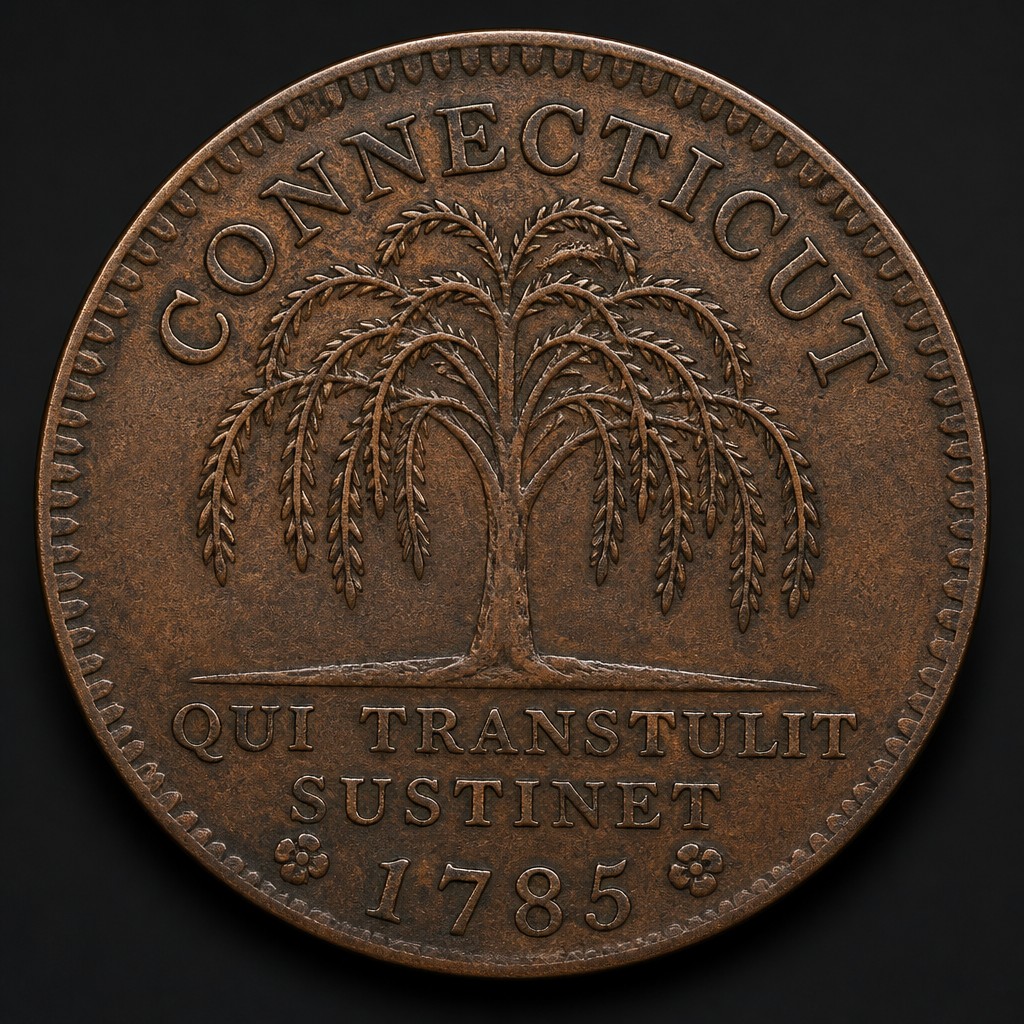
Connecticut Copper
1785–1788
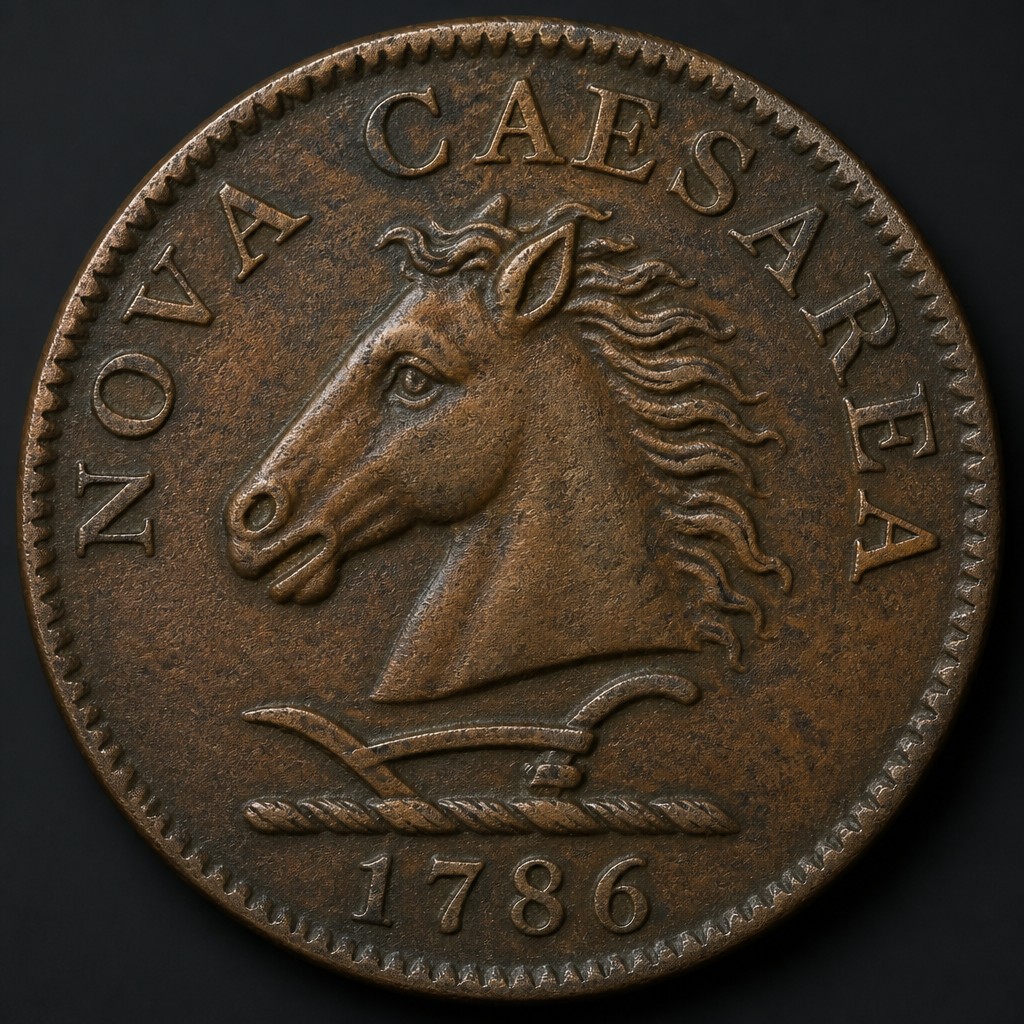
New Jersey Copper
1786–1788
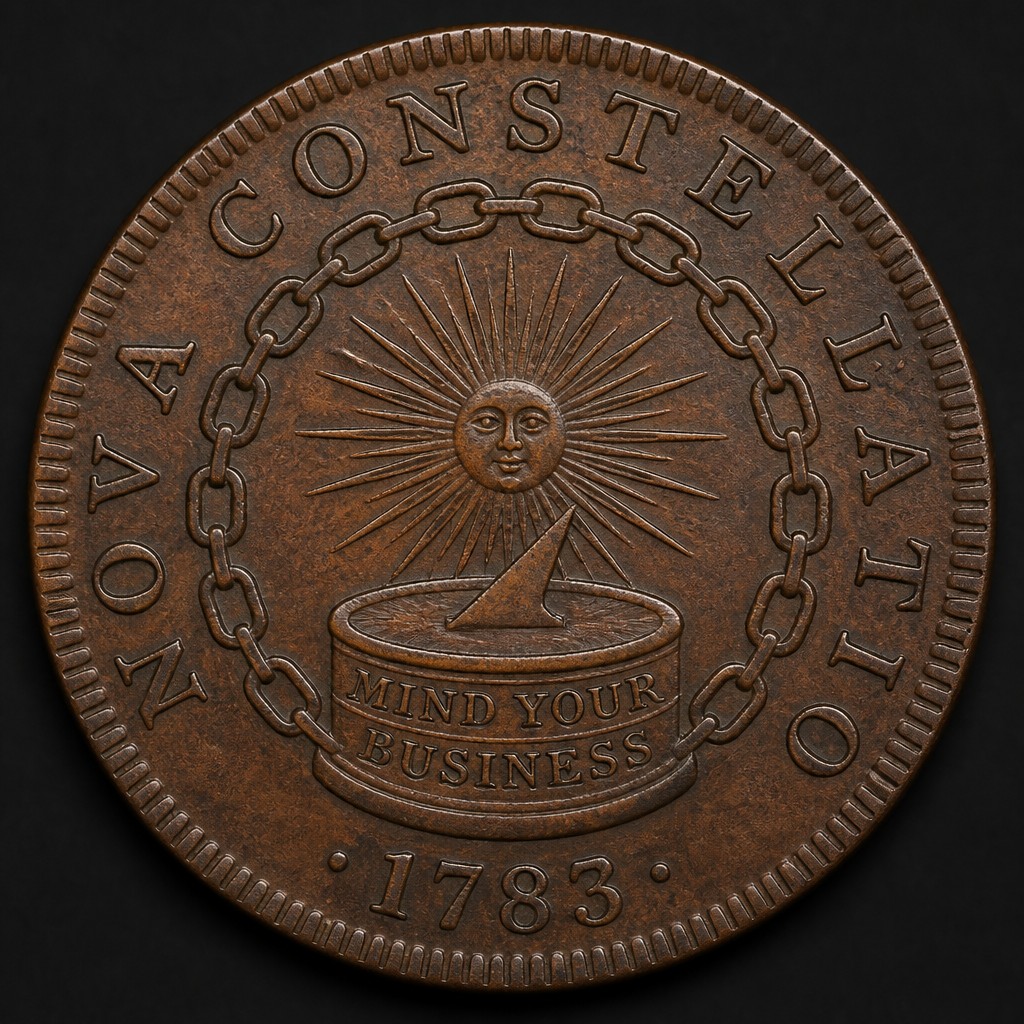
Nova Constellatio Copper
1783–1785
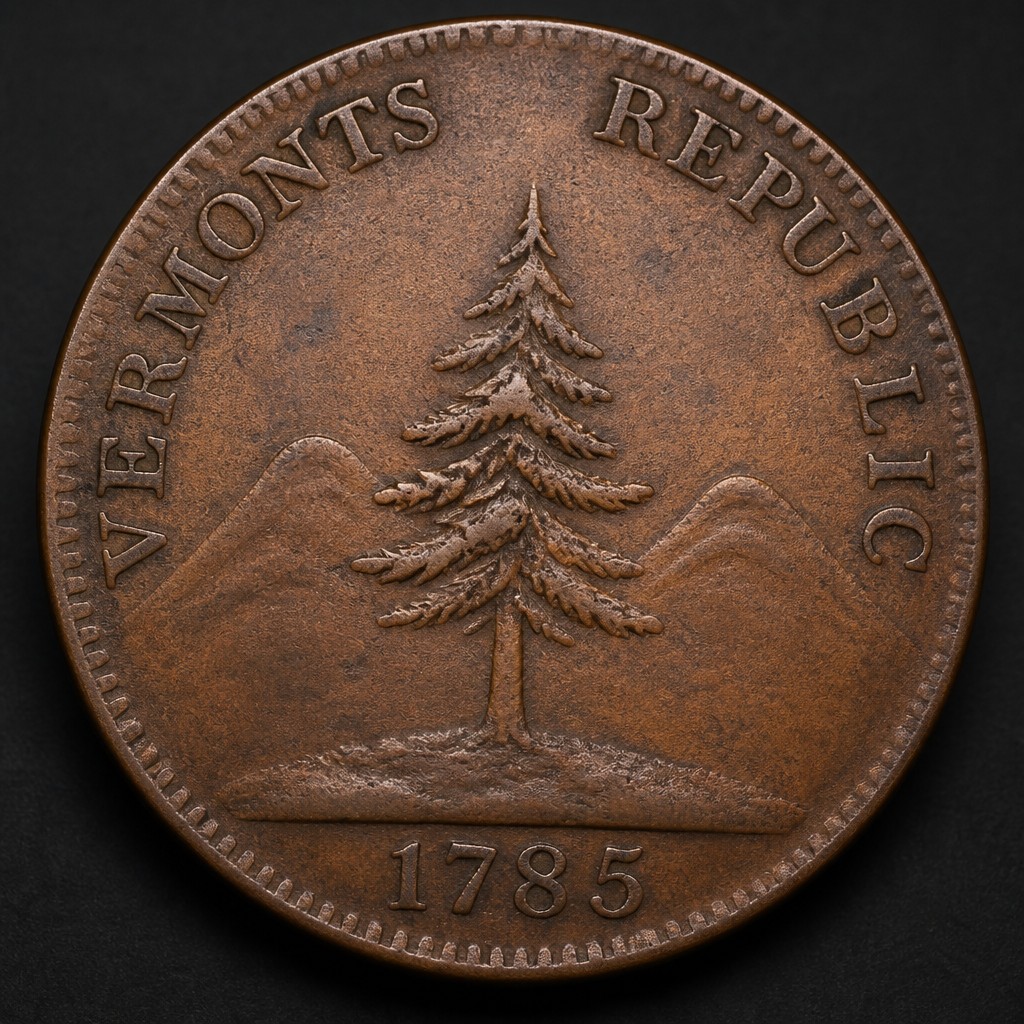
Vermont Copper
1785–1788
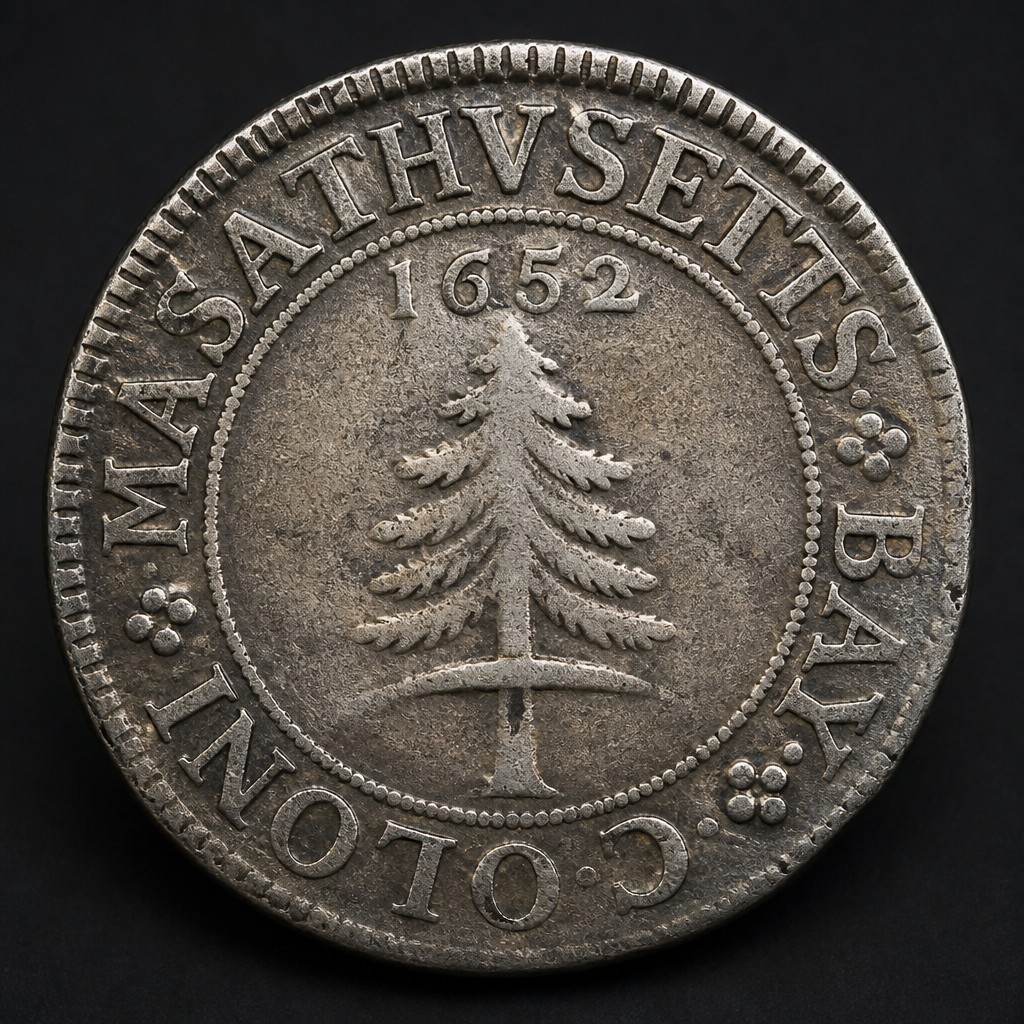
Pine Tree Shilling
Dated 1652, struck circa 1652–1682
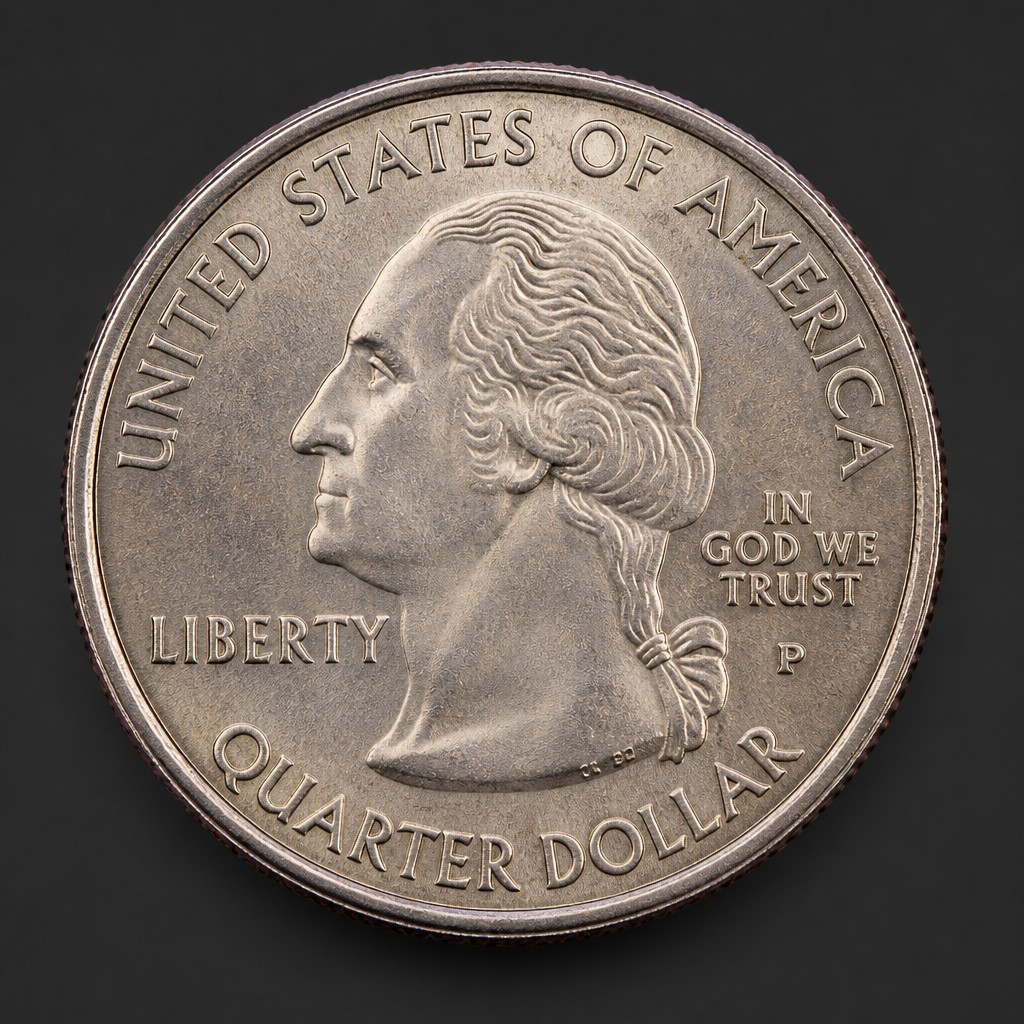
US State Quarters Series
1999-2008 (plus 2009 territories)
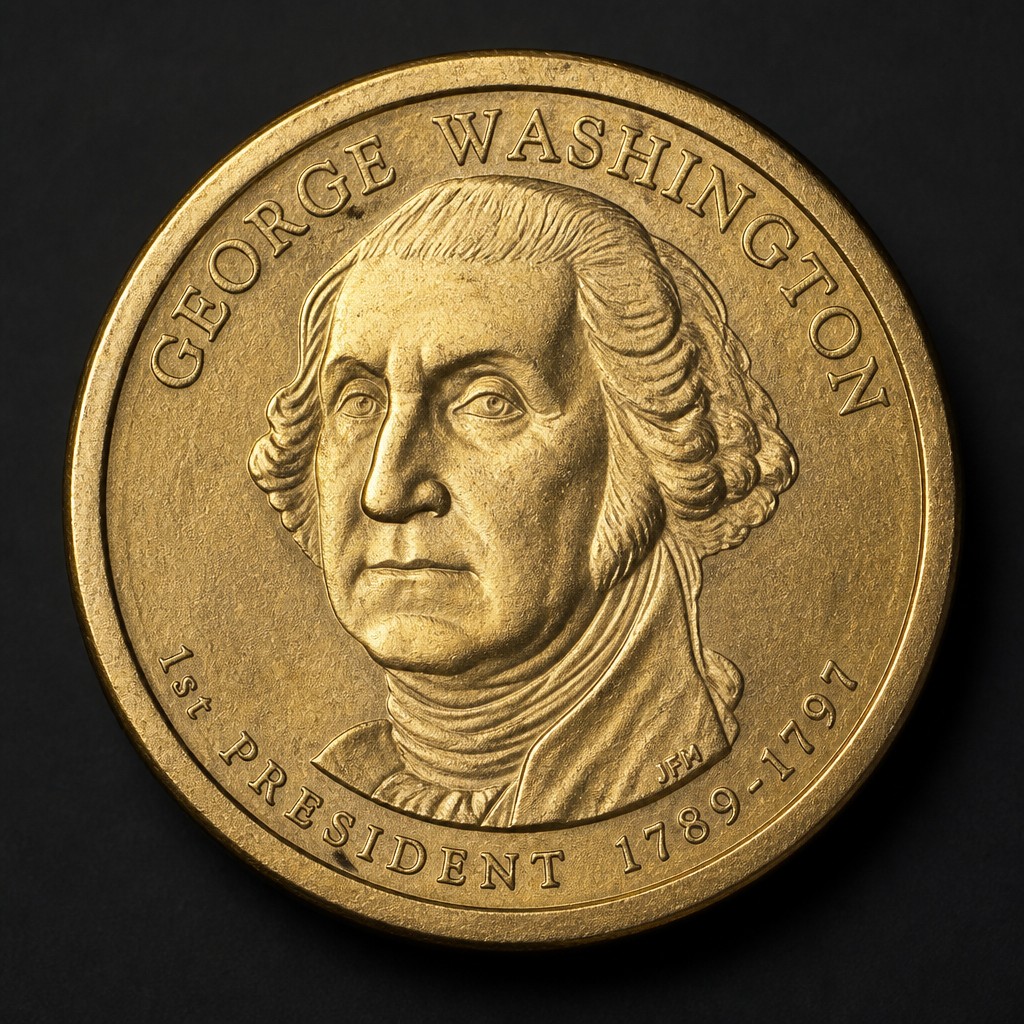
Presidential Dollar Series
2007-2016 (later special issues through 2020)
Sacagawea Golden Dollar
2000-present (reverse changed to Native American series in 2009)
US America the Beautiful Quarters
2010-2021
US Peace Dollar
1921–1928, 1934–1935
US Bicentennial Quarter (1976)
1976 (dated 1776-1976)
US Morgan Dollar
1878–1904, 1921