
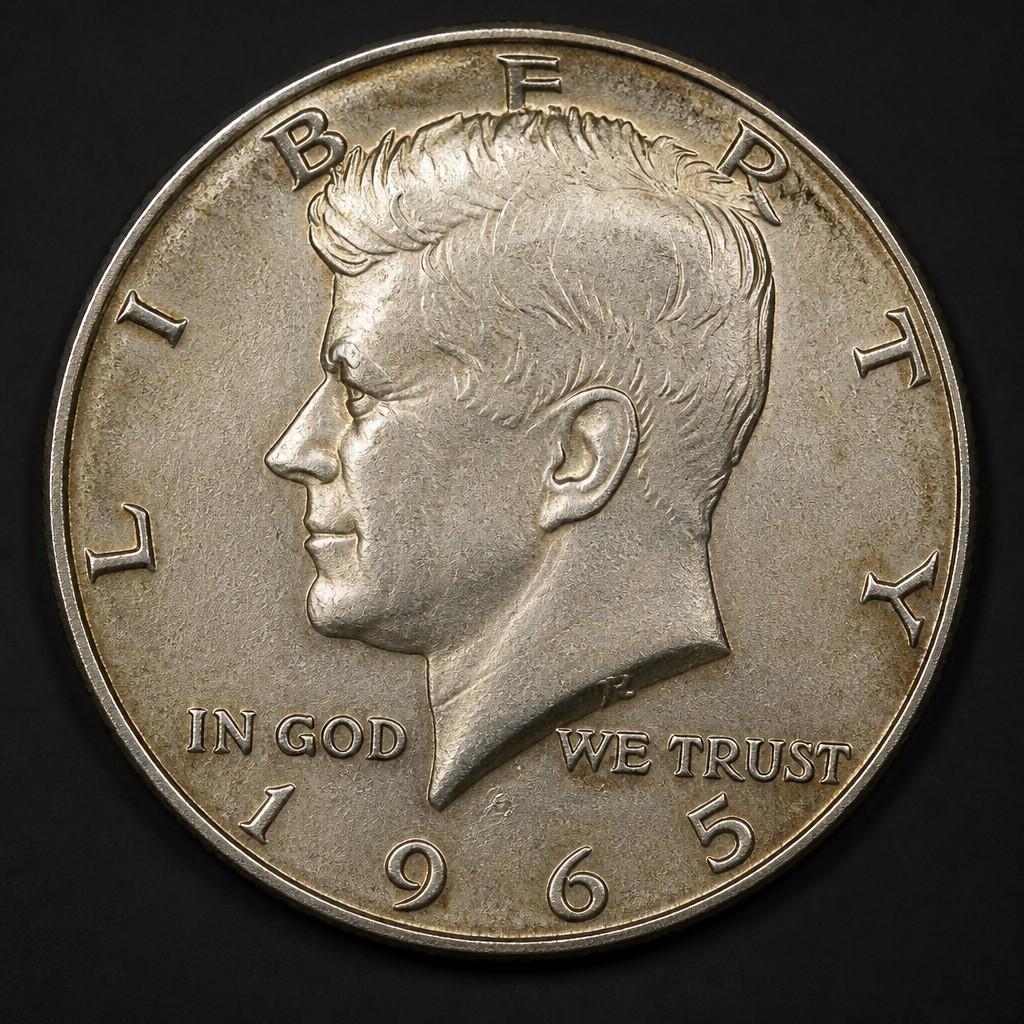
1965 Kennedy Half Dollar (40% silver)
A transitional Kennedy half dollar struck with reduced 40% silver content after the Coinage Act of 1965 eliminated silver from dimes and quarters, honoring the assassinated president.
- Country
- United States
- Denomination
- 50 Cents
- Metal
- 40% silver clad (silver-copper outer layers bonded to a copper-silver alloy core)
Got a coin like this?
Identify any coin from a photo, free.
Overview
The 1965-1970 Kennedy Half Dollar represents a brief transitional period in US coinage history when half dollars retained a reduced silver content even after dimes and quarters were switched entirely to copper-nickel clad composition. Struck in a 40% silver clad format, these coins bridge the gap between the fully silver 1964 Kennedy half and the copper-nickel clad halves produced from 1971 onward.
The coin honors President John F. Kennedy, assassinated in November 1963, and was rushed into production within months of his death to meet overwhelming public demand for a tribute coin. Its continued partial silver content through 1970 reflected both public sentiment favoring silver coinage and the Treasury's gradual phase-out strategy as it worked to conserve silver reserves amid rising bullion prices.
Because of their silver content and historical significance, these half dollars were frequently hoarded by the public rather than spent, contributing to persistent half-dollar shortages in circulation during the mid-to-late 1960s.
History & Background
Following President Kennedy's assassination, Congress and the Treasury moved quickly to replace the existing Benjamin Franklin half dollar design with a new coin honoring Kennedy, first struck in 1964 in the traditional 90% silver composition. Demand was so intense that the coins were hoarded almost immediately, worsening a national coin shortage.
The Coinage Act of 1965 addressed rising silver prices and shortages by eliminating silver entirely from dimes and quarters, replacing them with copper-nickel clad compositions, but half dollars were given a compromise: a reduced 40% silver clad composition, made by bonding outer layers of 80% silver/20% copper to an inner core of about 21% silver/79% copper, averaging 40% silver overall. This allowed continued silver content in the half dollar while easing pressure on silver supplies compared to the prior 90% standard.
The 40% silver format continued through 1970, after which the half dollar transitioned fully to copper-nickel clad composition beginning with coins dated 1971, matching the dime and quarter. Design work on the obverse came from Chief Engraver Gilroy Roberts, using an existing Kennedy portrait relief he had created, while the reverse Presidential Seal design was created by Frank Gasparro.
How to Identify
The obverse features a left-facing portrait of John F. Kennedy with "LIBERTY" arched above, "IN GOD WE TRUST" beside the portrait, and the date below. The reverse depicts the Presidential Seal, a heraldic eagle with a shield, arrows, and olive branch, encircled by "UNITED STATES OF AMERICA" and "HALF DOLLAR," with "E PLURIBUS UNUM" on a ribbon and stars representing the states above the eagle.
To distinguish the 40% silver issues (1965-1970) from the earlier 90% silver 1964 half and the later copper-nickel clad halves from 1971 onward, look at the edge: silver clad coins show a visible copper-colored stripe sandwiched between outer layers when viewed edge-on, similar to but with a thinner, less obviously banded appearance than standard clad coins due to the silver content in the outer layers, whereas fully silver 1964 halves have a solid silver edge with no distinct banding.
The coin measures 30.6mm in diameter, matching other half dollars of the era, and weighs approximately 11.5 grams, notably lighter than the 12.5-gram 90% silver 1964 issue but heavier than the fully clad copper-nickel version from 1971 onward. Mint marks "D" (Denver) appear to the left of the eagle's tail feathers on the reverse for this period; Philadelphia coins from 1965-1967 bore no mint mark, though a "P" mint mark eventually appeared on Philadelphia coinage decades later for other denominations, not applicable retroactively to these dates.
Value & Collectibility
Because 40% silver Kennedy halves were struck in large quantities and widely saved by the public due to their silver content, most examples in circulated to lightly circulated condition are valued primarily for their melt silver content, which fluctuates with the current silver market price. Uncirculated and higher-grade examples, along with Special Mint Set and proof versions, carry modest additional premiums.
No dates in this series are considered true key dates in the traditional sense, since mintages were generally high across 1965-1970, though certain proof and special mint set issues from 1965-1967 (produced instead of standard proof sets during a period when the US Mint suspended regular proof coinage) attract dedicated collector interest.
Overall, common circulated 40% silver halves typically trade for a modest multiple of face value based on silver content, while well-preserved uncirculated or proof examples can bring more, though prices should always be checked against current silver spot prices given the coin's fractional silver composition.
Frequently asked questions
How can I tell if my Kennedy half dollar has silver in it?
Check the date: 1964 halves are 90% silver, 1965-1970 halves are 40% silver clad, and 1971 onward are copper-nickel clad with no silver.
Why did the government reduce silver content in 1965?
Rising silver prices and coin shortages led Congress to remove silver from dimes and quarters entirely, while half dollars kept a reduced 40% silver compromise through 1970.
What is the actual silver weight in a 40% Kennedy half?
Each coin contains roughly 0.148 troy ounces of pure silver, based on its 40% silver clad composition.
Are 1965-1970 Kennedy halves rare?
No, they were struck in large numbers and are common today, so their value is mostly tied to silver content rather than scarcity.
Who designed the Kennedy half dollar?
Chief Engraver Gilroy Roberts designed the obverse portrait and Frank Gasparro designed the reverse Presidential Seal.
Other coins you may enjoy
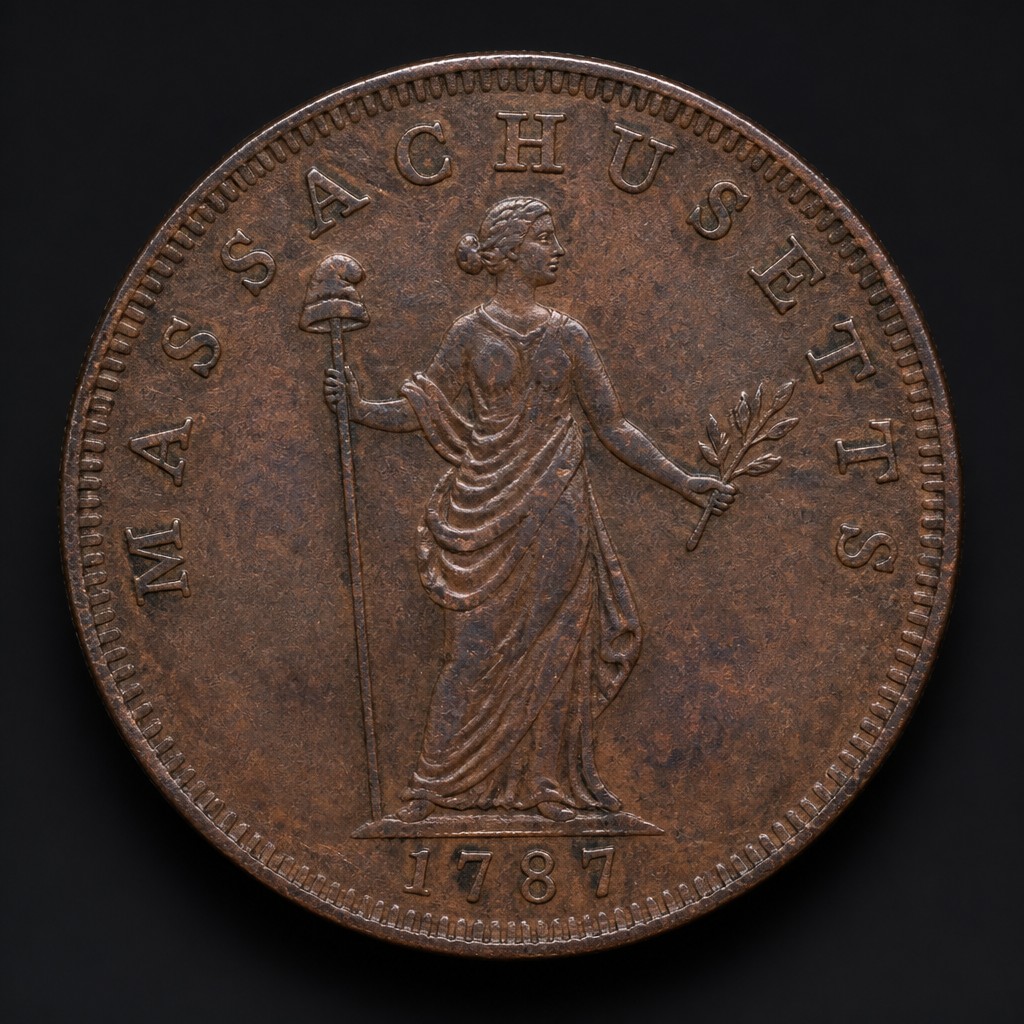
Massachusetts Cent (1787-1788)
1787–1788
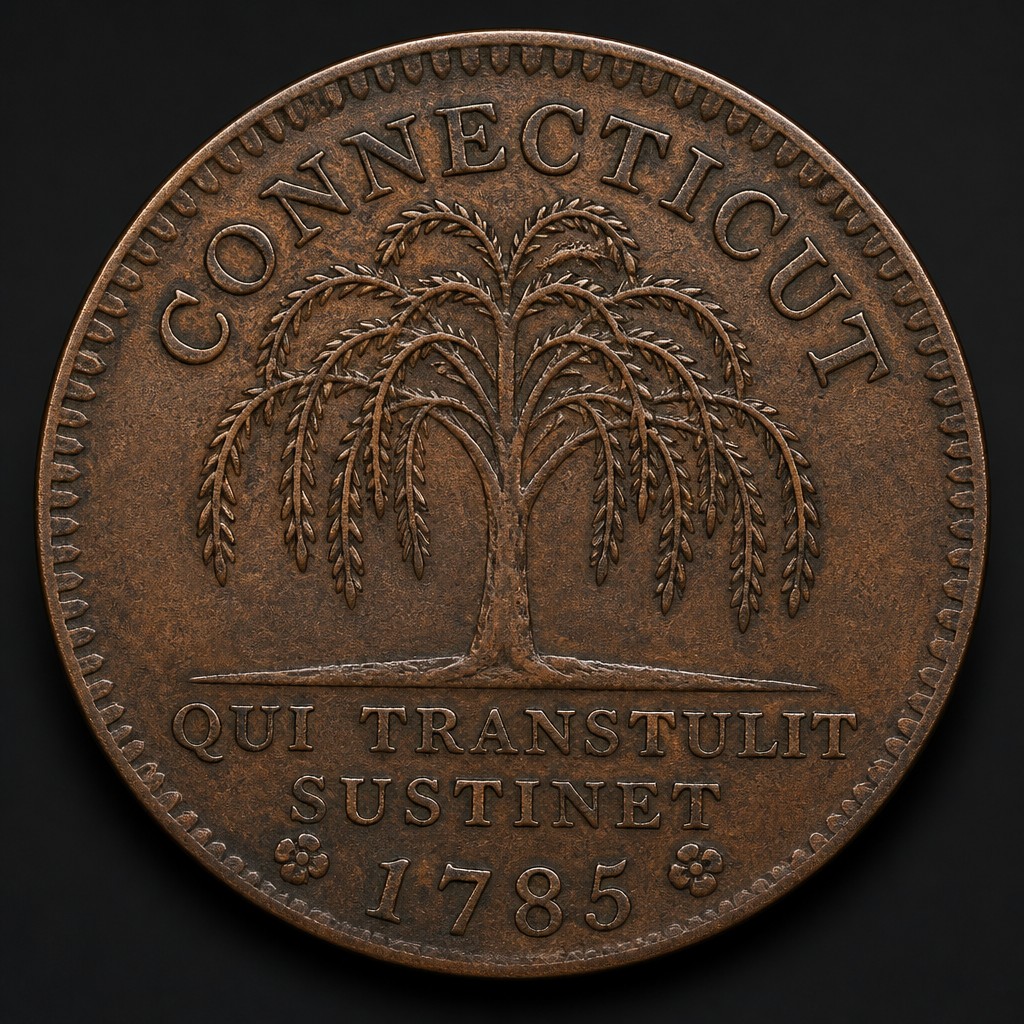
Connecticut Copper
1785–1788
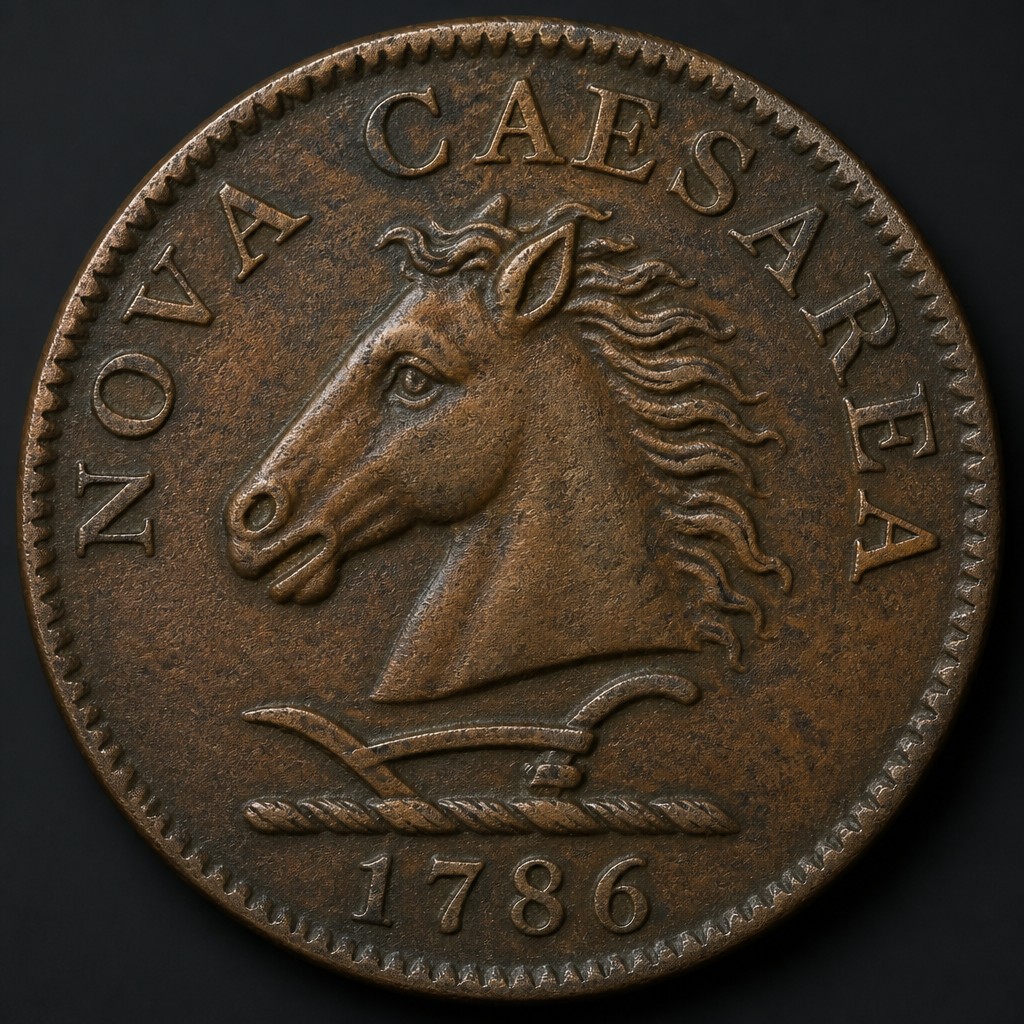
New Jersey Copper
1786–1788
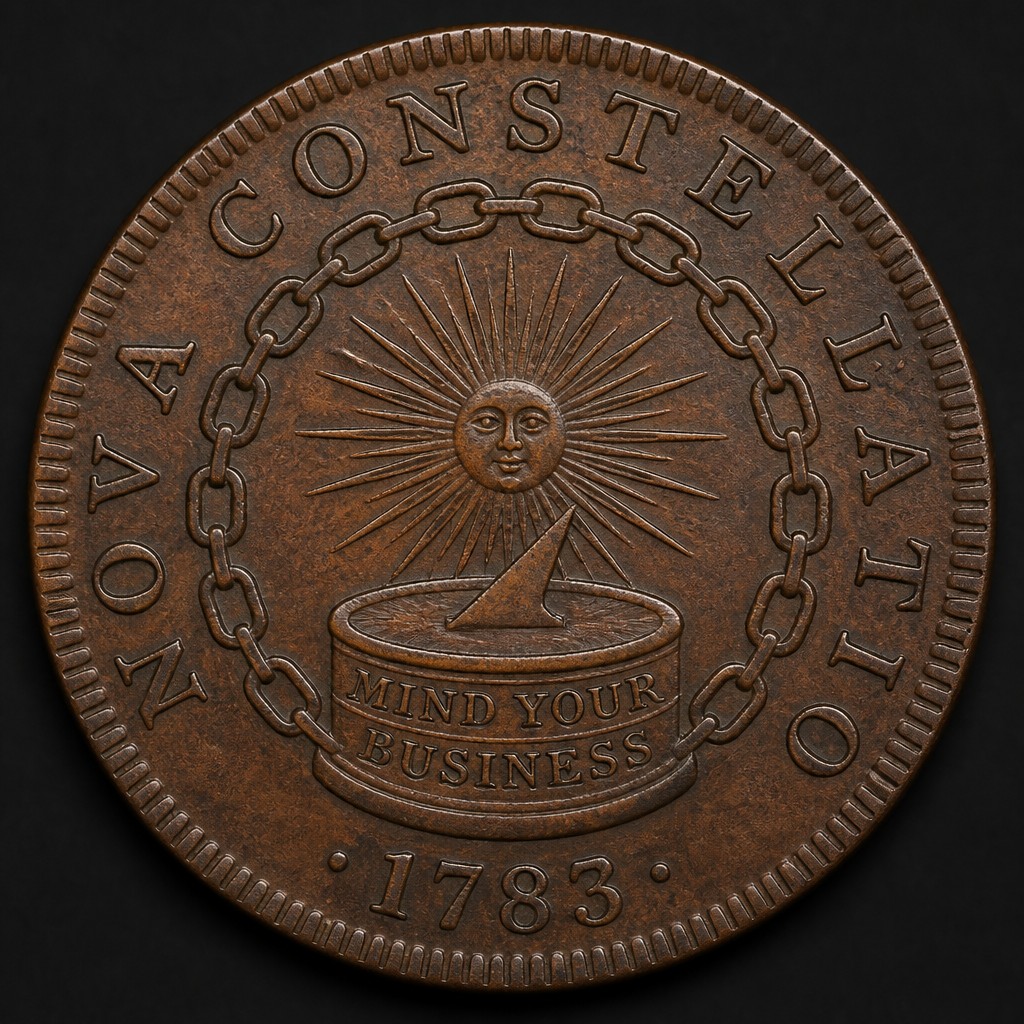
Nova Constellatio Copper
1783–1785
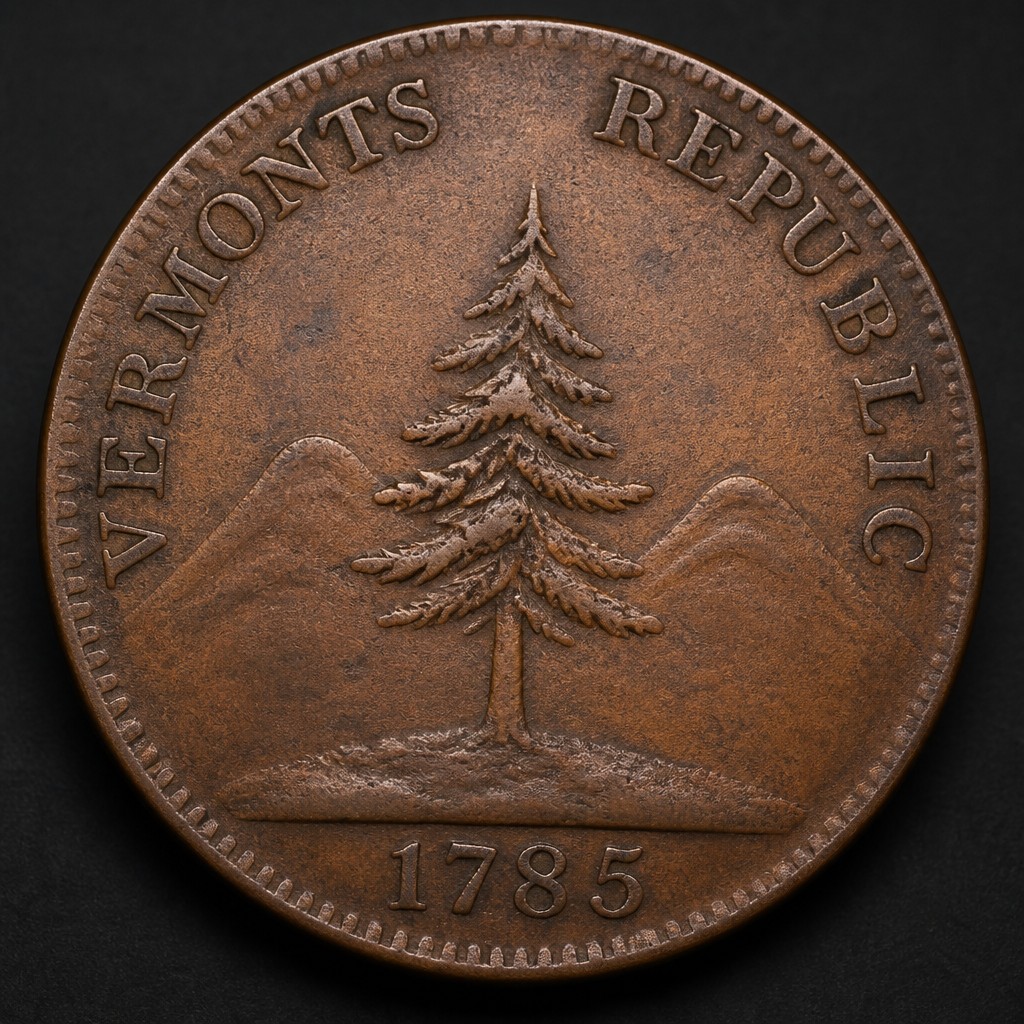
Vermont Copper
1785–1788
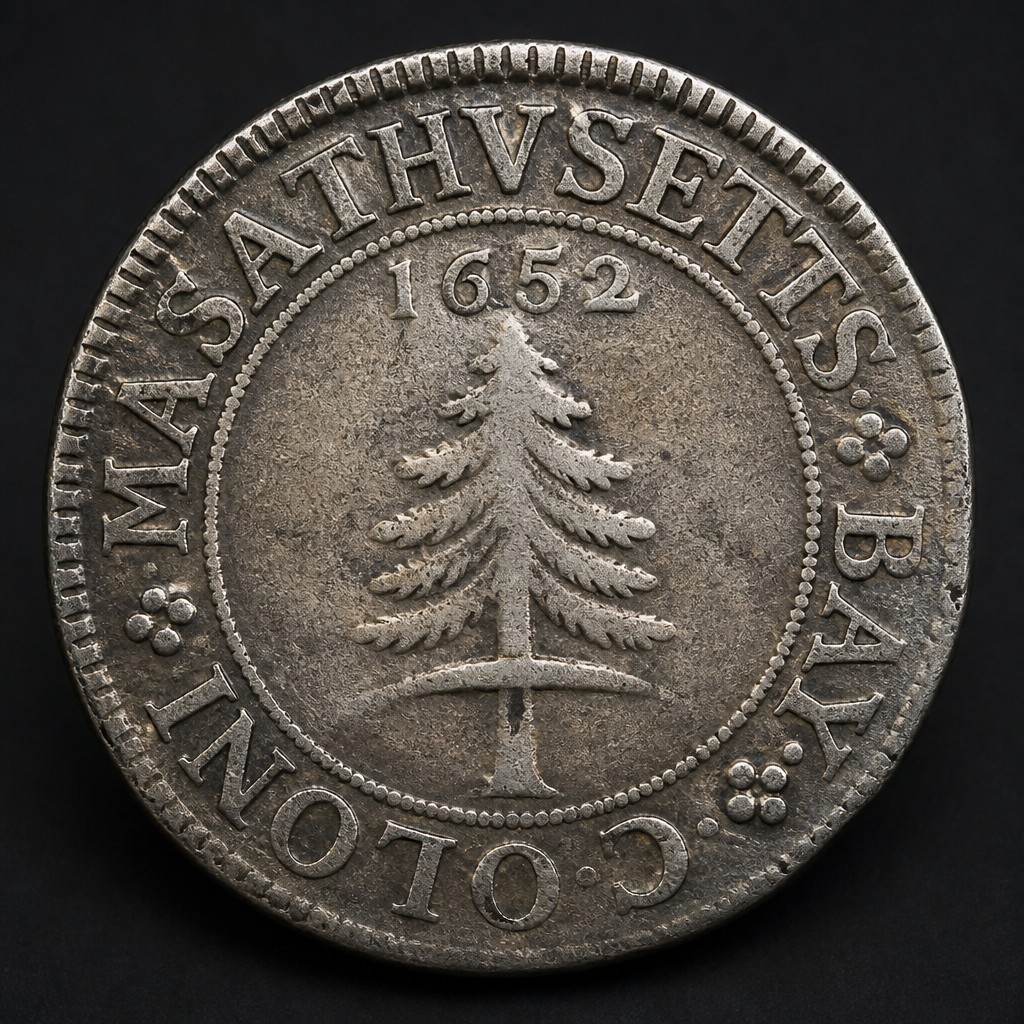
Pine Tree Shilling
Dated 1652, struck circa 1652–1682
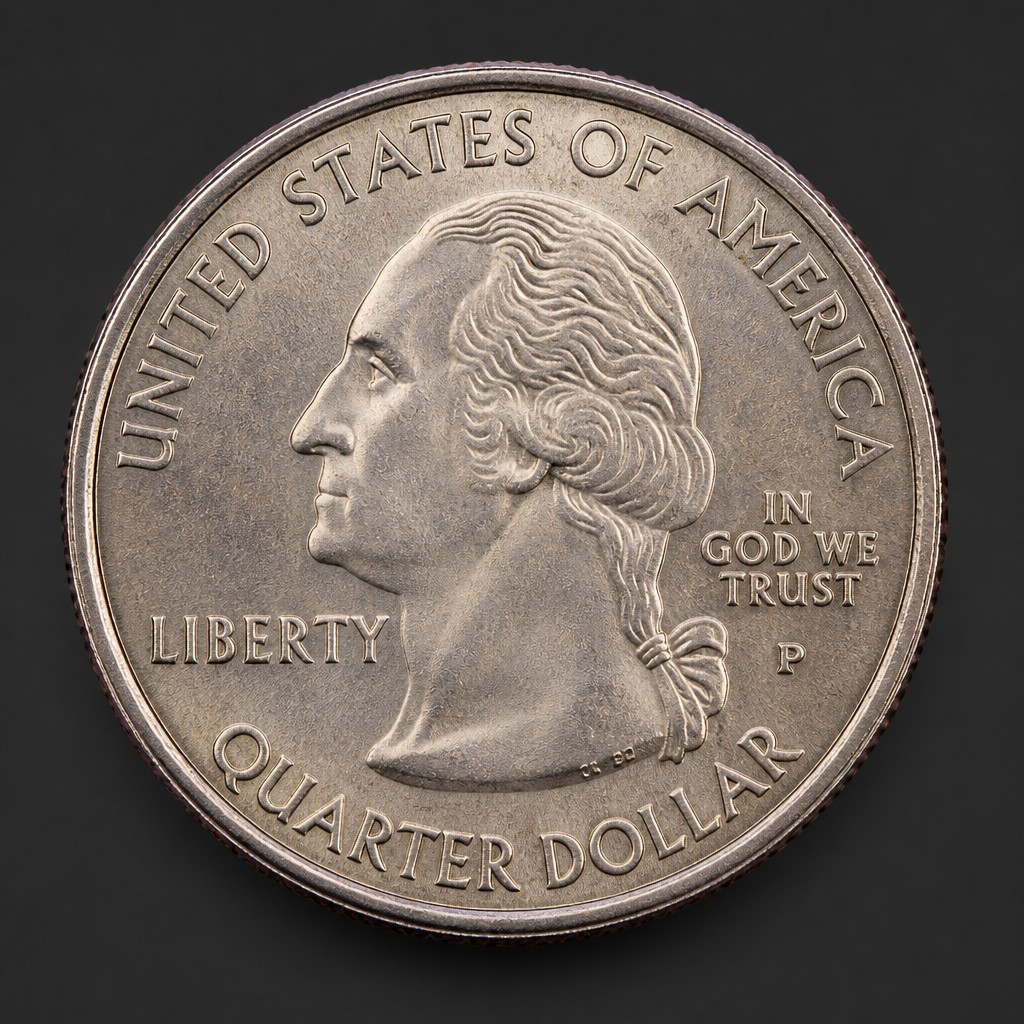
US State Quarters Series
1999-2008 (plus 2009 territories)
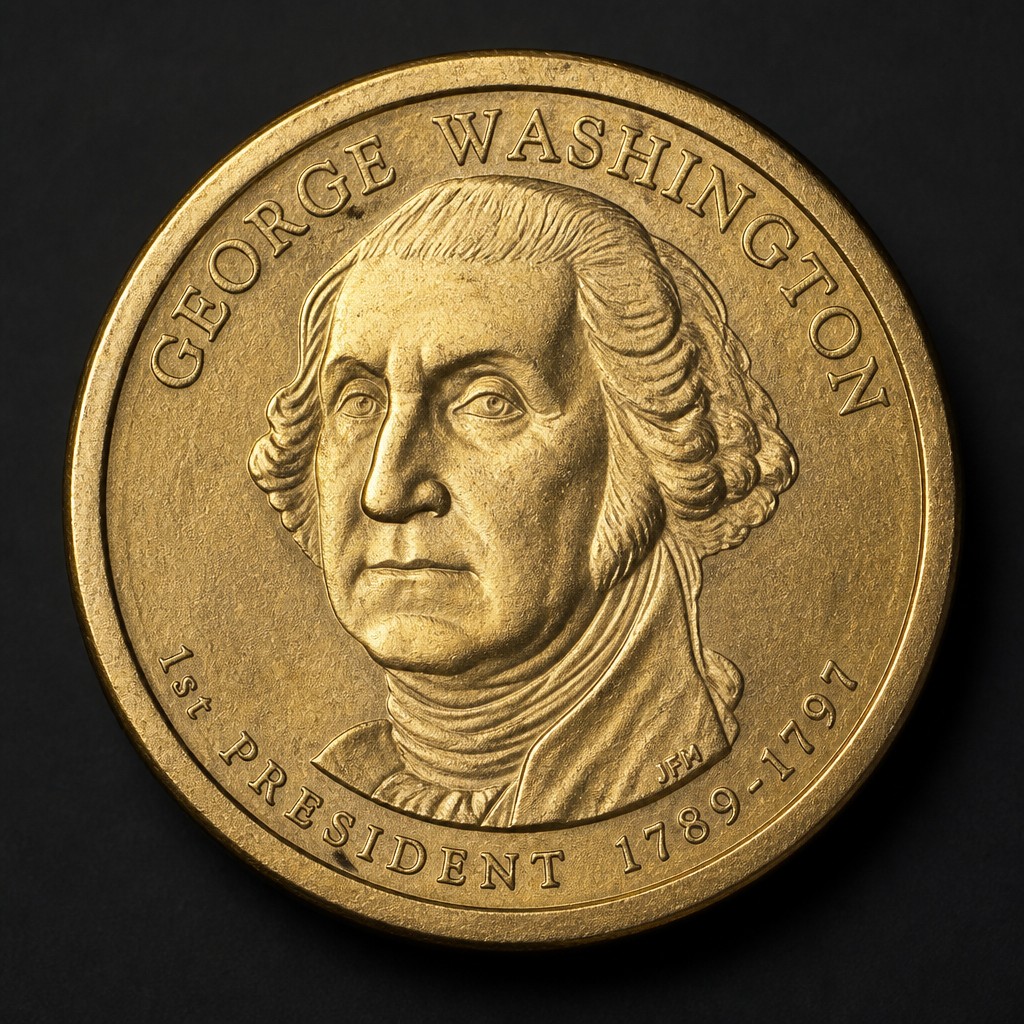
Presidential Dollar Series
2007-2016 (later special issues through 2020)
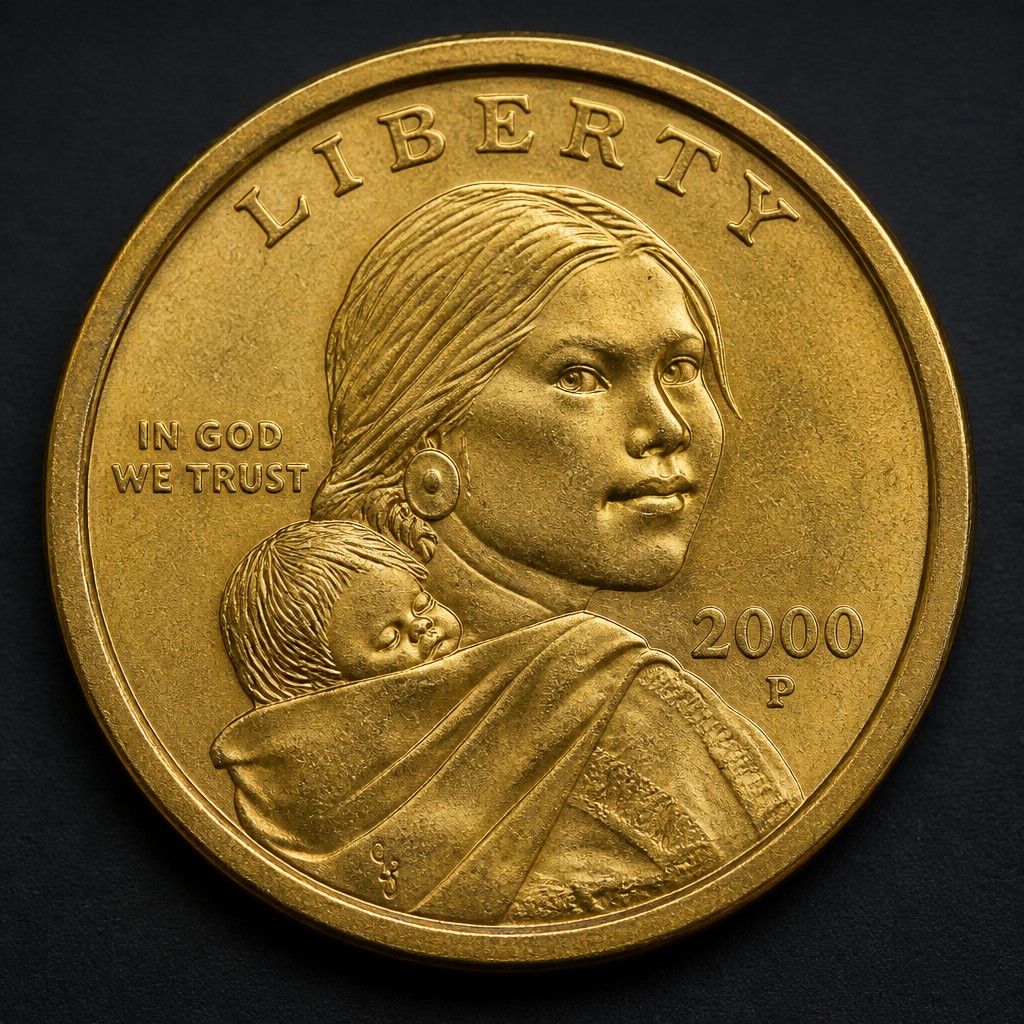
Sacagawea Golden Dollar
2000-present (reverse changed to Native American series in 2009)
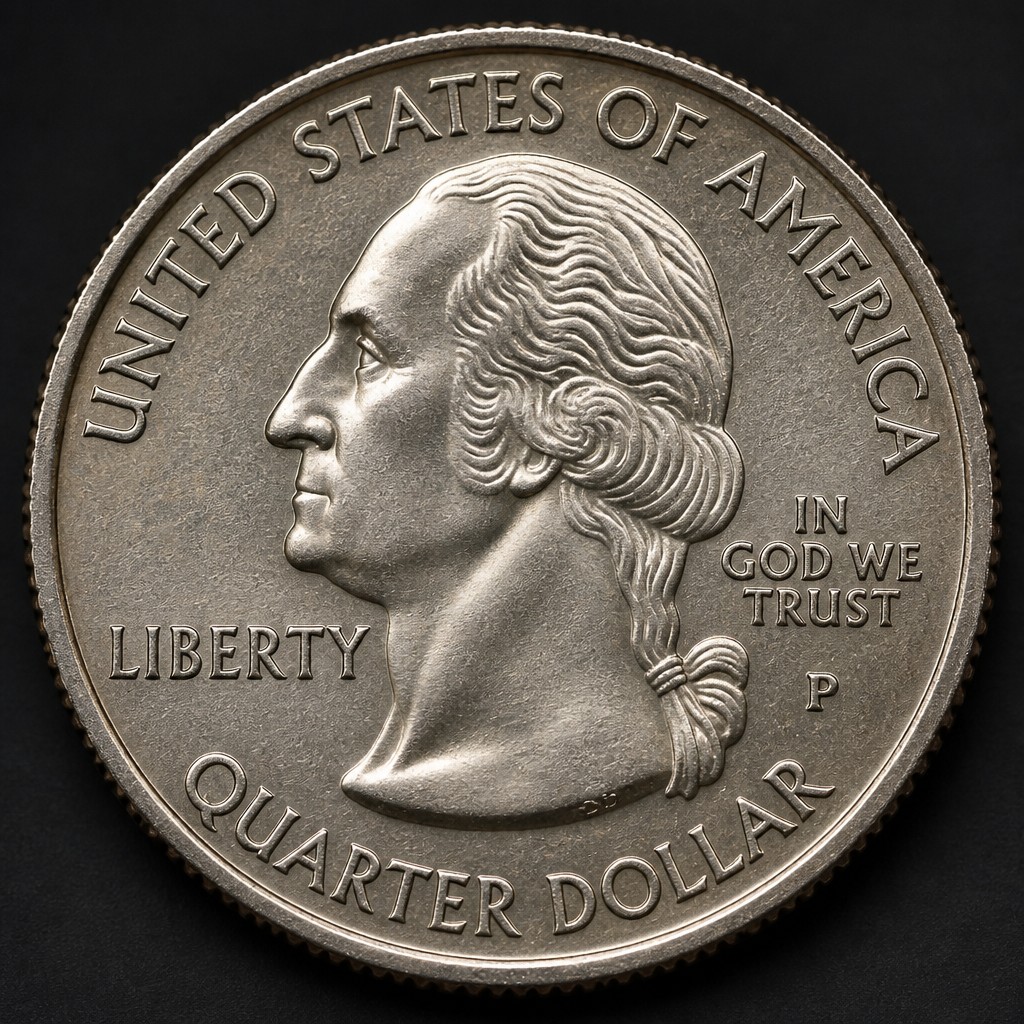
US America the Beautiful Quarters
2010-2021
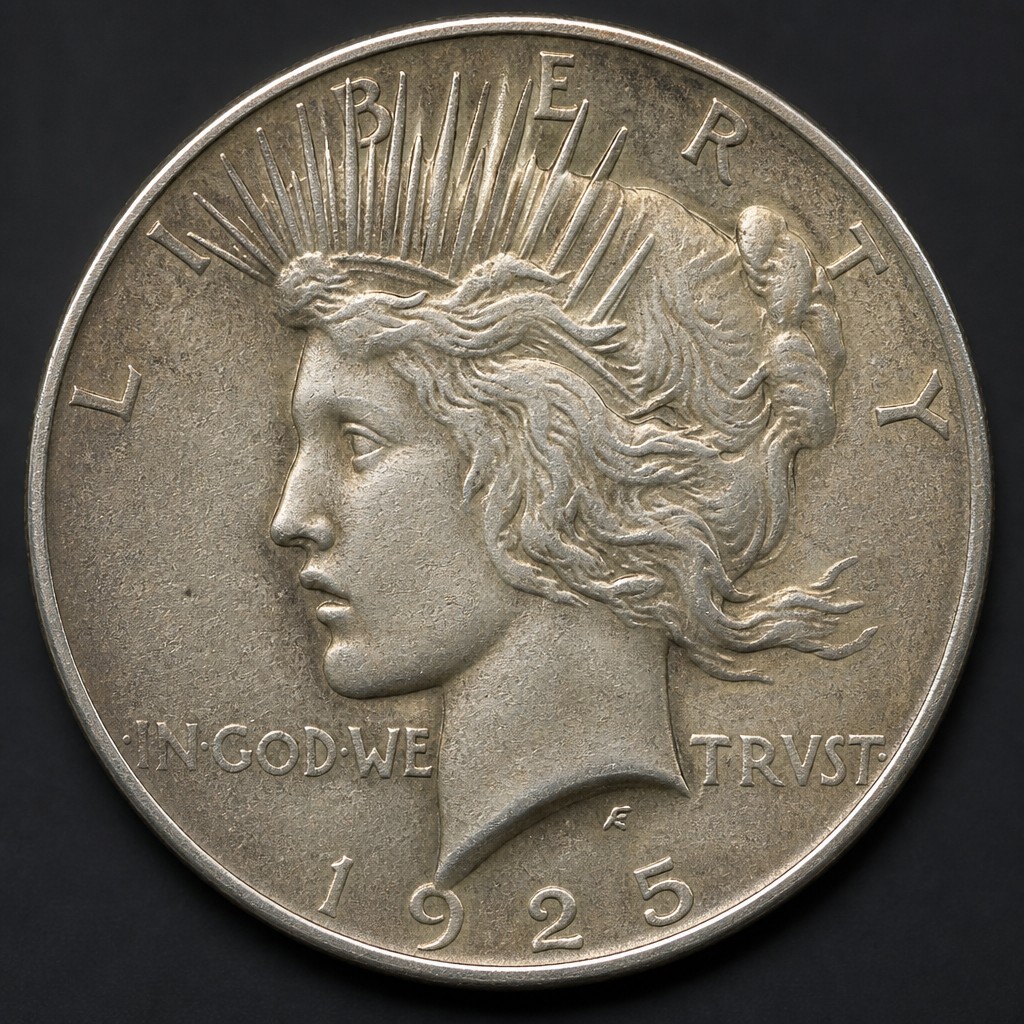
US Peace Dollar
1921–1928, 1934–1935
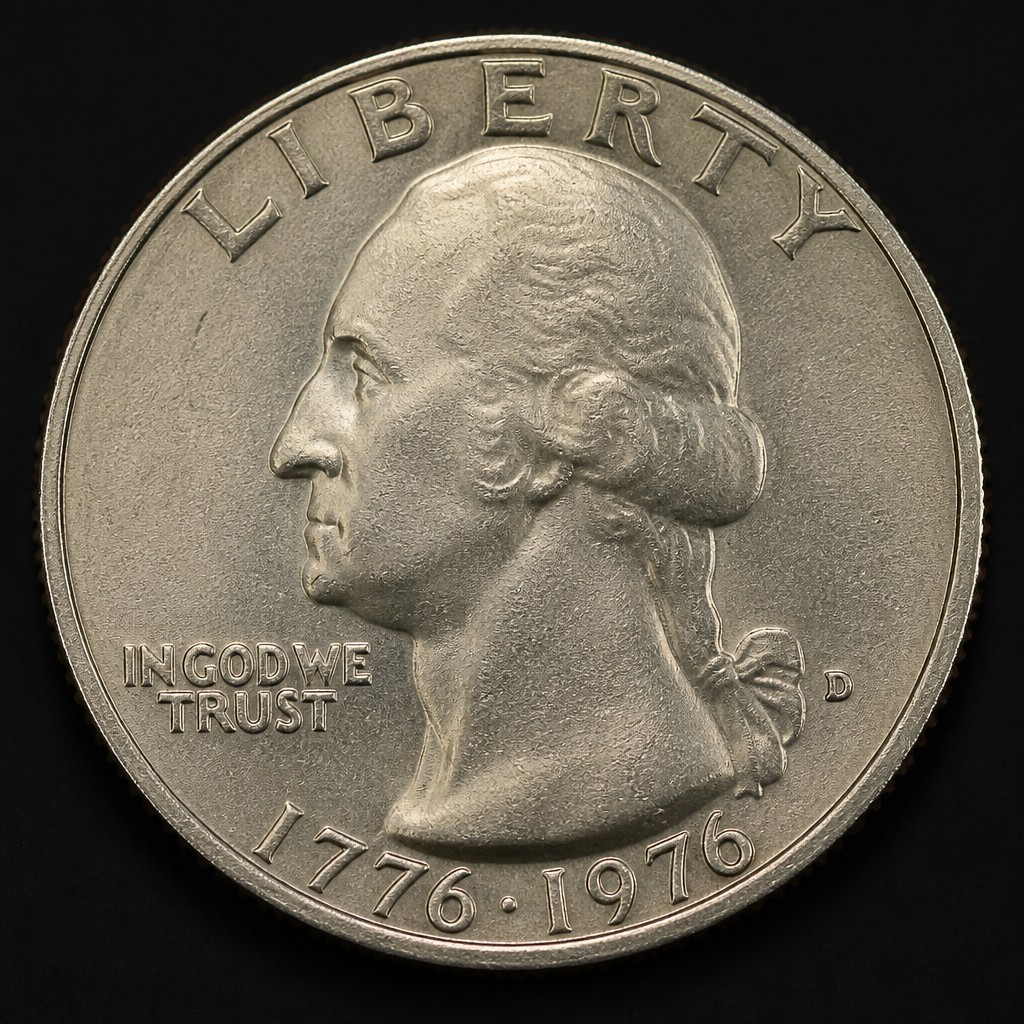
US Bicentennial Quarter (1976)
1976 (dated 1776-1976)