Coin Identifier
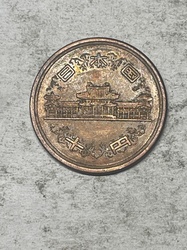
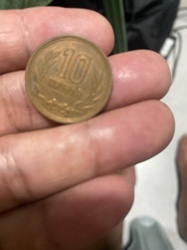
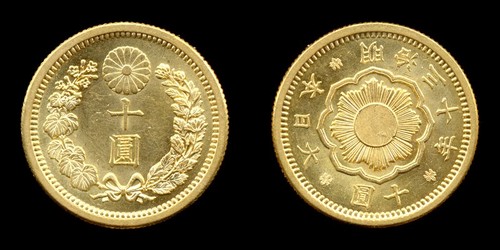
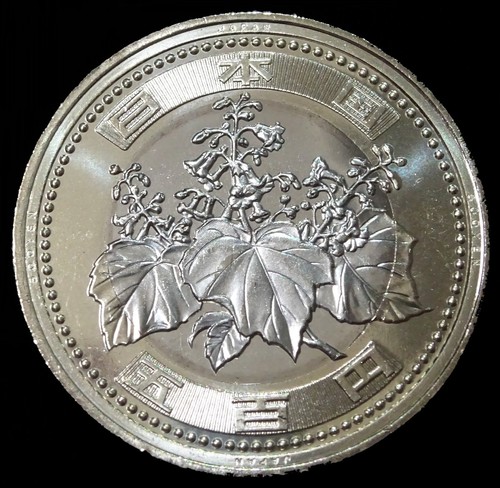
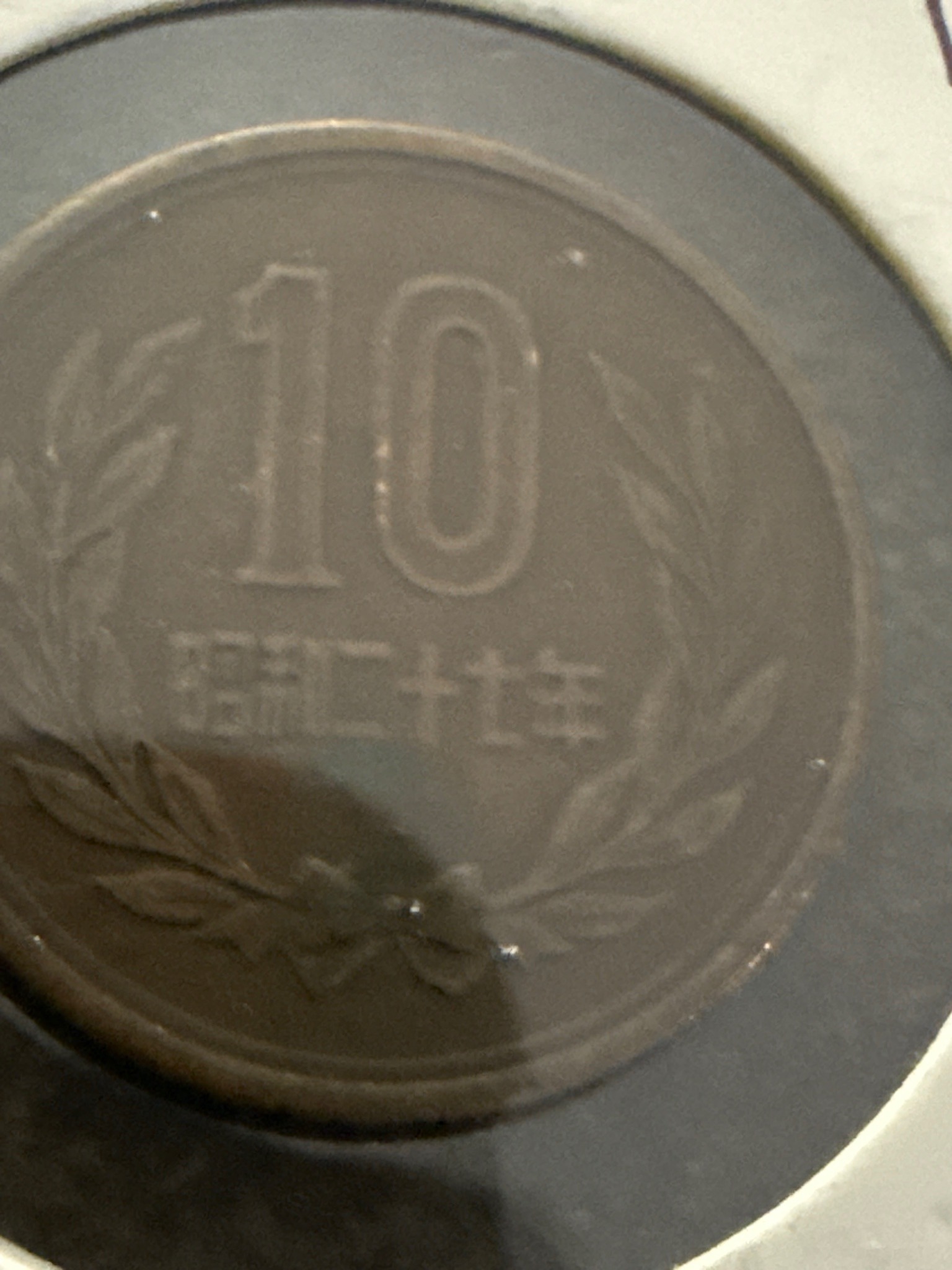
Japanese 10 Yen (Byodoin Temple) — obverse
Obverse
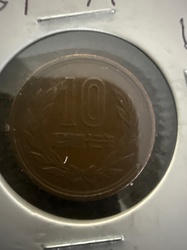
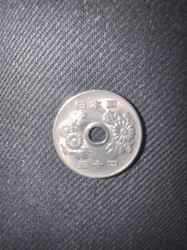
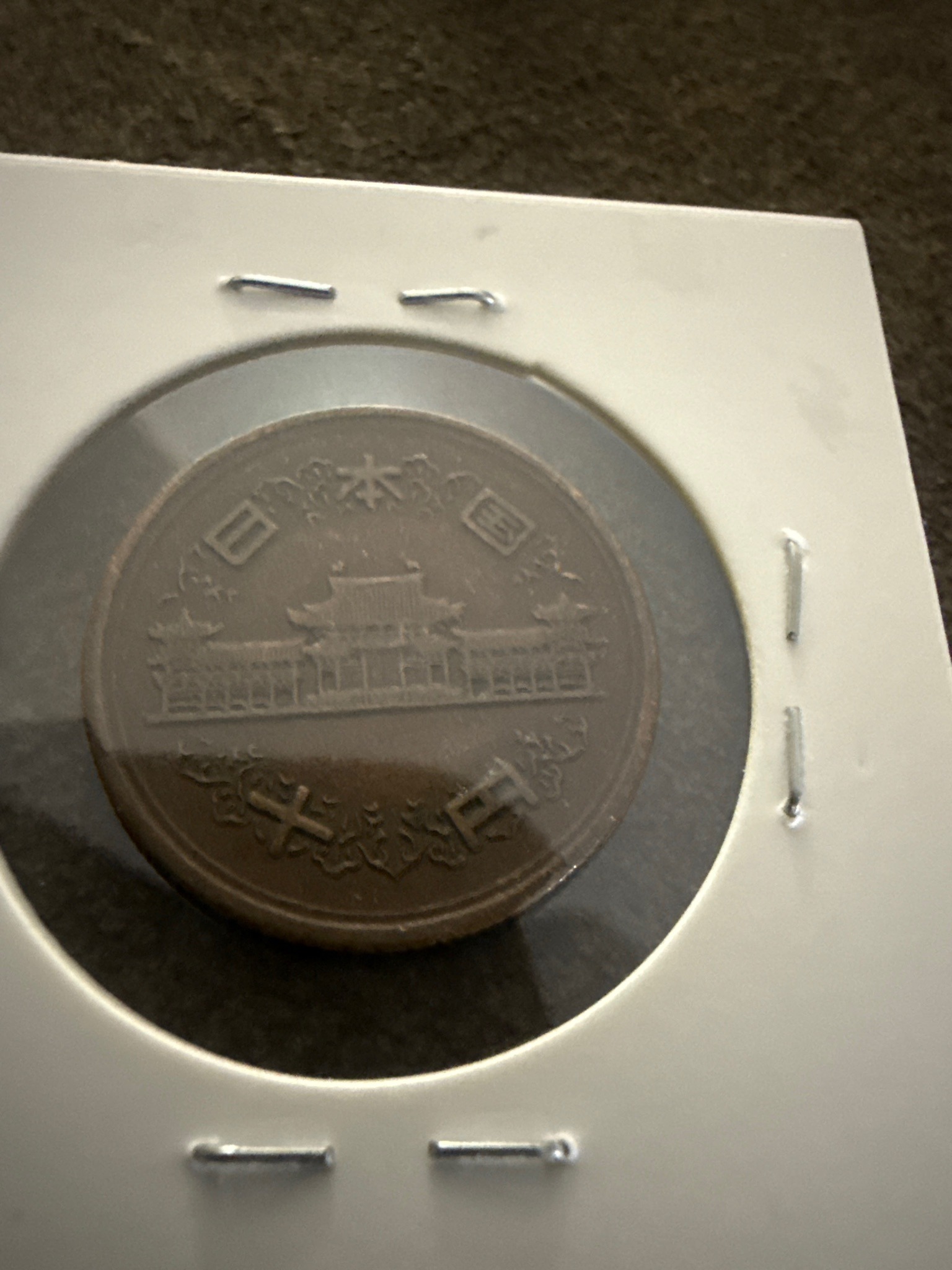
Japanese 10 Yen (Byodoin Temple) — reverse
Reverse
10 Yen

Japanese 10 Yen (Byodoin Temple)

Japan (Japanese Government / Japan Mint) · Showa 27 (1952)

A bronze coin featuring the Phoenix Hall of the Byodoin Temple on one side and a large numeral 10 surrounded by an evergreen wreath on the other.

Country
Japan (Japanese Government / Japan Mint)
Year
Showa 27 (1952)
Denomination
10 Yen
Metal
Bronze (95% Copper, 4% Zinc, 1% Tin)

This report is AI-generated and can be wrong. Always verify grade, authenticity, and value with a qualified dealer or certified grading service before buying, selling, or insuring.

Explore Japanese 10 Yen (Byodoin Temple) in the encyclopedia →

Identify your own coins.

Get a report just like this from any photo, free.

Overview

A bronze coin featuring the Phoenix Hall of the Byodoin Temple on one side and a large numeral 10 surrounded by an evergreen wreath on the other.

Historical significance

Introduced in 1951 (Showa 26) as a high-denomination circulating coin following post-WWII inflation in Japan. The Byodoin Temple depicted is a famous Buddhist temple in Uji, Kyoto, known for its iconic Phoenix Hall.

Obverse (front)

Features the Phoenix Hall (Amida-do) of the Byodoin Temple in Kyoto, surrounded by the country name 'Nihon Koku' (State of Japan) at the top and the denomination characters 'Ju En' (Ten Yen) at the bottom.

Reverse (back)

Features a large numeral '10' at the top with the Japanese date 'Showa Nijunana-nen' (Year 27 of Showa / 1952) written horizontally below it, all framed by an open laurel wreath tied with a bow at the bottom.

Estimated value

$1 - $5 in circulated condition, up to $15-$30 in uncirculated (Mint State) condition.

What drives this coin's value

Overall state of preservation, presence of original mint luster, freedom from scratches or corrosion, and specific key dates (such as Showa 31, which is rarer).

Grade assessment

About Uncirculated to Mint State (AU/MS) with minor toning typical of older bronze coins, showing strong details on the temple architecture.

Mintage & rarity

High mintage, very common in circulated grades. Millions were produced annually.

Authenticity & counterfeit red flags

Counterfeits for common circulation 10 Yen coins are extremely rare because of their low face value and massive mintage. Verify weight (4.5g) and composition (bronze) if suspicious.

Notable varieties & errors

Early issues feature a design where the foliage around the temple includes vines that connect differently, but major errors are scarce.

Similar coins

Later issues of the Japanese 10 Yen coin, which maintain the exact same design but bear different Showa, Heisei, or Reiwa era dates.

Care & preservation

Store in a cool, dry place inside a PVC-free coin holder or flip. Avoid cleaning or touching the metal with bare hands to preserve its original surface and prevent accelerated toning or corrosion.