Coin Identifier

Coin Encyclopedia

Search and identify coins from around the world — with country, denomination, metal, mint, history, and how to tell them apart.
Norwegian Krone

Norwegian Krone

The krone became Norway's national currency in 1875 upon joining the Scandinavian Monetary Union, and it has remained Norway's currency ever since, featuring the reigning monarch's portrait through the decades.

European
Swedish Krona

Swedish Krona

The krona has been Sweden's national currency since 1873, originally struck in silver as part of the Scandinavian Monetary Union and today issued in base metals bearing the reigning monarch's portrait.

European
New Zealand Lord of the Rings Coins (2003)

New Zealand Lord of the Rings Coins (2003)

New Zealand issued legal-tender coins featuring characters and scenes from Peter Jackson's Lord of the Rings film trilogy, celebrating the films' production in the country with both a circulating dollar and premium collector coins.

Commemorative
US State Quarters Series

US State Quarters Series

A landmark US Mint program issuing a new quarter reverse design for each of the 50 states in the order they joined the Union, sparking widespread collecting interest nationwide.

United States
Venetian Ducat

Venetian Ducat

Gold coin first struck by the Republic of Venice in 1284, prized for its remarkably consistent weight and purity, which made it a dominant trade coin across medieval and Renaissance Europe.

European
Visigothic Gold Tremissis

Visigothic Gold Tremissis

Small gold coin of the Visigothic kings of Spain, evolving from crude imitations of Roman/Byzantine coinage into the first distinctly national royal coinage of post-Roman Western Europe.

European
Islamic Silver Dirham (Abbasid)

Islamic Silver Dirham (Abbasid)

The standard silver coin of the Abbasid Caliphate, continuing the text-only Kufic script tradition and widely used across a vast medieval trade network stretching from Europe to Central Asia.

Ancient
Finnish Markka

Finnish Markka

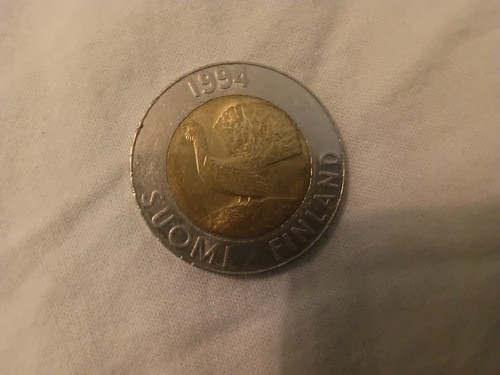
Finland's national currency from the era of Russian imperial rule until the adoption of the euro, issued in a range of coin denominations reflecting the country's changing political history.

European
Venetian Gold Ducat

Venetian Gold Ducat

First struck in 1284, the Venetian gold ducat became medieval Europe's most trusted trade coin, prized for centuries for its unwavering weight and purity.

European
Florentine Florin

Florentine Florin

Introduced in 1252, the gold florin of Florence became medieval Europe's leading trade coin, its lily emblem and fixed gold standard copied by dozens of other mints.

European
Bolivian Boliviano Silver

Bolivian Boliviano Silver

Bolivia's national currency unit, the boliviano, was introduced in the 1860s as a substantial silver coin and remains the country's monetary unit in modern, non-silver form.

Latin American
Brazilian 20000 Reis Gold

Brazilian 20000 Reis Gold

The highest-value gold coin of the Empire of Brazil, struck intermittently under Emperor Pedro II to support the country's monetary reserves and international trade.

Latin American
Guatemala Quetzal Silver

Guatemala Quetzal Silver

Guatemala's modern national currency unit, named after the resplendent quetzal bird, introduced in the 1920s with a substantial silver coin marking the country's monetary modernization.

Latin American
Argentine Peso Moneda Nacional (Patacón)

Argentine Peso Moneda Nacional (Patacón)

Argentina's long-standing peso moneda nacional coinage, informally nicknamed the patacón, formed the backbone of the country's currency from the 1880s well into the twentieth century.

Latin American
1967 Centennial Gold $20 Coin

1967 Centennial Gold $20 Coin

A gold $20 coin struck to mark the 100th anniversary of Canadian Confederation in 1967, sold mainly to collectors as part of the country's centennial commemorative coinage.

Commemorative
Hungarian Ducat

Hungarian Ducat

A remarkably long-lived gold coin of the Kingdom of Hungary, showing St. Ladislaus and the Madonna and Child, prized for centuries as one of Europe's most trusted trade coins.

European
Portuguese 1000 Reis

Portuguese 1000 Reis

A large silver crown of the Kingdom of Portugal, bearing the reigning monarch's portrait and national arms, serving as the country's principal high-value silver coin before the 1910 republic.

European
Colombian Peso Silver

Colombian Peso Silver

Colombia's traditional silver dollar-sized coin, struck across different eras of the country's political evolution, from Nueva Granada through the modern Republic of Colombia.

Latin American
New Zealand Penny (KGVI)

New Zealand Penny (KGVI)

New Zealand bronze penny struck under King George VI, notable for its reverse featuring the native tuatara reptile, part of the country's distinctive 1933-launched coin series.

Africa & Oceania
Rama IV Siamese Baht (first machine-struck)

Rama IV Siamese Baht (first machine-struck)

Landmark Siamese silver coin introduced under King Mongkut (Rama IV), marking the country's shift from traditional bullet-shaped money to modern, flat, machine-struck coinage.

Asian
Siam Tin Pot Duang / Porcelain Gambling Token

Siam Tin Pot Duang / Porcelain Gambling Token

Two related forms of traditional Siamese small change: tin versions of the bent bullet-shaped pot duang currency, and porcelain gambling tokens used informally as local currency in Chinese-run gaming houses.

Asian
Italian 20 Lire Gold (Vittorio Emanuele)

Italian 20 Lire Gold (Vittorio Emanuele)

The Kingdom of Italy's standard 20 lire gold coin, issued under kings including Vittorio Emanuele II, sharing the Latin Monetary Union's gold specifications with coins like the French Napoleon.

European
Netherlands Rijksdaalder Gulden

Netherlands Rijksdaalder Gulden

The 2.5 guilder coin of the Kingdom of the Netherlands, carrying forward the historic rijksdaalder name through the monarchy era until the euro's adoption.

European
1795 Flowing Hair Silver Dollar

1795 Flowing Hair Silver Dollar

One of the earliest United States silver dollars, sharing the Flowing Hair design introduced in 1794 and struck in two collectible leaf-count varieties.

United States