
Palestine 2 Mils
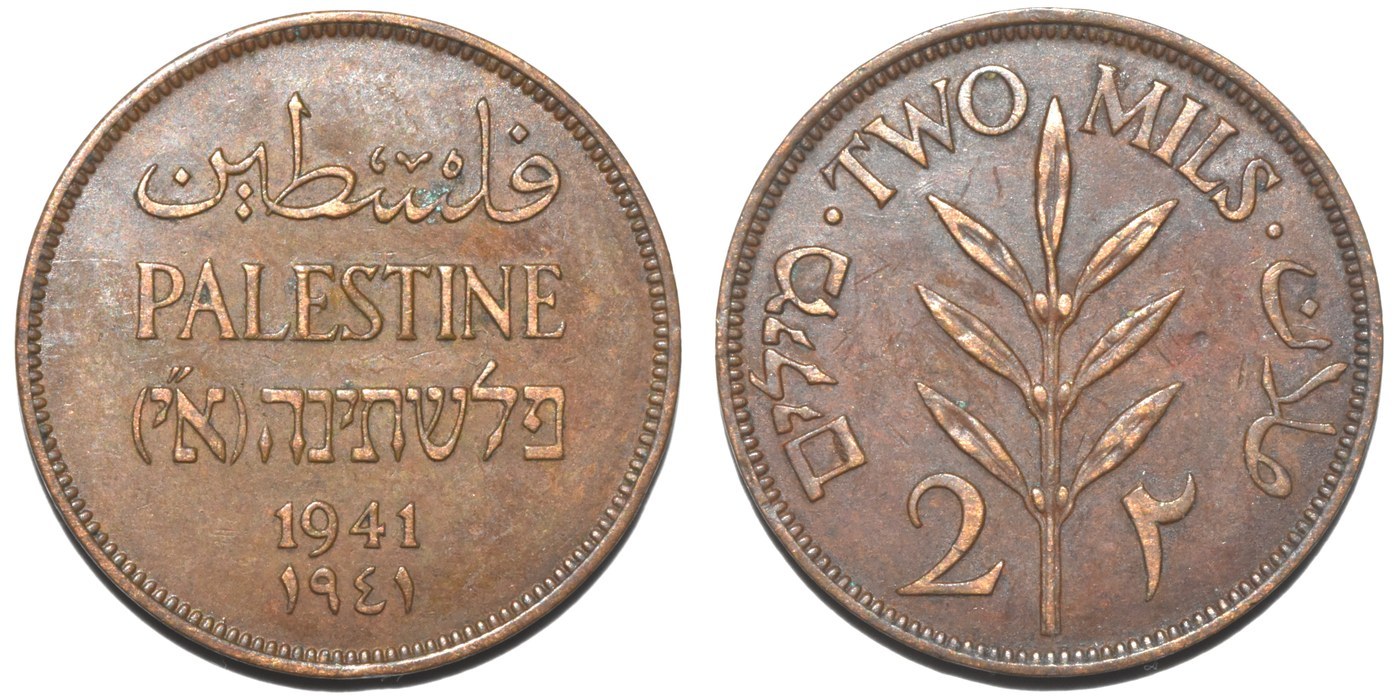
A small bronze coin of British Mandate Palestine, inscribed PALESTINE in English, Arabic and Hebrew, with an olive sprig above the TWO MILS value.
- Country
- Palestine
- Denomination
- 2 Mils
- Metal
- Bronze
Got a coin like this?
Identify any coin from a photo, free.
Overview
The Palestine 2 Mils is a small bronze coin issued under the British Mandate for Palestine. It carries the country name PALESTINE in three scripts, English, Arabic and Hebrew, reflecting the multilingual administration of the territory between the World Wars.
The mil was the smallest unit of the Palestine pound, with 1,000 mils to the pound, so the 2 Mils was a minor everyday coin used for small change. It belongs to a series that also included 1, 5, 10 and 20 mil pieces, of which the 1 and 2 mils were struck in solid bronze while the higher values were holed cupronickel.
Because it circulated widely across the Mandate era, the 2 Mils is a familiar and historically evocative coin today, valued as much for the vanished political entity it represents as for the coin itself.
History & Background
Britain administered Palestine under a League of Nations mandate from 1920, and a distinct Palestine currency was introduced in the mid-1920s to replace the Egyptian pound that had circulated earlier. The mil-denominated bronze and cupronickel coins, including this 2 Mils, entered use from 1927.
The deliberately trilingual inscriptions, English, Arabic and Hebrew, were a hallmark of Mandate-era official design, acknowledging the territory's Arab and Jewish populations alongside the British administration. On the Hebrew side the name appears as Palestina followed by the letters aleph-yod, an abbreviation read as Eretz Israel.
The series continued to be struck in several years across the 1920s through the mid-1940s, ending with the winding down of the Mandate. When the Mandate concluded and new states and currencies emerged in 1948, these coins were demonetized, leaving them as artifacts of a specific historical period rather than ongoing money.
How to Identify
The obverse is dominated by the single word denoting the country, rendered as PALESTINE in English at the center with the equivalent name in Arabic and in Hebrew arranged around it, together with the date. There is no monarch's portrait, unusual for a British colonial coin of the era.
The reverse displays the value TWO MILS in English accompanied by the Arabic and Hebrew equivalents, with a small olive sprig or branch as the central decorative device. The presence of this plant motif and the plain, portrait-free layout are strong identifiers.
Physically it is a small, solid bronze coin, brown to reddish-brown in tone with no central hole. That solid, coppery fabric distinguishes the 1 and 2 mil bronzes from the holed cupronickel 5, 10 and 20 mils in the same series. Confirm the value reads TWO MILS to separate it from the very similar 1 Mil piece.
Value & Collectibility
The Palestine 2 Mils is generally an affordable world coin, with common dates in worn condition trading for modest sums as historical curiosities. Its appeal comes largely from the interest in Mandate-era Palestine rather than from precious-metal content, as bronze carries no bullion premium.
Value rises sharply with condition and with scarcer dates. Well-struck examples retaining original red or red-brown bronze luster command a significant premium over dark, worn pieces, and certain years are much harder to find than others, so date and grade should both be checked.
For any particular coin, identify the exact date, assess the grade honestly, and compare recent sales of the same date rather than relying on a single figure, since prices for this series vary widely between a common circulated coin and a scarce high-grade example.
Frequently asked questions
What metal is the Palestine 2 Mils made of?
It is struck in bronze, a copper-based alloy, and has no precious-metal content. Expect a solid, coppery-brown small coin with no central hole, unlike the holed cupronickel 5, 10 and 20 mil pieces in the same series.
Why does the coin have three languages on it?
The British Mandate administration used English, Arabic and Hebrew together on its official coinage to acknowledge the territory's populations. That trilingual inscription is a defining feature of Palestine Mandate coins.
Is this coin still legal tender?
No. Palestine Mandate currency was demonetized when the Mandate ended and new currencies replaced it around 1948. The 2 Mils survives today only as a collectible historical coin, not as spendable money.
What is the plant on the reverse?
The reverse carries a small olive sprig or branch above the TWO MILS value. This plant motif, combined with the absence of any ruler's portrait, helps distinguish the coin at a glance.
Palestine 2 Mils guides
In-depth guides for identifying, valuing, and collecting Palestine 2 Mils.
Other coins you may enjoy
5 Aurar
1926-1942
20 Kronor
1925 (denomination struck 1873-1925)
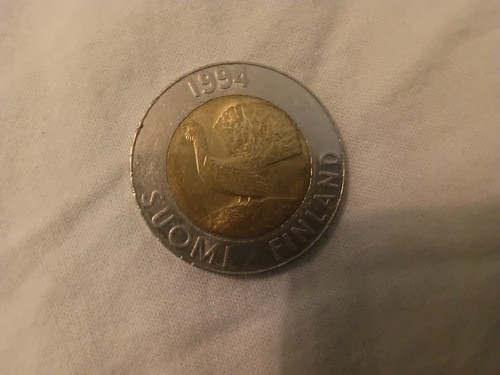
10 Markka
1993–2001
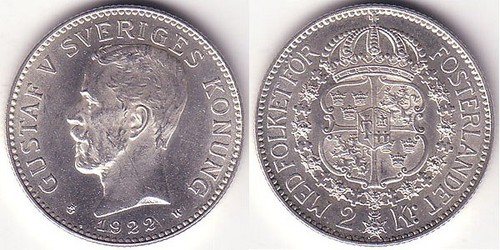
2 Kronor
1910-1940 (this example dated 1922)
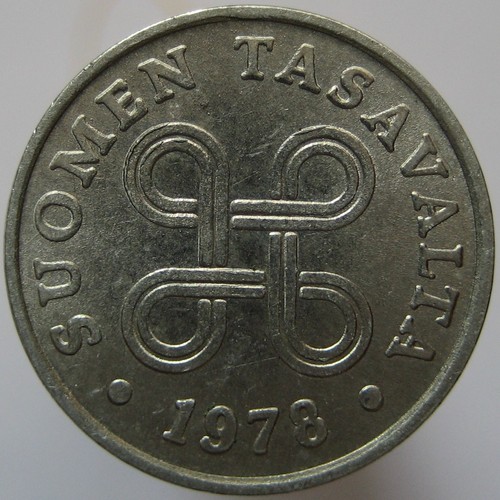
1 Penni
1969–1979
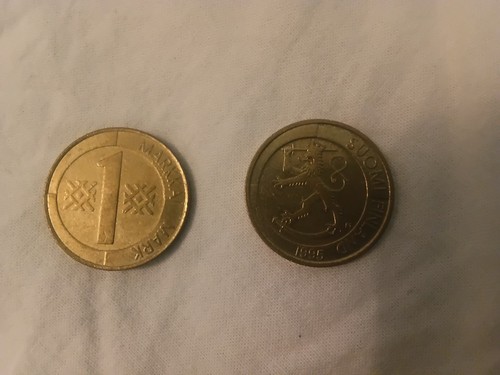
1 Markka
1993–2001
Kenya 5 Shillings
Bimetallic issues (2005–2010)
Kenya 20 Shillings
Modern issue (late 1990s–2000s)
South Africa Farthing
1923-1960
Kenya 10 Shillings
Republic of Kenya, bimetallic issues (mid-1990s to c. 2010)
Gold Sovereign
1817–present
Henri V Five Francs
1831