
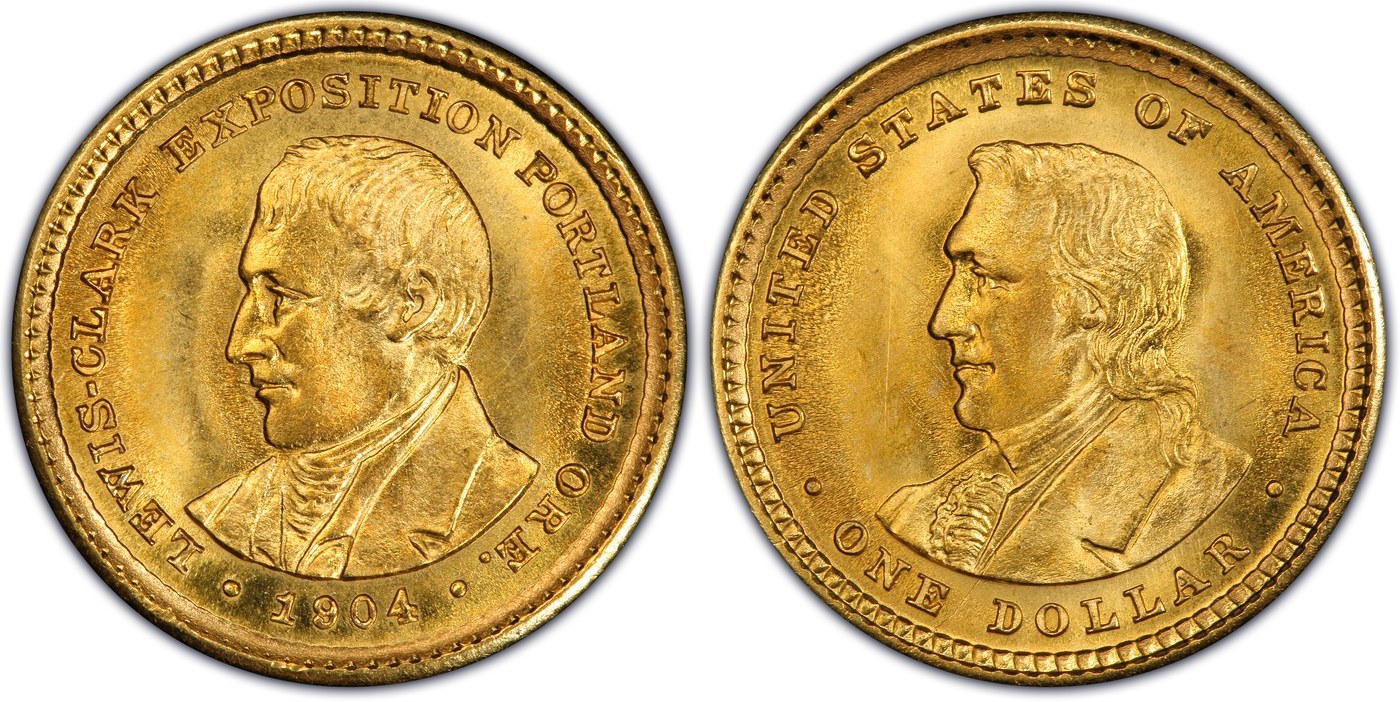
Lewis and Clark Exposition Dollar
A small U.S. gold dollar for the 1905 Portland exposition — unusual for carrying an explorer portrait on each side, Meriwether Lewis and William Clark.
- Country
- United States
- Denomination
- $1
- Metal
- Gold
Got a coin like this?
Identify any coin from a photo, free.
Overview
The Lewis and Clark Exposition Dollar is a classic United States commemorative gold dollar issued for the Lewis and Clark Centennial Exposition held in Portland, Oregon, in 1905. It is a tiny coin, struck in .900 fine gold at the standard gold-dollar size, and it is best known for a design quirk: it carries a portrait of an explorer on both faces rather than a portrait and a scenic reverse.
One side shows Meriwether Lewis and the other shows William Clark, making this the only U.S. coin type to bear two different portraits, one on each side. Both are attributed to Chief Engraver Charles E. Barber. The photographed example, with the "LEWIS AND CLARK EXPOSITION PORTLAND" legend and centennial dates, is a genuine specimen of this two-portrait gold dollar.
Coins were dated 1904 and 1905. Both dates are scarce today because relatively few were sold at the fair and large numbers of the unsold pieces were later returned and melted, leaving modest surviving populations prized by commemorative collectors.
History & Background
The Lewis and Clark Centennial Exposition marked one hundred years since the Corps of Discovery expedition of 1804–1806. To help fund and promote the Portland fair, Congress authorized a commemorative gold dollar, and the coins were produced at the Philadelphia Mint carrying the dates 1904 and 1905.
Charles E. Barber prepared the dies, placing Meriwether Lewis on one side and William Clark on the other. This was only the second U.S. commemorative gold dollar series, following the 1903 Louisiana Purchase Exposition dollars, and it continued the early-1900s practice of selling small gold commemoratives at a premium to raise money for expositions. Numismatic promoter Farran Zerbe was heavily involved in distributing the coins at the fair.
Sales fell well short of the authorized quantity. Many coins went unsold, and a large share were returned to the Mint and melted, so the net surviving mintage for each date runs only into the low thousands. Today both the 1904 and 1905 issues are collected as key early commemoratives.
How to Identify
The defining feature is the two-portrait layout: one side shows Meriwether Lewis and the other shows William Clark, both facing profiles. Unlike most coins, there is no seated figure, wreath, or scenic reverse — an explorer's bust appears on each face. Look for the legend naming the Lewis and Clark Exposition and Portland, along with centennial dates tied to the expedition (1804–1904 or 1805–1905).
This is a small gold coin, roughly 15 mm in diameter and about 1.7 grams in .900 fine gold, the same physical standard as a regular U.S. gold dollar. Its warm yellow color and diminutive size are immediate clues. There is no mint mark, since all pieces were struck at Philadelphia.
The date on the coin distinguishes the two issues: 1904 versus 1905. Both are legitimate; the year simply identifies which of the two production runs a given coin belongs to. Genuine strikes show crisp Barber lettering and sharp portrait detail.
Value & Collectibility
As a scarce classic gold commemorative, the Lewis and Clark dollar trades well above its small gold content, on the strength of low surviving mintages and collector demand. Values are driven mainly by date, condition, and eye appeal rather than by the metal itself.
Circulated and lightly handled examples of either date command solid collector prices, while choice uncirculated and high certified grades bring substantially more. The two dates are valued separately, and gem-quality survivors are genuinely scarce because many coins were cleaned or mishandled over the decades.
Because figures vary with the market and with each coin's grade, any specific value should be checked against recent auction results and current dealer listings for certified examples. Professional grading (PCGS or NGC) is common for these coins and strongly affects price.
Frequently asked questions
Why does this coin have a portrait on both sides?
It was designed to honor both explorers, so Meriwether Lewis appears on one face and William Clark on the other. It is the only U.S. coin type to carry two different portraits, one on each side.
What years was the Lewis and Clark Exposition Dollar made?
It was struck at Philadelphia dated 1904 and 1905, tied to the 1905 Lewis and Clark Centennial Exposition in Portland, Oregon. Both dates are collected separately.
Is it made of real gold?
Yes. It is a genuine gold dollar struck in .900 fine gold at the standard U.S. gold-dollar size, about 15 mm across and roughly 1.7 grams.
Why is it so scarce?
Sales at the fair fell short of expectations, and many unsold coins were returned to the Mint and melted. The net surviving mintage for each date is only in the low thousands.
Does it have a mint mark?
No. All Lewis and Clark Exposition dollars were struck at the Philadelphia Mint and carry no mint mark. The date, 1904 or 1905, is what distinguishes the two issues.
Lewis and Clark Exposition Dollar guides
In-depth guides for identifying, valuing, and collecting Lewis and Clark Exposition Dollar.
Other coins you may enjoy
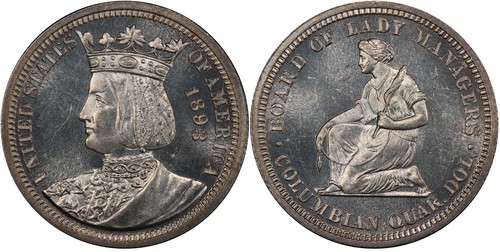
Isabella Quarter
1893
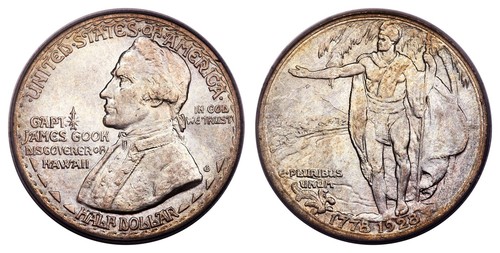
Hawaiian Sesquicentennial Half Dollar
1928
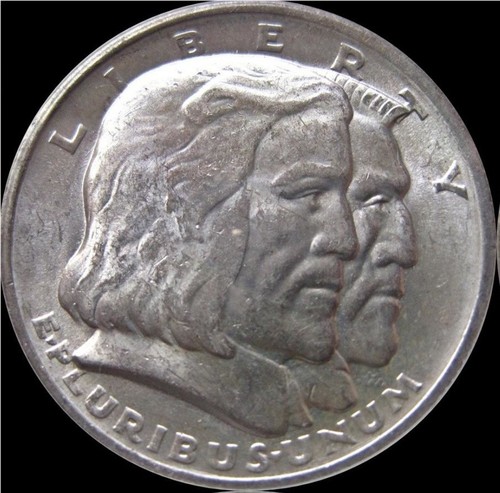
Long Island Tercentenary Half Dollar
1936
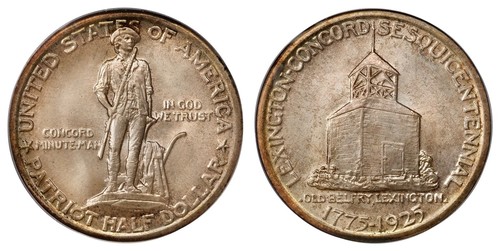
Lexington-Concord Sesquicentennial Half Dollar
1925
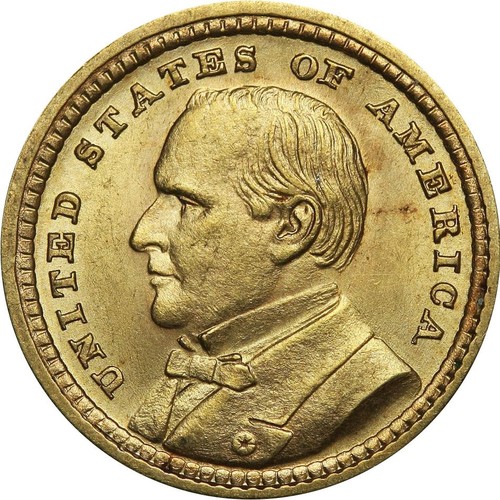
Louisiana Purchase Exposition Dollar (Jefferson)
1903
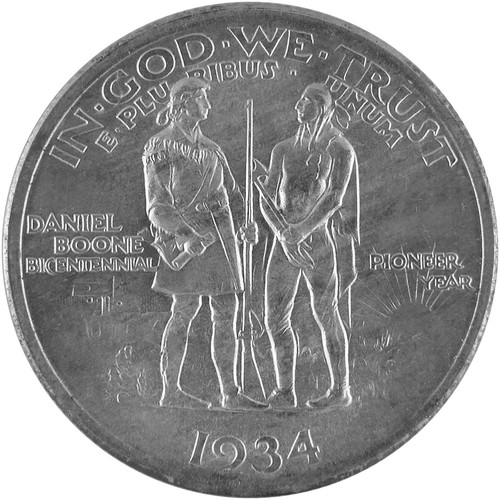
Daniel Boone Bicentennial Half Dollar
1934–1938
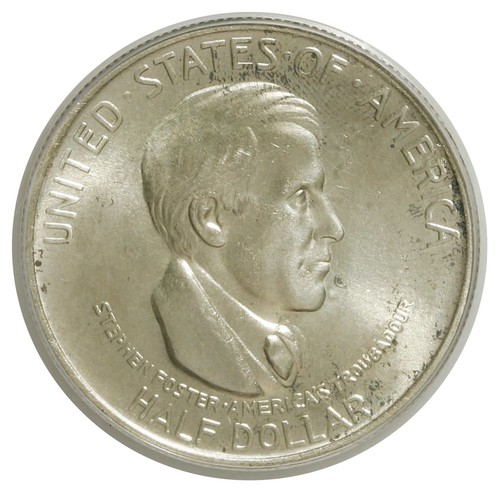
Cincinnati Music Center Half Dollar
1936
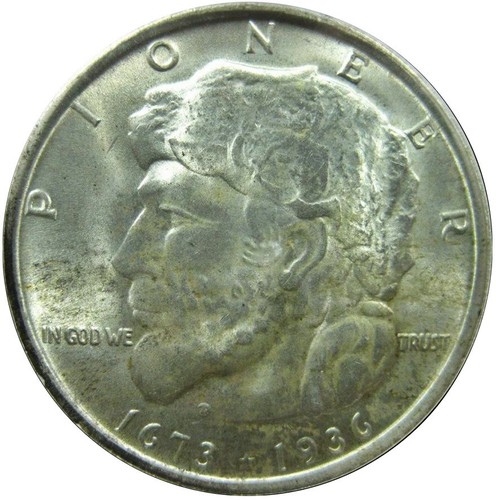
Elgin Illinois Centennial Half Dollar
1936
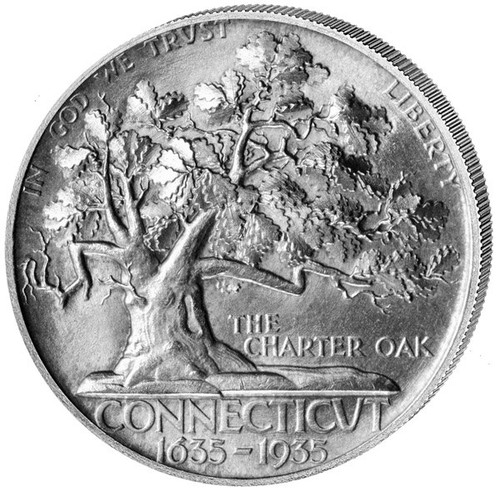
Connecticut Tercentennial Half Dollar
1935
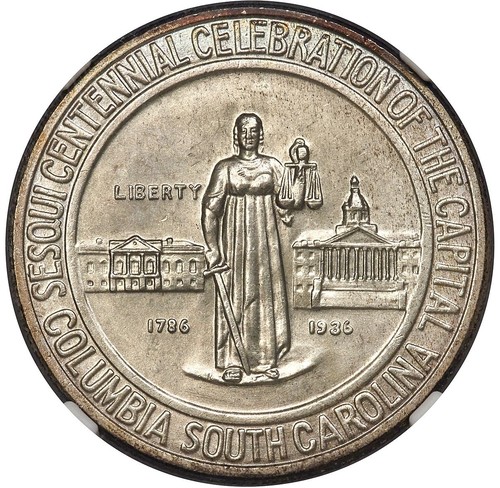
Columbia South Carolina Sesquicentennial Half Dollar
1936
Sesquicentennial of American Independence Quarter Eagle
1926
Pilgrim Tercentenary Half Dollar
1920-1921