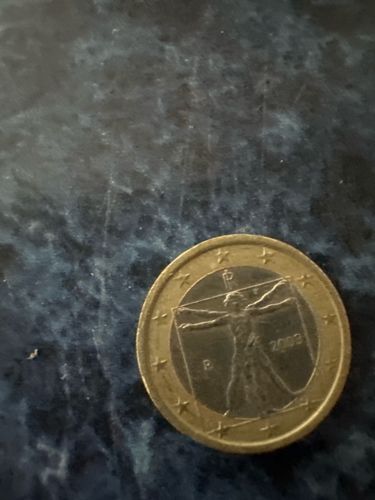
Italian 1 Euro Coin
Italy · 2003
The coin features Leonardo da Vinci's drawing of the 'Vitruvian Man' in the center. The year of issue, '2003', is visible to the right of the figure, and the mint mark 'R' (for Rome) is to the left. The twelve stars of the European Union are depicted on the outer ring.
- Country
- Italy
- Year
- 2003
- Denomination
- 1 Euro
- Metal
- Bimetallic: Nickel Brass (outer ring) and Copper-Nickel (inner part)
This report is AI-generated and can be wrong. Always verify grade, authenticity, and value with a qualified dealer or certified grading service before buying, selling, or insuring.
Identify your own coins.
Get a report just like this from any photo, free.
Overview
Historical significance
Estimated value
Care & preservation
More like this
Other italy coins
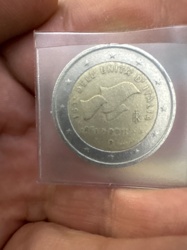
Italian 2 Euro Commemorative Coin - 150th Anniversary of Italian Unification
Italy · 2011
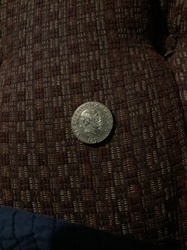
Italy 1 Lira Vittorio Emanuele II
Kingdom of Italy · 1861
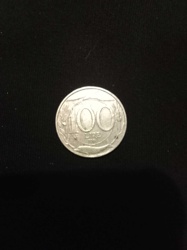
Italian 100 Lire (Minerva Type II)
Italy · 1994
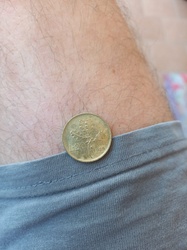
20 Lire
Italy · 1989
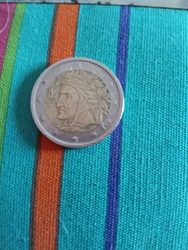
Italian 2 Euro Coin (Dante Alighieri)
Italy · 2002
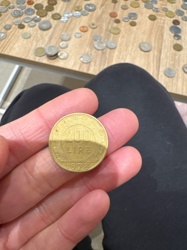
Italian 200 Lire (Lavoro)
Italy · 1978