Coin Encyclopedia
Search and identify coins from around the world — with country, denomination, metal, mint, history, and how to tell them apart.
Australian 50 Cent (round 1966 silver)
Australia's original round 50-cent coin from the 1966 decimal changeover, struck in 80% silver and withdrawn the same year once its bullion value exceeded face value.
Africa & Oceania
1873 Doubled Die Two-Cent Piece
A doubled die variety from the final year of the short-lived two-cent piece, showing noticeable doubling in the date or lettering caused by a die hubbing misalignment.
Errors & Varieties
1859 Indian Head Cent (Laurel Wreath)
The first-year Indian Head cent, struck only in 1859 with a distinctive laurel wreath reverse that was replaced by an oak wreath and shield the following year.
United States
Type II Silver Three-Cent Piece
A short-lived redesign of the silver three-cent piece with heavier silver content and an outlined star, known for weak strikes and generally low mintages.
United States
Silver Three-Cent Piece (Trime)
A tiny silver coin created to match the new 3-cent postage rate, the trime is the smallest-diameter coin ever struck by the U.S. Mint.
United States
1795 Liberty Cap Large Cent
An early United States large cent from 1795 featuring the Liberty Cap design, struck as America's young Mint worked out production and metal-supply challenges.
United States
1908-S Indian Head Cent
The first Indian Head cent struck at the San Francisco Mint, marking the first time a branch mint produced a one-cent coin for the United States.
United States
1876-CC Twenty-Cent Piece
One of the great rarities of United States coinage: a Carson City twenty-cent piece of which nearly the entire mintage was melted, leaving only a small number of survivors known.
United States
1875-S Twenty-Cent Piece
The most commonly encountered date in the short-lived US twenty-cent piece series, struck in large numbers at San Francisco in the coin's debut year.
United States
1888/7 Indian Head Cent Overdate
A scarce overdate variety of the Indian Head cent in which traces of an underlying 7 are visible beneath the final 8 in the 1888 date, from a working die repunched with a new year.
Errors & Varieties
1860 Indian Head Cent (Oak Wreath)
The redesigned Indian Head cent introducing the oak wreath and shield reverse that would remain in use, with only a metal change in 1864, through the end of the series in 1909.
United States
1873 Two-Cent Piece (Proof Only)
The final year of the two-cent piece, struck only in proof for collectors rather than for circulation, and split into Closed 3 and Open 3 date varieties.
United States
George VI Small Cent (Maple Twig)
Canada's bronze one-cent coin issued under King George VI, featuring two maple leaves on a twig, a design that helped modernize Canadian coinage in the late 1930s.
Canadian
1873 Open 3 vs Closed 3 Indian Head Cent
Two distinct date logotype varieties of the 1873 Indian Head cent, distinguished by whether the top loop of the final 3 in the date is nearly closed or clearly open.
Errors & Varieties
1955 Jefferson Nickel Poor Man's Doubled Die
A minor doubled-die variety on the 1955 Jefferson Nickel's date, nicknamed the 'Poor Man's Doubled Die' as a more affordable alternative to the famous 1955 doubled-die Lincoln Cent.
Errors & Varieties
Walking Liberty Half Dollar
Widely admired U.S. half dollar designed by Adolph A. Weinman, depicting Liberty striding toward the sun and a bold eagle on the reverse; its obverse design was later revived for the Silver Eagle.
United States
1804 Draped Bust Quarter
The key date of the short Draped Bust, Heraldic Eagle quarter series, the 1804 issue had a very small original mintage and ranks among the rarest and most valuable early United States quarters in any condition.
United States
Liberty Head V Nickel
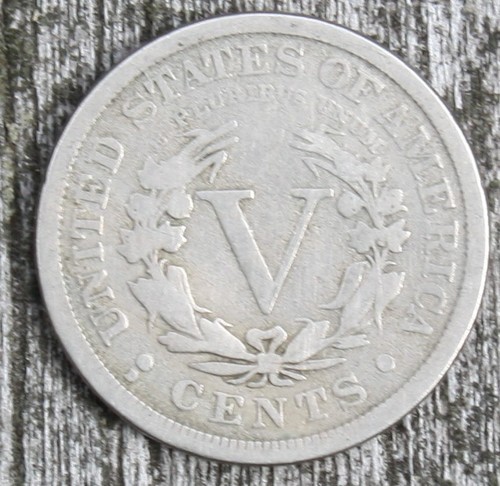
Struck from 1883 to 1912 (with five secretly made 1913 examples), the Liberty Head Nickel is famous for its 1883 'No CENTS' variety and its ultra-rare 1913 issue.
United States
1805 Draped Bust Quarter
A far more available date than the famous 1804, the 1805 quarter is a popular representative of the Draped Bust, Heraldic Eagle type for collectors building an early American type set.
United States
1918/7-D Buffalo Nickel Overdate
A famous overdate error on the Buffalo Nickel where a leftover 1917 working die was hand-repunched with an 1918 date, leaving traces of the underlying 7 visible beneath the 8.
Errors & Varieties
Roosevelt Dime
Issued since 1946 in honor of Franklin D. Roosevelt, this dime is struck in 90% silver through 1964 and copper-nickel clad afterward, and remains in circulation today.
United States
Royal Canadian Mint Colored Poppy Quarter (2004)
Canada's 2004 poppy quarter is widely credited as the world's first coin with a colored design produced for general circulation, honoring Canadian war remembrance with a red poppy at its center.
Commemorative
Connecticut Copper
State-authorized copper coinage struck for Connecticut in the mid-1780s, featuring a bust obverse and seated Liberty reverse across numerous die varieties.
United States
Nova Constellatio Copper
Distinctive early American copper coin featuring a radiant eye within a circle of stars, associated with Gouverneur Morris's proposed decimal coinage plans of the early 1780s.
United States