Coin Identifier

Coin Encyclopedia

Search and identify coins from around the world — with country, denomination, metal, mint, history, and how to tell them apart.
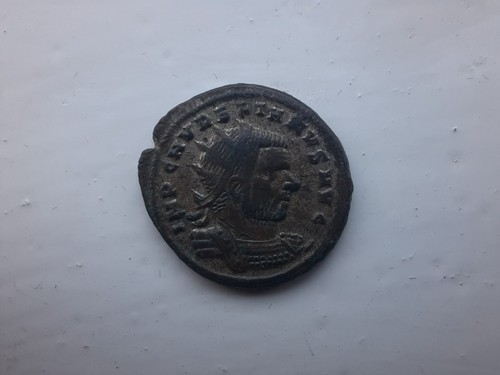
Aegina Land Tortoise Stater

Aegina Land Tortoise Stater

A silver stater from the island of Aegina bearing a land tortoise, successor to the earlier sea-turtle design and among the earliest widely circulated coinages in the Greek world.

Ancient
Ephesus Bee Tetradrachm

Ephesus Bee Tetradrachm

A silver coin from the Ionian city of Ephesus featuring a bee, sacred symbol of the great Temple of Artemis, paired with a stag on the reverse.

Ancient
Akragas (Agrigentum) Eagle and Crab Tetradrachm

Akragas (Agrigentum) Eagle and Crab Tetradrachm

A silver tetradrachm from the wealthy Sicilian city of Akragas, pairing an eagle, symbol of Zeus, with a river crab representing the city's local waterways.

Ancient
Elis Olympia Zeus Stater

Elis Olympia Zeus Stater

A silver stater struck by the city-state of Elis, guardian of the sanctuary of Olympia, showing Zeus on the obverse and his sacred eagle on the reverse.

Ancient
Athenian Owl Tetradrachm

Athenian Owl Tetradrachm

Classical Athenian silver coin depicting Athena and her sacred owl, one of the most recognizable and widely circulated coinages of the ancient Mediterranean world.

Ancient
Niue Silver Owl (Athenian)

Niue Silver Owl (Athenian)

A modern silver bullion coin issued in the name of Niue, reviving the design of the ancient Athenian owl tetradrachm as a tribute to classical coinage.

Bullion
Kroton Tripod Stater

Kroton Tripod Stater

A silver stater from the Greek colony of Kroton in southern Italy, depicting Apollo's sacred tripod, among the finest examples of the early incuse coinage style.

Ancient
Aegina Sea Turtle Stater

Aegina Sea Turtle Stater

One of the earliest widely circulated Greek silver coins, struck by the island city-state of Aegina, featuring a sea turtle and later a land tortoise, and nicknamed simply 'turtles' by ancient traders.

Ancient
Postumus Antoninianus

Postumus Antoninianus

Radiate coin of Postumus, the general who broke away from Rome to found the separatist Gallic Empire covering Gaul, Britain, Germania, and Hispania during the Crisis of the Third Century.

Ancient
Islamic Gold Dinar (Umayyad)

Islamic Gold Dinar (Umayyad)

The first purely epigraphic Islamic gold coin, introduced by Caliph Abd al-Malik around 696 AD, replacing figural Byzantine-style imagery with Quranic inscriptions.

Ancient
Caligula Sestertius

Caligula Sestertius

A large brass sestertius of the notorious emperor Caligula, a scarce and historically fascinating coin due to his short, controversial reign and later condemnation.

Ancient
Carthage Zeugitania Electrum Stater

Carthage Zeugitania Electrum Stater

A gold-silver electrum coin struck by Carthage, chiefly to fund its wars in Sicily, showing a wreathed female head and a horse or horse's head.

Ancient
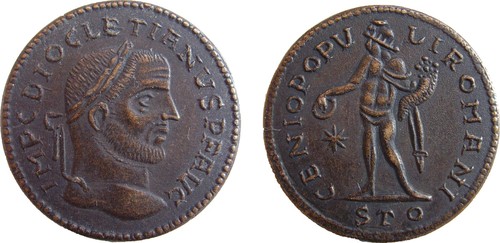
Diocletian Follis

Diocletian Follis

Large bronze follis of Diocletian, whose sweeping reforms ended the Crisis of the Third Century, established the Tetrarchy, and introduced this new standardized coin denomination in 294 AD.

Ancient
Gordian III Antoninianus

Gordian III Antoninianus

Radiate silver coin of Gordian III, who became sole emperor at about thirteen years old and reigned through Rome's costly war with Sassanid Persia.

Ancient
Augustus Aureus Gaius and Lucius Caesar

Augustus Aureus Gaius and Lucius Caesar

One of the most common ancient gold coins, an Augustus aureus honoring his grandsons and intended heirs Gaius and Lucius Caesar, both of whom died young.

Ancient
Trajan Decius Antoninianus

Trajan Decius Antoninianus

Radiate coin of Trajan Decius, remembered for his empire-wide persecution of Christians and his death in battle against the Goths, and for a famous series honoring deified past emperors.

Ancient
Philip the Arab Antoninianus

Philip the Arab Antoninianus

Radiate coin of Philip the Arab, notable for celebrating Rome's 1,000th anniversary in 248 AD with a memorable series of animal-themed 'Saecular Games' reverse types.

Ancient
Caracalla Antoninianus

Caracalla Antoninianus

The first antoninianus coins, introduced by Caracalla in 215 AD as a debased double-denarius identified by the emperor's radiate crown.

Ancient
Antoninus Pius Denarius

Antoninus Pius Denarius

Silver denarius of Antoninus Pius, whose long, peaceful reign is remembered for stability and prosperity, including coins marking Rome's 900th anniversary.

Ancient
Vespasian Judaea Capta Sestertius

Vespasian Judaea Capta Sestertius

A large bronze coin of Emperor Vespasian commemorating Rome's suppression of the Jewish Revolt, showing a mourning captive beneath a palm tree with the legend IVDAEA CAPTA.

Ancient
Probus Antoninianus

Probus Antoninianus

Radiate coin of Probus, a capable soldier-emperor who defended the frontiers against Germanic incursions and issued coinage noted for elaborate consular and military portrait styles.

Ancient
Domitian Denarius

Domitian Denarius

Silver coin of the last Flavian emperor, Domitian, whose lengthy autocratic reign produced abundant, well-struck denarii before his assassination and damnatio memoriae.

Ancient
Ostrogothic Silver Quarter Siliqua

Ostrogothic Silver Quarter Siliqua

Small silver coin struck by the Ostrogothic kings of Italy in the name of the reigning Byzantine emperor, bearing the Gothic king's monogram on the reverse.

European
Reichsthaler

Reichsthaler

The standard large silver coin of the Holy Roman Empire and its constituent German states from the 16th century onward, whose name is the direct linguistic ancestor of the word 'dollar.'

European