
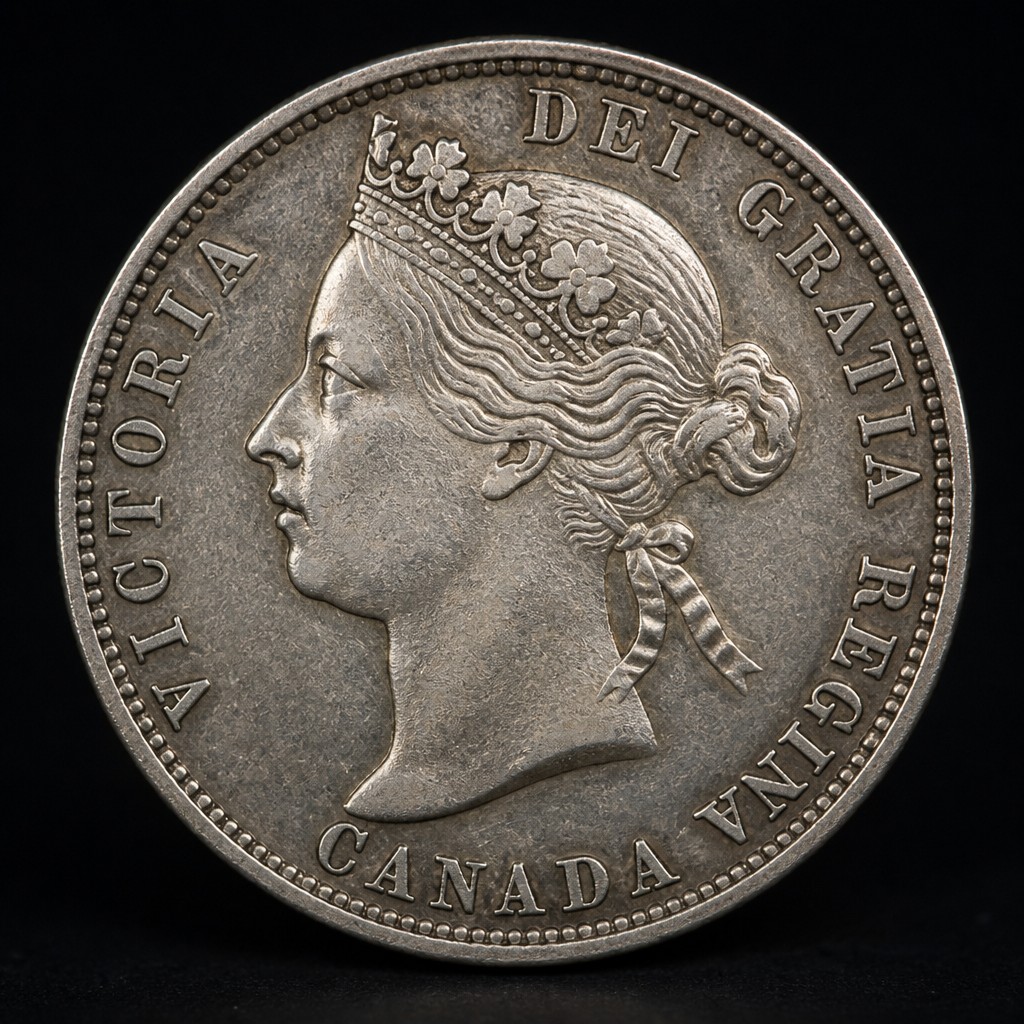
Victorian Silver Five Cents
The small sterling silver five-cent coin struck under Queen Victoria for the Province of Canada and later the Dominion of Canada, issued intermittently from 1858 to 1901.
- Country
- Canada
- Denomination
- Five Cents
- Metal
- 92.5% Silver (sterling), later .925/.800 fine variants
Got a coin like this?
Identify any coin from a photo, free.
Overview
The Victorian silver five-cent piece spans the entire second half of the 19th century in Canadian coinage, from the introduction of decimal currency in 1858 through the final years of Queen Victoria's long reign. Struck only in scattered years rather than continuously, the series offers collectors a genuine date-collecting challenge.
Because the coin is tiny, thin, and silver, well-preserved examples from this era are disproportionately harder to find than their low face value might suggest, making the series popular with collectors of early Canadian type and date sets alike.
History & Background
Following the introduction of decimal coinage in 1858, the five-cent silver piece continued to be struck sporadically for the Province of Canada and, after Confederation in 1867, for the Dominion of Canada. Because Canada lacked its own mint until 1908, these coins were produced under contract by the Royal Mint in London and, for several years, by the private Heaton Mint in Birmingham, whose coins carry a small H mint mark.
Mintages varied considerably from year to year depending on demand, and some years saw no five-cent coinage struck at all, creating natural gaps in the date run. Silver fineness and coin specifications were adjusted over time in line with British colonial minting standards of the period.
The series ran until Victoria's death in January 1901, after which her son Edward VII's portrait began appearing on Canadian coinage.
How to Identify
The obverse carries a portrait of Queen Victoria, generally a young laureate bust in the earliest issues transitioning to an older, veiled bust in the coin's final years, with a Latin legend naming her as queen. The reverse shows 5 CENTS within a wreath, with the date below.
The coin remains very small and thin throughout the series, similar in diameter to a modern dime. Coins struck at the Heaton Mint display a small H below the date on the reverse, while London-struck coins show no mint mark.
Collectors distinguish individual dates and mints by careful examination of the small mint mark and by known date-specific characteristics, since the overall design changed little across more than four decades of production.
Value & Collectibility
Common dates in well-worn condition are affordable and accessible, but the series contains several genuinely scarce dates, including certain low-mintage years from the 1870s through 1890s that command significant premiums even in modest grades. Coins with original luster and minimal wear are disproportionately valuable given the coin's fragility and tendency to wear quickly.
Because many surviving examples show cleaning, bending, or heavy wear from decades of circulation, problem-free coins with original surfaces are prized well above typical price-guide levels for the assigned grade.
Frequently asked questions
What does the H mint mark mean?
It indicates the coin was struck under contract at the Heaton Mint in Birmingham, England, rather than the Royal Mint in London.
Were five-cent coins struck every year under Victoria?
No, several years had no five-cent mintage at all, so the date run has natural gaps.
What is the coin's silver content?
It was struck in sterling silver, about 92.5 percent fine, consistent with British minting standards of the era.
Why are these coins often worn or damaged?
Their small size and thinness made them prone to wear, bending, and handling damage during decades of circulation.
Are any dates especially rare?
Yes, certain low-mintage 19th-century dates are notably scarcer and more valuable than the common issues.
Other coins you may enjoy
1953 Coronation Voyageur Dollar
1953
1911 Canadian Silver Dollar (Pattern)
1911
George V Twenty-Five Cents (silver)
1911–1936
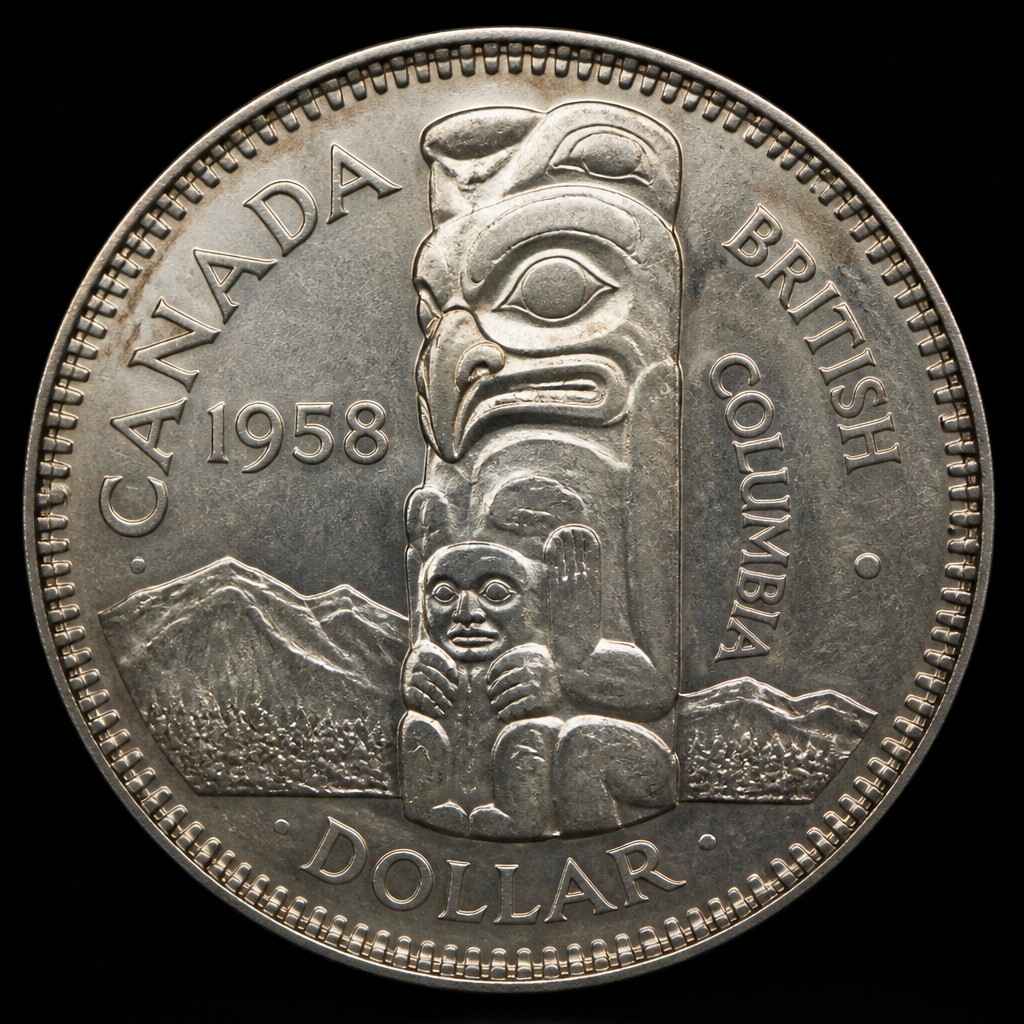
1958 British Columbia Totem Pole Dollar
1958
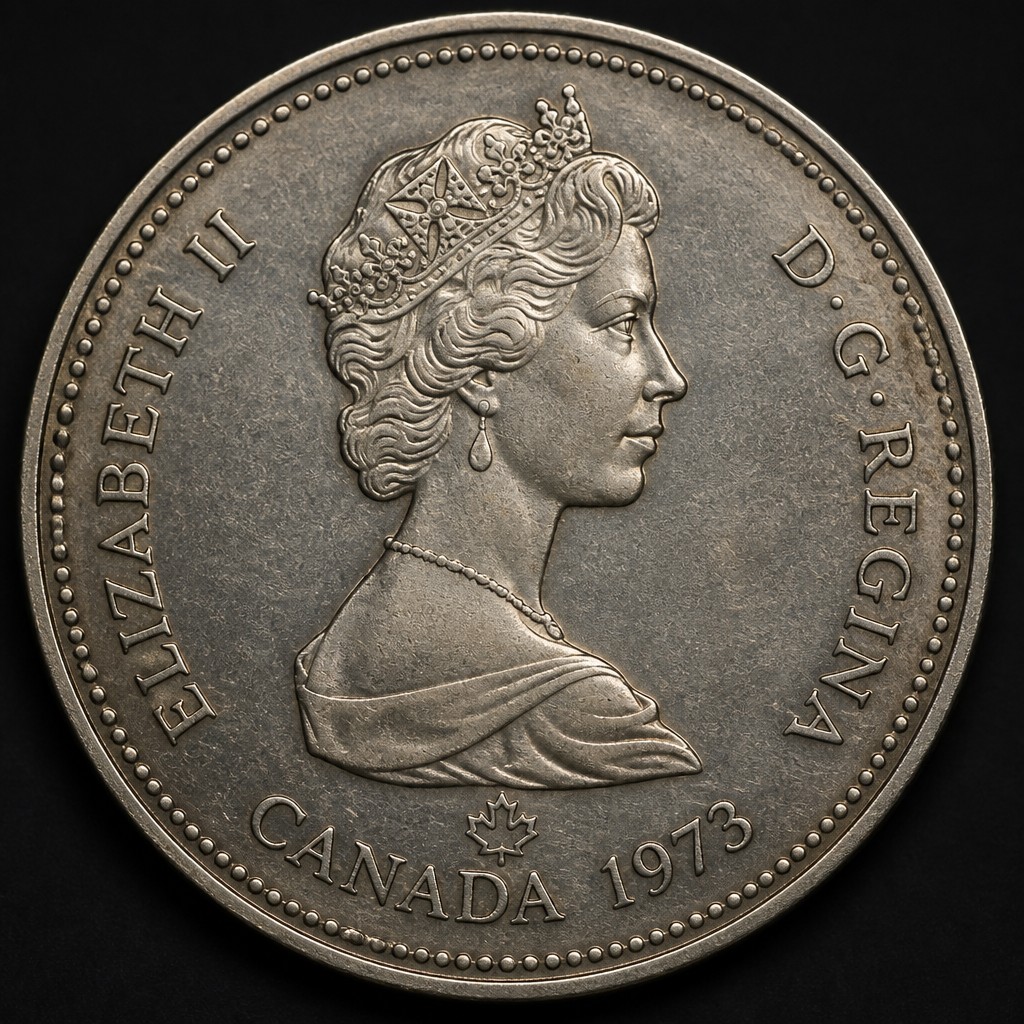
1973 RCMP Centennial Dollar
1973
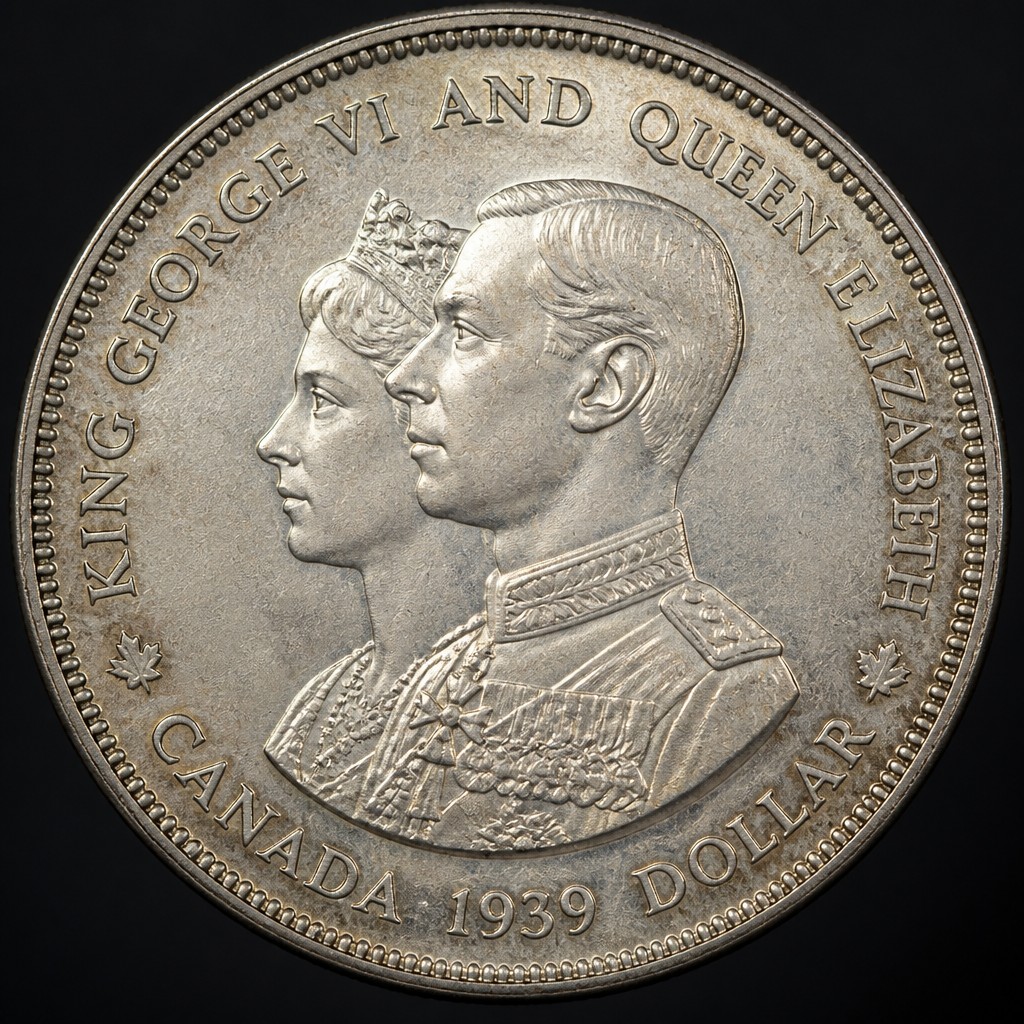
1939 Royal Visit Silver Dollar (Parliament)
1939
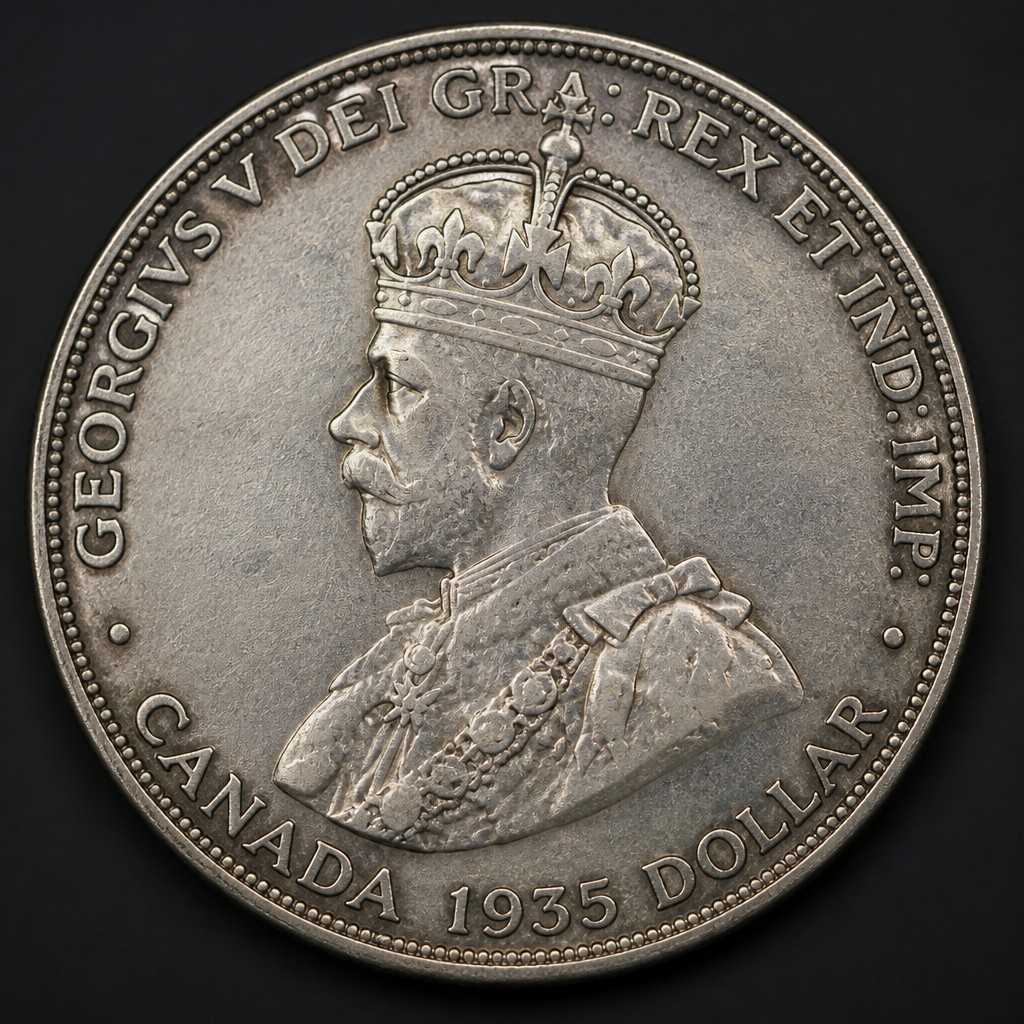
1935 George V Silver Jubilee Dollar (Voyageur)
1935
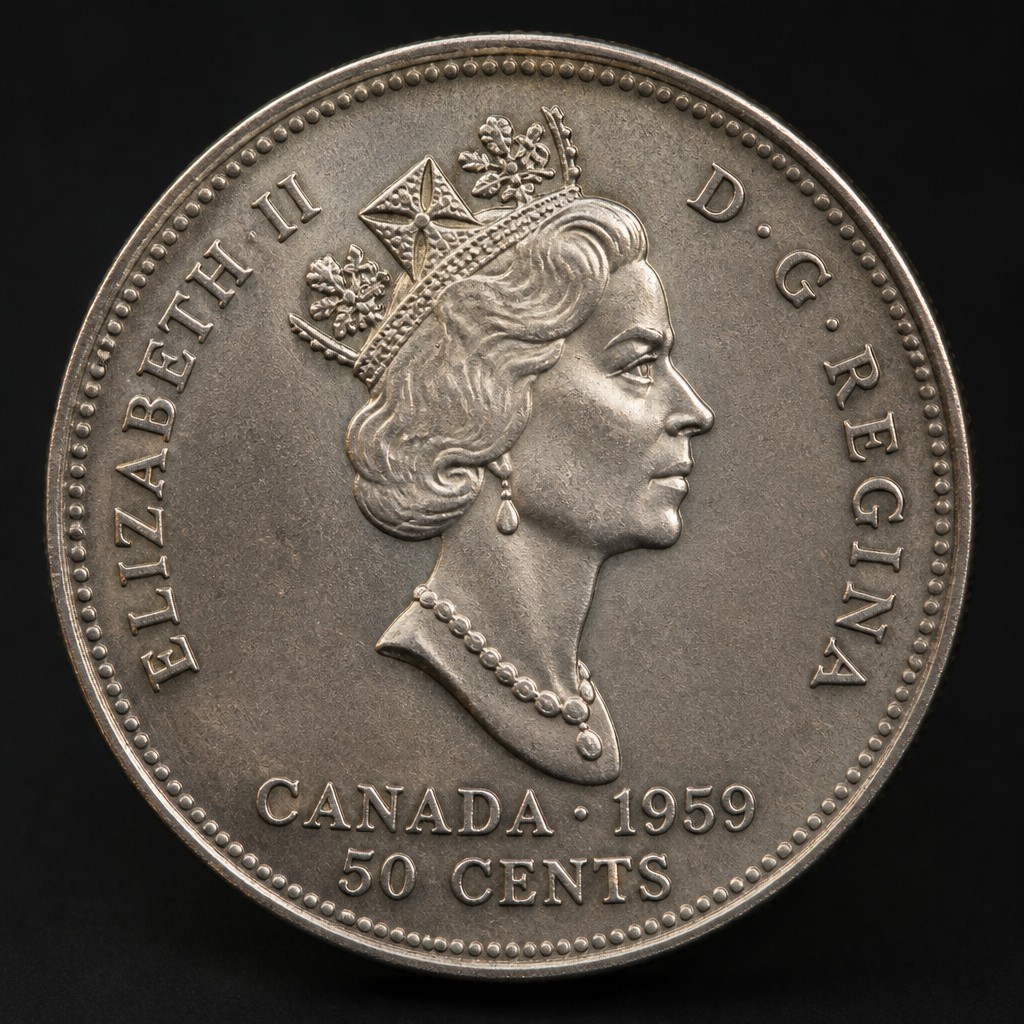
Coat of Arms Fifty Cents (Elizabeth II)
1959–present
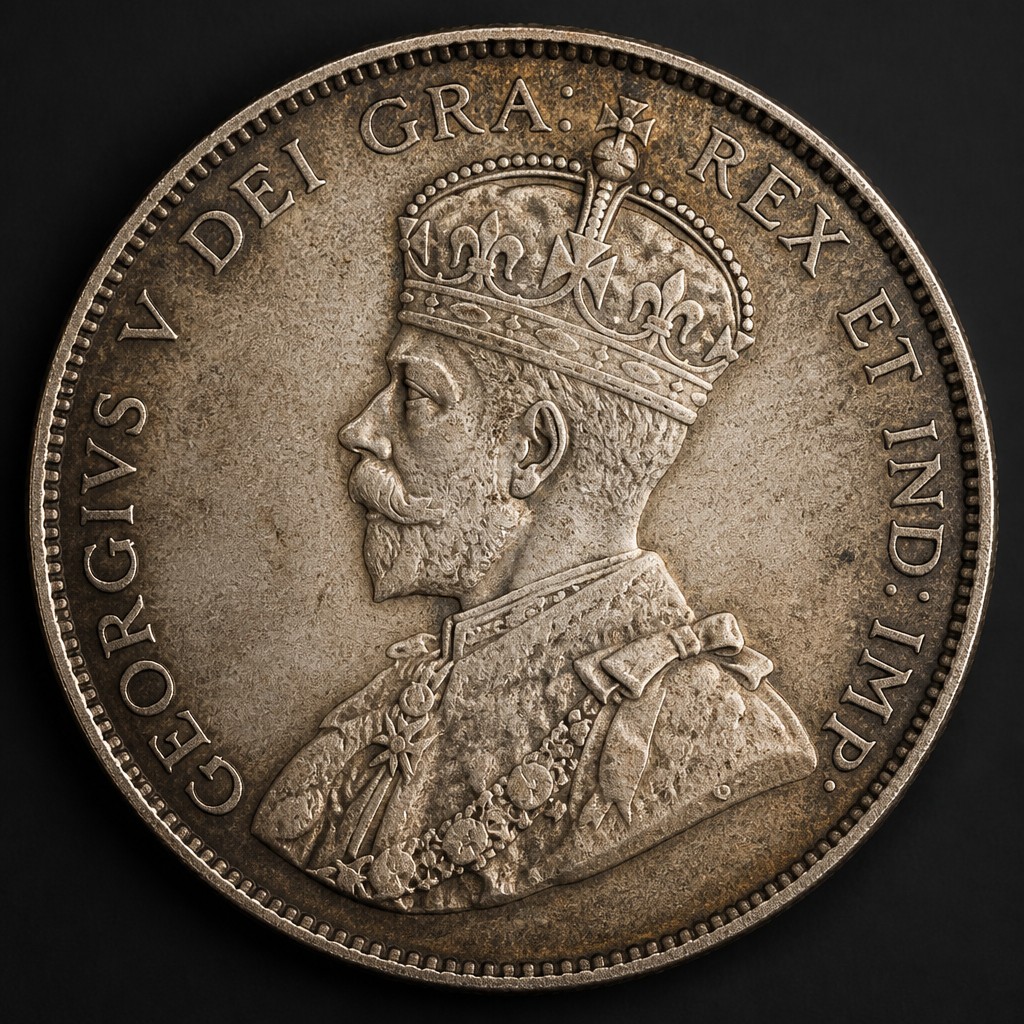
1921 Fifty Cents (King of Canadian Coins)
1921
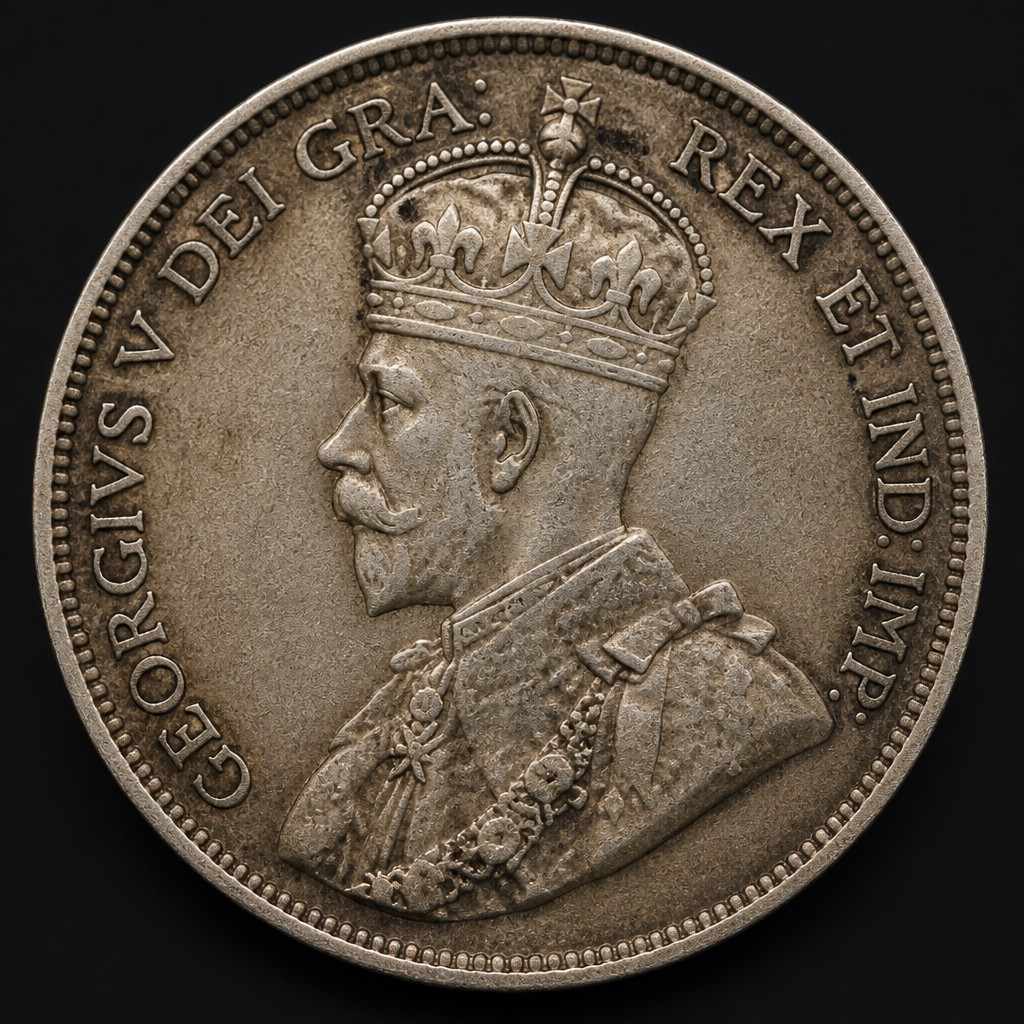
George V Fifty Cents
1911–1936
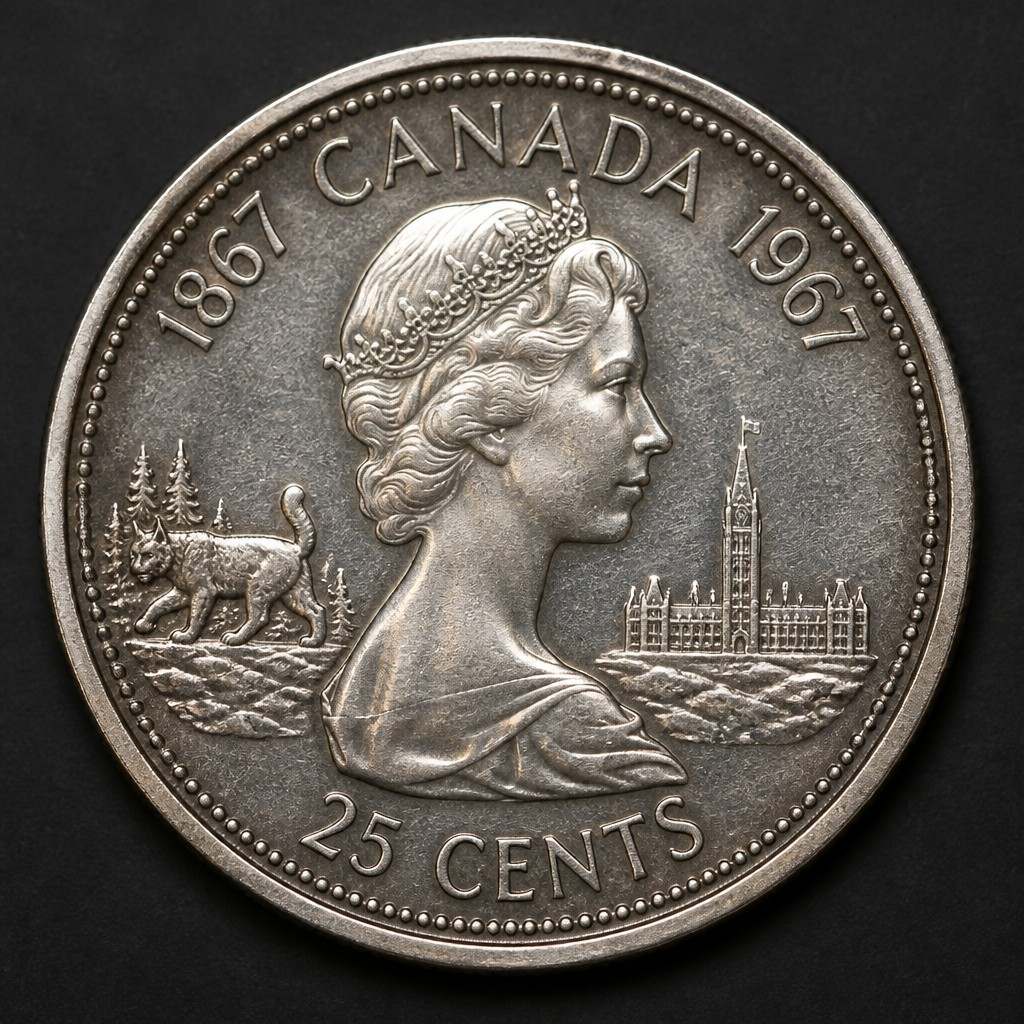
1967 Bobcat Centennial Quarter
1967
Caribou Twenty-Five Cents (quarter)
1937–present