
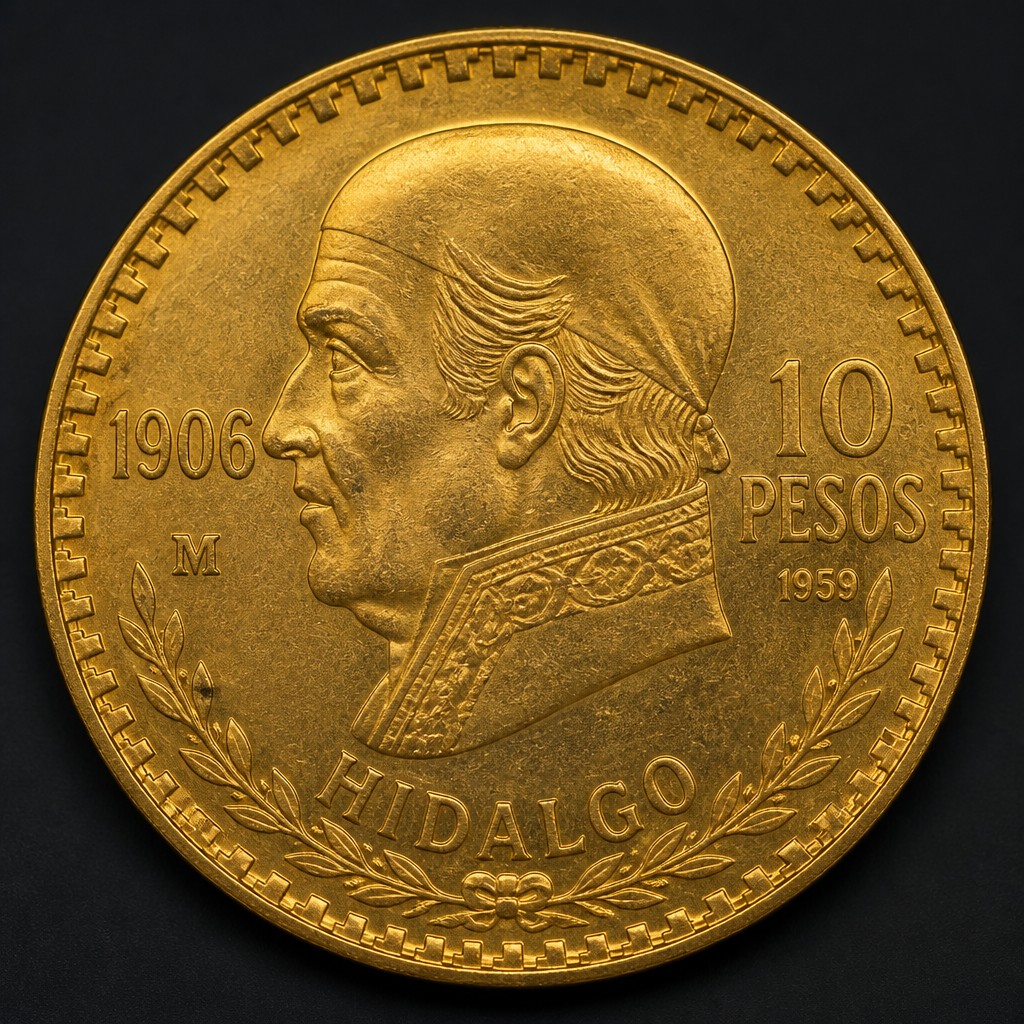
Mexican 10 Pesos Gold 'Hidalgo'
A small Mexican gold coin honoring independence leader Miguel Hidalgo, struck during the Porfiriato and later restruck for the bullion market in the 1950s.
- Country
- Mexico
- Denomination
- 10 Pesos
- Metal
- .900 fine gold
Got a coin like this?
Identify any coin from a photo, free.
Overview
The 10 Pesos gold coin, popularly called the 'Hidalgo' after the priest and revolutionary hero depicted on its obverse, was one of several gold denominations Mexico issued on the international gold standard in the early twentieth century. It circulated alongside larger 20 and 50 Pesos gold pieces as part of a coinage reform meant to align Mexican currency with world gold markets.
Production was interrupted by the Mexican Revolution beginning in 1913, and the coin was not struck again until the government resumed limited gold coinage decades later, this time explicitly for savers and investors rather than circulation. The later mintage, uniformly dated 1906 regardless of the actual striking year, made the coin a convenient, recognizable form of small gold holding for the Mexican public.
Today the coin is collected both for its historical ties to the Mexican Revolution era and as an accessible entry point into pre-1933-style gold coinage, since its gold content is modest compared to larger world gold pieces.
History & Background
Mexico adopted a gold coinage system in 1905 under President Porfirio Díaz, minting 5, 10, 20, and 50 Pesos gold pieces to modernize the country's currency and tie it to international gold reserves. The 10 Pesos denomination honored Miguel Hidalgo y Costilla, the parish priest whose 1810 'Grito de Dolores' call to arms is credited with sparking Mexico's war of independence from Spain.
Coinage was struck at the Mexico City mint from 1905 through 1920, spanning the outbreak and worst years of the Mexican Revolution, after which regular gold coin production ceased. In 1959, the Banco de México authorized a new run of 10 Pesos gold pieces, all struck with the 1906 date, to give the public a standardized small gold coin for savings; these restrikes continued intermittently for a number of years.
Because the restrikes reused the original 1906 date and design rather than the actual striking year, collectors distinguish true early issues from later restrikes mainly through mintage records and condition rather than the date alone.
How to Identify
The obverse shows a left-facing bust of Miguel Hidalgo in profile, surrounded by the legend ESTADOS UNIDOS MEXICANOS. The reverse carries the Mexican national eagle, standing on a cactus and grasping a serpent, encircled by the denomination and date.
The coin is struck in .900 fine gold, weighs 8.333 grams, and measures about 22.5 millimeters in diameter, giving an actual gold weight (AGW) of roughly 0.2411 troy ounces. The edge is reeded.
Because virtually all surviving examples are dated 1906 (either as true 1906-1920 issues or later restrikes), date alone cannot separate an original strike from a restrike; overall wear pattern, mint luster, and provenance are the practical clues, and a numismatist or grading service is needed for a confident distinction. It is easily told apart from the larger 20 and 50 Pesos gold coins by its smaller size and lighter weight.
Value & Collectibility
Most 10 Pesos Hidalgo coins trade close to their gold bullion value, since total mintages across the original and restrike periods were substantial and the coin was widely saved rather than melted. Common circulated and lightly worn examples typically sell for a modest premium over melt value.
Earlier, pre-Revolution strikes in higher mint-state grades can carry a collector premium above bullion pricing, particularly for well-struck, lustrous pieces, though the coin was never a low-mintage rarity. As with any gold coin, value tracks the spot price of gold closely, so broad price ranges shift with the market; buyers should expect prices anchored to roughly a quarter troy ounce of gold content plus a small collector premium.
Condition, strike quality, and whether a piece is an original pre-1921 issue versus a later restrike are the main value drivers beyond metal content; no specific date or mintmark variety is considered a major key rarity in this series.
Frequently asked questions
Who is pictured on the Mexican 10 Pesos gold coin?
Miguel Hidalgo y Costilla, the priest who launched Mexico's war of independence in 1810, appears on the obverse.
Why are so many 10 Pesos Hidalgo coins dated 1906?
Original coinage ran 1905-1920, but a 1959 restrike program reused the 1906 date and design for new coins meant for gold savers, so 1906 does not always mean an original strike.
How much gold is in a 10 Pesos Hidalgo coin?
It contains about 0.2411 troy ounces of pure gold, struck in .900 fine gold at a total weight of 8.333 grams.
Is the 10 Pesos Hidalgo rare?
No, it was produced in significant quantities across both the original run and later restrikes, so most examples are valued near their gold content rather than as rarities.
Mexican 10 Pesos Gold 'Hidalgo' identified by the community
Real coins identified with Coin Identifier.
Other coins you may enjoy
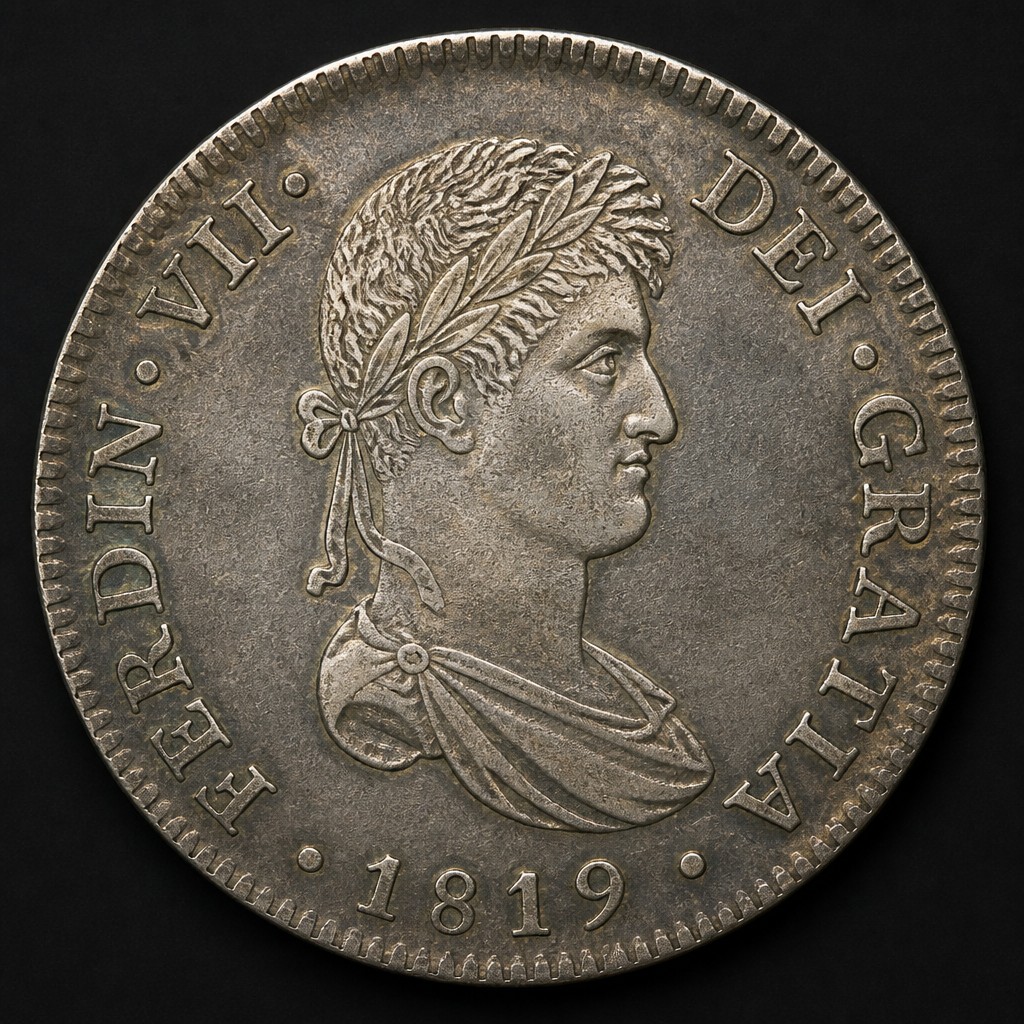
Colombia 8 Reales
Colonial issues through late 18th/early 19th century; republican issues 1820s–1830s
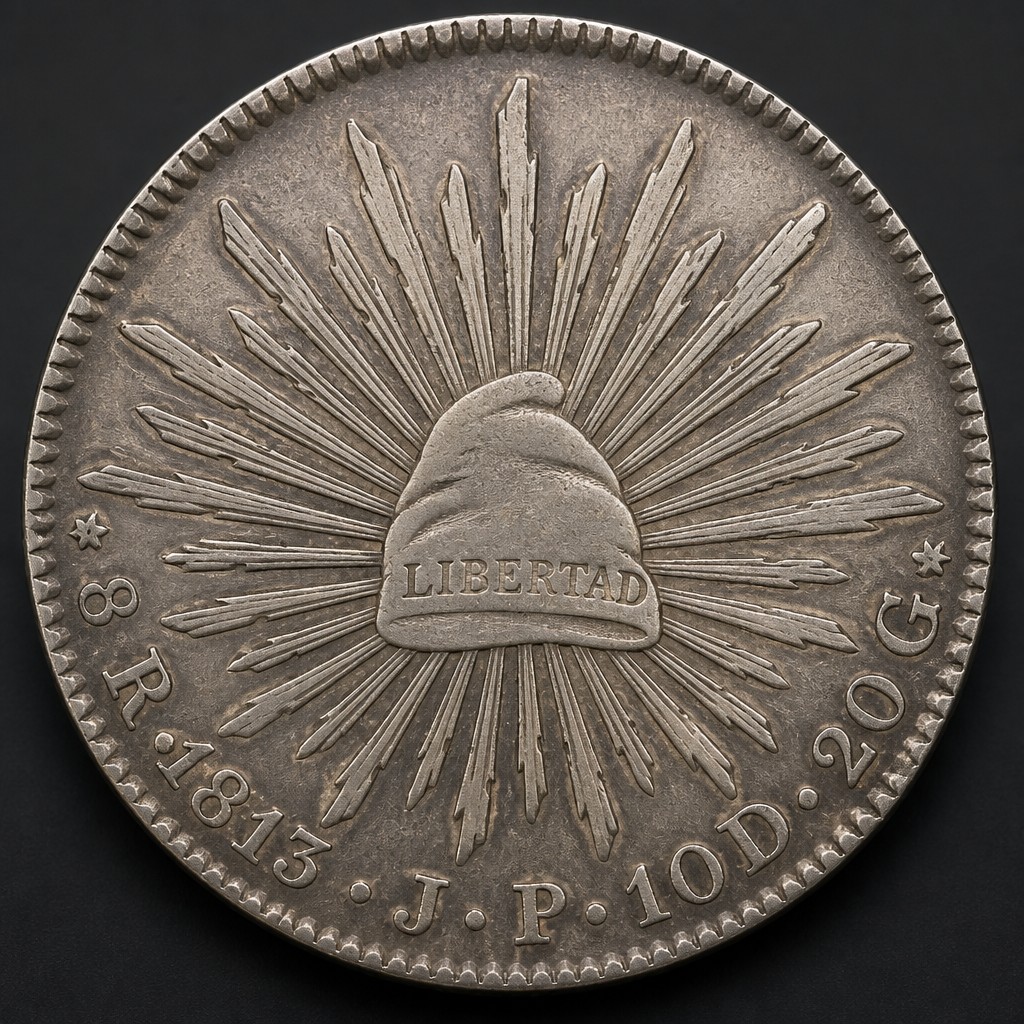
Argentina 8 Reales
c. 1813–1836
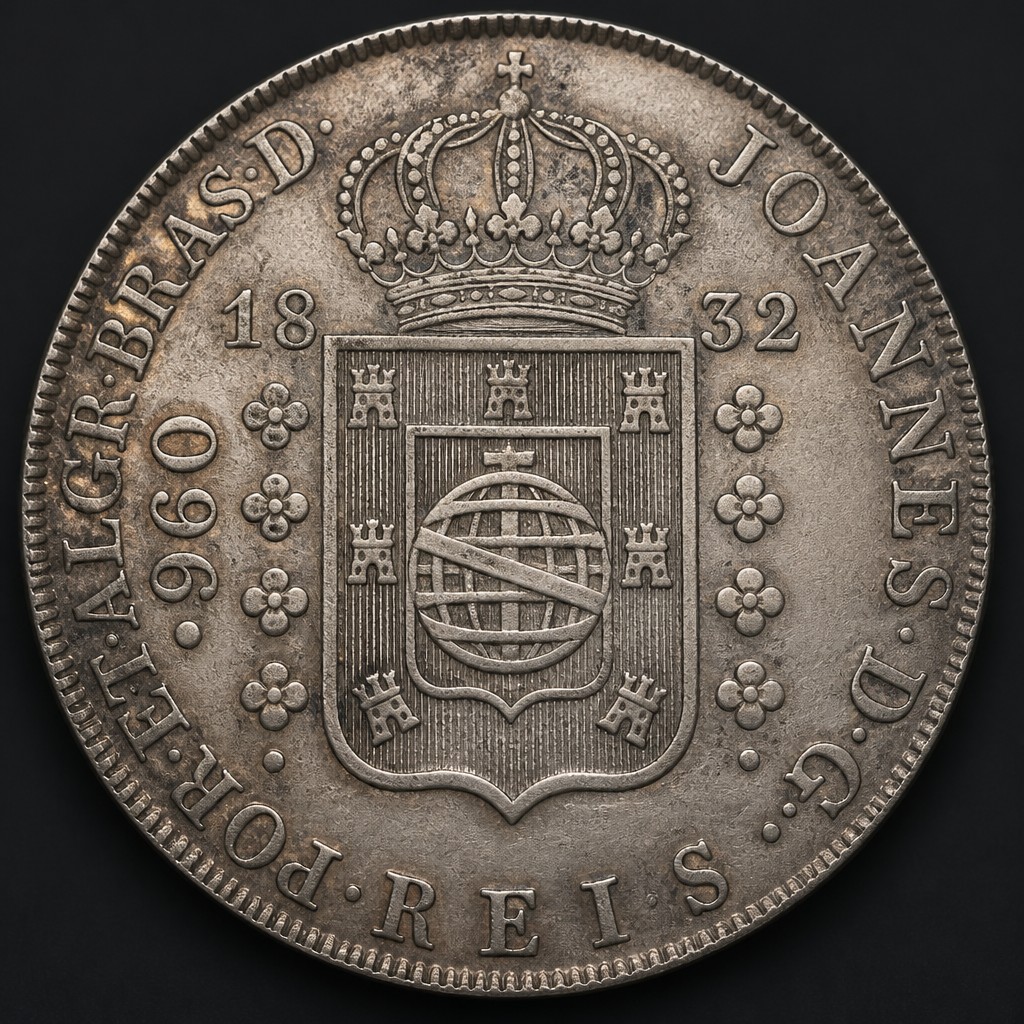
Brazil 960 Reis
1809–1832
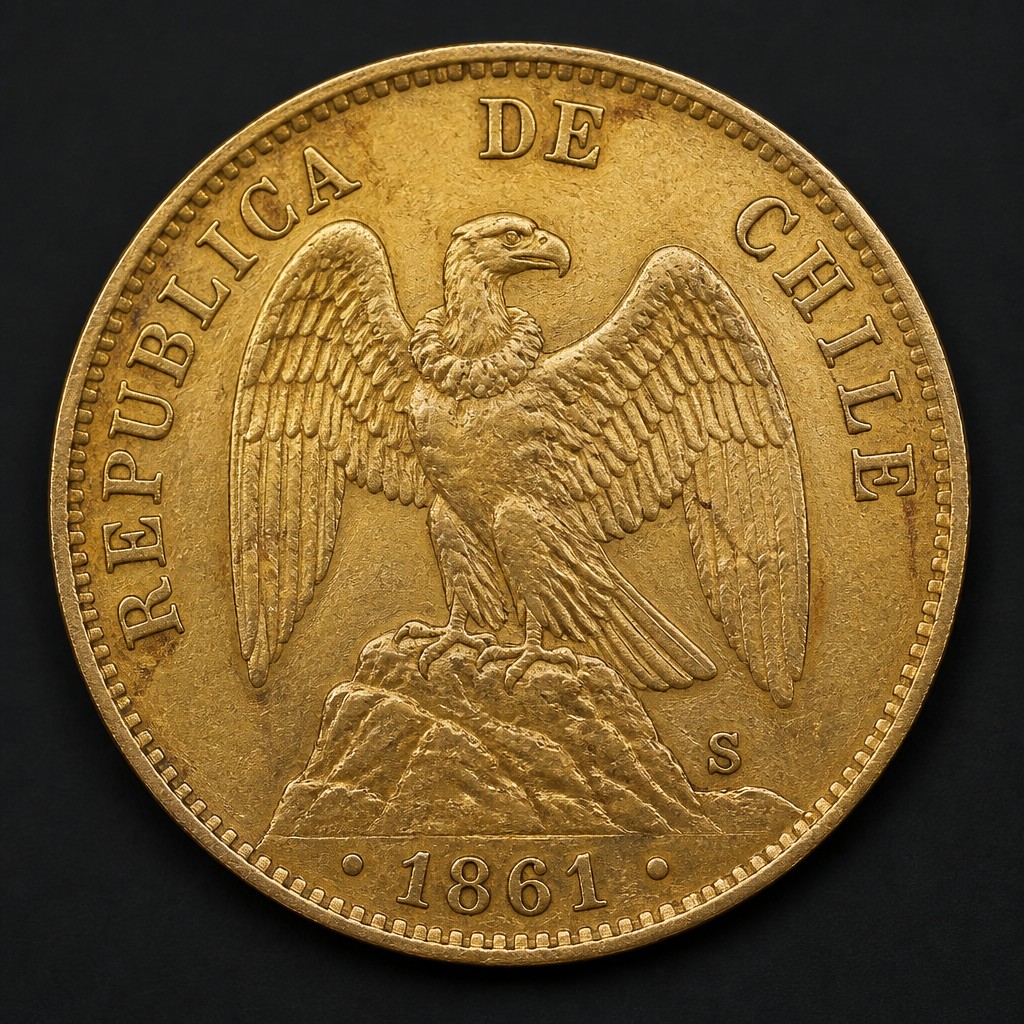
Chile Peso (Condor)
1851–1873 (gold condor series); modern base-metal peso 1990s–present
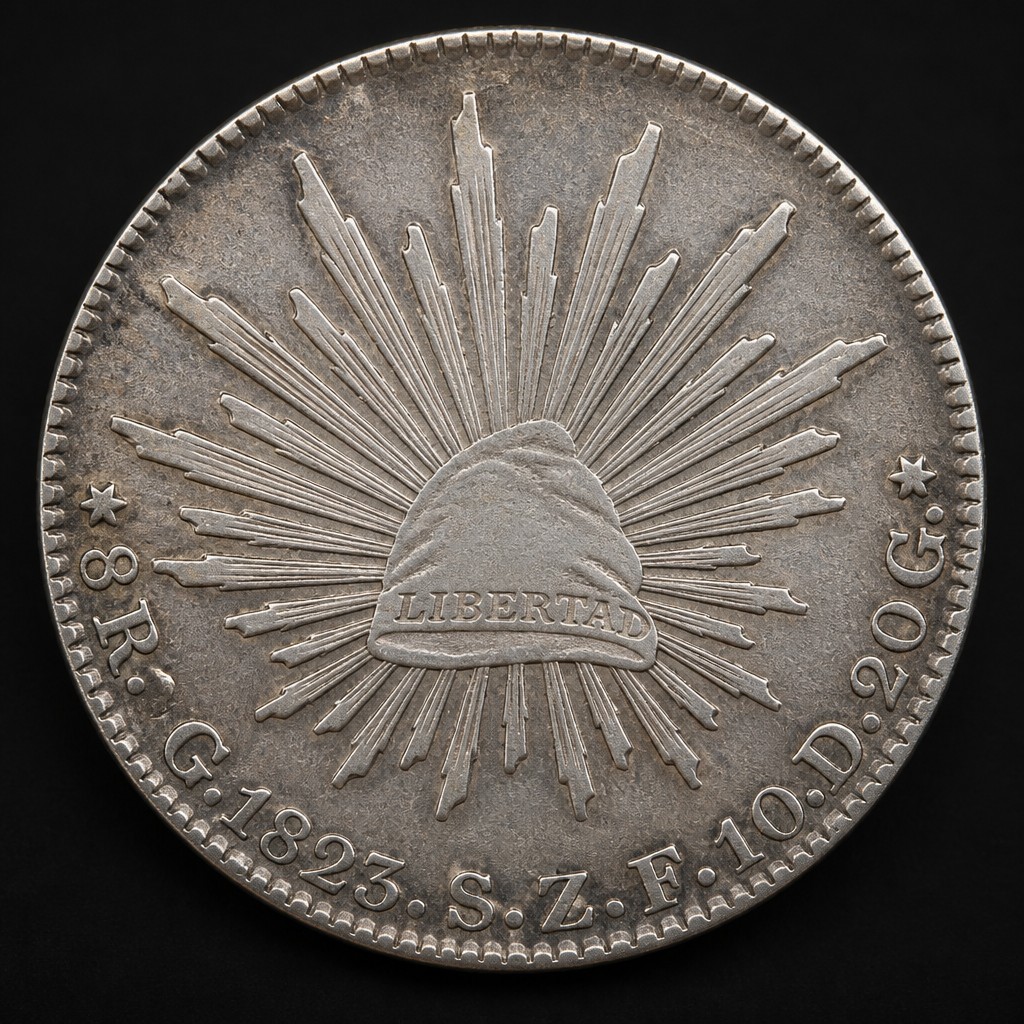
Mexican 8 Reales Cap and Rays
1823-1897
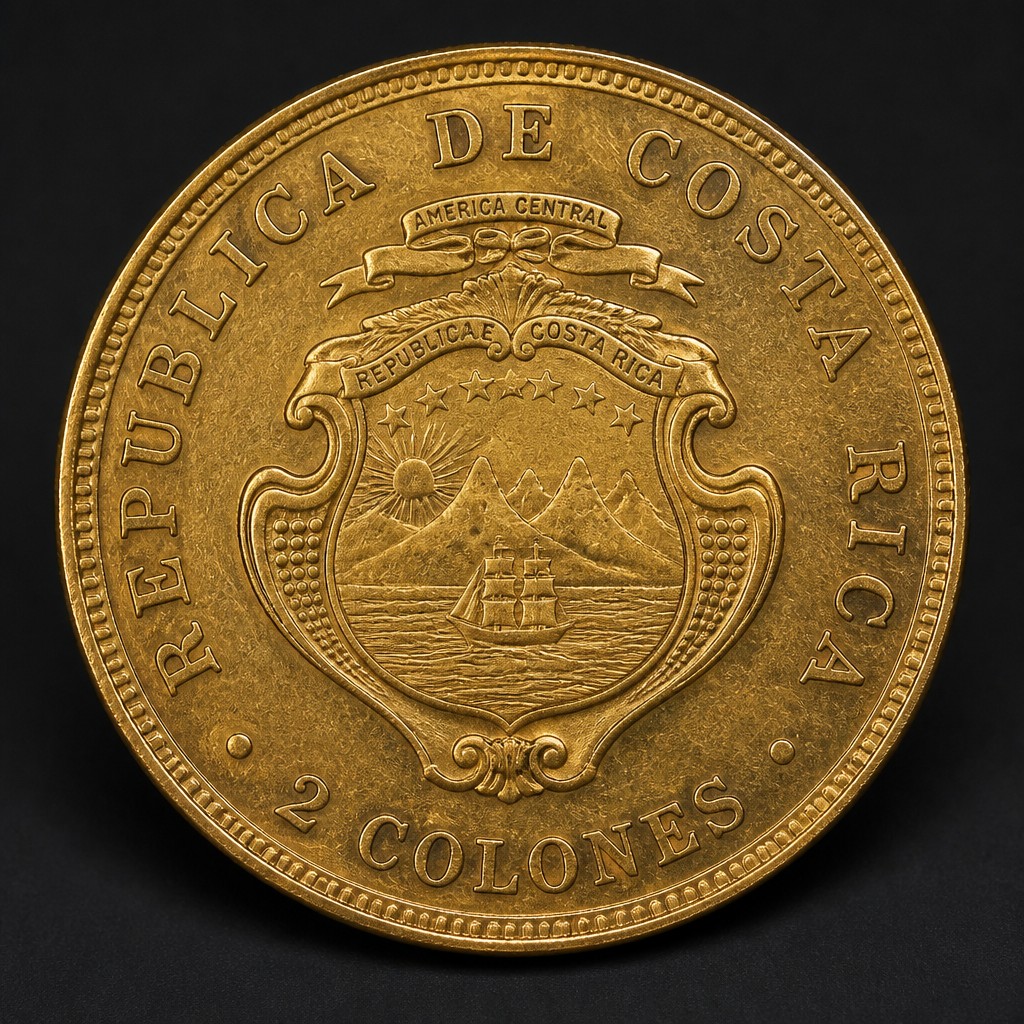
Costa Rica 2 Colones Gold
Late 1890s–early 1900s
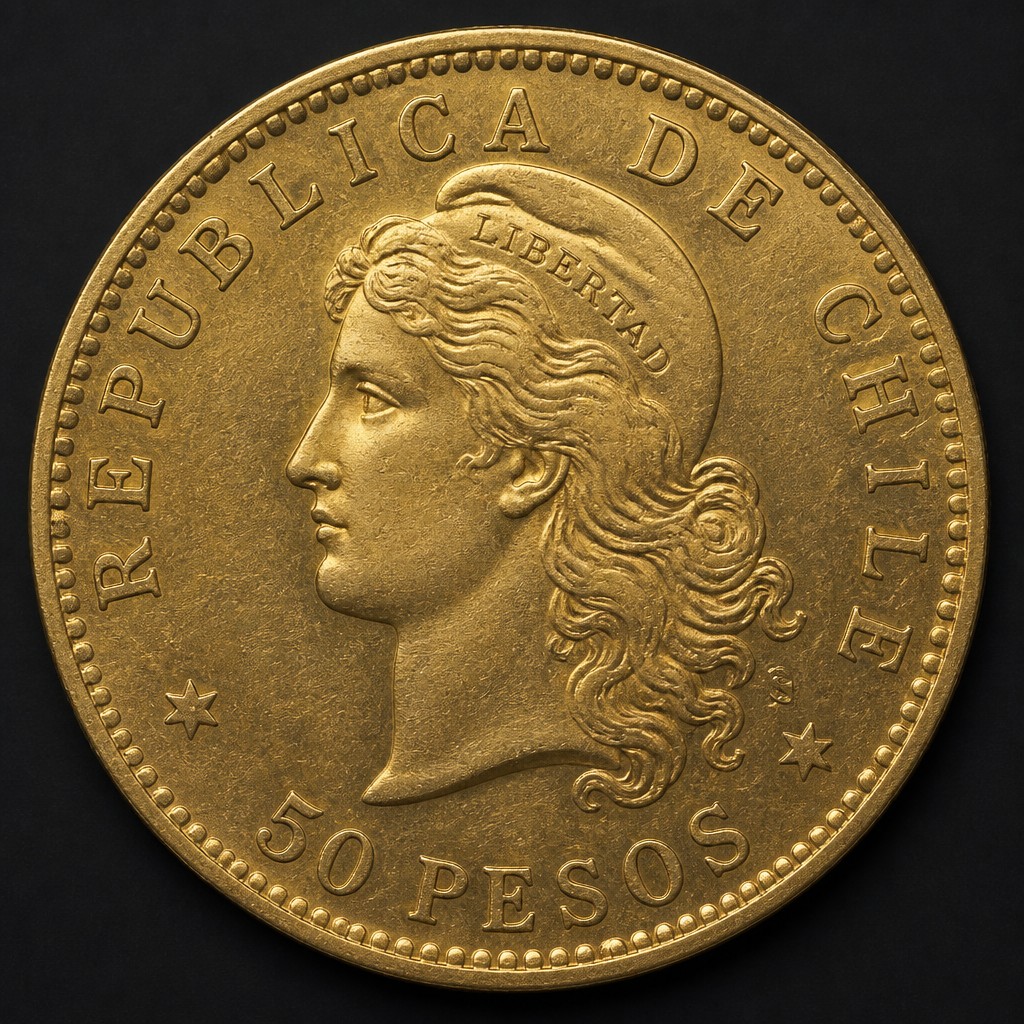
Chilean 50 Pesos Gold
1926–1980 (with interruptions)
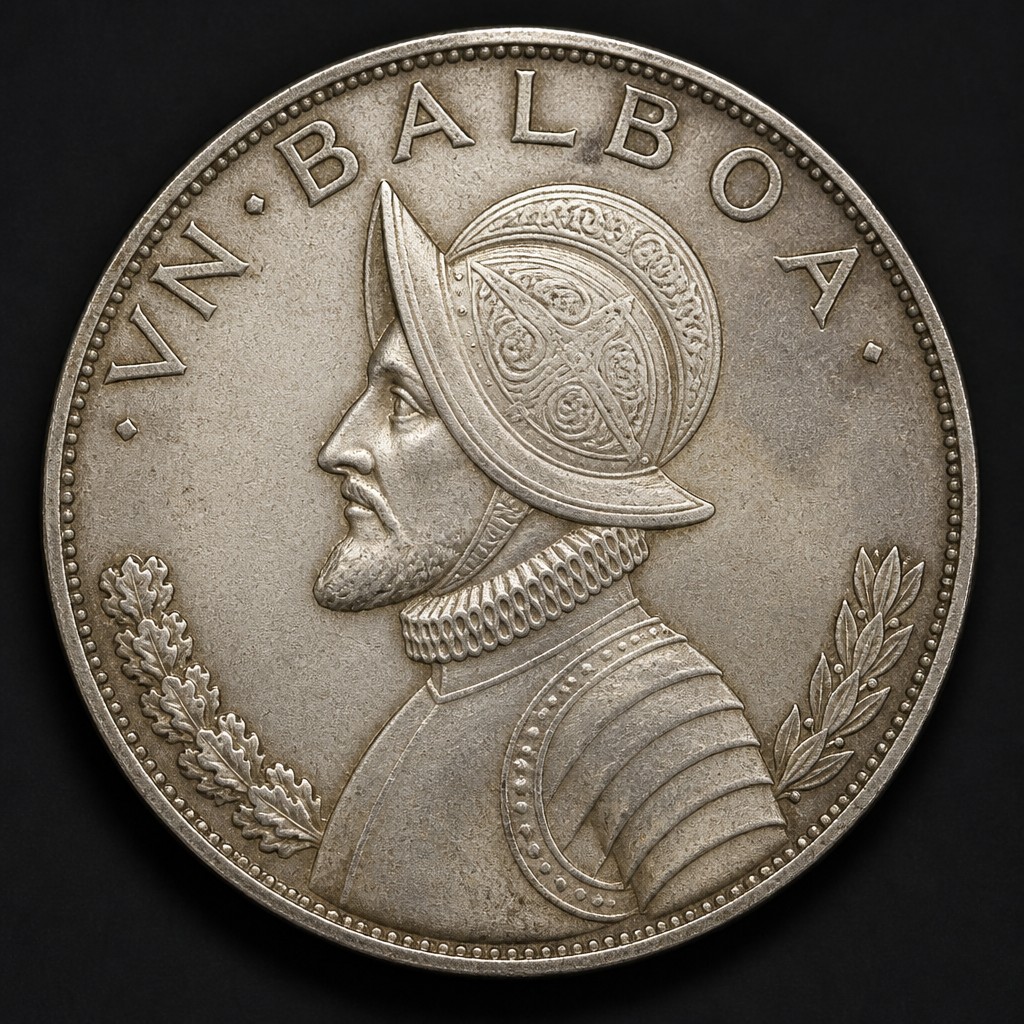
Panama Balboa Silver
1904, 1931, 1934, 1947, 1953, 1966 (various dates)
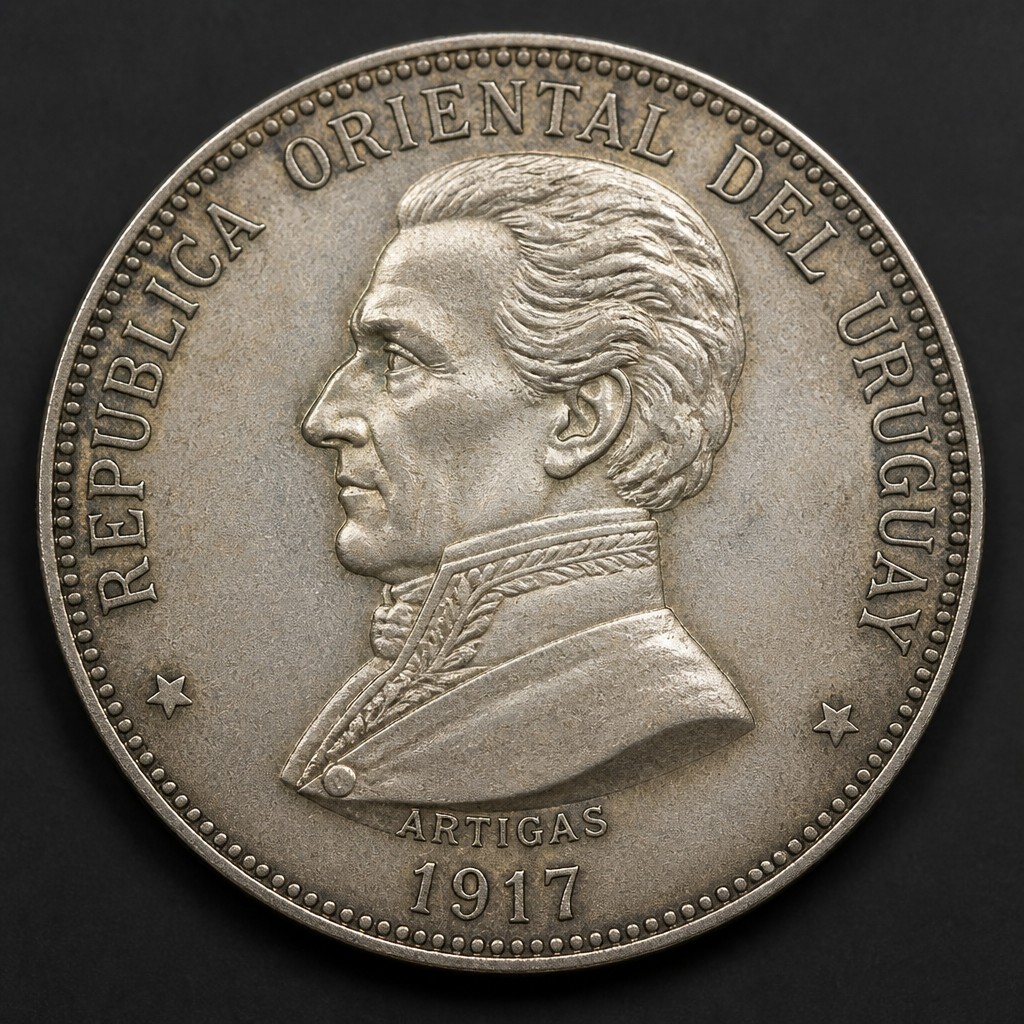
Uruguay Peso Silver 'Artigas'
1917–1920 (with related commemorative issues in later decades)
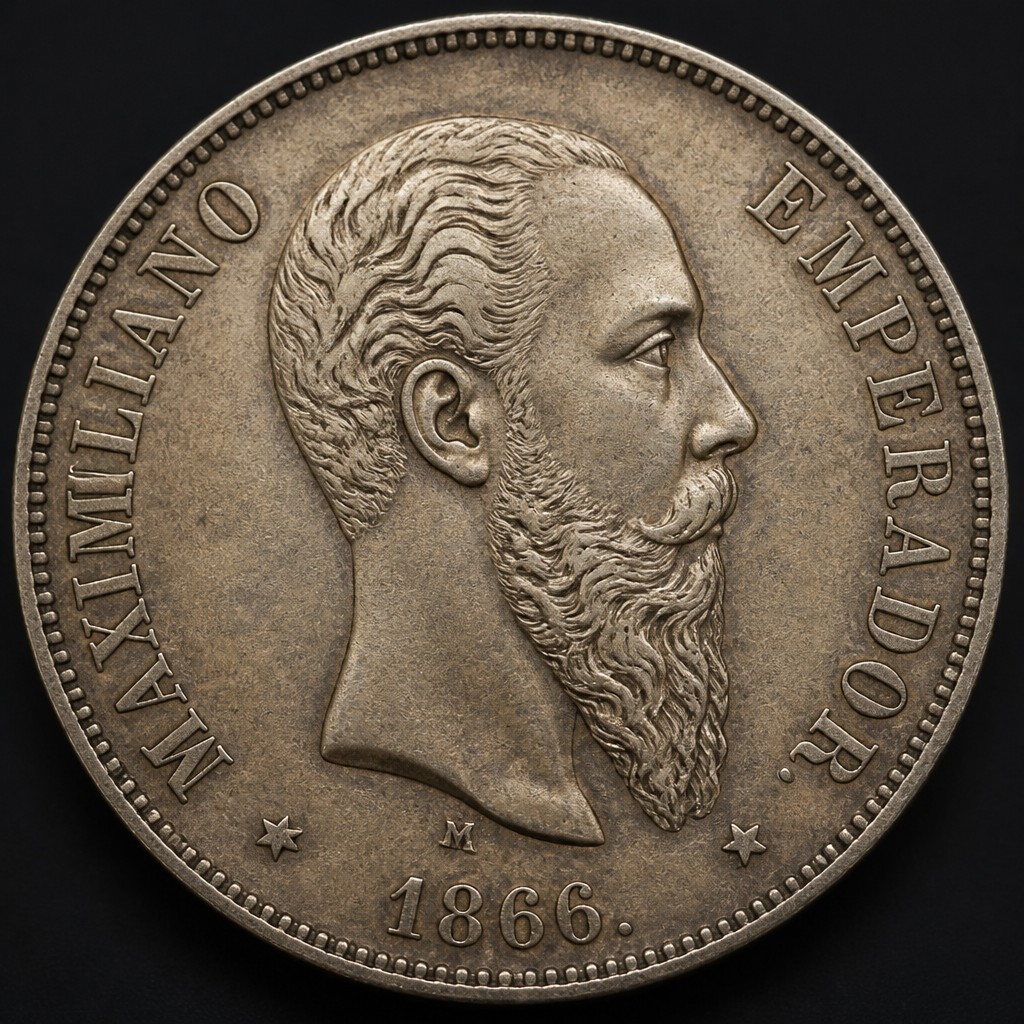
Mexican Emperor Maximilian Peso
1866–1867
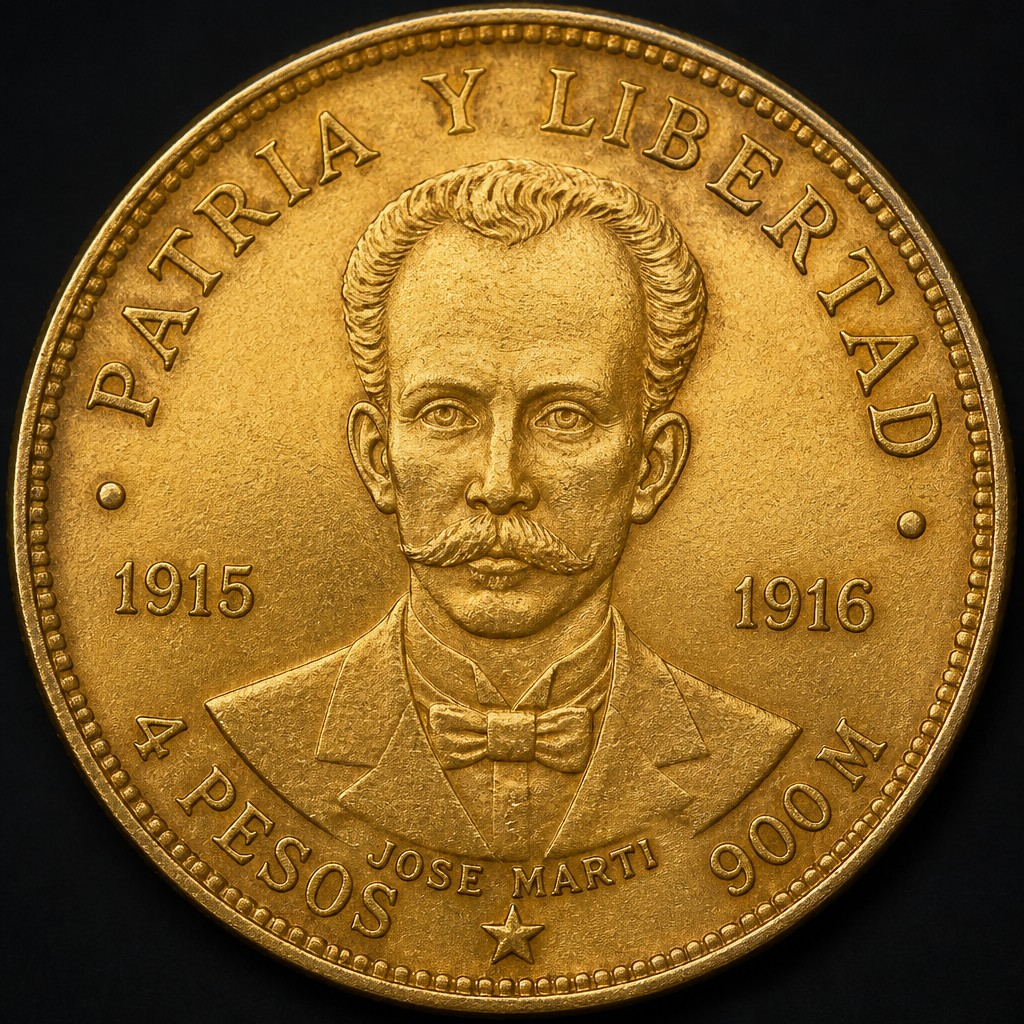
Cuba 4 Pesos Gold Jose Marti
1915–1916
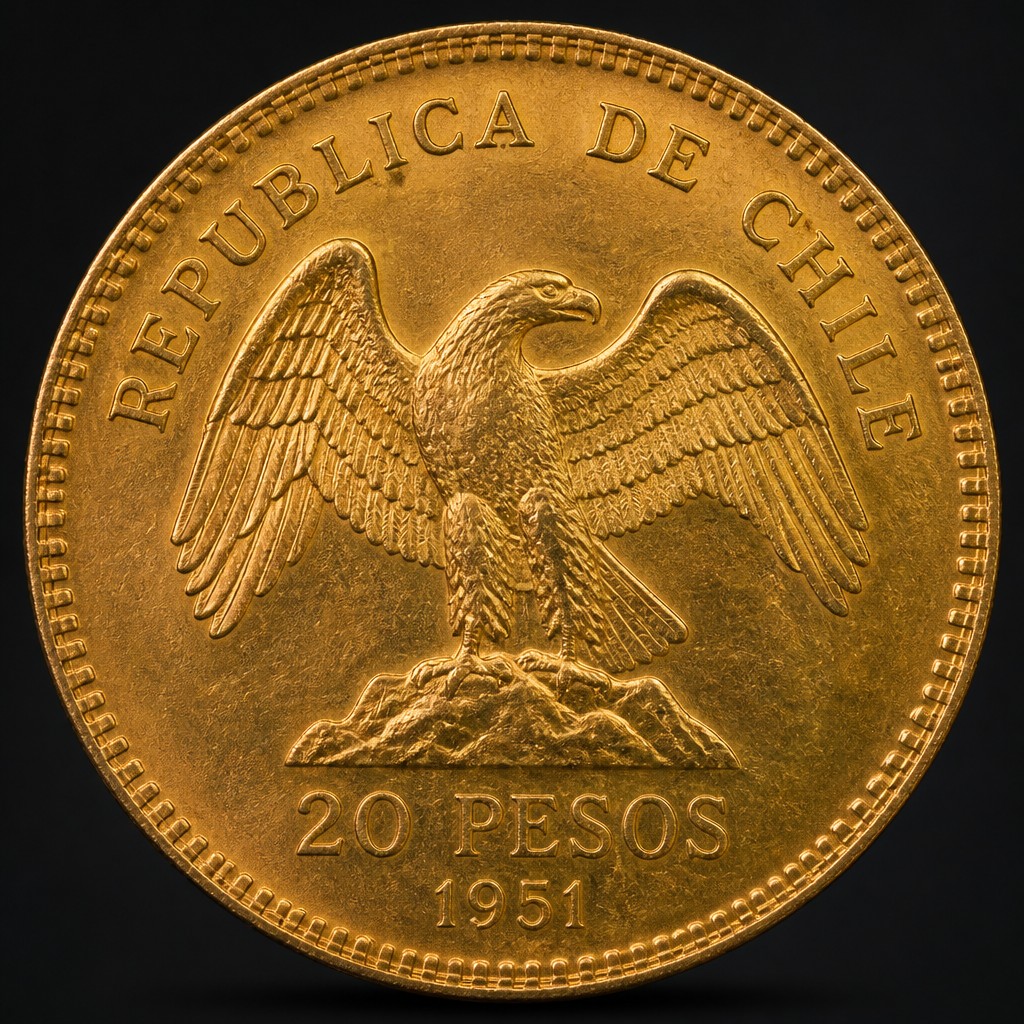
Chilean 20 Pesos Gold
19th century issues and 1926–1980 condor series