
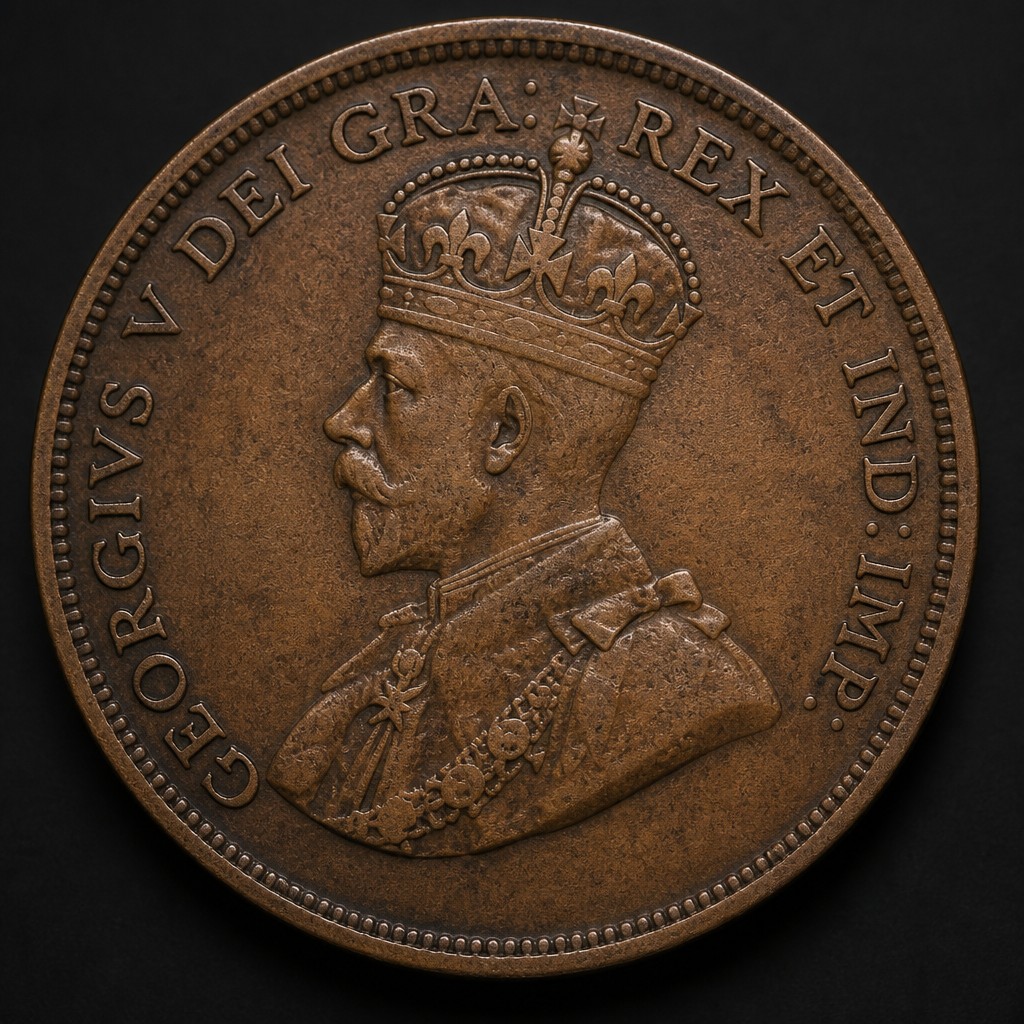
George V Large Cent
Canada's final large-format bronze cent, struck 1911-1920 under King George V, including the controversial 1911 "Godless" issue.
- Country
- Canada
- Denomination
- One Cent
- Metal
- Bronze
Got a coin like this?
Identify any coin from a photo, free.
Overview
The George V large cent was the last series of Canada's original large-format bronze cent, struck from 1911 until 1920, when Canada permanently switched to the smaller cent size still used today. The series is best known for its first year, 1911, whose obverse legend controversially omitted the traditional reference to the monarch reigning "by the grace of God," a change that provoked public criticism and was quietly reversed the following year.
Collectors particularly seek the 1911 "Godless" cent both for its brief, one-year-only legend and for the historical episode it represents, making it one of the more talked-about varieties in Canadian large cent collecting.
History & Background
King George V ascended the British throne in 1910 following the death of his father, Edward VII, and Canadian coinage was updated accordingly beginning with coins dated 1911. That year's large cent obverse legend, prepared by the Royal Mint, omitted the customary Latin abbreviation "DEI GRA" (by the grace of God) that had appeared on virtually all British and Canadian coinage for centuries, an omission that drew public complaints in Canada as inappropriate.
In response, the legend was restored to include "DEI GRA" beginning with coins dated 1912, and the 1911 issue became permanently known among collectors as the "Godless" cent for its one-year absence of the phrase.
Canada's large cent format, dating back to 1858 under Queen Victoria, was finally discontinued after 1920, when the Ottawa Mint transitioned to a smaller cent similar in size to the coin used today, ending more than sixty years of large-format bronze cent production.
How to Identify
The obverse shows King George V's portrait facing left, with a Latin legend around the rim; the key identifying feature for the famous variety is the 1911 date combined with a legend that omits "DEI GRA," distinguishing it from the corrected legend used from 1912 onward.
The reverse follows the long-standing Canadian large cent format, showing "ONE CENT" within a wreath and the date below, essentially unchanged from the Victoria and Edward VII series.
The coin is bronze, matching the size and weight of earlier Canadian large cents. Because 1920 marked the transition year to the smaller cent, both large and small cent formats can appear dated 1920, so overall diameter, not just the date, must be checked to identify a genuine large cent of that final year.
Value & Collectibility
Most dates in the George V large cent series are readily available in circulated grades and are affordable for collectors, though the famous 1911 "Godless" cent commands a distinct premium over other dates in the series due to its historical significance and popularity, even though its mintage was not unusually low.
Choice uncirculated examples of any date in the series, with full original bronze luster, are considerably scarcer and more valuable than typical circulated coins, as with most large cents where high-grade survivors are limited. Collectors assembling a complete large cent date run generally treat the 1911 issue as the most sought-after single date in the George V series.
Frequently asked questions
What is the "Godless" cent?
The 1911 large cent, whose obverse legend omitted the traditional "DEI GRA" (by the grace of God) reference, restored on coins from 1912 onward.
Why did Canada stop making large cents?
The large cent format was discontinued after 1920 in favor of a smaller, more economical cent size still used today.
Is the 1911 cent rare?
It is not necessarily low-mintage, but its historical "Godless" legend makes it the most popular and sought-after date in the series.
What metal is the George V large cent made of?
Bronze, matching the composition and size of the earlier Victoria and Edward VII large cents.
Other coins you may enjoy
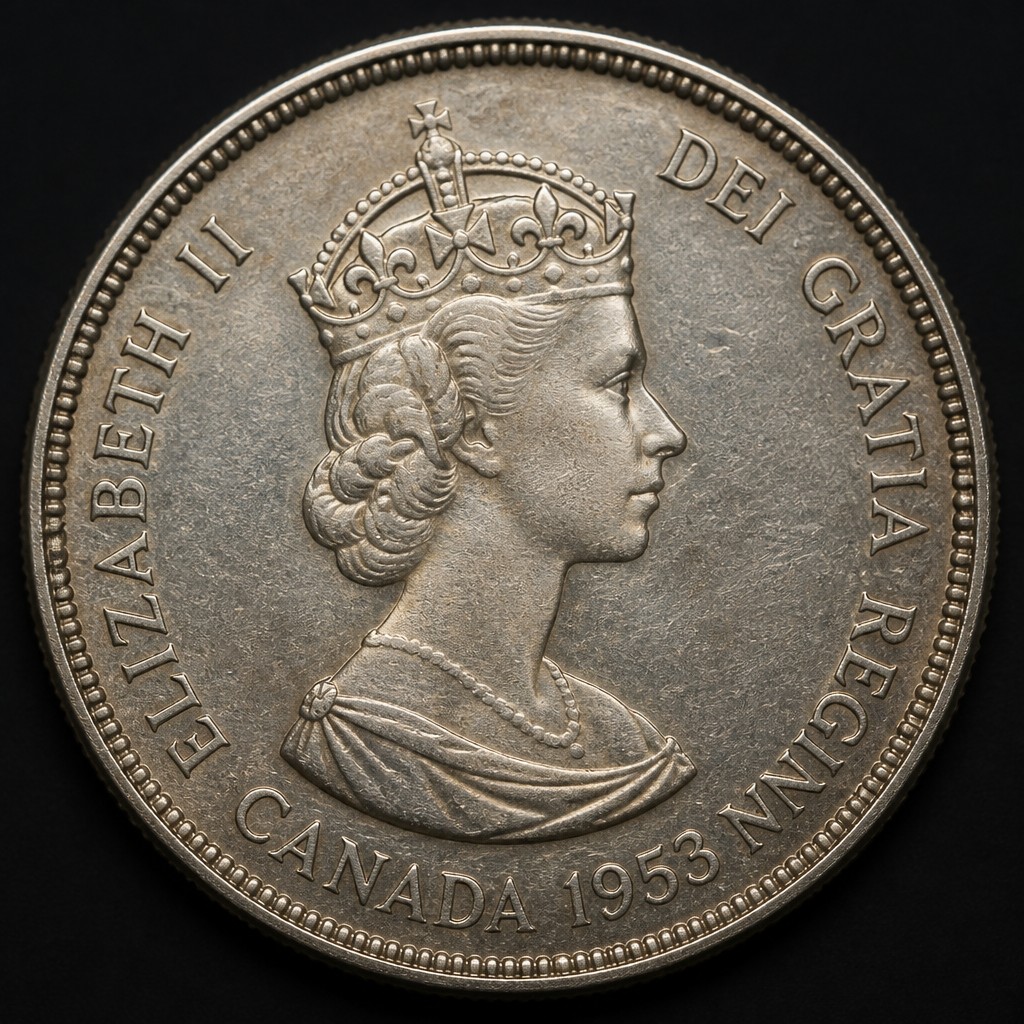
1953 Coronation Voyageur Dollar
1953
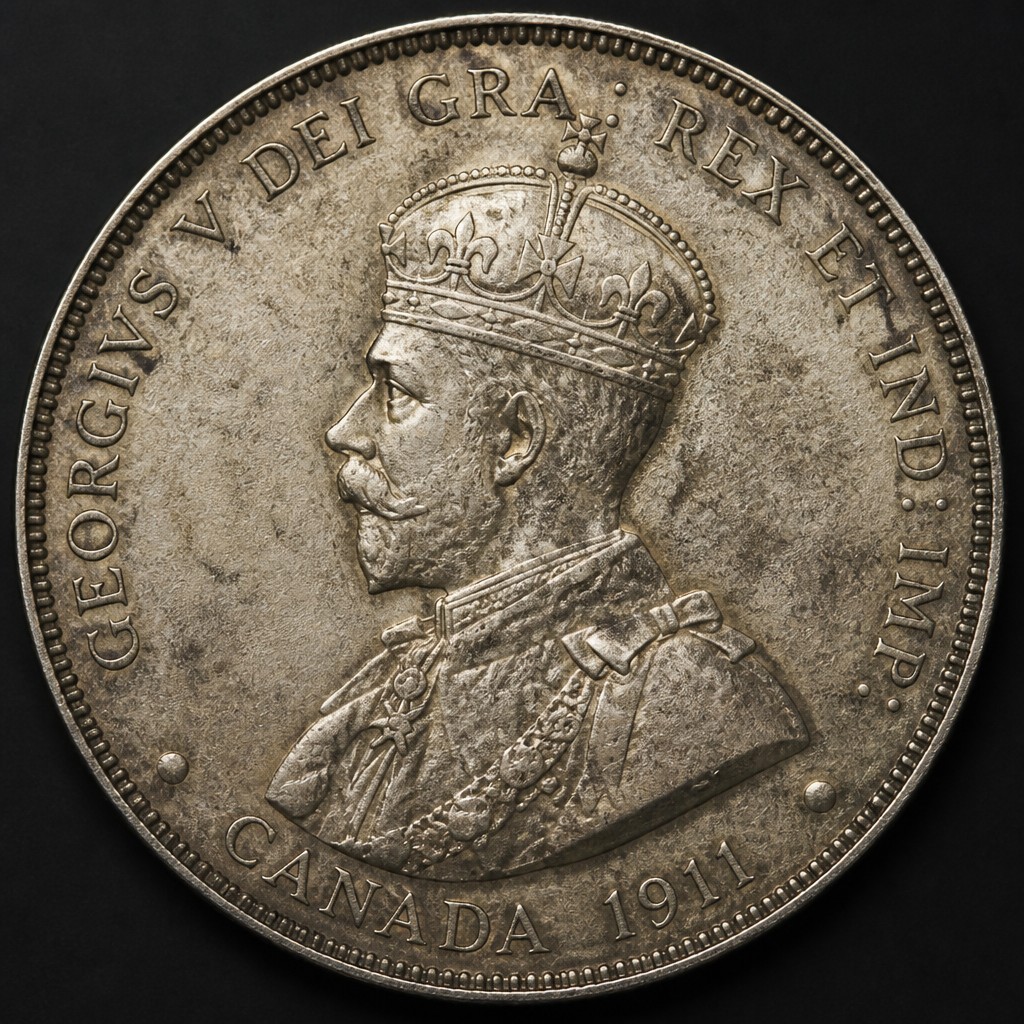
1911 Canadian Silver Dollar (Pattern)
1911
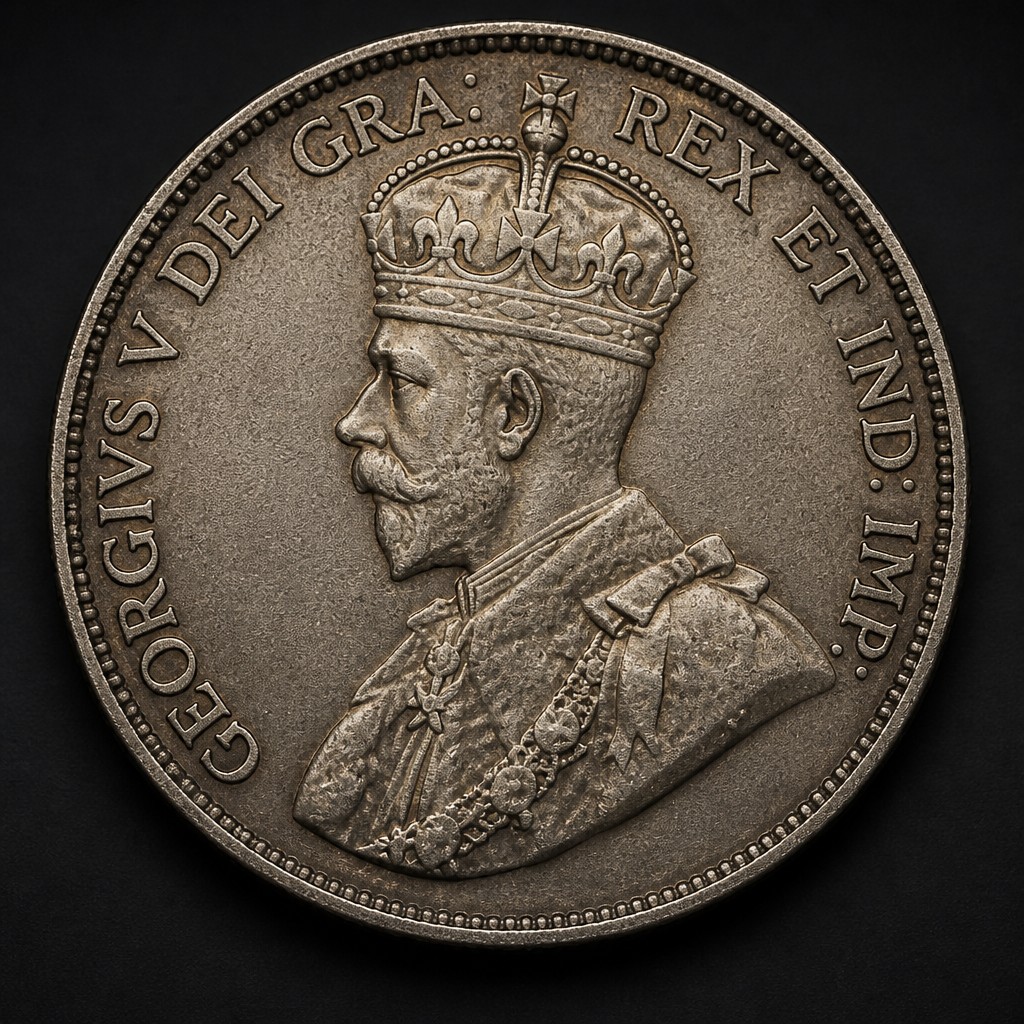
George V Twenty-Five Cents (silver)
1911–1936
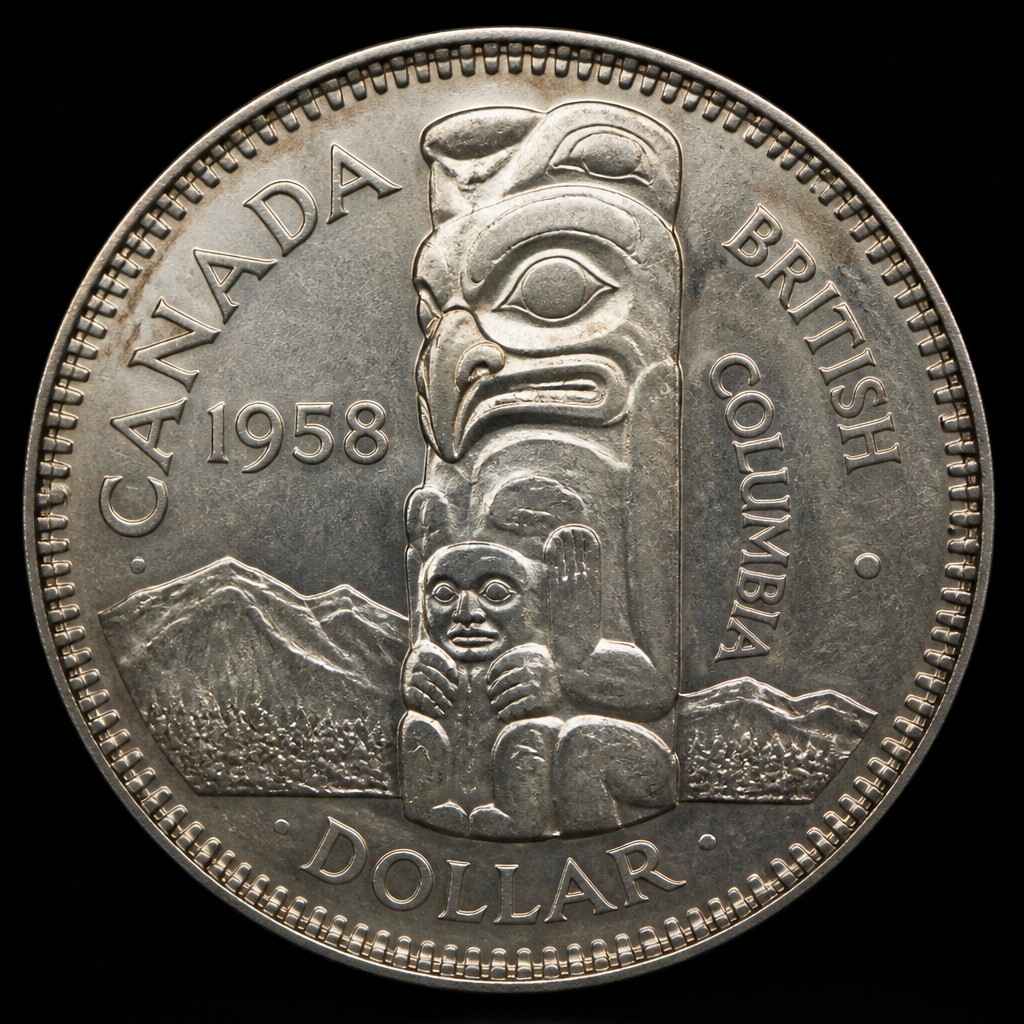
1958 British Columbia Totem Pole Dollar
1958
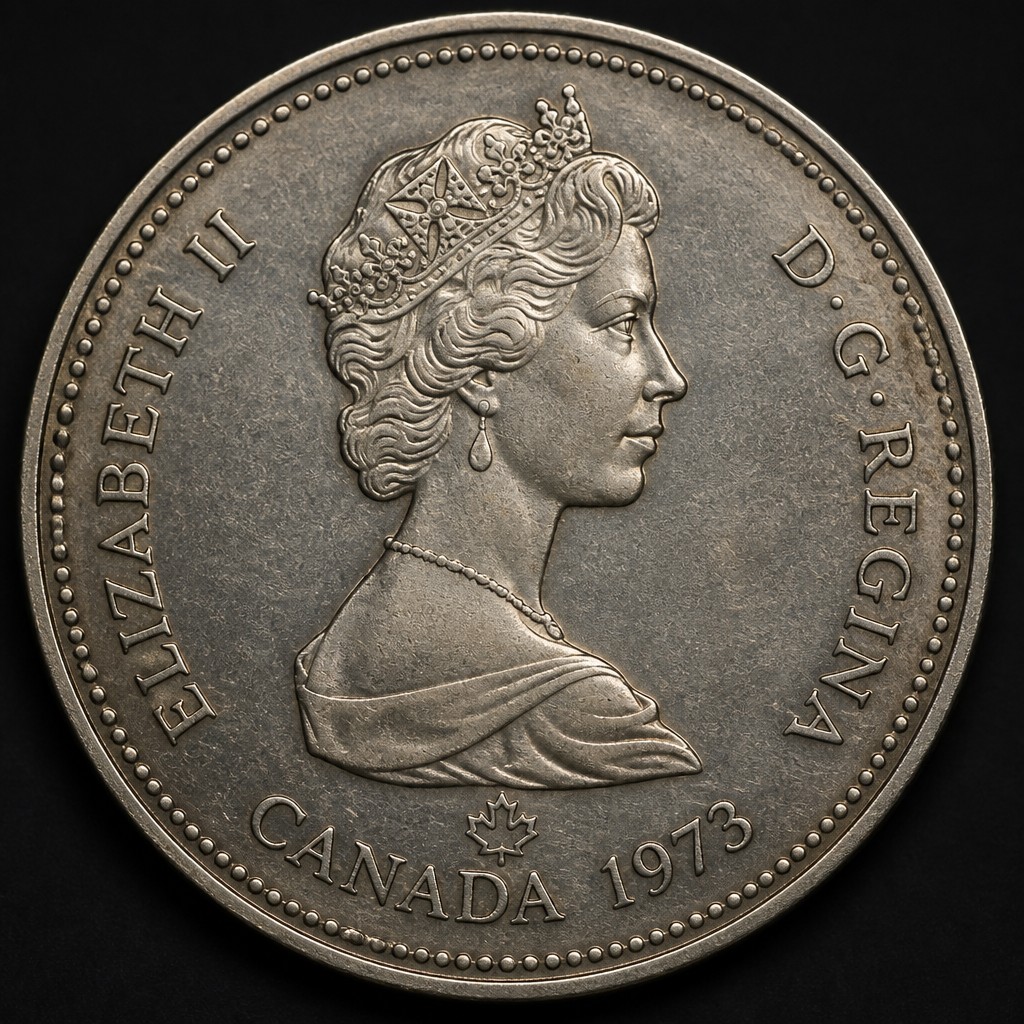
1973 RCMP Centennial Dollar
1973
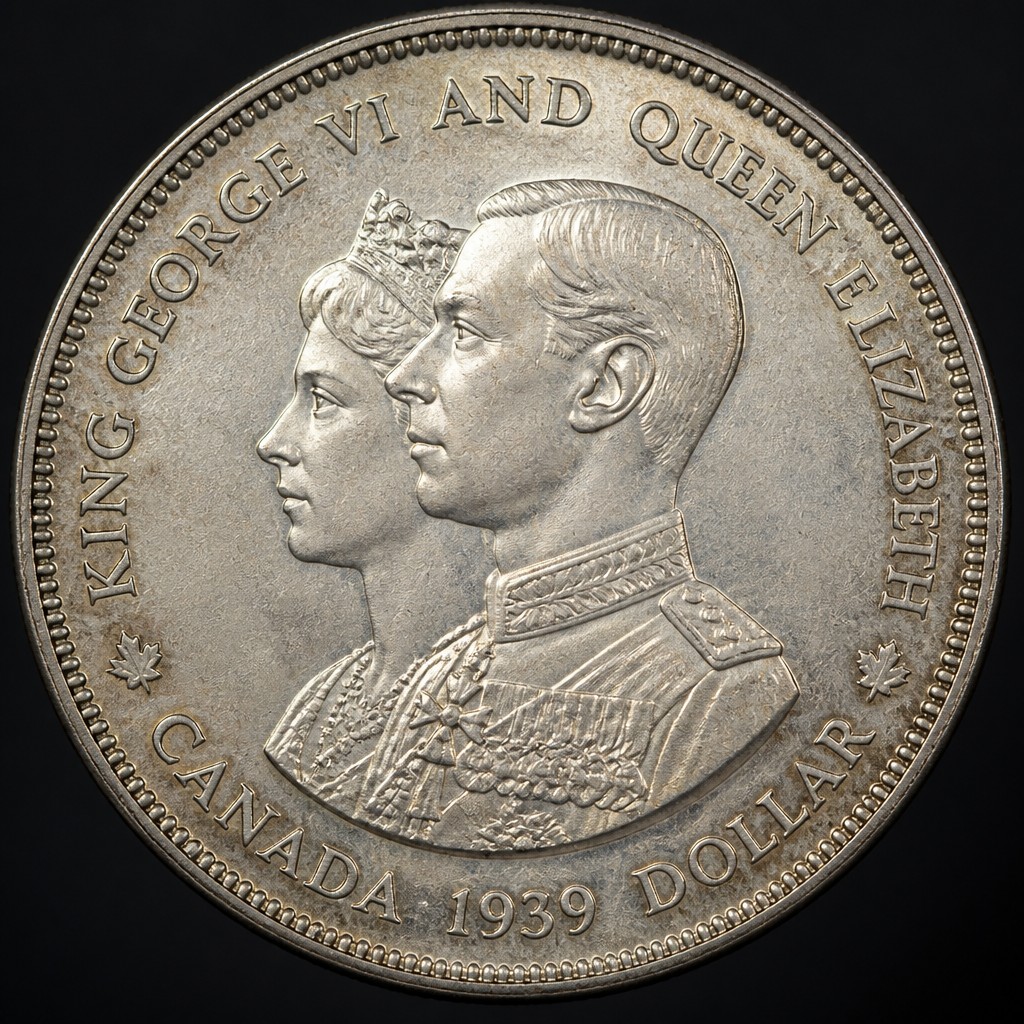
1939 Royal Visit Silver Dollar (Parliament)
1939
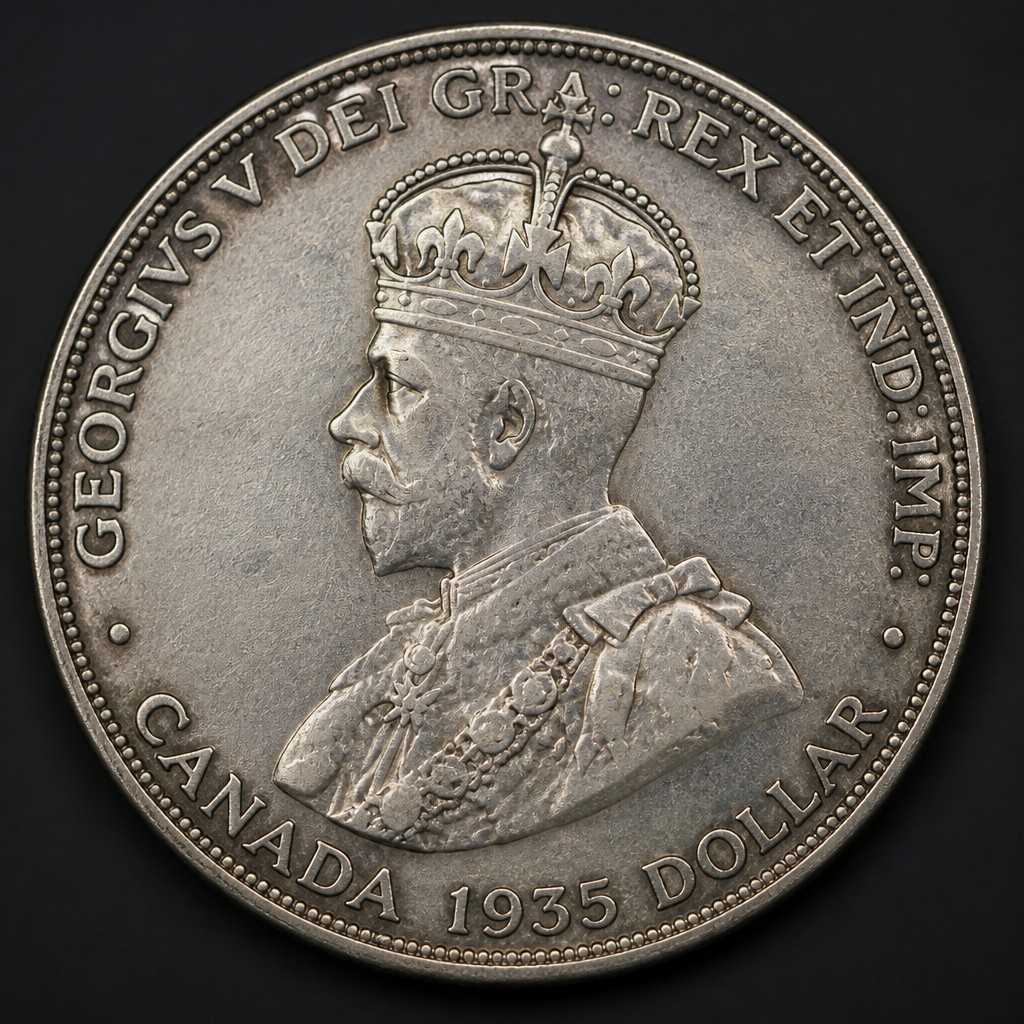
1935 George V Silver Jubilee Dollar (Voyageur)
1935
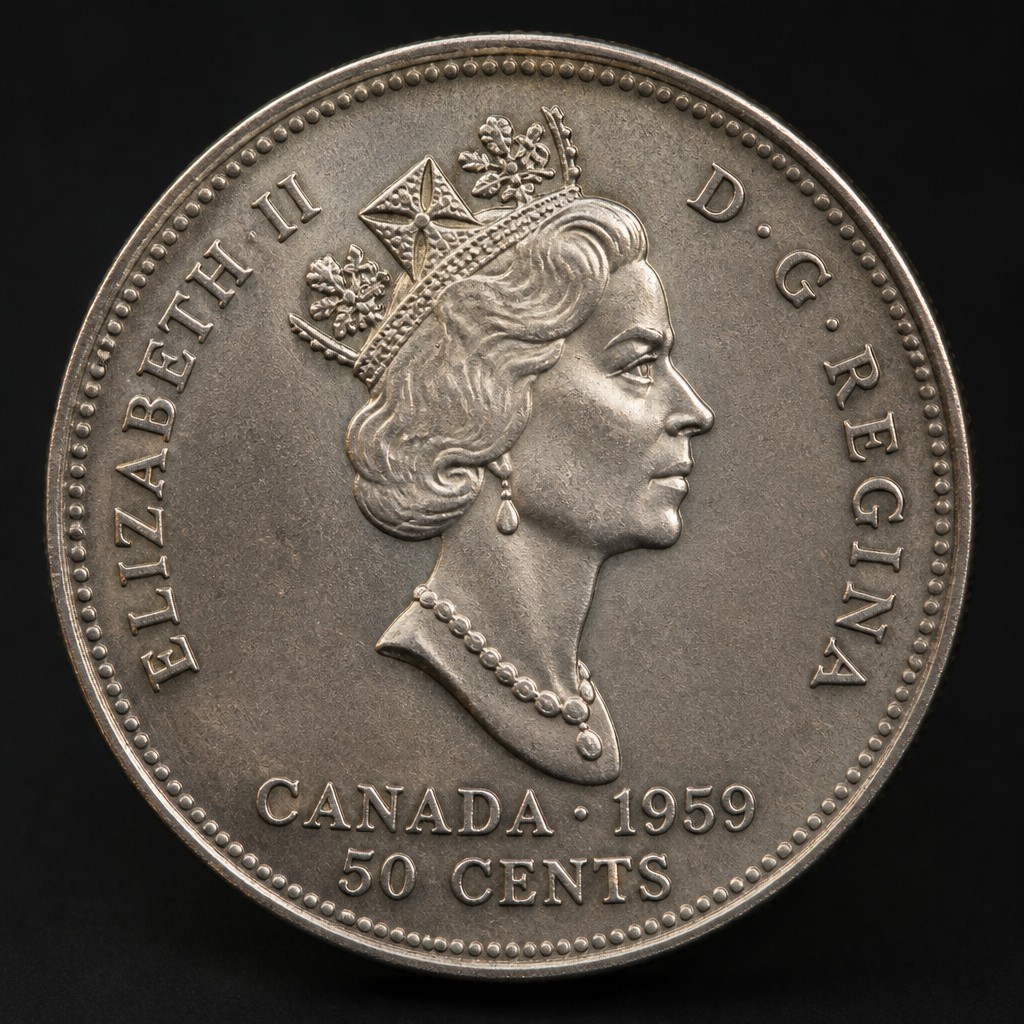
Coat of Arms Fifty Cents (Elizabeth II)
1959–present
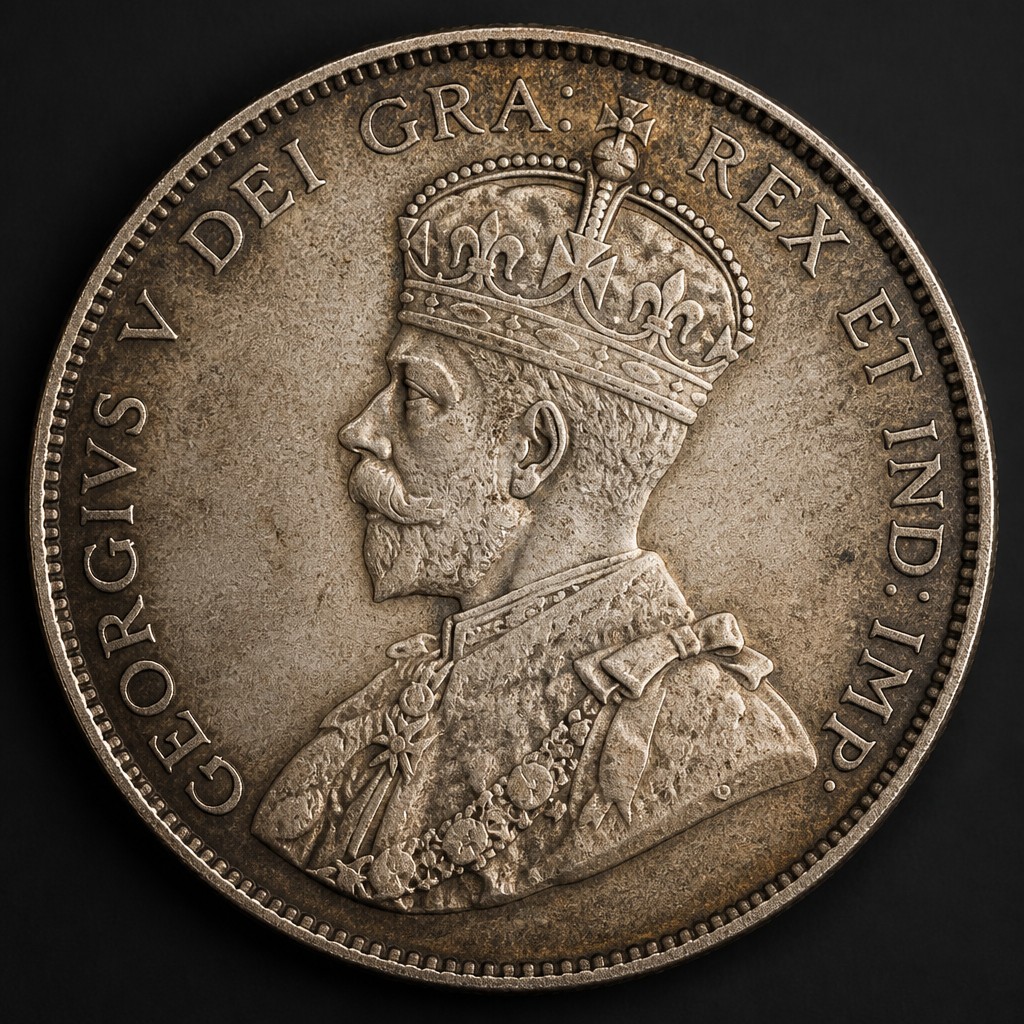
1921 Fifty Cents (King of Canadian Coins)
1921
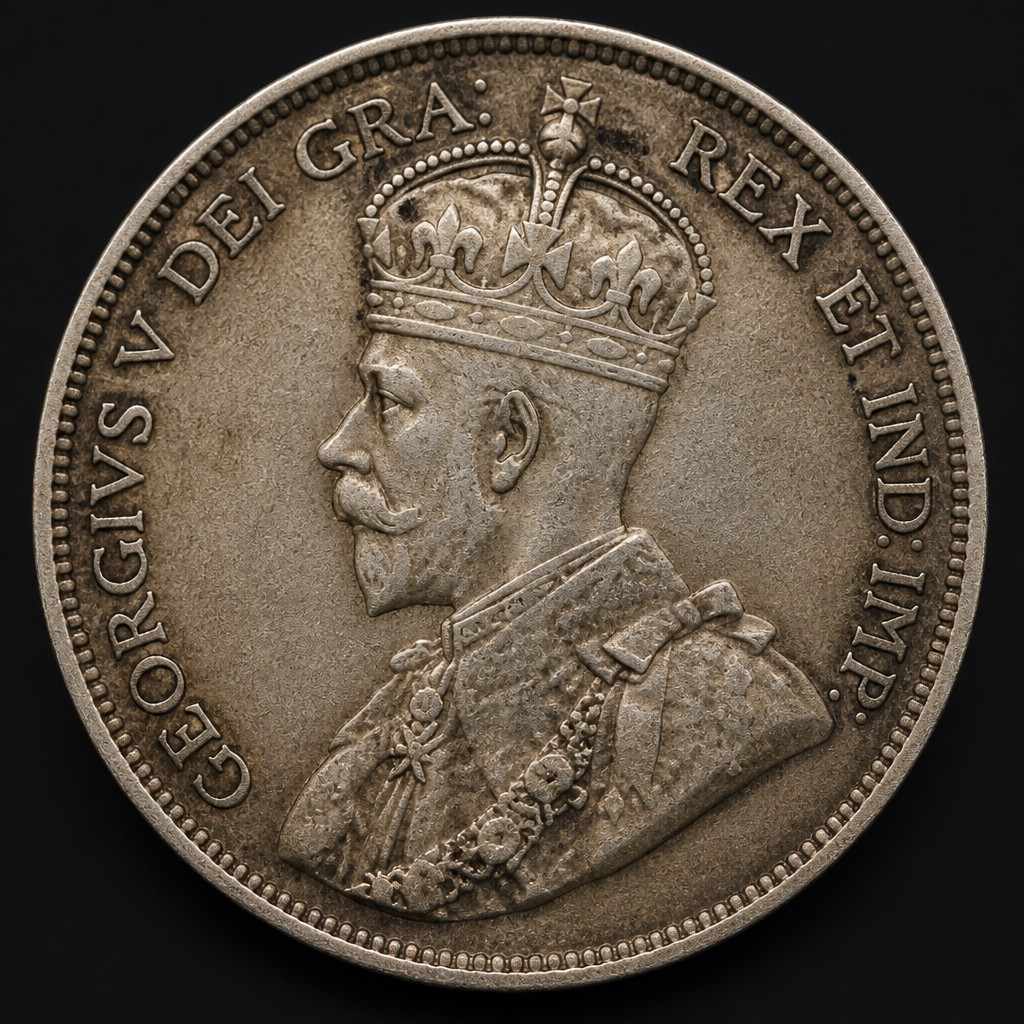
George V Fifty Cents
1911–1936
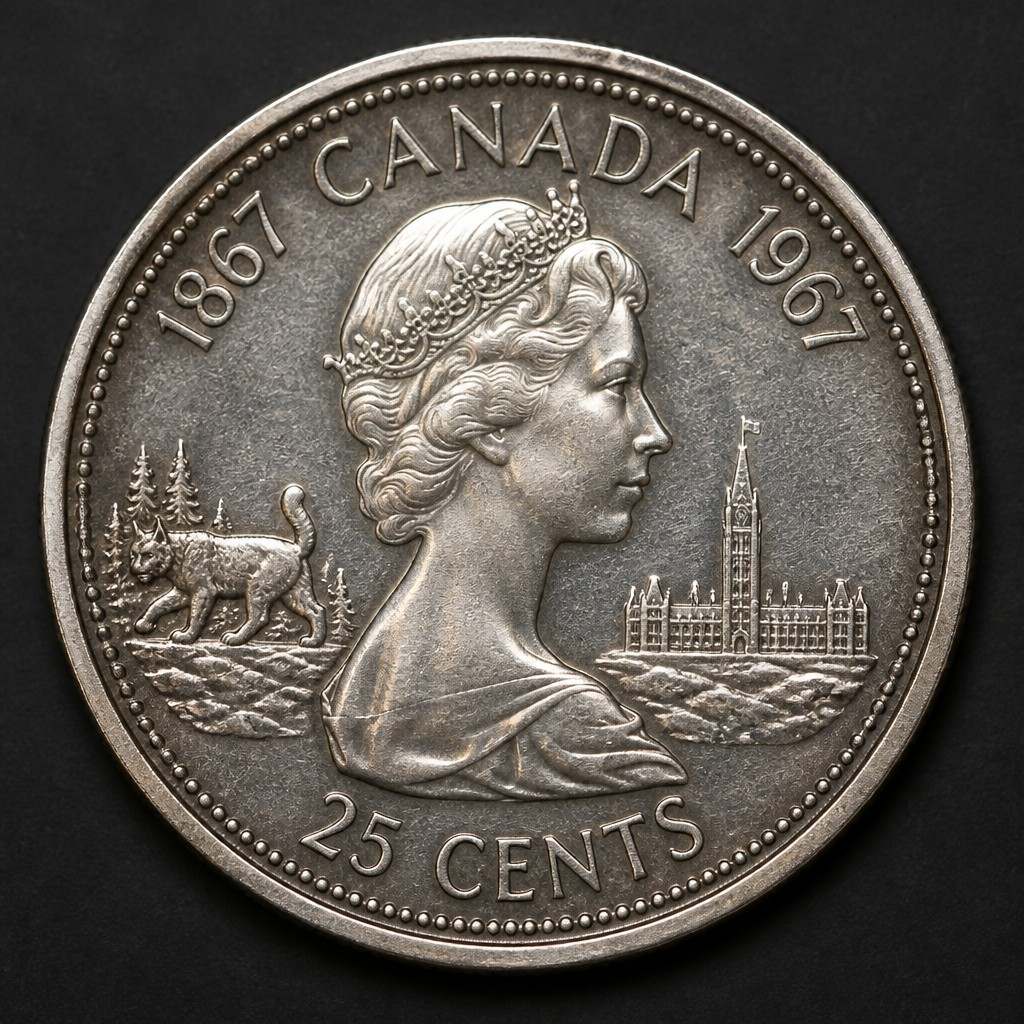
1967 Bobcat Centennial Quarter
1967
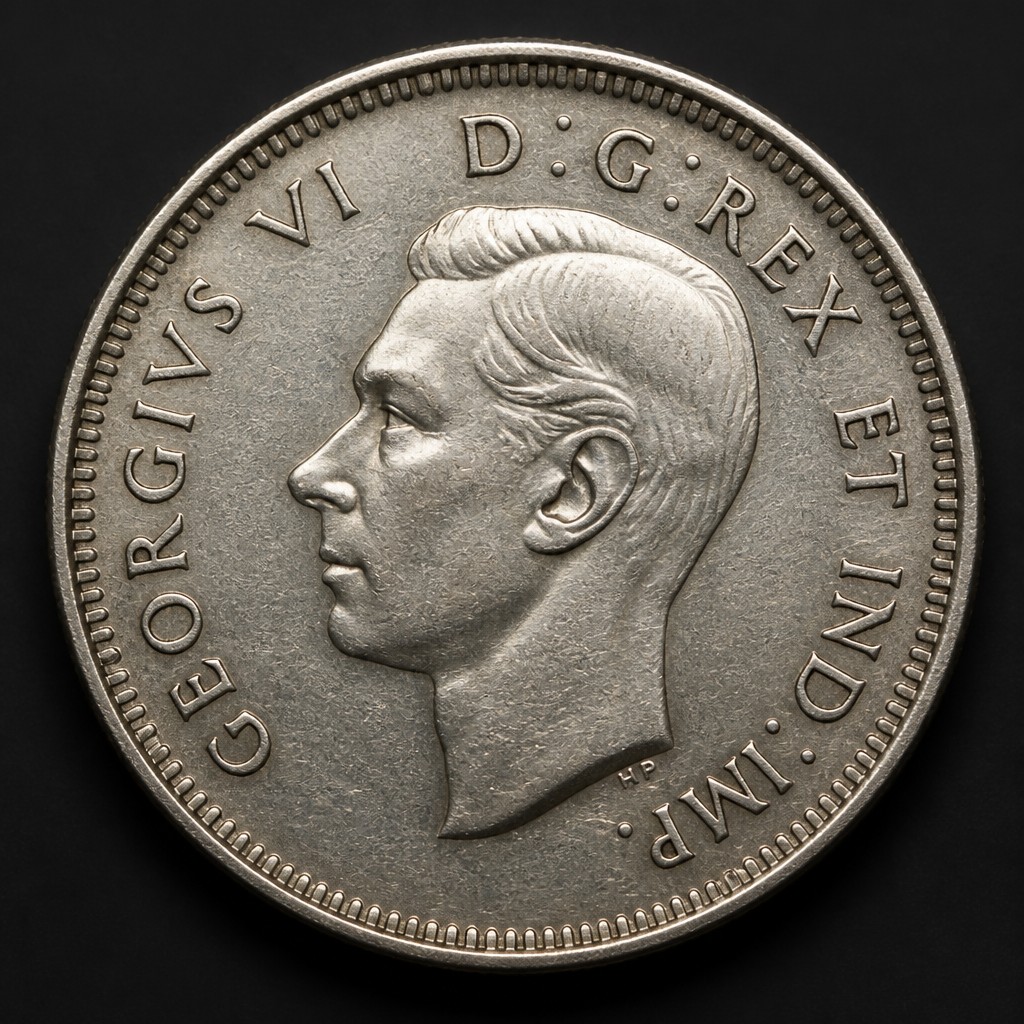
Caribou Twenty-Five Cents (quarter)
1937–present